
Best Tiny Home Communities in Austin, Texas: Compare Prices, Amenities & Locations
Austin has become a major hub for tiny home living, with communities spread across the city and surrounding areas. These communities offer different amenities, price points, and lifestyles to match various needs and budgets. From sustainable agrihoods in East Austin to family-friendly villages near Round Rock, the options continue to grow.
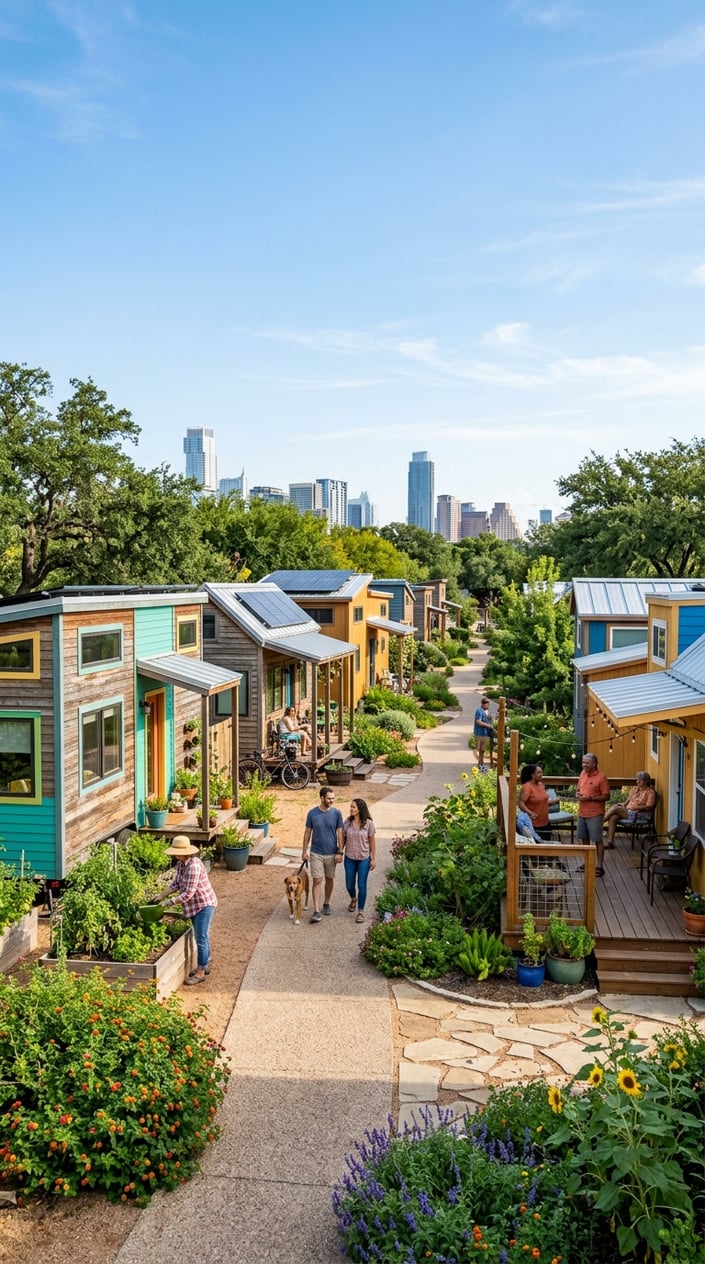
The best tiny home communities in Austin include Village Farm in East Austin, along with several options in nearby cities like Cedar Park, Georgetown, and Kyle, each offering unique features from community gardens to luxury amenities. Prices vary widely depending on location and whether residents buy or rent their lots. Many communities have waiting lists due to high demand.
This guide breaks down Austin’s tiny home communities by location, cost, and special features. Readers will find detailed comparisons, maps, and practical information about zoning laws and costs to help them choose the right community. Whether looking for an affordable option close to downtown or a luxury community in the suburbs, Austin offers choices for different lifestyles and budgets.
So Here is the Best Tiny Home Communities in Austin
Austin has several established tiny home communities that offer affordable, sustainable living options close to the city. These communities provide more than just a place to park a tiny house. They include amenities, social events, and a built-in neighborhood feel.
Village Farm stands out as Austin’s most developed tiny home community. Located less than 8 miles east of downtown, it features an agrihood design with community gardens, a farmers market, and social events. The community is nearly sold out, with only a few homes remaining available.
Other tiny home communities near Austin offer different features and price points. Most communities have the following:
- Shared amenities like gardens and common spaces
- Lot lease or purchase options
- Proximity to Austin (within 15-20 miles)
- Sustainability-focused designs
Village Farm Tiny Home Community Review: Prices, Homes, Amenities & Analysis
Village Farm Tiny Home Community Overview

Key considerations when choosing a community include lot costs, available amenities, and waitlist length. Some popular communities have waitlists with over 500 applicants due to high demand.
Prices vary by community and home size. Tiny homes in these neighborhoods typically cost less than traditional Austin housing. Most communities offer homes between 200-600 square feet.
The tiny home trend in Austin emerged partly as a response to the city’s housing affordability challenges. These communities attract residents looking to downsize, reduce expenses, and connect with like-minded neighbors who value simpler living.
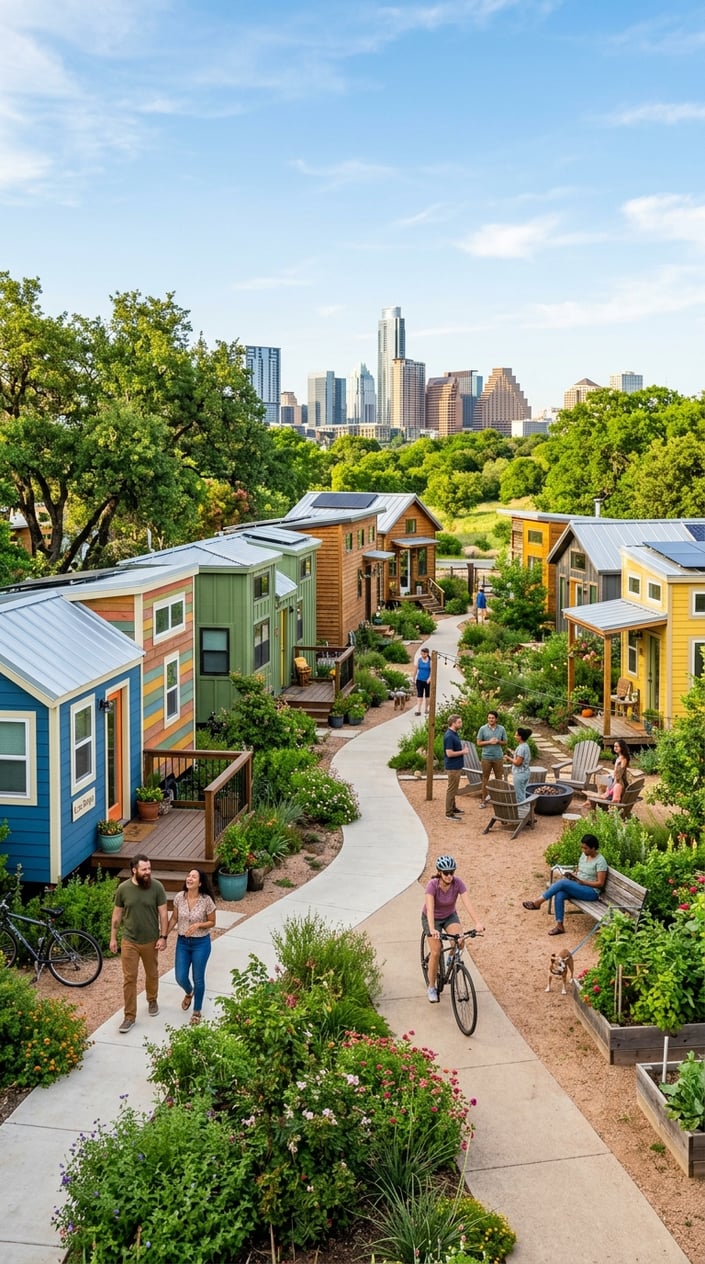
Austin Tiny Home Market Overview
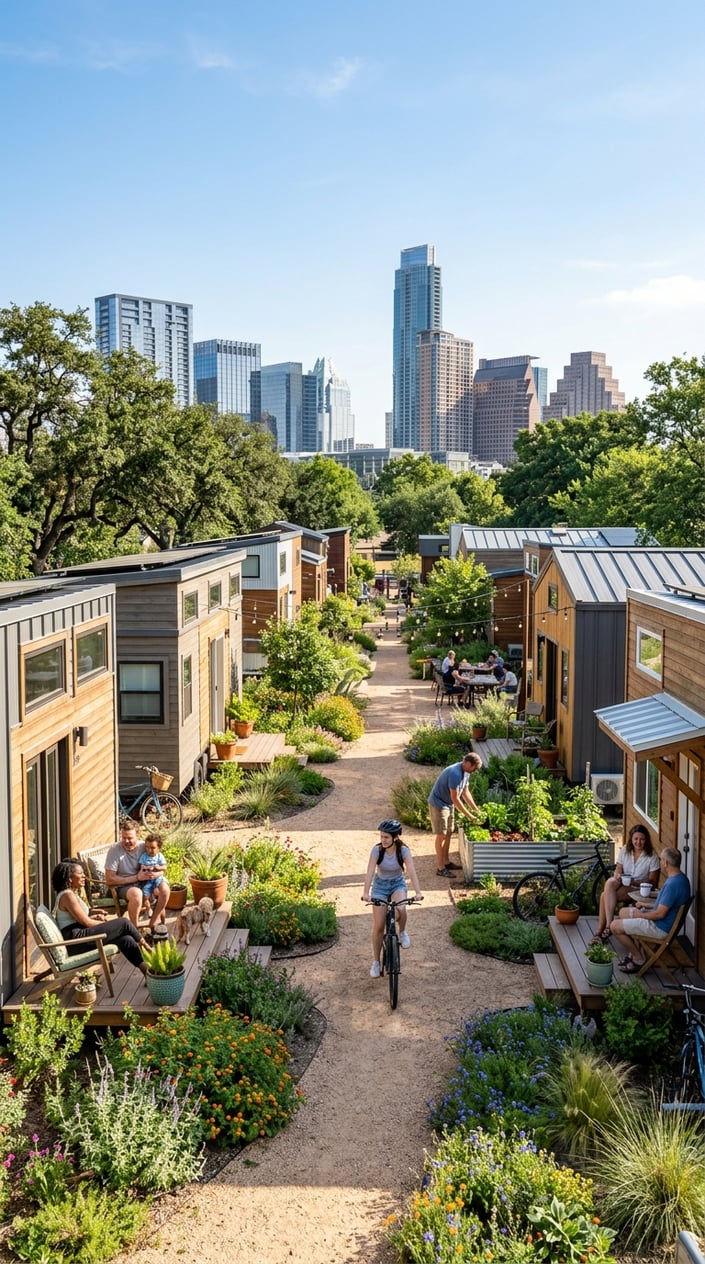
Austin has become a leading city for tiny home living in Texas. The city treats tiny homes as a legitimate housing option rather than a temporary solution. This approach has helped create multiple established communities across the area.
The market includes several types of tiny home developments. Traditional tiny home communities offer basic amenities and shared spaces. Agrihood communities combine tiny living with sustainable agriculture and farm-to-table lifestyles. Some developments feature community supported agriculture programs and access to USDA certified organic farms.
Key Market Features:
- Park-model tiny homes on permanent foundations
- Backyard cottage developments in neighborhoods like Cherrywood, Bouldin Creek, and Crestview
- Professional property management with full utilities
- Shared amenities including community gardens and gathering spaces
- East Austin hosts the majority of established communities
Village Farm operates as Austin’s primary agrihood community with tiny homes and sustainable living features. Community First! Village has established tiny homes as a recognized housing model in the city. These communities attract residents looking for affordable housing, smaller living spaces, and connection with like-minded neighbors.
Demand for tiny home communities in Texas remains high. Some communities maintain waiting lists with over 500 applicants. The market appeals to people seeking alternatives to rising apartment costs while embracing sustainability and simplified lifestyles.
Austin’s zoning laws permit three-unit lots in certain neighborhoods. This regulation allows backyard cottages and accessory dwelling units, expanding options for tiny home living throughout the city.
Top 5 Tiny Home Communities in Texas for Affordable, Sustainable Living

Austin at a Glance
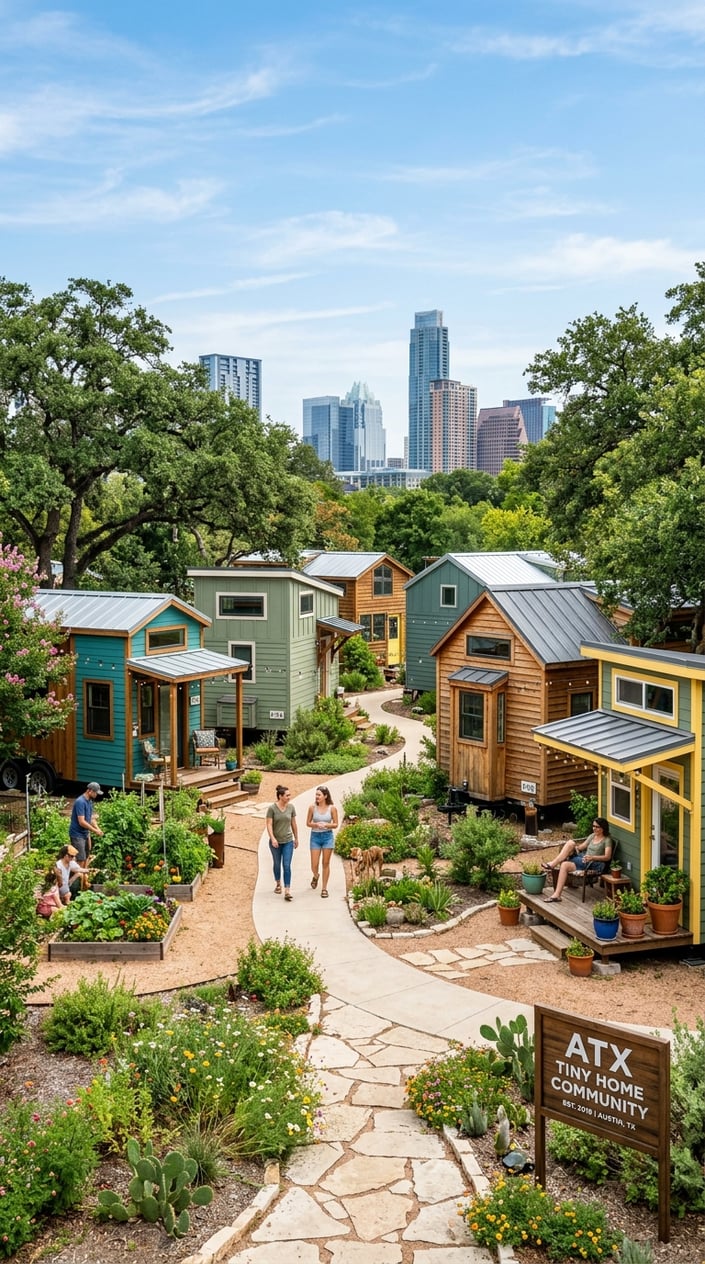
Austin sits in Central Texas and serves as the state capital. The city has grown rapidly over the past two decades, attracting people who want a mix of urban life and outdoor access.
The metro area is home to over 2.3 million people. Austin’s economy centers around technology, government, education, and healthcare sectors. Major employers include the University of Texas, Dell Technologies, and numerous tech startups.
Key Austin Statistics:
| Category | Details |
|---|---|
| Population | 2.3+ million (metro area) |
| Climate | Hot summers, mild winters |
| Average Temperature | 69°F annually |
| Cost of Living | Above national average |
| Major Industries | Technology, government, education |
The city experiences hot summers with temperatures often reaching above 95°F. Winters stay mild, rarely dropping below freezing. This climate works well for year-round outdoor activities.
Austin offers access to parks, lakes, and green spaces throughout the metro area. Zilker Park, Lady Bird Lake, and the Barton Creek Greenbelt provide recreation options close to the city center.
Traffic has become a challenge as the population grows. The city lacks extensive public transit compared to other major metros, though some bus and rail options exist.
Housing costs have risen significantly in recent years. The median home price sits well above the national average. This increase has driven interest in alternative housing options like tiny homes.
Map of Tiny Home Communities Near Austin

Austin’s tiny home communities spread across several areas around the city. Most are located within a 30-mile radius of downtown Austin.
Key Locations:
- East Austin – Home to Village Farm, an agrihood-style community
- South Austin – Several communities with land-lease options
- North Austin – Suburban-style tiny home parks
- Hill Country – Communities west of Austin with more land
Village Farm sits in East Austin and offers close proximity to downtown. The community features 40 lots in phase one and plans for 112 additional lots in phase two.
The search area for tiny home communities extends into the surrounding Texas Hill Country. Communities in this region provide more space and natural settings. Some are located near lakes and natural areas.
Distance Ranges from Downtown Austin:
| Distance | Area Type | Examples |
|---|---|---|
| 0-10 miles | Urban/Suburban | East and South Austin |
| 10-20 miles | Suburban | North Austin, Pflugerville |
| 20-30 miles | Rural/Hill Country | West and Southwest areas |
Most communities require residents to either purchase a lot or sign a land-lease agreement. The location affects pricing and availability. Urban communities tend to have longer waiting lists than rural options.
Many communities are located near major highways for easy access to Austin’s job centers and amenities. Route 183, I-35, and Highway 71 provide main access routes to different community locations.
Editor’s Picks
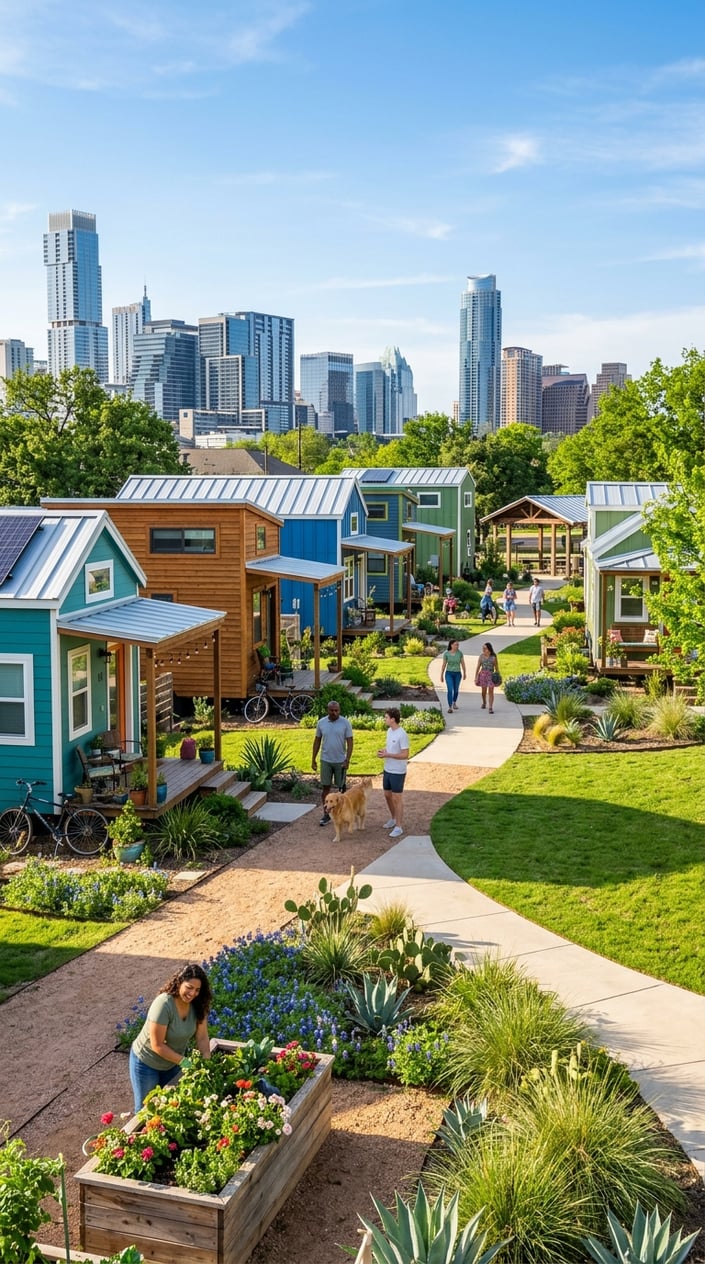
Austin’s tiny home community scene offers options for different lifestyles and budgets. These top picks stand out for their amenities, location, and resident satisfaction.
Best Overall Tiny Home Community
Village Farm leads as Austin’s premier tiny home community. This agrihood combines sustainable living with modern amenities in a well-established neighborhood setting.
The community features a 120-year-old Farm House that hosts pop-up restaurant nights. Residents enjoy a weekly farmers market every Saturday and regular cooking classes. The walkable layout connects tiny homes through shared spaces like community gardens and pocket parks.
Village Farm emphasizes environmental responsibility while building genuine connections between neighbors. A general store and cafe serve as gathering spots for the community. The development is nearly sold out, which speaks to its popularity among Austin tiny home buyers.
The location provides easy access to Austin while maintaining a rural feel. This balance makes it ideal for people who want community engagement without sacrificing convenience.
Best Luxury Tiny Home Community
High-end tiny home communities in the Austin area focus on resort-style amenities. These developments include premium features like swimming pools, fitness centers, and clubhouses.
Lake-area communities near Austin offer waterfront access and recreational activities. Residents can enjoy boating, fishing, and nature trails while living in upscale tiny homes. Many luxury communities require specific certifications for homes and maintain strict design standards.
The higher lot rent reflects the enhanced amenities and prime locations. Monthly fees typically cover maintenance of shared spaces and community facilities. Some developments provide concierge services and organized social events.
These communities attract retirees and professionals seeking a simplified lifestyle without giving up comfort. The quality of construction and attention to detail sets luxury options apart from standard tiny home parks.
Best Affordable Tiny Home Community
Bring-your-own tiny home (BYOH) communities offer the most budget-friendly option in Austin. These parks reduce costs by allowing residents to purchase or build their own certified tiny homes.
Monthly lot rent in affordable communities ranges from basic rates that cover essential utilities and parking. Some parks offer payment plans or lower deposits to help new residents join. The trade-off often involves fewer amenities compared to premium communities.
Many affordable options sit slightly outside Austin’s city center. This location strategy keeps costs down while still providing reasonable access to jobs and services. Basic amenities typically include water, electricity, and waste management.
The certification requirements remain important even in affordable communities. Homes must meet safety standards and local zoning laws. Several parks maintain waiting lists with hundreds of applicants due to high demand and limited availability.
Best Tiny Home Community for Families
Family-friendly tiny home communities prioritize safety and child-centered spaces. These developments include playgrounds, open green areas, and family activity programs.
Communities near quality schools attract parents who want to downsize without disrupting their children’s education. Some developments organize youth activities and family events throughout the year. The close-knit nature of tiny home living helps families build strong support networks with neighbors.
Lot sizes in family communities often allow for small yards or patio spaces. This extra room gives children outdoor play areas near their homes. Pet-friendly policies are common since many families include animals in their household.
The suburban locations balance affordability with access to family services. Parents appreciate lower housing costs that free up money for other family priorities.
Best Tiny Home Community for Nature Lovers
Eco-villages and agrihoods cater to residents who prioritize environmental connection. Village Farm’s agricultural focus creates opportunities for gardening and farm-to-table living.
These communities feature extensive green spaces, native plant landscapes, and wildlife-friendly designs. Residents participate in community gardens and sustainable farming practices. Educational programs teach organic growing methods and environmental stewardship.
Nature-oriented developments often include hiking trails, bird watching areas, and natural water features. The Texas climate supports year-round outdoor activities with hot summers and mild winters. Some communities partner with conservation groups to protect local ecosystems.
Residents share responsibility for maintaining green spaces and natural areas. This hands-on approach builds deeper connections to the land and fellow community members. The emphasis on sustainability extends to energy use, water conservation, and waste reduction programs.
Tiny Home Communities Comparison Table
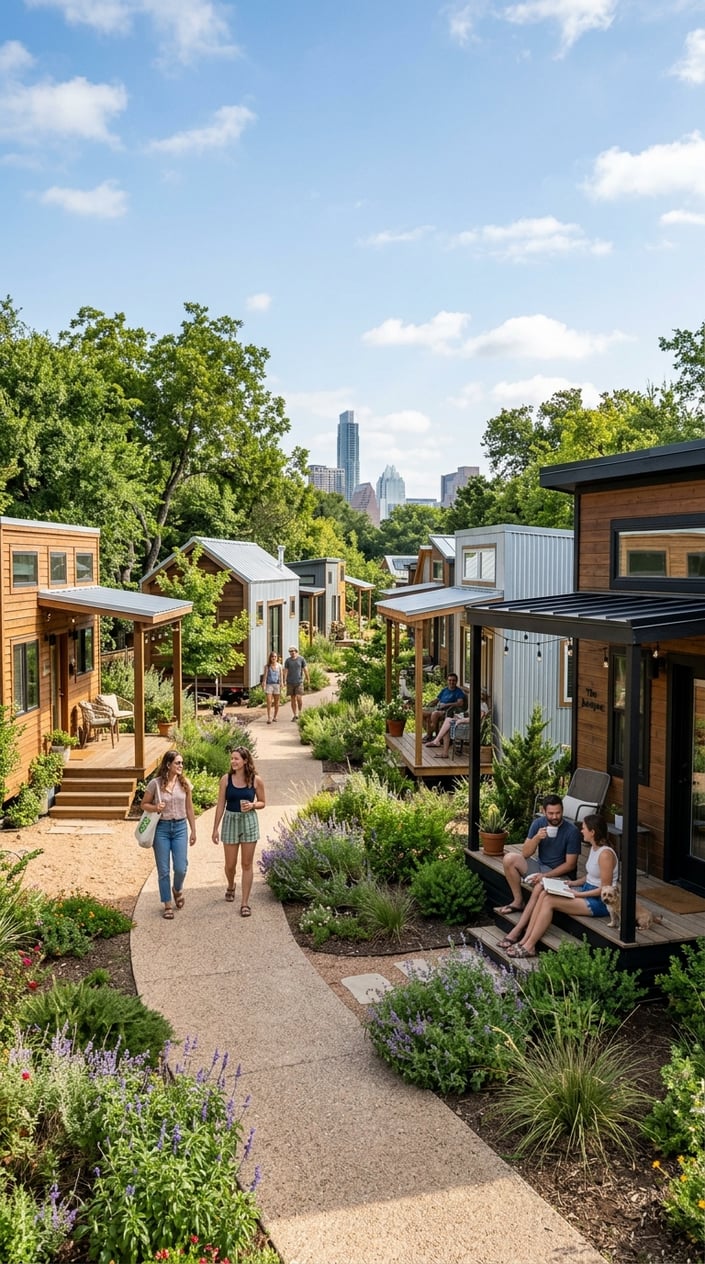
The following table breaks down key details for Austin’s top tiny home communities. This comparison helps readers evaluate monthly costs, location, and unique features at a glance.
| Community Name | Location | Monthly Lot Rent | Distance from Downtown | Best Feature |
|---|---|---|---|---|
| Village Farm | East Austin | $600 | 10 miles | Organic farm and community gardens |
| Constellation ATX | South Austin | $725-$1,050 | 10 miles | Resort-style pool and clubhouse |
| Community First! Village | Southeast Austin | $200-$800 | 10 miles | Mission-driven affordable housing |
| Pecan Meadow Village | Kyle | $600-$900 (est.) | 20 miles | Large-scale development near Tesla |
| Spicewood Tiny House Community | West of Austin | $600-$800 | 30 miles | Hill Country views and nature access |
| Manor Tiny Wildlife Resort | Northeast Austin | $350-$500 | 25 miles | Budget-friendly pet-friendly lots |
Each community serves different needs and budgets. Manor Tiny Wildlife Resort offers the lowest entry point at $350 per month for primitive lots. Community First! Village provides affordable options with supportive services for eligible residents.
Communities closer to downtown Austin charge higher rent but reduce commute times. Village Farm and Constellation ATX sit just 10 miles from the city center. Rural options like Spicewood trade proximity for scenic locations and lower costs.
Amenities vary significantly between communities. Some offer full hookups, pools, and clubhouses. Others provide basic utilities with simpler facilities. Buyers should visit communities in person to assess fit before committing.
Best Tiny Home Communities in Austin
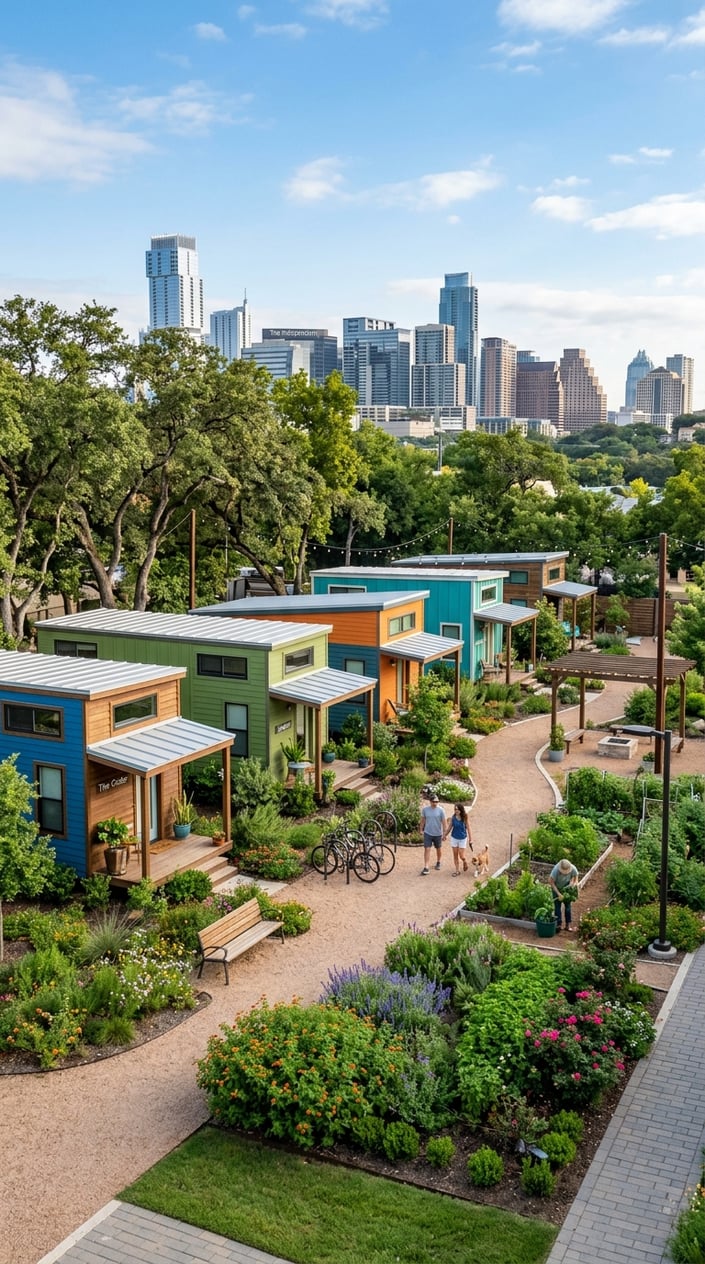
Austin offers several tiny home communities that cater to different lifestyles and budgets, from affordable housing-focused villages to upscale agrihood developments. Each community brings its own mix of amenities, lot sizes, and pricing structures.
Community #1
Village Farm Austin stands out as the city’s only tiny home agrihood, combining sustainable living with modern convenience. Located less than 8 miles east of downtown Austin, this community centers around Green Gate Farm and features 40 home lots in phase one, with 112 additional lots planned for phase two.
The free-standing tiny homes measure 399 square feet and use environmentally friendly materials throughout their construction. Residents enjoy access to a general store, cafe, community kitchen, and weekly farmers market every Saturday. The 120-year-old Farm House hosts pop-up restaurant nights and cooking classes.
Pathways and sidewalks connect homes to farms, gardens, and neighborhood pocket parks. The community emphasizes sustainable design with lean construction processes. Most homes have sold, with only a few remaining available for purchase.
Community #2
Community First! Village provides permanent housing for people experiencing homelessness. The community spans over 50 acres in northeast Austin and houses hundreds of residents in tiny homes, RVs, and canvas-sided micro-homes.
Residents pay affordable rent based on their income. The village includes a community market, outdoor movie theater, art studios, and workshop spaces. Medical services and job opportunities exist on-site to support residents.
The village operates on a model that combines affordable housing with community support services. Volunteers and staff work alongside residents to maintain the property and build new housing units.
Community #3
The Pines RV Community offers spaces for tiny homes on wheels and RVs. This community provides full hookups with water, electricity, and sewage connections for residents.
Located in the Austin area, The Pines emphasizes a quiet, residential atmosphere. Residents own their tiny homes but lease lot space monthly. The community maintains common areas and provides basic amenities.
Pet-friendly policies make The Pines attractive to tiny home owners with animals. Monthly lot fees cover utilities and maintenance of shared spaces.
Community #4
Constellation ATX focuses on creating an intentional community for tiny home dwellers. The development aims to blend privacy with shared community spaces.
Residents can purchase or lease lots depending on their preferences. The community plans include shared gardens, gathering spaces, and walking trails. Construction uses sustainable building practices where possible.
Location near Austin provides access to city amenities while maintaining a more rural feel. The community attracts people seeking a balance between independence and connection with neighbors.
Community #5
Tiny Town Texas caters to those seeking a simplified lifestyle outside the city center. The community allows both tiny homes on wheels and foundation-based structures.
Monthly lot fees remain competitive compared to traditional housing costs in Austin. Residents share responsibility for common area maintenance. The community emphasizes neighbor cooperation and shared resources.
Pet policies accommodate most animals with reasonable restrictions. RV-style hookups make moving in straightforward for those with mobile tiny homes.
Community #6
Majestic Hills and Majestic Hills Tiny Homes operate in the Texas Hill Country near Austin. The community sits on rolling terrain with views of the surrounding landscape.
Lot sizes vary to accommodate different tiny home configurations. The development includes planned amenities like community buildings and recreational areas. Residents enjoy access to hiking trails and natural spaces.
Building codes allow for various tiny home styles, from park models to custom builds. The location offers a quiet alternative to urban living while staying within driving distance of Austin.
Community #7
Lake Dallas Tiny Home Village serves the northern Texas region but attracts some Austin residents seeking affordable options. The community provides a structured environment with clear rules and maintenance standards.
Lot lease agreements include utilities and access to shared facilities. The village maintains roads, lighting, and common areas. Residents must meet certain criteria for tiny home construction and appearance.
The community hosts social events to build connections among neighbors. Monthly fees cover most services, making budgeting predictable for residents.
Community #8
Additional tiny home communities continue developing around Austin as demand grows. Many communities maintain waiting lists with hundreds of applicants due to limited availability.
These newer developments focus on sustainability features, community amenities, and proximity to Austin. Resident satisfaction depends on factors like lot size, privacy, shared resources, and community rules. Some communities offer more than just parking, providing a real sense of belonging through planned activities and shared spaces.
Zoning laws and building codes vary by location, affecting what types of tiny homes qualify for each community. Prospective residents should research specific requirements before committing to a community.
Find Your Best Tiny Home Community
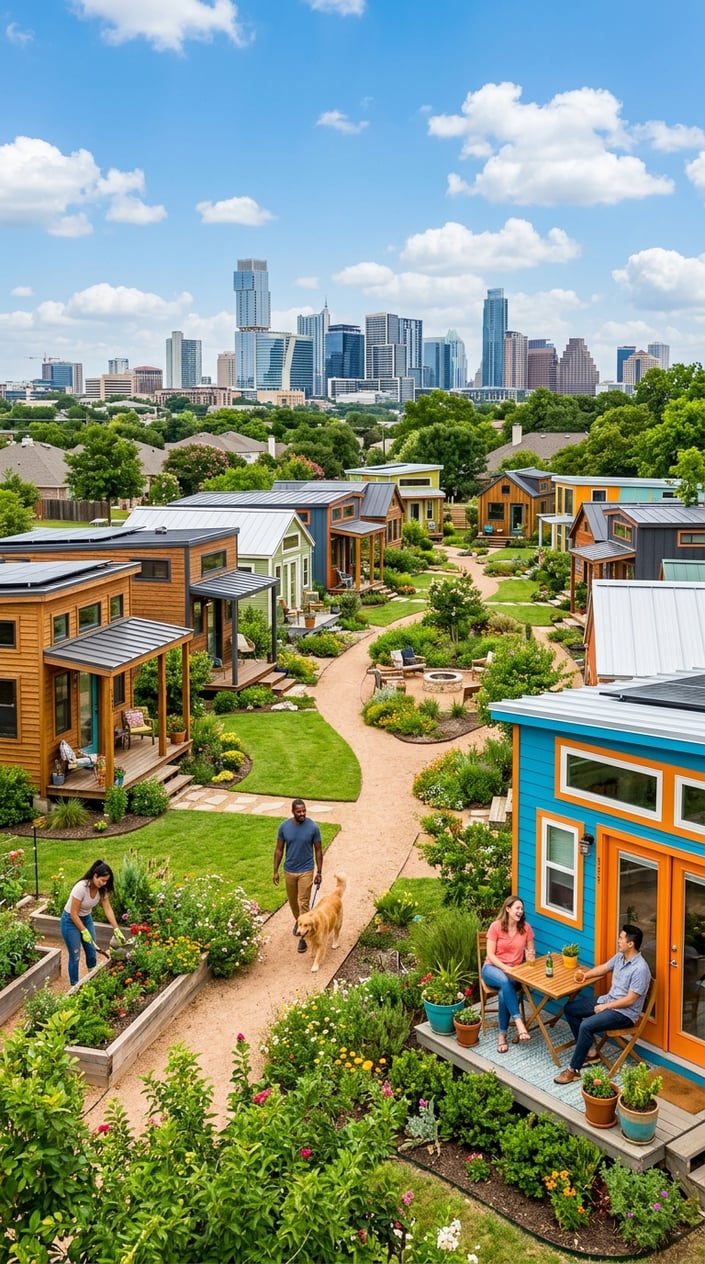
Different tiny home communities in Austin cater to specific lifestyles and priorities. Matching personal needs with community features helps buyers find the right fit for their situation.
Best for First-Time Buyers
First-time buyers need communities with transparent processes and straightforward requirements. Village Farm Austin offers a clear path to ownership with guided tours and staff who answer questions about the buying process. The community provides educational resources about tiny home living and helps new owners understand maintenance responsibilities.
The application process at most Austin tiny home communities includes a background check and proof of income. First-time buyers should expect lot fees ranging from $350 to $650 monthly at entry-level communities. These fees typically cover water, trash collection, and access to shared amenities.
Many communities allow buyers to tour multiple tiny home models before making decisions. This hands-on approach helps first-time buyers understand space limitations and layout options. Some communities also connect new buyers with existing residents who share their experiences.
Best for Retirees
Retirees benefit from communities with single-level homes and accessible amenities. Many Austin tiny home communities design paths and common areas with mobility considerations. Communities located within 30 miles of medical facilities provide convenient access to healthcare services.
Monthly lot fees in retirement-friendly communities range from $400 to $700. These fees often include lawn maintenance and exterior upkeep, reducing physical demands on residents. Some communities organize social activities like weekly farmers markets and cooking classes that create opportunities for connection.
The simplified living approach appeals to retirees downsizing from larger homes. Tiny homes require less cleaning and maintenance time. Communities with on-site management handle repairs and address concerns quickly.
Best for Families
Families need communities with safe outdoor spaces and room for children to play. Village Farm Austin includes pocket parks and community gardens where kids can explore nature. The agrihood concept introduces children to sustainable living practices through hands-on learning.
Communities with family-friendly features typically have quiet hours and rules about noise levels. Shared spaces like clubhouses provide areas for homework or indoor activities during hot Texas summers. Some communities host events designed for families, including seasonal celebrations and educational workshops.
Families should look for communities within reasonable driving distance to schools and pediatric care. Most tiny home families choose models between 400 and 600 square feet to accommodate children. Loft spaces in tiny homes often serve as kids’ bedrooms or play areas.
Best for Remote Workers
Remote workers require reliable high-speed internet and dedicated workspace. Communities should confirm internet speeds meet professional requirements before signing leases. Some Austin tiny home communities offer co-working spaces or clubhouses with desks and meeting areas.
Village Farm Austin provides a cafe space that functions as an alternative work environment. This setup allows remote workers to separate home and work life within a small footprint. The community’s proximity to Austin gives workers access to the city’s tech infrastructure.
Quiet communities with professional residents create better work environments. Remote workers should visit communities during business hours to assess noise levels. Some communities have specific rules about home-based businesses and client visits.
Best for Luxury Living
Luxury tiny home communities feature high-end finishes and premium amenities. Village Farm Austin offers wellness facilities and organic farming features that appeal to luxury seekers. The 120-year-old Farm House serves as a venue for upscale pop-up restaurant nights.
Lot fees for luxury communities range from $800 to $1,050 monthly. These higher costs include access to premium features like fitness centers, community pools, and concierge services. Luxury tiny homes often include custom cabinetry, high-efficiency appliances, and designer fixtures.
The agrihood concept at Village Farm combines sustainability with upscale living. Residents access fresh produce from community gardens while enjoying modern conveniences. The focus on green lifestyle attracts environmentally conscious buyers who want quality without excess.
Best for Pet Owners
Pet-friendly communities provide dedicated dog parks and walking trails. Village Farm Austin includes a dog park specifically designed for four-legged residents. Living in a tiny home doesn’t require giving up pets when communities accommodate animals.
Pet policies vary by community. Most allow dogs and cats with weight restrictions between 40 and 75 pounds. Some communities limit the number of pets per household or require additional pet deposits. Monthly pet fees typically range from $25 to $50.
Communities with green spaces give pets room to exercise. Proximity to veterinary clinics matters for pet owners. Some communities organize pet-focused events that help owners socialize while their animals play together.
Best Budget-Friendly Option
Budget-conscious buyers should look for communities with lot fees under $450 monthly. These communities offer basic amenities like water, trash service, and parking without premium features. Locations further from downtown Austin typically have lower costs while maintaining community standards.
Buyers can reduce costs by purchasing used tiny homes or building their own. Some communities allow owner-built homes that meet specific standards and pass inspections. This approach cuts housing costs significantly compared to buying new models.
Budget communities still provide essential features like safe neighborhoods and legal zoning compliance. Residents should verify communities meet Texas state regulations before committing. Lower-cost options may have fewer shared amenities but still foster community connections through regular events and gatherings.
Tiny Home Communities in North Austin
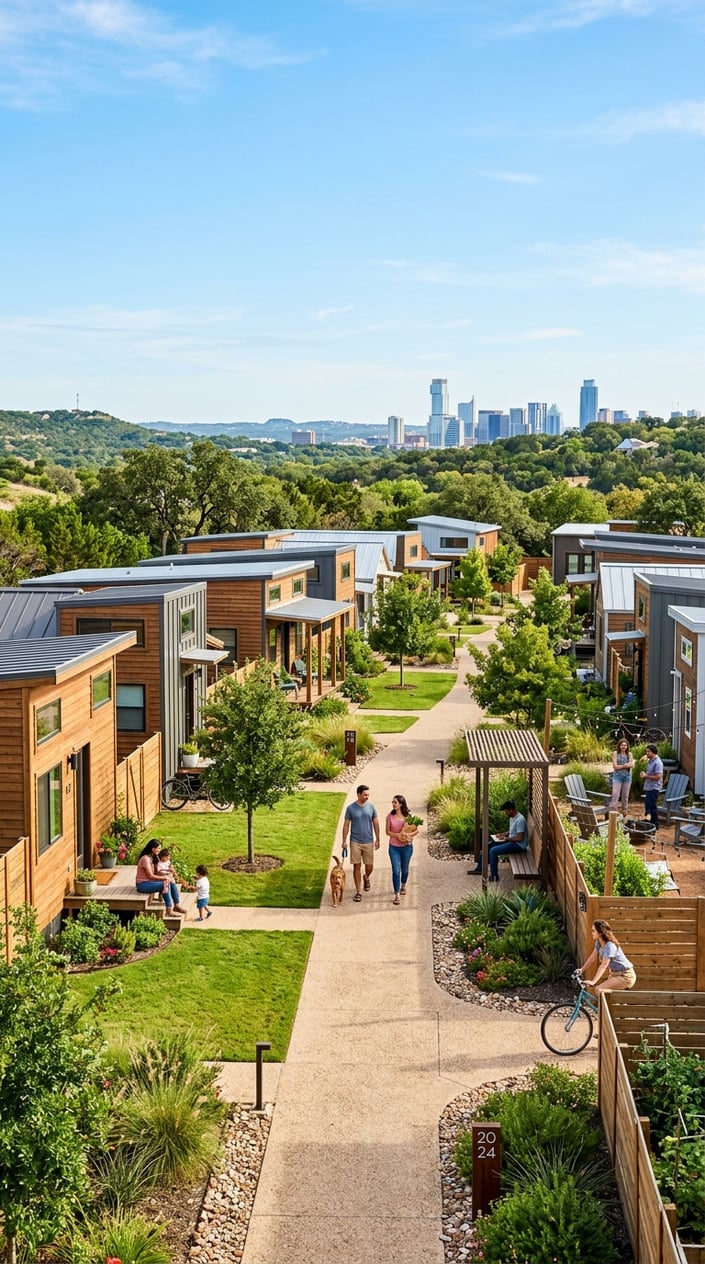
North Austin offers limited options for established tiny home communities compared to other parts of the city. Most dedicated tiny home villages in the Austin area are located in the eastern or southeastern regions.
Village Farm Austin stands as the primary tiny home community serving the greater Austin area, though it sits outside the strict boundaries of North Austin proper. This agrihood features tiny homes starting at 399 square feet and centers around sustainable living practices. The community includes amenities like community gardens, a historic farmhouse, and weekly farmers markets every Saturday.
Residents looking specifically for North Austin locations may need to consider alternative options:
- Private land arrangements with property owners
- RV parks that accept tiny homes on wheels
- Custom tiny home placement on purchased land
The shortage of tiny home communities in North Austin stems from zoning regulations and land availability. The area has more traditional residential development, which makes it challenging for tiny home villages to establish themselves.
Those determined to live in North Austin with a tiny home should research current zoning laws and work with local officials. Some residents have successfully placed tiny homes on family-owned properties or through special use permits.
Village Farm Austin remains the closest established community for those seeking a true tiny home village experience near North Austin. The community reports being close to selling out, with only a few homes remaining available for purchase.
Tiny Home Communities in South Austin
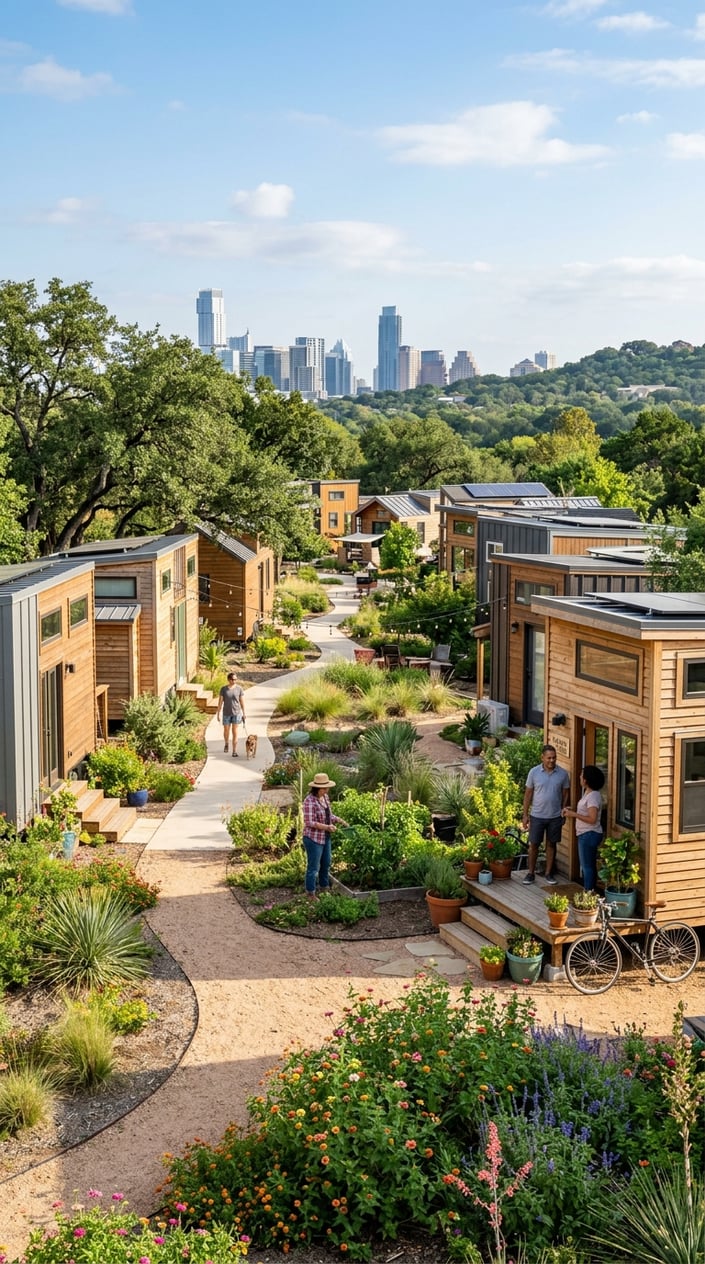
South Austin has emerged as a growing area for tiny home developments. The region offers residents a blend of urban convenience and community-focused living.
Casata is one of the newest tiny home communities in far South Austin. This development features more than 60 microhomes designed for affordable, compact living. Residents can rent these units starting at approximately $1,500 per month, making it an accessible option for those seeking alternatives to traditional apartments.
The community provides residents with modern amenities while maintaining lower housing costs. Each microhome comes equipped with essential utilities and is built to maximize limited square footage.
South Austin’s tiny home communities appeal to various demographics. Young professionals working in Austin’s tech sector often choose these communities for their affordability and proximity to downtown. Others appreciate the simplified lifestyle and reduced environmental footprint.
Key Features of South Austin Tiny Communities:
- Monthly rent starting around $1,500
- Proximity to South Austin amenities and businesses
- Modern utilities and infrastructure
- Community-oriented design
- Smaller environmental impact
The location offers residents access to South Austin’s popular restaurants, shops, and outdoor spaces. Public transportation connections make commuting to other parts of Austin manageable for those without vehicles.
Demand for tiny homes in South Austin remains high. Some communities maintain waiting lists due to limited availability. Prospective residents should contact communities directly to inquire about current openings and application processes.
Tiny Home Communities in East Austin
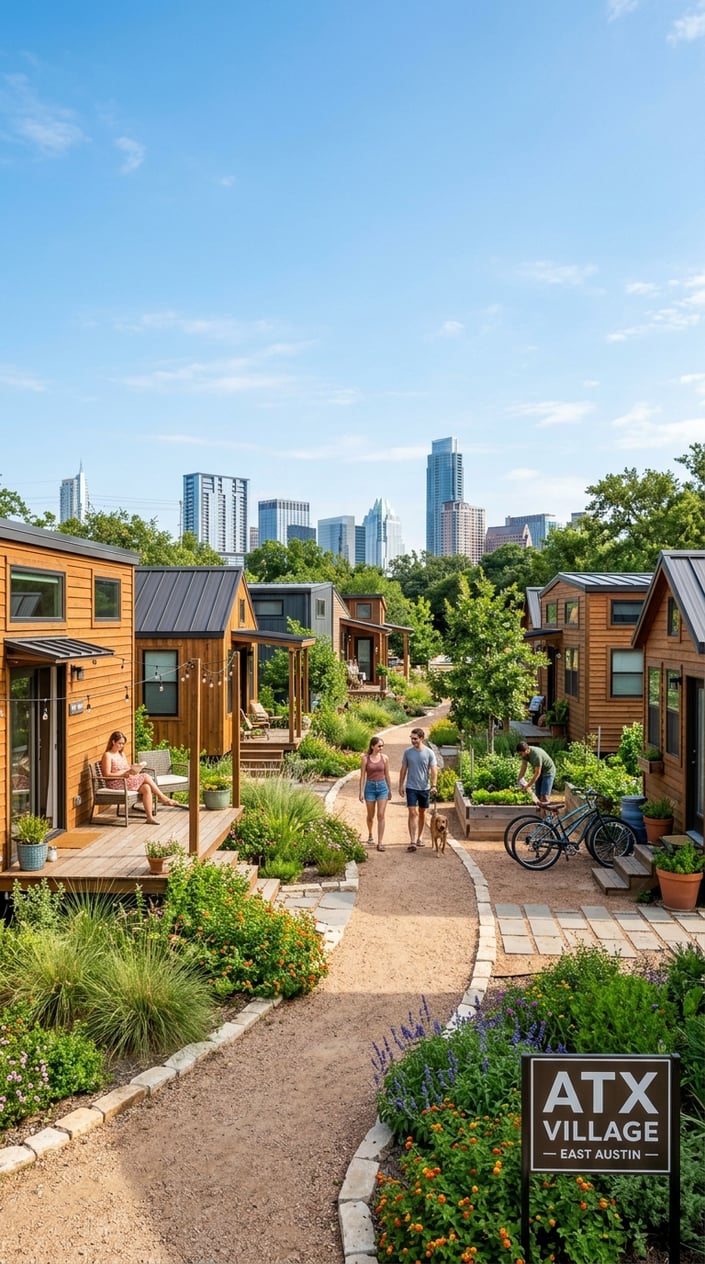
East Austin has become a hub for tiny home living with several established communities. The area sits less than 8 miles from downtown Austin, making it convenient for residents who work in the city center.
Village Farm stands out as Austin’s premier tiny home agrihood. This community combines sustainable living with agricultural spaces centered around Green Gate Farm. The development includes 40 home lots in phase one and plans for 112 additional lots in phase two.
Residents at Village Farm enjoy multiple amenities designed to build community connections:
- General store and cafe
- Community kitchen facilities
- Pathways and sidewalks connecting all areas
- Community gardens and organic farming spaces
- Neighborhood pocket parks
- Weekly farmers market every Saturday
- Pop-up restaurant nights at the 120-year-old Farm House
- Cooking classes and community events
The community features free-standing tiny homes built with sustainable design principles. Environmental care guides the development’s planning and daily operations.
Camp Esperanza serves a different purpose in East Austin. This community provides tiny homes specifically for people experiencing homelessness. The shelter community has developed 200 tiny homes on state-owned land, offering supportive housing with wraparound services.
Both communities demonstrate how tiny home developments can address different housing needs in East Austin. Village Farm focuses on sustainable lifestyle living for buyers, while Camp Esperanza provides essential housing support for vulnerable residents.
Tiny Home Communities in West Austin
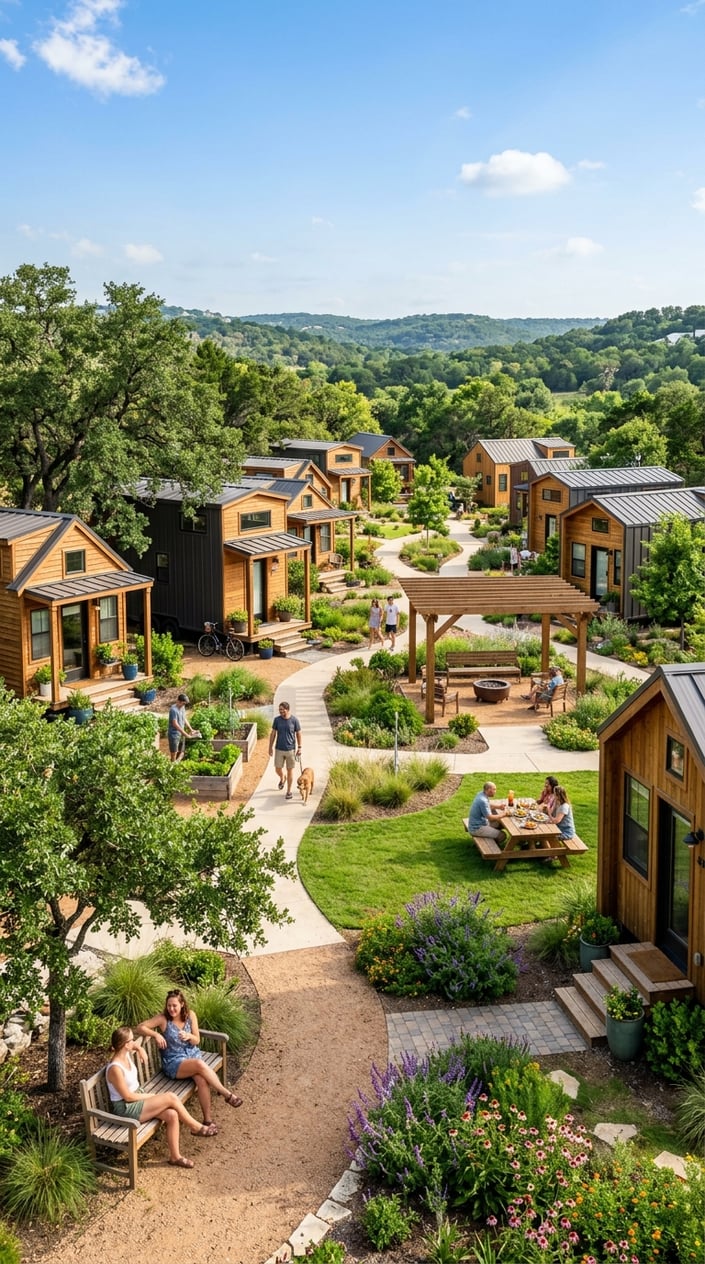
West Austin offers limited options for tiny home communities compared to other parts of the city. The area’s higher property costs and zoning restrictions make it challenging for developers to establish affordable tiny home villages in this location.
Village Farm stands as the primary tiny home community serving the greater Austin area, though it sits outside the traditional West Austin boundaries. This agrihood features tiny homes for sale in a sustainable community setting. The village includes amenities like community gardens, a general store, a cafe, and pocket parks.
Village Farm hosts regular events for residents, including:
- Weekly farmers markets every Saturday
- Pop-up restaurant nights at a 120-year-old farmhouse
- Cooking classes
- Community gatherings focused on sustainable living
The community is nearly sold out, with only a few homes remaining available for purchase.
Those seeking tiny home living specifically in West Austin may need to explore alternative options. Some residents choose to place tiny homes on private land within West Austin’s city limits, though this requires careful attention to local zoning laws and regulations.
The lack of established tiny home communities in West Austin reflects the area’s real estate market and regulatory environment. Prospective tiny home residents interested in this part of Austin should research current zoning requirements and consider nearby communities that offer similar access to West Austin’s amenities and lifestyle.
Tiny Home Communities Near Round Rock
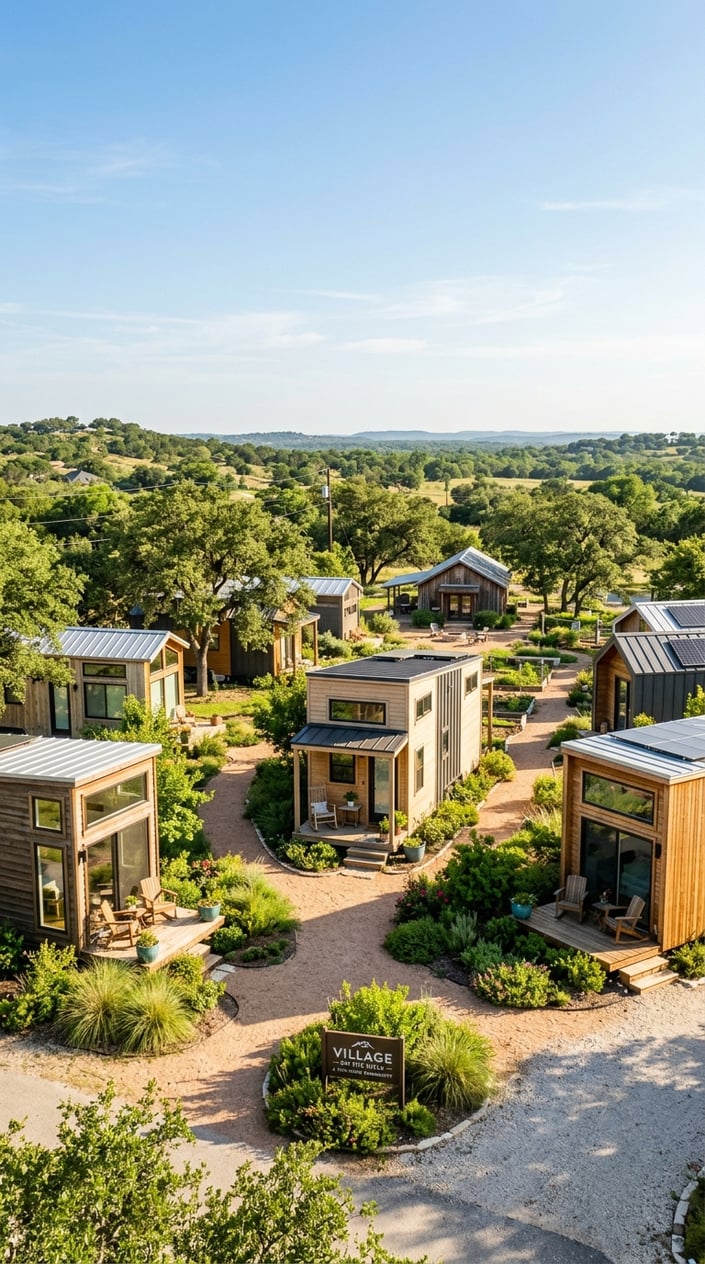
Round Rock has become a notable area for tiny home living just outside of Austin. The city offers several options for people looking to downsize and live in a smaller footprint.
Mustard Seed Village stands out as Round Rock’s first affordable tiny home community. Amplify Credit Union funded this project, which was completed in September 2023. The village houses 28 families and focuses on providing affordable housing options in the Central Texas area.
The community was developed by a local husband and wife team who wanted to address the growing housing cost problem in the region. Residents live in a communal environment where they share certain amenities and spaces.
These tiny homes offer full utility hookups for water, electric, and sewer. The village creates a neighborhood atmosphere where families can live affordably while still having access to essential services.
Round Rock’s tiny home communities provide an alternative to traditional housing in the Austin metro area. They give residents a chance to live simply without the high costs associated with conventional homes in Central Texas.
The development of these communities shows how tiny homes can help solve housing affordability challenges. Families who might struggle to find affordable housing in Austin proper can find options in nearby Round Rock. The close proximity to Austin means residents still have access to the city’s amenities and job opportunities.
Tiny Home Communities Near Cedar Park
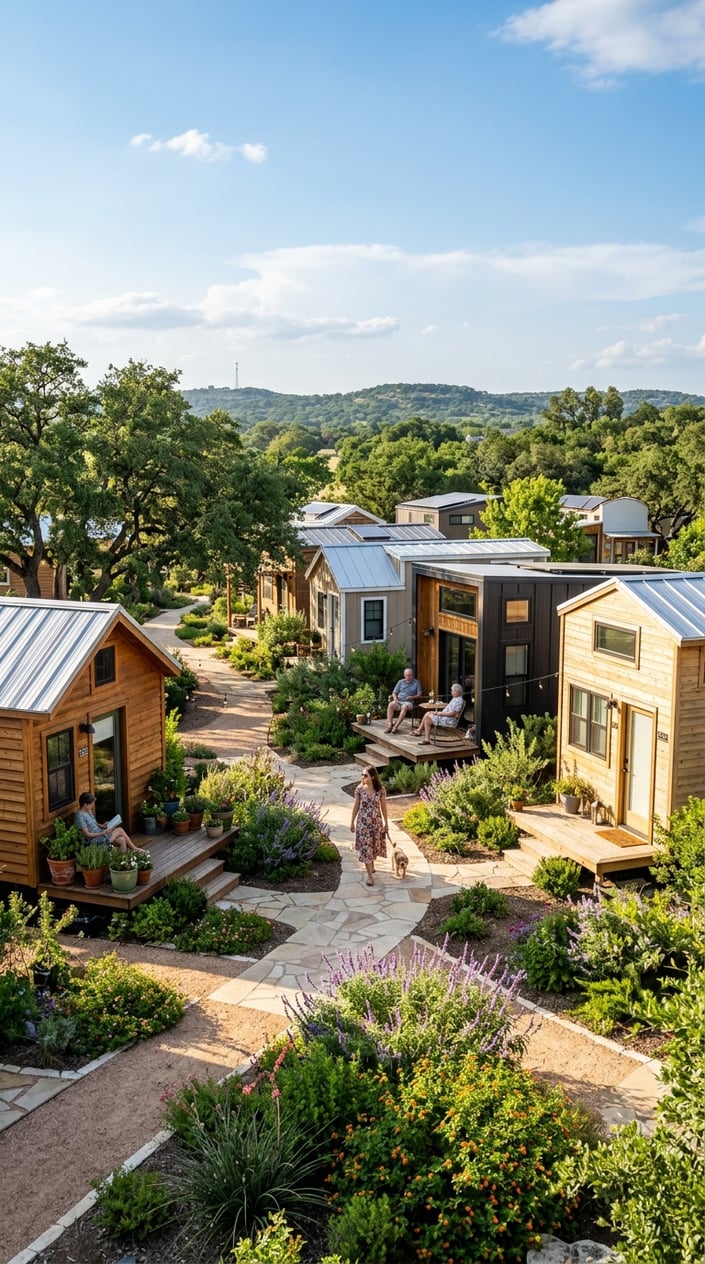
Cedar Park sits just northwest of Austin, making it a prime location for people who want tiny home living near the city. Several communities in this area offer options for those looking to downsize while staying close to urban amenities.
County Line Cottages is one notable community near Cedar Park. This 55+ community is located in the Texas Hill Country and offers a peaceful rural setting. The community is conveniently positioned near Liberty Hill, Cedar Park, Burnet, Marble Falls, and Georgetown.
Village Farm Austin is another option within reasonable distance of Cedar Park. This agrihood focuses on sustainable living and offers tiny homes with access to community amenities. The community includes plans for a general store, cafe, community gardens, and pocket parks. They also host weekly farmers markets every Saturday and other community events.
The area’s proximity to Cedar Park provides residents with access to local shops, restaurants, and outdoor recreation. People living in these communities can easily reach Cedar Park for daily needs while enjoying a quieter lifestyle.
Most tiny home communities near Cedar Park require either purchasing a tiny home or leasing a pad for an existing tiny home on wheels. Interested buyers should contact communities directly about availability. Some communities have waiting lists due to high demand for tiny home living in the Austin area.
The communities near Cedar Park offer different amenities and living arrangements. Potential residents should research each option to find the best fit for their needs and lifestyle preferences.
Tiny Home Communities Near Georgetown
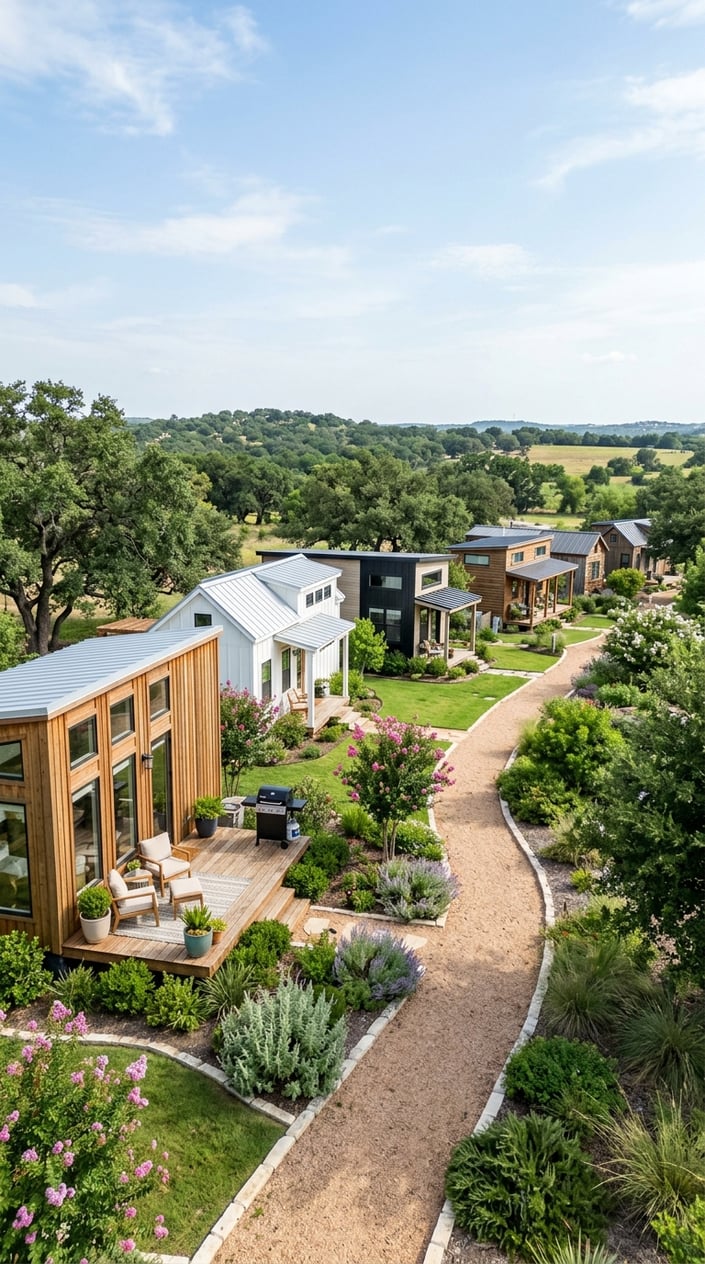
Georgetown sits about 30 miles north of Austin, and tiny home seekers in this area have limited but growing options. Most communities serving the Georgetown area are actually located closer to Austin proper.
Village Farm stands out as the nearest established option, positioned less than 8 miles east of downtown Austin. This puts it roughly 35-40 miles from Georgetown, making it accessible for those willing to commute. The community offers free-standing tiny homes on individual lots with a focus on sustainable living.
The drive from Georgetown to Village Farm takes approximately 45 minutes depending on traffic conditions. Residents get access to community amenities including gardens, pathways, and regular events like farmers markets.
Key Details for Georgetown Residents
| Feature | Information |
|---|---|
| Distance from Georgetown | ~35-40 miles |
| Drive Time | 45 minutes average |
| Home Type | Free-standing tiny homes |
| Community Style | Agrihood with sustainable focus |
Georgetown itself has fewer dedicated tiny home communities compared to Austin. The city’s zoning regulations and land availability create challenges for tiny home development. Some residents choose to place tiny homes on private land outside city limits.
Those seeking tiny home living near Georgetown should expect to expand their search radius. Austin-area communities remain the primary option for now. Village Farm continues to add phases, with phase 2 planning an additional 112 lots beyond the initial 40.
Tiny Home Communities Near Leander
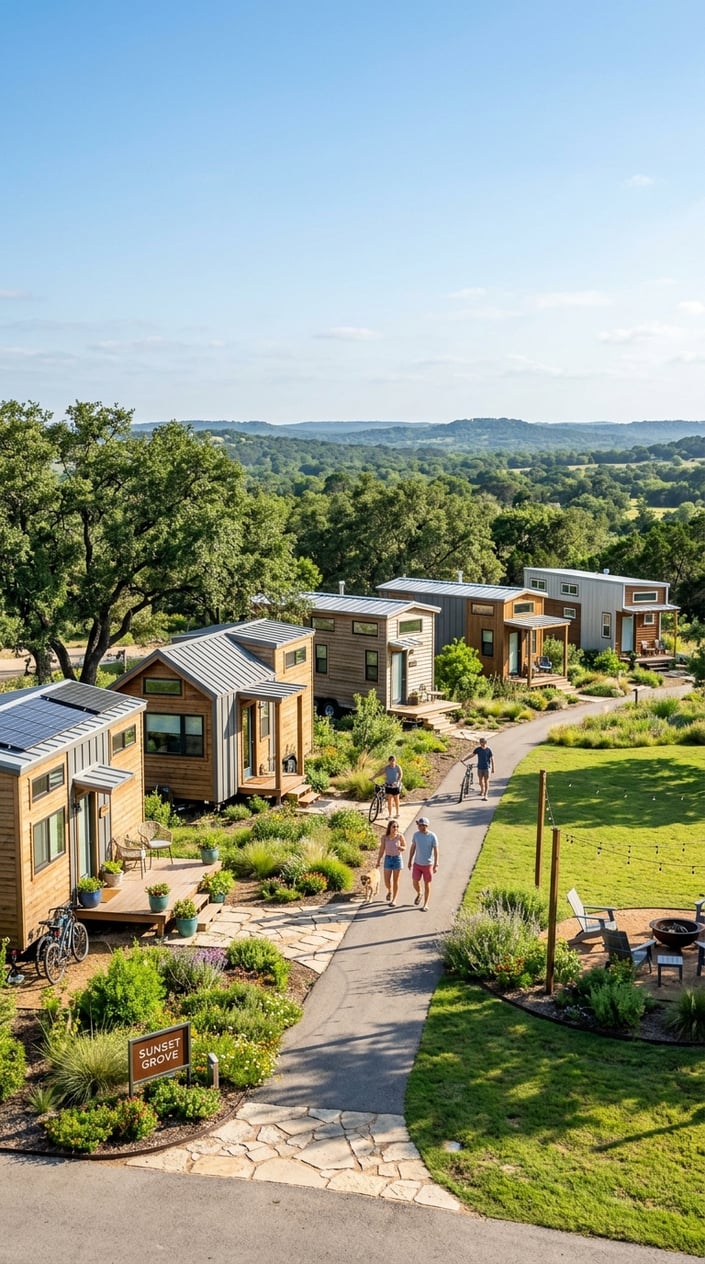
Leander sits in the northern part of the Austin metro area. Residents looking for tiny home communities in this region have limited options directly in Leander itself.
Village Farm Austin is the closest established tiny home community to Leander. It operates as Austin’s only dedicated tiny home village and agrihood. The community features homes starting at $89,000 with limited availability remaining.
Village Farm offers several amenities for residents:
- Community gardens
- Weekly farmers market on Saturdays
- Pop-up restaurant events at a 120-year-old Farm House
- Cooking classes
- Future plans for a general store and cafe
The community focuses on sustainable living practices. Residents share a connection through their interest in environmental responsibility and a green lifestyle.
Alternative Options
Those willing to travel slightly farther from Leander can explore other tiny home developments throughout the Austin area. Several communities exist across the region, though many maintain waiting lists with hundreds of applicants.
Some tiny home builders like Village Tiny Homes of Austin sell customized units that buyers can place on private land. This option works well for people who own property near Leander but cannot find an established community nearby.
The demand for tiny home communities near Leander continues to grow. Current inventory remains tight across the Austin metro area, making early research and quick decisions important for interested buyers.
Tiny Home Communities Near Kyle
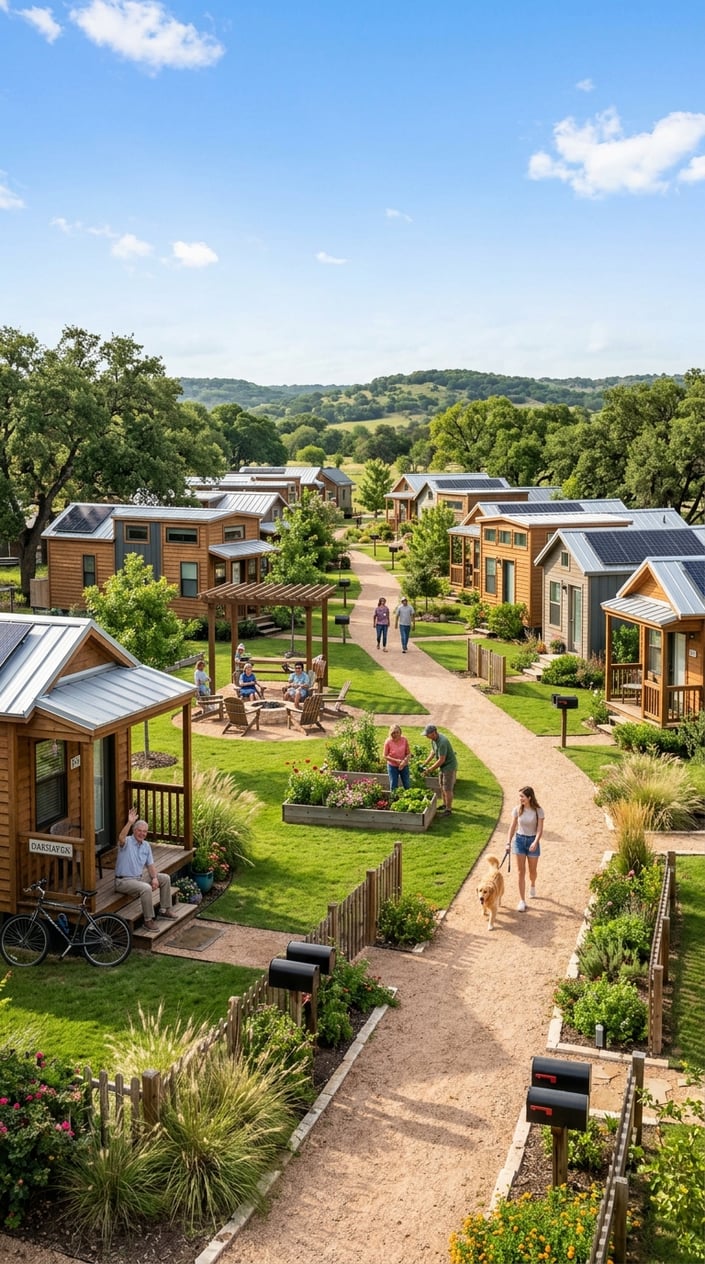
Kyle sits just south of Austin and offers easier access to tiny home living compared to the crowded city center. The area between Kyle and Austin has become a hot spot for people seeking affordable, sustainable housing options.
Village Farm stands as the most established tiny home community in this region. Located less than 8 miles east of downtown Austin, it places residents within easy reach of Kyle via Highway 183. The community features free-standing tiny homes built with sustainable design principles.
Village Farm offers several amenities that set it apart:
- Weekly farmers market every Saturday
- Community gardens and pocket parks
- On-site general store and cafe (planned)
- Pop-up restaurant events at a 120-year-old farmhouse
- Cooking classes and community gatherings
The community is close to selling out, with only a few homes remaining available. Residents pay for their tiny homes rather than renting, which creates long-term stability.
Other tiny home communities near Kyle remain in development stages or operate as private land-lease arrangements. The demand for tiny house living in the Kyle area has grown significantly due to rising apartment costs in Austin proper.
Most established communities near Kyle maintain waiting lists due to high demand. Some waiting lists exceed 500 applicants. The proximity to both Austin’s job market and Kyle’s more relaxed atmosphere makes this area attractive to remote workers and those seeking community-focused living.
Tiny Home Communities Near Buda
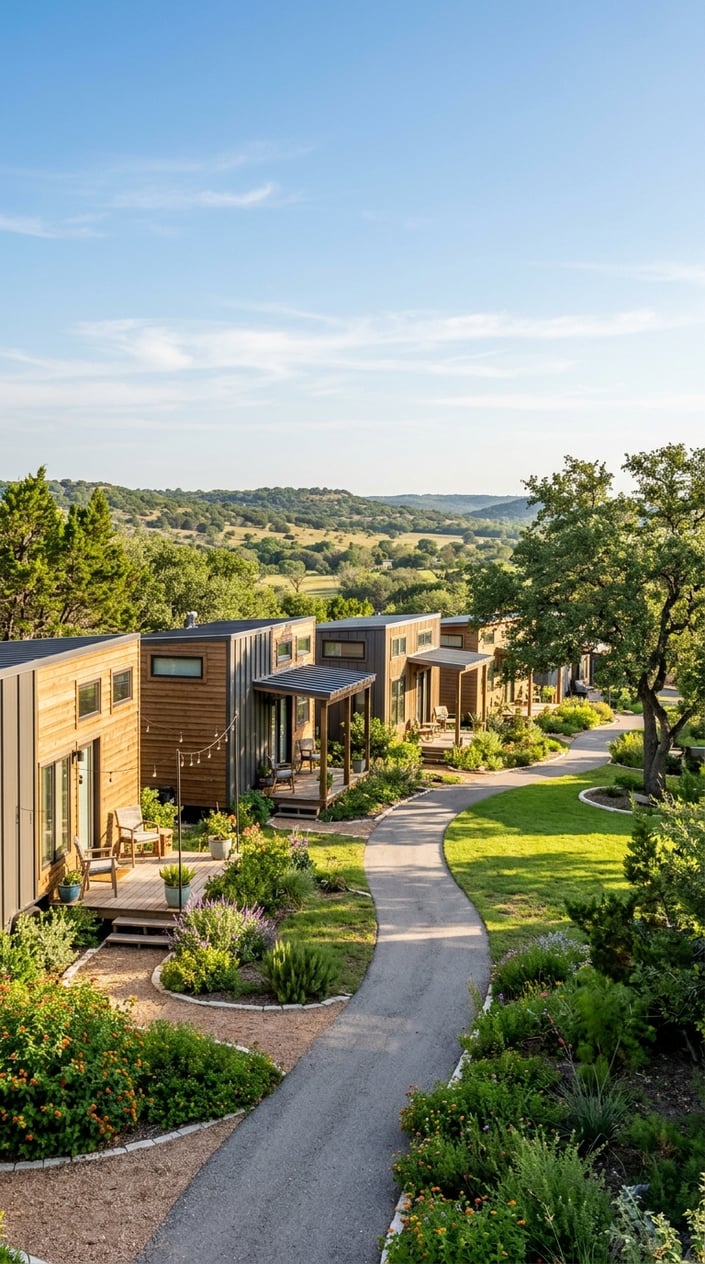
Buda sits just south of Austin and offers easy access to several tiny home communities. The town’s location makes it ideal for people who want a quieter setting while staying close to Austin’s amenities.
Village Farm stands out as the closest option to Buda residents. Located less than 8 miles east of downtown Austin, this community features freestanding tiny homes built with sustainable design principles. The community operates as an agrihood, which means it combines tiny home living with agricultural elements.
Village Farm offers several amenities for residents:
- Weekly farmers market every Saturday
- Community gardens
- General store (planned)
- Cafe (planned)
- Pocket parks
- Pop-up restaurant events at a 120-year-old farmhouse
The community is nearly sold out, with only a few homes remaining available. Those interested in joining should act quickly, as demand for tiny home communities in the Austin area continues to grow.
Buda’s proximity to Austin provides residents with the best of both worlds. They can enjoy small-town living while maintaining access to Austin’s job market, entertainment, and cultural offerings. The commute to downtown Austin typically takes less than 30 minutes.
Other tiny home communities near the Austin area may require longer drives from Buda. Mustang Ridge, located southeast of Austin, hosts Village Tiny Homes, which specializes in RV park model homes. The distance from Buda makes this a less convenient option for those specifically seeking a community near Buda.
Luxury Tiny Home Communities Near Austin
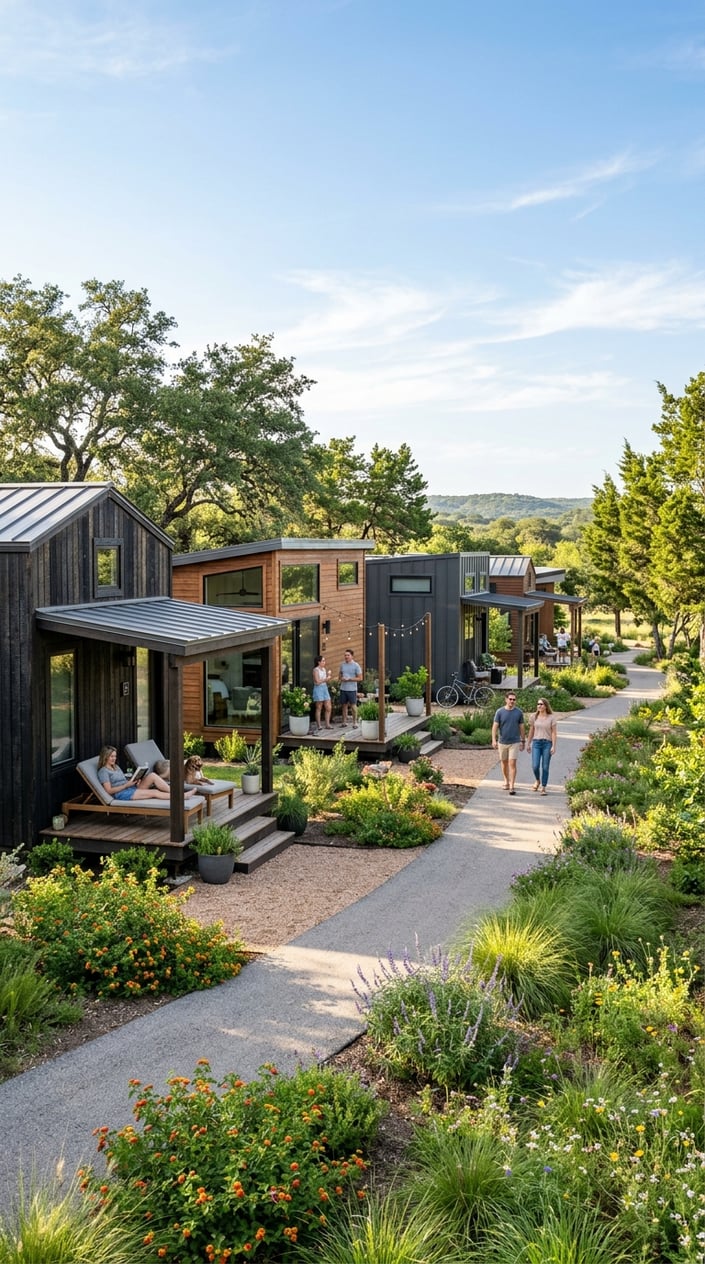
Luxury tiny home living near Austin combines high-end finishes with resort-style amenities and sustainable design. These communities offer premium features like gourmet kitchens, spa-inspired bathrooms, and access to shared spaces that rival traditional upscale neighborhoods.
Best Luxury Communities
Village Farm Austin stands out as the premier luxury agrihood in the area. This community features custom-designed tiny homes ranging from 300 to 500 square feet with premium finishes and modern appliances. The development sits on working farmland and offers residents a unique blend of sustainable living and upscale amenities.
The Magnolia model at Village Farm showcases what luxury tiny living looks like. It includes 399 square feet with one bedroom, two lofts, and space for up to six adults. The full kitchen comes equipped with high-end appliances that match what you’d find in a conventional luxury home.
Several communities in the greater Austin area accept custom-built luxury tiny homes. These developments require specific certifications but allow owners to bring their own high-end designs to the property.
Luxury Amenities You Can Expect
Luxury tiny home communities provide amenities that create a resort-like atmosphere. Community gathering spaces include cafes, general stores, and restored historic buildings that serve as event venues. Village Farm Austin features a 120-year-old farmhouse that hosts pop-up restaurant nights.
Outdoor amenities focus on relaxation and community building. Residents can access community gardens, pocket parks, and planned green spaces. Some developments include pool and jacuzzi facilities as part of their shared amenities packages.
Weekly events add value to community life. Farmers markets happen every Saturday at Village Farm, while cooking classes and social gatherings bring neighbors together regularly. These scheduled activities create a sense of belonging that goes beyond basic housing.
Average Luxury Tiny Home Prices
Luxury tiny homes in Austin communities typically start around $80,000 for basic models with premium finishes. Mid-range luxury options with custom features run between $100,000 and $150,000. Top-tier custom builds with the highest-end materials and finishes can exceed $200,000.
Land lease fees vary by community but generally range from $400 to $800 per month for luxury developments. These fees cover amenities, maintenance of common areas, and utilities. Some communities require purchase of the land plot separately, which adds to the total investment.
The total cost of luxury tiny home living includes the home purchase, land lease or lot purchase, and any required certifications or hookups. Most communities near Austin have limited availability, with waiting lists of 500 or more applicants for premium spots.
Affordable Tiny Home Communities in Austin
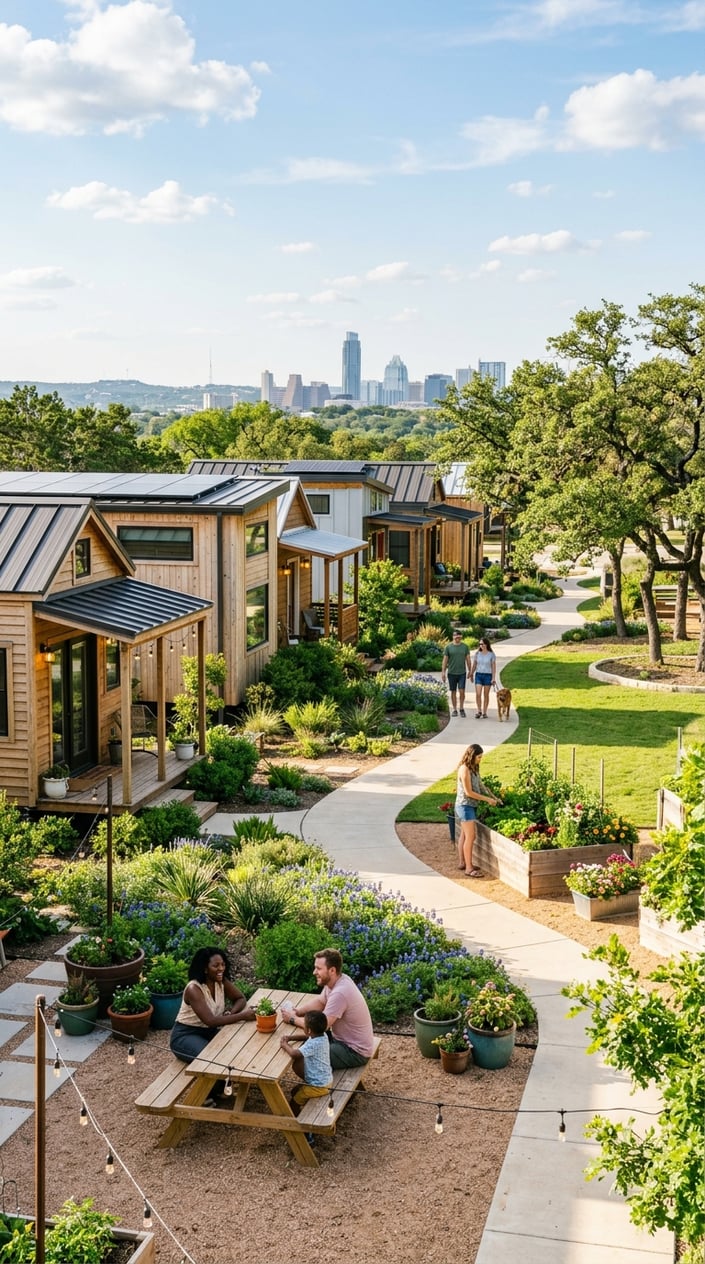
Austin’s tiny home communities offer various price points, with some providing entry-level options under $50,000 and monthly lot fees starting around $400-$600. Understanding the cost structure and available incentives helps buyers find communities that match their budget.
Cheapest Tiny Home Communities
Village Farm stands out as one of the most affordable established tiny home communities in Austin, located less than 8 miles east of downtown. The community offers low-cost, free-standing tiny homes on permanent foundations with full utilities included. Homes start in the lower price ranges compared to traditional Austin housing.
Several communities near Austin operate on a land-lease model, which reduces upfront costs significantly. These arrangements allow residents to own their tiny home while renting the land, eliminating the need to purchase property. This structure makes tiny home living accessible to buyers with smaller down payments.
New developments on the outskirts of Austin frequently offer lower prices than established communities closer to downtown. Buyers willing to accept a longer commute can find tiny homes priced $15,000-$25,000 less than equivalent options in central locations.
Lowest Monthly Lot Rent
Monthly lot rent in Austin tiny home communities typically ranges from $400 to $750, depending on location and included amenities. Communities farther from downtown generally charge $400-$500 per month, while those within 10 miles of the city center command $600-$750.
Lot rent usually covers water, sewage, trash collection, and common area maintenance. Some communities include additional services like internet, community event access, and shared facility use. Residents should verify which utilities are included before committing to a community.
Communities with fewer amenities offer the lowest monthly costs. Those seeking basic parking with hookups pay less than residents in communities with cafes, gardens, and event spaces.
Budget Buying Tips
Buyers should compare total ownership costs rather than just purchase price. A cheaper tiny home with high lot rent may cost more over time than a slightly more expensive home with lower monthly fees.
Purchasing a pre-owned tiny home within an existing community can save $20,000-$40,000 compared to buying new. Some communities maintain resale listings or waiting lists for interested buyers.
Key cost-saving strategies include:
- Buying during off-peak seasons (fall and winter)
- Choosing communities still under development
- Opting for smaller square footage (under 300 square feet)
- Selecting standard finishes instead of custom upgrades
Many communities offer flexible financing options or can connect buyers with tiny home-specific lenders. These financing arrangements often require lower down payments than traditional mortgages.
55+ Tiny Home Communities Near Austin
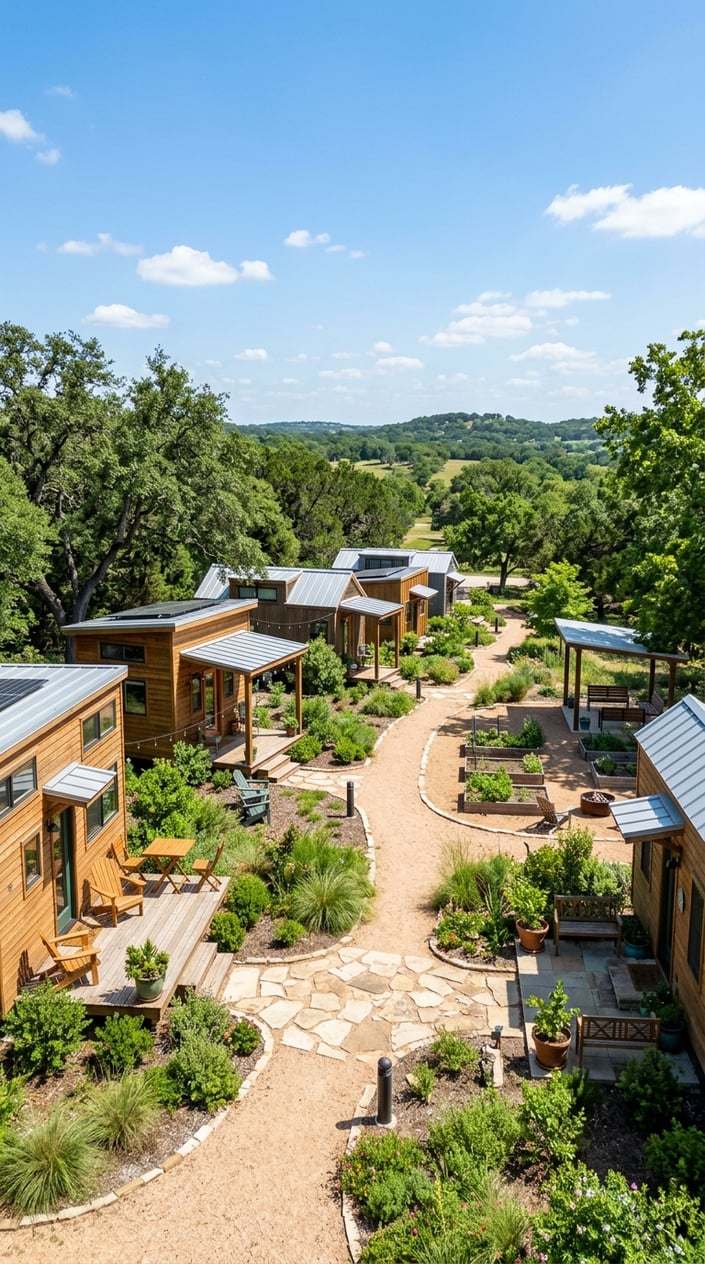
Age-restricted tiny home communities near Austin remain limited, with County Line Cottages standing as the primary dedicated option for seniors in the area. Most active adults find themselves exploring traditional 55+ communities or mixed-age tiny home villages that welcome older residents.
Best 55+ Communities
County Line Cottages operates as the only established 55+ tiny home community serving the Austin area. Located in the Texas Hill Country, this community sits within easy reach of Liberty Hill, Cedar Park, Burnet, Marble Falls, and Georgetown.
The community provides a peaceful rural setting while maintaining convenient access to medical facilities, shopping, and entertainment in nearby cities. Residents enjoy the quiet Hill Country environment without complete isolation from urban amenities.
Beyond County Line Cottages, active adults often consider mixed-age communities like Village Farm. Located less than 8 miles east of downtown Austin, Village Farm welcomes residents of all ages and focuses on sustainable living. The community offers weekly farmers markets, cooking classes, and social events that appeal to retirees seeking an active lifestyle.
Amenities for Active Adults
55+ tiny home communities prioritize low-maintenance living and social connection. County Line Cottages emphasizes its rural setting and proximity to multiple cities, allowing residents to access healthcare, cultural activities, and family visits easily.
Mixed-age communities like Village Farm provide amenities that suit active adults. The community features a 120-year-old Farm House for gatherings, weekly farmers markets every Saturday, and regular cooking classes. Community gardens and pocket parks encourage outdoor activity without demanding intensive physical labor.
Most age-friendly tiny home communities focus on single-level living, minimal yard maintenance, and walkable designs. These features help residents maintain independence while reducing physical demands associated with traditional homeownership.
Pet-Friendly Tiny Home Communities in Austin
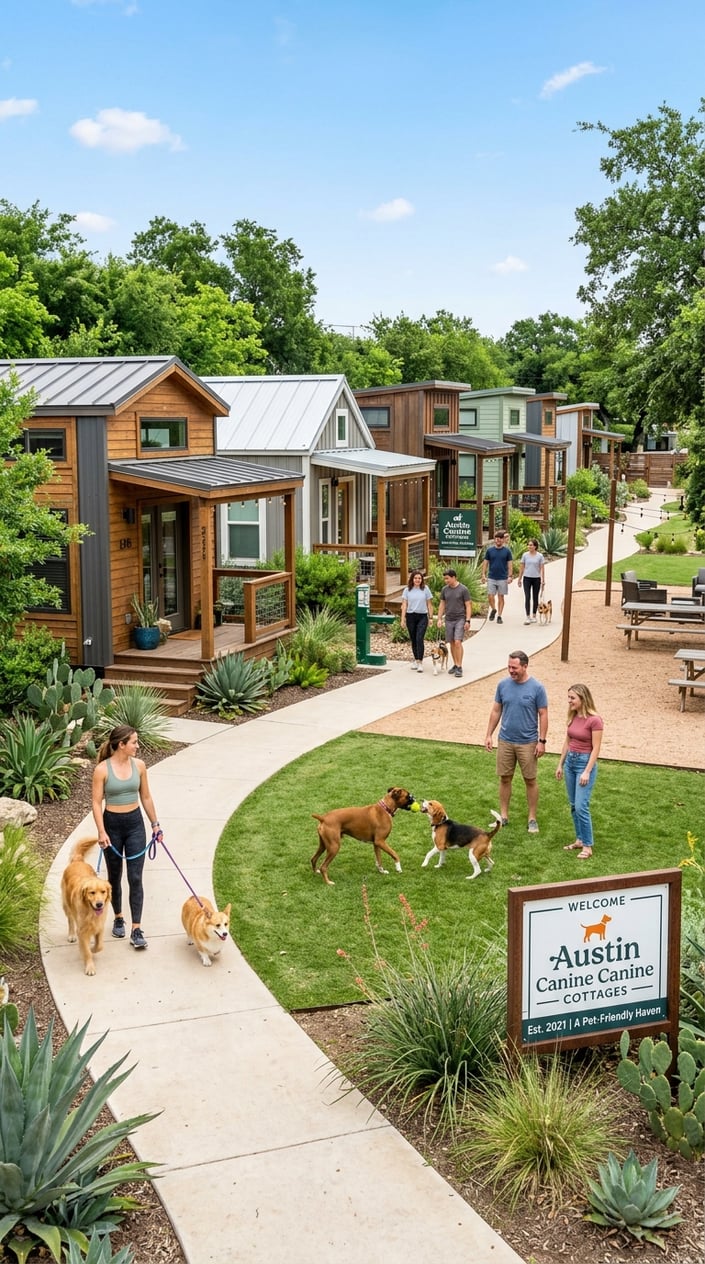
Several tiny home communities in Austin welcome pets, with amenities like dog parks and designated outdoor spaces. Pet policies vary between communities, including weight limits, breed restrictions, and monthly fees that residents need to review before moving in.
Communities with Dog Parks
Village Farm Austin stands out for its pet amenities, offering two dog parks for residents and their dogs. The community also features multiple trails where pet owners can walk and exercise their animals throughout the property.
The community sits less than 8 miles east of downtown Austin in the East Austin area. Pet owners have access to both on-site facilities and nearby outdoor spaces for their animals.
Other tiny home communities near Austin provide outdoor spaces for pets, though not all include dedicated dog parks. Communities typically offer common areas or trails where residents can walk their dogs. Prospective residents should ask about specific pet amenities during tours.
Pet Policies to Know
Most tiny home communities in Austin require pet deposits or monthly pet fees. These fees typically range from $25 to $50 per month per pet, though amounts vary by community.
Communities usually limit the number of pets per household. Many allow one or two pets, with some communities permitting additional animals for an extra fee.
Weight restrictions are common in pet-friendly communities. Some communities set limits at 25 pounds, while others allow larger dogs up to 50 or 75 pounds. Residents must provide proof of current vaccinations and spay/neuter documentation.
Pet owners need written approval before moving in with their animals. The application process often includes providing veterinary records and photos of the pet.
Breed Restrictions and Fees
Breed restrictions apply at many tiny home communities in Austin. Communities often prohibit dogs classified as aggressive breeds, including pit bulls, rottweilers, doberman pinschers, and German shepherds.
Some communities use insurance-based restriction lists that may include additional breeds. These restrictions exist due to liability insurance requirements that property owners must follow.
Pet deposits range from $200 to $500 per animal. This deposit is usually refundable if the pet causes no damage to the property. Non-refundable pet fees of $100 to $300 may also apply at move-in.
Monthly pet rent adds to the overall cost of living in these communities. Residents should budget for these recurring fees when calculating their housing expenses. Communities may waive certain fees for registered service animals as required by law.
Are Tiny Homes Legal in Austin?
Tiny homes are legal in Austin, but owners must follow specific zoning rules, building codes, and permit requirements that vary based on whether the home sits on a foundation or wheels. The city updated its land development code in 2023 to expand where residents can place and live in tiny homes.
Austin Tiny Home Laws
Austin distinguishes between tiny homes on wheels (THOWs) and those built on permanent foundations. The city requires all tiny homes to meet minimum safety standards and obtain proper permits before occupancy.
Tiny homes on wheels must have RVIA certification to qualify as legal dwellings. Without this certification, the city classifies them as recreational vehicles with limited residential use. Property owners can face fines if they allow uncertified units to be occupied full-time.
The city updated its regulations in September 2023 to allow more flexibility for tiny home placement. Residents can now live in certified tiny homes on private property outside of designated mobile home parks and campgrounds. This change aims to create more affordable housing options across Austin’s increasingly expensive real estate market.
Zoning Regulations
Most single-family residential zones in Austin now permit tiny homes as accessory dwelling units. The HOME Initiative allows property owners to build up to three units on single-family lots in many areas.
Tiny homes must comply with the same setback requirements as traditional structures. They need to maintain specific distances from property lines, typically 5-10 feet depending on the zone. The exact requirements vary by neighborhood and lot size.
Some historic districts and neighborhoods with special zoning overlays have additional restrictions. Property owners should check with the city’s Development Services Department to confirm their specific zone allows tiny homes before purchasing or building one.
Building Permit Requirements
All tiny homes in Austin require building permits regardless of size or foundation type. The permit process ensures structures meet International Residential Code standards adapted for smaller dwellings.
Foundation-based tiny homes follow the same permit process as traditional houses. Owners must submit detailed plans showing:
- Structural specifications
- Electrical systems
- Plumbing layouts
- HVAC designs
- Emergency egress windows
Tiny homes on wheels need RVIA certification instead of standard building permits. However, owners must still obtain permits for utility connections and any permanent improvements to the property where the tiny home sits.
ADU Rules
Accessory dwelling units provide the most straightforward path to legal tiny home ownership in Austin. ADUs can be detached structures on the same lot as a primary residence.
The city limits ADU size to 1,100 square feet, though most tiny homes fall well below this threshold. Only one ADU is allowed per lot unless the property qualifies under the HOME Initiative’s expanded rules.
Property owners must live in either the primary residence or the ADU. They cannot rent out both structures while living elsewhere. This owner-occupancy requirement helps prevent investment properties from reducing the available housing stock for residents.
ADUs do not require additional parking spaces under Austin’s current code. The city eliminated parking mandates in May 2023 to encourage more housing development.
Foundation Requirements
Tiny homes on permanent foundations must meet the same structural standards as traditional houses. They need concrete slab, pier and beam, or basement foundations approved by city inspectors.
The foundation type depends on soil conditions and flood zone status. Properties in flood-prone areas require elevated foundations that raise the living space above the base flood elevation.
Tiny homes on wheels avoid foundation requirements but lose some flexibility in placement. They must park on improved surfaces like gravel or concrete pads rather than bare ground. The wheels can remain attached, making the homes technically mobile even if owners never move them.
Utility Connections
Austin approved regulations in 2023 allowing tiny home owners to connect utilities to their properties. This change lets residents hook up water, electricity, and sewer services to certified tiny homes and RVs.
Water and sewer connections must meet city plumbing codes. Properties without access to municipal sewer lines can use septic systems if the lot size and soil conditions allow it. Some tiny home owners choose composting toilets to avoid septic system costs, though these still require proper permitting.
Electrical connections need inspection and approval from Austin Energy. The utility company requires a licensed electrician to install the service panel and metering equipment. Temporary power hookups used at RV parks do not meet code for permanent residences.
Cost of Living in an Austin Tiny Home Community
Living in an Austin tiny home community typically costs between $1,200 and $2,500 per month when factoring in all expenses. Monthly lot rent ranges from $350 to $1,050, while home purchase prices start around $50,000 for basic models and can exceed $150,000 for custom builds.
Tiny Home Purchase Costs
Tiny homes in Austin communities start at approximately $50,000 for basic models. Mid-range homes with standard amenities cost between $80,000 and $120,000. Custom-built tiny homes with premium features can reach $150,000 or more.
Design choices significantly impact the final price. Buyers who select custom layouts, high-end finishes, or eco-friendly materials pay more than those choosing standard options. The size of the home also affects cost, with most units ranging from 200 to 600 square feet.
Financing options include traditional mortgages, RV loans, or personal loans depending on the home’s classification. Some communities like Village Farm offer homes with mortgage payments starting at $1,430 per month. Buyers should budget an additional 10-20% for delivery, setup, and connection fees.
Monthly Lot Rent
Lot rent represents one of the largest ongoing expenses in tiny home communities. Monthly fees in Austin-area communities range from $350 to $1,050 based on location and amenities. Communities closer to downtown Austin charge higher rates than those in surrounding areas.
The lot rent typically covers land lease, water, sewer, and trash services. Some communities include internet and cable in their monthly fees. Premium communities with pools, clubhouses, and extensive shared spaces charge rates at the higher end of the spectrum.
Residents should confirm what utilities and services are included before signing a lease. Communities may increase lot rent annually, usually by 2-5% to account for inflation and rising costs.
Utility Costs
Electric bills for tiny homes average $40 to $100 per month depending on home size and energy efficiency. Homes with solar panels or high-efficiency appliances stay on the lower end of this range. Summer cooling costs in Texas can push bills higher during peak months.
Water and sewer are often included in lot rent. When these utilities are billed separately, residents typically pay $30 to $60 per month. Gas costs for homes with propane heating or cooking run $20 to $50 monthly.
Internet and phone services add another $50 to $100 to monthly expenses. Many residents bundle these services for better rates. Total utility costs outside of lot rent generally range from $110 to $250 per month.
Insurance Costs
Tiny home insurance costs $500 to $1,200 annually, or about $40 to $100 per month. The classification of the home affects insurance rates and options. Tiny homes on permanent foundations qualify for standard homeowners insurance, while mobile units require RV or specialized tiny home policies.
Coverage amounts depend on home value and contents. A $100,000 tiny home typically requires $600 to $800 in annual premiums. Liability coverage protects against accidents on the property.
Residents should get quotes from multiple insurance providers. Some companies specialize in tiny home coverage and offer better rates than traditional insurers.
HOA Fees
Some Austin tiny home communities charge HOA fees separate from lot rent. These fees range from $50 to $200 per month. The fees fund community maintenance, amenities, and shared space upkeep.
HOA fees may cover lawn care in common areas, community event planning, and facility maintenance. Communities with extensive amenities like pools, fitness centers, or community gardens charge higher fees. Not all tiny home communities have HOA fees, as some include these costs in the monthly lot rent.
Residents should review the HOA budget and bylaws before moving in. This helps avoid unexpected assessments or rule conflicts.
Property Taxes
Property tax obligations vary based on whether residents own their tiny home and land or lease the lot. Owners who lease land typically pay personal property taxes on the home itself, which cost $200 to $800 annually in the Austin area.
Homes classified as RVs may avoid property taxes altogether in some jurisdictions. Homes on permanent foundations in communities where residents own their lots face standard property tax rates. Travis County’s average effective property tax rate is approximately 1.8% of assessed value.
A $100,000 tiny home on owned land would incur roughly $1,800 in annual property taxes. Residents should check with their specific community and local tax assessor for exact obligations.
Sample Monthly Budget
| Expense Category | Low End | High End |
|---|---|---|
| Mortgage/Home Payment | $400 | $1,500 |
| Lot Rent | $350 | $1,050 |
| Utilities | $110 | $250 |
| Insurance | $40 | $100 |
| HOA Fees | $0 | $200 |
| Property Taxes | $15 | $65 |
| Total Monthly Cost | $915 | $3,165 |
Most residents in Austin tiny home communities spend between $1,200 and $2,000 monthly on housing costs. Individuals who own their homes outright eliminate mortgage payments, reducing monthly expenses to $500 to $1,500. Those financing premium tiny homes in communities near downtown Austin face costs at the higher end of the range.
Buying vs. Renting a Tiny Home Lot in Austin
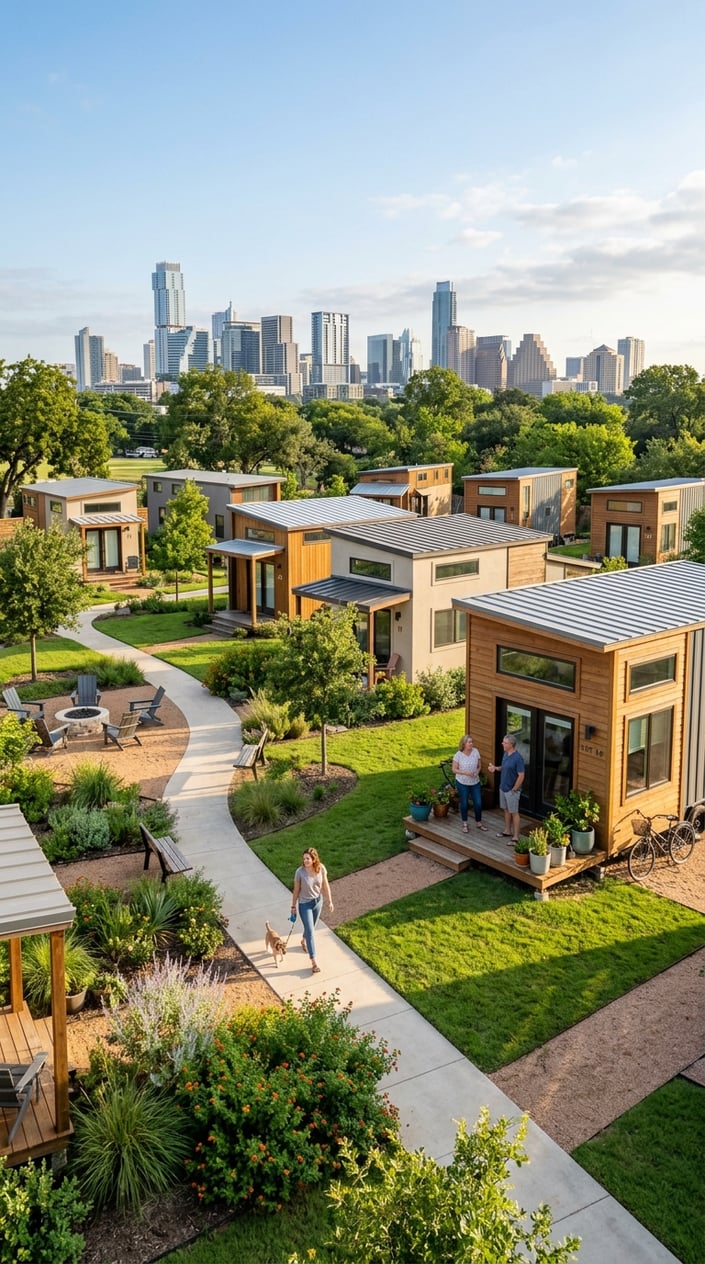
Austin offers both ownership and rental options for tiny home lots, with monthly lot fees ranging from $350 to $1,050 depending on the community. The choice between buying and renting depends on financial goals, lifestyle flexibility, and long-term plans.
Benefits of Buying
Owning a tiny home lot provides equity building and property appreciation potential. Village Farm in East Austin sells lots with 399 square foot tiny homes that owners can use for short-term rentals like Airbnb, creating an income stream. This setup works well for investors building rental portfolios.
Buyers gain more control over their property and living space. They can modify their lot within community guidelines and don’t face annual rent increases. Austin Telco Federal Credit Union offers traditional mortgage products for tiny houses on permanent foundations over 400 square feet if the property meets appraisal standards.
Property ownership also provides stability and roots in the community. Owners participate in community decisions and benefit from any property value increases in Austin’s growing market.
Benefits of Renting
Renting a tiny home lot requires less upfront investment than buying. Monthly lot fees cover amenities like pools, pocket parks, and clubhouses without the financial commitment of a mortgage or land purchase.
Flexibility is the main advantage of renting. Residents can relocate more easily if job opportunities arise or lifestyle needs change. This matters in Austin’s dynamic tech workforce environment where career mobility is common.
Renters avoid property taxes, maintenance costs, and homeowner association fees. The landlord handles infrastructure repairs and community upkeep. This arrangement appeals to people testing tiny home living before making a permanent commitment.
Which Option Is Best?
Buying makes sense for people planning to stay in Austin long-term or wanting to generate rental income. The investment pays off over time through equity and potential appreciation.
Renting suits those who value flexibility or aren’t ready for a large financial commitment. It works well for remote workers, young professionals, or anyone exploring Austin before settling permanently. People with changing income or uncertain job situations benefit from lower upfront costs and easier exit options.
Financial readiness plays a key role. Buyers need down payment funds and stable income for mortgage approval, while renters only need first month’s rent and a deposit.
Who Should Live in an Austin Tiny Home Community?
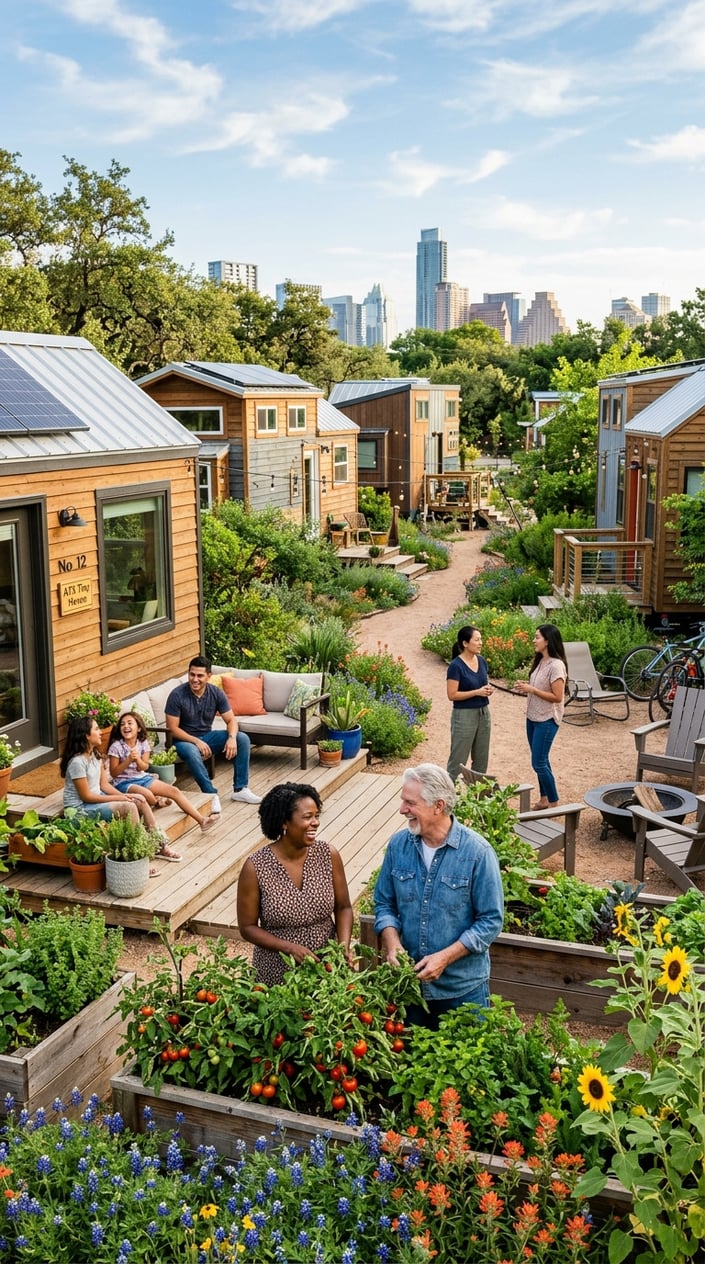
Austin’s tiny home communities attract people at different life stages who value affordability, sustainability, and intentional living. These spaces work best for those ready to embrace a simpler lifestyle while staying connected to the city’s culture and opportunities.
Young Professionals
Young professionals find tiny home communities like Village Farm offer an affordable entry point into Austin’s expensive housing market. Monthly costs typically run lower than traditional apartments, allowing residents to save money while living near downtown Austin.
The communities provide built-in networking opportunities with like-minded neighbors. Many young professionals work remotely or have flexible schedules that complement the tiny home lifestyle.
Austin’s tech sector and creative industries draw workers who prioritize experiences over square footage. Tiny home communities put them within miles of downtown while maintaining lower living costs. The shared amenities and community events create social connections without the time commitment of traditional homeownership maintenance.
Retirees
Retirees choose tiny homes to reduce housing costs and simplify daily maintenance responsibilities. The smaller space requires less cleaning, fewer repairs, and lower utility bills than traditional homes.
Many retirees appreciate the built-in community aspect of these neighborhoods. Regular farmers markets, shared gardens, and community gatherings provide social interaction without the isolation some experience in standard retirement housing.
The single-level layouts of most tiny homes eliminate stairs and reduce fall risks. Austin’s mild climate allows retirees to enjoy outdoor spaces year-round. Fixed monthly costs through land lease arrangements help retirees manage retirement budgets more predictably than traditional homeownership with variable maintenance expenses.
Families
Small families and couples planning for children find tiny homes teach valuable lessons about sustainability and mindful consumption. The compact spaces encourage families to spend more time outdoors and engage with community amenities.
Communities with shared gardens and green spaces give children safe play areas. The agrihood model at places like Village Farm exposes kids to food systems and environmental stewardship through hands-on experiences.
Families must carefully consider storage needs and privacy requirements. Tiny homes work best for families committed to minimalism and outdoor activities. The lower housing costs free up income for education savings, travel, and experiences. Some families use tiny homes as starter housing while building savings for larger properties later.
Digital Nomads
Digital nomads need reliable internet and flexible living arrangements that tiny home communities provide. The lower monthly costs allow nomads to maintain a home base in Austin while traveling periodically.
Short-term lease options at some communities accommodate the fluid lifestyle digital workers prefer. Austin’s position as a tech hub offers coworking spaces and networking events when nomads return home.
The community atmosphere provides social connection that balances the isolation of remote work. Nomads appreciate utilities and maintenance handled through community management while they travel. Austin’s airport access and cultural amenities make the city an ideal home base for those who work remotely but value urban experiences.
Downsizers
Empty nesters and individuals downsizing from larger homes transition well to tiny home communities. They gain financial freedom by reducing housing costs and eliminating excess possessions accumulated over years.
The downsizing process forces intentional decisions about belongings and priorities. Many downsizers discover they need far less space than they maintained in traditional homes.
Communities near Austin keep downsizers connected to city amenities while providing a quieter lifestyle. The land lease model eliminates yard maintenance and exterior upkeep that becomes burdensome with age. Downsizers often redirect savings from reduced housing costs toward travel, hobbies, or family support.
Investors
Investors view tiny homes as affordable real estate with lower entry costs than traditional properties. A completed tiny home at Village Farm costs significantly less than standard Austin real estate.
The land lease model means investors own the structure while paying monthly lot rent. This arrangement reduces the total capital required compared to purchasing land and home together.
Rental demand for unique housing options in Austin creates income potential. Investors must verify community rules about rentals and absentee ownership before purchasing. The growing tiny home movement suggests these properties may appreciate as demand increases. Investors should research zoning regulations and resale markets specific to tiny homes before committing capital.
How to Choose the Right Tiny Home Community in Austin
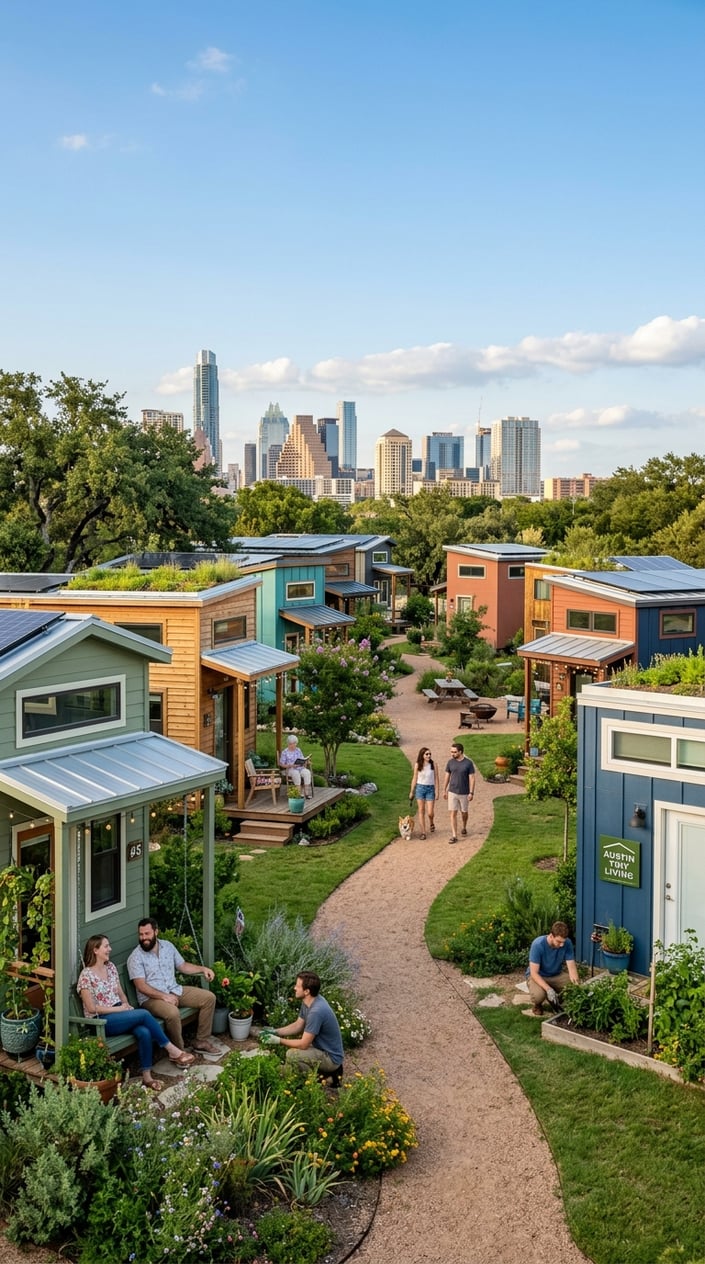
Finding the right tiny home community requires evaluating costs, amenities, rules, and practical considerations like internet access and commute times. Potential residents should visit communities in person and review policies on pets and lifestyle restrictions before making a commitment.
Set Your Budget
Monthly lot fees in Austin tiny home communities typically range from $350 to $1,050. These fees usually cover land rental, utilities, and access to shared spaces. Residents need to factor in additional costs like home insurance, maintenance, and any community-specific charges.
Some communities require upfront deposits or membership fees. Others may charge extra for premium lots with better views or larger spaces. Buyers should calculate their total monthly housing costs, including the tiny home payment if financed, before committing to a community.
Compare Community Amenities
Austin tiny home communities offer different amenities that affect daily living quality. Village Farm provides a general store, cafe, community kitchen, and pathways connecting homes. The community also hosts a weekly farmers market on Saturdays and pop-up restaurant events at their 120-year-old farmhouse.
Common amenities include:
- Community gardens for growing food
- Pocket parks for outdoor recreation
- Fire pits for gathering spaces
- Pools and clubhouses for socializing
- Cooking classes and educational programs
Residents should prioritize amenities they will actually use. A community garden matters more to gardening enthusiasts than those who prefer other activities.
Review Community Rules
Each tiny home community maintains specific rules about home size, design, and placement. Some communities require homes to meet certain aesthetic standards or size restrictions. Others limit the types of structures allowed on lots.
Rules often cover quiet hours, guest policies, and use of shared spaces. Communities may restrict commercial activities or short-term rentals. Residents need to confirm they can work from home if that applies to their situation.
Texas zoning regulations also play a role in what communities can permit. Legal compliance varies by location, so residents should verify their chosen community meets state requirements.
Check Internet Availability
Remote workers and digital nomads need reliable internet connections. Not all tiny home communities in the Austin area offer high-speed internet access. Some locations have limited options due to rural positioning.
Residents should ask about available internet providers and typical speeds before signing a lease. Cell phone signal strength also matters for those who rely on mobile hotspots. Testing connectivity during a visit provides the most accurate assessment of what to expect.
Understand Pet Policies
Pet policies vary significantly between communities. Some welcome all pets without restrictions. Others limit the number, size, or breed of animals allowed. A few communities may prohibit pets entirely.
Pet owners should get policy details in writing, including any pet deposits or monthly fees. Rules about leash requirements, designated pet areas, and cleanup expectations need clarification upfront. Communities with many pet owners often provide better amenities like dog parks or walking trails.
Evaluate Your Commute
Most established tiny home communities sit within 60 miles of downtown Austin. This distance affects daily commute times for those working in the city. Traffic patterns on major routes can add significant travel time during peak hours.
Residents should test drive their potential commute during typical work hours. Access to public transportation or carpool options may influence the decision. Those working remotely have more flexibility with location choices.
Proximity to essential services like grocery stores, healthcare facilities, and schools also matters. Communities farther from Austin may offer lower costs but require more planning for routine errands.
Visit Before You Buy
In-person visits reveal details that photos and descriptions cannot capture. Prospective residents should walk the property, observe the layout, and experience the atmosphere. Talking with current residents provides honest feedback about daily life in the community.
Visitors should attend community events like farmers markets or cooking classes to observe the social dynamics. The level of interaction between neighbors and overall vibe becomes clear during these gatherings. Some communities feel more active and social while others offer more privacy.
Checking the condition of shared spaces, roads, and infrastructure shows how well the community maintains its property. Visitors should note noise levels, lighting, and security features during both day and night visits.
Pros and Cons of Tiny Home Communities in Austin
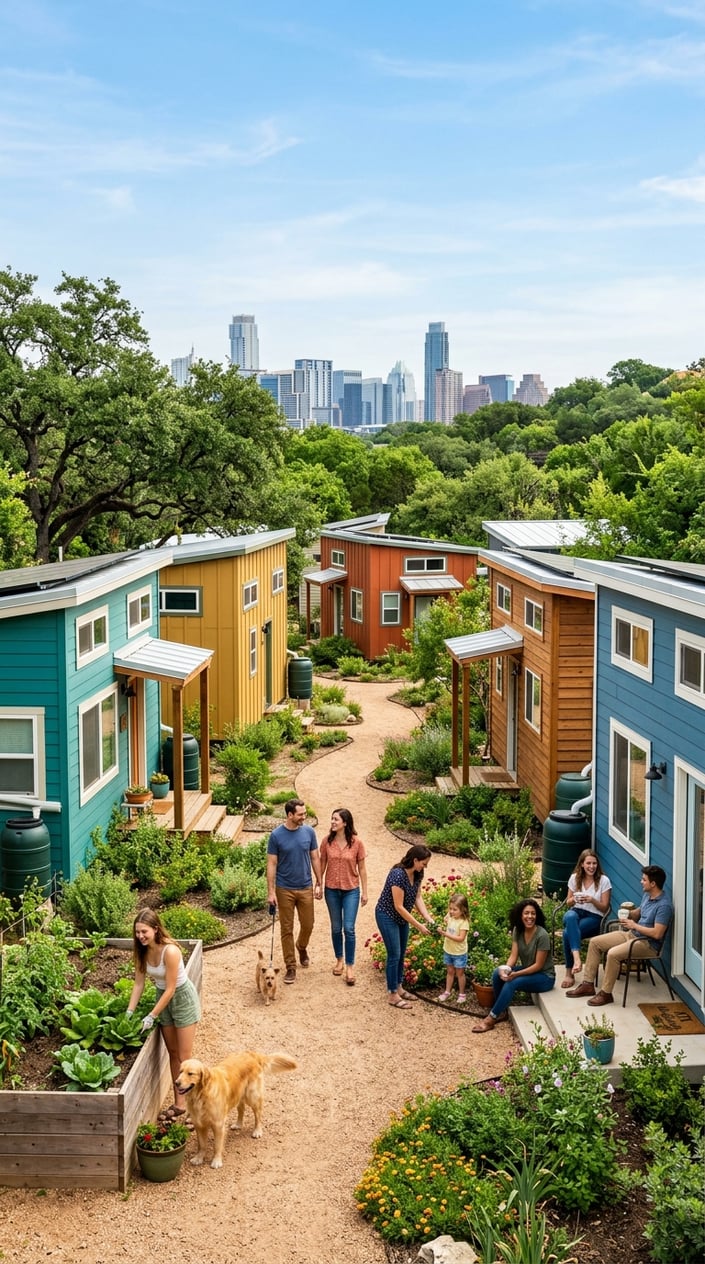
Tiny home communities in Austin offer distinct advantages like lower costs and built-in social networks, but they also come with limitations such as space constraints and restrictive community rules.
Pros
Lower Housing Costs Tiny homes in Austin typically cost between $50,000 and $150,000 to purchase, far less than traditional homes. Monthly rental options range from $800 to $1,500, making them accessible for people on tight budgets.
Reduced Monthly Expenses Smaller living spaces mean lower utility bills, property taxes, and maintenance costs. Many communities bundle utilities into rent, which simplifies budgeting and keeps expenses predictable.
Strong Community Connections Communities like Village Farm organize regular events, potlucks, and activities that help residents build meaningful relationships. Shared amenities such as community gardens, pools, dog parks, and coworking spaces create natural gathering points.
Sustainable Living Most tiny homes feature eco-friendly designs with solar panels, composting toilets, and rainwater harvesting systems. Communities often include organic farms and community-supported agriculture programs that reduce environmental impact.
Included Amenities Residents enjoy access to fitness centers, swimming pools, outdoor trails, and on-site maintenance services. Some communities offer general stores, cafes, and farmers markets right on the property.
Cons
Limited Space Tiny homes require significant downsizing of belongings and careful organization. Storage becomes a constant challenge, and hosting guests can be difficult or impossible.
Community Rules Most communities enforce specific guidelines about home modifications, pet policies, and visitor hours. These restrictions can feel limiting compared to traditional homeownership freedoms.
Long Wait Lists Popular communities face waiting lists exceeding 500 applicants due to high demand. This delays move-in timelines and limits immediate housing options.
Transportation Challenges Austin’s limited public transportation system can make daily commuting difficult without a personal vehicle. Some communities sit several miles from downtown, increasing travel time.
Zoning Restrictions Austin’s zoning regulations limit where tiny homes can be placed legally. Finding appropriate land or RV parks that allow permanent tiny home placement requires extensive research and often involves navigating complex permit requirements.
Final Verdict
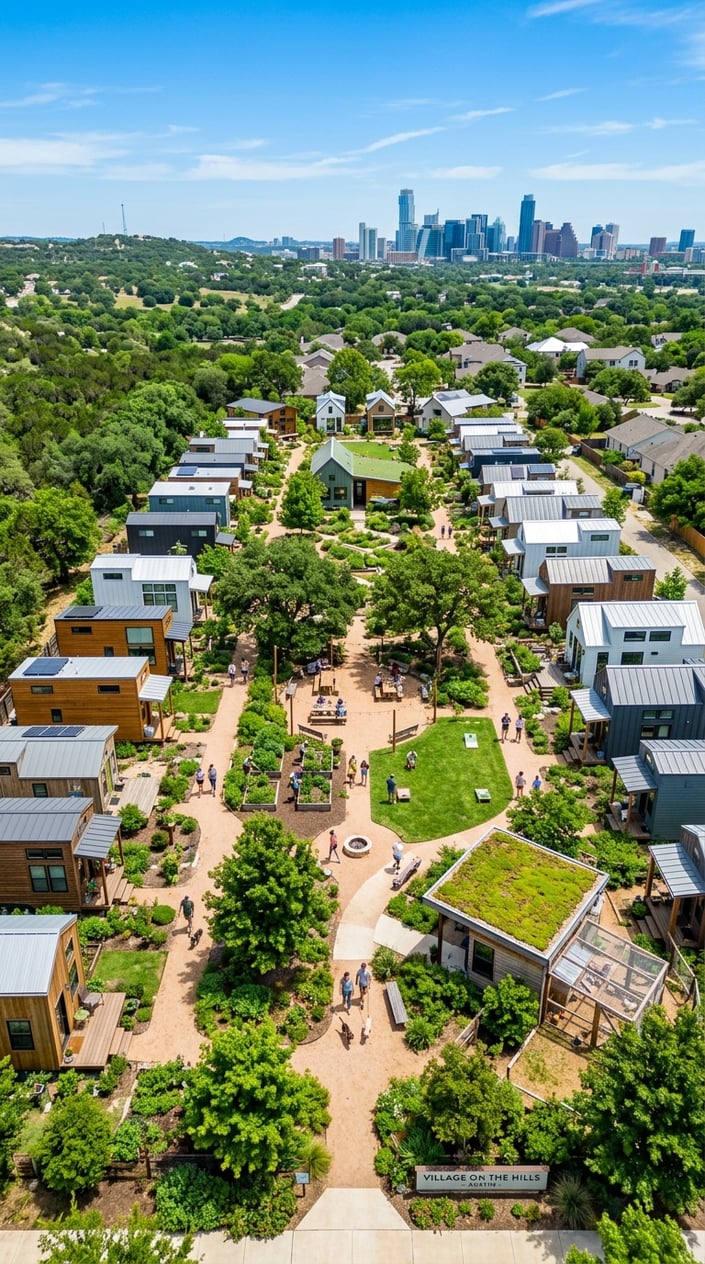
Austin’s tiny home communities offer distinct advantages depending on priorities like location, amenities, and budget. Village Farm stands out for its sustainable design and proximity to downtown, while other communities cater to different lifestyle preferences and financial considerations.
Best Overall Tiny Home Community
Village Farm earns the top position for its combination of location, sustainability features, and community amenities. Situated less than 8 miles east of downtown Austin, residents get easy access to the city while maintaining a quieter lifestyle. The agrihood model includes community gardens, a 120-year-old farmhouse, and weekly farmers markets every Saturday.
The development focuses on eco-friendly living with sustainable design principles built into each home. Planned amenities include a general store, cafe, and pocket parks that connect residents through shared green spaces. Regular events like pop-up restaurant nights and cooking classes create strong social bonds among neighbors.
Village Farm is nearing capacity, which speaks to its popularity and demand. The community offers freestanding tiny homes rather than RV-style units, giving residents more permanence and stability. This setup works well for people who want a true neighborhood feel instead of a temporary living arrangement.
Best Value for Money
Communities that allow bring-your-own tiny homes (BYOH) typically offer the best value for budget-conscious buyers. These communities require certification for the homes but eliminate the markup from developer-built units. Lot rental costs vary across the Austin area, with communities further from downtown generally charging lower monthly fees.
BYOH communities give residents control over their home’s design, size, and features. Buyers can purchase a tiny home from a local builder or construct one themselves, then secure a lot in an established community. This approach often saves $20,000 to $40,000 compared to purchasing a move-in-ready unit in a premium development.
Best Luxury Community
Premium tiny home communities near Austin provide resort-style amenities and upscale finishes. These developments include features like community pools, fitness centers, and maintained common areas. Homes in luxury communities often come with high-end appliances, custom cabinetry, and upgraded materials throughout.
The trade-off for luxury amenities comes through higher purchase prices and monthly fees. Some communities charge homeowners association dues that cover landscaping, security, and facility maintenance. Location also plays a role, with communities closer to Austin’s core commanding premium prices.
Who Should Consider Tiny Home Living in Austin
Tiny home communities suit people who value experiences over possessions and want to reduce their environmental footprint. The lifestyle works well for remote workers, retirees, and young professionals who spend more time outside their homes than inside. Austin’s mild winters and active outdoor culture support year-round tiny living.
People struggling with traditional housing costs find tiny homes offer a path to homeownership without massive debt. The reduced square footage forces intentional decisions about belongings and space usage. Those who thrive in close-knit communities benefit from the social aspects that many tiny home developments emphasize.
Families with children may find tiny homes challenging due to space constraints. The lifestyle requires significant downsizing, which doesn’t work for everyone’s needs or preferences.


