
Best Tiny Home Communities in San Antonio: A Complete Guide
Tiny homes are gaining ground in San Antonio, Texas, as more residents look for affordable, low-maintenance housing options. Interest has grown steadily across San Antonio, Texas, as buyers weigh smaller mortgages against the tradeoffs of compact living. This guide looks at the actual communities available in and near San Antonio, TX, along with their costs, rules, and who they tend to suit best.
For anyone comparing tiny home communities near San Antonio, the right choice depends less on the home itself and more on lot rent, commute distance, and community rules. This guide breaks down real pricing, amenities, and restrictions so readers can compare options side by side before making a decision.
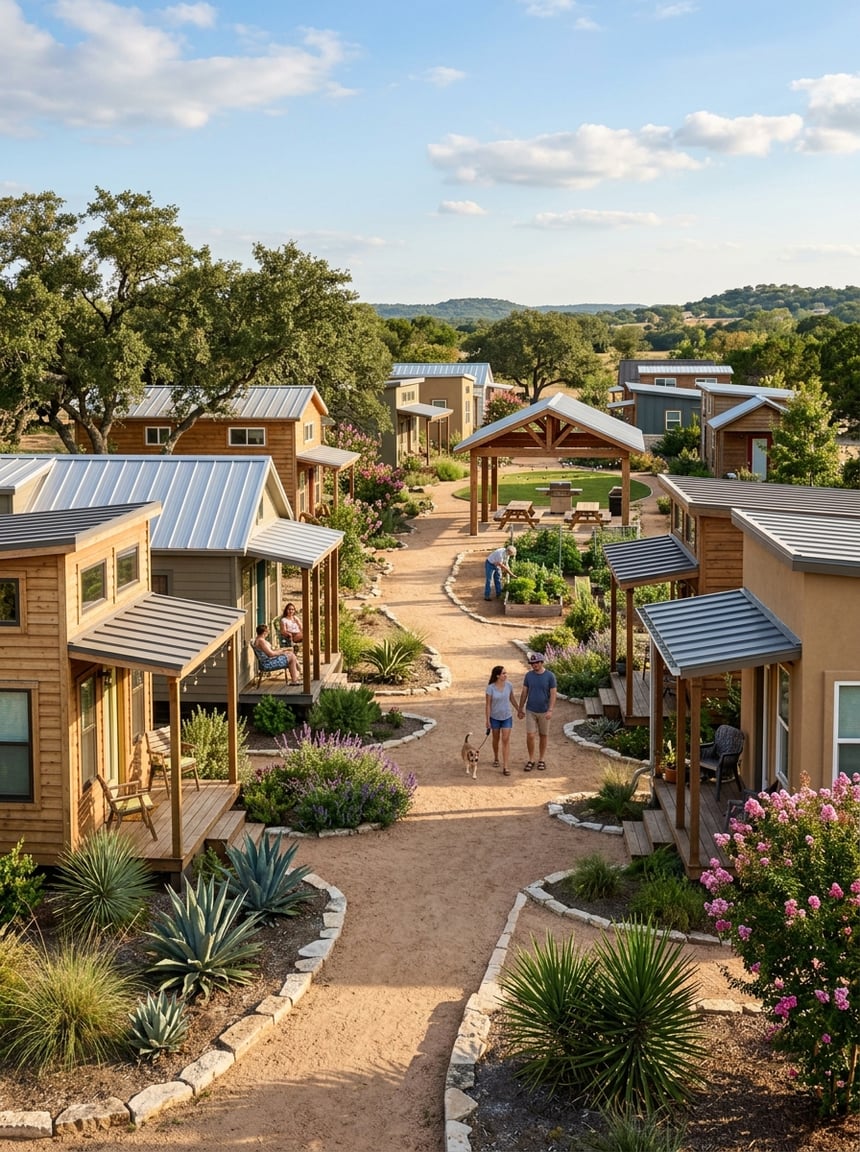
This guide covers established and emerging tiny home communities in San Antonio and the surrounding Hill Country region. It also breaks down monthly costs, rules, and lifestyle fit so readers can compare options realistically.
At a Glance
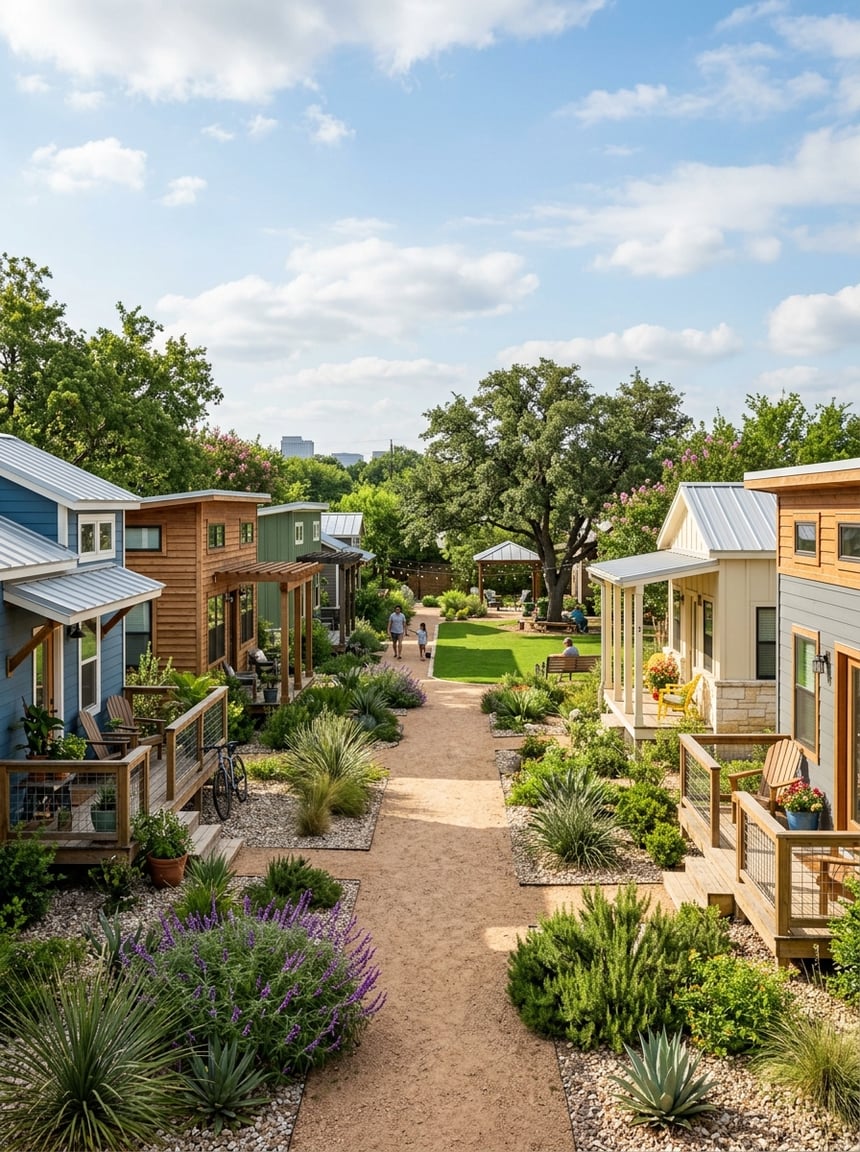
San Antonio has seen a steady rise in tiny homes over the past several years. Builders like Lennar have introduced masterplanned tiny home communities inside city limits, while smaller, independently run parks operate on the outskirts and in nearby Hill Country towns.
Most tiny home communities in this region fall into two categories. Some are built around ownership, where residents buy a small house and either own or lease the land beneath it. Others operate more like RV parks, where residents lease both the home and the lot.
Prices vary widely. Buyers can expect anywhere from the high $30,000s for a basic unit to well over $150,000 for a larger, fully finished home. Location, square footage, and amenities all affect the final price.
Key things to check before choosing a community:
- Whether the home is owned or leased
- Monthly lot rent and what it includes
- Distance to downtown San Antonio
- Age restrictions or pet policies
- Whether the community is zoned for full-time living
The following sections break down specific communities by location, starting with those inside San Antonio proper and moving outward toward Hill Country towns.
Comparison Table
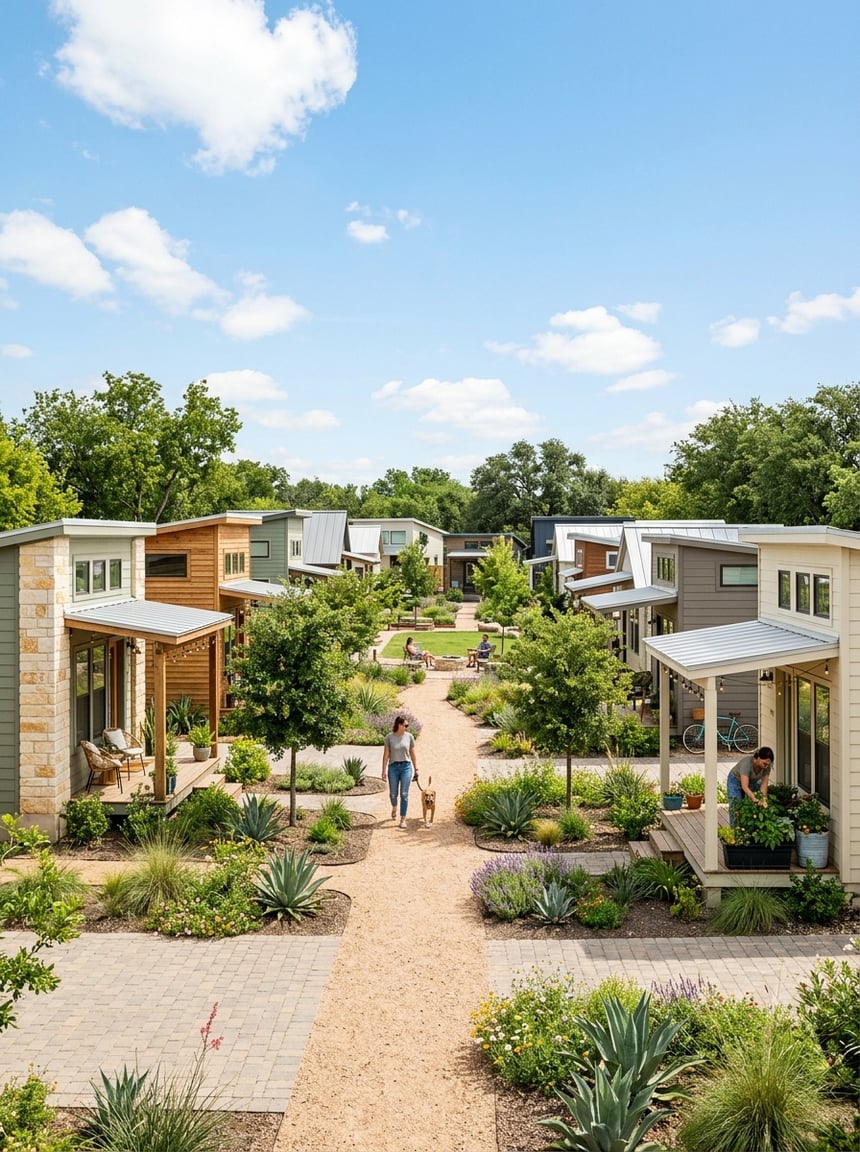
Comparing communities side by side makes it easier to see where the real cost differences lie. Purchase price only tells part of the story; lot rent, utilities, and commute time all affect the true monthly commitment.
| Community | Approx. Location | Price Range | Lot Rent (Monthly) | Best For |
|---|---|---|---|---|
| Elm Trails | San Antonio, TX | $150,000-$280,000 | Owned lot (HOA fees apply) | Families, first-time buyers |
| Towne Twin Village | San Antonio, TX | Rental model | Included in rent | Formerly unhoused individuals, supportive housing |
| New Braunfels Area Communities | Near New Braunfels | $60,000-$180,000 | $400-$700 | Remote workers, retirees |
| Boerne Area Communities | Near Boerne | $80,000-$200,000+ | $450-$800 | Buyers wanting Hill Country setting |
| Canyon Lake Area Communities | Near Canyon Lake | $50,000-$150,000 | $350-$650 | Vacation or seasonal use |
Some communities listed above focus on luxury tiny homes with upgraded finishes and larger square footage, while others keep costs low with basic construction and shared amenities. Readers should confirm current pricing directly with each community, since availability and rates change often.
Communities Near San Antonio
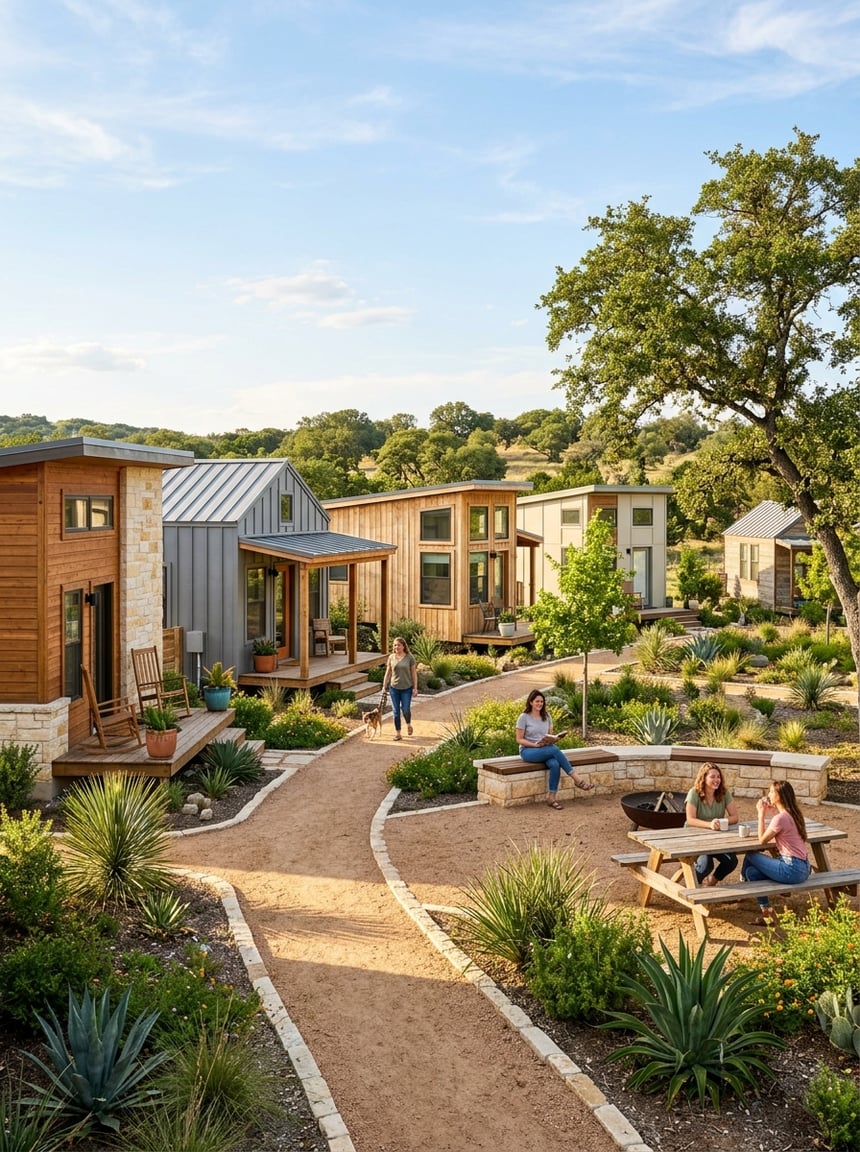
Bexar County has become a focal point for tiny house communities in San Antonio, with several masterplanned developments built specifically for tiny homes rather than converted RV parks. These communities typically follow local building codes more closely than rural RV parks, which matters for buyers planning to live full-time.
Tiny homes in San Antonio built by production builders like Lennar tend to look and function like small traditional houses, often between 400 and 900 square feet. They come with permanent foundations, full kitchens, and standard utility hookups. This differs from park model homes or cabins found in more rural Central Texas communities, which may have fewer code requirements and more flexible but less permanent construction.
Buyers considering a purchase inside Bexar County should ask whether the community is zoned for permanent residency or restricted to RV parks classification, since this affects financing options and long-term stability. Some lenders will not issue traditional mortgages for homes in RV-zoned communities.
Elm Trails Tiny Home Community
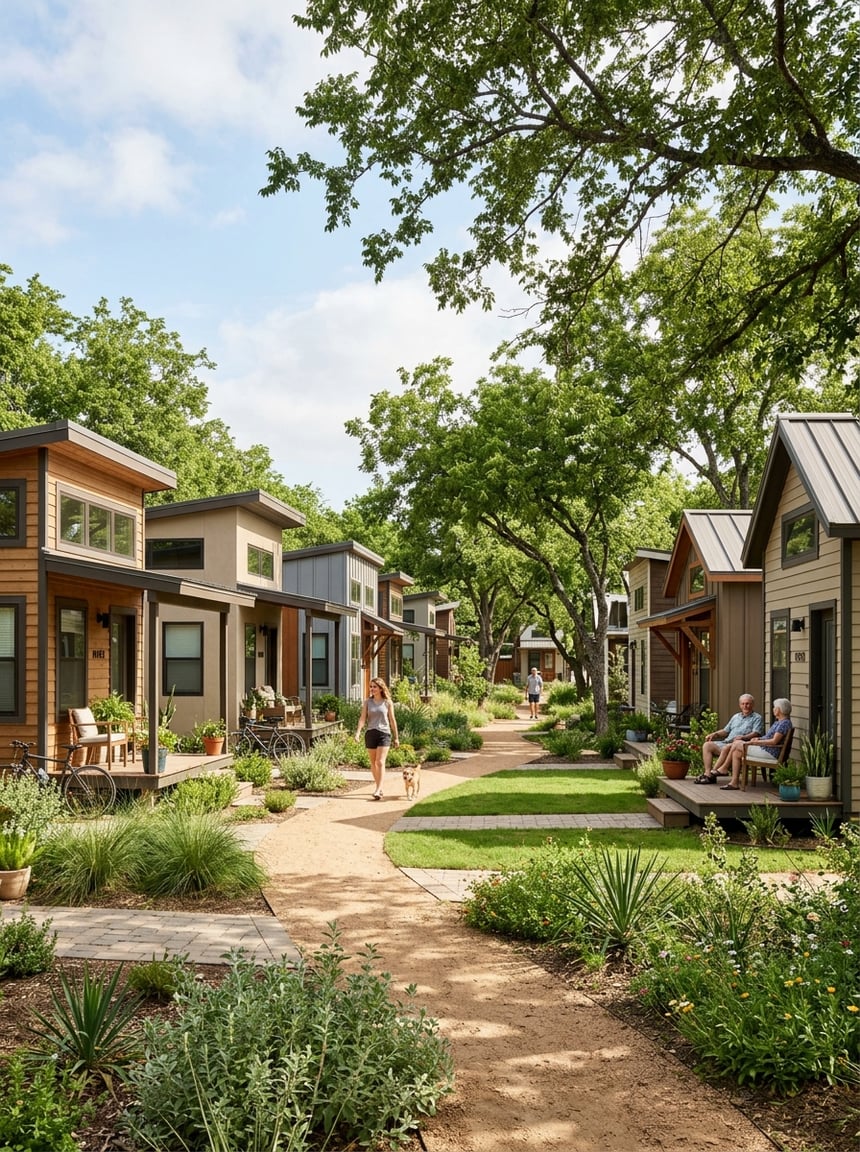
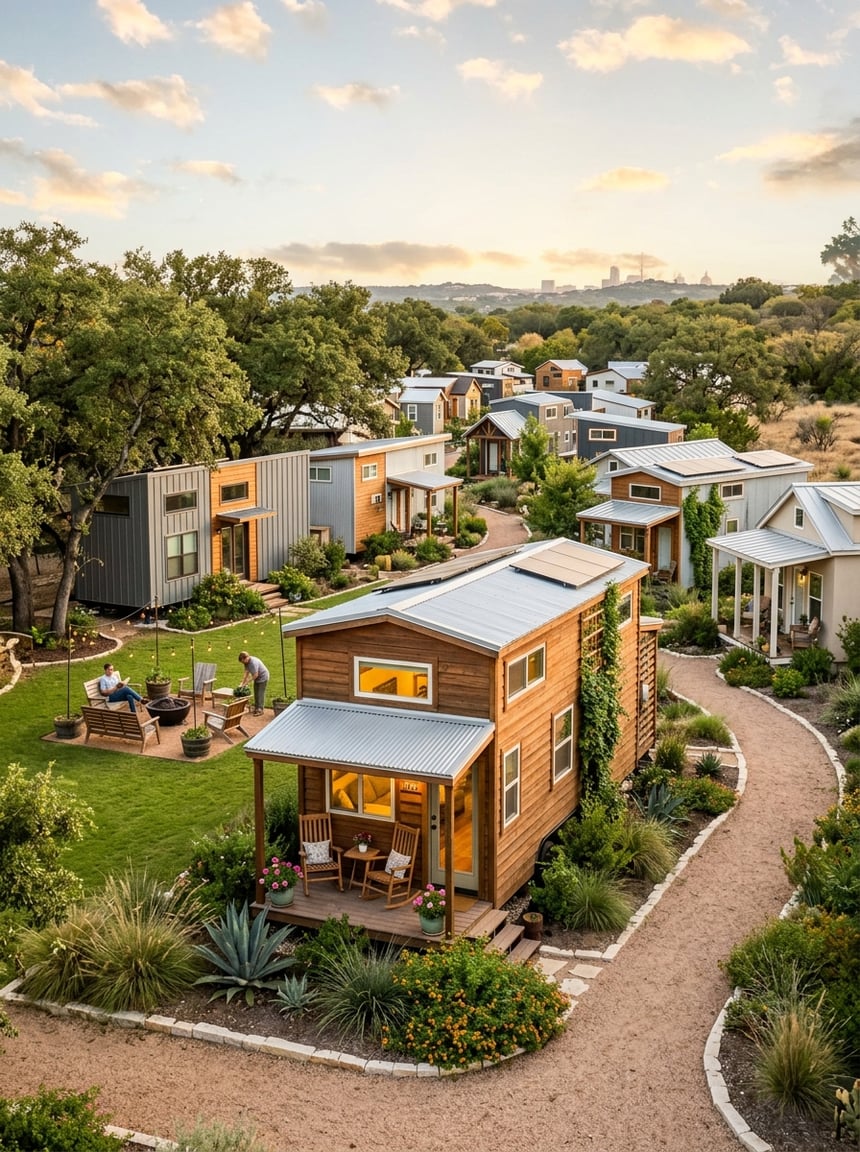
Elm Trails is a Lennar-built community located within San Antonio city limits. It offers small, single-family homes ranging from roughly 400 to 900 square feet, built with permanent foundations and standard utility connections.
Homes here typically sell in the $150,000 to $280,000 range, depending on size and finish level. Buyers own both the home and the land, which differs from lease-based tiny home parks elsewhere in the region.
The community includes shared green space and walking paths, along with an HOA that manages common areas. Monthly HOA fees apply on top of the mortgage payment, so buyers should factor that into their budget.
Elm Trails suits buyers who want a tiny home experience without leaving the conveniences of city living. It works well for remote workers and small families who want a shorter commute into San Antonio proper.
Towne Twin Village
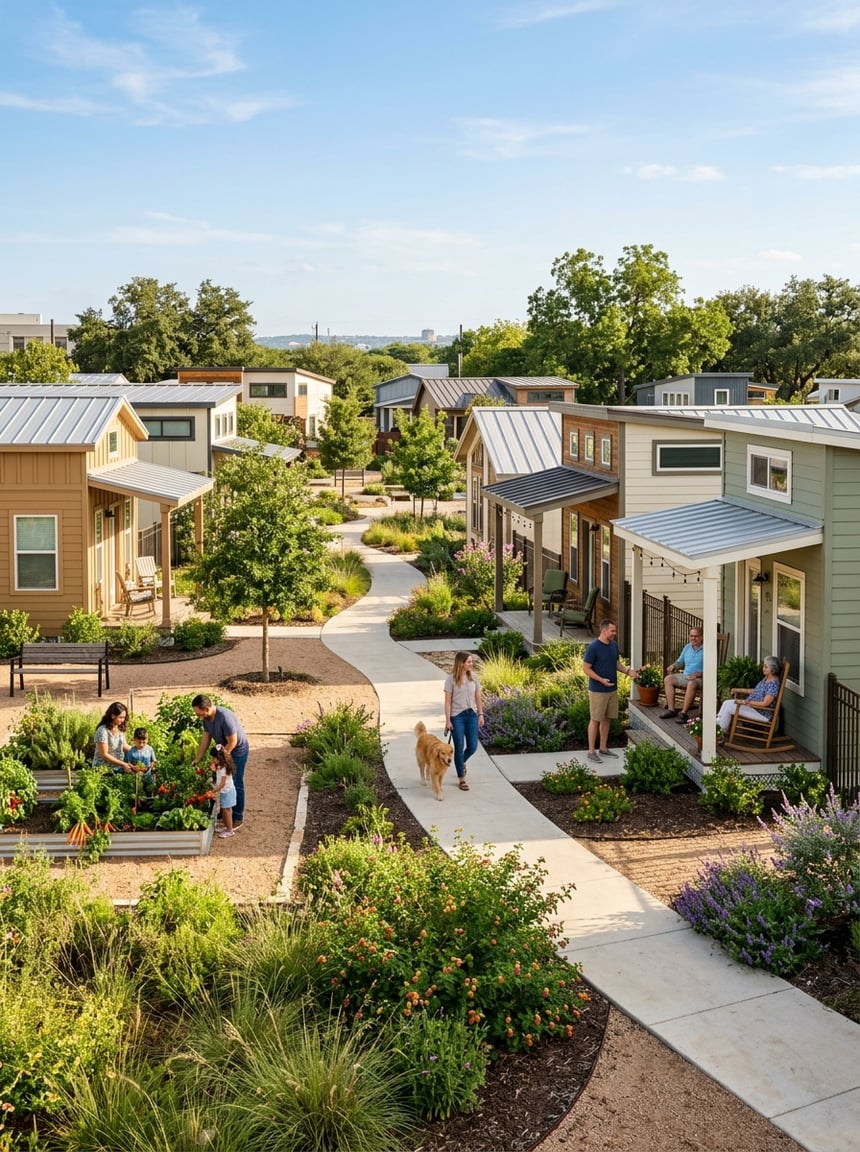
Towne Twin Village operates differently from most communities on this list. It functions as a supportive housing development aimed at individuals experiencing homelessness, particularly those over 50 or living with disabilities.
Residents rent small homes rather than purchase them, and on-site services include case management, medical support, and community meals. This model prioritizes stability and access to services over traditional homeownership.
Because of its mission-driven structure, Towne Twin Village is not a fit for buyers seeking equity or long-term investment. It serves a specific population and operates with eligibility requirements that differ from standard rental communities.
Anyone interested in Towne Twin Village should contact the organization directly to understand intake requirements, since it does not function like a typical open-market tiny home community.
Communities Near New Braunfels
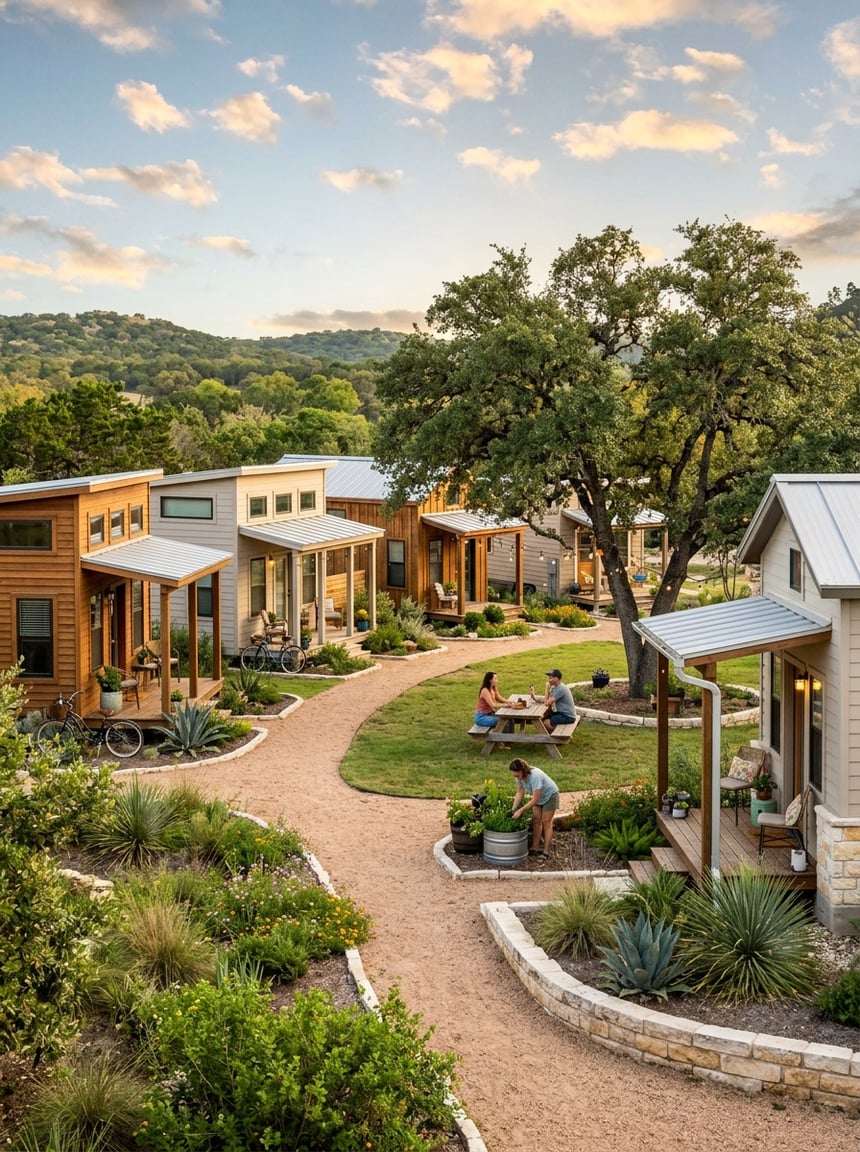
New Braunfels sits roughly 30 to 40 minutes from downtown San Antonio, making it a reasonable option for buyers who want a quieter setting without an extreme commute. Several tiny home and park model communities operate in this area, often blending permanent residents with vacation renters.
Prices in this area tend to run lower than inside San Antonio city limits, with many homes falling between $60,000 and $180,000. Lot rent typically ranges from $400 to $700 per month, though this varies based on amenities like pool access or clubhouse use.
One community worth reviewing directly is Village Farm, which has drawn attention for its blend of tiny home ownership and community-focused design. Readers considering this area can find a detailed breakdown in this Village Farm tiny home community review.
New Braunfels communities generally appeal to retirees and remote workers who want proximity to river activities and small-town amenities. Buyers should confirm whether the community allows full-time residency, since some parks cater primarily to seasonal or vacation use.
Communities Near Boerne
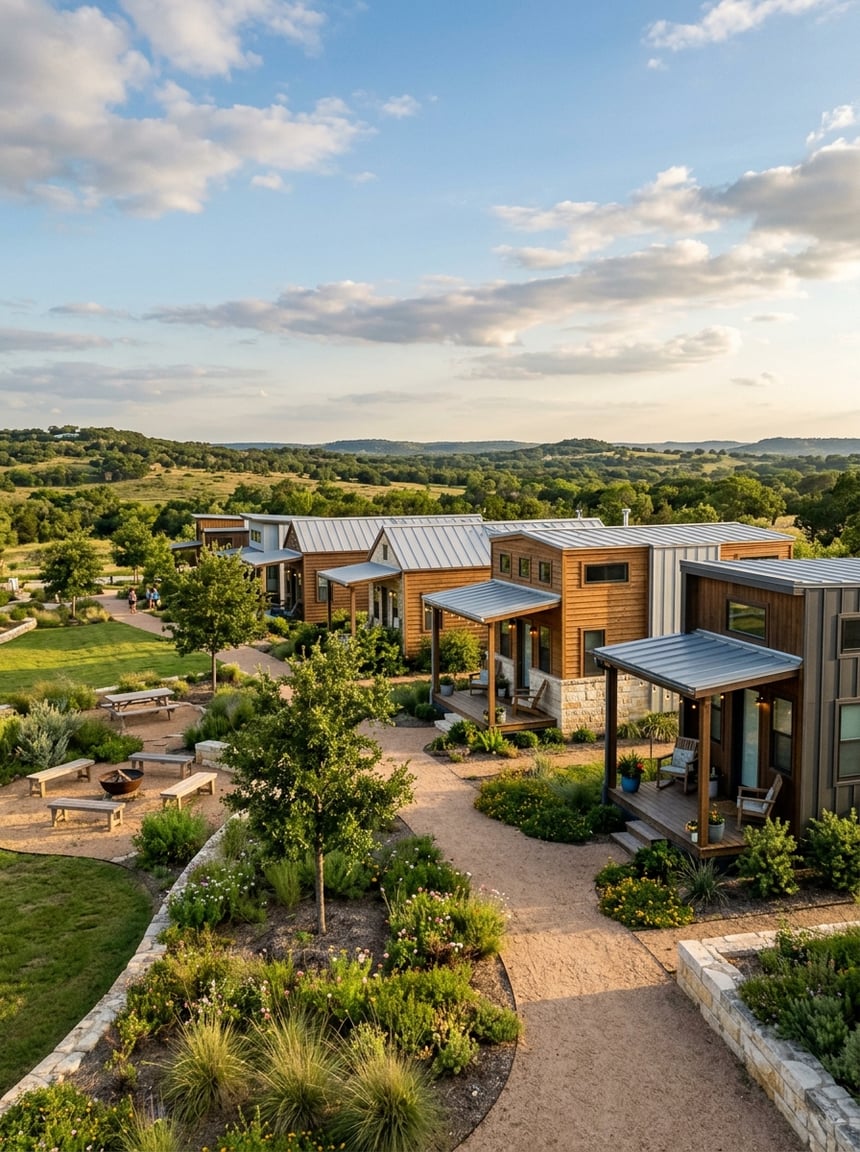
Boerne offers a Hill Country setting roughly 30 minutes northwest of San Antonio. Tiny home communities here tend to emphasize scenic lots, larger acreage per home, and quieter surroundings compared to city-based options.
Home prices in this area often range from $80,000 to $200,000 or more, particularly for units with upgraded finishes or larger square footage. Lot rent generally falls between $450 and $800 per month, reflecting the area’s higher land values.
Boerne communities tend to appeal to buyers seeking privacy and natural surroundings over walkable amenities. Many properties back up to greenbelt or wooded areas, which adds appeal for retirees and those wanting distance from city noise.
Commute times to downtown San Antonio can stretch to 45 minutes or more depending on traffic, which matters for anyone planning daily commutes. Buyers should also verify whether short-term rentals are permitted, since some Boerne-area HOAs restrict this to protect residential character.
Communities Near Canyon Lake
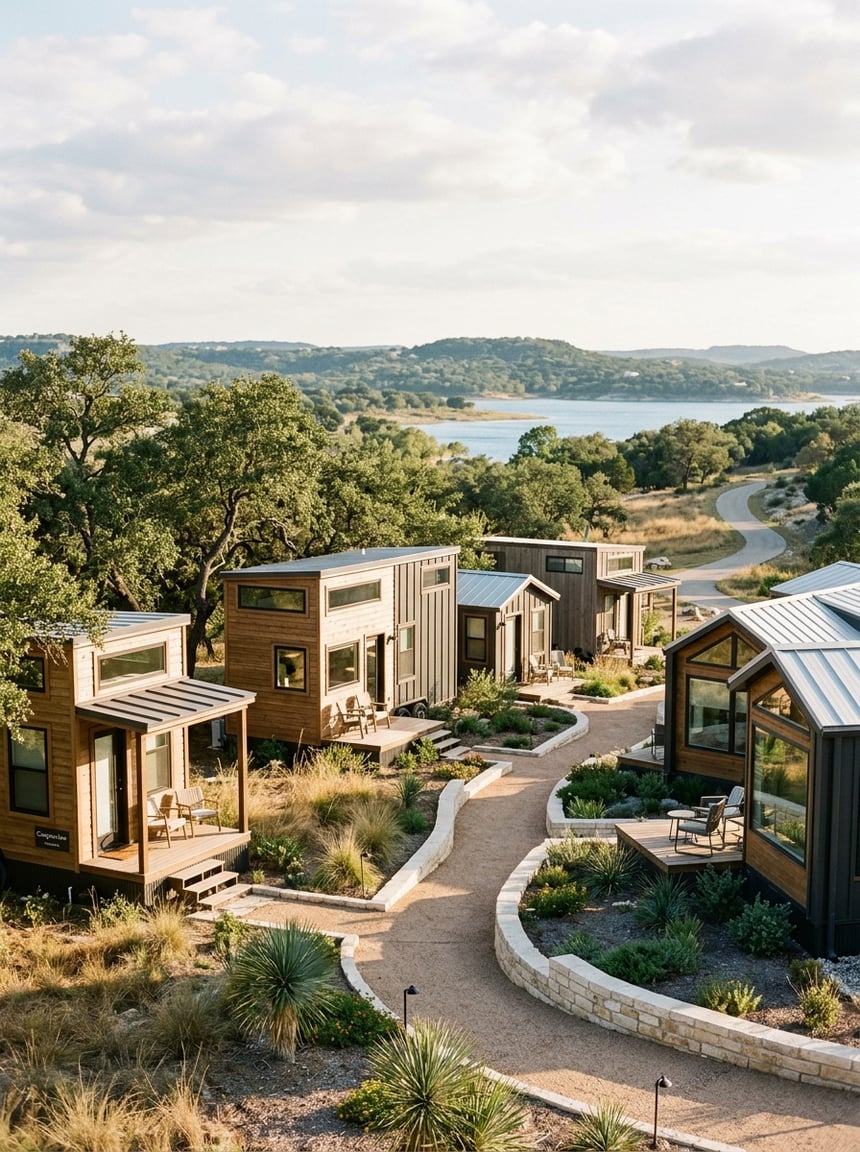
Canyon Lake sits roughly 45 minutes to an hour from downtown San Antonio, making it better suited to vacation use or full-time retirees rather than daily commuters. Several communities here combine tiny homes with RV sites, catering to a mix of seasonal visitors and permanent residents.
Prices tend to be lower than in Boerne or New Braunfels, often ranging from $50,000 to $150,000. Lot rent typically falls between $350 and $650 monthly, though lakefront or lake-view lots can command higher rates.
Many communities near Canyon Lake emphasize outdoor recreation, with proximity to boating, fishing, and hiking. This makes the area attractive for buyers prioritizing lifestyle over commute convenience.
Buyers should confirm zoning status before purchasing, since some lakeside communities restrict full-time occupancy to protect vacation rental income for other owners. Flood zone status is also worth verifying given the area’s proximity to the lake and river system.
Other Communities Worth Considering
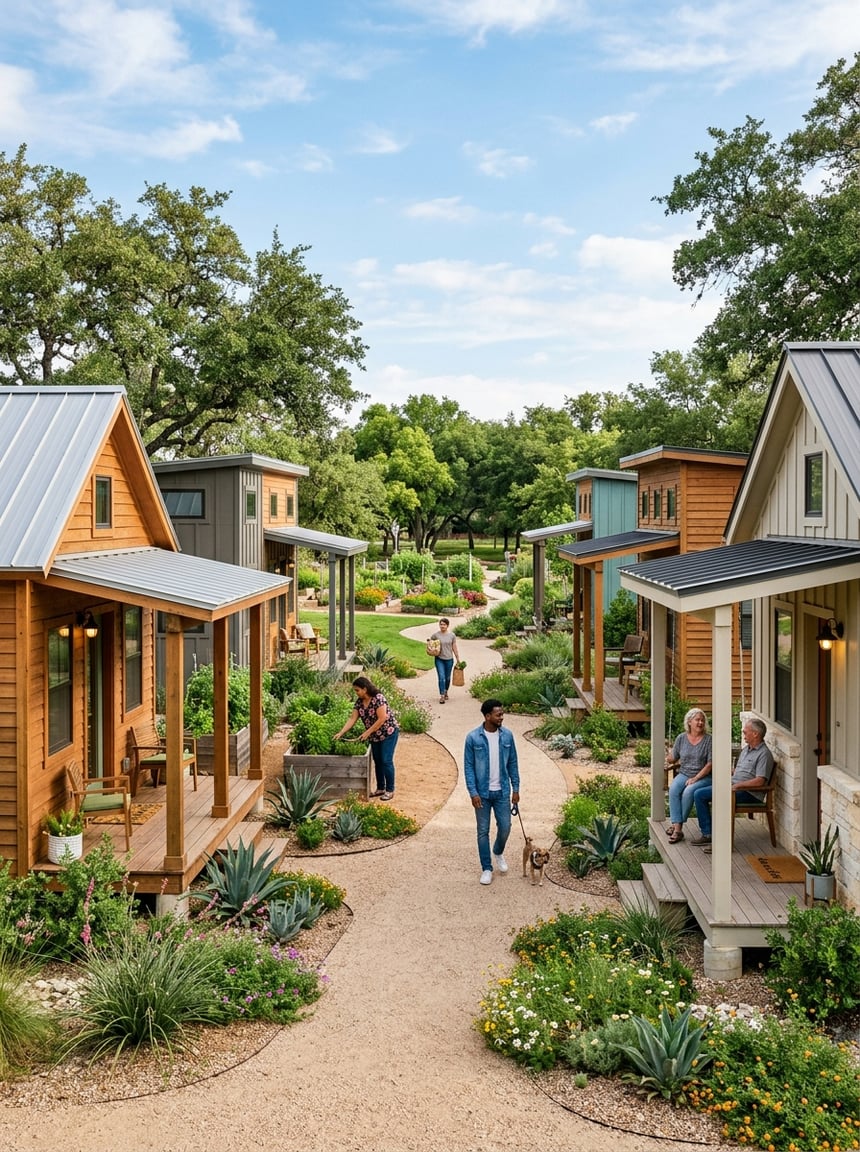
A few additional communities outside the immediate San Antonio area are worth a brief mention, even though they sit further afield. These options may suit buyers willing to expand their search radius for lower prices or specific amenities.
Liberty Tiny Village, located further north, has drawn interest for its straightforward pricing and amenity package. Readers can review specifics in this Liberty Tiny Village amenities guide before deciding if the distance works for their needs.
Lake Dallas Tiny Home Village sits well outside the San Antonio region but appears frequently in statewide comparisons. Those researching Texas-wide options may find it useful to read this Lake Dallas tiny home village review for context on pricing and rules.
For a broader look at sustainable-focused developments across the state, this guide to top tiny home communities in Texas for sustainable living offers additional comparison points. It highlights communities built with energy efficiency and smaller environmental footprints in mind, which may matter for buyers prioritizing long-term utility savings over proximity to San Antonio.
Cost of Living
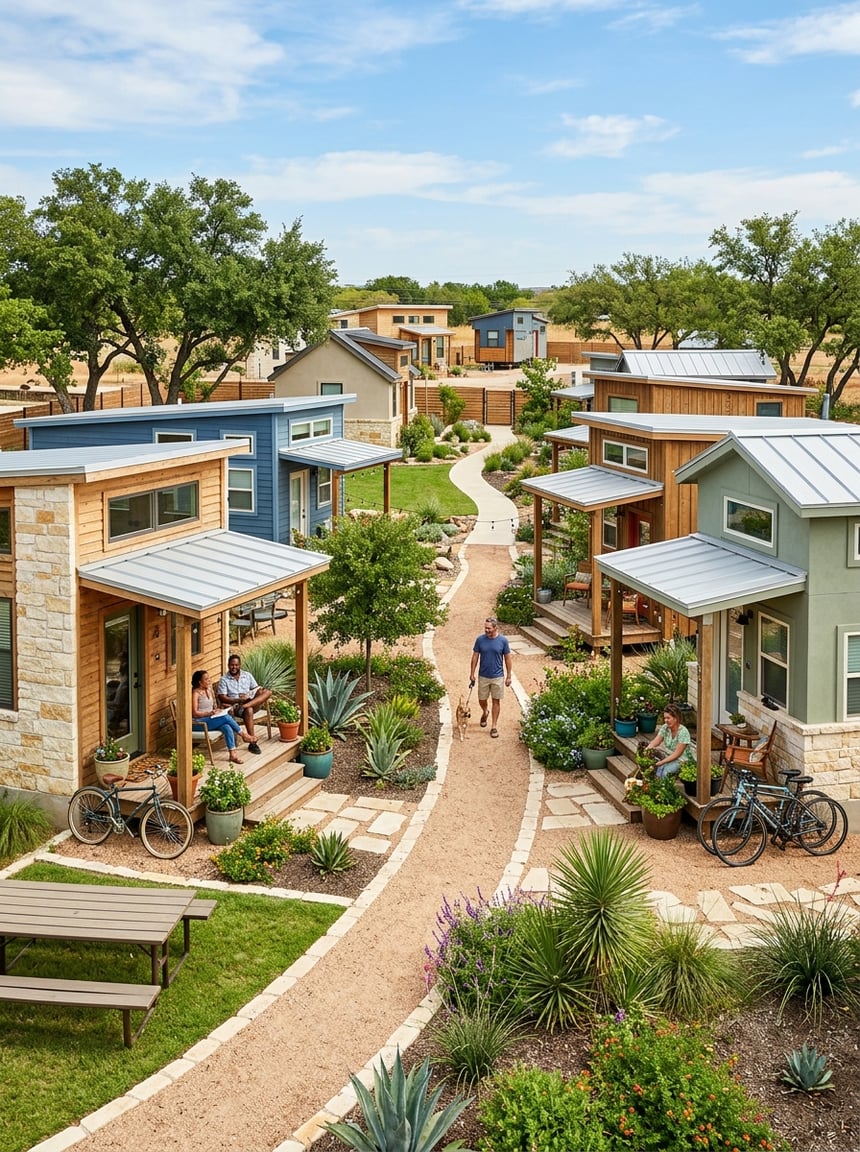
Understanding the full cost of tiny home living means looking past the sticker price. Purchase price, monthly lot rent, and utility costs each factor into the real monthly commitment, and buyers should calculate all three before signing anything.
Tiny Home Prices
Tiny homes in and around San Antonio generally range from $30,000 for basic models to over $280,000 for larger, fully finished units. Prefab homes and prefab tiny homes tend to sit on the lower end of that range, since factory construction reduces labor costs.
Financing options vary. Some buyers use personal loans or RV loans instead of traditional mortgages, particularly for homes classified as recreational vehicles rather than permanent structures. This distinction affects interest rates and loan terms significantly.
Monthly Lot Rent
For buyers who own the home but lease the land, monthly lot rent typically runs between $350 and $800 depending on location and amenities. Rent often includes trash service and common area maintenance, though this varies by community.
Buyers should ask whether lot rent is fixed for a set term or subject to annual increases, since this affects long-term affordability.
Utilities and Other Monthly Costs
Utility costs depend heavily on electrical service setup and home size. Smaller homes generally cost less to heat and cool, though older units without proper insulation can see higher bills than expected.
Buyers should also budget for property taxes, if applicable, along with insurance and any HOA dues tied to affordable housing developments.
How to Choose the Right Community

Choosing the right community depends on how the home will be used, what amenities matter most, and how far the resident is willing to commute. The following breakdown covers the key factors that tend to make or break the decision.
Full-Time Living vs. Vacation Communities
Some communities restrict occupancy to seasonal or vacation use, while others are zoned for full-time residency. Zoning laws vary by county, so buyers should confirm this detail directly with community management before assuming full-time living is allowed.
This distinction matters most for tiny homes on wheels, often called THOWs. Many jurisdictions treat THOWs differently from homes built to IRC standards, which affects whether a THOW can legally serve as a primary residence.
Community Amenities
Amenities range widely between communities. Some offer community gardens, shared amenities like pools or clubhouses, and walking trails, while others provide minimal shared space beyond a common driveway.
Community events also vary in frequency, from monthly potlucks to no organized activities at all. Buyers who value social connection should ask about this directly rather than assuming based on marketing materials.
Pet Policies
Pet policies differ significantly across communities. Some allow multiple pets with no size restriction, while others cap the number of animals or restrict certain breeds.
Buyers with pets should get pet policies in writing before signing a lease or purchase agreement.
Age Restrictions
Certain communities, particularly those marketed toward retirees, enforce age restrictions requiring at least one resident to be 55 or older. Others have no age requirements at all.
Distance From Downtown San Antonio
Commute time affects daily life significantly. Communities inside city limits offer short commutes, while Hill Country options can add 30 to 60 minutes each way. Buyers should factor legal considerations tied to minimum square footage requirements as well, since some counties enforce stricter codes than others.
Pros and Cons of Community Living
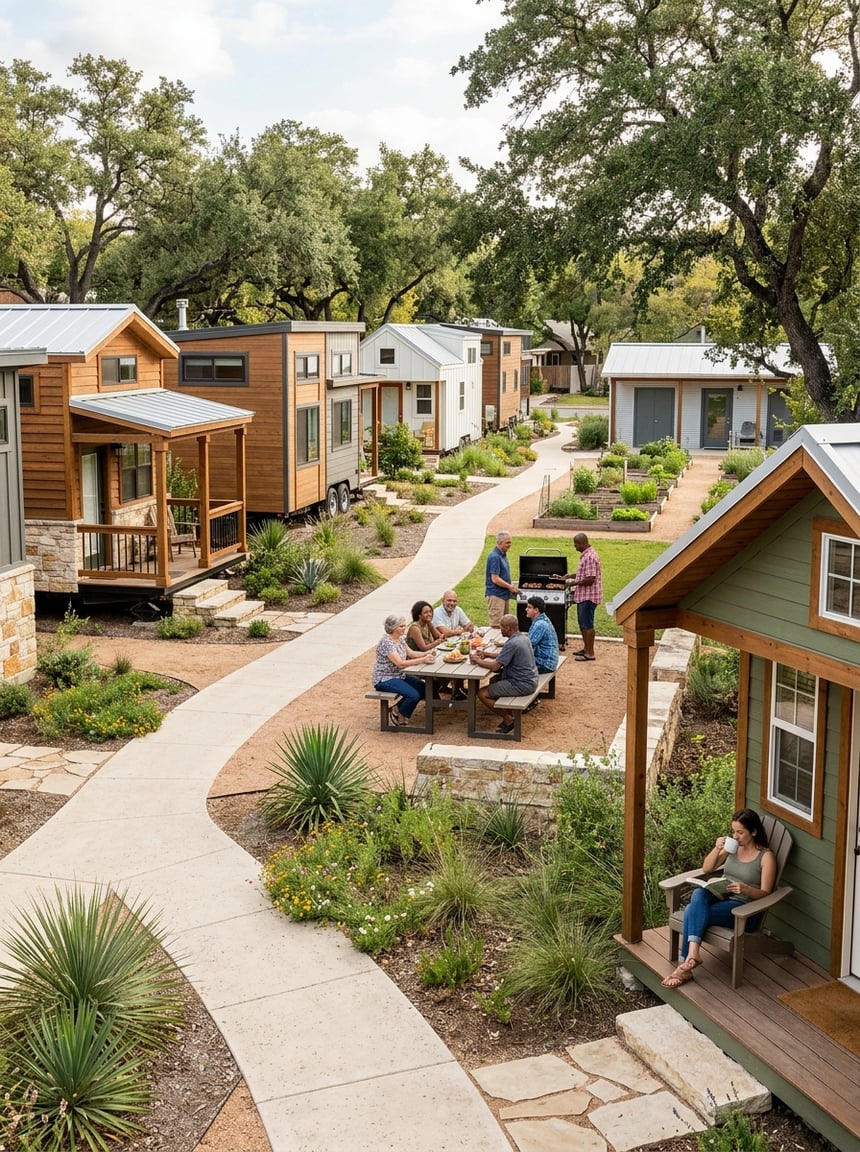
Tiny home living offers clear benefits, but it also comes with tradeoffs that buyers should weigh honestly before committing. The following breakdown separates common advantages from potential drawbacks.
Advantages
Tiny home living generally reduces housing costs compared to traditional homeownership. Lower square footage means smaller utility bills, less maintenance, and often a smaller mortgage or lease payment overall.
Community living also supports sustainable housing goals, since smaller homes use fewer resources to build and maintain. Downsizing appeals to buyers looking to simplify their lifestyle and reduce clutter.
Shared amenities like gardens, trails, and event spaces can foster stronger neighbor connections than typical suburban neighborhoods offer.
Potential Drawbacks
Tiny house living requires significant lifestyle adjustment, particularly for families used to more space. Storage limitations affect daily routines, and privacy can feel reduced in tightly packed communities.
Financing can also be more complex than traditional homeownership, especially for homes classified as RVs. Buyers should research loan options carefully before assuming standard mortgage terms will apply.
Some communities enforce strict rules around exterior appearance, guest policies, or noise levels, which may not suit every resident.
Final Verdict
No single community fits every buyer, since priorities around cost, commute, and lifestyle vary widely. The recommendations below are conditional, based on common priorities among prospective tiny home residents.
Best Overall Community
Elm Trails stands out for buyers wanting a balance of city convenience and tiny home affordability. Its location inside San Antonio limits commute time while still offering the smaller footprint many buyers seek.
Best Budget-Friendly Community
Canyon Lake area communities tend to offer the lowest entry prices among the options covered here. Buyers willing to accept a longer commute can find meaningful savings on both purchase price and lot rent.
Best Community for Retirees
New Braunfels area communities suit retirees looking for a quieter pace without cutting off access to shopping, medical care, and river recreation. Age-restricted options in this area also tend to offer more predictable community rules.
Best Community Near San Antonio
For buyers unwilling to compromise on commute time, Elm Trails remains the strongest option inside city limits. Those wanting more land or a Hill Country feel should look toward Boerne, accepting a longer drive in exchange for more space and quieter surroundings.


