
How to Decorate a Yurt: Stylish Ideas for a Cozy Interior
Decorating a yurt is all about creativity and making smart choices to use the space well. The round shape and open floor plan give people a chance to design a unique home that feels warm and inviting. Choosing the right furniture, adding cozy textiles, and using vertical space are key steps for making a yurt both stylish and comfortable.
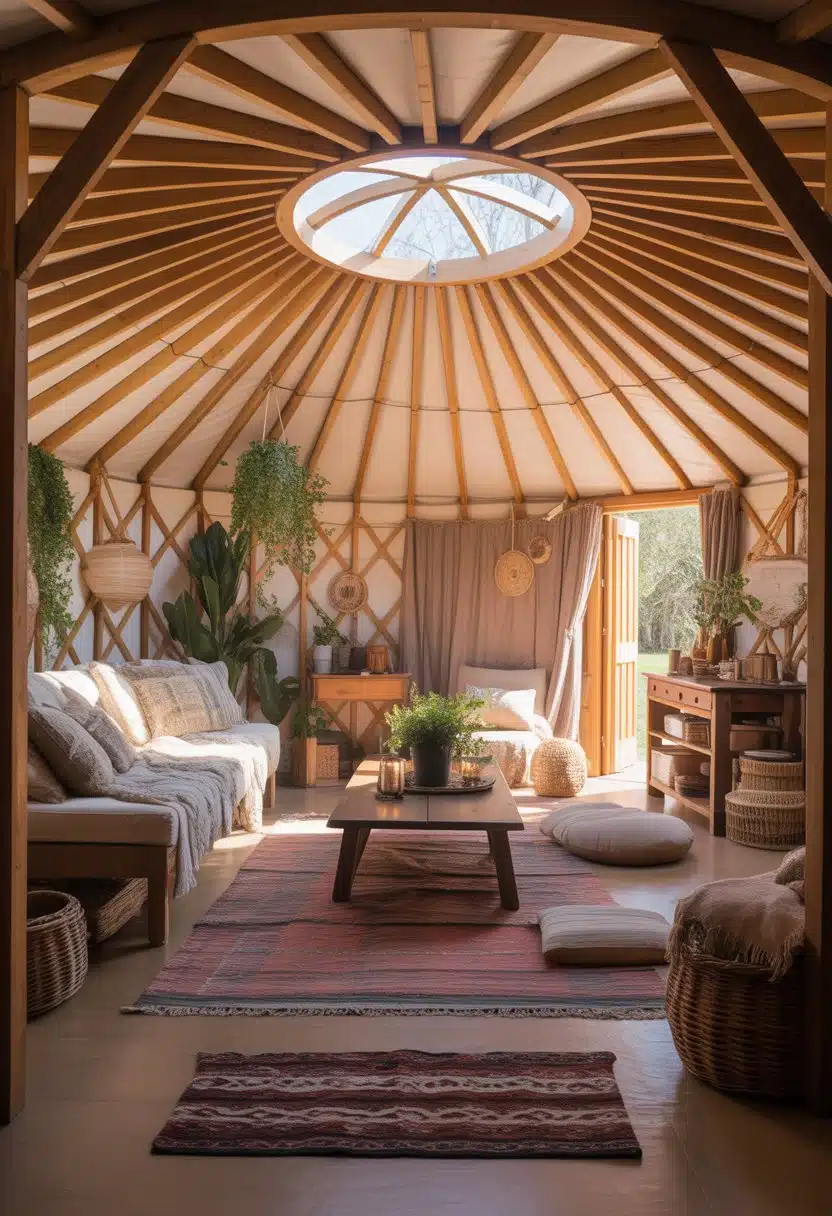
Yurts often have limited space, so every piece of decor and furniture should have a purpose. Mixing multifunctional items, simple designs, and natural elements helps keep the area open and clutter-free. With a little effort, anyone can turn a yurt into a personal and practical retreat.
Understanding the Unique Features of Yurts

Yurts have distinct architectural elements that set them apart from other types of housing. These features affect how furniture fits, how light enters, and how people move through the space.
Circular Layout and Space Challenges
A yurt’s round shape creates unique interior challenges and opportunities. There are no sharp corners or traditional walls to break up the space, which means furniture must be arranged thoughtfully. Standard rectangular furniture might not fit neatly along curved walls, so items like round tables, modular sofas, or bean bags often work better.
The supporting lattice walls and central roof ring are key structural parts. The roof’s gradual slope toward the center can affect headroom, especially at the edges. Storage and shelving may need to be custom or placed thoughtfully since vertical wall space is limited.
It helps to:
- Use multi-purpose furniture such as storage ottomans or fold-out beds
- Arrange seating to focus on a central feature (like a wood stove)
- Divide the yurt into zones with rugs, low bookcases, or screens
These space-saving strategies keep the area organized and allow for easy movement.
Customizable Windows and Entrances
Unlike standard homes, most yurts use flexible materials for walls, windows, and doors. Windows can be clear vinyl, glass, or fabric flaps positioned where extra light or fresh air is needed. Entrances often have simple wooden frames and can be customized with doors of different sizes or materials.
Strategically placed windows allow for cross-ventilation and natural daylight. Many yurts use a central skylight, called a “crown” or “toono,” which brings in overhead sunlight and often opens for extra airflow. Owners can install curtains, blinds, or removable covers to manage privacy and temperature.
With customizable entry points, it is possible to design a space that captures scenic views or best suits traffic flow. Choices in this area have a big impact on comfort, brightness, and connection with the outdoors.
Benefits of Open Plan Living
Yurts typically offer an open floor plan with few or no interior walls. This encourages a sense of spaciousness despite the compact footprint. An open layout allows users to flexibly arrange living, dining, and sleeping zones as needed.
This style works well for:
- Creating multi-use areas, like combining a dining and workspace
- Hosting guests with movable dividers or curtains for privacy
- Maximizing natural circulation of air and light
Open plan living also makes it easier to keep an eye on children or interact as a family. The central layout promotes communication, versatility, and an uninterrupted flow between daily activities.
Planning a Functional Yurt Interior
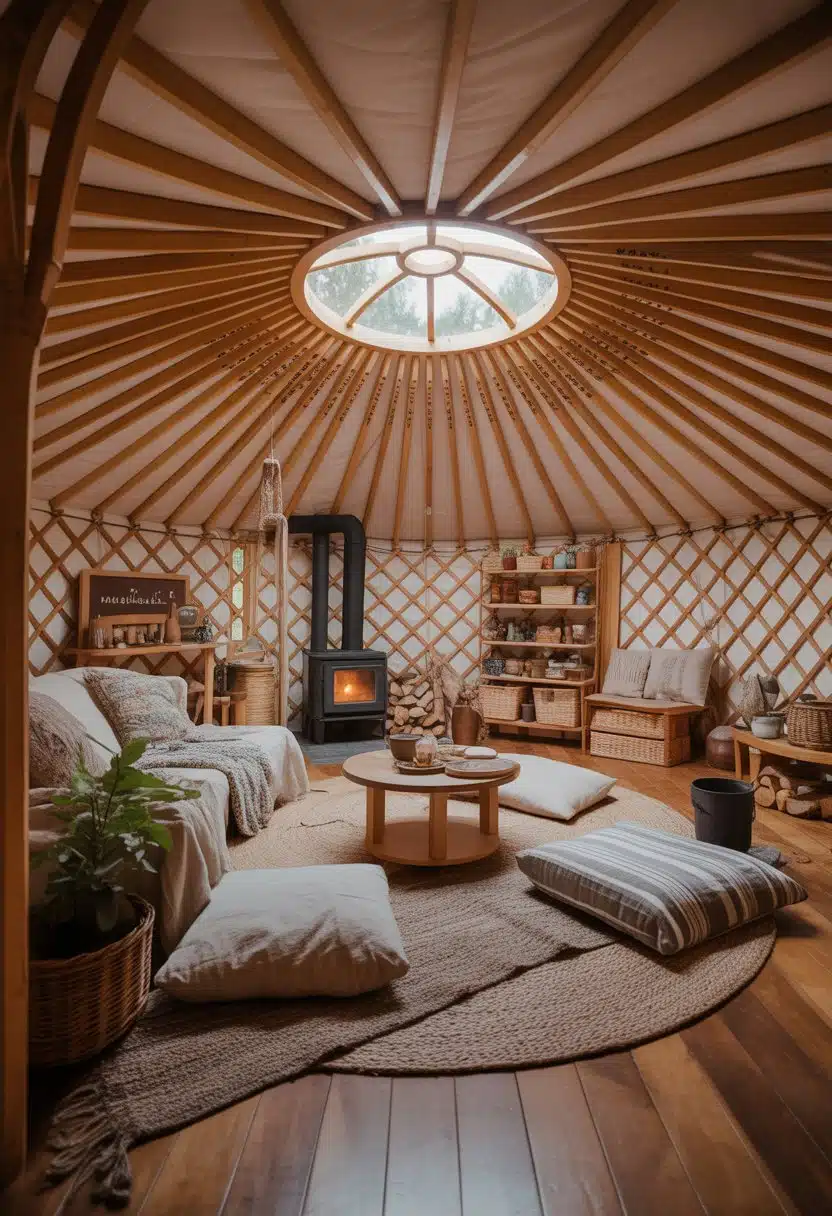
A well-designed yurt interior makes daily life easier, especially in a small space. By dividing living zones, choosing smart furniture, and planning for storage, every inch of the yurt serves a real purpose.
Dividing Living Zones Effectively
In a yurt, separate spaces for sleeping, eating, and relaxing create order and comfort. Curtains, open shelving, or lightweight dividers help section off areas without blocking light or airflow. Some people use rugs or changes in floor color to mark different zones.
Placing the bed or futon on one side and seating on the other side of the yurt helps people move around more freely. A circular furniture layout, matching the round shape of the yurt, can also make the space feel open.
A small kitchen can fit along one wall with shelves above for easy access. Using compact kitchen appliances keeps cooking practical but doesn’t waste room. Clear zones mean less clutter and smoother routines.
Using Multifunctional Furniture
Multifunctional furniture is vital in yurt interior design. Items like a futon or sofa bed give both seating and sleeping space, allowing the same piece of furniture to serve two needs. Tables with fold-down leaves or stackable chairs work well for mealtimes without taking up much room the rest of the day.
Storage ottomans, benches with hidden compartments, and convertible desks make it simple to shift between activities. Pieces that are light and easy to move help residents rearrange the layout for guests or hobbies.
In a yurt, functional furniture should be sturdy but flexible. Modular kits or DIY shelves that fit the yurt’s round walls make even limited square footage more usable. This type of smart design means no one has to sacrifice comfort or style.
Optimizing Storage Solutions
Space-saving storage keeps a yurt tidy. Vertical storage, such as tall shelves or hanging baskets, uses the full height of the tent. Pegboards, wall hooks, and hanging fabric organizers hold tools, coats, or cooking utensils off the floor.
Under-bed bins or drawers can hide extra blankets, clothes, or gear. Labeled boxes and baskets on high shelves help families locate what they need quickly. Closets may not fit inside a yurt, so using corner shelving units takes advantage of odd spaces.
Having a specific spot for each item keeps essentials at hand and reduces stress. Even small changes, like adding a shoe rack by the door or built-in shelves under windows, add order and improve daily life inside the yurt.
Furniture and Layout Strategies for Circular Spaces
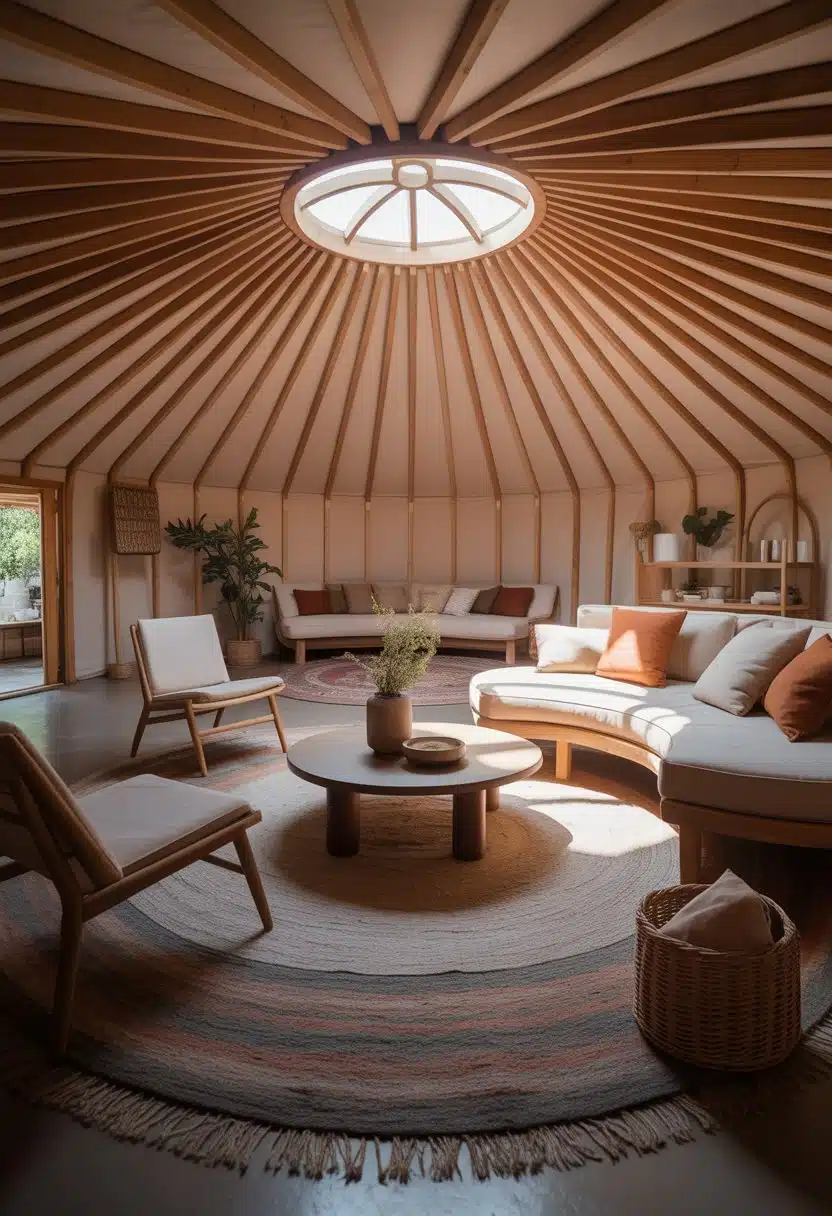
Arranging furniture in a yurt requires adapting to the round shape and using the available floor and wall space efficiently. The right furniture and layout help make the area functional and comfortable, especially in smaller yurts.
Incorporating Round Tables and Curved Furniture
Placing round tables in the center of the yurt allows for smoother movement and fits the circular form. Round tables also provide equal seating and reduce sharp edges, making the space feel open and safe for children.
Curved sofas or benches can line the walls, maximizing seating without wasting corners. For storage, low curved shelves fit neatly along the perimeter, keeping items organized while freeing up the central area.
Multi-purpose furniture, such as storage ottomans or fold-out beds, can save space and serve more than one use. Choosing neutral colors and simple, solid fabrics keeps the design balanced and avoids visual clutter.
Tips for Choosing Furniture:
- Measure before buying
- Choose curved or round pieces
- Use light, compact items
Lofts and Vertical Space Utilization
Adding a loft takes advantage of the yurt’s vertical height, increasing usable space without enlarging the footprint. Lofts are often used for sleeping areas or storage, freeing the main floor for daily activities.
Installing open shelving or hanging organizers high on the walls stores items without crowding the floor. Sturdy ladders or spiral staircases can connect the loft with minimal room taken up below.
Placing sleeping areas in the loft also provides privacy in open-plan yurts. Windows and skylights above bring in daylight, making the upper space feel comfortable and airy. Vertical strategies help create separated zones within a single circular room.
Stylish Decor and Design Approaches
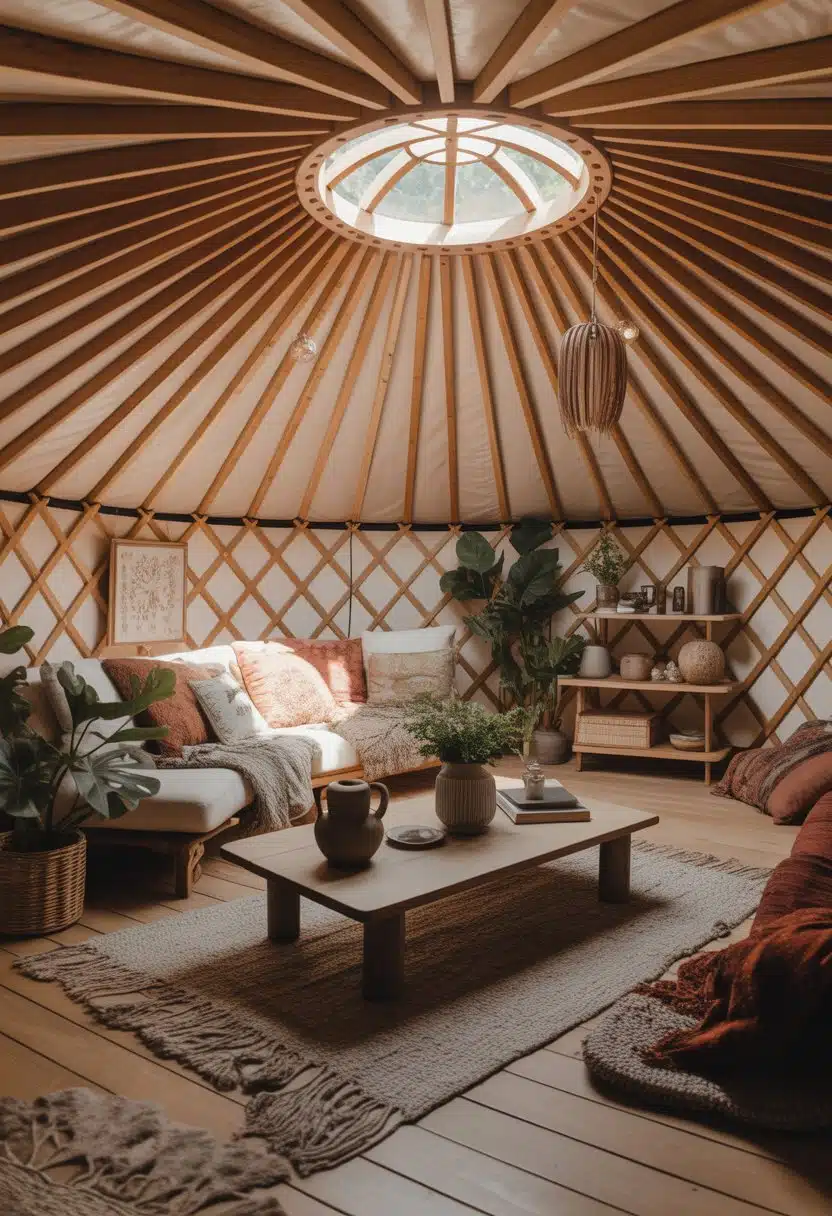
Balancing style and function is essential for a comfortable yurt environment. Design choices range from sleek and modern to creative blends of color and pattern, bringing both personality and practicality to a circular living space.
Modern Design Elements
Modern yurt interiors often use a combination of clean lines, neutral color palettes, and minimal accessories. Furniture pieces tend to be low-profile and lightweight, making it easier to adapt the layout. Storage solutions are built into benches or under beds to keep the space clutter-free.
Materials like metal, glass, and polished wood are popular in this style. Open shelving works well against the round lattice walls, providing simple views of favorite items. Light fixtures with simple shapes, such as pendant lamps or recessed lighting, help maintain a contemporary feel.
Light colors for walls or floor coverings reflect sunlight, making the interior look larger and brighter. Plants or a few well-chosen artworks keep the space from feeling cold while staying uncluttered.
Eclectic Style Inspirations
An eclectic approach to yurt decor mixes patterns, colors, and objects collected over time. Instead of following strict rules, eclectic design combines favorite items from different styles and backgrounds, creating a space that feels personal.
Some features often seen in this style include:
- Bright throw pillows or layered blankets
- Rugs from different cultures
- Mismatched chairs or stools
- Artwork in various frames and sizes
Shelving made from repurposed crates or baskets brings a touch of creativity. Vintage pieces can be mixed with modern items, like pairing an old wooden trunk with a sleek metal lamp. Small collections—such as pottery, books, or souvenirs—add character to open shelves or window ledges.
Even in a compact space, using a variety of colors and patterns makes the yurt interior feel lively and welcoming. Careful arrangement keeps the decor engaging without becoming busy or crowded.
Textiles, Patterns, and Textures
Textiles play a big part in yurt design since they soften the look and help with insulation. Wool rugs, woven baskets, and soft blankets make the interior warm and inviting. Using natural materials like cotton, linen, or wool adds both comfort and a connection to nature.
For extra interest, textures and patterns can be layered throughout the space. Place kilim or shaggy rugs underfoot, hang woven wall hangings, or drape quilts over seating. Sheer curtains filter sunlight and add privacy without blocking light.
A balance of smooth, rough, and soft surfaces adds depth to a yurt’s simple shape. Mixing textiles in solid colors with those in stripes or geometric prints brings visual variety without overwhelming the decor. Pillows and throws in bold colors or rich textures can change the look each season, keeping the yurt feeling fresh and lived-in.
Lighting and Climate Comfort in Yurts
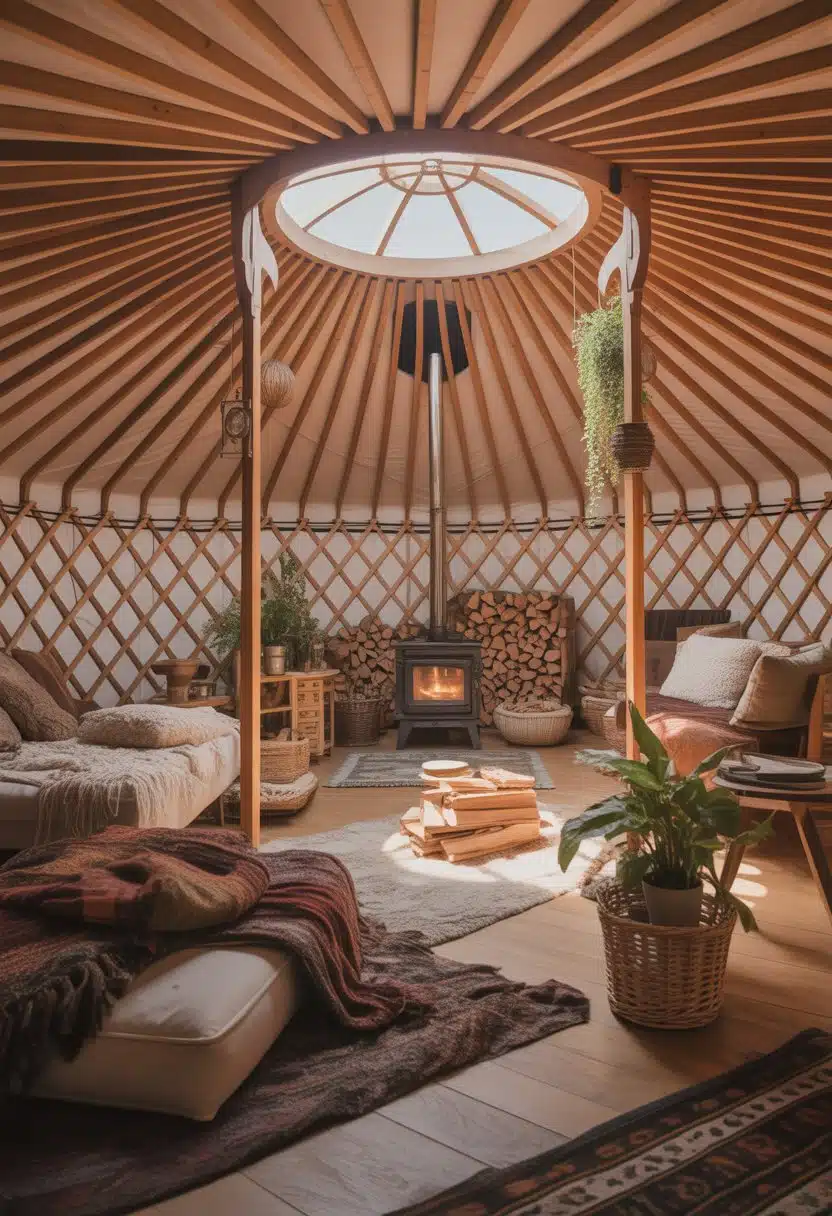
Maintaining a cozy and functional yurt depends on good lighting and steady indoor temperatures. Careful choices help make the yurt feel open, bright, and comfortable throughout the year.
Maximizing Natural Light Sources
Natural light plays a big role in making a yurt feel roomy and cheerful.
Key ways to enhance daylight in a yurt:
- Central Dome Skylight: Many yurts feature a skylight at the top. This allows sunlight to enter the space directly from above, spreading light evenly across the yurt.
- Multiple Windows: Placing windows around the circular wall gives a balanced glow and helps with airflow. Clear vinyl or glass windows can brighten the interior without letting in cold drafts.
Other tips:
- Opt for window covers that can be rolled up in the day and closed at night for privacy.
- Use light-colored fabrics or curtains near windows to reflect sunlight deeper into the space.
- When possible, face the main entrance or larger windows toward the best natural light source, like south-facing for more sun exposure.
Integrating Effective Lighting Solutions
When natural light fades, reliable artificial lighting becomes essential.
Lighting options for yurts include:
- String or Fairy Lights: These are popular for their soft, even glow and flexibility. They can wrap around roof supports or hang from the dome.
- LED Lanterns and Ceiling Lights: LEDs use less energy and last longer. They offer both overhead and task lighting without large fixtures.
- Portable Lamps: Table or floor lamps are easy to move based on needs and can add warmth to reading nooks or sitting areas.
Considerations:
- Choose warm color temperatures (2700K–3000K) for a softer and more inviting feel.
- Use battery or solar-powered lights if electricity is limited.
- Install dimmer switches for adjustable brightness depending on the time of day.
| Lighting Type | Pros | Best Placement |
|---|---|---|
| LED String/Fairy | Energy efficient, cozy | Roof beams, walls |
| Solar Lantern | Off-grid ready | Near windows, door |
| Ceiling Fixture (LED) | Bright, long-lasting | Center dome, main area |
Insulation and Year-Round Comfort
Proper insulation keeps a yurt cool in summer and warm in winter. Without insulation, heat and cool air escape quickly due to the thin wall structure.
Key insulation materials include:
- Wool felt
- Reflective liners (like bubble foil)
- Cotton batting
These materials fit between the yurt wall and outer cover. Layering helps reduce heat loss and prevents drafts.
Climate control tips:
- In cold climates, add draft stoppers around doors and windows and use rugs on the floor.
- For warmth, a wood stove, propane heater, or electric unit can be used safely with proper ventilation and fire safety measures.
- In warmer months, promote airflow with roof vents and openable windows. Ceiling fans also help distribute air evenly.
Good insulation and thoughtful heating or cooling devices ensure comfort every season while also controlling energy costs. This balance is key for anyone living in a yurt full-time or using it as a getaway.
Personalizing and Expanding Your Yurt Space

Choosing the right colors, decorations, and layout helps reflect a person’s style and needs. Creating flow between indoor and outdoor spaces adds both comfort and flexibility to yurt living.
Color Schemes and Personal Touches
Using the right colors can set the mood inside a yurt. Light and cool colors make the space feel open and airy, while dark or warm tones create a cozier, enclosed feeling.
Soft pastel shades on the lattice or roof supports give a gentle touch without making the room feel too busy. Neutral walls paired with bright pillows or throws add interest without overwhelming the space. Furniture with solid fabrics often looks better than busy patterns in a round, open room.
Personal touches—like favorite artwork, rugs, or handmade crafts—make the space feel truly unique. Small plants, string lights, and personal mementos can add warmth and help show off personality.
A few ideas to consider:
| Element | Tip |
|---|---|
| Wall Hangings | Use lightweight, easy-to-move art |
| Textiles | Layer with cushions and throws |
| Furniture | Choose pieces with hidden storage |
Blending Indoor and Outdoor Living
Yurts often have large doors or window panels that make it easy to connect the inside to nature. Placing furniture close to doors helps people enjoy garden or deck views from inside.
Use weather-resistant rugs and mats at the entrance to make moving in and out simple, even in wet or muddy conditions. Adding a small patio or deck outside can expand living space for meals, relaxing, or entertaining. Light curtains on doors and windows keep bugs out while letting breezes in.
Table ideas for indoor-outdoor flow:
| Feature | Benefit |
|---|---|
| Outdoor seating | Extra space for guests |
| Potted plants | Smooth transition to outdoors |
| String lights | Lights up both inside and out |
Frequently Asked Questions
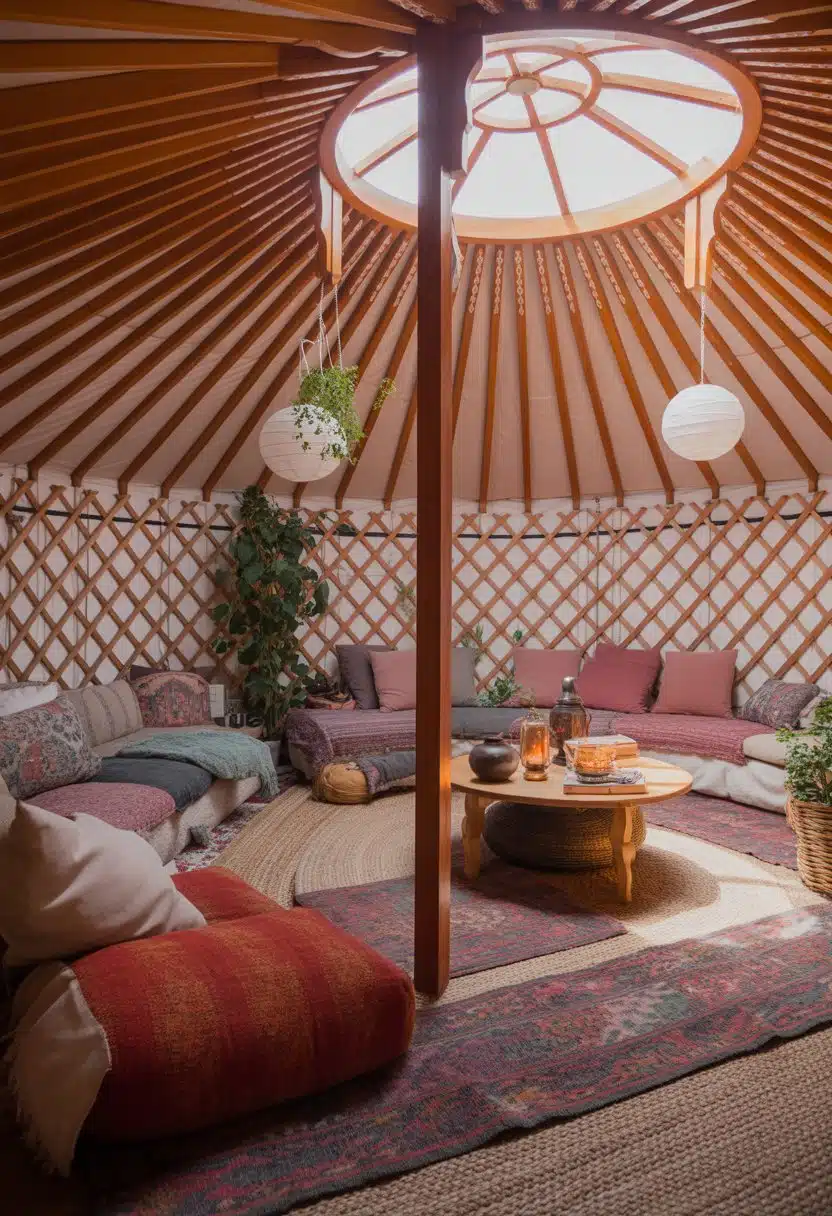
Decorating a yurt takes careful planning and a mix of practical and creative choices. The right layout, furniture, and decorative touches can turn a simple yurt into a cozy, unique living area.
What are the best practices for yurt interior design?
Good yurt design uses open floor plans and makes full use of round spaces. Placing the largest furniture along the walls keeps the center open and easy to move through.
Using light colors brightens the space, while adding rugs, cushions, and curtains can give warmth and comfort. Keeping décor simple can prevent the space from looking crowded.
How can one effectively furnish a small yurt interior?
Multi-purpose furniture is very helpful in small yurts. Items like fold-out couches, storage ottomans, and tables that can be taken apart save space.
Shelves that fit the curved walls or hang from the lattice work also help to keep things neat without taking up floor space. Lofted beds or bunk beds work well to make the most of the high ceiling.
What are traditional elements to include in yurt decor?
Traditional yurts often use natural materials like wood, felt, and wool. Rugs, woven tapestries, and low tables are common inside.
Colors are usually earthy or bright and sometimes include patterns from Central Asia. Handcrafted items, such as baskets or pottery, can also give a more authentic feel.
Can you recommend techniques for hanging decorations in a yurt?
Many yurts have a wooden lattice that can support lightweight decorations. Hooks, strong clips, and string work well for hanging items such as photos, fairy lights, or fabric banners.
It is important not to hang heavy items that could damage the frame or covering. Using adhesive hooks that can be removed safely is also an option.
What are the considerations for choosing yurt floor plans with respect to decor?
The circular shape means that dividing walls should be used carefully. Freestanding screens or curtains can make separate “rooms” without blocking air flow or light.
Arranging furniture around the edge leaves the middle open for group activities, making the space feel larger. Built-in storage can use wall space more efficiently than bulky cabinets.
How does one blend modern amenities with a traditional yurt interior?
Hidden wiring, low-profile lighting, and compact appliances keep a modern look without feeling out of place. Solar lights or propane stoves that blend with the design are good choices.
Modern furniture with neutral colors can fit in with traditional rugs or wall hangings. Mixing both styles allows for comfort while respecting the yurt’s roots.


