Victorian Living Room Design Ideas: 7 Timeless Inspirations for Elegant Homes

Victorian living room design brings history, comfort, and detail into one space. It draws from classic homes that used strong colors, layered textures, and careful craftsmanship to shape how a room feels and functions today. Victorian living room design blends rich detail with comfort to create a classic space that still feels livable.
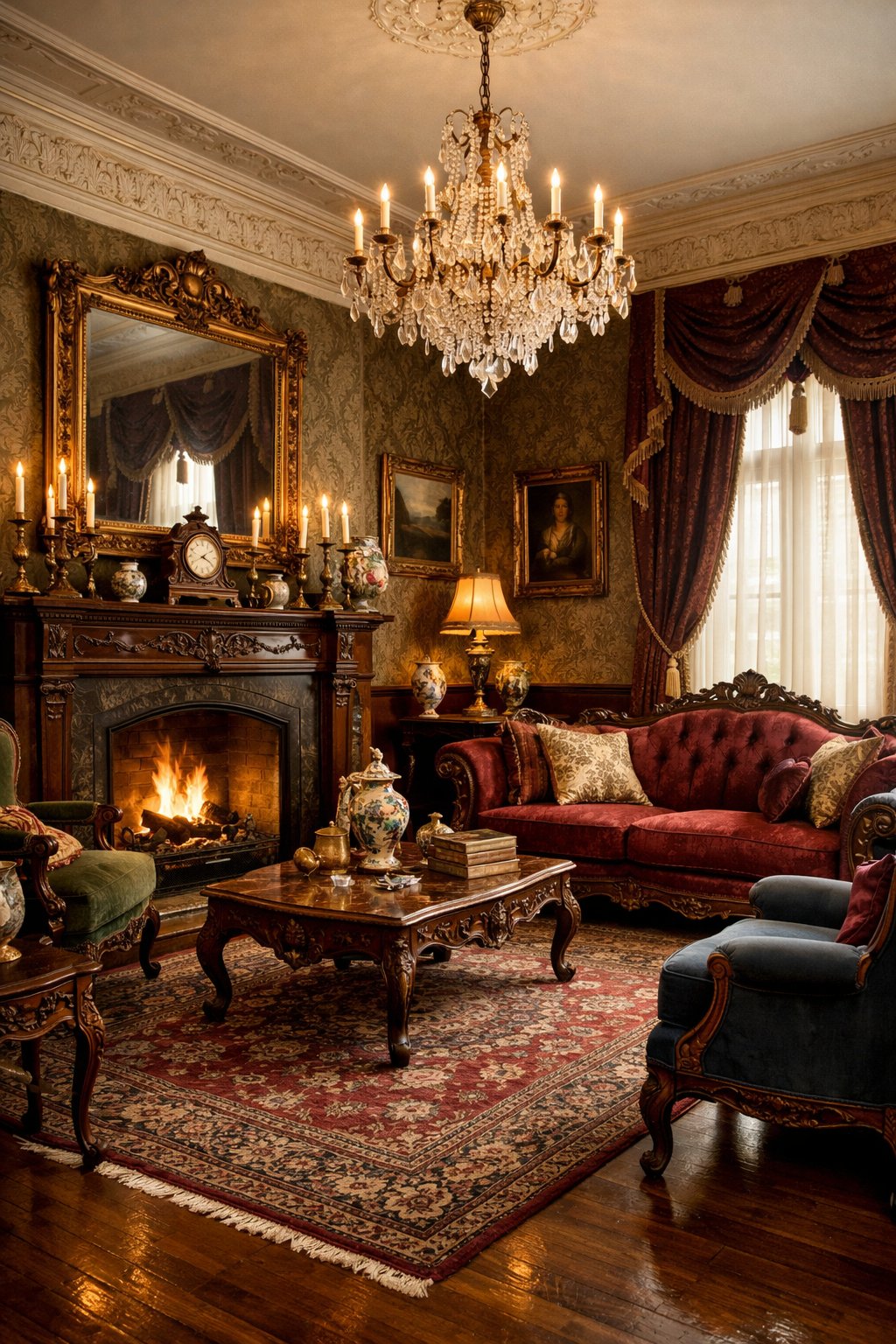
This article explores how these rooms balance beauty and use through color, fabric, finishes, and layout. It also shows how traditional features can fit into modern homes without feeling heavy or outdated. The focus stays on clear design ideas that help shape a space with purpose and balance.
1) Incorporate ornate fireplaces as a focal point
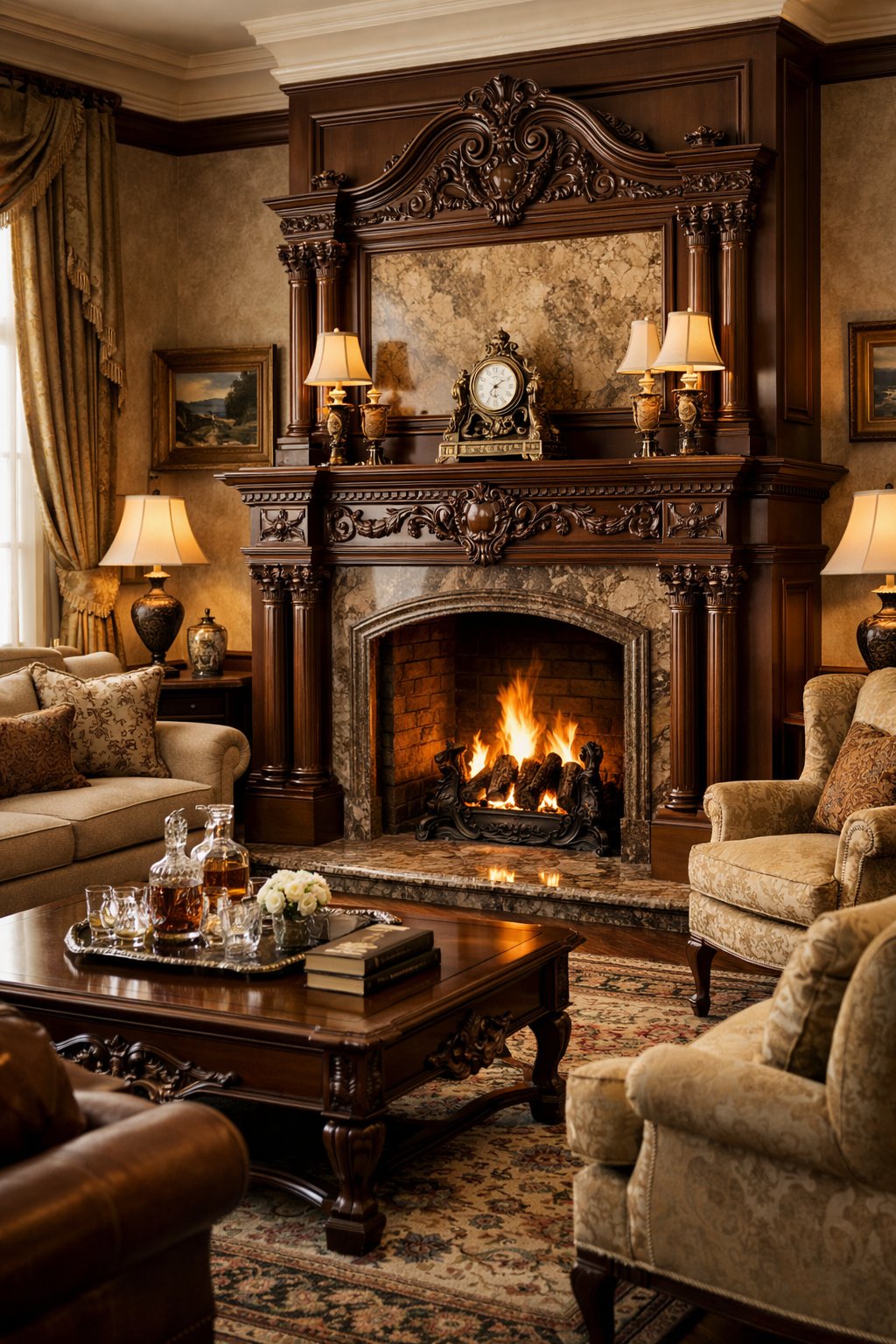
Victorian living rooms often place the fireplace at the center of the space. Designers use it to anchor the layout and guide furniture placement.
These fireplaces feature carved marble, dark wood, or cast iron. Many include floral or geometric tile surrounds that reflect period craft.
An ornate mirror above the mantel adds balance and light. Simple decor keeps focus on the fireplace without crowding the room.
2) Use rich, deep color palettes like burgundy and emerald
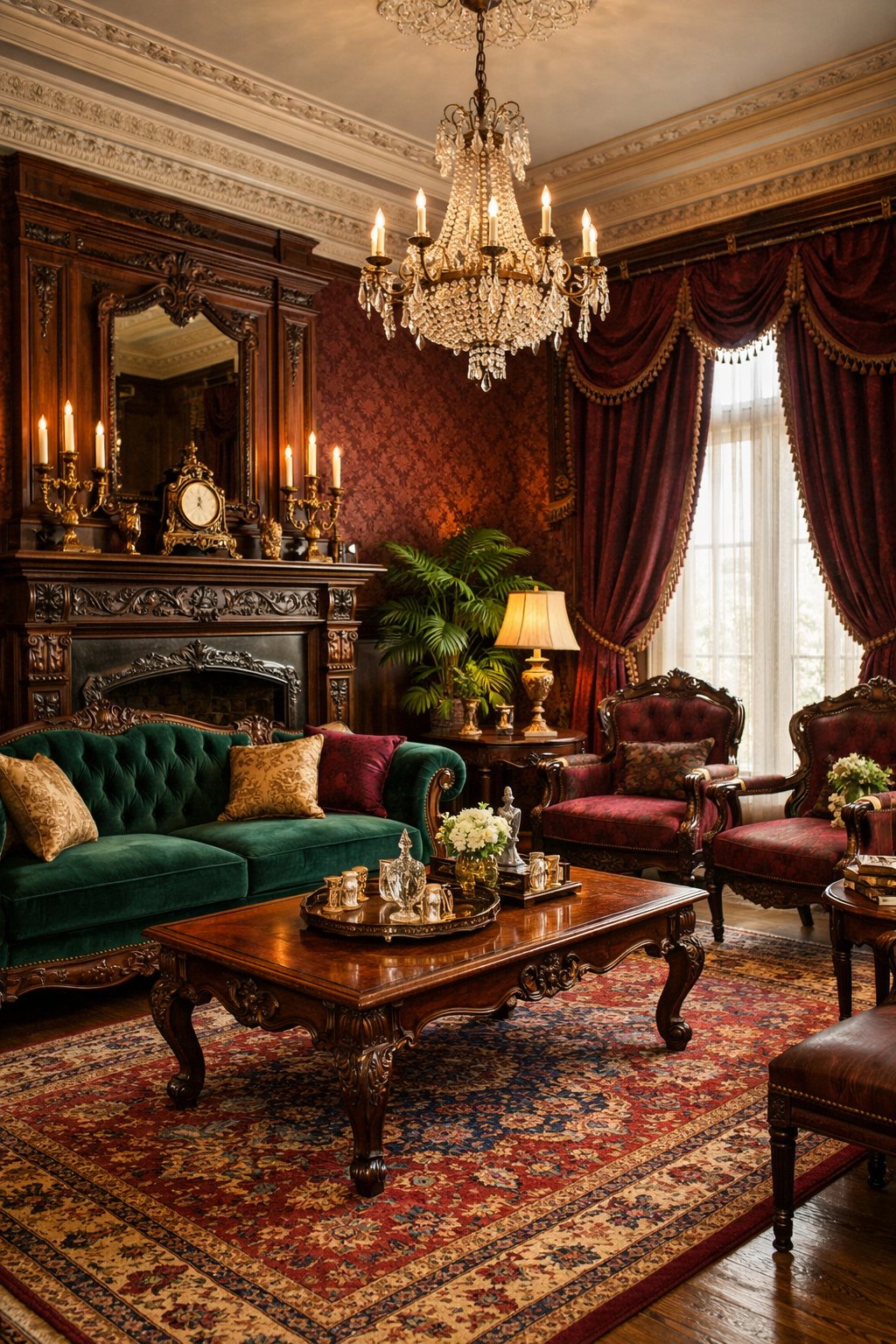
Victorian living rooms often use deep colors to set a formal tone. Burgundy and emerald green appear on walls, drapes, and large furniture pieces.
Designers balance these shades with softer neutrals like cream, taupe, or soft gray. This mix keeps the room from feeling too dark.
Navy blue and royal blue also fit the style. Small gold or brass accents add contrast without overpowering the space.
3) Add patterned wallpaper with floral or damask motifs
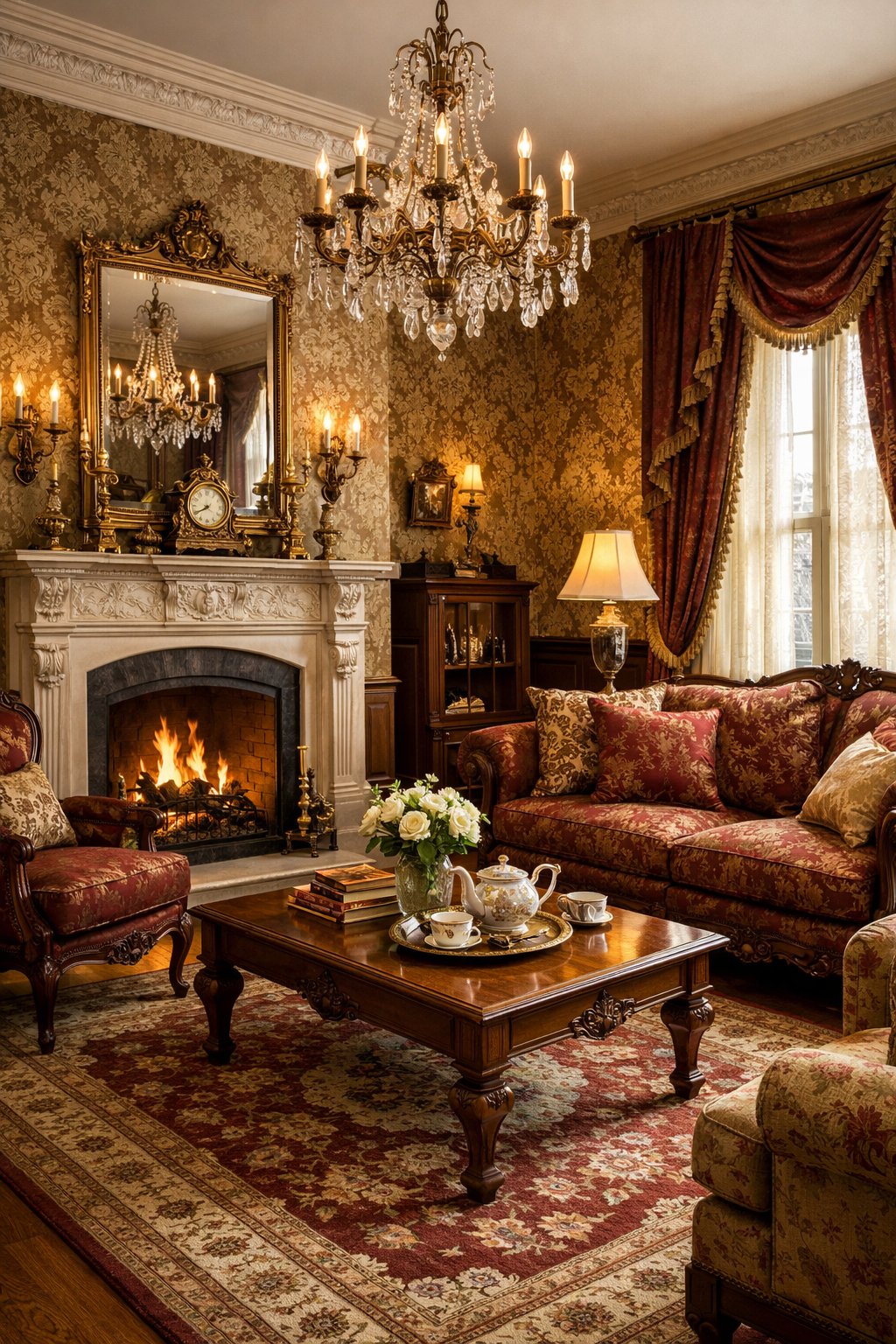
Victorian living rooms often feature patterned wallpaper with floral or damask designs. These motifs reflect the period’s interest in nature and detail. They add visual depth without changing the room layout.
Designers often choose rich colors like burgundy, navy, or deep green. Lighter floral patterns also work well in smaller rooms. The key is to keep the pattern balanced with plain trim.
Wallpaper pairs well with decorative moldings and period-style furniture. This combination helps the room feel cohesive and true to the era.
4) Choose plush velvet upholstery for sofas and chairs
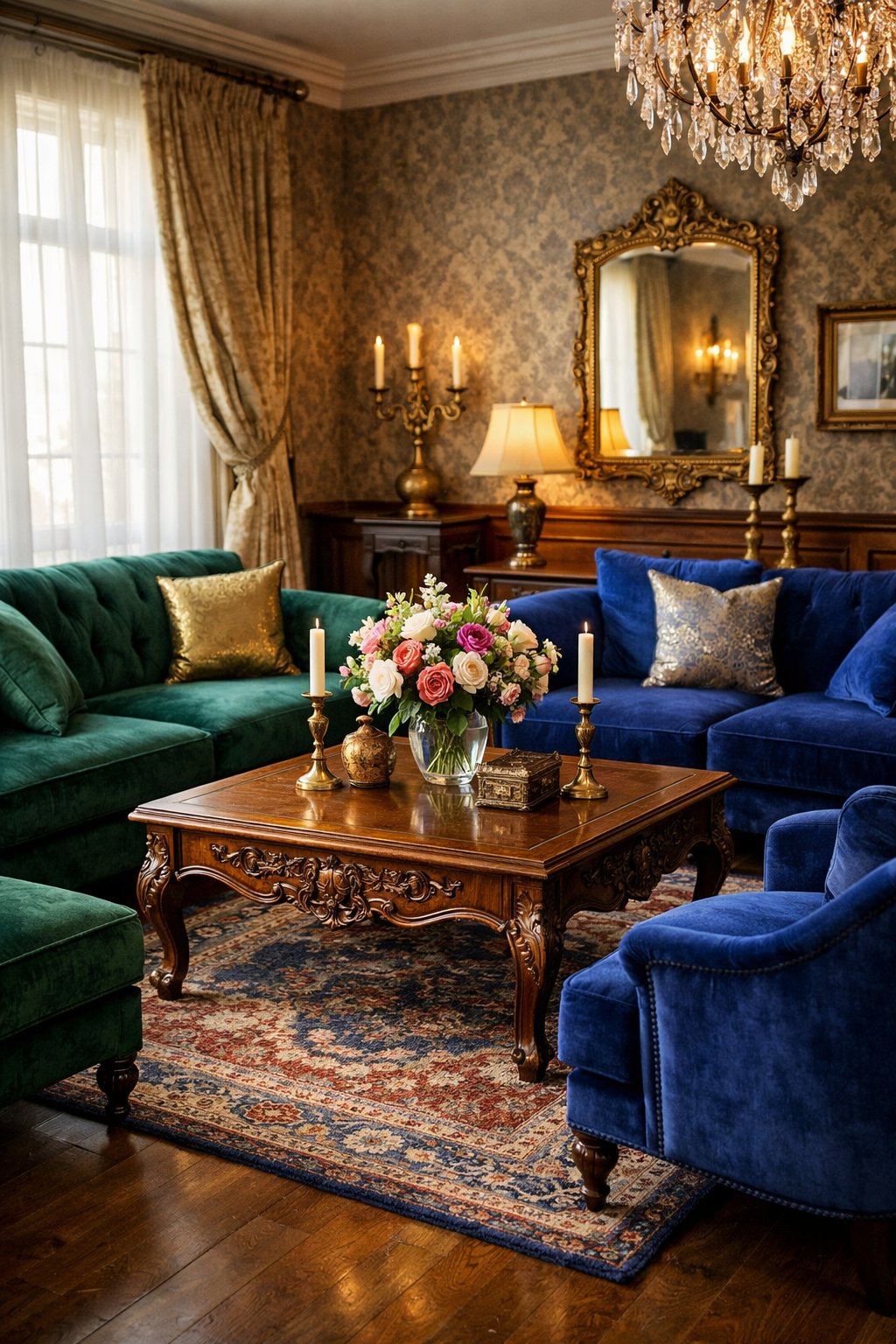
Victorian living rooms often feature velvet on sofas and chairs. Velvet adds softness and depth, which suits formal seating areas and social rooms.
They can choose solid velvet for a classic look. Deep colors like burgundy, emerald, and navy reflect common Victorian palettes and pair well with dark wood.
Modern velvet blends, such as polyester, improve durability and resist stains. These options keep the traditional look while handling daily use more easily.
Crushed or lightly textured velvet adds interest without changing the style. It works well on accent chairs or smaller seating pieces.
5) Display antique brass or bronze Victorian wall clocks
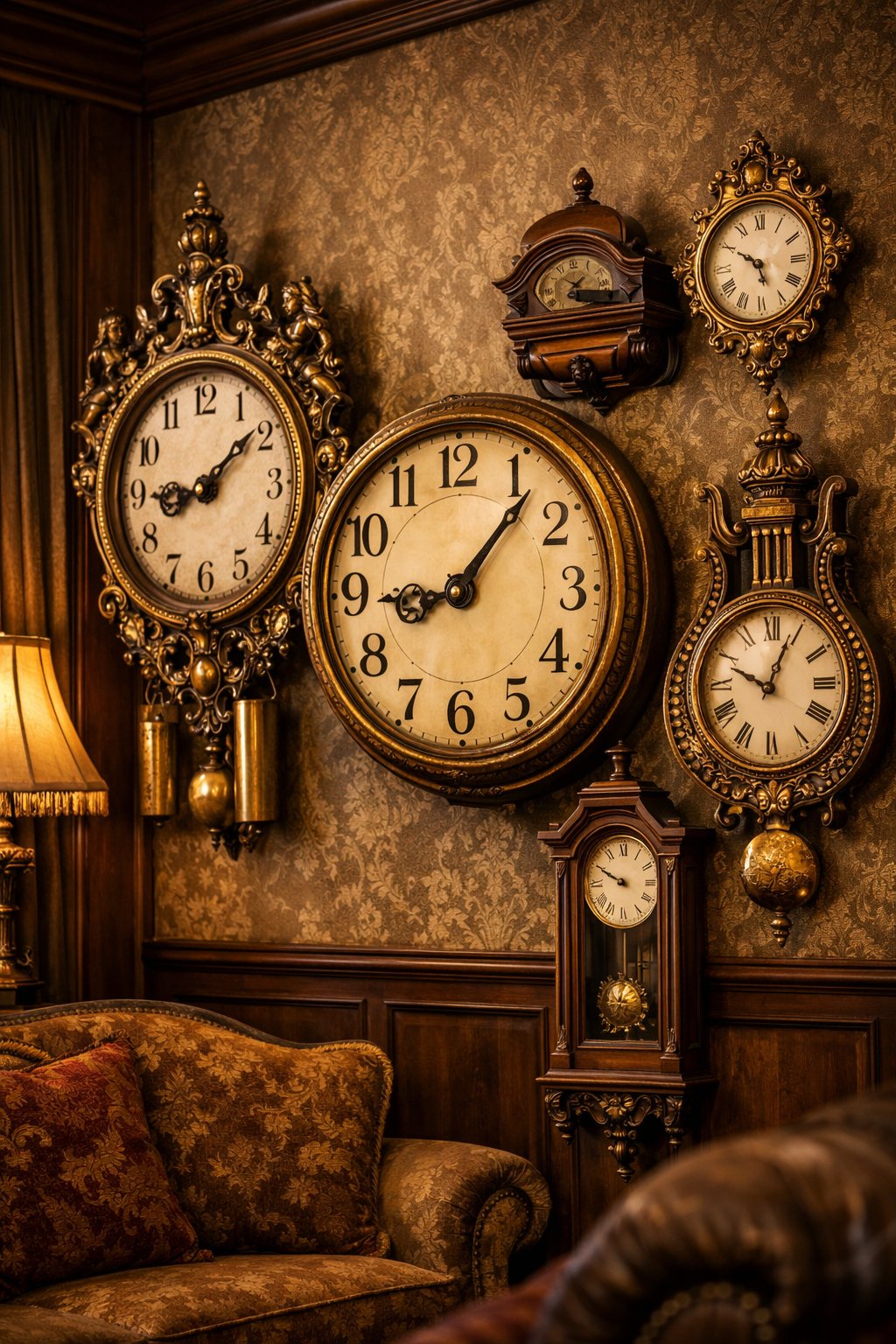
Antique brass or bronze Victorian wall clocks add clear period detail to a living room. They feature ornate cases, visible dials, and classic pendulums that suit traditional spaces.
Designers place these clocks at eye level on a main wall. The clock often becomes a calm focal point without taking over the room.
They pair well with dark wood furniture and neutral walls. Soft lighting highlights the metal finish and keeps the look balanced.
6) Include heavy drapery with tassels and trims
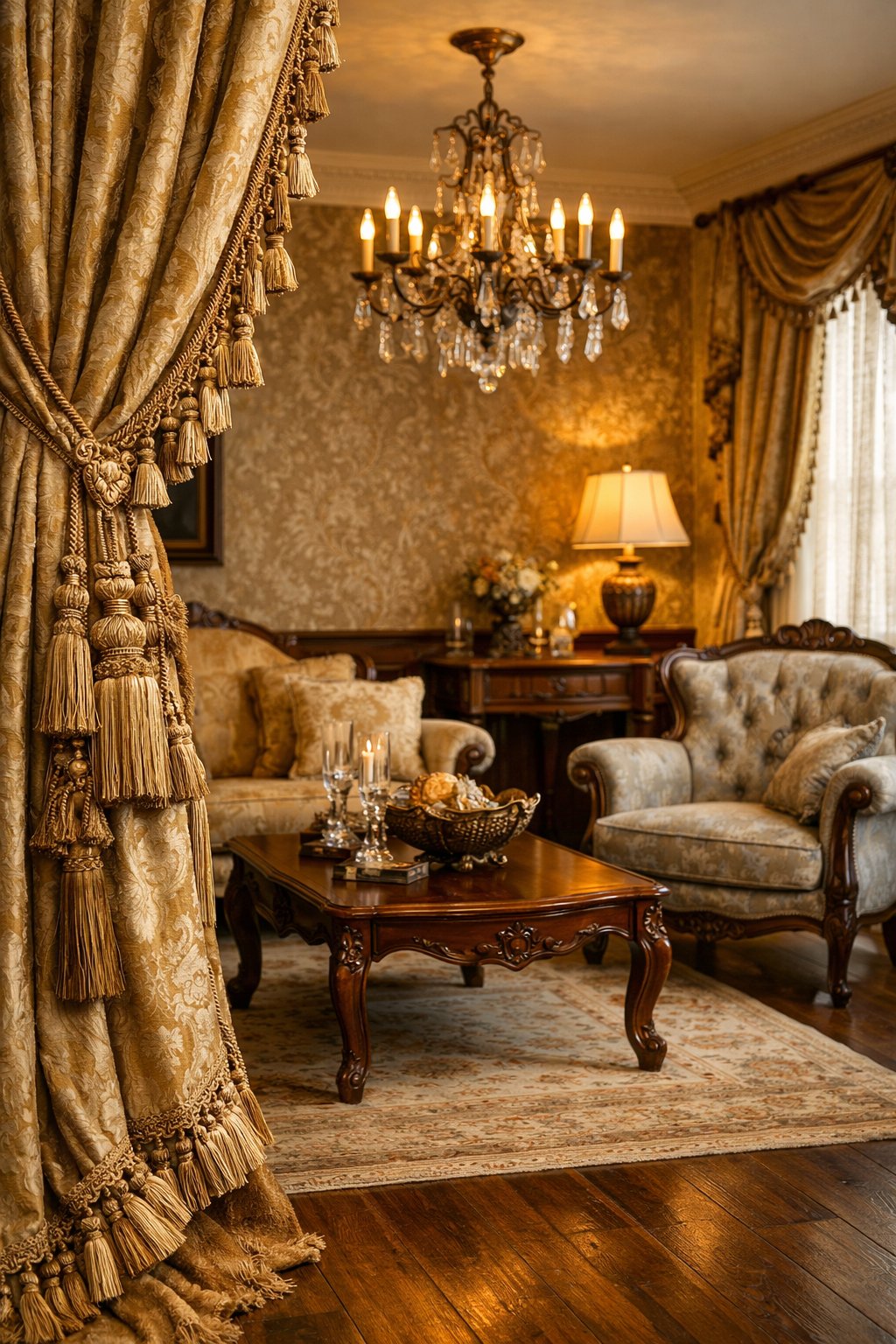
Victorian living rooms often use heavy drapery to frame windows and add depth. Thick fabrics like velvet or brocade help the room feel grounded and formal.
Tassels and trims give curtains a finished look. Tiebacks with fringe or cords hold panels neatly and show off the fabric.
Many designs layer sheer curtains under the main drapes. This setup lets in light while keeping privacy and a classic style.
7) Select intricate wooden moldings and ceiling medallions
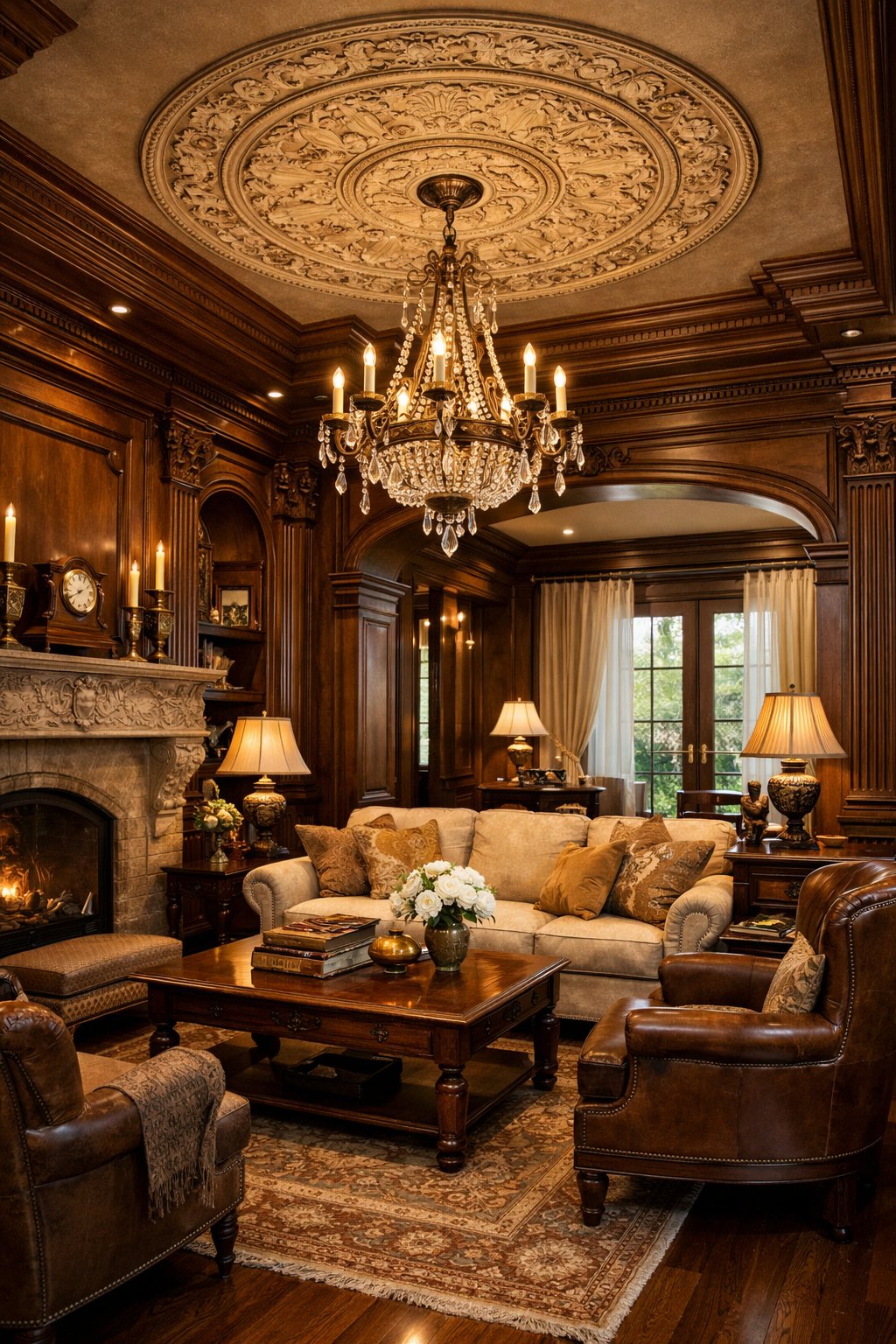
Intricate wooden moldings shape the walls and ceilings of a Victorian living room. They add depth and highlight the room’s structure without heavy decoration.
Ceiling medallions draw the eye upward and frame light fixtures. Designers often place them at the center of the ceiling to support chandeliers or pendant lights.
Many Victorian rooms use painted or stained wood details. White, cream, or soft gold finishes keep the look classic and balanced.
Key Victorian Design Principles
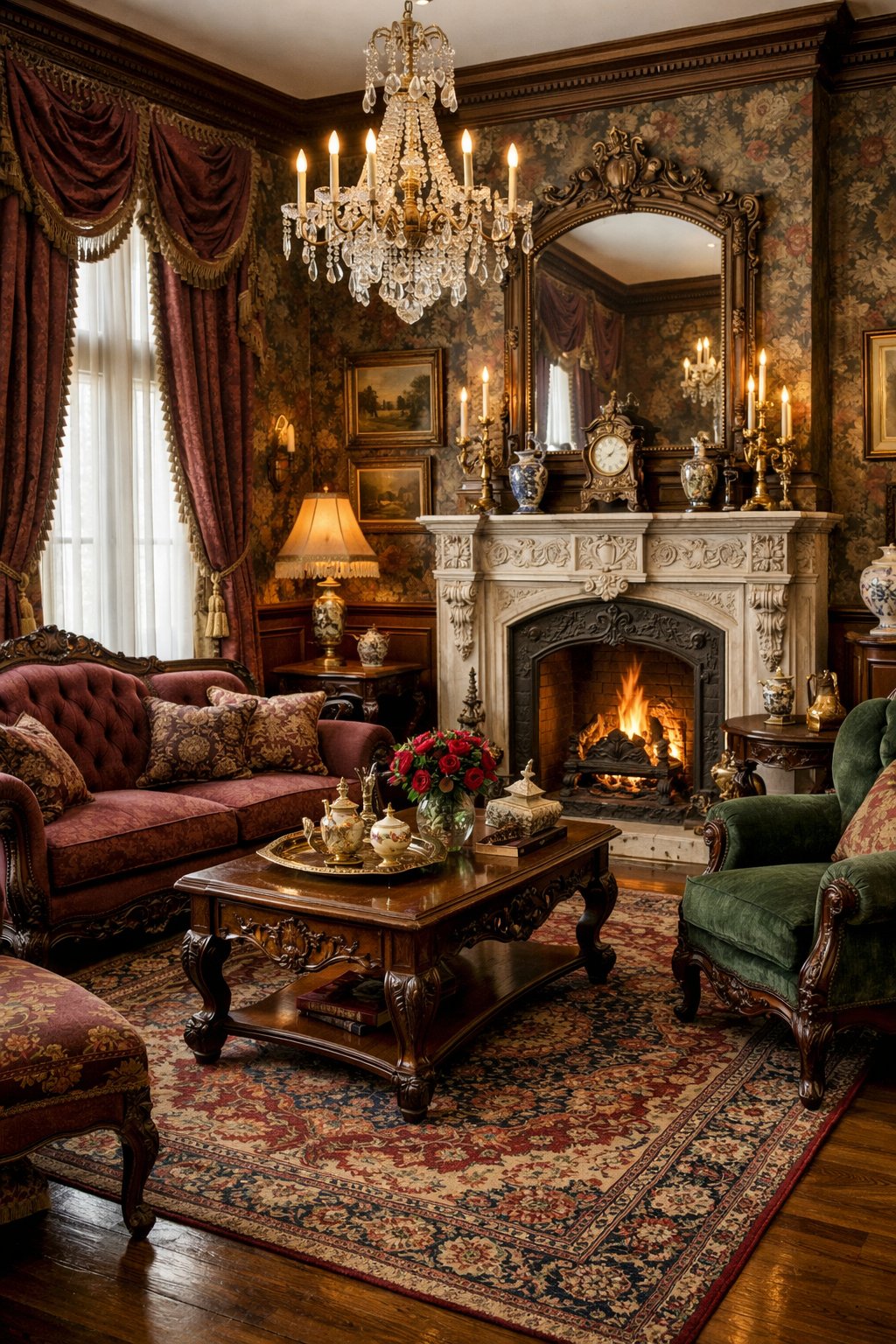
Victorian living rooms rely on rich color choices and strong built-in features. These elements shape the mood, show skill, and give the room a finished look.
Understanding Period Color Palettes
Victorian color palettes favor deep, warm tones. Designers used color to create comfort and show status. Walls often carried bold shades, balanced with lighter trim.
Common colors included burgundy, forest green, navy, and deep brown. These shades worked well with low light and heavy fabrics. Accent colors added contrast without looking bright.
| Main Color | Typical Use |
|---|---|
| Burgundy | Wall paint, rugs |
| Dark Green | Upholstery, drapes |
| Navy | Feature walls |
| Cream | Trim, ceilings |
Victorian rooms often layered color. A dark wall paired with lighter trim and patterned textiles created depth. Modern spaces can copy this look by using one strong wall color and softer tones around it.
Importance of Architectural Details
Victorian design places strong focus on fixed details. These features give the room structure and history. Fireplaces often serve as the main focal point.
Common details include crown molding, ceiling medallions, wood paneling, and tall baseboards. These elements frame the space and add texture without extra decor.
Built-in features matter more than furniture style. A simple sofa still fits if the room keeps its original trim and moldings. When original details do not exist, added molding or paneling can recreate the look.
Attention to proportion matters. Tall windows, high ceilings, and wide door frames help balance heavy colors and furnishings.
Incorporating Victorian Elements in Modern Spaces
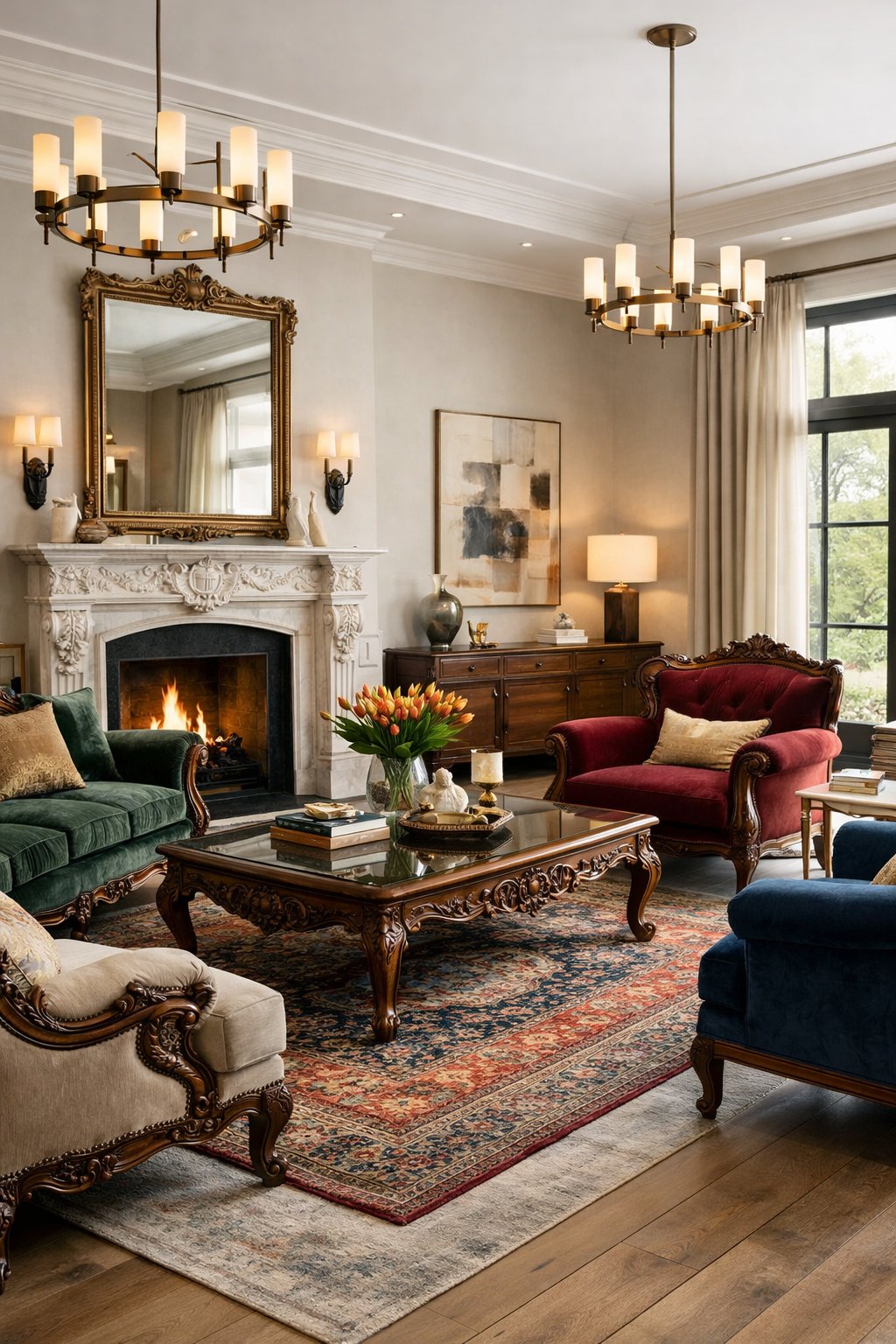
Designers often pair classic Victorian details with clean modern lines to create rooms that feel rich but practical. The goal is balance through careful choices in furniture and lighting.
Blending Antique and Contemporary Furniture
They mix antique pieces with modern furniture to keep the room functional and calm. A carved wood sofa table can sit next to a simple modern sofa. This contrast highlights detail without making the space feel crowded.
They focus on a few strong Victorian items instead of filling the room. Common anchor pieces include tufted sofas, ornate armchairs, or marble-topped tables. Modern items should stay low-profile and solid in color.
Helpful pairings include:
- Victorian sofa + modern metal coffee table
- Antique sideboard + sleek wall art
- Carved wood chair + neutral fabric cushions
They often use a limited color palette. Deep tones like navy, burgundy, or forest green work well with modern neutrals such as cream or gray.
Modern Lighting with Victorian Flair
They use lighting to connect old and new styles. Victorian rooms often featured layered light, and modern spaces benefit from the same approach. Designers combine ambient, task, and accent lighting for control and comfort.
They choose fixtures with classic shapes but updated finishes. A chandelier with clean lines or a brass pendant with simple glass works well.
Popular lighting choices include:
- Chandeliers with minimal ornament
- Wall sconces with fabric or frosted shades
- Table lamps with ceramic or metal bases
They avoid harsh white light. Warm bulbs help highlight textures like wood, velvet, and patterned wallpaper while keeping the room inviting.