Victorian Furniture Ideas For Elegant & Timeless Interior: 7 Curated Design Essentials
Victorian furniture brings order, beauty, and lasting style into a home through careful design and quality materials. This article explains how Victorian furniture ideas help create an elegant and timeless interior that feels rich without feeling dated. The style reflects a clear respect for detail, balance, and purpose.
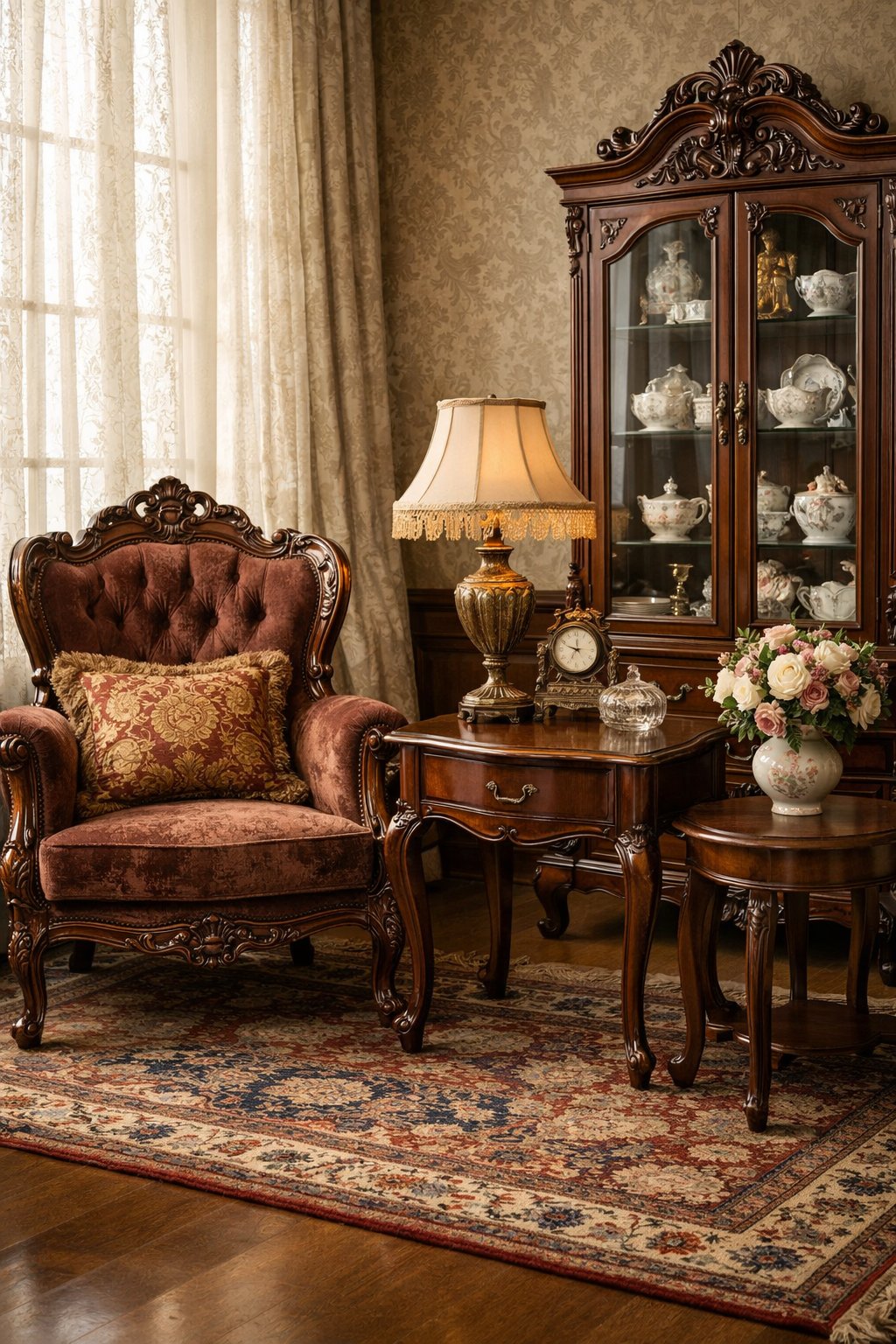
The article guides how different furniture pieces work together, why materials and finishes matter, and how classic forms still fit today’s homes. It also shows how traditional Victorian elements blend with modern spaces to create a look that feels refined, warm, and practical.
1) Mahogany Oval Back Chairs
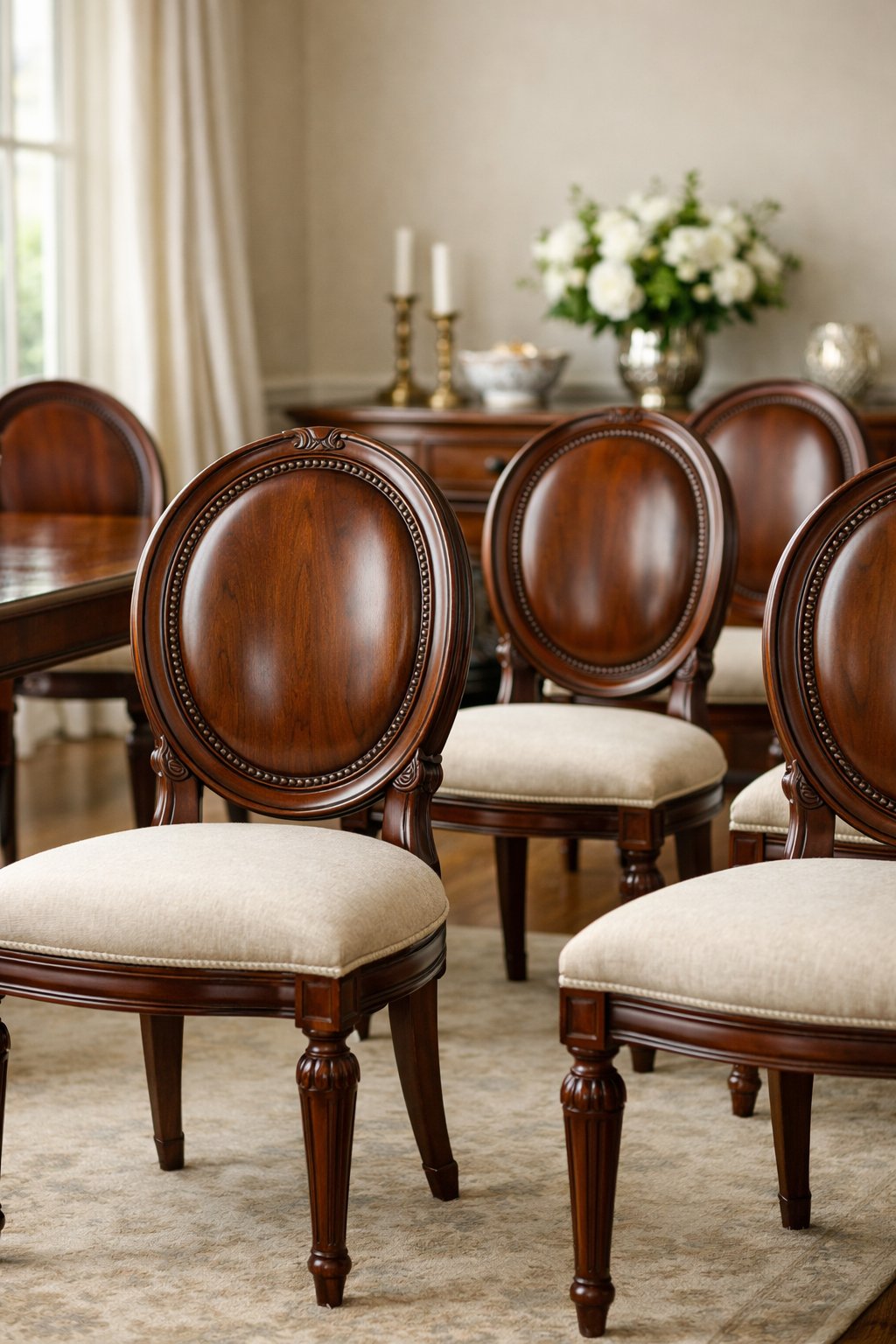
Mahogany oval back chairs reflect common Victorian design. Makers favored mahogany for its strength and smooth finish. The oval back adds a soft shape to formal rooms.
Designs often show carved details and simple floral lines. Upholstered seats improve comfort without changing the classic look. Dark wood tones pair well with neutral walls.
These chairs suit dining rooms, studies, and sitting areas. They work best as matching sets or as accent pieces.
2) Walnut Marble-Top Bedside Tables
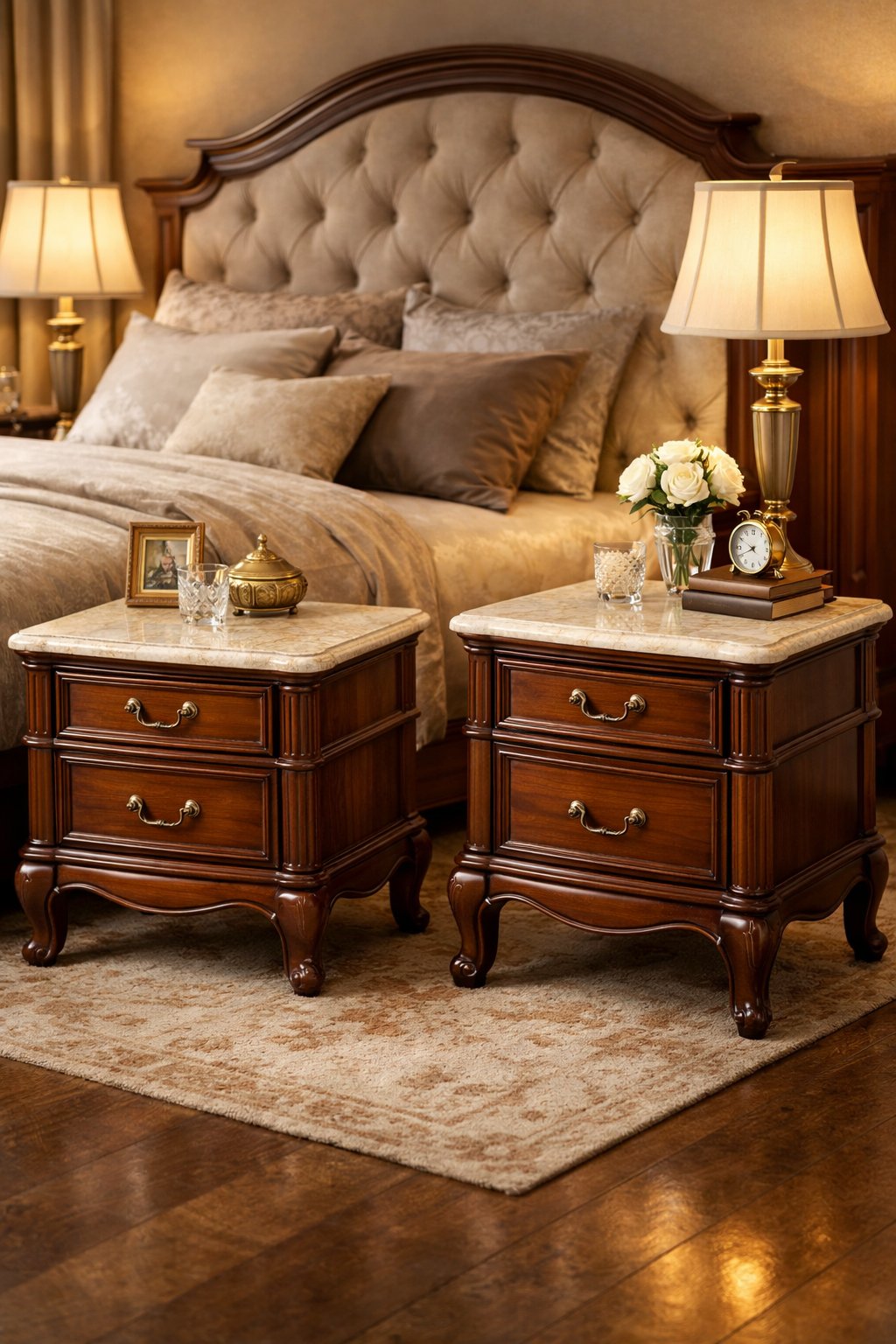
Walnut marble-top bedside tables reflect common Victorian design choices. Makers often paired dark walnut wood with white or light marble tops.
The marble surface resists heat and stains, which made it practical for daily use. The walnut base adds warmth and visual weight near the bed.
Designs often include curved legs, small drawers, and carved details. These features fit well in elegant interiors without drawing too much attention.
3) Rosewood Victorian Writing Desks
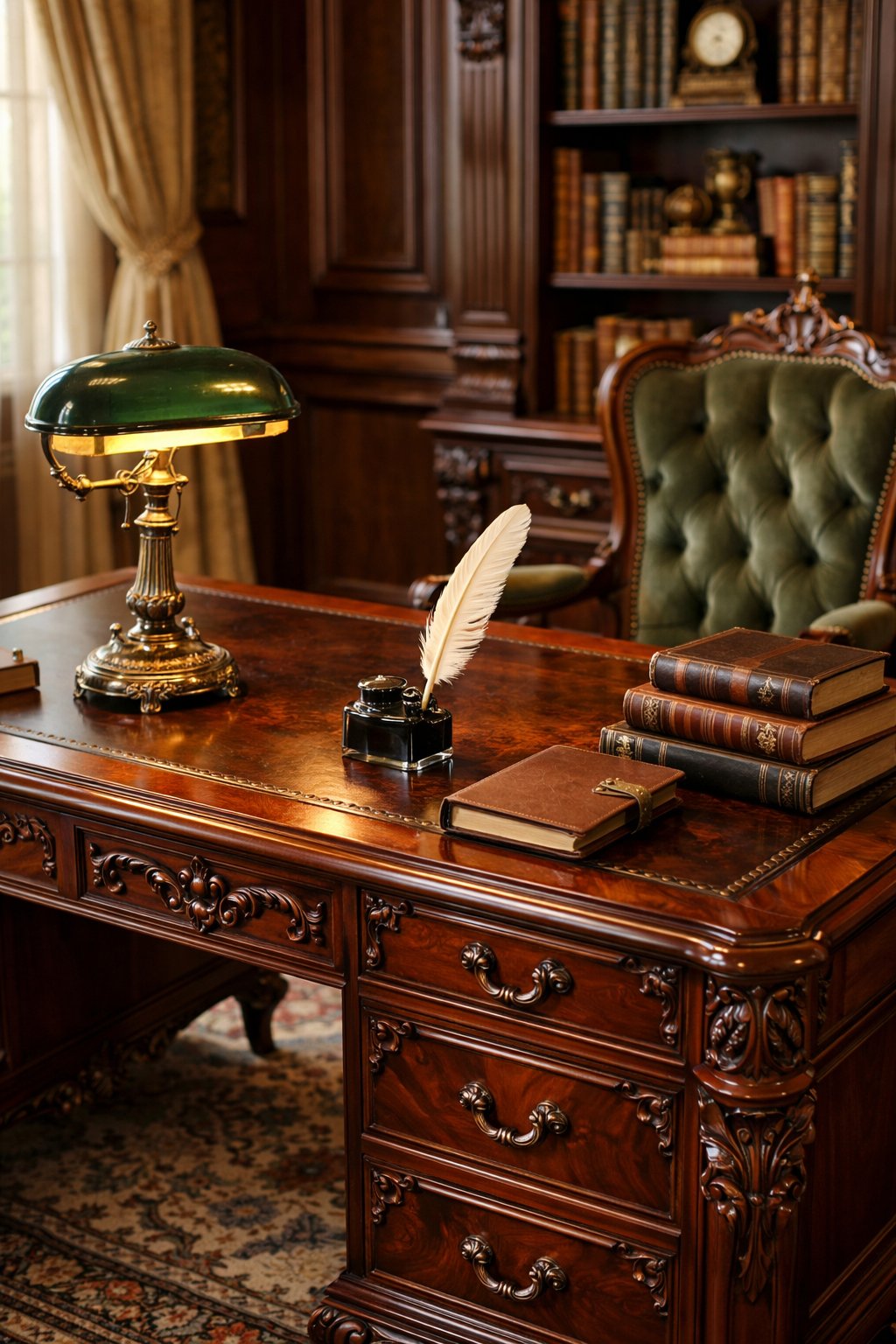
Rosewood writing desks fit well in Victorian interiors. They show dark grain, smooth polish, and fine details.
Many designs include drawers, turned legs, and carved edges. Some feature leather tops or marble accents.
Designers place these desks in studies or home offices. They pair them with oval-back chairs and warm wall colors.
4) Intricately Carved Mahogany Wardrobes
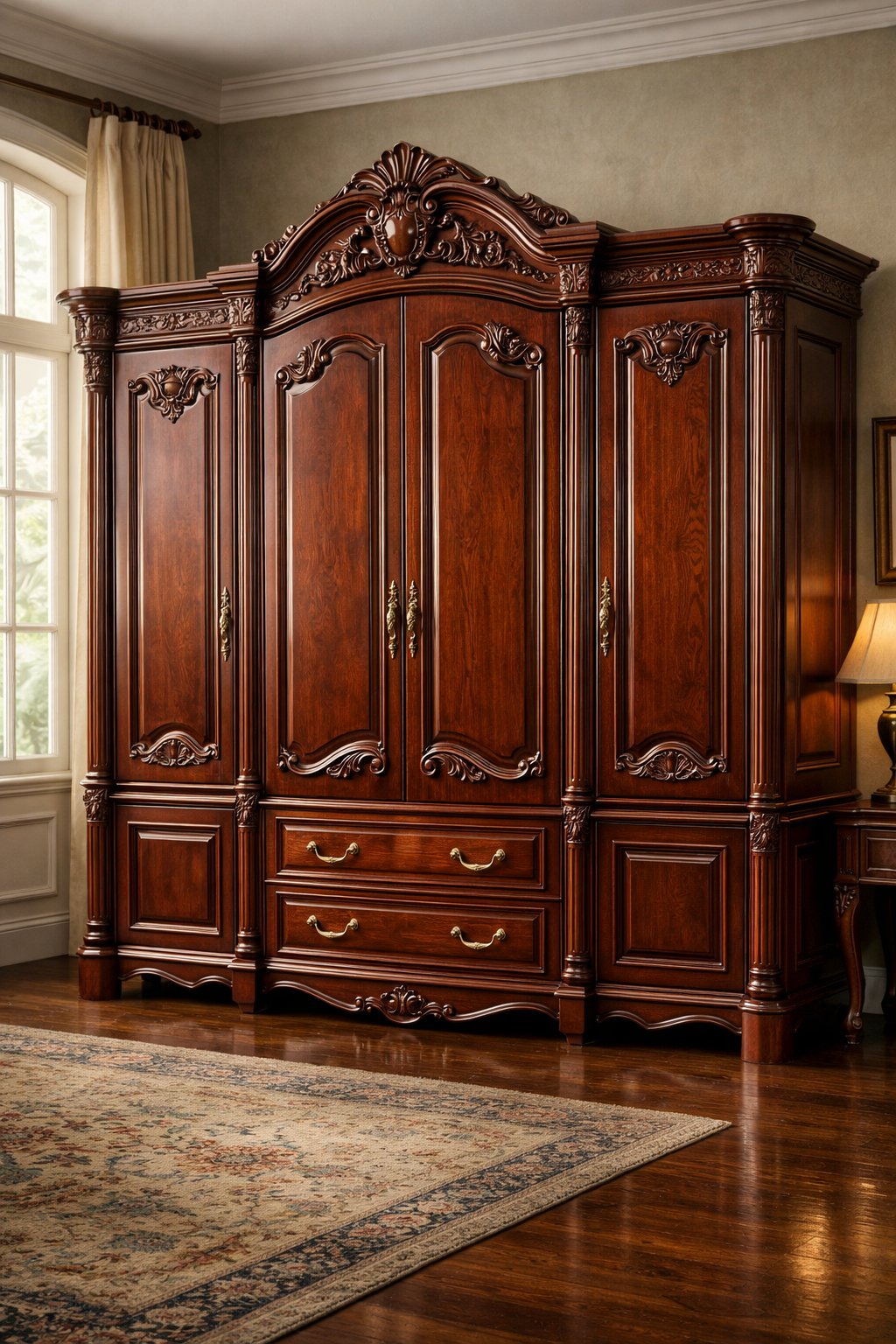
Victorian homes often feature mahogany wardrobes with deep carvings and solid frames. Craftsmen carved floral and geometric details that add texture without excess.
These wardrobes use dark wood tones that suit period rooms. They provide storage while serving as a visual anchor. Designers place them in bedrooms or halls to reinforce a formal, historic look.
5) Velvet Upholstered Armchairs with Floral Patterns
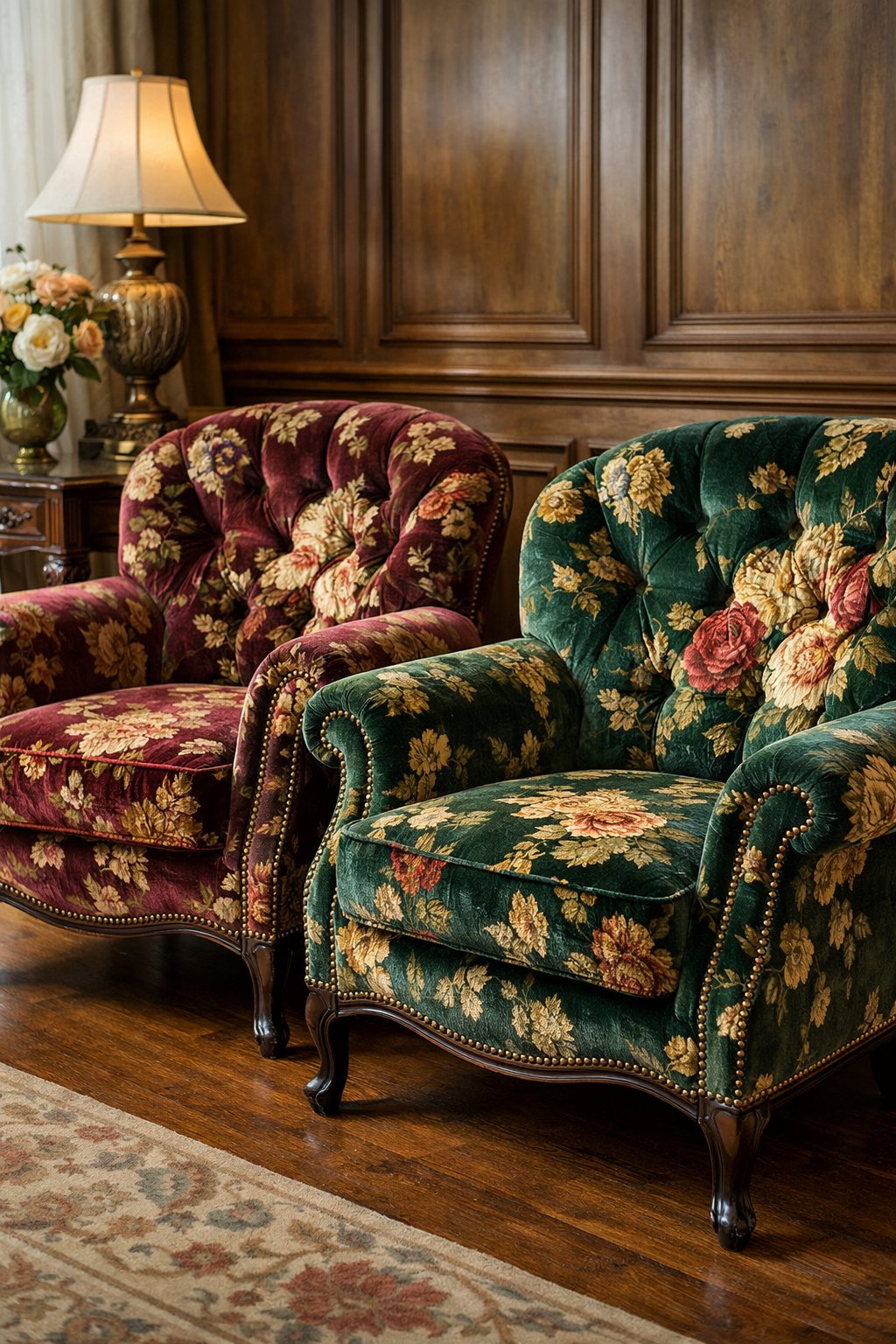
Velvet upholstered armchairs with floral patterns reflect Victorian taste for comfort and decoration. Designers often use rich velvet to add softness and depth to formal rooms.
Floral patterns bring natural detail into the space. Small or muted prints suit elegant interiors and avoid visual clutter.
Wood frames often feature carved details and dark finishes like walnut or mahogany. These chairs work well in living rooms, bedrooms, or reading corners.
6) Dark Wood Sideboards with Ornate Brass Handles
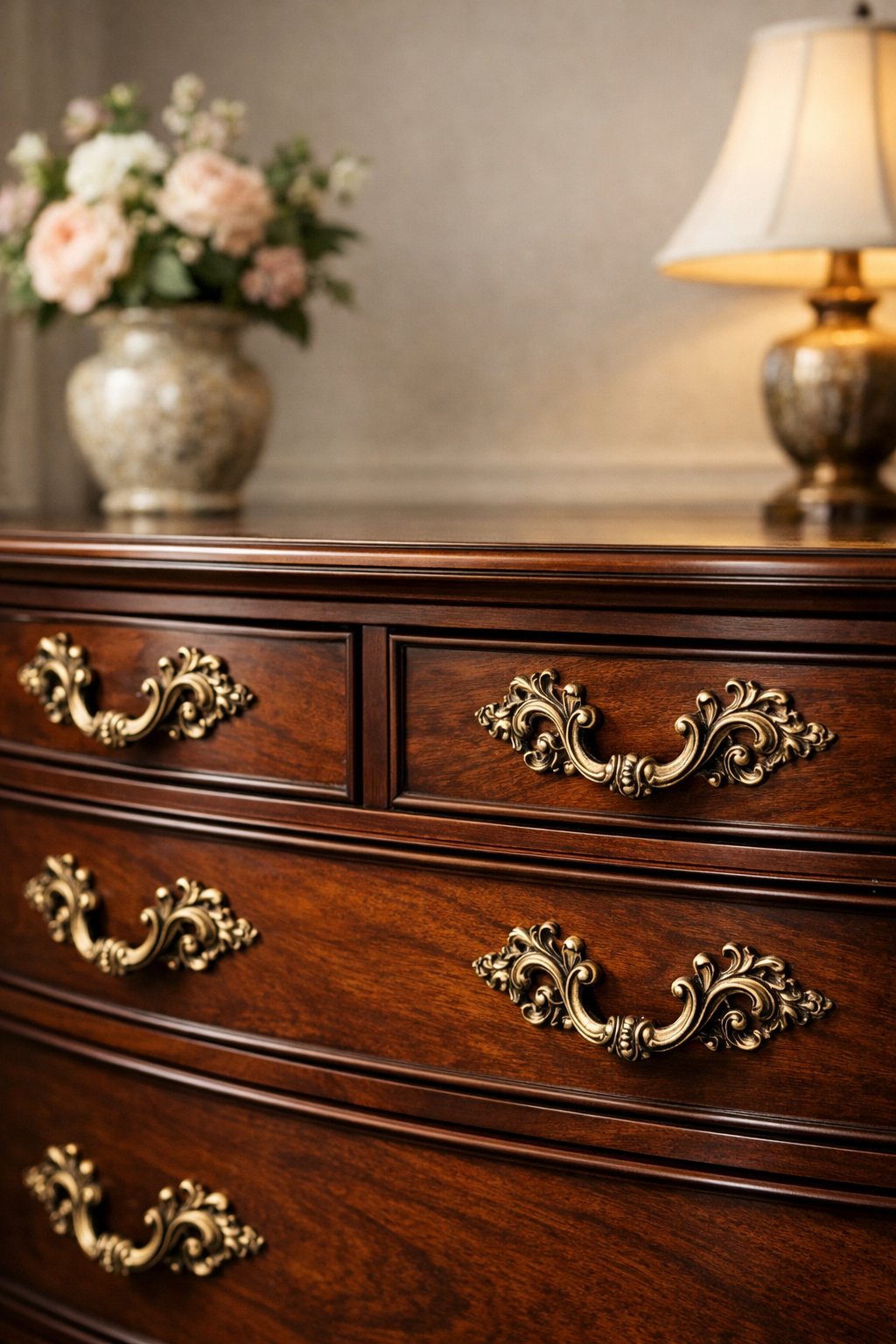
Dark wood sideboards anchor Victorian rooms with a strong, grounded look. Craftsmen often used mahogany or walnut, which aged well and showed rich grain.
Ornate brass handles add contrast and visual interest. Designers shaped them with curves and fine details that reflect the period’s taste for decoration.
These sideboards offer practical storage with drawers and cabinets. They fit well in dining rooms, hallways, and formal living spaces.
7) Marble Fireplace Mantels with Victorian Detailing
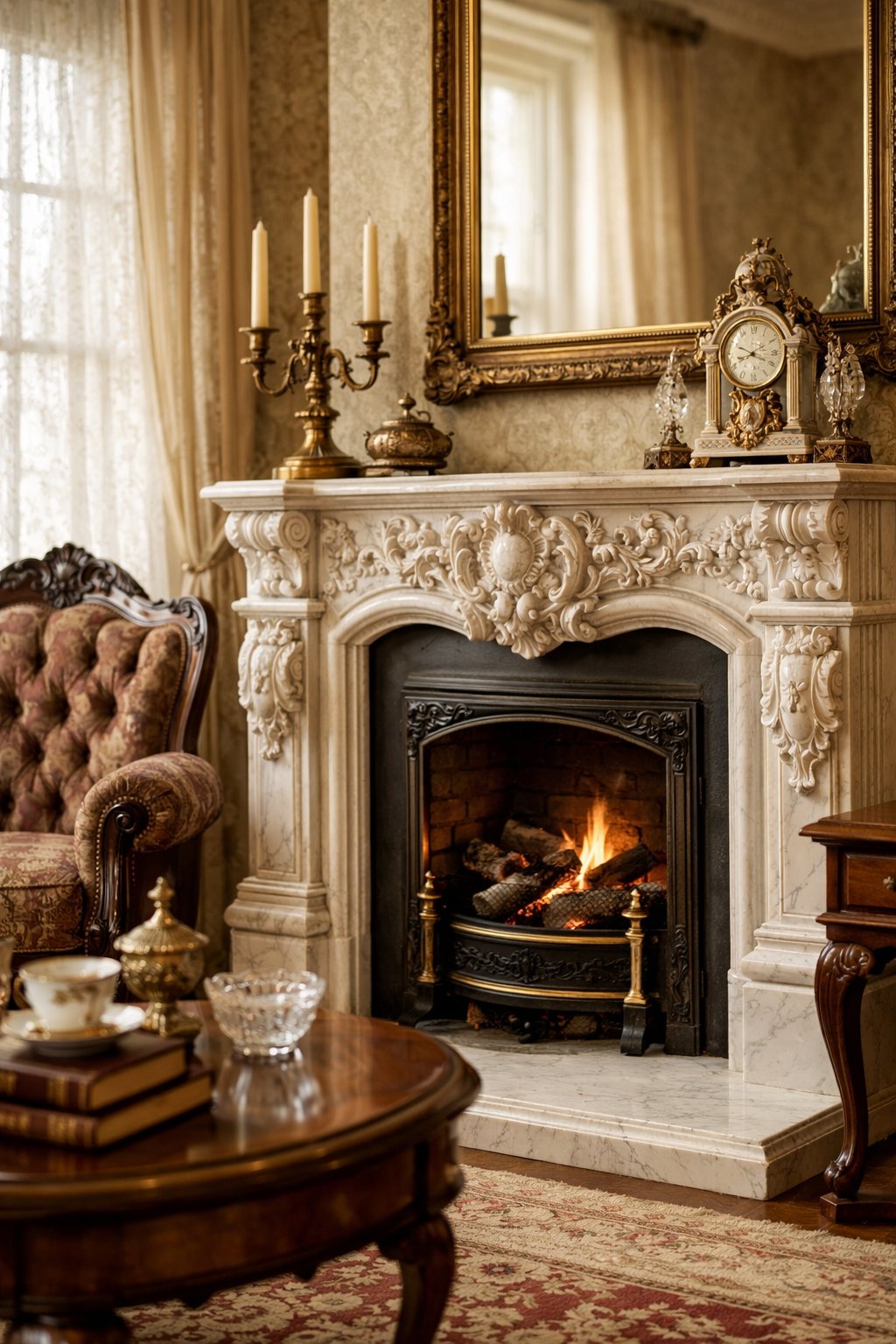
Victorian homes often used marble fireplace mantels as a key focal point. Builders favored marble for its durability and clean finish, and they shaped it with carved columns, arches, and floral details.
These mantels balanced function and decoration. They framed cast iron fireboxes and anchored formal rooms like parlors and dining spaces.
Key Elements of Victorian Furniture
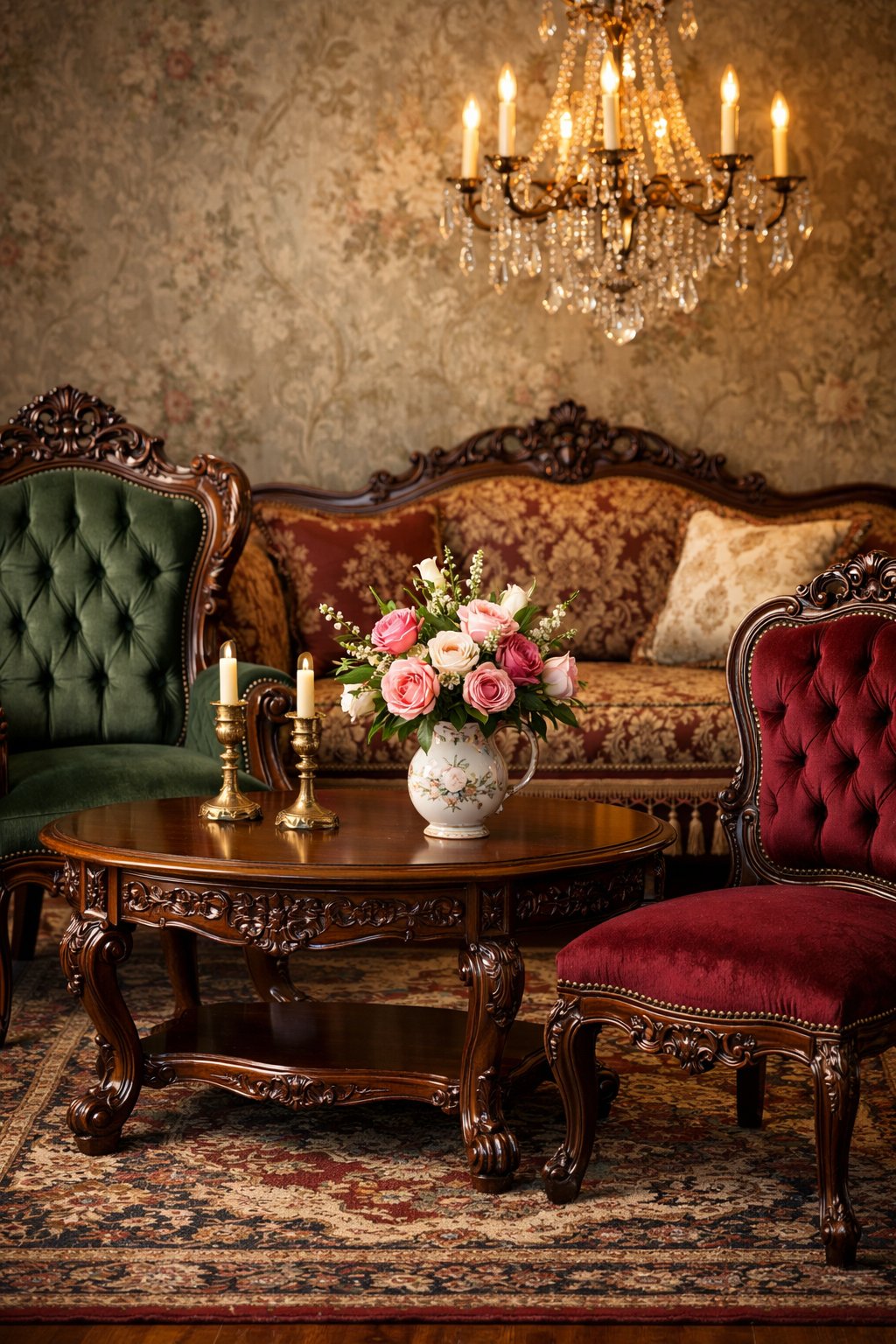
Victorian furniture relies on rich materials, skilled handwork, and bold visual details. These elements work together to create pieces that feel formal, detailed, and long-lasting.
Materials and Craftsmanship
Victorian furniture makers favored solid hardwoods that could handle deep carving and heavy use. Mahogany, walnut, oak, and rosewood appeared most often. Craftsmen shaped these woods by hand, which gave each piece small, natural variations.
They used strong joinery instead of glue alone. Mortise-and-tenon joints helped chairs, tables, and cabinets last for decades. Makers often polished surfaces with shellac to add warmth and depth.
Common materials include:
| Material | Purpose | Visual Effect |
|---|---|---|
| Mahogany | Tables, cabinets | Smooth grain, deep red tone |
| Walnut | Chairs, sideboards | Warm brown color |
| Oak | Large furniture | Heavy, textured look |
| Brass | Handles, trims | Subtle shine |
Distinctive Features and Silhouettes
Victorian furniture shows clear and formal shapes. Pieces often look tall, wide, and solid. Curved lines appear alongside straight edges, which creates contrast without feeling loose or casual.
Carved details stand out as a key feature. Makers added floral patterns, scrolls, and geometric designs to legs, backs, and frames. Many chairs use high backs, while sofas and settees feel structured and upright.
Common visual traits include:
- Turned legs with rounded or spiral shapes
- Claw or bun feet on chairs and tables
- Decorative moldings along edges
- Symmetry in large furniture pieces
These features give rooms a formal and balanced look.
Popular Upholstery Techniques
Victorian upholstery focuses on comfort and display. Thick padding made seating firm but supportive. Upholsterers stretched fabric tight to keep clean lines and sharp edges.
Button tufting appears often on chair backs and sofa arms. This method pulls fabric inward at set points, which creates a quilted pattern. Deep-set buttons also help hold padding in place.
Popular fabric choices include:
- Velvet for softness and depth
- Damask for detailed patterns
- Brocade for raised texture
Fringe, piping, and nailhead trim finish the edges. These details add structure and visual weight without changing the shape of the piece.
Incorporating Victorian Furniture Into Modern Interiors
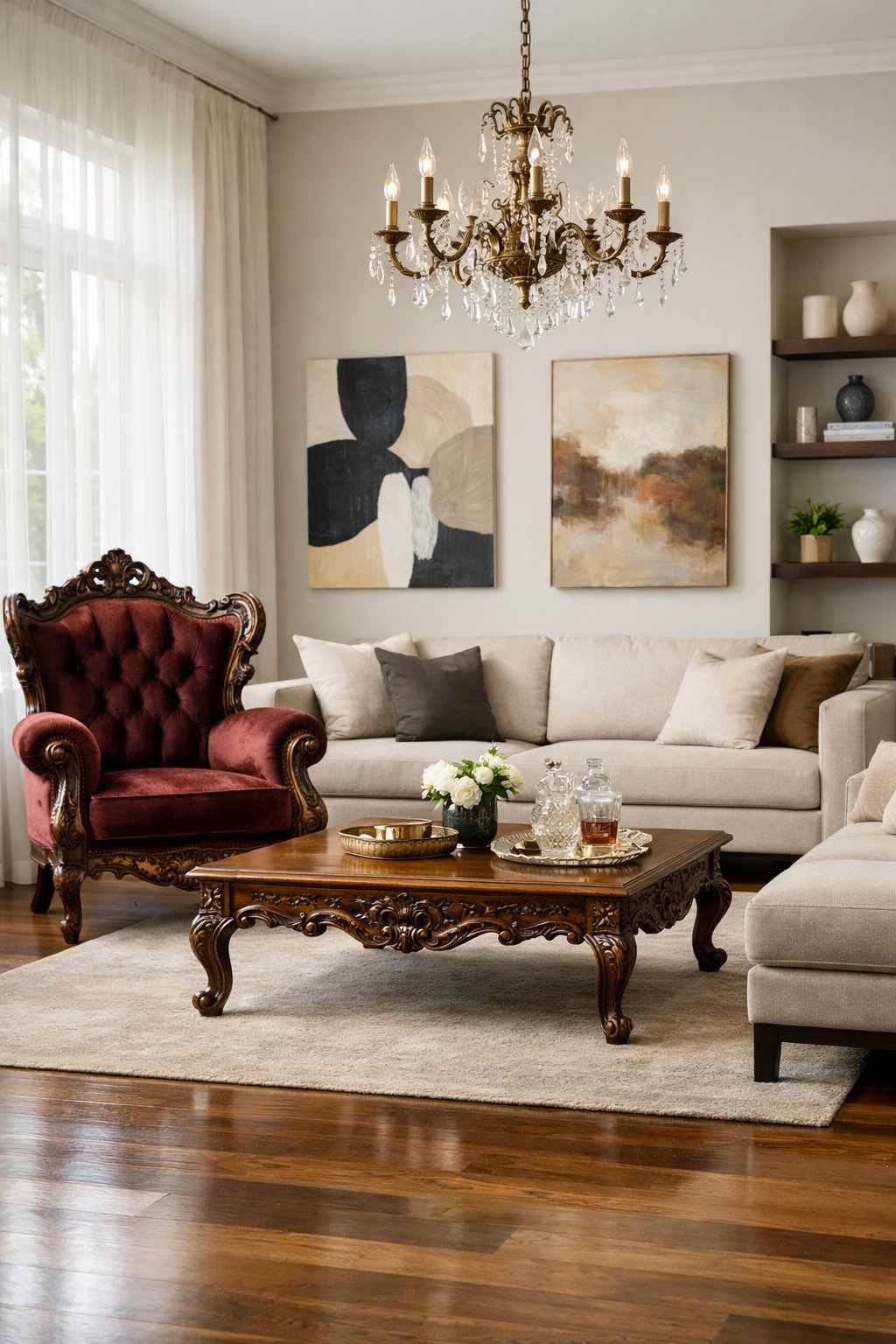
Designers often pair Victorian furniture with modern elements to keep spaces elegant and usable. They focus on contrast, smart color choices, and layouts that support daily life.
Blending Old and New
Victorian furniture brings carved wood, curved lines, and rich detail. Modern interiors add clean shapes and open space. Designers blend both by choosing one Victorian statement piece, such as a tufted sofa or carved sideboard, and placing it among simple items.
They often mix materials to keep the room grounded. A dark wood table can sit on a light rug. A classic armchair can face a plain, modern sofa.
Effective pairings include:
- Ornate chairs with simple tables
- Antique cabinets with modern lighting
- Decorative mirrors above clean-lined consoles
This approach keeps the room calm while letting key pieces stand out.
Color Palettes and Patterns
Color plays a major role when mixing Victorian and modern styles. Victorian furniture often uses deep tones like burgundy, navy, or forest green. Modern interiors favor soft neutrals.
Designers balance this by using neutral walls and floors. They then add color through furniture, art, or textiles. This keeps the space from feeling heavy.
Patterns work best in small doses. Floral or damask fabrics can appear on one chair or pillow, not across the whole room.
Common color choices:
- Walls: warm white, light gray, soft beige
- Accents: deep blue, emerald, muted gold
- Metals: brass, bronze, or black
This mix feels refined and controlled.
Maintaining Balance and Functionality
Victorian furniture can feel large, so scale matters. Designers measure carefully and avoid crowding the room. They leave open paths and use fewer pieces.
Function stays a priority. Storage pieces like cabinets or chests serve daily needs. Seating remains comfortable and placed for conversation.
| Focus Area | Practical Choice |
|---|---|
| Layout | Clear walkways |
| Storage | Multi-use furniture |
| Comfort | Supportive seating |
By limiting décor and choosing useful pieces, the space stays elegant and easy to live in.