
Bathroom Storage Hacks: 7 Smart Ways To Maximize Space

Bathrooms often feel crowded, even when they serve a small household. Smart storage hacks help turn tight spaces into clean, easy-to-use rooms without major changes.
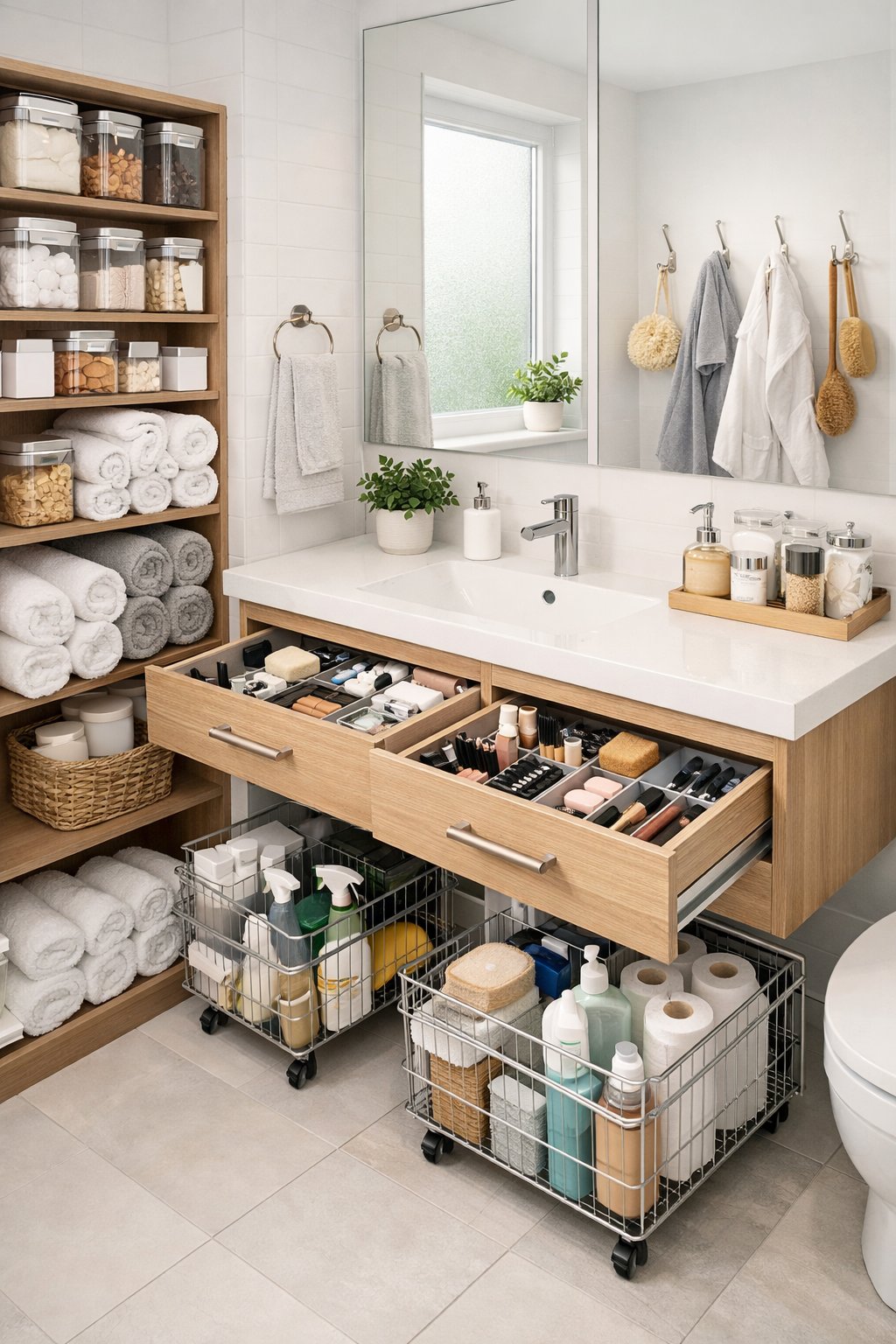
This article explores practical ways people organize daily items, use overlooked space, and avoid common layout mistakes. It also explains simple principles that guide better storage choices and long-term order.
1) Install over-the-door hooks for towels and robes
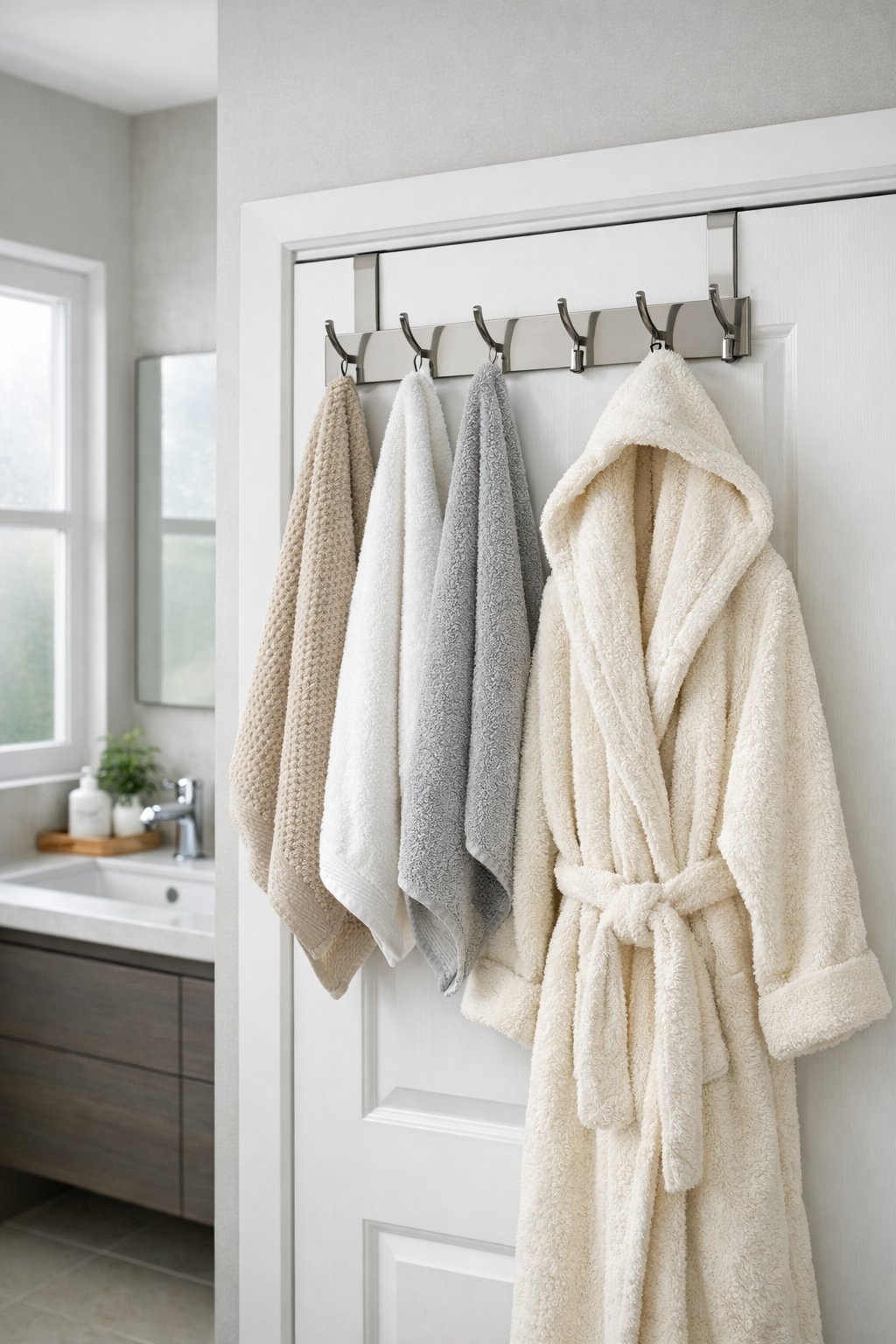
Over-the-door hooks add storage without drilling holes. They hang on the top edge of a door and use unused space.
They work well for towels and robes in small bathrooms. Install them on the bathroom door or a closet door near the shower.
Choose hooks with enough clearance so the door closes fully. Place them away from direct water spray to limit moisture buildup.
2) Use magnetic strips inside cabinet doors for small metal items
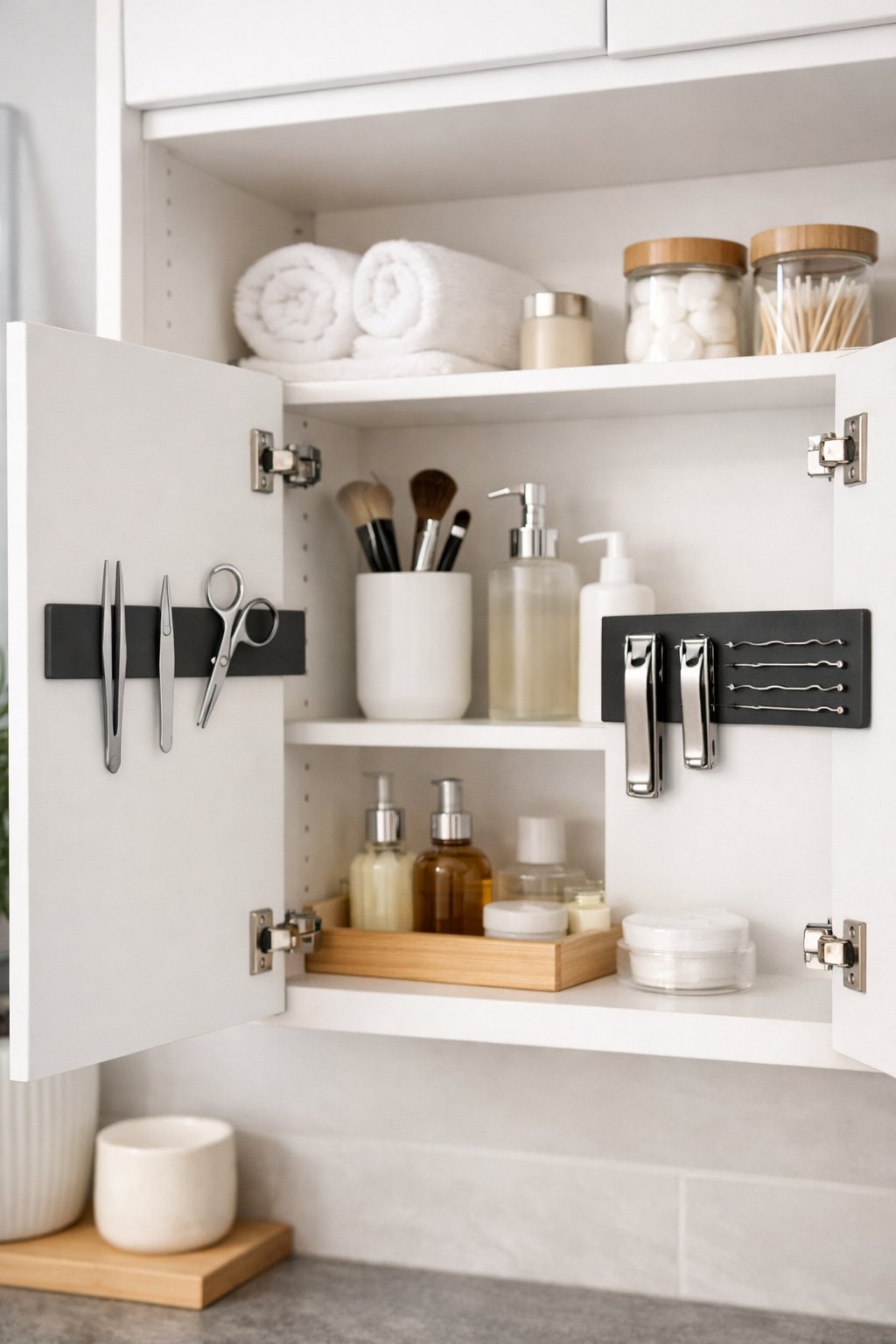
Magnetic strips inside cabinet doors turn unused space into storage. They keep small metal items off counters and drawers.
They hold tweezers, nail clippers, bobby pins, and small scissors. Items stay visible and easy to grab.
Adhesive strips work well in rentals and tight bathrooms. Place them inside vanity or medicine cabinets to keep tools hidden but close.
3) Mount floating shelves above the toilet for extra storage
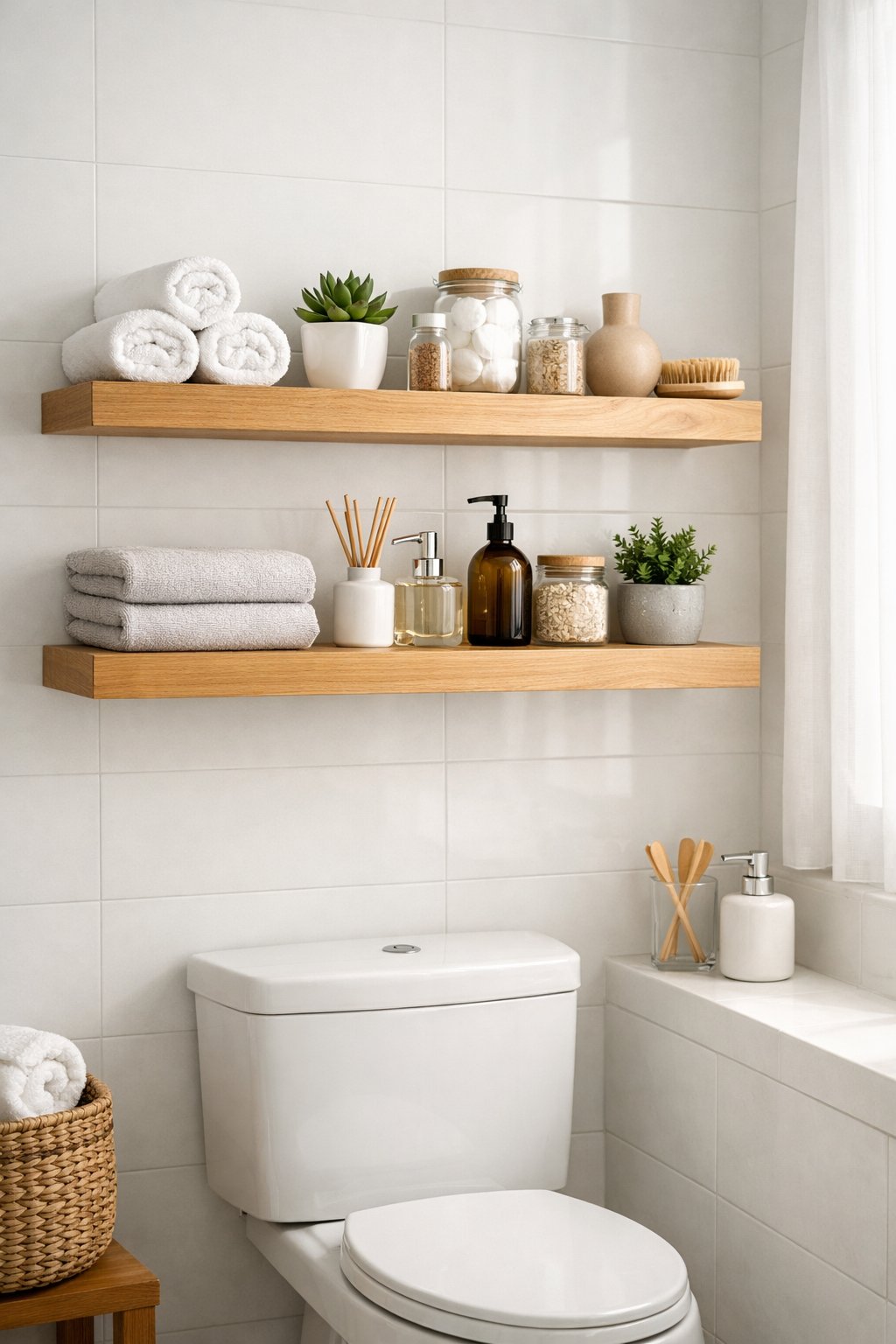
Floating shelves above the toilet add storage without using floor space. They fit small bathrooms and keep items within reach.
They should mount high enough to avoid bumps. They can hold towels, toilet paper, or daily toiletries.
A small tray or basket keeps items neat. Simple decor like plants or framed art also works.
4) Use stackable clear bins to organize toiletries inside cabinets
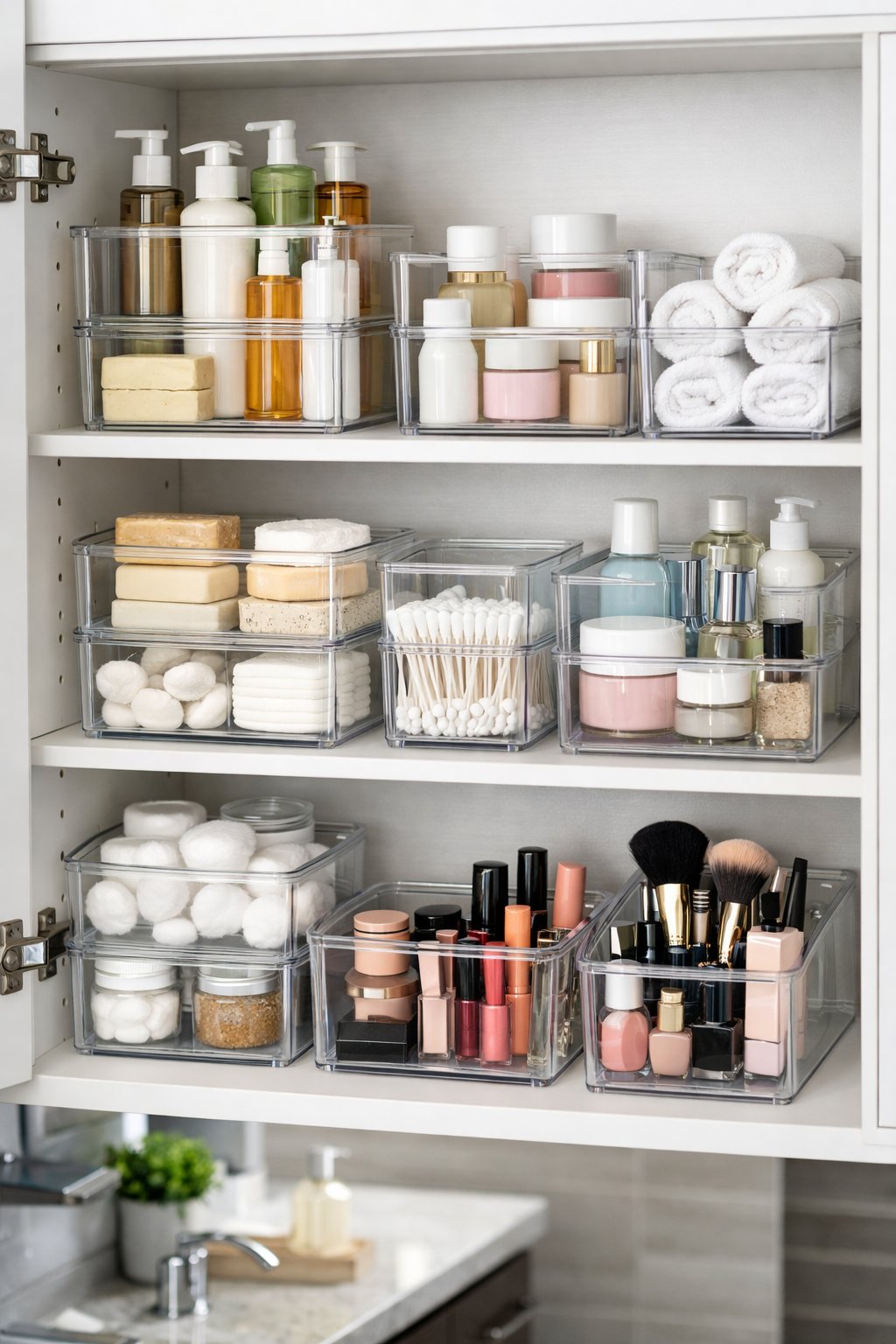
They keep toiletries sorted and easy to see. Clear sides let users spot items fast without digging. This saves time during daily routines.
Stackable designs use vertical space inside cabinets. Users can group items by type, like skin care or dental care. The bins stay stable and reduce clutter.
Some bins include pull-out drawers or handles. These features improve access in deep cabinets. They also make cleaning and rearranging simpler.
5) Add a tension rod under the sink to hang spray bottles
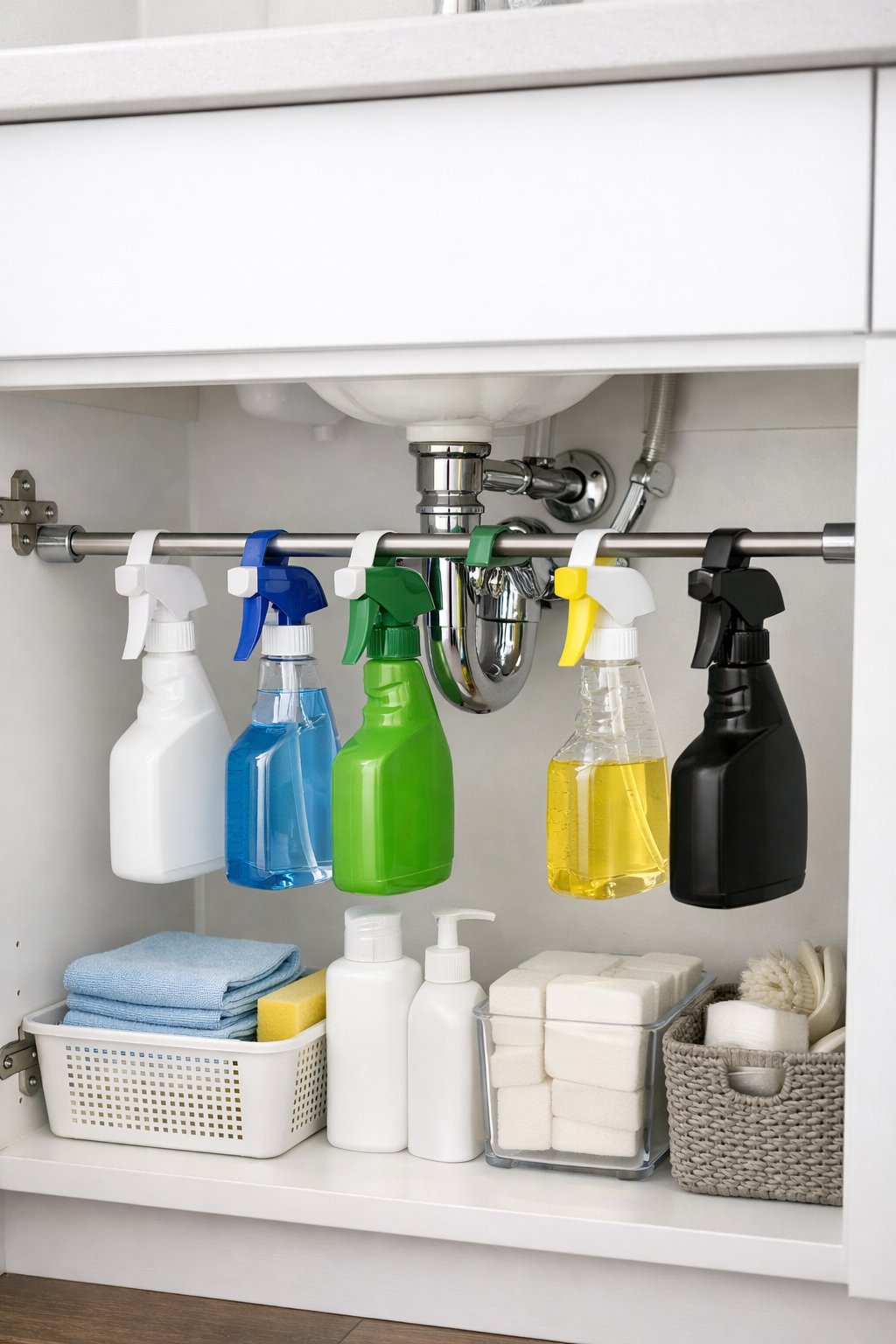
A tension rod adds simple storage under the sink. It fits between cabinet walls and installs without tools.
They can hang spray bottles by the trigger. This keeps bottles upright and easy to reach.
The open space below stays free for bins or larger items. The setup works best for small to medium bottles, not heavy bulk sizes.
6) Incorporate a multi-tiered corner shelf to maximize unused space
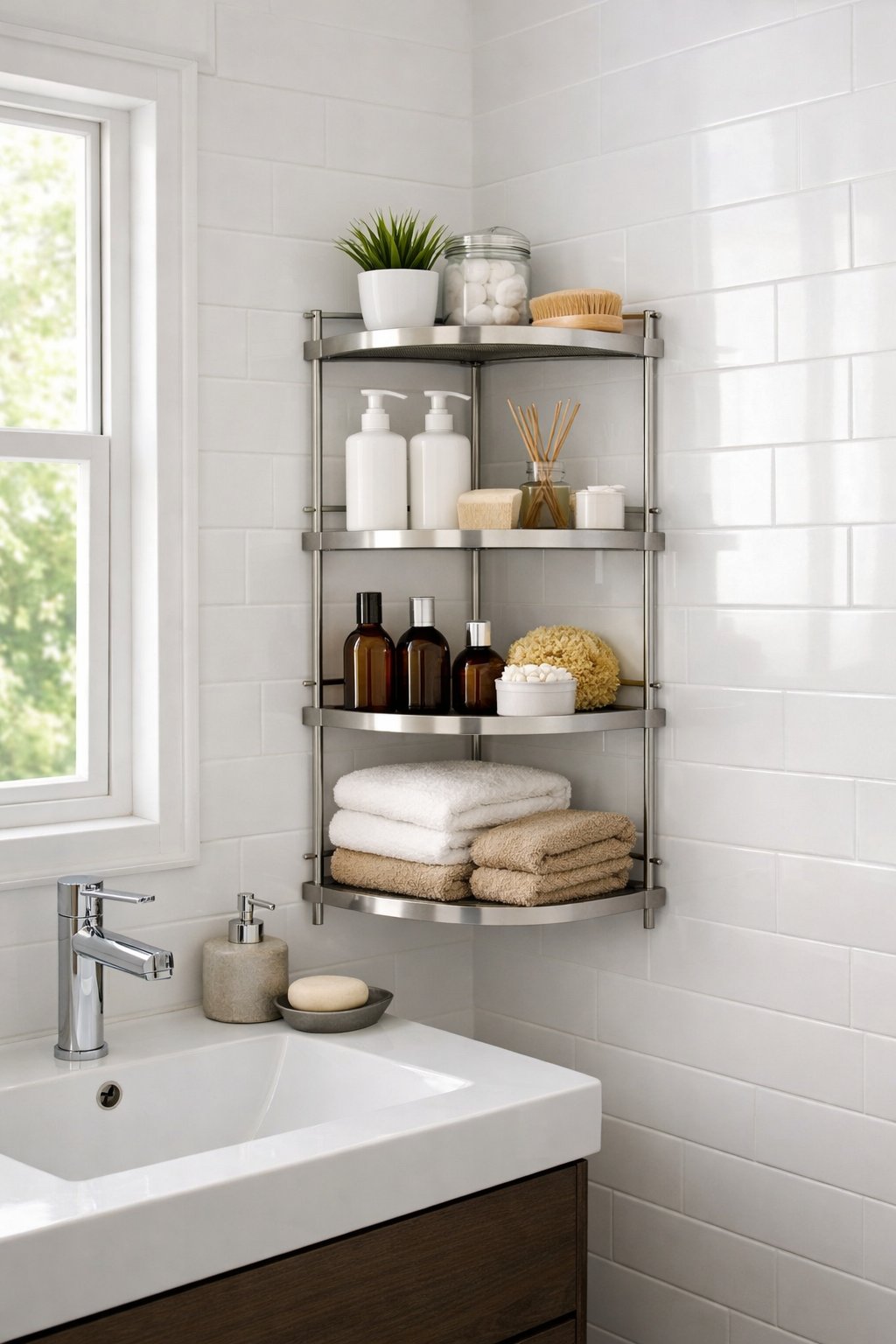
Multi-tier corner shelves turn unused corners into storage. They stack items upward and free counter space.
In bathrooms, they fit tight layouts and hold towels, bottles, and décor. A floating or freestanding unit works when drilling is not ideal.
Materials like coated metal, glass, or sealed wood handle moisture. Graduated shelf sizes follow the corner shape and keep items easy to reach.
7) Repurpose a radiator top as a surface for storing daily essentials
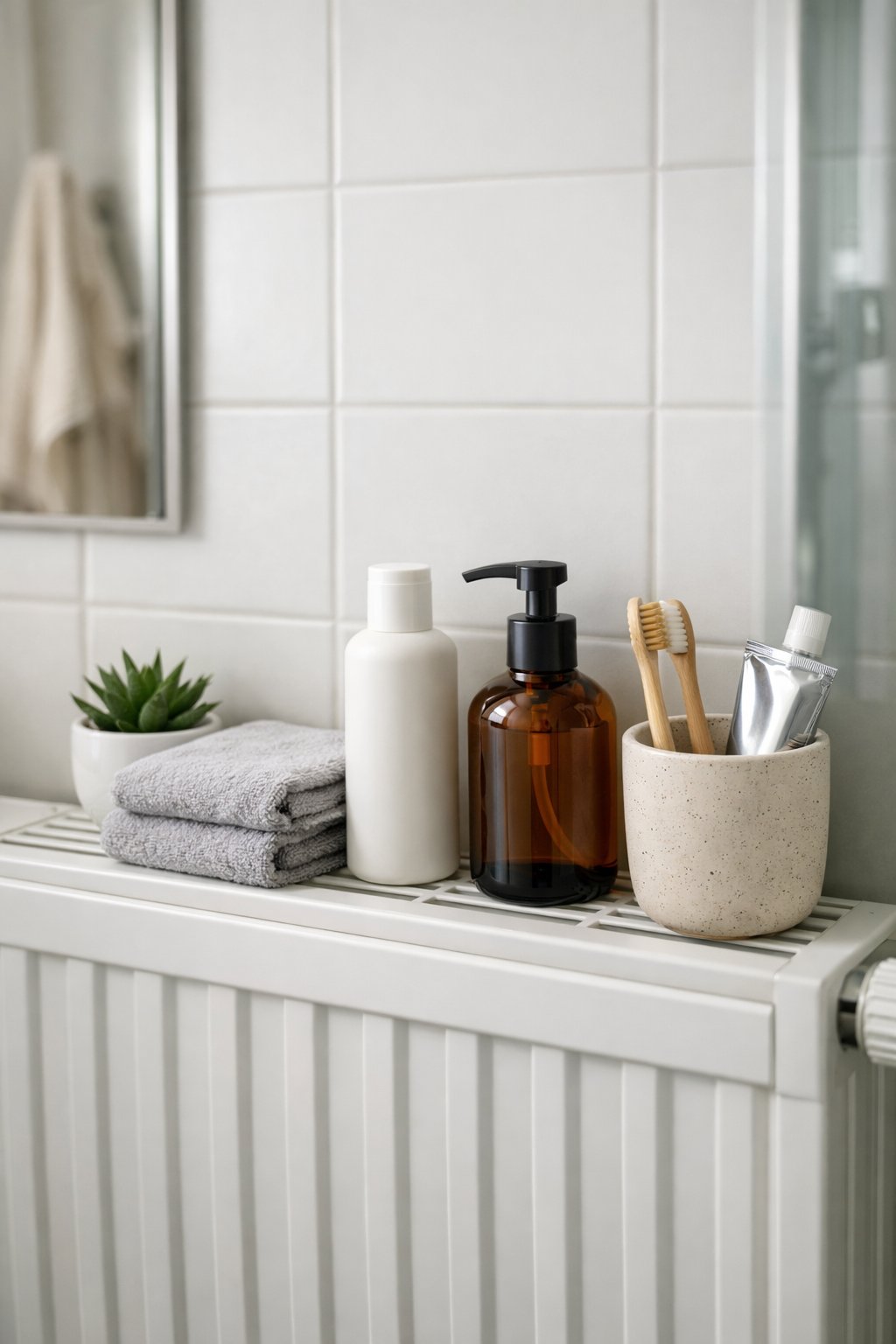
A radiator top can hold daily items without taking floor space. A slim shelf or cover creates a flat surface for soap, tissues, or a small tray.
They should choose a vented shelf to let heat move upward. This helps the room warm evenly.
They must keep items heat-safe and leave gaps near valves. A simple shelf installs fast and keeps clutter off the sink.
Key Principles For Maximizing Bathroom Storage
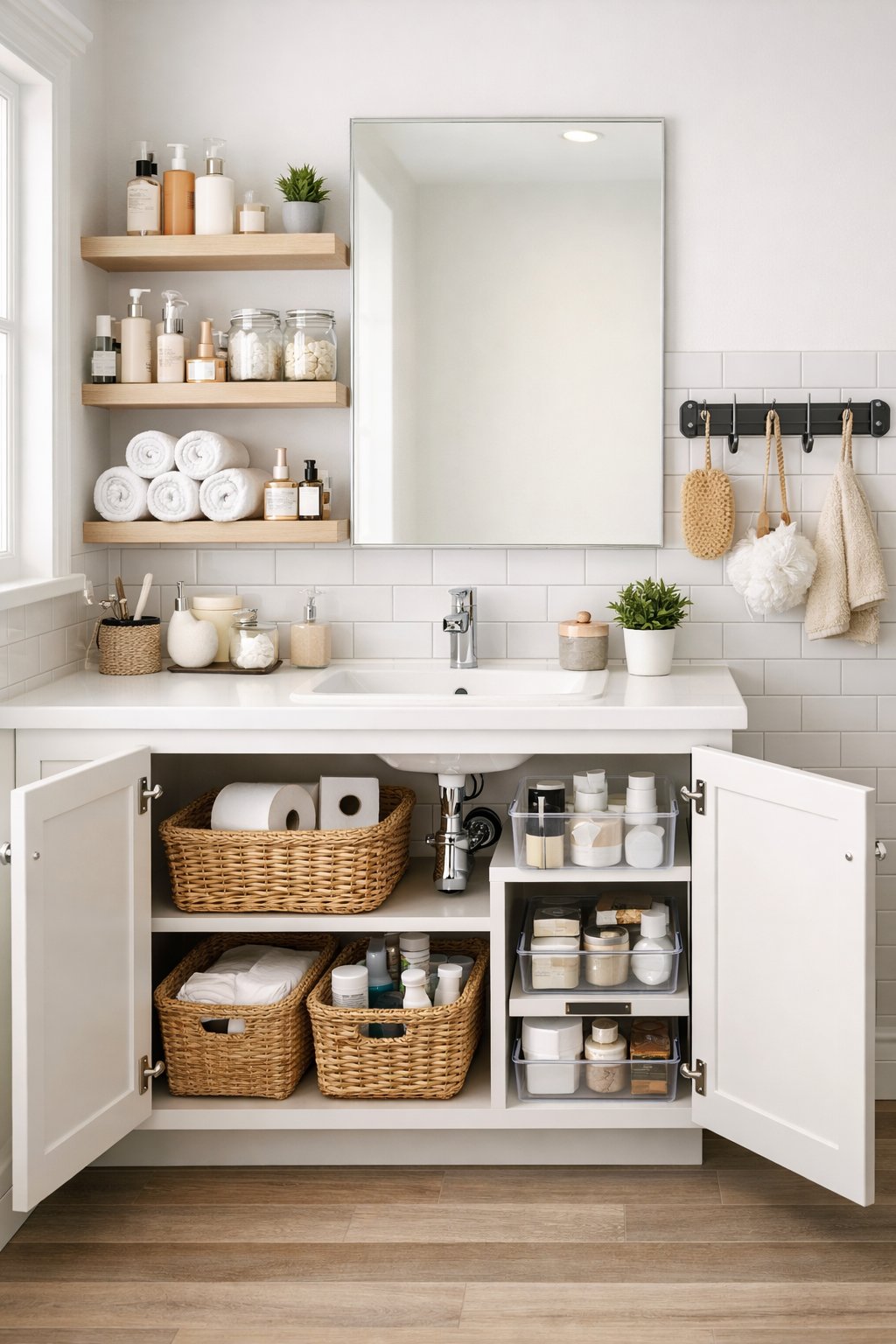
Smart bathroom storage starts with clear planning and daily use in mind. The most effective setups make use of every surface while keeping items easy to reach and simple to put away.
Understanding Available Space
They should start by mapping the room and noting every usable area. Walls, corners, and the space above toilets or doors often sit empty but hold strong storage potential.
Vertical space matters most in small bathrooms. Floating shelves, corner caddies, and slim cabinets add storage without taking floor space. Cabinets under sinks work best when they use stackable bins or pull-out trays.
They should also measure before adding storage. Tight spaces need shallow shelves or narrow racks to avoid crowding. The table shows common spaces and smart uses:
| Space | Storage Option |
|---|---|
| Above toilet | Wall shelf or cabinet |
| Shower corner | Hanging or corner caddy |
| Door back | Hooks or pocket organizer |
Prioritizing Accessibility And Functionality
They should store daily items where hands reach first. Toothbrushes, soap, and towels belong near sinks or showers, not deep in cabinets.
Function guides layout. Clear bins help users see items fast. Labels reduce time spent searching. Open shelves work well for towels, while closed cabinets hide clutter like cleaning supplies.
They should group items by task to keep routines smooth:
- Morning use: face wash, deodorant, hair tools
- Shower use: shampoo, soap, razors
- Cleaning use: sprays, sponges, gloves
They should avoid overfilling storage. A small gap between items keeps shelves usable and safe.
Common Design Mistakes In Bathroom Organization
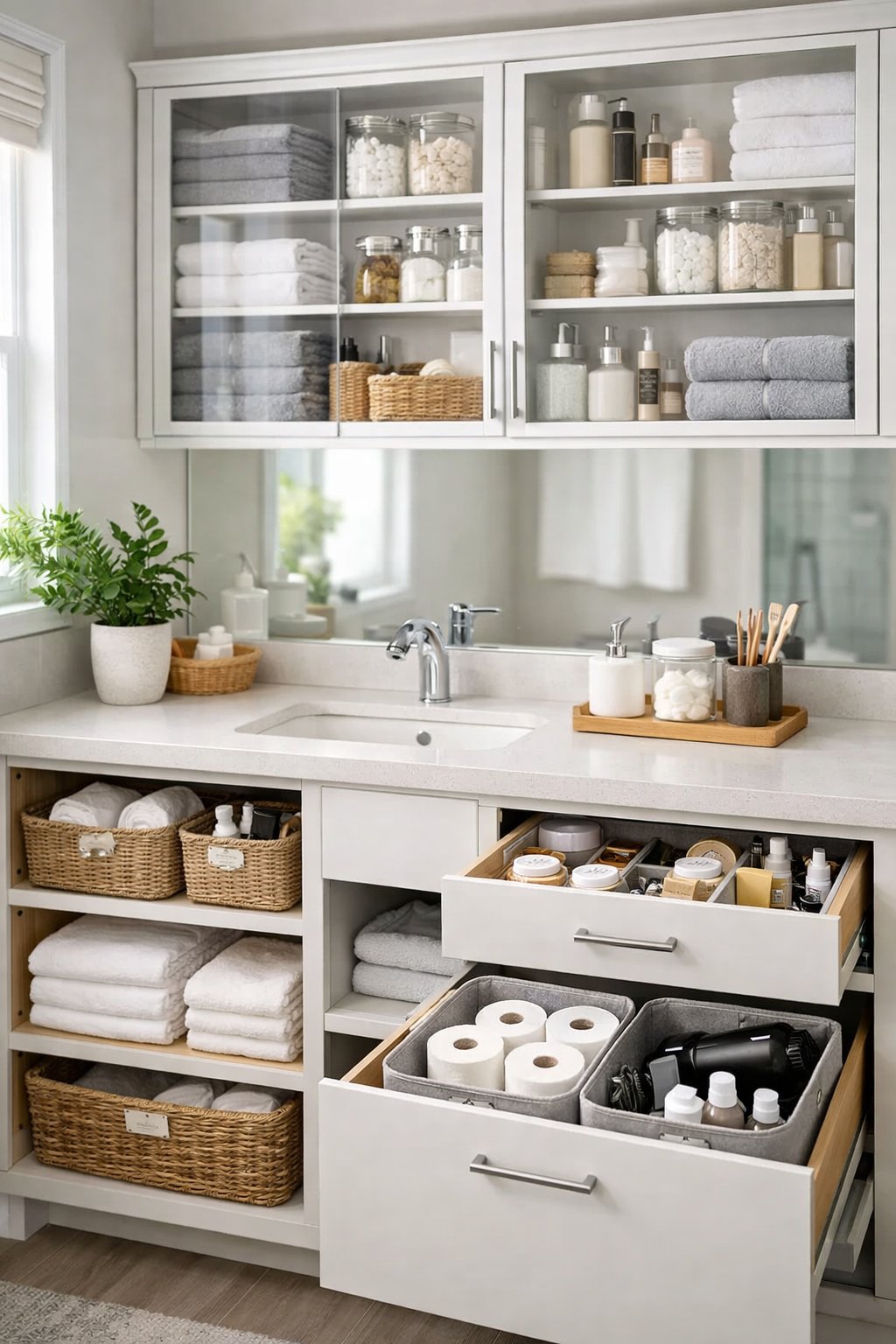
Many bathrooms lose storage space due to poor layout choices and weak container systems. These issues create clutter, waste space, and make daily use harder than it should be.
Overlooking Vertical Storage
Many bathrooms fail to use wall space, even when floor space stays tight. Empty walls above toilets, doors, and sinks often go unused. This mistake forces items onto counters and inside crowded drawers.
Wall-mounted shelves, cabinets, and hooks add storage without blocking movement. Tall cabinets also store more than short units with the same footprint. Open shelves work well for daily items, while closed cabinets hide extras.
Common missed vertical areas:
- Space above the toilet
- Wall space near the shower
- The back of the bathroom door
A simple rule helps: store light, daily items at eye level and heavy items lower. This setup keeps the bathroom safe and easy to use.
Improper Use Of Containers
Many bathrooms use random containers with no clear system. Mixed sizes, weak materials, and open bins cause items to shift and pile up. This leads to wasted space and harder cleanup.
Containers should match the items they hold and the space they sit in. Clear bins help users see contents fast. Labeled containers reduce search time and keep items in place.
Better container choices:
| Item Type | Container Type |
|---|---|
| Small tools | Drawer dividers |
| Toiletries | Stackable bins |
| Cleaning items | Tall caddies |
Avoid overfilling containers. Leave space so items stay easy to grab and return.


