
Medicine Cabinet Organization Ideas: 7 Smart Solutions for a Clutter-Free Space
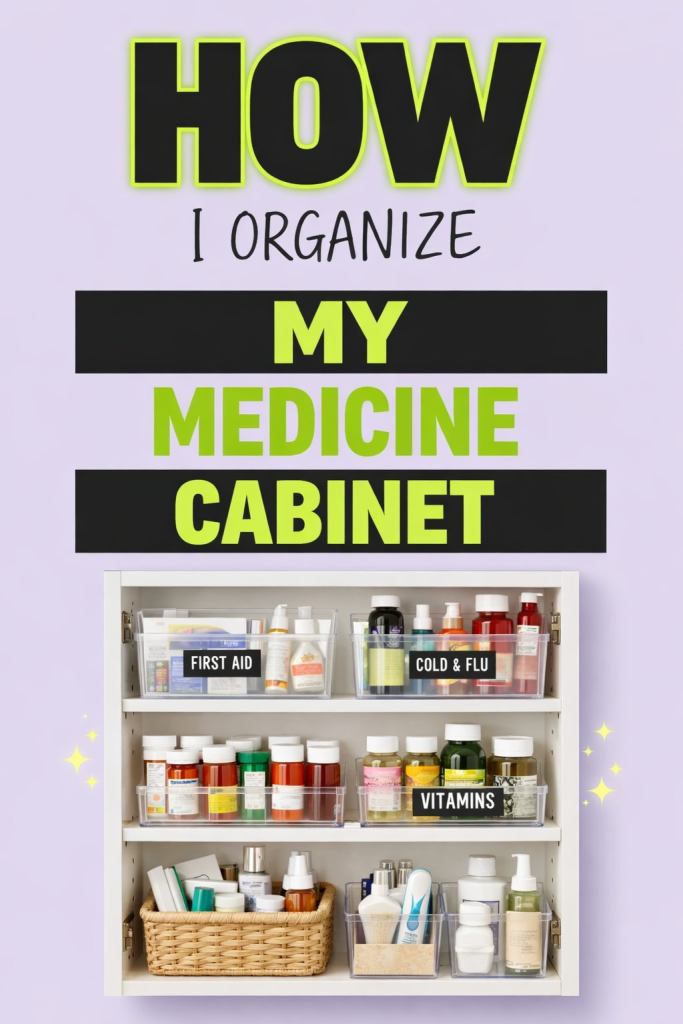
A cluttered medicine cabinet slows daily routines and hides what matters. With a clear plan, they can turn a small space into one that feels calm and easy to use. They can organize a medicine cabinet so items stay visible, safe, and quick to reach.
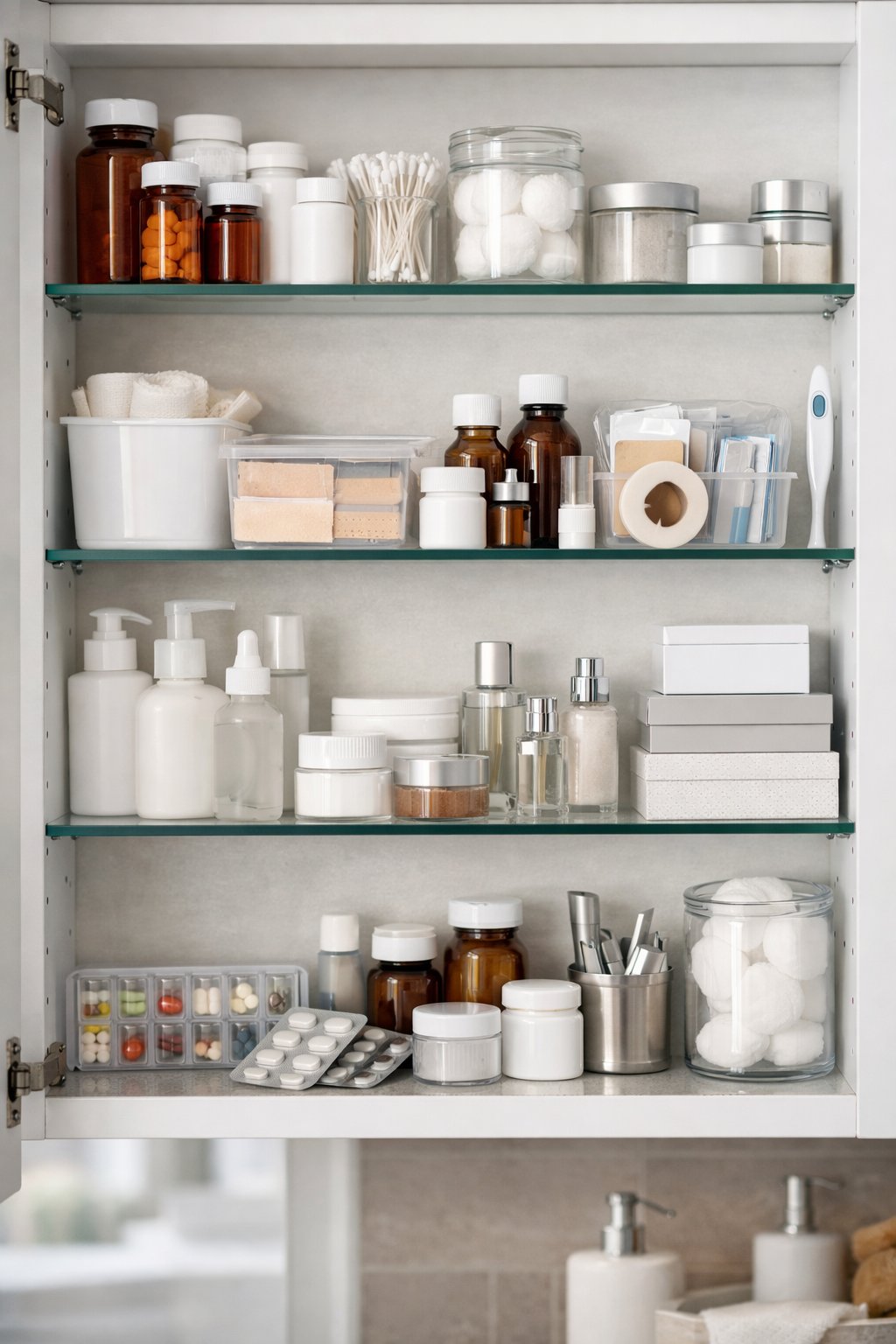
This article guides them through simple ways to group items, adjust space, and place daily needs where they make sense. It also covers common problems and steady habits that help the cabinet stay neat over time.
1) Categorize medications by type using clear labeled bins
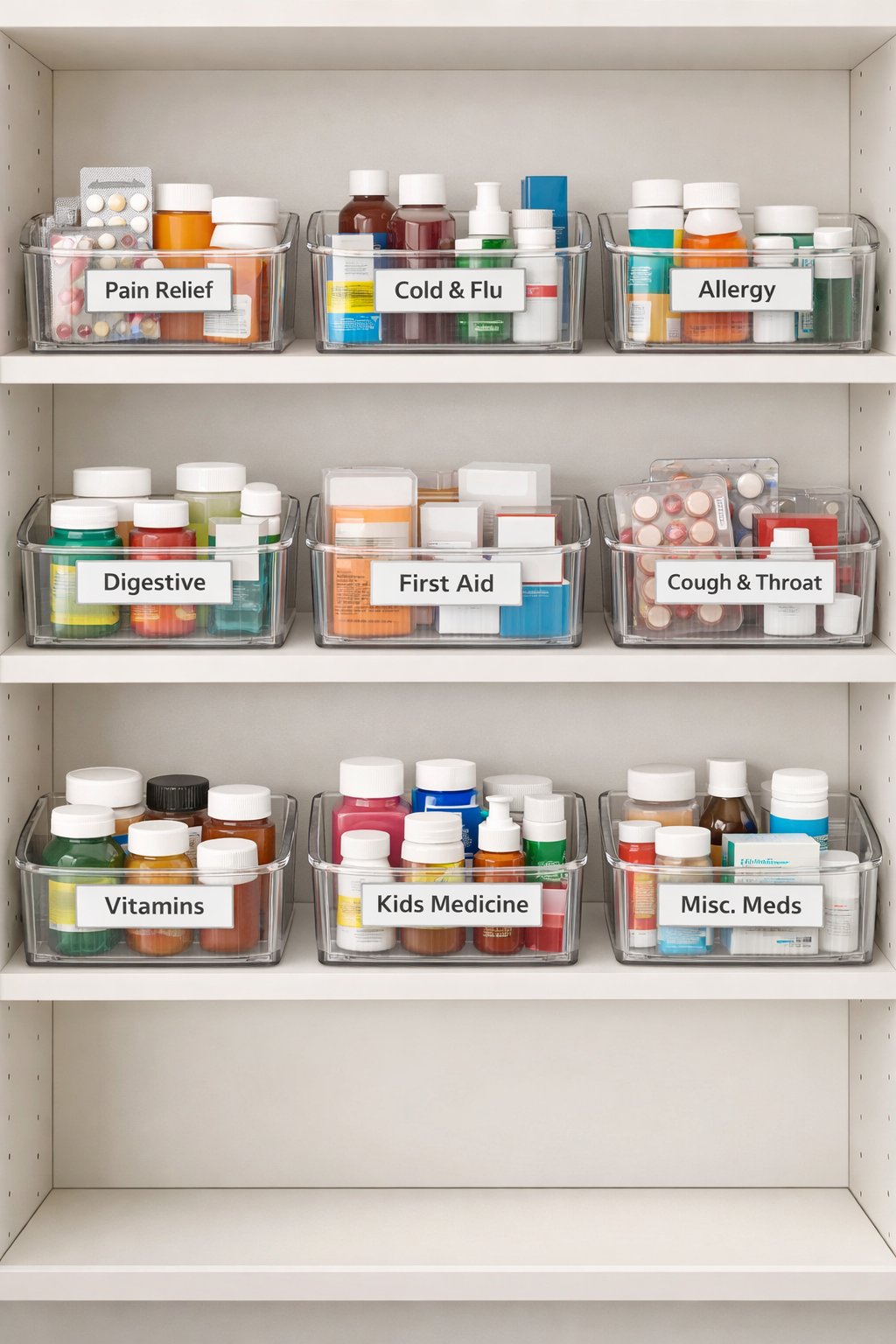
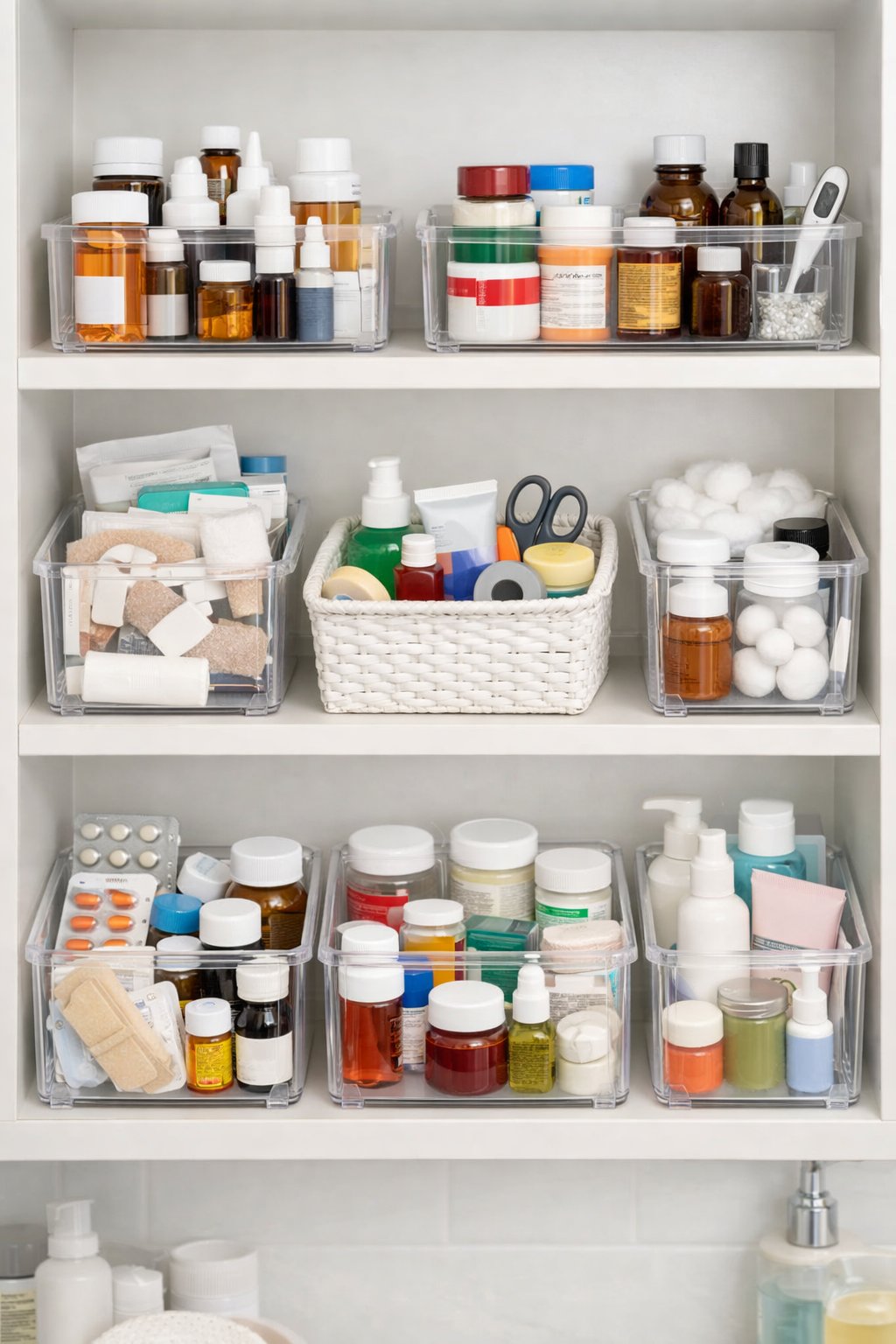
Clear, labeled bins help sort medicines by type, such as pain relief, allergies, and daily use.
They let people see items at a glance and reduce time spent searching.
Place similar items together and label each bin with plain words. Use small bins for pills and taller bins for bottles to keep shelves tidy.
2) Install adjustable shelves for flexible storage space
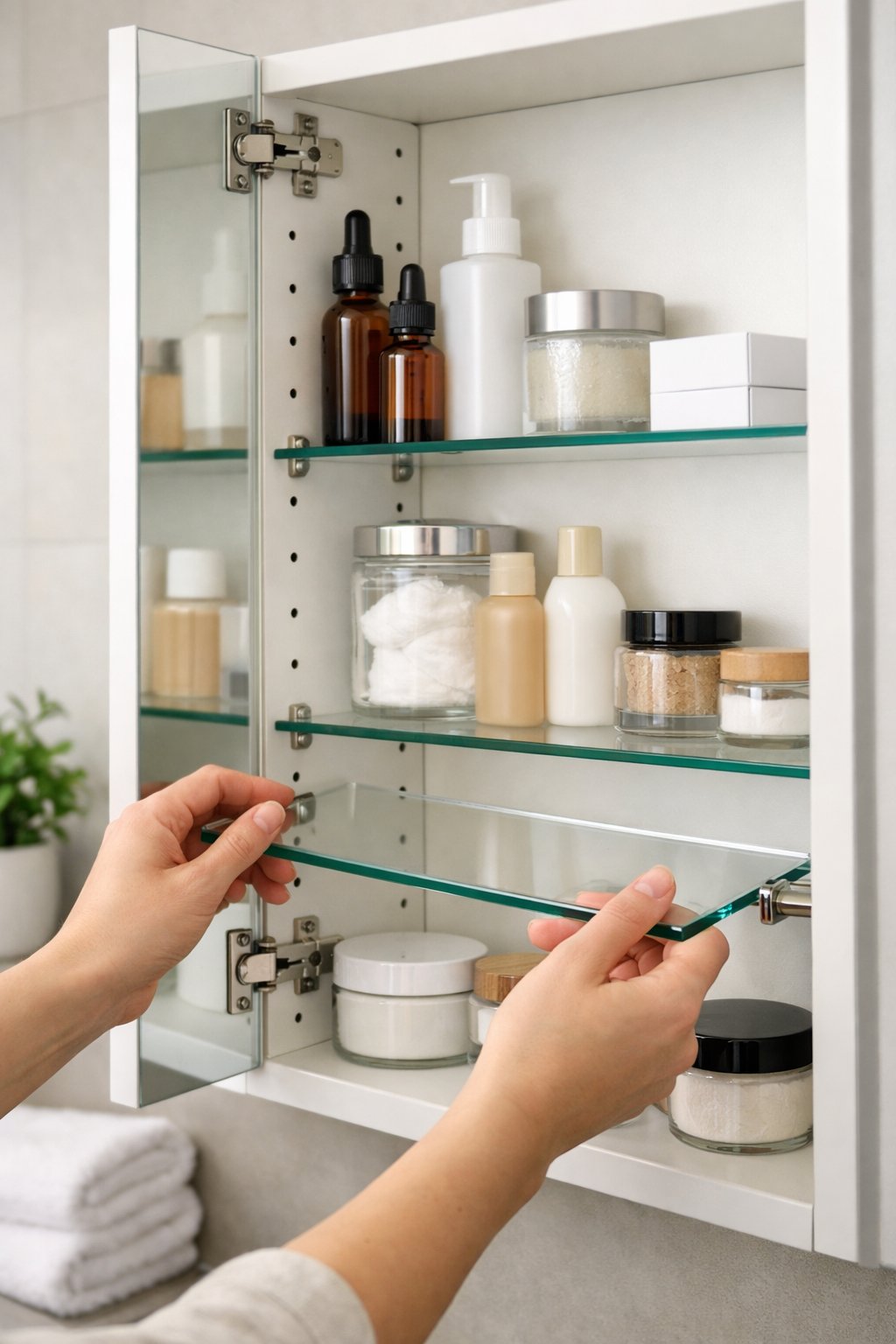
Adjustable shelves let users change spacing to fit items of different heights. This setup improves access and reduces wasted space.
They can raise shelves for tall bottles and lower them for small items like tubes. This keeps items visible and easy to reach.
Many cabinets support clip-in or sliding shelves that move without tools. This flexibility helps cabinets adapt as needs change.
3) Use magnetic strips on the inside of doors for small metal items
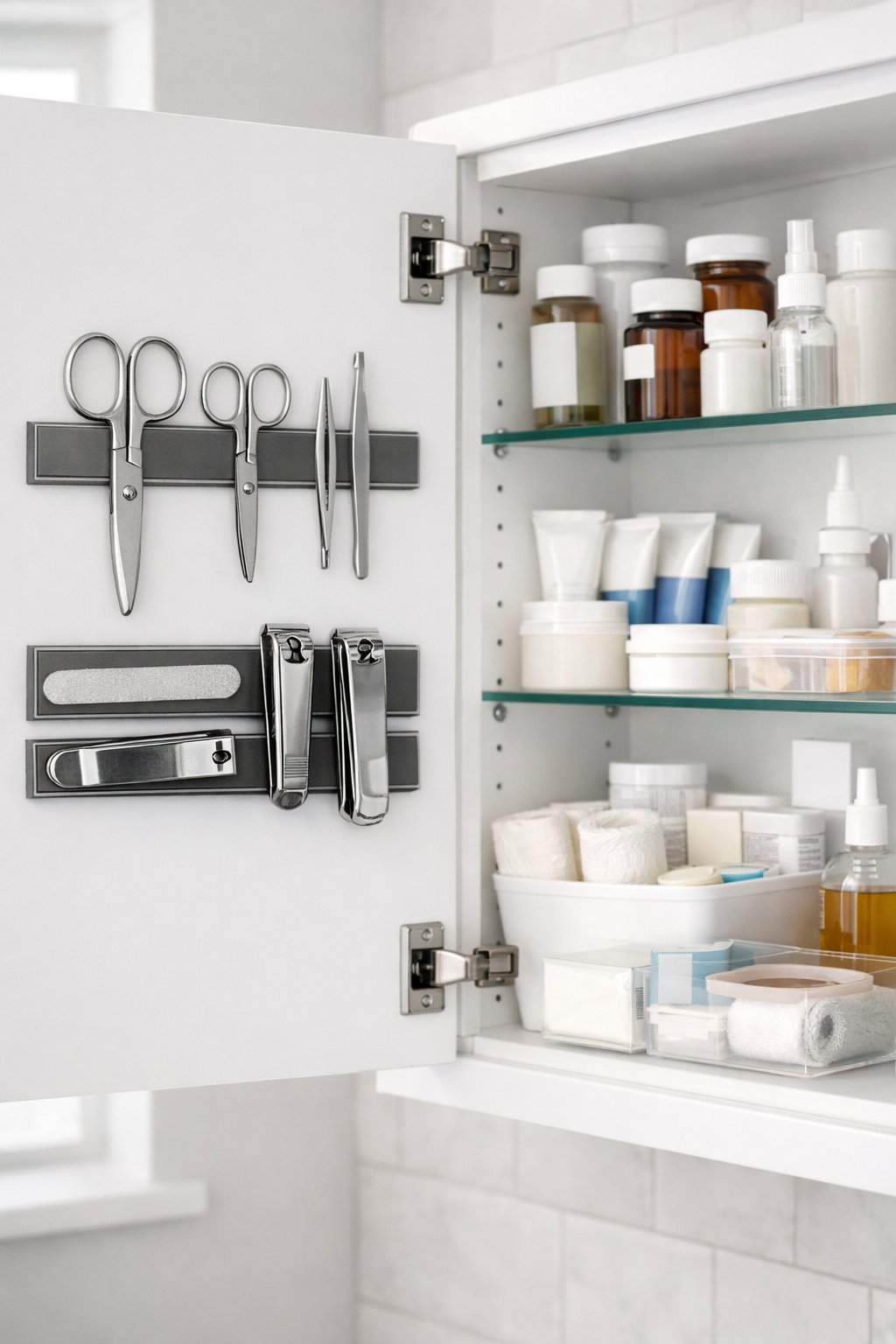
Magnetic strips on the inside of cabinet doors hold small metal items in plain view. They free shelf space and reduce clutter.
People can store tweezers, nail clippers, scissors, and bobby pins on a slim strip. The strip installs with adhesive or screws and fits behind the door.
This setup keeps tools easy to grab and easy to return. It also helps items stay dry and separated from medicines.
4) Incorporate a lazy Susan for easy access to frequently used items
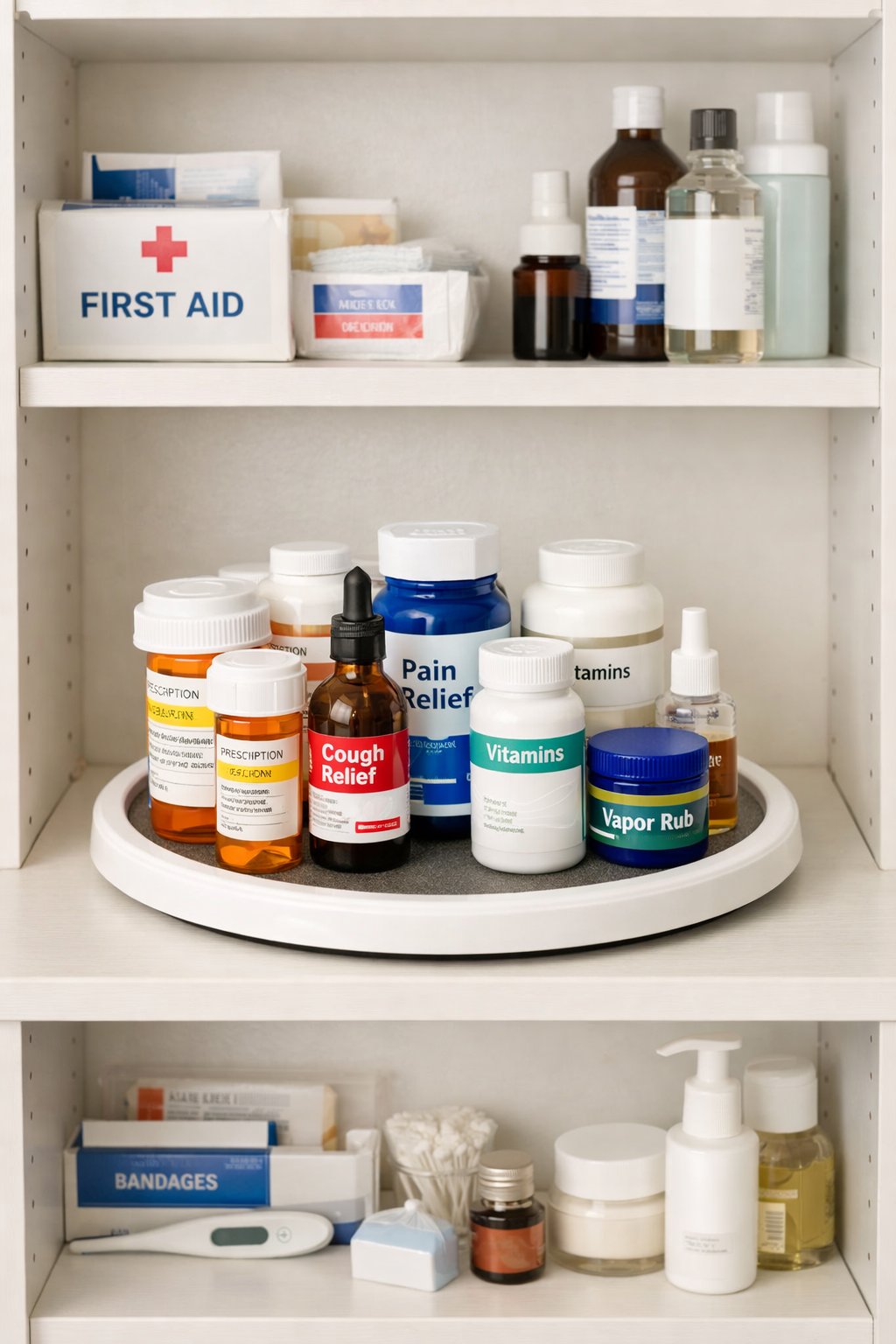
A lazy Susan improves access in a deep medicine cabinet. It lets items spin forward, so nothing hides in the back.
They place daily items on the top or front edge. Pain relief, skincare, and vitamins stay within reach.
Clear, low-profile turntables fit most shelves. Labels and small bins prevent tipping and keep categories separate.
5) Store first aid supplies in a dedicated, easy-to-reach container
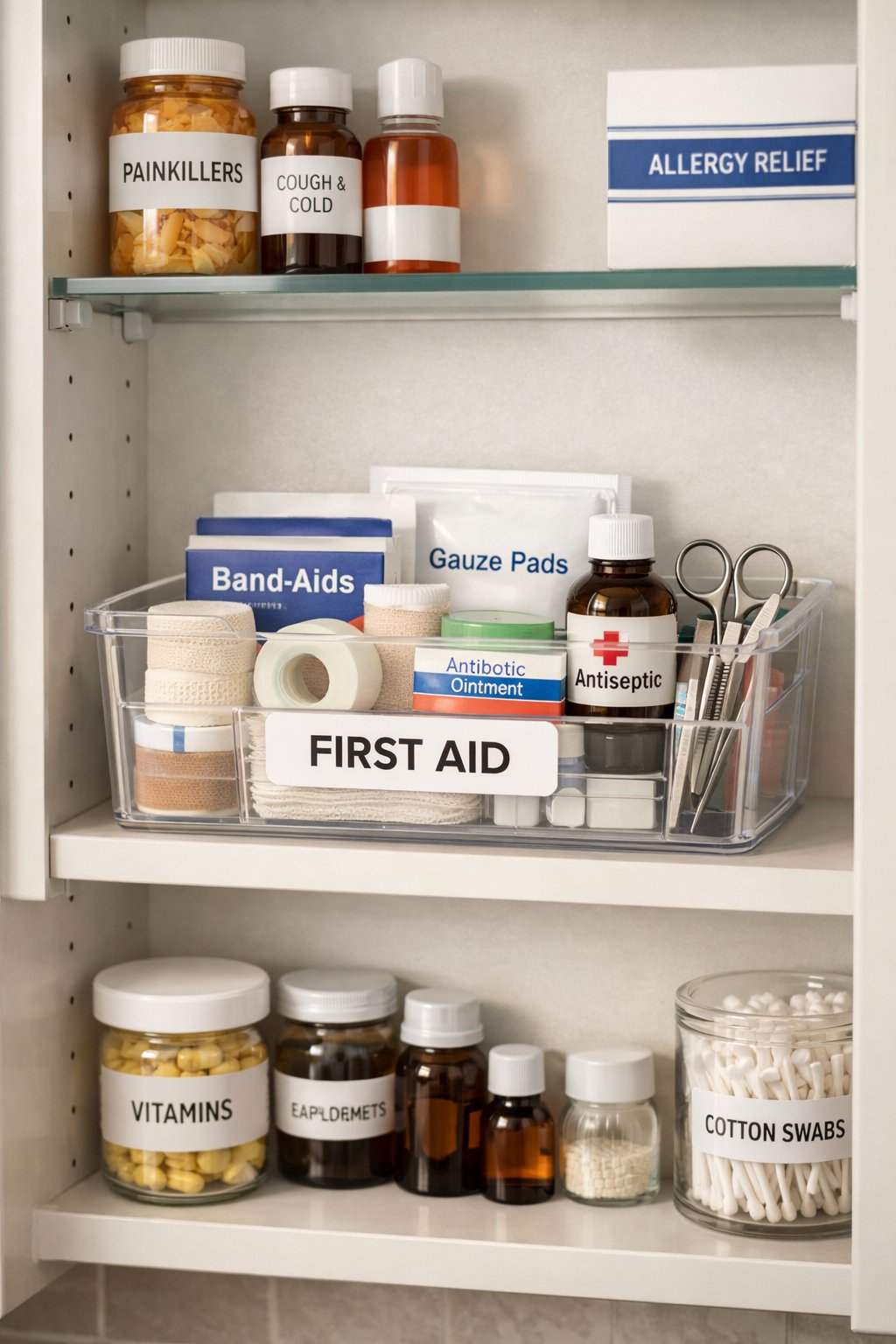
They should keep first aid items in one clear, labeled container. A hard plastic box helps protect supplies and makes them easy to spot.
A container with tiers or trays keeps bandages, wipes, and tools separated. A handle supports quick access at home, in the car, or during travel.
A lockable lid and tight seal help keep items dry and out of reach of children.
6) Utilize clear acrylic organizers to quickly identify contents
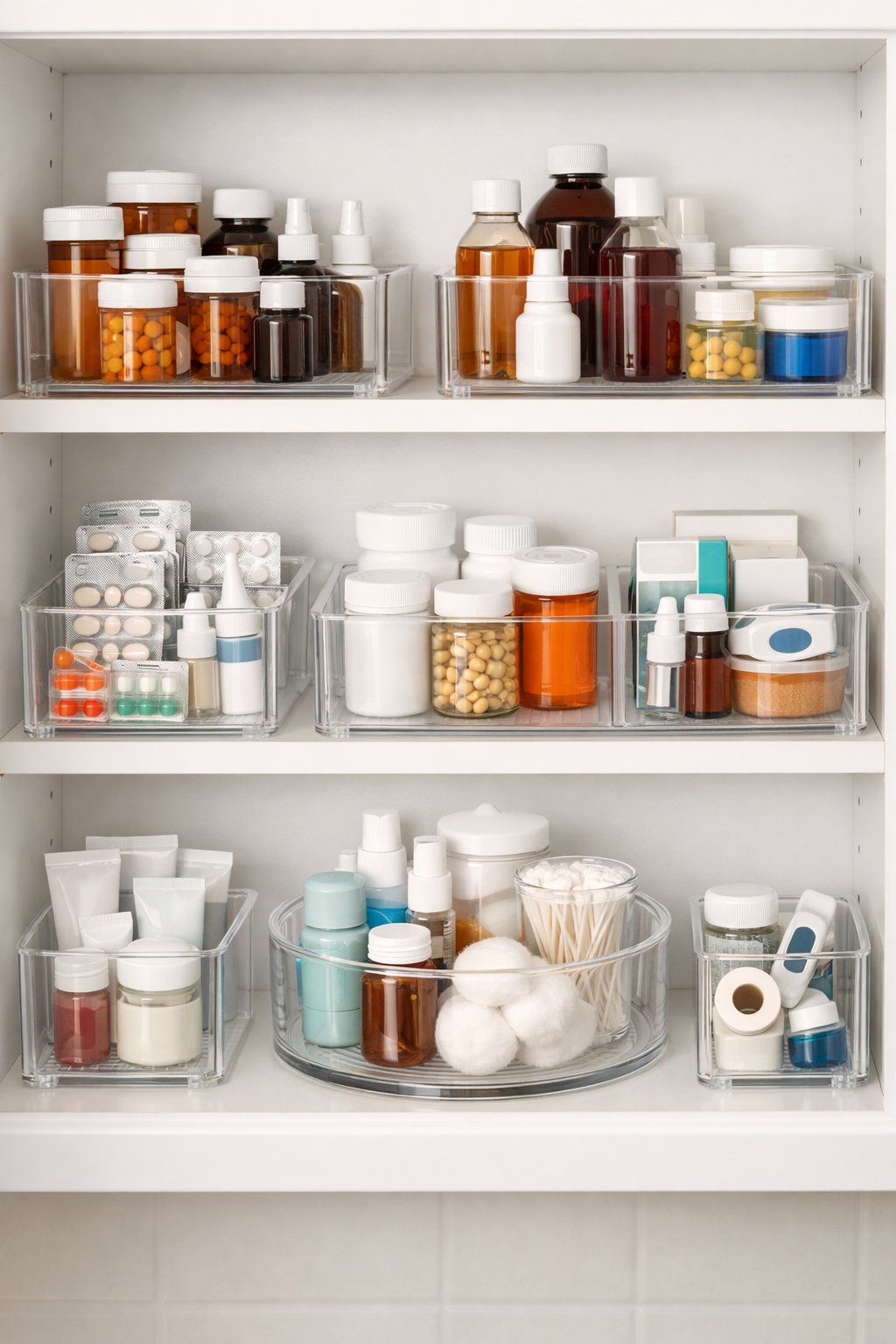
Clear acrylic organizers make items easy to see at a glance. They reduce time spent searching and help prevent missed doses.
They work well for pills, bandages, and small tools. Stackable trays and divided boxes keep categories separate without blocking light.
Placing these organizers at eye level improves access. Labels add clarity and keep the layout consistent.
7) Place daily-use items at eye level for convenience
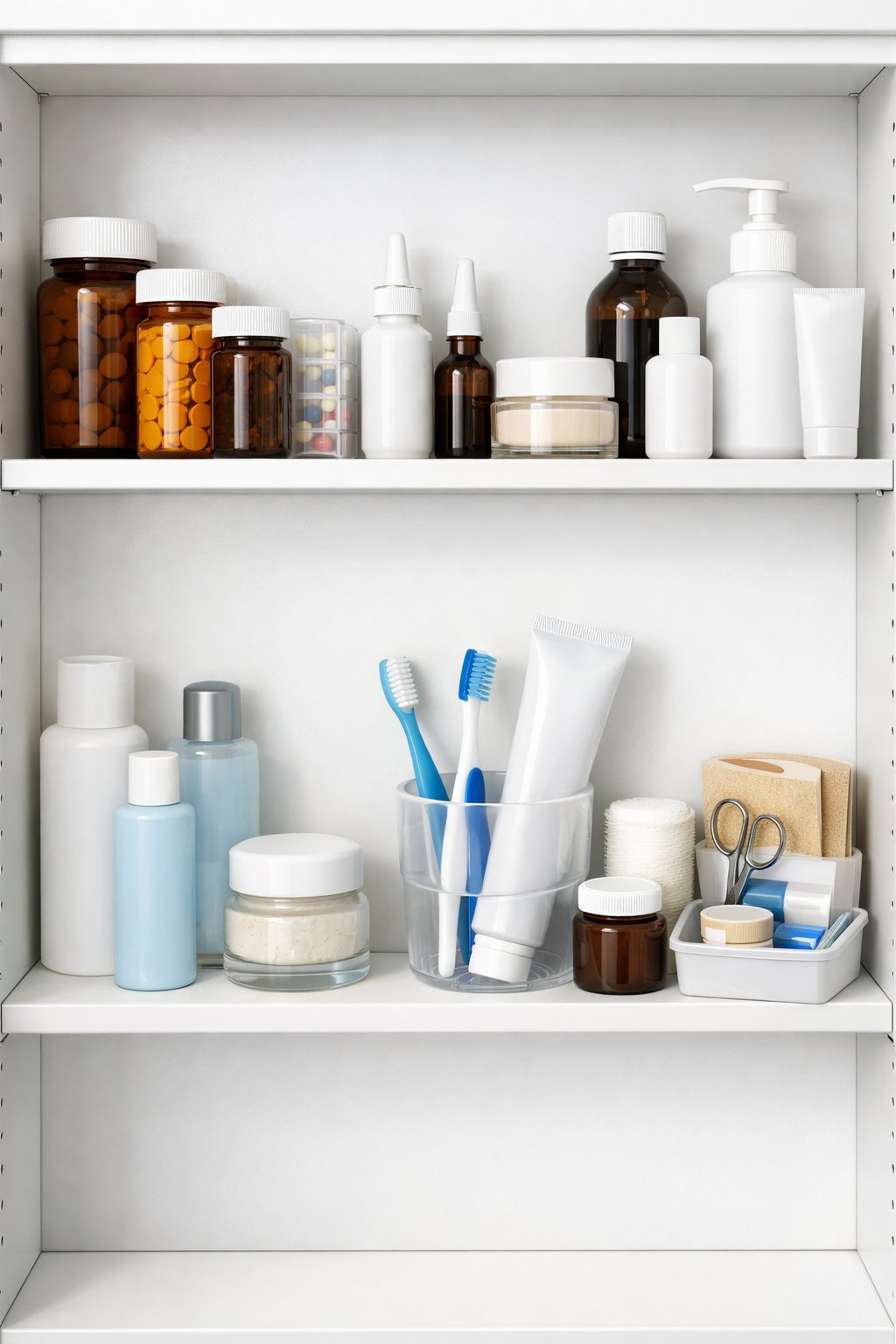
They should place daily-use items at eye level to save time. This spot works best for toothpaste, skin care, and common medicines.
Eye-level storage reduces digging and keeps routines smooth. Clear bins or simple shelf dividers help them see and grab items fast.
Common Challenges of Medicine Cabinet Organization
Many homes struggle with tight storage, mixed items, and safety risks. These issues affect daily use, medication tracking, and access during urgent moments.
Limited Space Constraints
Small cabinets limit how much a person can store and how well items stay sorted. Shallow shelves often force bottles to stack, which hides labels and causes spills.
Crowded cabinets also waste time. People dig through rows of items to find one product, then forget where it belongs.
Common space problems include:
- Fixed shelves that do not adjust
- Tall bottles that block shorter items
- Doors that hold little or no storage
Some cabinets sit above sinks or toilets. Moisture in these spots can damage packaging and labels, which makes items harder to identify.
Managing Different Medication Types
A single cabinet often holds many item types. These include daily pills, pain relief, first aid, and personal care items. Mixing them causes confusion.
Medications vary by dose, use, and schedule. Without clear separation, people risk taking the wrong product or missing doses.
Typical mix-ups involve:
- Adult and child medications stored together
- Short-term medicines kept with daily prescriptions
- Similar bottles with different strengths
Expiration dates add another layer of risk. Older items hide behind new ones, which leads to unsafe use and wasted money.
Safety and Accessibility Concerns
Safety matters most in homes with children, pets, or guests. Easy access helps adults but can expose others to harm.
High shelves reduce risk but limit reach. Low shelves improve access but increase danger. Finding balance proves hard.
Key safety concerns include:
- Unlocked cabinets within reach of children
- Poor lighting that hides labels
- Loose pills or broken caps
Accessibility also affects emergencies. People need fast access to first aid and key medicines. Poor layout delays care when time matters.
Best Practices for Maintaining an Organized Medicine Cabinet
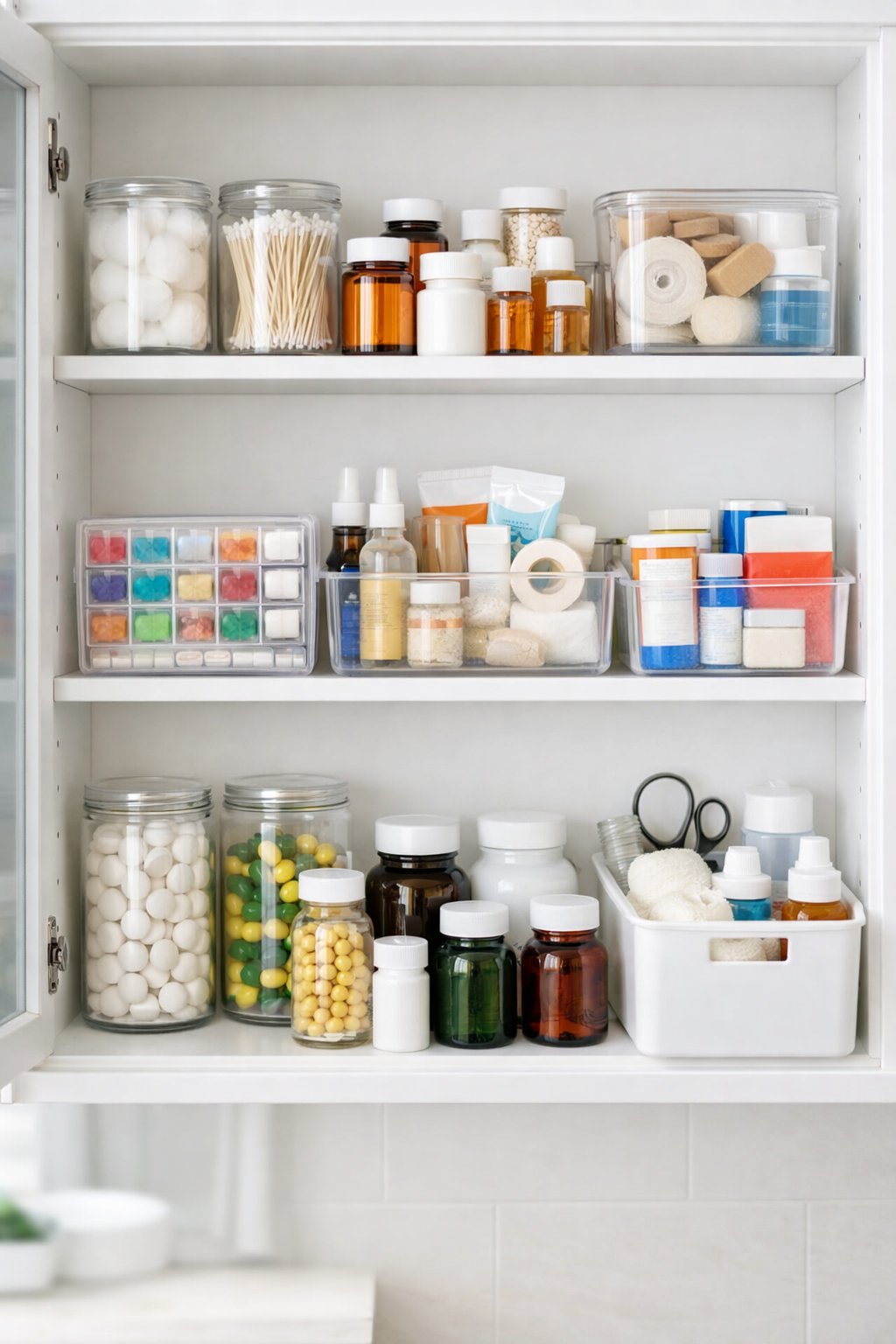
Good habits keep a medicine cabinet tidy and safe over time. Regular cleanouts, proper disposal, and clear labels prevent clutter and reduce mistakes.
Routine Decluttering Schedules
They should set a simple schedule and stick to it. A quick check every three months works well for most homes. During each check, they remove items that no longer serve a purpose, such as duplicates or products used for past illnesses.
They group items by use, like pain relief, allergy care, and first aid. This step makes gaps and excess easy to spot. They also wipe shelves and bins to remove dust and spills.
A short checklist helps keep the task fast:
- Remove expired or unused items
- Combine partial bottles when safe
- Return items to labeled zones
Consistency matters more than perfection. Short, planned sessions prevent clutter from building up again.
Safe Disposal of Expired Medicines
They should never keep expired medicines. Old drugs can lose strength or become unsafe. Disposal also keeps children and pets safe.
They follow local rules first. Many pharmacies and police stations run drug take-back programs. These options provide the safest method.
When take-back options do not exist, they use household disposal with care:
| Item Type | Safe Method |
|---|---|
| Pills | Mix with coffee grounds, seal, trash |
| Liquids | Absorb with cat litter, seal, trash |
| Sharps | Use approved sharps container |
They remove personal details from labels before disposal. They never flush medicines unless the label clearly allows it.
Maintaining Accurate Labels
Clear labels reduce errors and save time. They label shelves, bins, and containers using large, plain text. Waterproof labels last longer in humid bathrooms.
They include key details on custom labels:
- Medicine name
- Dose or strength
- Use time, like morning or night
They keep original pharmacy labels when possible. These labels include directions and warnings that matter.
They update labels right away after changes. When a dose changes or a bottle moves, they fix the label the same day. Accurate labels keep the cabinet reliable and easy to use.


