
90-Degree Corner Shelf Ideas: 7 Smart Designs for Any Room

90-degree corner shelf ideas show how unused corners can support storage and style at the same time. They fit tight angles and keep rooms open while adding function. These shelves help turn empty corners into useful space without crowding the room.
This article explores how different shapes, materials, and finishes change the look and use of a corner shelf. It also explains how smart choices and proper installation affect safety and durability. The goal stays simple: help any space work better with clean, practical design.
1) Zigzag Tiered Corner Shelf for Bold Geometry
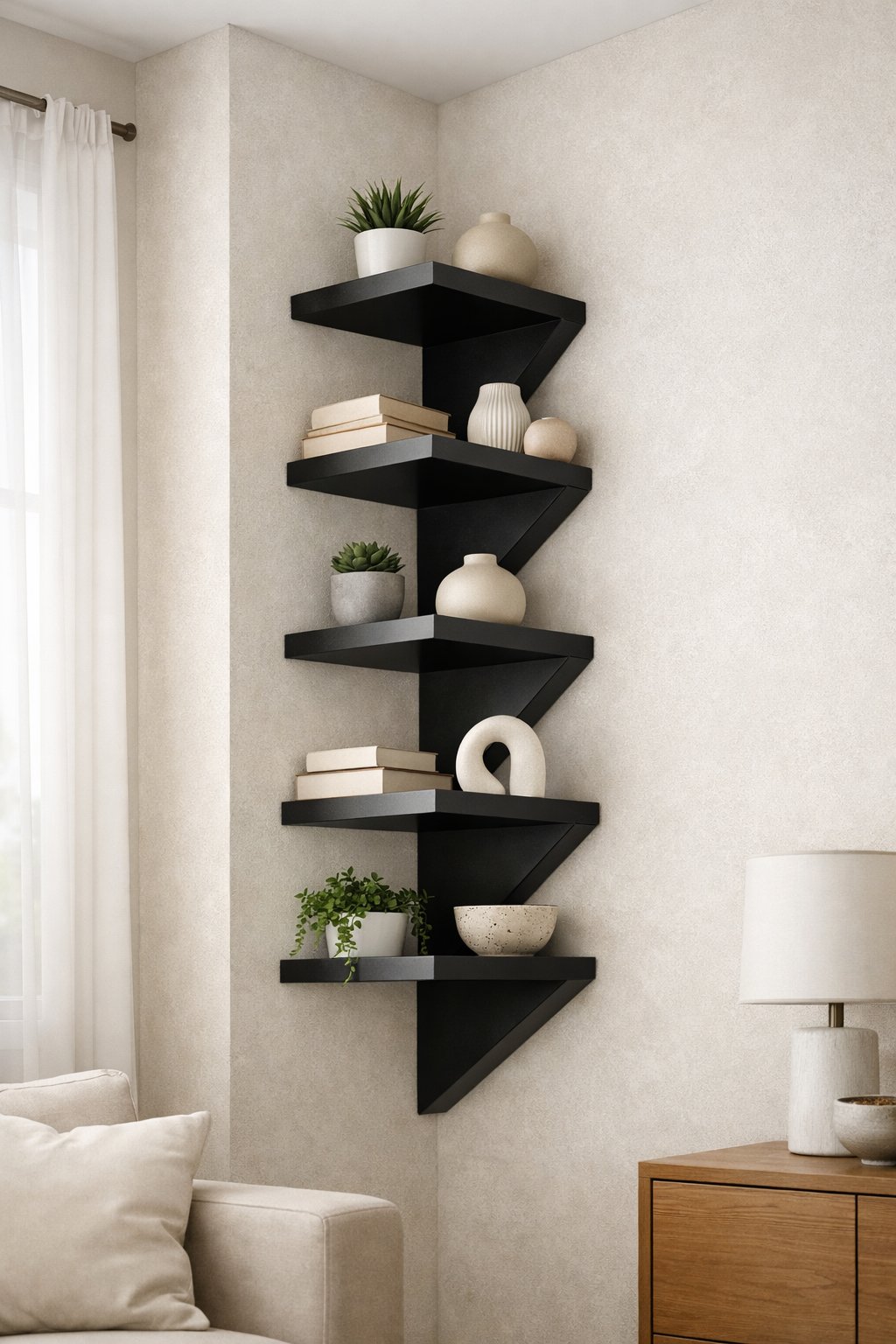
A zigzag tiered corner shelf fits tight 90-degree corners and adds strong lines. It stacks four or five shelves in a staggered pattern that draws the eye upward.
Designers often mount it to the wall as a floating unit. Makers use wood or MDF, with finishes that suit modern or casual rooms.
People place books, plants, or small decor on each tier. The shape saves floor space while keeping items easy to reach.
2) Floating Triangular Shelves with Alternating Directions
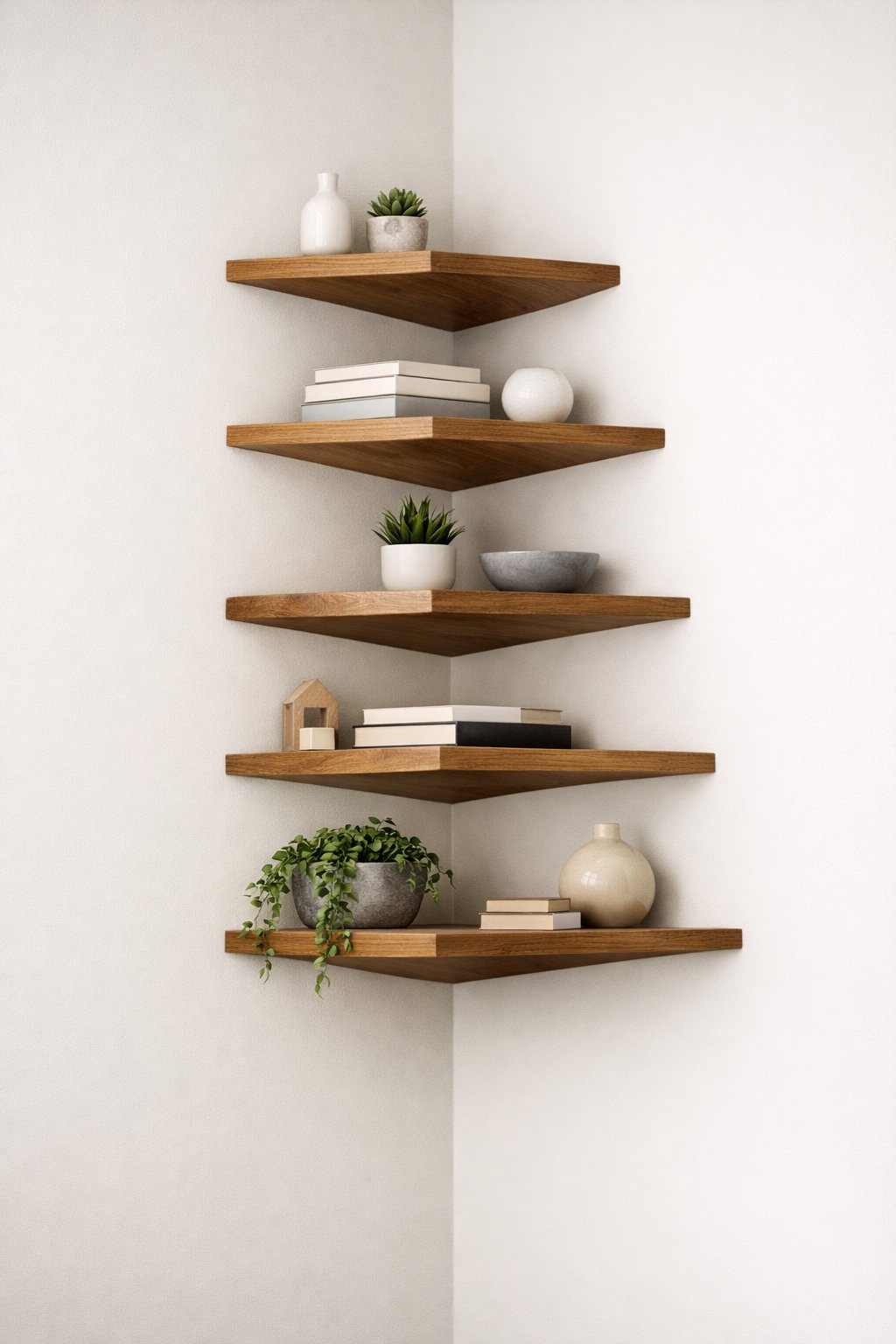
Floating triangular shelves fit cleanly into 90-degree corners. They mount to the wall and free up floor space.
When installers alternate the direction of each shelf, the corner gains balance and movement. The pattern breaks repetition and keeps the wall from looking flat.
They work well for small items like plants, books, or frames. Many sets come in groups of three for easy spacing and alignment.
3) Glass Corner Shelves for a Modern Minimalist Look
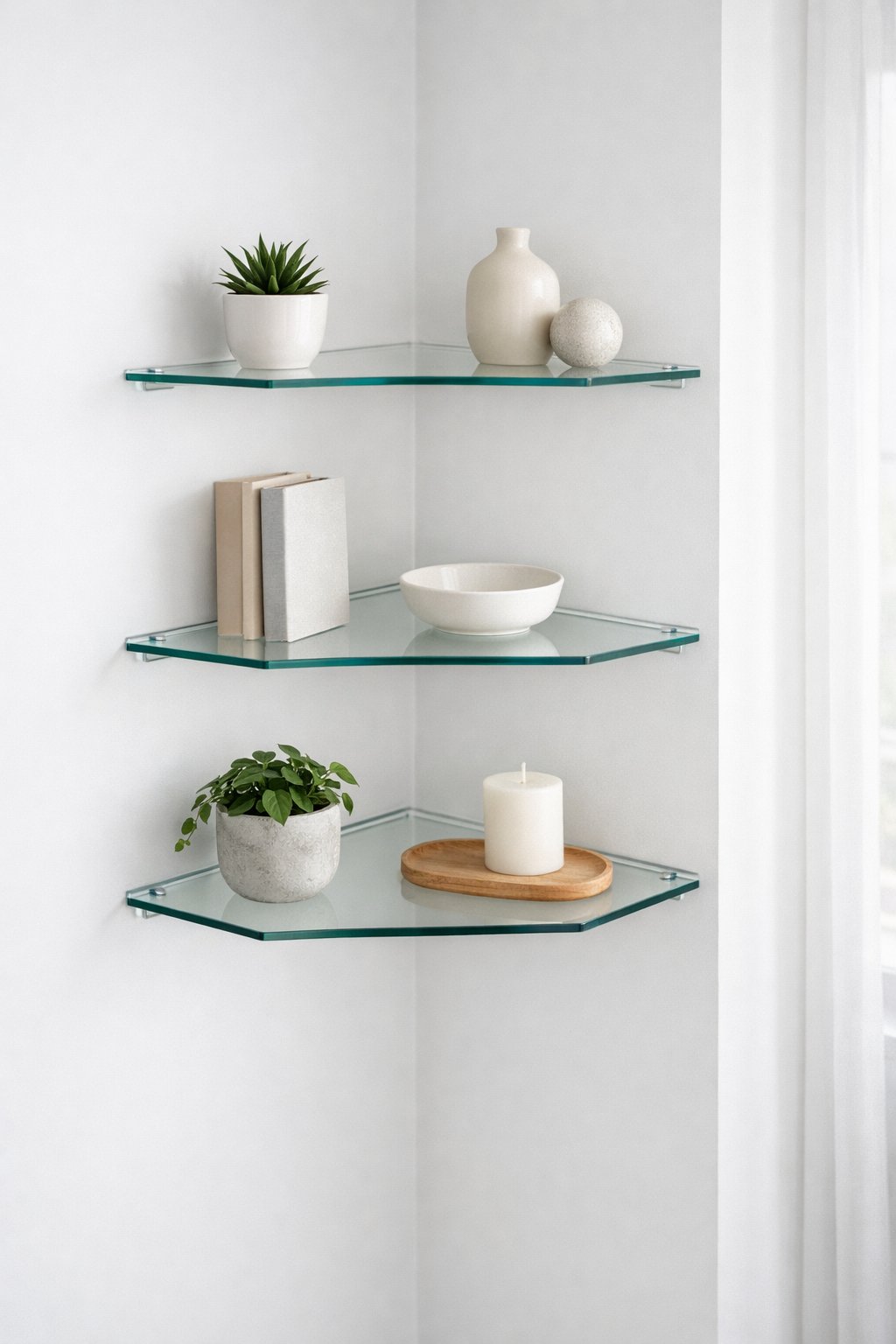
Glass corner shelves suit clean, modern rooms. They keep corners open and avoid visual clutter. Clear glass blends with most colors and walls.
Many designs use floating mounts for a simple look. Tempered safety glass adds strength while staying thin. Rounded edges improve safety in tight spaces.
These shelves work well in bathrooms, kitchens, and small living rooms. They hold light decor, plants, or daily items without crowding the space.
4) Wooden Ledge Shelves with Integrated Lighting
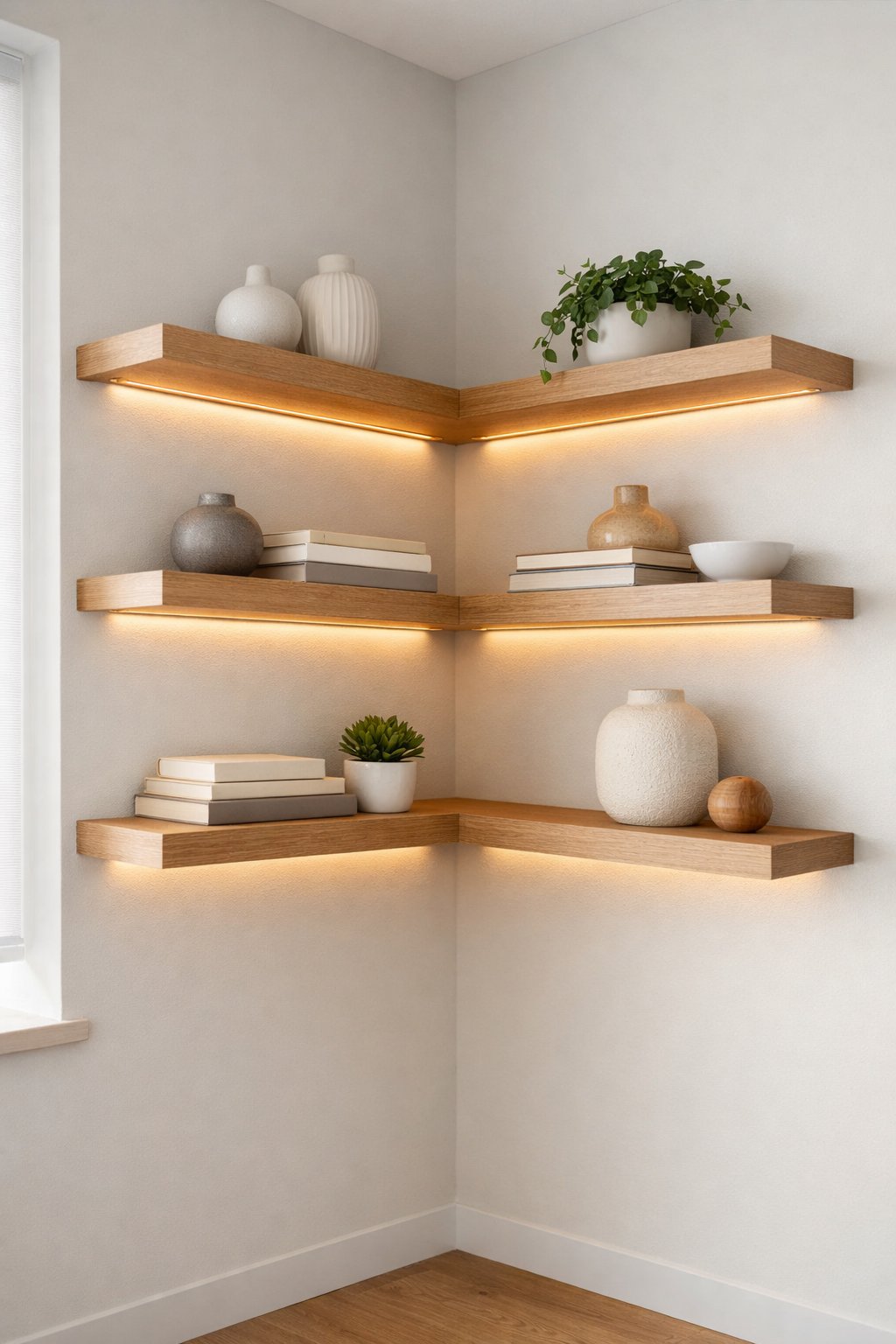
Wooden ledge shelves with built-in lighting fit well in 90-degree corners. They provide storage while adding soft light to dark edges. The wood keeps the look simple and warm.
Integrated LED strips sit under the ledge and highlight items on display. They work well in kitchens, living rooms, and home offices. The light improves visibility without taking up extra space.
5) Metal Frame Corner Units with Industrial Style
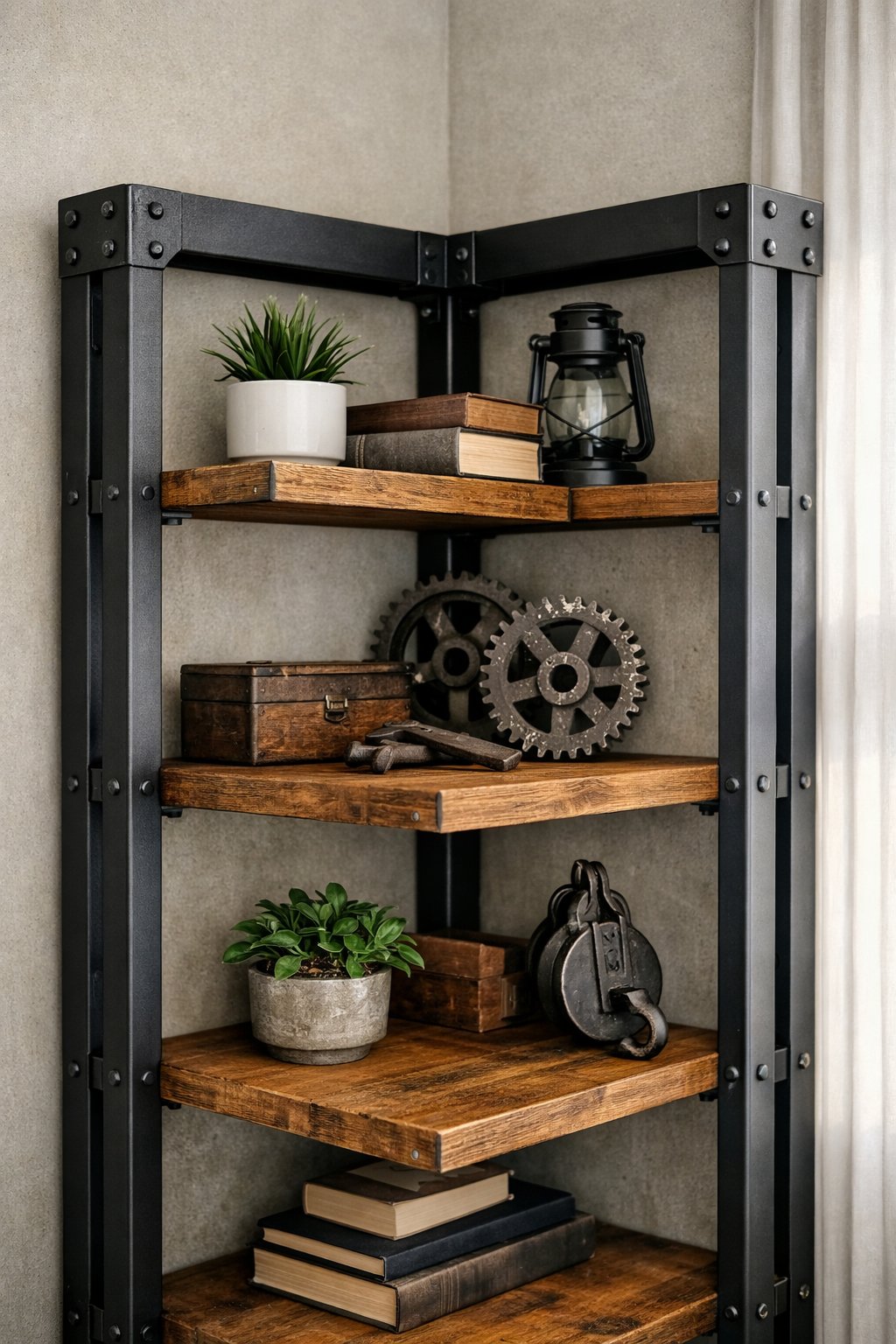
Metal frame corner units bring an industrial look to 90-degree corners. They use steel or iron frames with wood shelves. The right-angle design fits tight spaces.
Open backs keep walls visible and help rooms feel light. Many units offer five to seven tiers for books, plants, or decor. The shelves resist scratches and chips.
Makers add safety features like tip-over straps and adjustable feet. These units work in living rooms, offices, and kitchens.
6) Rustic Reclaimed Wood Corner Shelf
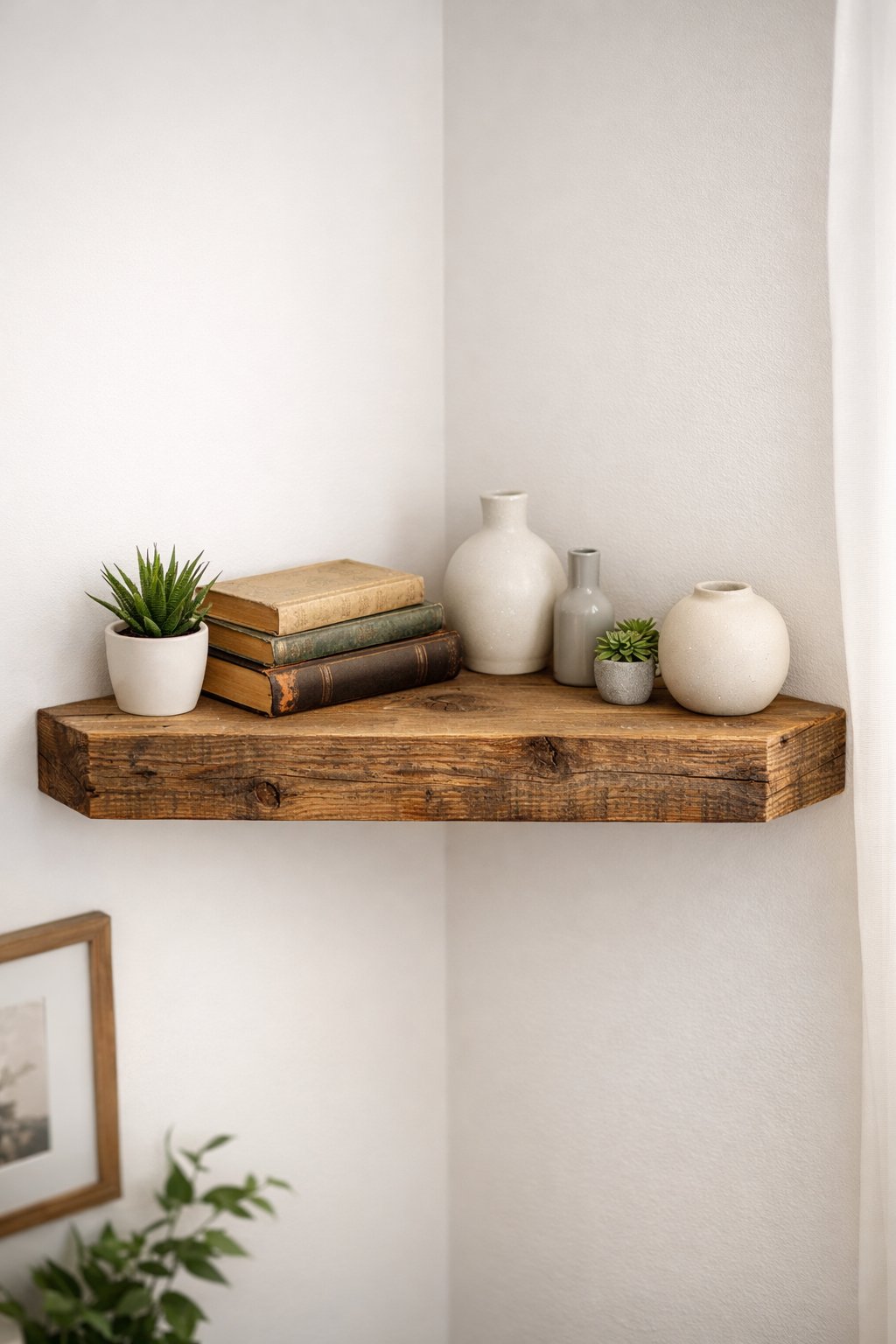
A rustic reclaimed wood corner shelf uses old wood from barns, beams, or planks. The wood shows marks, knots, and color changes that add natural character.
This shelf fits well in living rooms, bedrooms, and home offices. It pairs easily with metal brackets or simple floating mounts.
The solid wood supports books, plants, and small decor. Regular sealing helps protect the surface and keeps the wood stable.
7) Corner Shelf with Built-in Planter Box
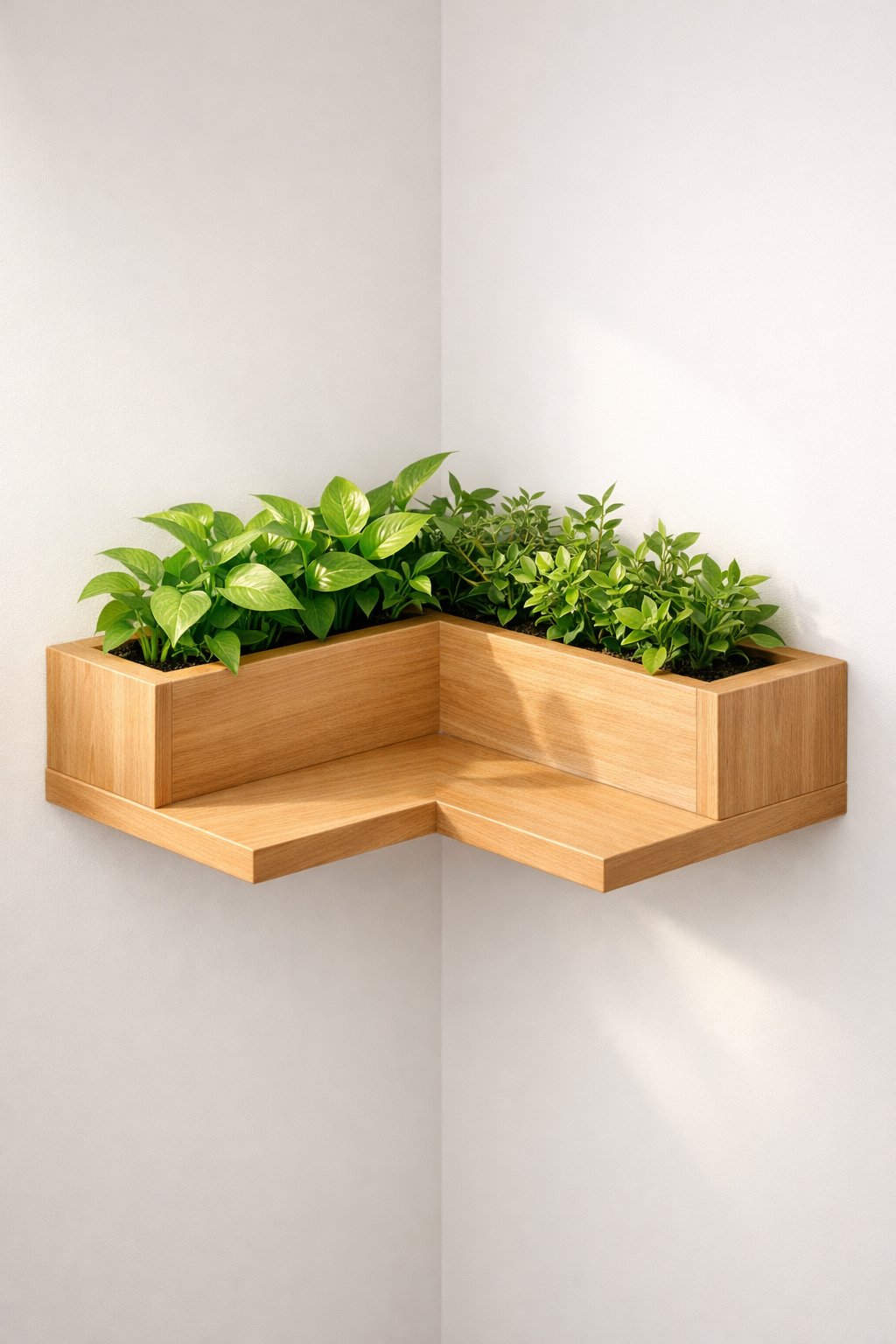
This 90-degree corner shelf includes a built-in planter box. It combines storage and plant display in one compact unit.
Designers often place it in living rooms, kitchens, or balconies. Built-in shelves fit the corner and save floor space.
Wood or metal frames work well with simple planter liners. The shelf keeps plants stable and easy to reach.
Choosing the Right Materials
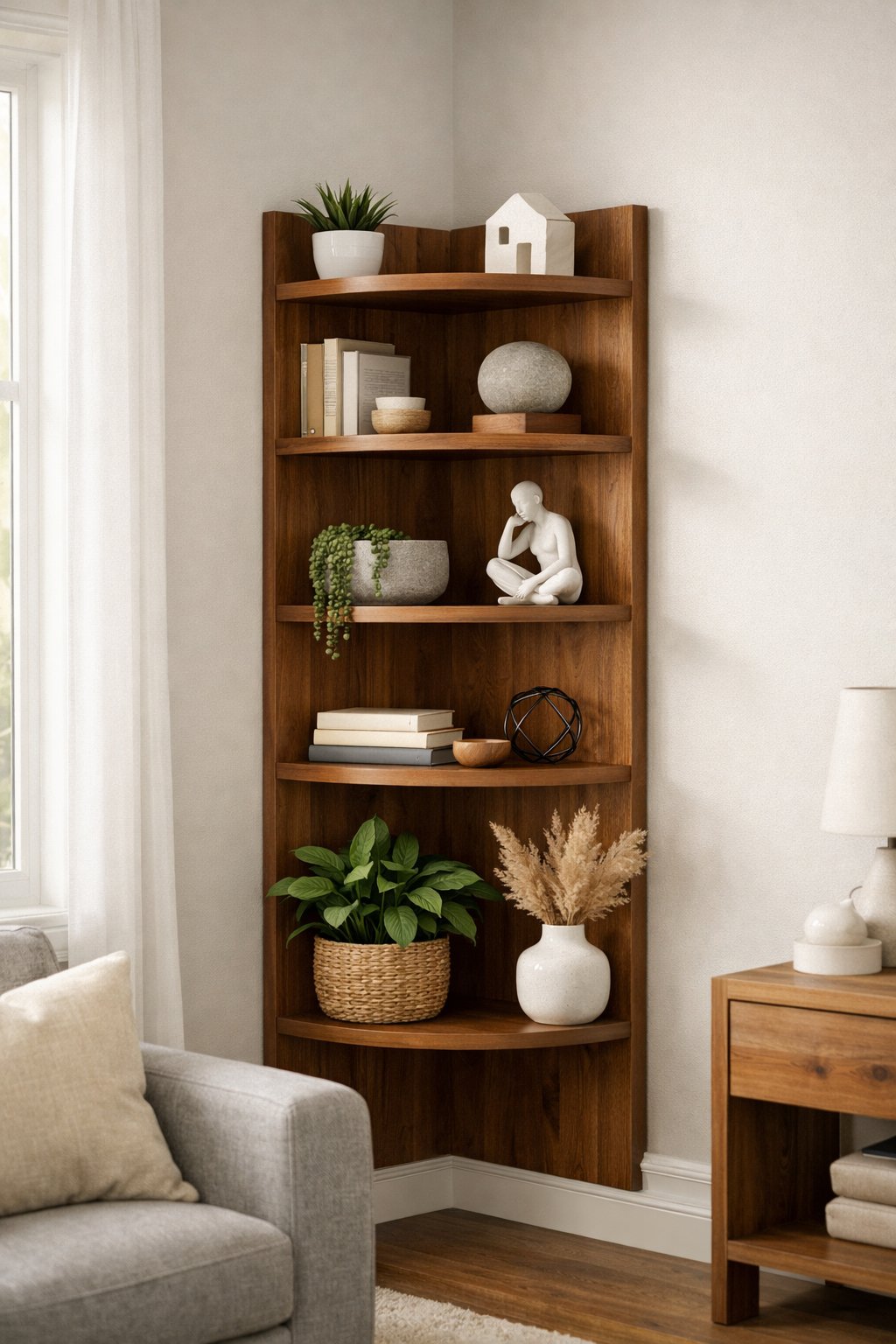
Material choice affects strength, look, cost, and care. Each option fits different rooms, loads, and styles, especially for tight 90-degree corners where balance and wall support matter.
Wood vs. Metal Corner Shelves
Wood shelves offer warmth and easy shaping for true 90-degree fits. Solid wood holds weight well and suits living rooms, offices, and bedrooms. Plywood with a veneer costs less and stays stable when sealed.
Metal shelves bring a clean, modern look and resist sagging. Steel handles heavy loads in kitchens and garages. Aluminum weighs less and works well for floating designs.
Key differences
| Feature | Wood | Metal |
|---|---|---|
| Load capacity | Medium to high | High |
| Moisture resistance | Low unless sealed | High |
| Style range | Classic to rustic | Modern to industrial |
| Ease of cutting | Easy | Hard |
Choose wood for décor and metal for tools or heavy items.
Glass and Acrylic Options
Glass shelves keep corners open and bright. Tempered glass resists heat and small impacts. It fits bathrooms and modern living spaces where light matters. Clear edges highlight items without adding bulk.
Acrylic looks like glass but weighs less. It resists shattering and suits homes with kids or pets. Acrylic scratches easier, so avoid rough items.
What to watch
- Thickness: 8–10 mm supports daily items.
- Brackets: Use metal brackets rated for glass.
- Care: Clean with non-abrasive cloths.
Glass and acrylic work best for light to medium loads like plants, candles, and small books.
Eco-Friendly Shelf Materials
Eco-friendly shelves reduce waste and use safer finishes. Bamboo grows fast and offers strong fibers. It handles light moisture when sealed and fits kitchens and baths.
Reclaimed wood reuses old boards and adds character. It may vary in size, so careful measuring matters for 90-degree corners. Look for kiln-dried stock to limit warping.
Engineered panels with low-VOC glue cut emissions. Cork and recycled plastic suit light-duty shelves.
Smart choices
- Certifications: FSC wood, low-VOC finishes
- Durability: Seal edges to extend life
- Source: Local suppliers cut transport impact
Installation Tips for 90-Degree Corner Shelves
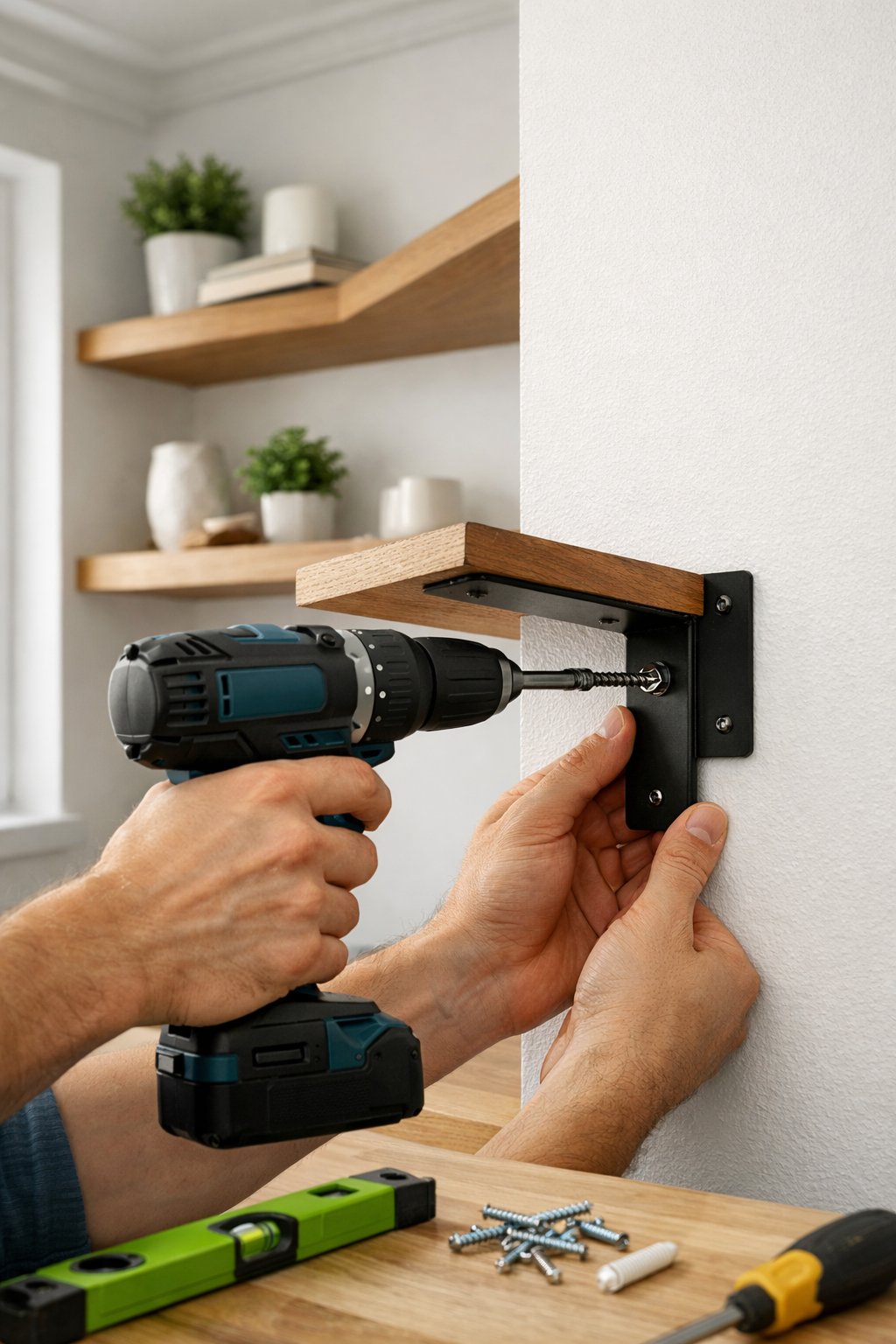
Good installation depends on two things: strong support and exact measurements. The shelf must hold the load without pulling from the wall, and it must sit tight in the corner without gaps.
Weight Capacity and Wall Anchors
Installers should match the shelf weight to the wall type. Drywall alone cannot hold heavy loads, so anchors or studs matter.
Key points to follow:
- Use studs when possible. They give the strongest hold.
- Use wall anchors rated above the shelf’s load.
- Include the weight of items, not just the shelf.
Common anchor choices:
| Wall Type | Anchor Type | Typical Use |
|---|---|---|
| Drywall | Toggle bolt | Medium to heavy loads |
| Drywall | Plastic anchor | Light loads only |
| Plaster | Metal anchor | Medium loads |
| Brick or concrete | Masonry anchor | Heavy loads |
Installers should tighten hardware firmly but avoid over-tightening. Over-tightening can crack walls or strip anchors. Floating shelves need brackets made for corner use, not flat wall brackets.
Measuring for a Perfect Fit
Corners rarely form a true 90-degree angle. Installers should measure before cutting or drilling.
They should measure wall length on both sides of the corner at the same height. A level helps keep marks straight. Measuring twice prevents gaps and uneven shelves.
Helpful steps:
- Mark shelf height on both walls.
- Measure depth from the corner on each wall.
- Check the corner angle with a square or angle finder.
If walls bow or tilt, installers should leave a small gap at the back. Caulk can hide small gaps and keep a clean look. Accurate measuring saves time and avoids wall damage.


