Gorgeous Victorian Home Interiors You’ll Love: 7 Timeless Design Ideas
Victorian home interiors reflect a style shaped by craft, detail, and comfort. These spaces show how design from the past can still feel warm and inviting today. The article explores how classic features work together to create rooms that feel rich without feeling heavy.
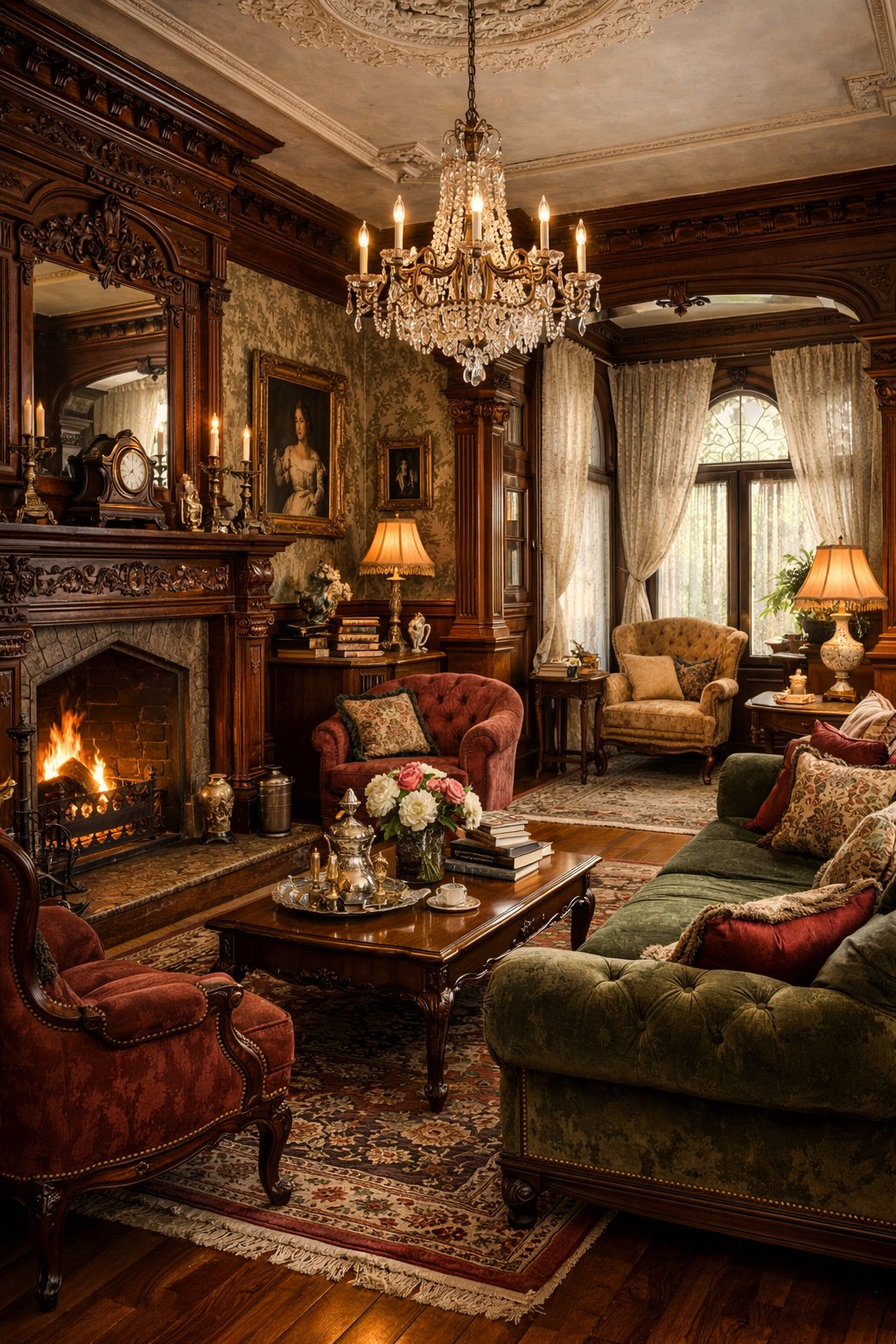
It explains what makes Victorian interiors beautiful by showing how detail, color, and structure create a lasting sense of elegance that still fits modern living. The focus stays on how these homes balance decoration and function, and how old design ideas continue to influence updated spaces today.
1) Ornate wooden furniture with intricate carvings
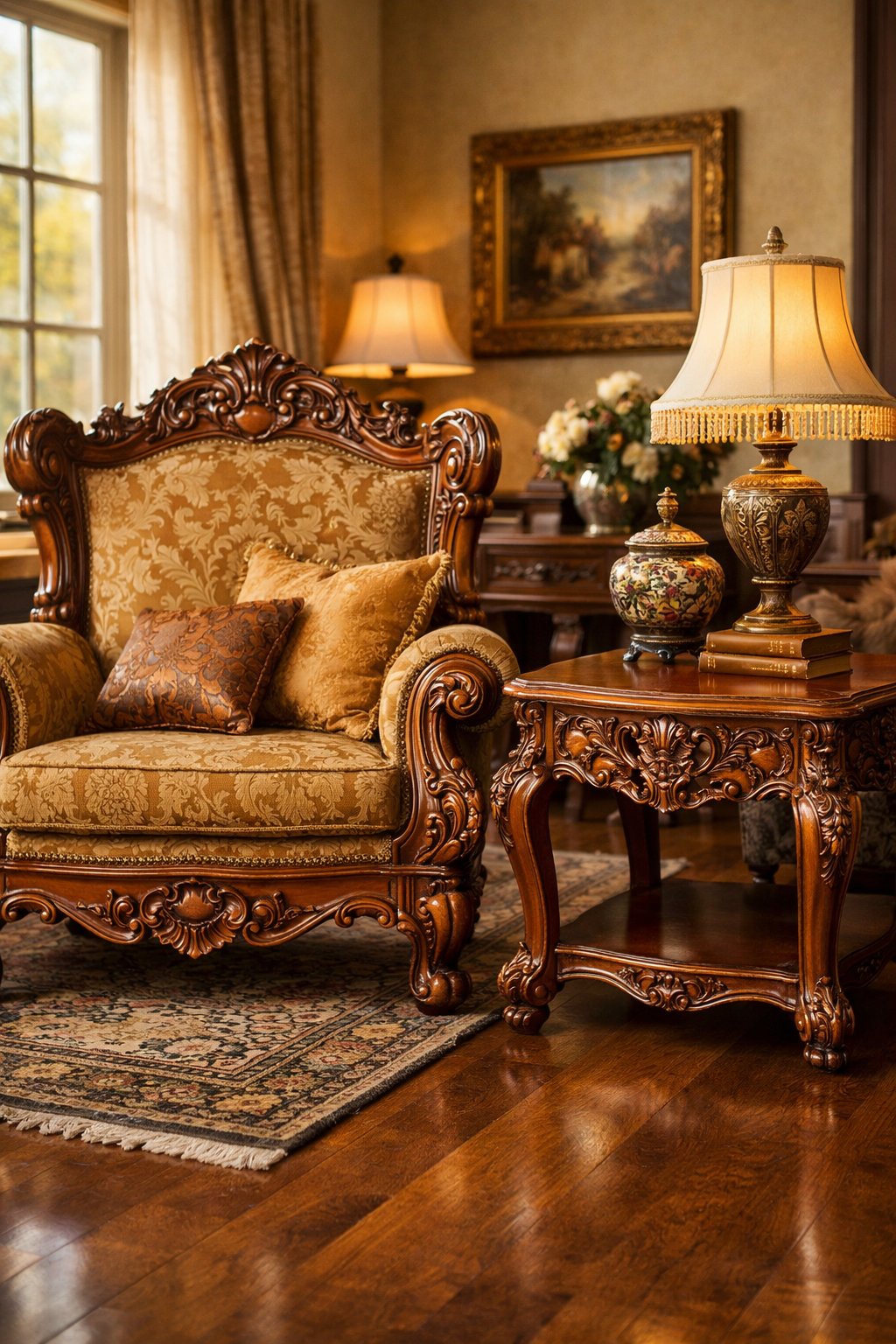
Victorian homes often feature heavy wooden furniture with fine carvings. Makers used woods like mahogany and oak for strength and detail. Dark finishes help the patterns stand out.
Carved tables, armoires, and sideboards show floral and geometric designs. Craftsmen shaped curved legs, panels, and edges by hand. These details give each piece a clear, formal look.
Designers place these pieces as focal points in rooms. They pair them with rich colors and patterned walls. The furniture adds structure and visual weight without clutter.
2) Rich, deep color palettes like burgundy and emerald
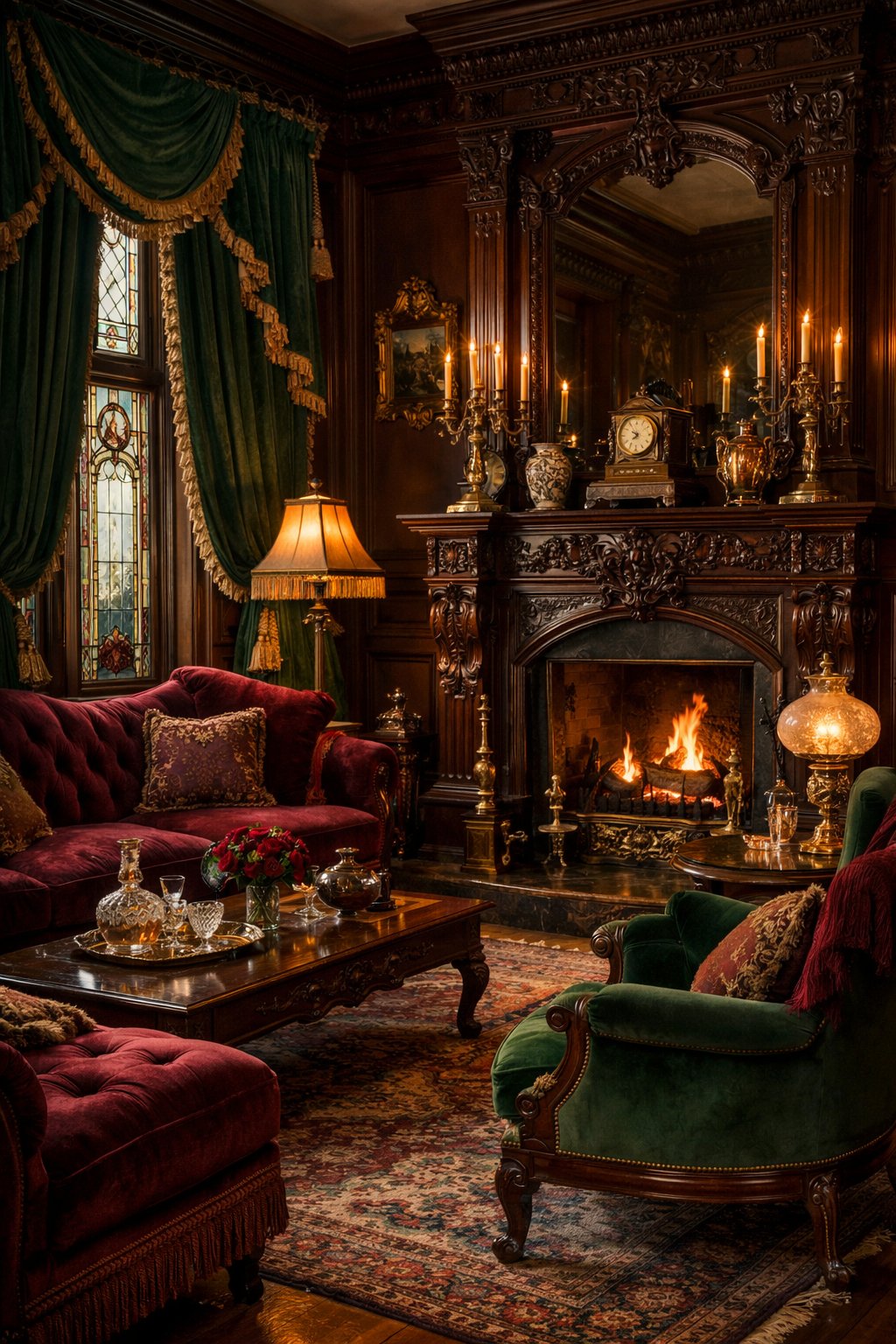
Victorian interiors often use deep colors to set a formal tone. Burgundy, emerald, and dark blue appear on walls, drapes, and large furniture.
These shades create contrast with light trim and pale ceilings. Designers often add soft pastels to prevent rooms from feeling too dark.
Gold accents, dark wood, and patterned fabrics support these colors. Together, they highlight detail and structure without relying on bright finishes.
3) High ceilings with detailed crown moldings
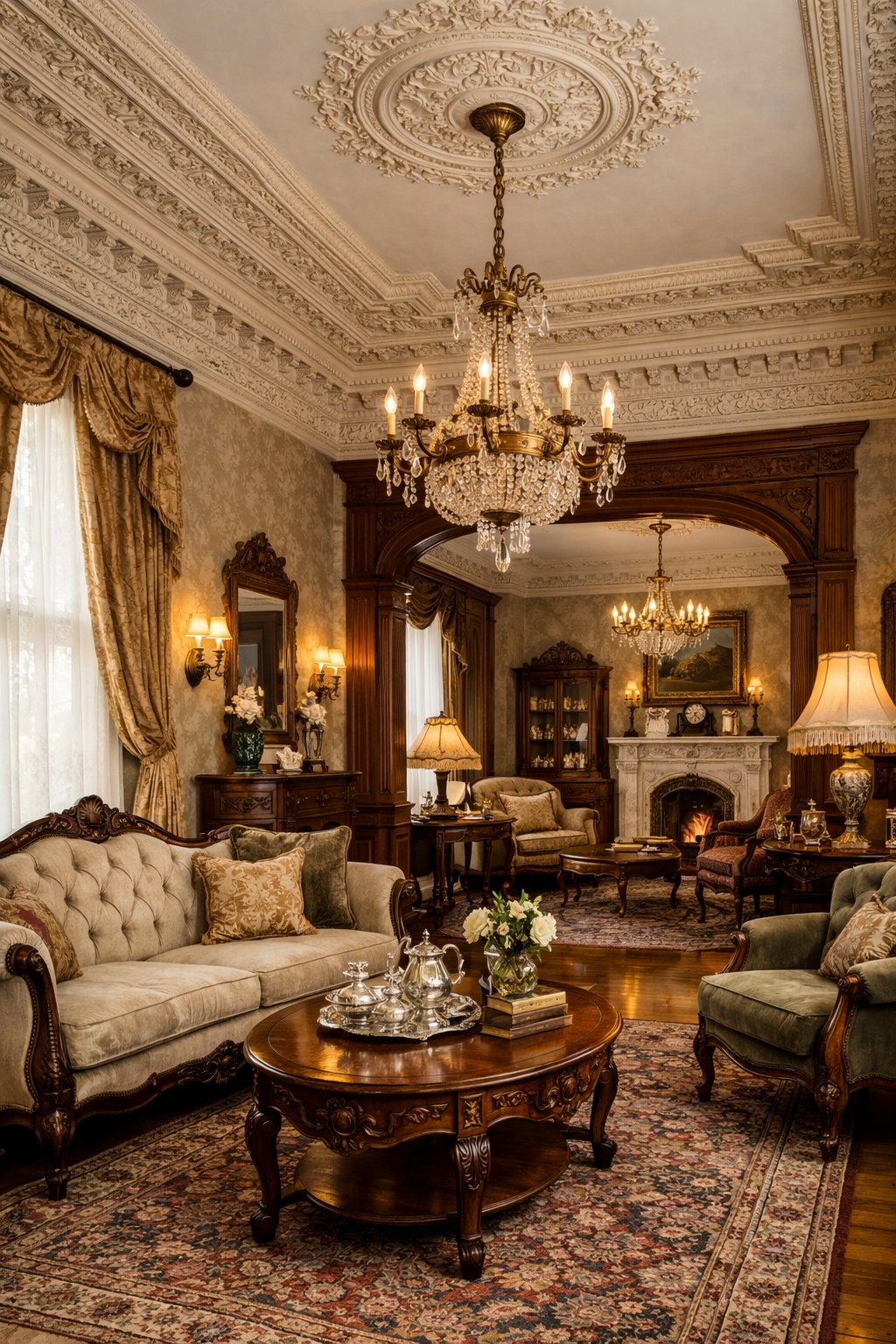
Victorian homes often feature tall ceilings that make rooms feel open and bright. These heights allow light to spread and show off the home’s structure.
Detailed crown moldings sit where the wall meets the ceiling. Builders used carved wood or plaster with floral or scroll patterns. These details add order and finish to large rooms.
The molding frames the space and draws the eye upward. It works well in living rooms, dining rooms, and bedrooms with classic layouts.
4) Grand staircases with wrought iron railings
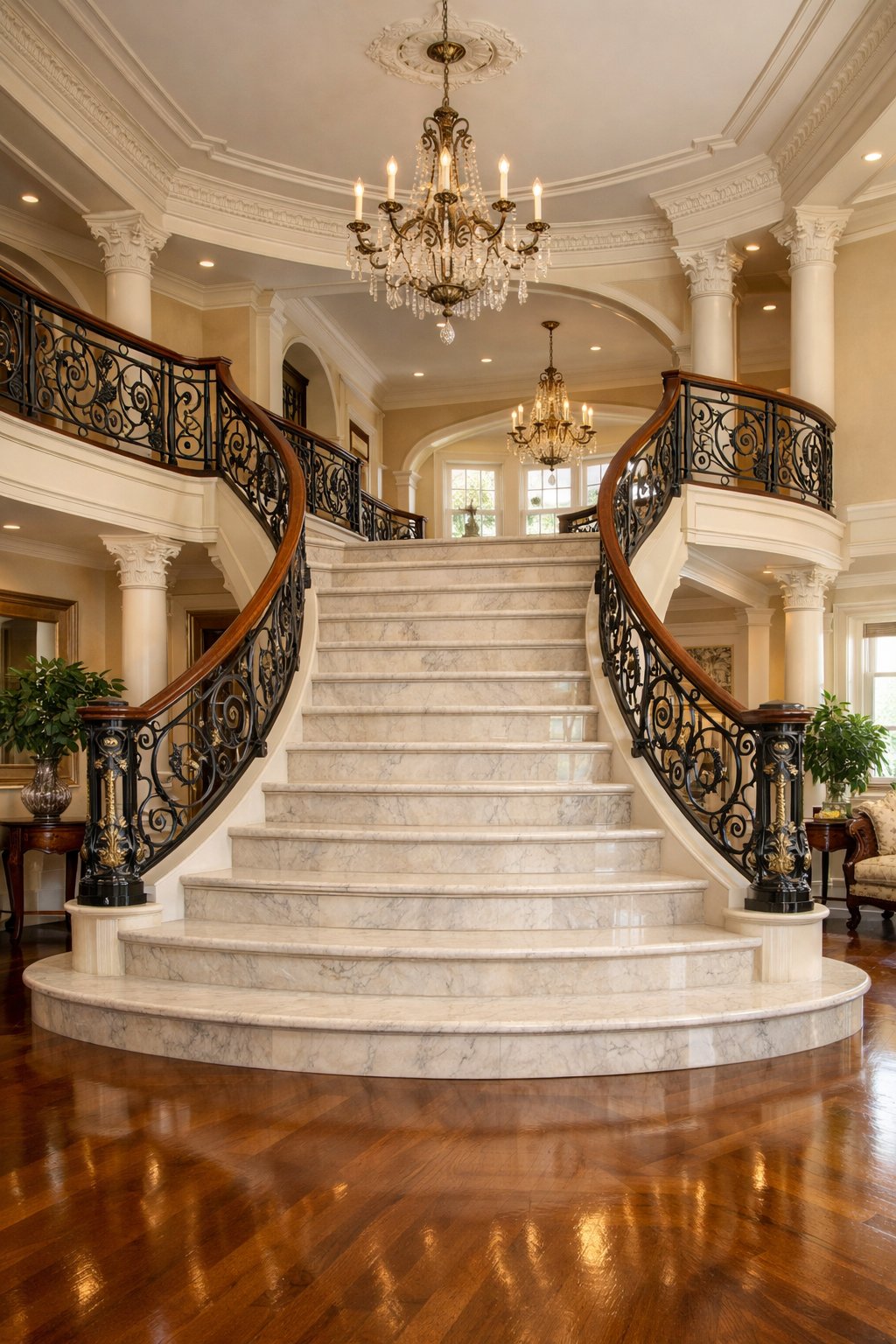
Victorian homes often feature grand staircases that anchor the main hall. Builders used wrought iron or carved wood for strong, detailed railings. These staircases guide movement between floors and draw attention upward.
Wrought iron railings show scrolls, curves, and fine patterns. Craftsmen shaped each piece to fit the stair’s curve or spiral. The metal adds structure without blocking light.
Many designs use wide steps and a gentle rise. Some homes include spiral or curved stairs for compact spaces. The staircase becomes a clear focal point without excess decoration.
5) Lavish textiles such as velvet drapes and plush upholstery
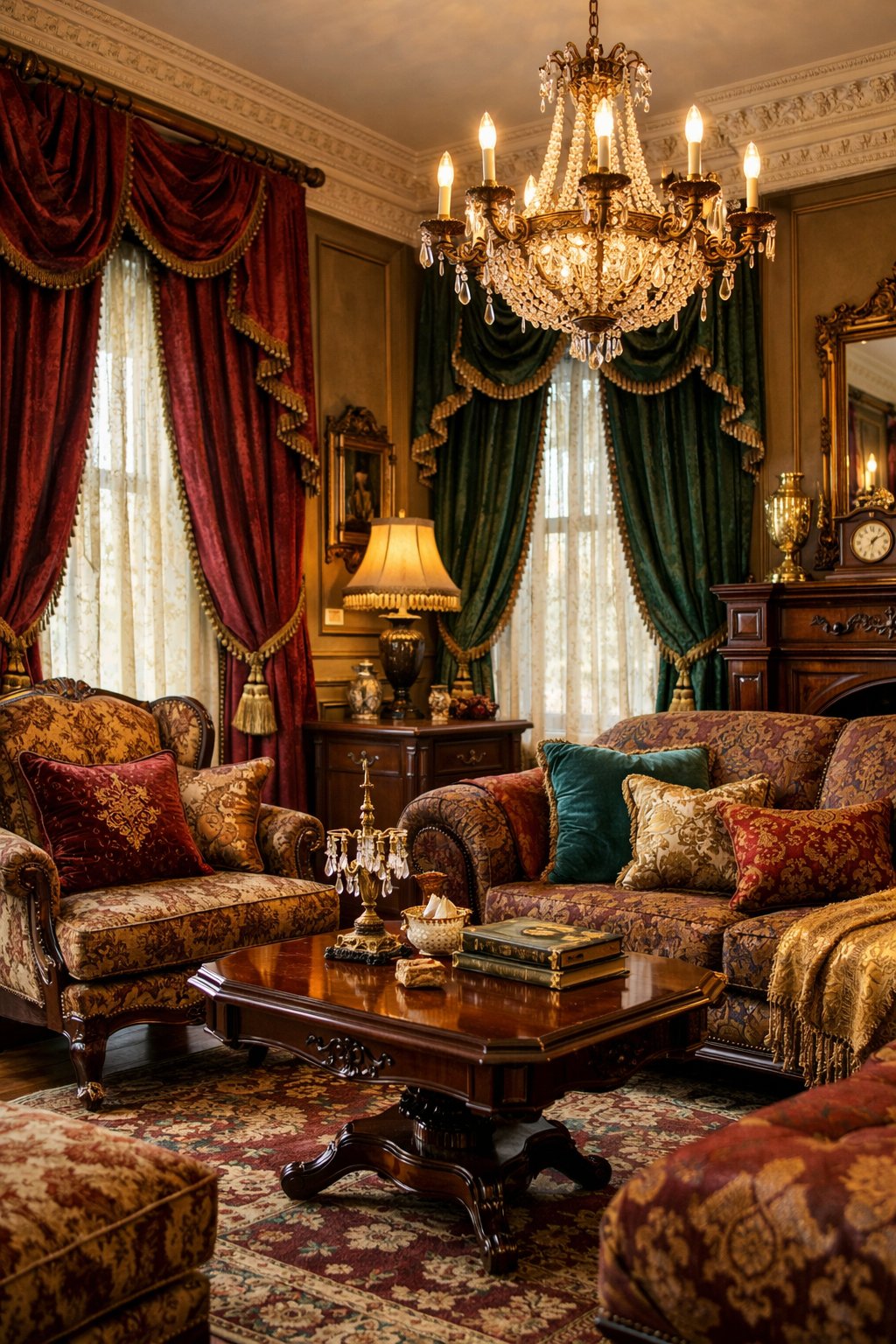
Victorian interiors rely on rich textiles to shape the room. Designers often choose velvet, silk, and brocade for drapes, chairs, and sofas. These fabrics add depth without changing the layout.
Heavy curtains frame tall windows and help control light. Upholstered seating uses thick padding and tight patterns. The textures create comfort while keeping a formal look.
Patterns stay detailed but controlled. Floral or damask designs appear often, balanced by solid colors to avoid visual clutter.
6) Decorative ceiling medallions and chandeliers
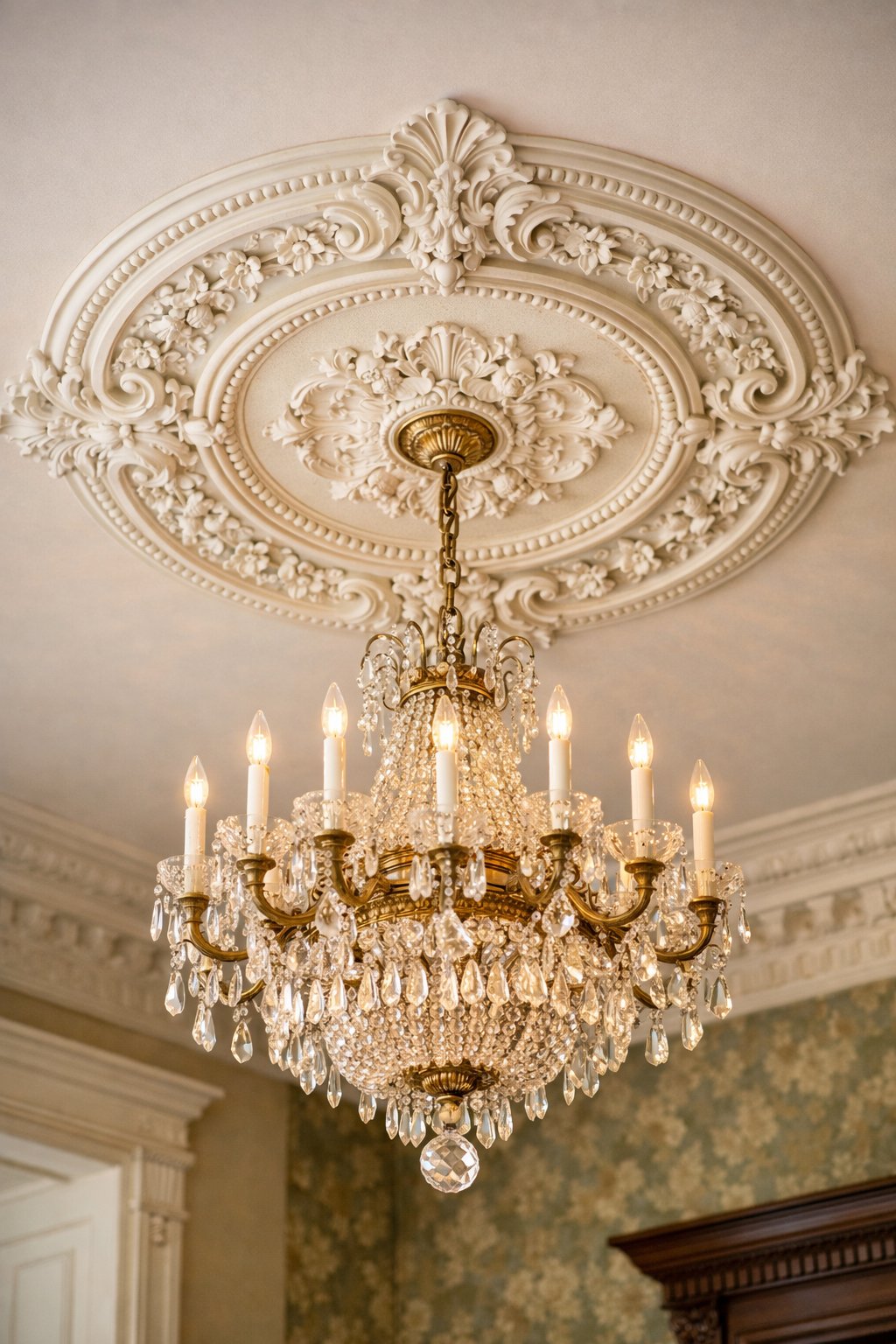
Victorian homes often feature ceiling medallions placed around chandeliers or pendant lights. These pieces add detail to the ceiling and draw attention to the center of the room.
Designs usually include floral patterns, scrolls, or classical shapes. Many come in different sizes to fit small parlors or large dining rooms.
Chandeliers pair well with these medallions. Together, they create a balanced look that feels planned and refined without overwhelming the space.
7) Vintage fireplaces with detailed mantels
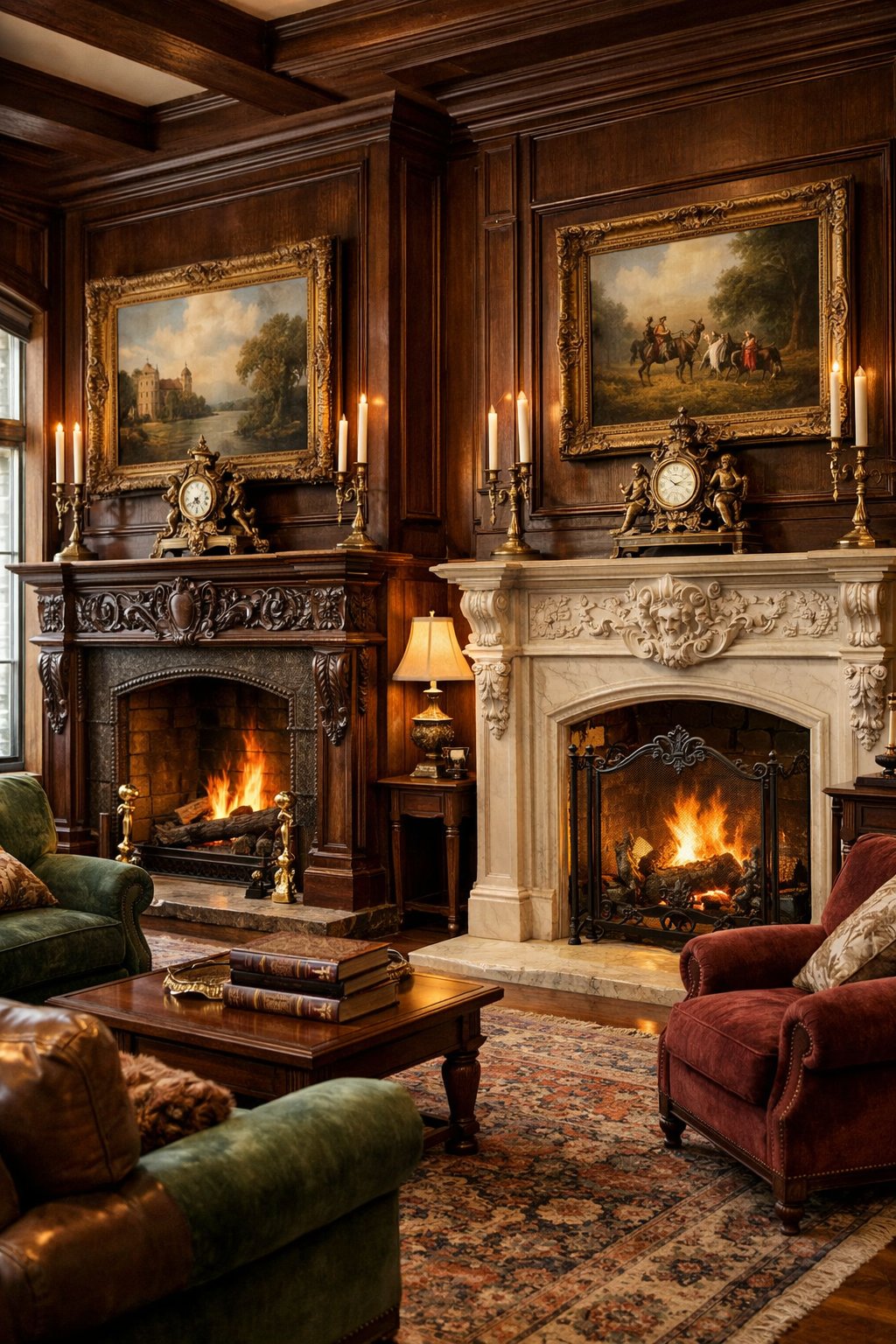
Victorian homes often feature vintage fireplaces that anchor the room. They use carved wood or stone mantels with clear lines and fine detail. Many include a tall overmantel that frames the wall.
Dark oak and walnut appear often in these designs. Craftsmen carved panels, scrolls, and floral shapes by hand. The mantel became a focal point, not just a shelf.
Brick or tile lines the firebox, often paired with a metal fire basket. These parts reflect common Victorian materials and practical design choices.
Defining Victorian Interior Elegance
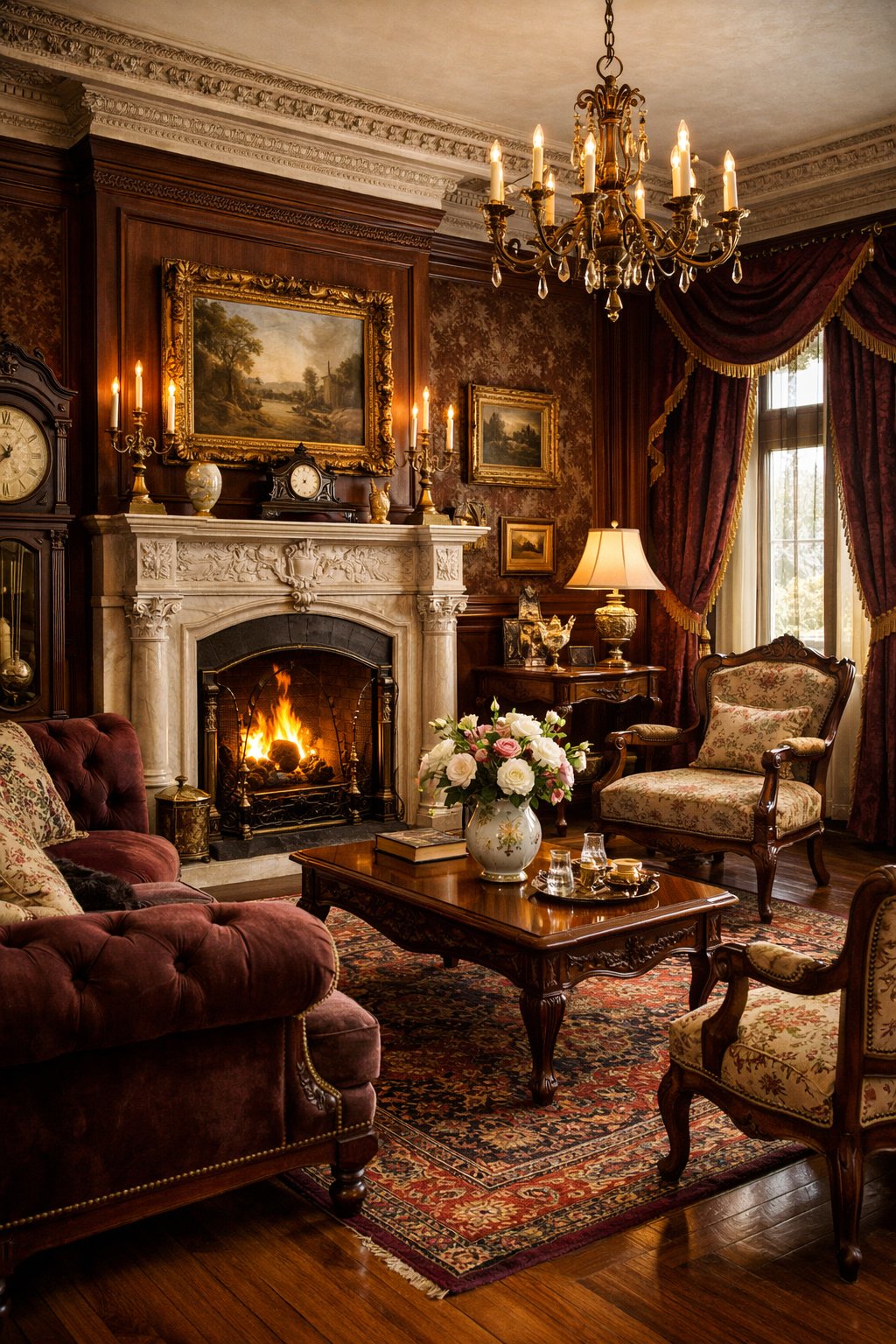
Victorian interiors focus on detail, structure, and layered design. Builders and designers used strong forms, rich surfaces, and careful decoration to create rooms that felt refined and lived-in.
Key Architectural Features
Victorian homes rely on solid architecture to set the tone. High ceilings create open space and allow for tall windows. Decorative trim frames doors, windows, and ceilings with care.
Common features include:
- Crown molding and ceiling medallions that add visual weight
- Tall baseboards that ground the room
- Fireplaces with carved wood or stone surrounds
- Staircases with turned balusters and detailed newel posts
Built-in elements matter as much as furniture. Bay windows, alcoves, and built-in cabinets shape how rooms function. These features support layered decor without making the space feel random.
Color Palettes and Materials
Victorian interiors favor deep, steady colors and natural materials. Designers chose tones that worked well in low light and paired them with durable surfaces.
Typical choices include:
| Element | Common Options |
|---|---|
| Wall colors | Burgundy, forest green, navy, ochre |
| Wood | Mahogany, walnut, oak |
| Fabrics | Velvet, wool, brocade |
| Finishes | Brass, copper, polished wood |
Walls often use patterned wallpaper or painted panels. Floors feature hardwood or tile, often covered with rugs. These choices create contrast and texture without relying on modern effects.
Modern Touches in Victorian-Inspired Homes
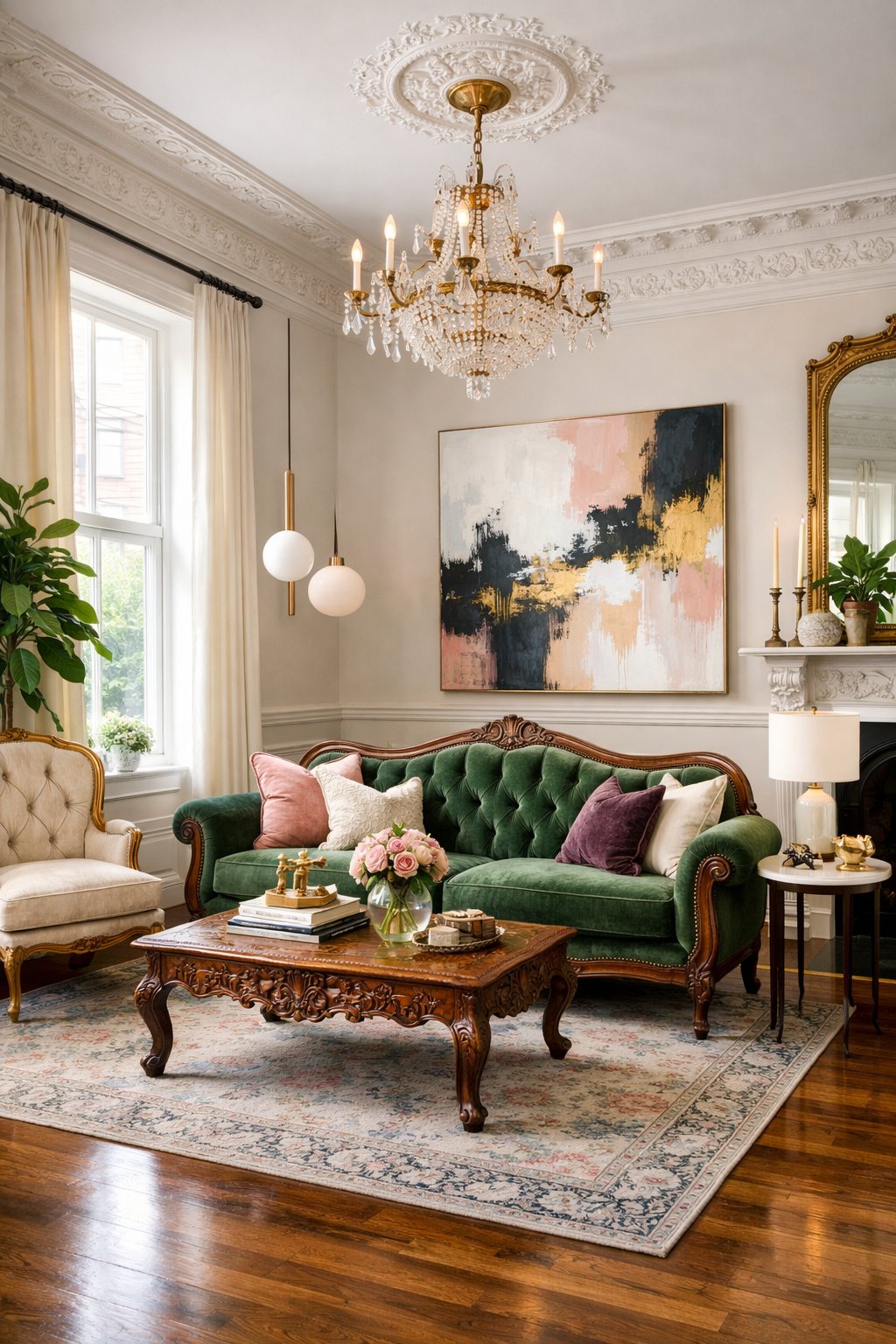
Modern Victorian interiors keep classic details while adding comfort and function. Designers mix old forms with clean lines and update lighting to suit daily life.
Blending Antique and Contemporary Decor
Designers pair original features with modern furniture to keep rooms balanced and usable. They often keep crown molding, carved mantels, and wainscoting, then add simple sofas or streamlined tables. This contrast keeps the space from feeling heavy.
They limit antiques to a few strong pieces. A vintage sideboard or mirror adds history without crowding the room. Modern art and neutral rugs help calm bold patterns often found in Victorian homes.
Common pairings that work well:
| Victorian Element | Modern Match |
|---|---|
| Ornate fireplace | Minimal mantel decor |
| Patterned wallpaper | Solid-color furniture |
| Dark wood trim | Light walls or floors |
This approach respects the past while fitting modern routines.
Lighting and Ambiance Enhancements
Lighting plays a key role in updating Victorian spaces. Designers replace dim or dated fixtures with efficient options that still feel period-appropriate. They choose LED bulbs with warm tones to match the original mood.
Layered lighting improves function. Ceiling fixtures provide general light, while wall sconces and table lamps add focus. Large windows, common in Victorian homes, stay clear of heavy drapes to bring in more daylight.
Effective lighting updates include:
- Simple chandeliers with classic shapes
- Slim sconces in brass or matte black
- Floor lamps near seating areas
These choices improve visibility and comfort without erasing character.