
Yurt: Architecture, History, Sustainability, Materials And Typical Prices Explained Clearly
A yurt is a round, portable shelter with a wooden frame and fabric covering that started in Central Asia and now serves as a modern, flexible living space. You can use a yurt as a full-time home, retreat space, or guest house, and you can expect typical prices to range from several thousand dollars for basic models to much more for larger, upgraded designs. Its simple structure supports strength, easy setup, and efficient use of materials.
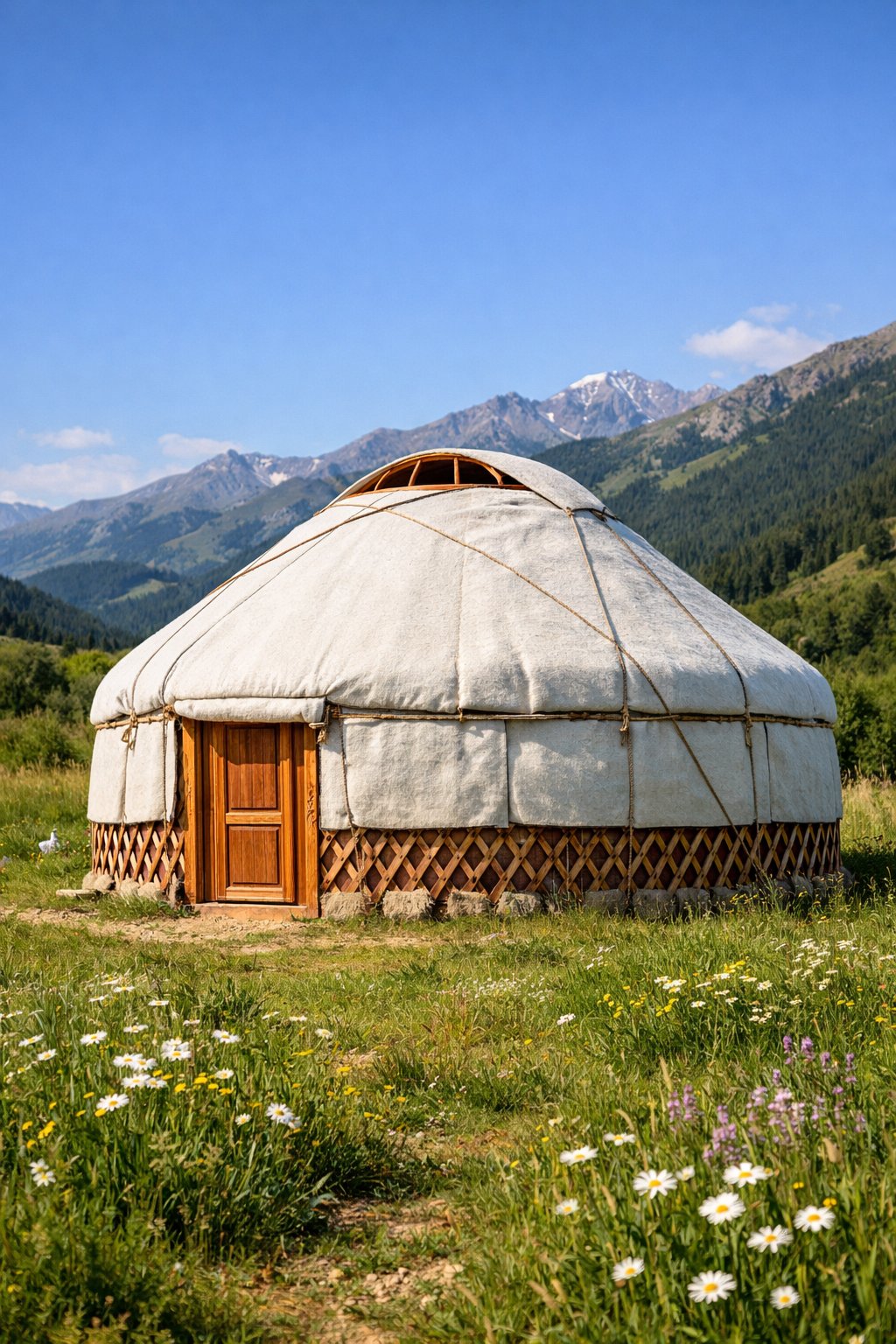
You will see how the yurt’s circular design uses lattice walls, roof rafters, and tension bands to create an open interior without load-bearing walls. You will also learn how nomadic groups used yurts for thousands of years and how that history shapes modern designs.

As you explore further, you will find clear details on materials, insulation, lifespan, and maintenance. You will also see how modern yurts use improved fabrics, stronger framing, and off-grid options, along with what affects cost so you can decide if this type of structure fits your needs and budget.
Fundamental Design and Architecture of the Yurt
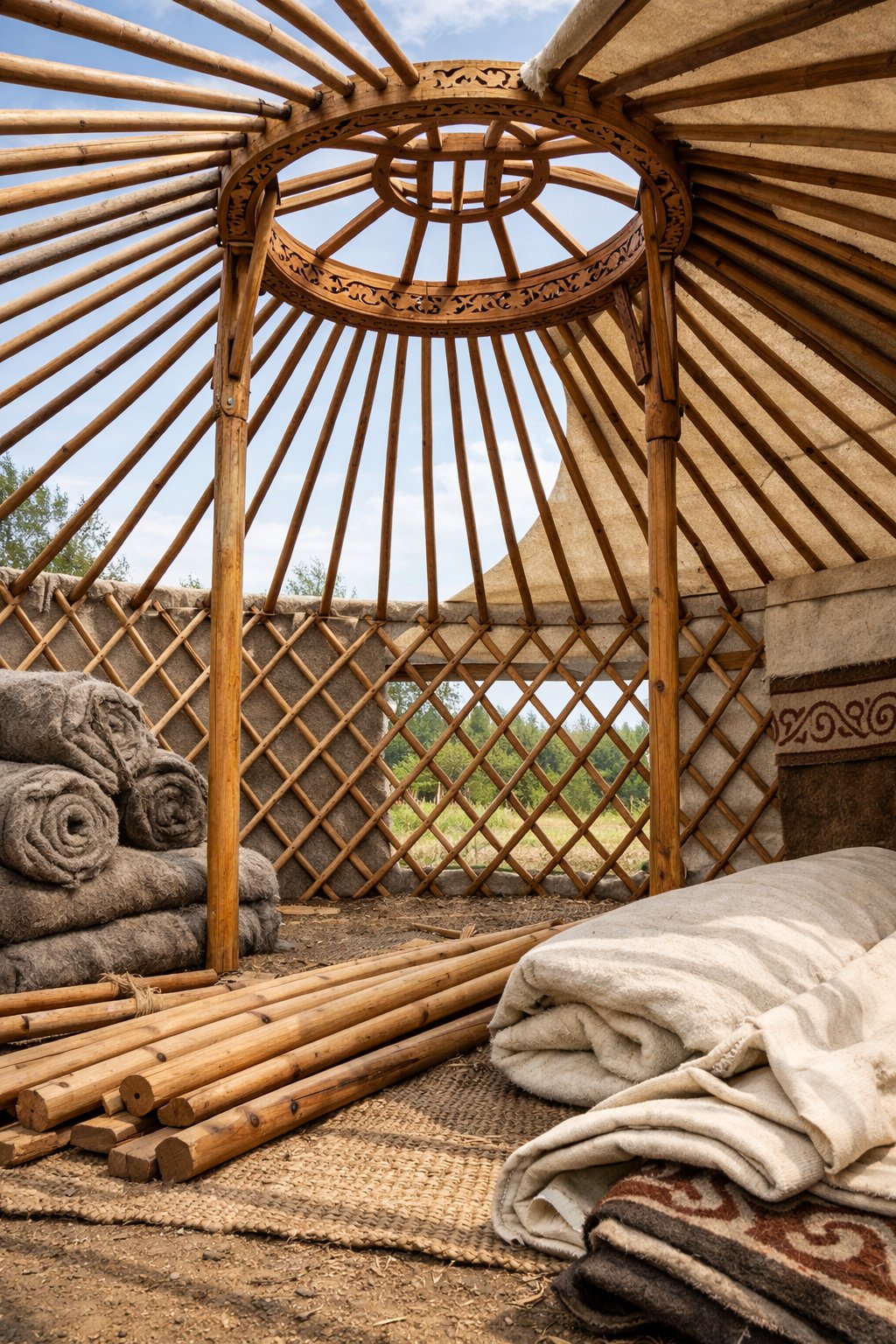
A yurt uses a simple but precise system of wooden parts and fabric layers to create a strong, efficient shelter. Its circular floor plan, flexible frame, and portable home features allow you to set it up, take it down, and move it with limited tools.
Core Structural Elements
The yurt structure relies on a tension and compression system that locks together without nails in traditional forms. The main wall is a folding wooden lattice called the khana. You expand the khana into a circle and secure its ends to form the base wall.

Roof poles, often called rafters, angle upward from the top of the khana to a central roof ring. This ring forms the skylight, which brings in daylight and allows smoke to escape when you use a stove. In many Mongolian yurts, two interior posts known as bagana support the roof ring.
The roof creates a low conical roof shape. This design sheds rain and snow while spreading weight evenly around the circular wall. A tension band or rope wraps around the top of the wall to resist the outward push of the roof poles.
You then cover the frame with layers. Traditional yurts use felt made from sheep’s wool. Modern versions may use canvas, insulation, and waterproof membranes for better weather control.

Circular Floor Plan Concept
The circular floor plan defines how you use and experience the space. Unlike square buildings, a yurt has no corners, so you use every part of the interior.
This shape gives you more usable floor area compared to the amount of wall material. The round form also helps wind move around the structure instead of pushing against flat walls. That improves stability in open степpe or rural sites.
Inside, you often place the stove at the center under the skylight. This layout spreads heat evenly in all directions. In traditional settings, families divide the circle into zones for sleeping, storage, and guests.
The circular design also supports the roof system. Each roof pole presses evenly into the wall ring, which balances the load across the entire frame. This simple geometry makes the yurt design both efficient and strong.
Portable Home Features
You can take down a traditional yurt in a few hours and move it to a new site. The folding khana collapses into compact bundles, and the roof poles stack together for transport.
The fabric and felt coverings roll into manageable sections. In nomadic cultures of Central Asia, families loaded these parts onto animals or carts as they moved with their herds.
The portable home concept shapes every design choice. Builders keep parts lightweight and modular. You do not rely on heavy foundations; instead, you set the yurt on a simple platform or directly on level ground.
Modern yurts keep this basic system but may add features like pre-built doors, insulated panels, and metal connectors. Even with these updates, the core idea remains the same: a circular, flexible shelter that you can assemble, disassemble, and relocate with limited equipment.
Historical and Cultural Origins
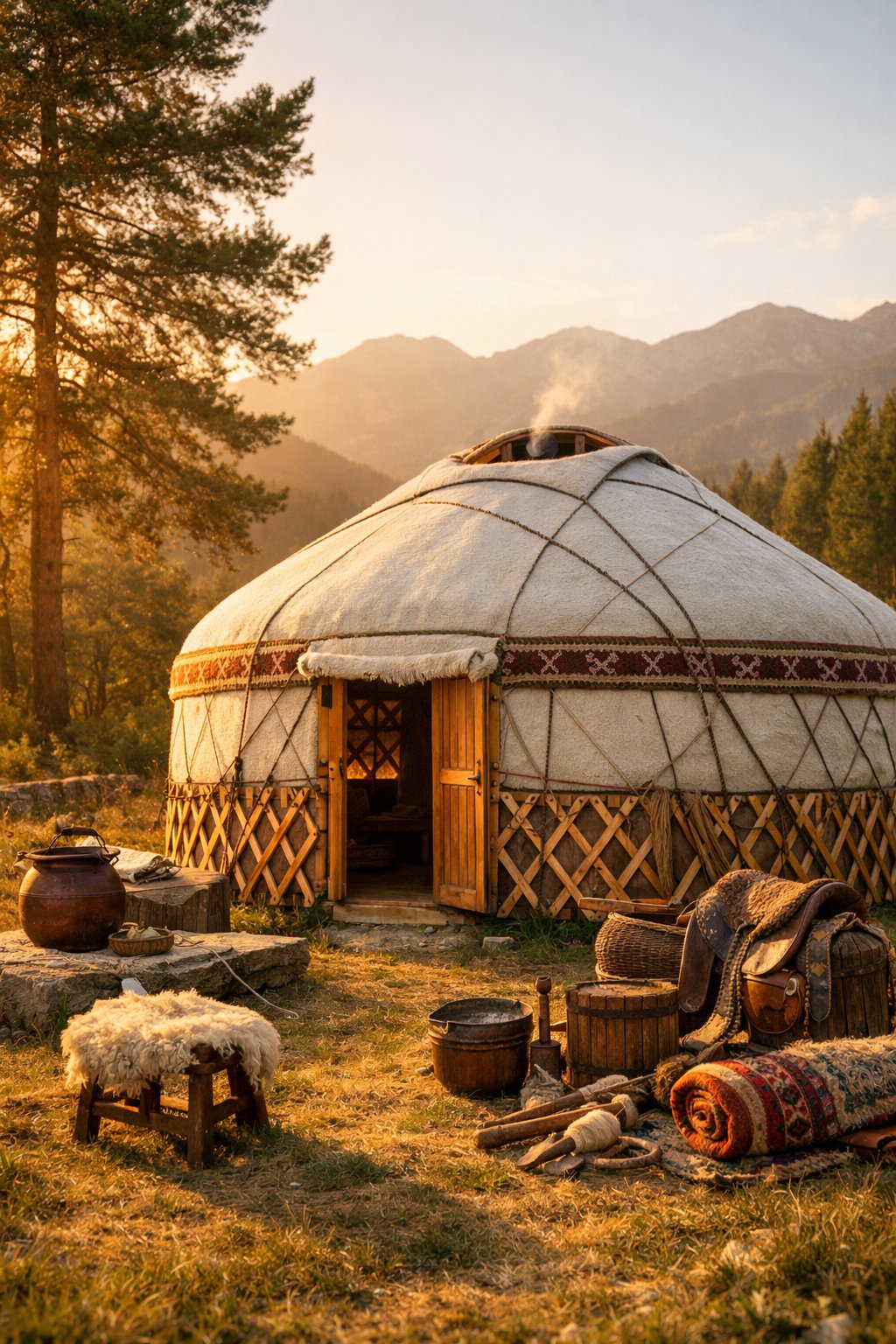
Yurts began as practical shelters for herding societies in Central Asia and grew into strong cultural symbols. You can trace their form, structure, and meaning directly to the needs of a mobile life on open grasslands.
Central Asian Roots
You find the earliest yurts on the Central Asian steppe more than 3,000 years ago. Nomadic groups in what is now Mongolia, Kazakhstan, and surrounding regions used them long before written records.
In Mongolia, people call the yurt a ger or Mongolian ger. This structure uses a collapsible wooden lattice wall, roof poles called uni, and a central compression ring. Builders cover the frame with layers of wool felt made from sheep’s wool.
The circular shape resists strong steppe winds. The low profile and tight felt layers help hold heat during harsh winters.
A traditional yurt balances strength and portability. You can take it apart, load it onto animals or carts, and rebuild it within hours. This design allowed herding families to move with their livestock across wide grasslands without giving up shelter or comfort.
Nomadic Lifestyle Significance
The yurt developed to support a true nomadic lifestyle. You move several times a year to find fresh pasture and water for animals. A permanent house would not work in this system.
A Mongolian yurt meets key needs:
- Quick assembly and disassembly
- Light but strong materials
- Climate control through felt insulation
- Efficient use of interior space
Inside, families organize space with purpose. The stove sits at the center under the roof opening, which lets out smoke and brings in light. The door often faces south in Mongolia to reduce wind exposure and increase sunlight.
Every part of the traditional yurt serves daily life. You cook, sleep, store tools, and host guests in one circular room. The layout reflects order, with specific areas for men, women, elders, and honored visitors.
Symbolism and Cultural Legacy
The ger stands as more than a shelter. It represents family unity and connection to land. The circular plan has no sharp corners, which many see as a sign of continuity and balance.
The roof ring at the top holds strong meaning. In Mongolia, its image appears on the national emblem and flag. It reflects the sky and the idea of openness to the world.
Decorative elements also carry cultural value. Families paint wooden frames in bright colors and add carved details. Felt coverings may include patterns that reflect regional identity.
Today, you still see yurts used across Mongolia and parts of Central Asia. Modern versions appear in eco-tourism and rural housing, yet the core form remains close to the traditional yurt. The structure continues to link present-day life with centuries of nomadic culture.
Materials and Construction Techniques
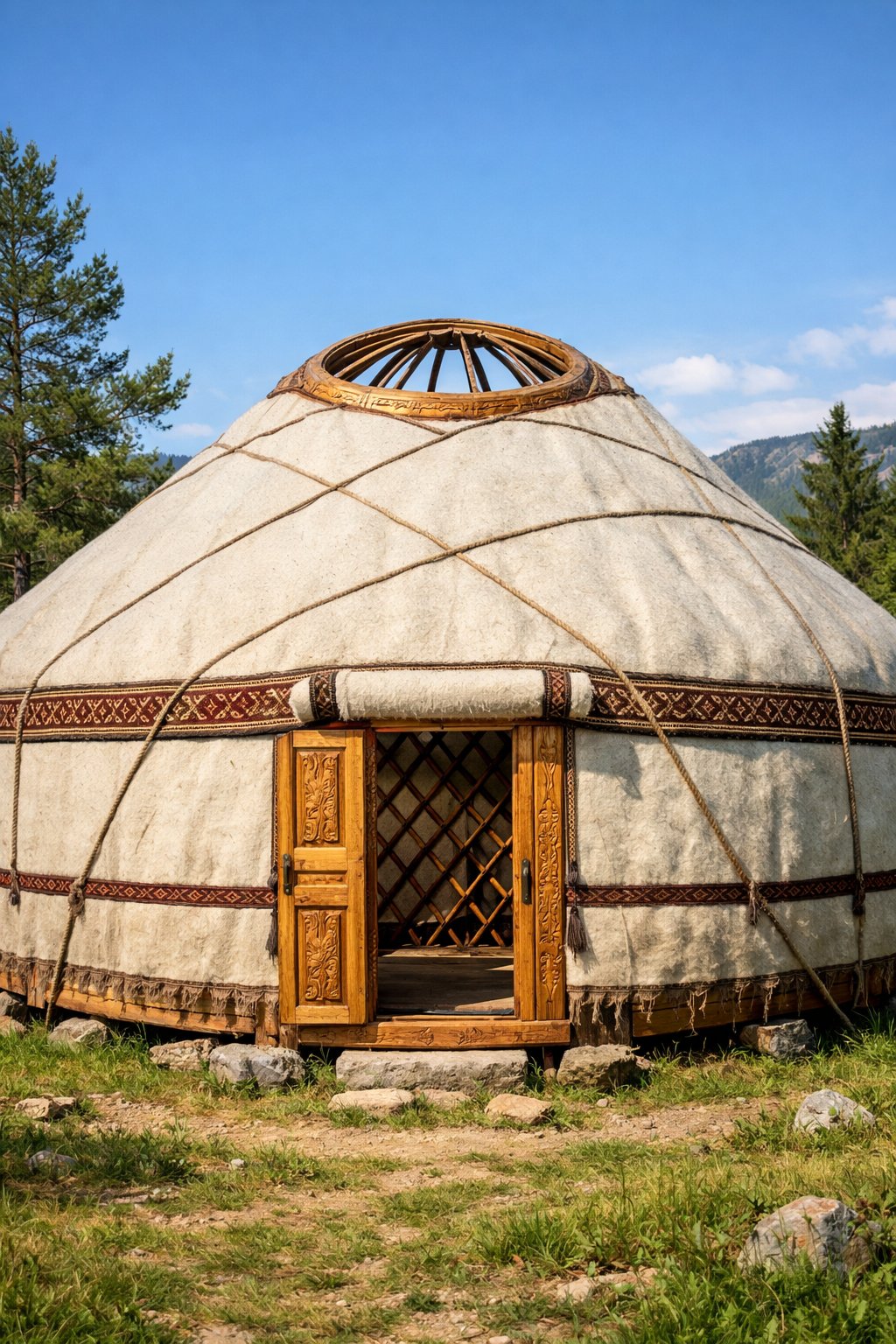
Yurts rely on a simple frame, layered insulation, and a tension system that holds the structure in balance. Over time, builders have updated materials and methods to improve strength, weather resistance, and energy performance.
Traditional Components and Methods
A traditional wooden yurt uses a collapsible lattice wall called a khana. Craftsmen shape thin wooden slats and tie them together so you can expand or fold the wall for transport.
Roof rafters, known as uni, connect the wall to a central compression ring. This ring forms the roof opening and supports the load of the rafters. Builders rely on tension bands made of rope or rawhide to keep the frame tight and stable.
You cover the frame with layers of wool felt made from sheep’s wool. Thick felt insulation blocks wind and traps heat, which helps in cold степpe climates. An outer fabric layer, often canvas, protects the felt from rain and sun.
You do not need nails in many traditional builds. The design uses compression and tension to stay upright, which allows quick assembly and disassembly.
Evolution of Materials
As yurts spread beyond Central Asia, builders adapted materials to suit new climates and building codes. You now see kiln-dried lumber, engineered wood, and metal fasteners used in many structures.
Instead of raw wool alone, some makers combine wool felt with synthetic insulation for higher R-values. This change improves energy efficiency, especially if you plan to live in your yurt year-round.
Outer covers have also changed. Modern fabrics often include acrylic-coated polyester or marine-grade canvas. These materials resist mold, UV damage, and heavy rain better than untreated cloth.
Floor systems evolved as well. Many owners now place a yurt on a raised wooden deck or platform, which improves drainage and meets local regulations.
Modern Manufacturing Advances
Today, many yurt manufacturers produce prefabricated frames and complete yurt kit packages. A kit usually includes lattice walls, rafters, a compression ring, hardware, insulation, doors, and window units.
Computer-aided design helps manufacturers cut parts with precision. This improves fit and reduces air gaps. You benefit from faster installation and more predictable performance.
A modern yurt may include double-pane windows, rigid insulation panels, and snow and wind load ratings. Some models support off-grid systems such as solar panels and composting toilets.
These advances make yurts more durable and easier to maintain, while keeping the circular form and core structural system that define the design.
Sustainability and Environmental Benefits
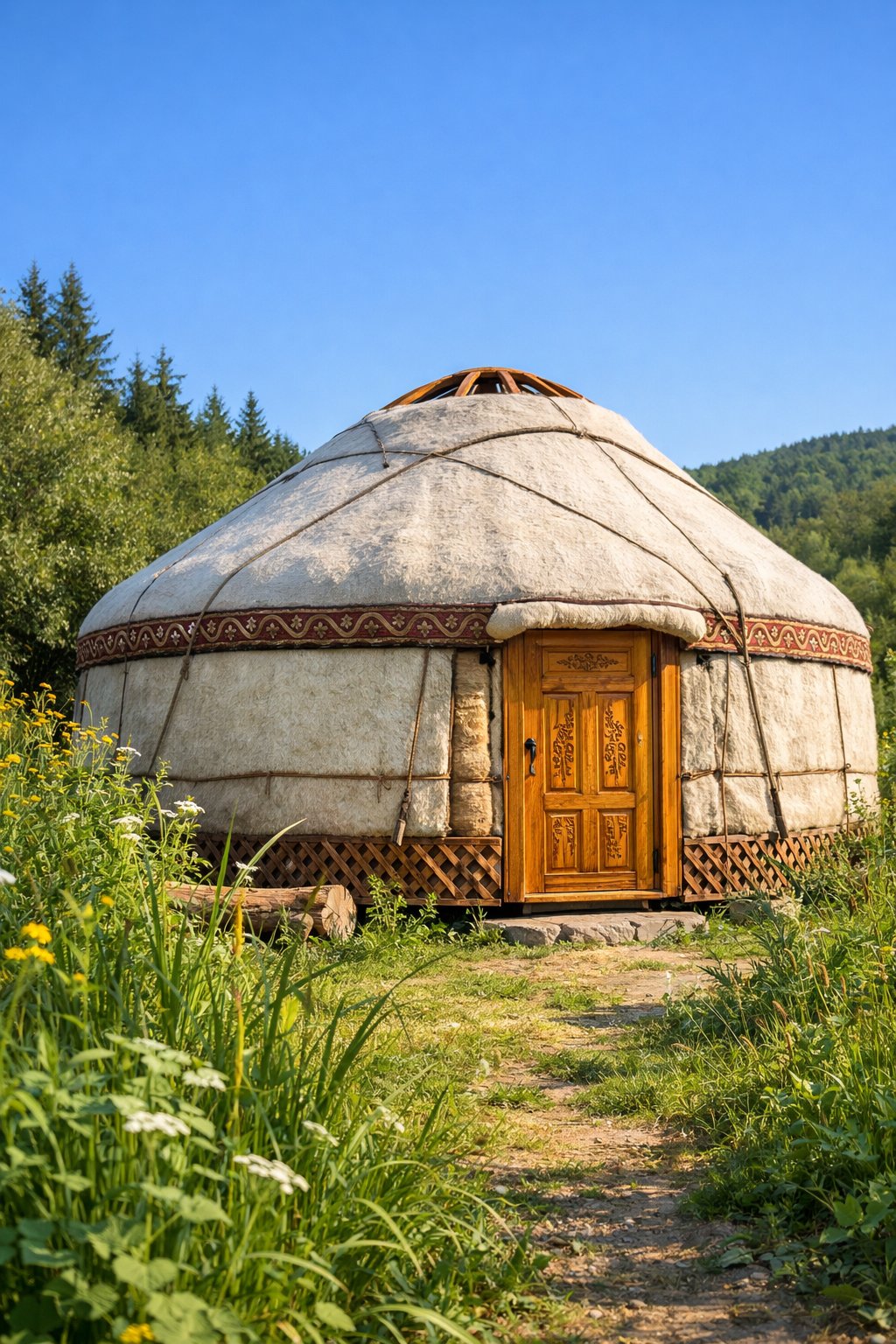
Yurts support sustainable living through simple design, efficient use of materials, and low energy needs. Their structure, insulation, and flexibility make them practical for low-impact and off-grid lifestyles.
Principles of Sustainable Living
A yurt uses fewer building materials than most rectangular houses of the same size. Its circular shape encloses more floor space with less wall area, which reduces lumber, fasteners, and exterior cladding.
Many builders choose renewable or natural materials such as sustainably sourced wood lattice, cotton canvas, and wool felt. These materials often have a lower carbon footprint than concrete, brick, or steel. You can also select low-VOC finishes and recycled components to further reduce environmental impact.
Yurts also disturb the land less during construction. You can build them on raised platforms or simple foundations, which limits soil disruption and allows air and water to move under the structure.
Lower material use and simpler construction often mean lower upfront costs. This can reduce financial strain and make sustainable living more accessible to you.
Energy Efficiency and Insulation
The round form of a yurt supports steady air circulation. Warm air moves evenly across the interior, which helps reduce cold spots in winter.
Modern or contemporary yurt models often include layered insulation systems. Common options include wool felt, reflective foil, and rigid insulation panels in the roof and walls. These layers help slow heat loss in cold climates and limit heat gain in hot weather.
The roof ring, or crown, allows natural light to enter during the day. This reduces your need for artificial lighting. You can also open it for passive ventilation, which lowers cooling demand.
Because a yurt has a compact footprint, you heat and cool a smaller volume of space. This can lower energy use compared to larger, traditional homes.
Adaptability for Off-Grid Living
Yurts work well for off-grid living because they pair easily with small-scale systems. You can install rooftop solar panels near the structure or on a separate rack to power lights and appliances.
Their modest energy needs make renewable energy systems more practical and affordable. A small solar array and battery bank can often meet daily electrical demand.
You can also add rainwater collection systems along the roof edge. Composting toilets and greywater systems fit well with the yurt’s simple layout.
Because you can dismantle or relocate many yurts, they offer flexibility that permanent buildings do not. This mobility allows you to adapt to changing land use, climate needs, or personal goals while maintaining a low environmental impact.
Modern Innovations and Lifestyle Applications
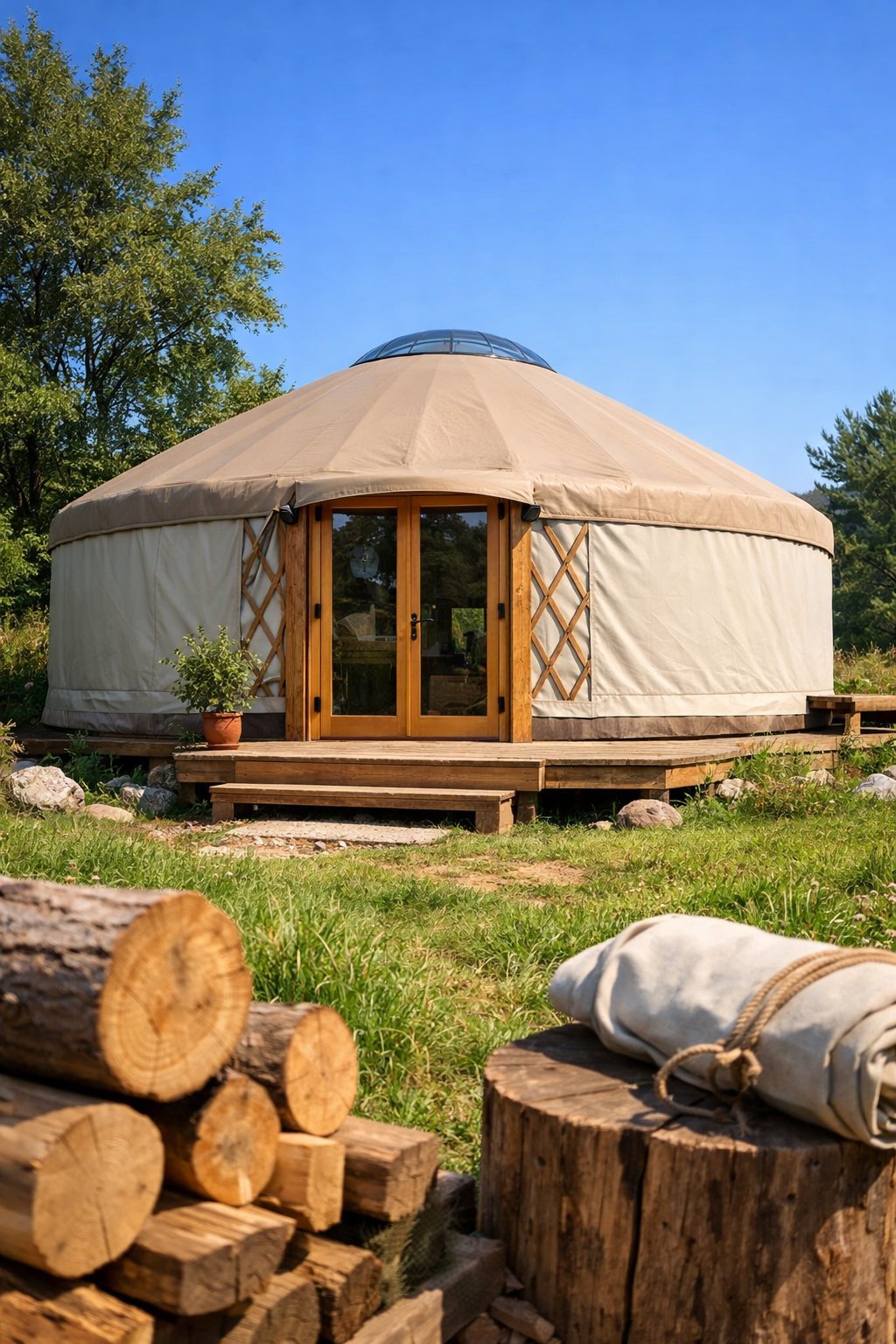
Modern yurts combine traditional circular form with new materials, stronger frames, and updated layouts. You can now use a contemporary yurt as a full-time home, a short-term rental, or a flexible off-grid shelter.
Contemporary Yurt Designs
Modern yurts keep the classic round shape but improve comfort and durability. You will find engineered wood lattice walls, stronger roof rafters, and metal hubs that increase structural strength.
Many models use weather-resistant outer fabrics, insulated panels, and reflective liners. These upgrades help control heat loss in winter and reduce heat gain in summer. Double-pane windows, insulated doors, and sealed seams also improve energy efficiency.
Some companies offer yurts that two people can set up in about an hour. These portable models often include a ground cloth and use treated wood, canvas, and low-toxin finishes.
Modern yurt design also supports off-grid living. You can add solar panels, composting toilets, rainwater systems, and battery storage. Builders now plan smart interior layouts with built-in storage, loft beds, and framed bathroom sections to make small spaces work better.
Popular Uses in the Modern Era
You can use a contemporary yurt for many purposes beyond traditional shelter. Many owners choose them as primary homes, especially in rural areas where building codes allow alternative structures.
Yurts also serve as guest houses, backyard offices, and art studios. Their open floor plan makes it easy to divide space with partial walls or furniture.
In the travel market, modern yurts appear at glamping sites, eco-resorts, and retreat centers. Operators value their fast setup time and lower material use compared to standard cabins.
Some businesses use yurts as temporary classrooms, yoga studios, or event spaces. The circular design creates a central gathering area, which works well for group activities.
Market Trends and Audience
Interest in modern yurts grows as more people seek smaller, efficient homes. Buyers often look for lower upfront costs than traditional houses, though prices vary by size and features.
You will see price ranges such as:
- Small camping yurts: lower cost, minimal insulation
- Mid-size residential yurts: insulated walls, framed doors and windows
- Large custom yurts: full insulation packages, interior walls, utility hookups
Many buyers focus on sustainability. They prefer responsibly sourced wood, durable fabrics, and designs that reduce material waste.
The typical audience includes off-grid living enthusiasts, remote workers, retirees downsizing, and short-term rental hosts. You choose a modern yurt not just for style, but for flexibility, efficiency, and adaptable living space.
Typical Prices and Buying Considerations
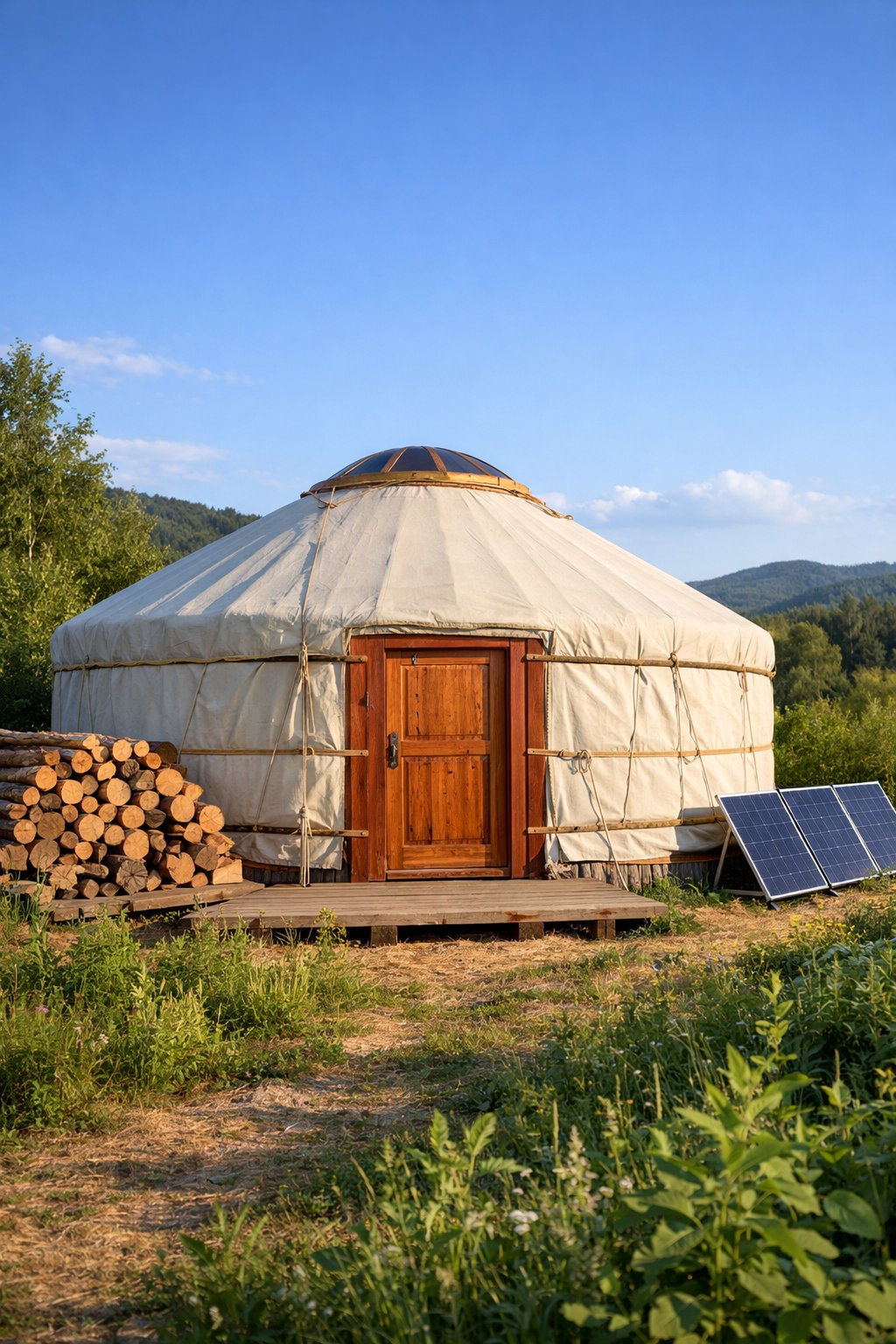
Yurt prices vary based on size, insulation, materials, and level of finish. You need to look beyond the base price and plan for delivery, site work, and long-term use.
Standard Price Ranges
In 2025, most basic yurt kits cost between $7,000 and $12,000 for small to mid-size models. These usually measure 12 to 20 feet in diameter and include the lattice wall, roof rafters, center ring, and fabric cover.
Smaller yurts, around 8 to 14 feet wide, can cost under $10,000 for entry-level versions. Larger modern yurt models with thicker insulation, upgraded windows, and snow or wind packages can exceed $15,000 to $25,000.
The base price often does not include a platform, foundation, utilities, interior walls, or permits. When you add flooring, electrical work, plumbing, heating, and delivery, total project costs can reach $20,000 to $50,000 or more, depending on size and finish level.
Always ask what the listed price includes. Some yurt manufacturers bundle doors, windows, and insulation, while others charge for them separately.
Cost Factors and Buying Tips
Several key factors affect what you will pay:
- Diameter and wall height
- Insulation type and thickness
- Climate upgrades (snow load, wind rating)
- Door and window quality
- Delivery distance
A larger diameter increases material use and structural demands. Cold climates require better insulation and stronger framing, which raises costs.
Modern yurt designs often include glass windows, skylights, and custom doors. These features improve comfort but increase the final price. Platform construction also adds significant expense, especially if your site is sloped.
Before you buy, check local zoning and building codes. Some areas treat a yurt as a temporary structure, while others require permits like a small house. Choose established yurt manufacturers with clear warranties and documented wind and snow ratings.
Yurt Kits vs Custom Builds
A yurt kit offers a cost-effective and predictable option. Manufacturers pre-cut and size the components, which reduces labor and material waste. Kits also simplify ordering and shipping.
Building from scratch gives you more control over materials and design. However, buying parts separately often costs more and requires advanced carpentry skills. Mistakes can lead to structural issues or weather leaks.
Custom builds from experienced yurt manufacturers cost more than standard kits but provide tailored layouts, upgraded insulation, and high-end finishes. If you plan to live in your yurt full time, a well-designed modern yurt kit with climate-specific upgrades often delivers the best balance of price, durability, and comfort.