
Small Apartment Storage Ideas: 5 Smart Solutions to Maximize Every Square Foot
Small apartments can feel crowded fast, but smart storage changes how the space works. With the right approach, they can turn tight rooms into organized, useful areas that feel calm and easy to manage. They can maximize every inch of a small apartment by using vertical space, hidden storage, and furniture that does more than one job.
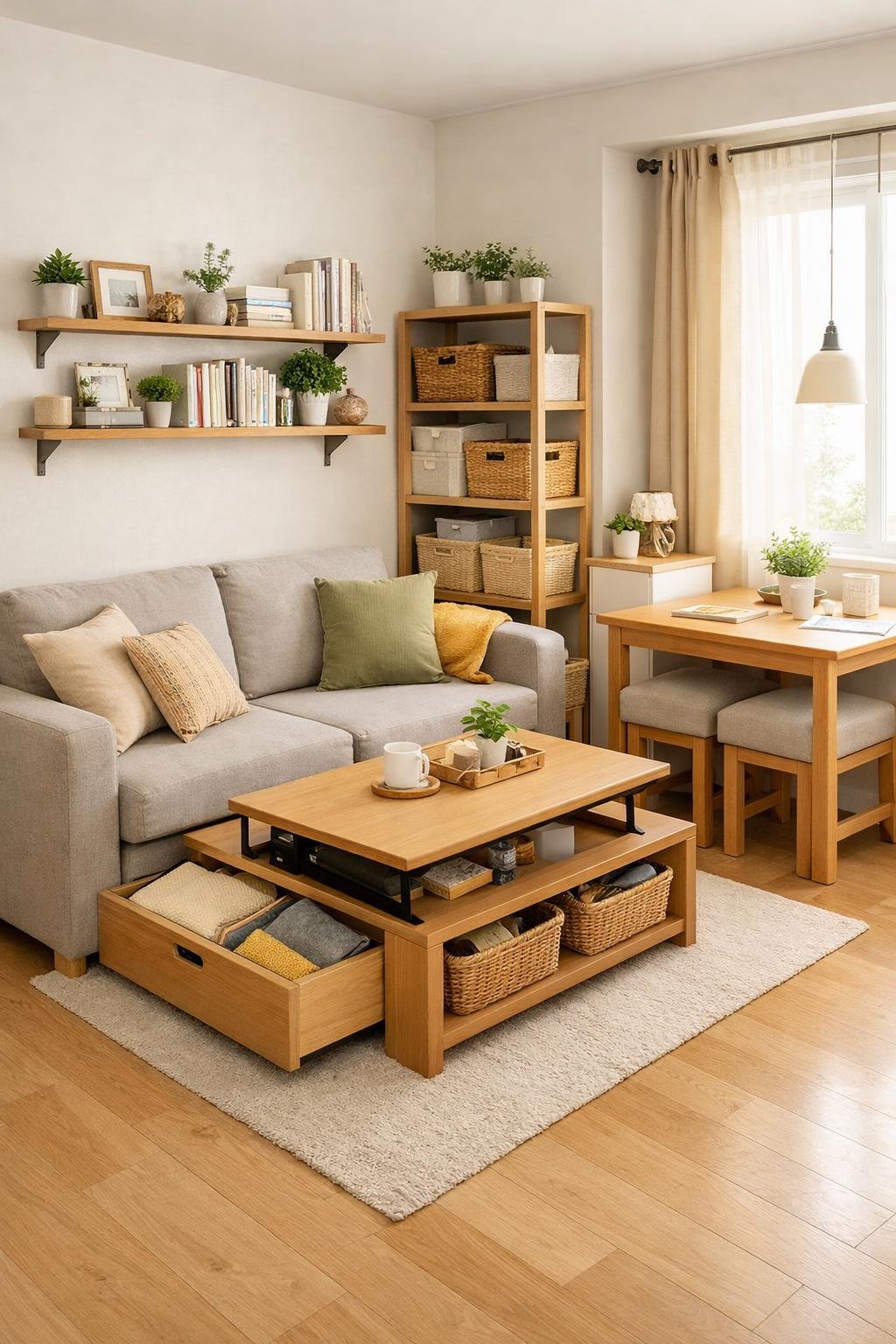
This article explores practical ways to use walls, corners, doors, and furniture to create more room without adding clutter. It shows how thoughtful storage choices help them stay organized, protect their belongings, and make daily life smoother in a small home.
1) Use vertical shelving units to maximize wall space
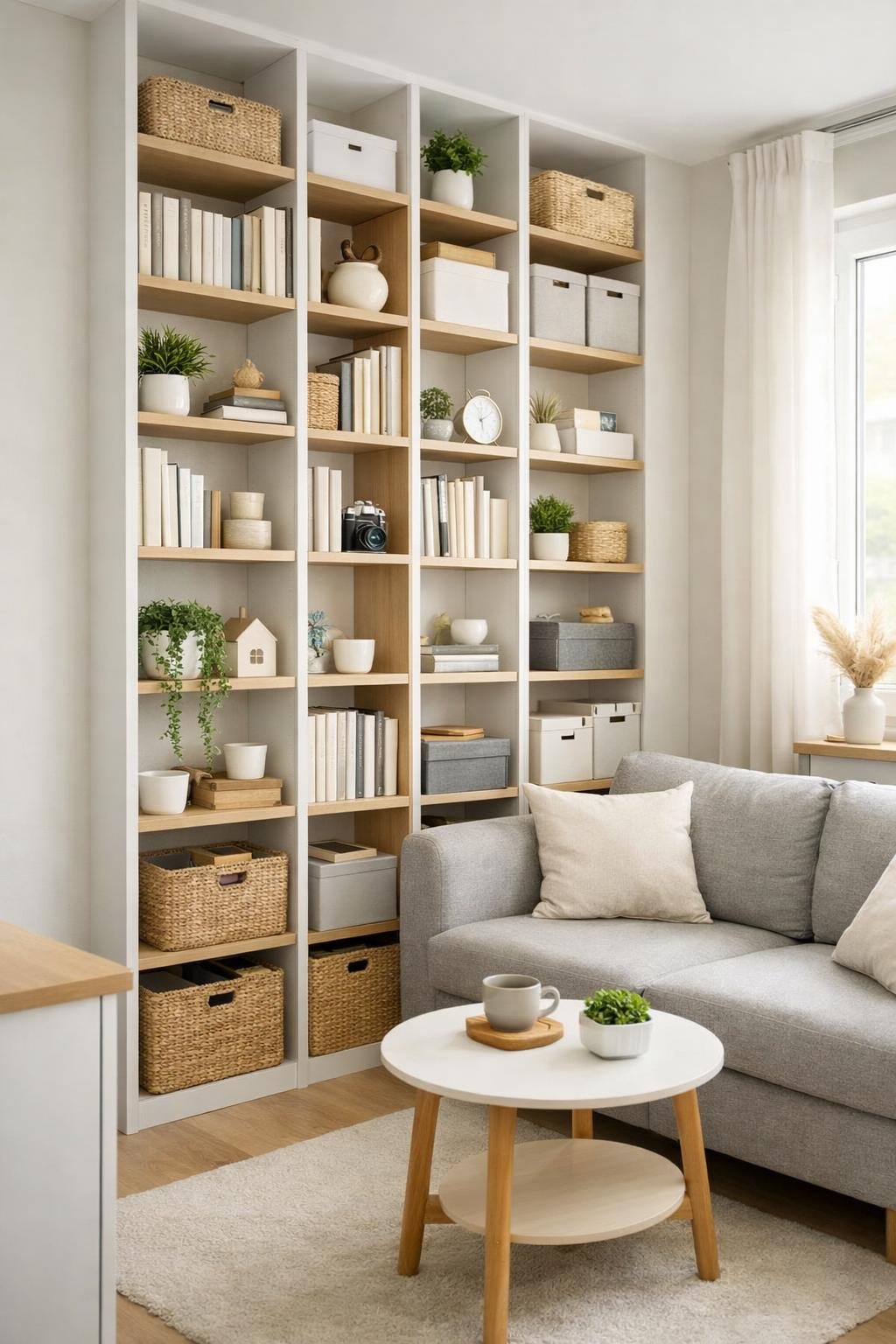
Vertical shelving units help small apartments use wall space instead of floor space. They draw the eye upward and free up room to move around. This approach works well in living rooms, bedrooms, and kitchens.
They can install tall bookcases, floating shelves, or narrow shelving towers. Floor-to-ceiling shelves add strong storage without taking much width. Wall-mounted options also keep the floor clear, which makes the room feel less crowded.
They should group items in baskets or bins to keep shelves neat. This method keeps daily items within reach while reducing clutter.
2) Install under-bed storage drawers for hidden organization
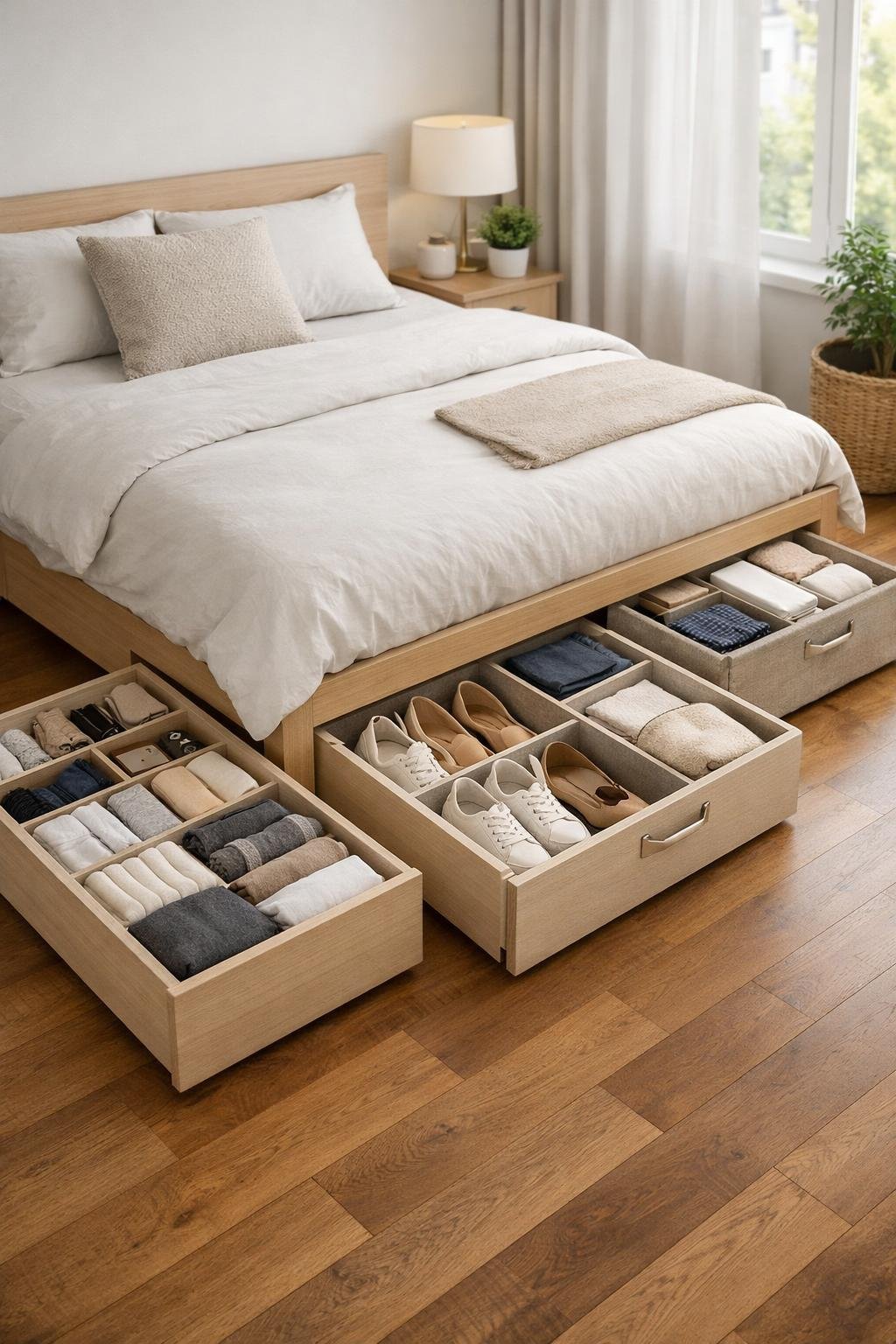
Under-bed storage drawers turn unused space into practical storage. They keep items out of sight while freeing up closets and shelves.
They can store bedding, extra towels, off-season clothes, or wrapping paper. This setup reduces clutter in small rooms. It also keeps daily areas clear and easy to clean.
Some beds come with built-in drawers. Others can use rolling bins or low-profile containers that slide under the frame.
They should measure the space under the bed before buying. Proper fit ensures smooth access and better use of every inch.
3) Add over-the-door hanging organizers for shoes and accessories
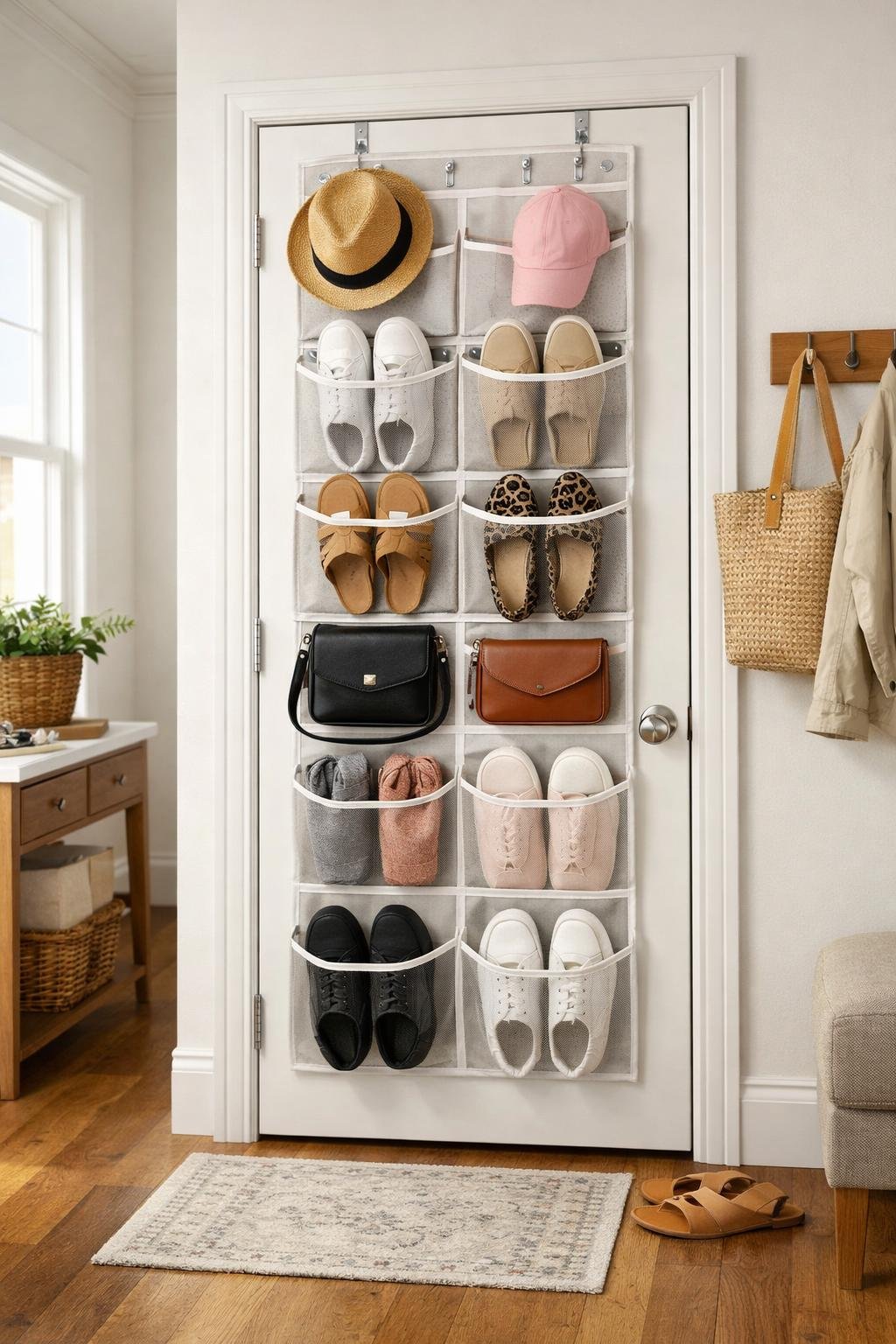
Over-the-door organizers turn unused space into storage. They hang on the back of a bedroom, closet, or bathroom door without taking up floor space.
Many designs include clear or mesh pockets. These pockets hold shoes, sandals, and flats so pairs stay visible and easy to grab. Some models also support heavier items and use strong hooks for stability.
They also store small items like scarves, belts, and clutches. In tight apartments, this simple tool keeps everyday items off the floor and out of crowded drawers.
4) Opt for multifunctional furniture like storage ottomans
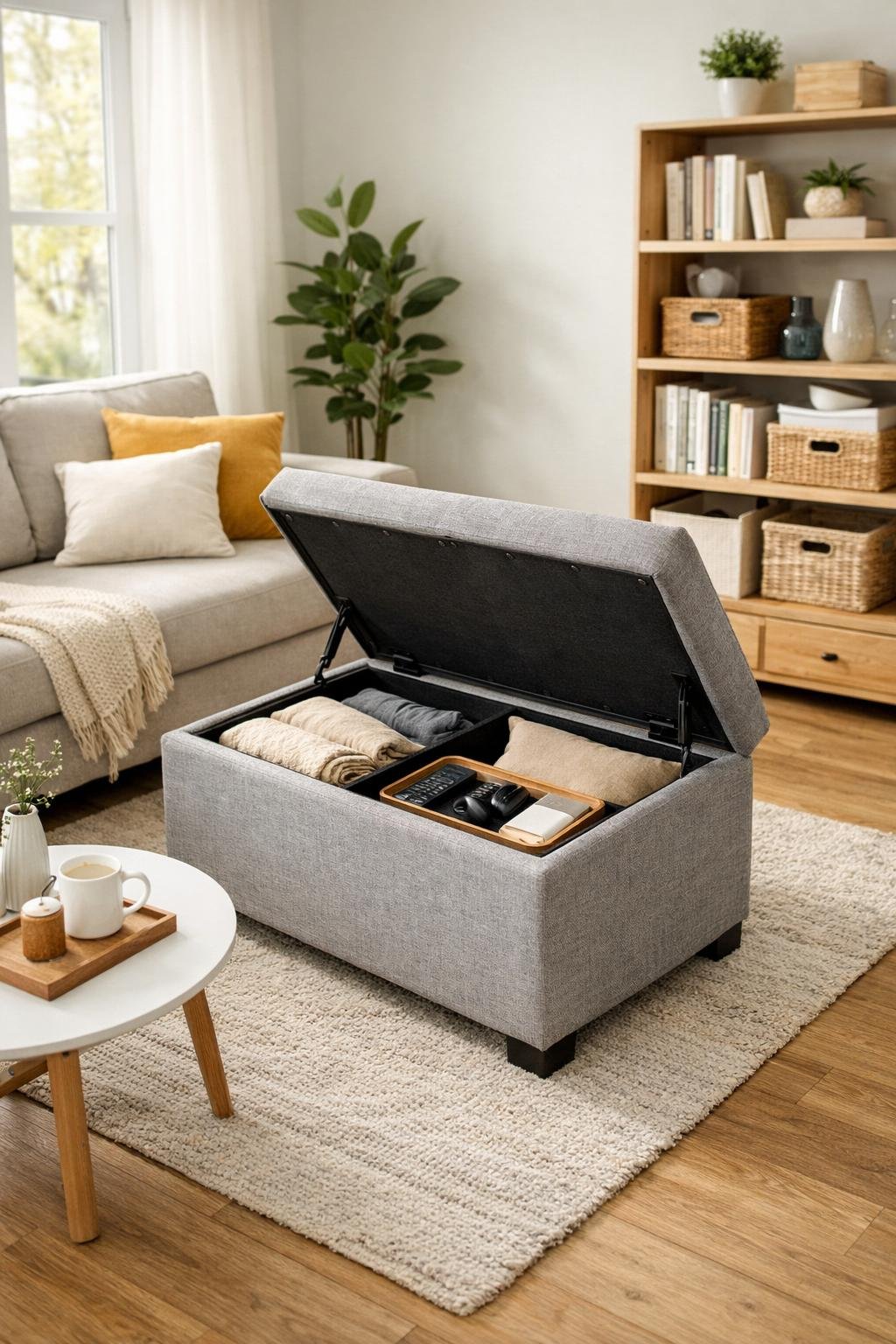
Small apartments need furniture that serves more than one purpose. Multifunctional pieces help reduce clutter and save floor space.
Storage ottomans work well in living rooms and bedrooms. They can act as a coffee table, footrest, or extra seat. Inside, they hold blankets, books, pillows, or other small items.
Many small-space guides recommend furniture with hidden storage. A storage ottoman keeps everyday items out of sight while staying easy to reach.
By choosing pieces that combine seating and storage, renters and owners use their space more efficiently without adding bulky cabinets.
5) Utilize corner shelves to make use of dead space
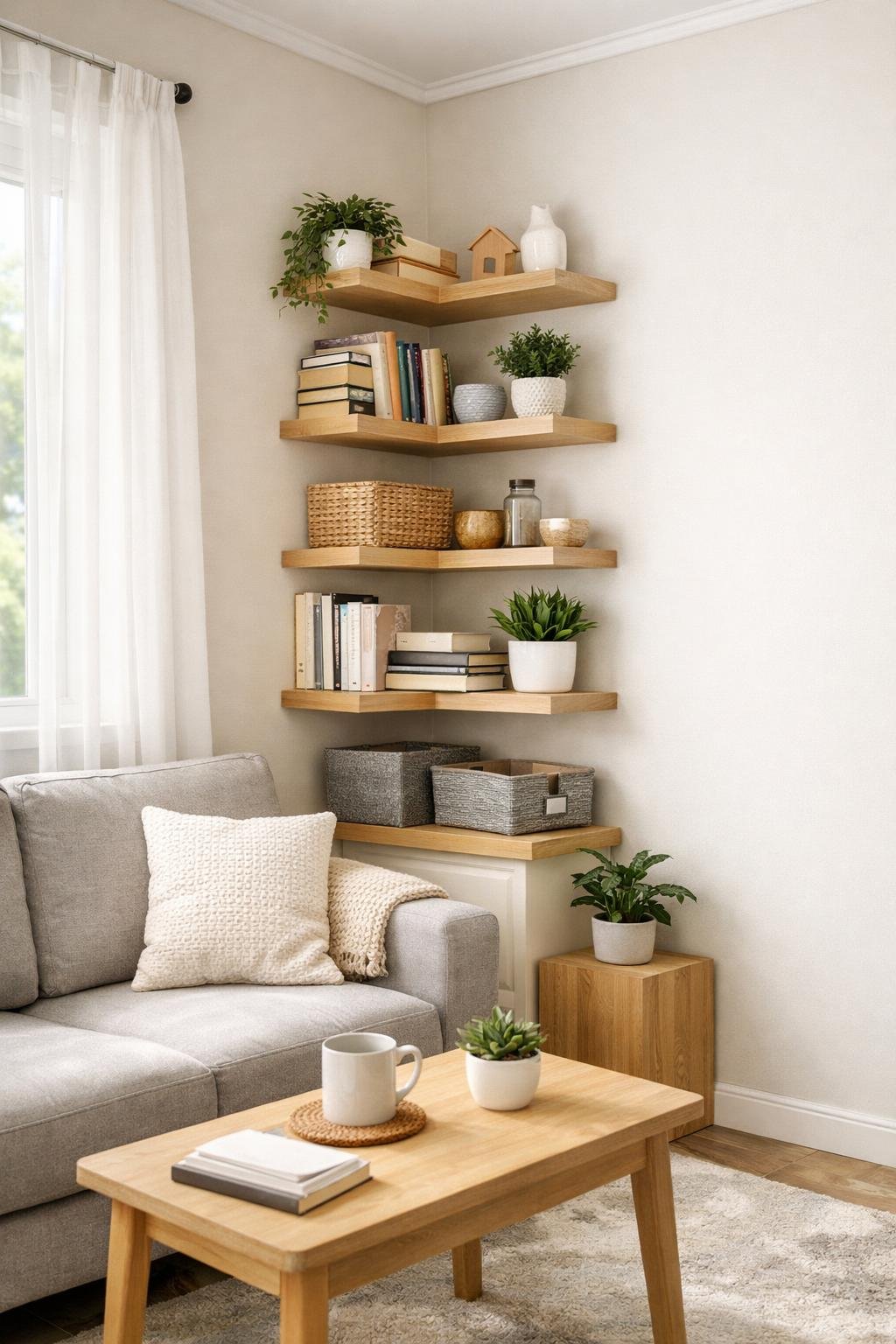
Many apartments waste corner space because standard furniture does not fit well there. Corner shelves turn these tight spots into useful storage areas. They add function without taking up much floor space.
Floating corner shelves work well in living rooms, bedrooms, or home offices. They hold books, plants, or storage bins while keeping surfaces clear. This setup reduces clutter on desks and tables.
In kitchens and bathrooms, corner shelves store dishes, toiletries, or small containers. They use vertical space and help keep daily items within easy reach.
Maximizing Vertical Space
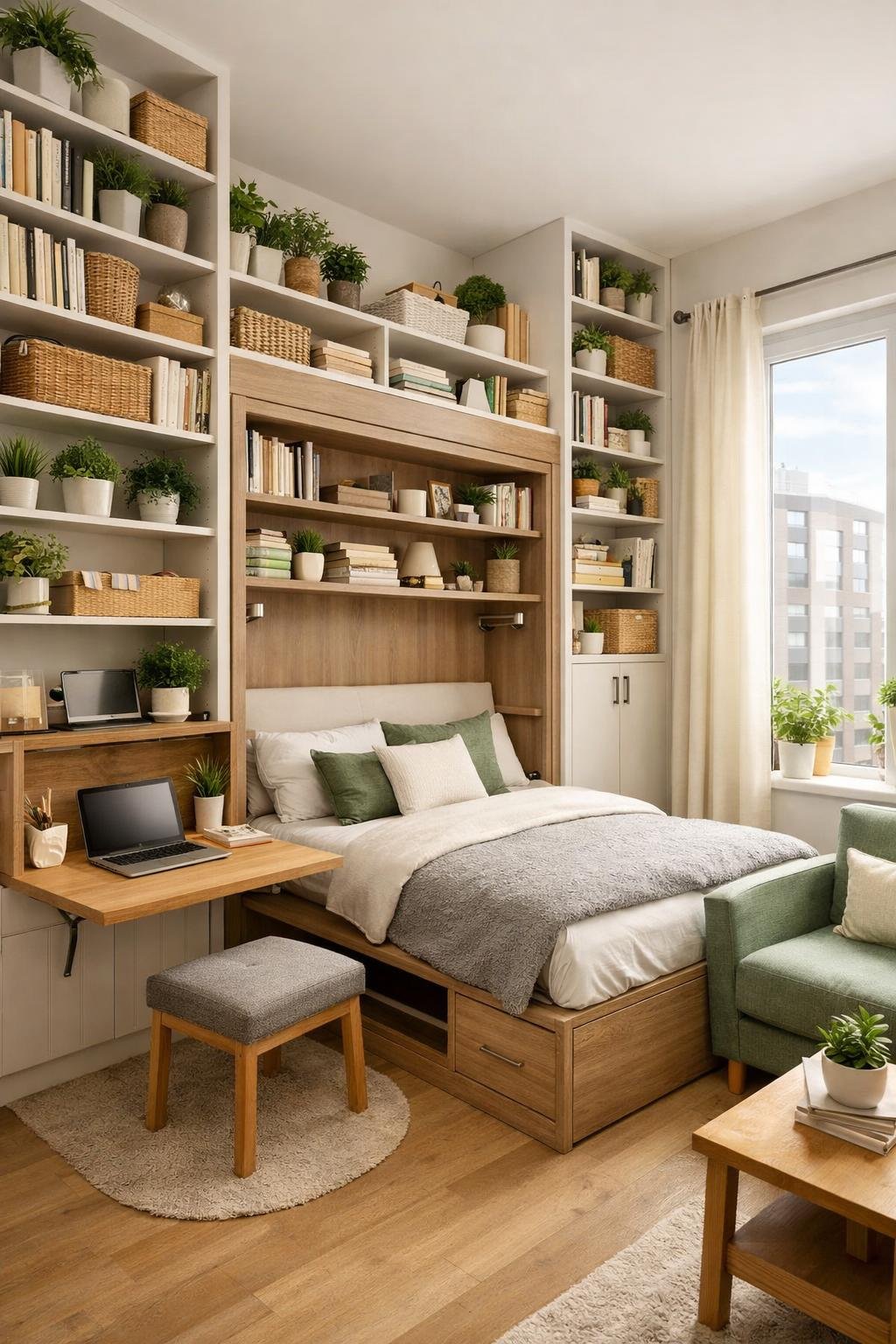
Vertical space gives small apartments more storage without using floor area. Walls and ceilings can hold shelves, cabinets, and racks that keep items organized and easy to reach.
Wall-Mounted Shelving Solutions
Wall-mounted shelves turn empty walls into usable storage. They work well above desks, sofas, and beds where floor space is limited.
Floating shelves create a clean look and hold books, baskets, or decor. Bracket shelves support heavier items like dishes or storage bins. Install shelves into wall studs or use strong anchors to prevent sagging.
Best places to add shelves:
- Above a desk for office supplies
- Over the toilet for towels and toiletries
- Near the ceiling for seasonal storage
- Along entry walls for keys and small bins
They can also mount pegboards in kitchens or work areas. Pegboards hold hooks, small baskets, and tools, and they adjust easily as needs change.
Keep everyday items at eye level. Store less-used items higher up to maintain easy access and reduce clutter.
Overhead Storage Strategies
Ceiling and upper-wall areas often go unused. Overhead storage makes use of this space without crowding the room.
Install tall cabinets that reach close to the ceiling. This design reduces dust buildup on top and adds extra shelves for storage. Use labeled bins on high shelves to keep items organized.
Smart overhead options include:
- Hanging pot racks in kitchens
- Ceiling-mounted bike hooks
- Overhead shelves in closets
- Storage racks above doors
Over-door organizers also add vertical storage without drilling holes. They work well for shoes, cleaning supplies, or pantry goods.
They should use sturdy hardware and follow weight limits to prevent damage. A small step stool helps them reach high storage safely while keeping the floor clear.
Creative Use of Multifunctional Furniture
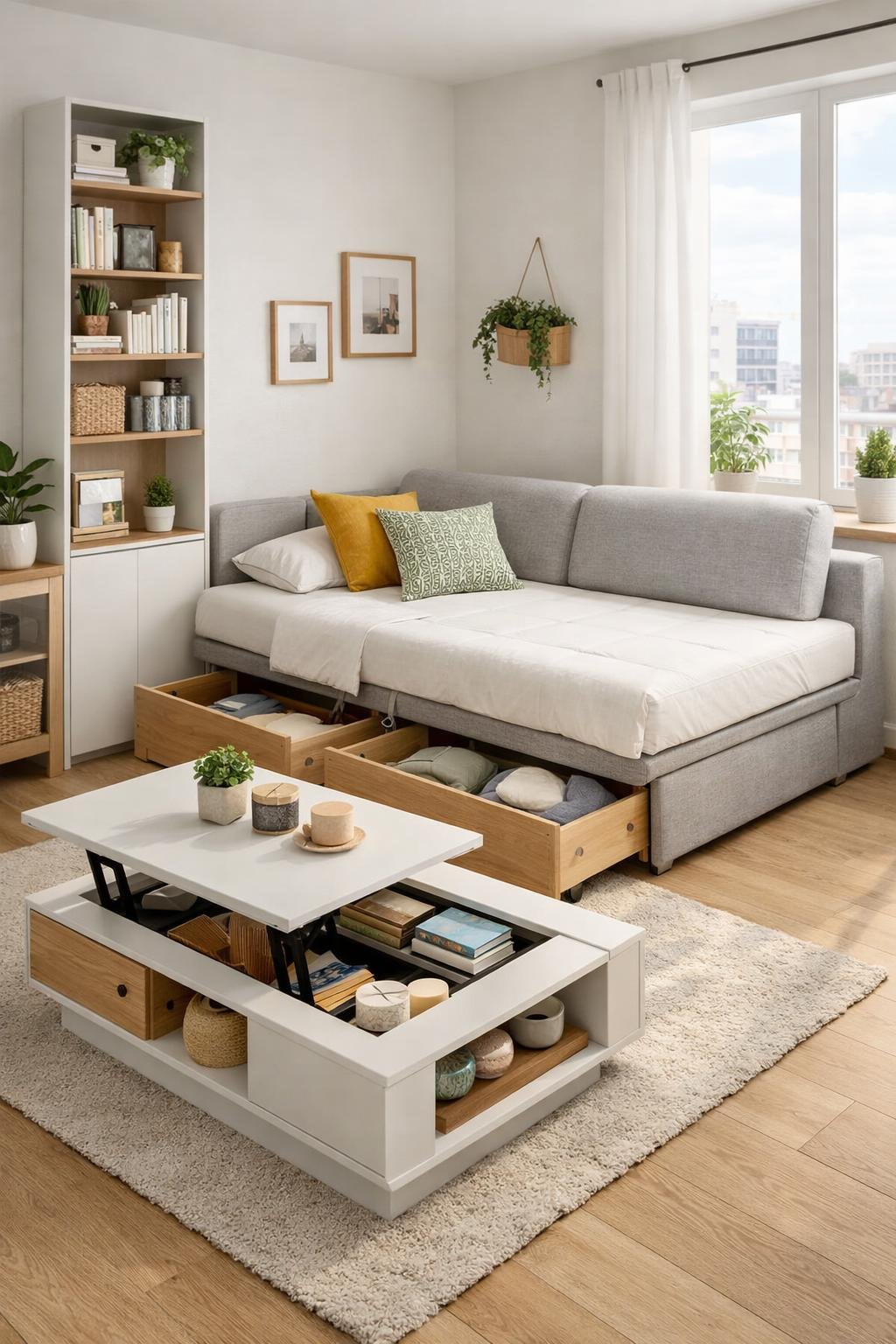
Multifunctional furniture helps small apartments work harder without adding clutter. It combines storage and daily use so every piece serves more than one purpose.
Hidden Storage in Common Areas
Living rooms and entry areas often hold unused storage space. Residents can add storage ottomans, which offer seating and a place to store blankets, books, or games.
A coffee table with drawers or a lift-top design keeps remote controls, chargers, and papers out of sight. This reduces surface clutter and keeps daily items within reach.
Sofas with built-in storage under the seat provide space for extra pillows or seasonal items. Some models also include side pockets for magazines or tablets.
In dining areas, benches with hinged lids create hidden storage for table linens or small kitchen tools. Wall-mounted shelves above these benches use vertical space without taking up floor area.
Key features to look for:
- Soft-close hinges for safety
- Deep compartments for bulky items
- Neutral finishes that match existing décor
These details improve both function and appearance.
Convertible Furniture Options
Convertible furniture changes form to match daily needs. A sofa bed allows the living room to double as a guest room without adding a separate bed.
Murphy beds, also called wall beds, fold up when not in use. Some designs include built-in desks or shelves, which keep the room usable during the day.
Drop-leaf tables expand for meals and fold down to save space. Nesting tables stack together and separate when extra surface area is needed.
Residents should measure their space before buying convertible pieces. They need enough clearance for folding or sliding parts.
Well-designed pieces feel stable in both forms. Strong frames and simple mechanisms ensure long-term use.
