
Best 55+ Tiny Home Communities In Texas: 2026 Guide
If you’re picturing retirement in Texas, chances are it now includes a smaller footprint and a lower monthly bill. Tiny home communities built specifically for adults 55 and older have grown steadily across the state, from the Hill Country west of Austin to lake towns north of Dallas. The best 55+ tiny home communities in Texas combine genuine age-restricted living with manageable costs, real proximity to healthcare and groceries, and honest answers about what you own versus what you lease.
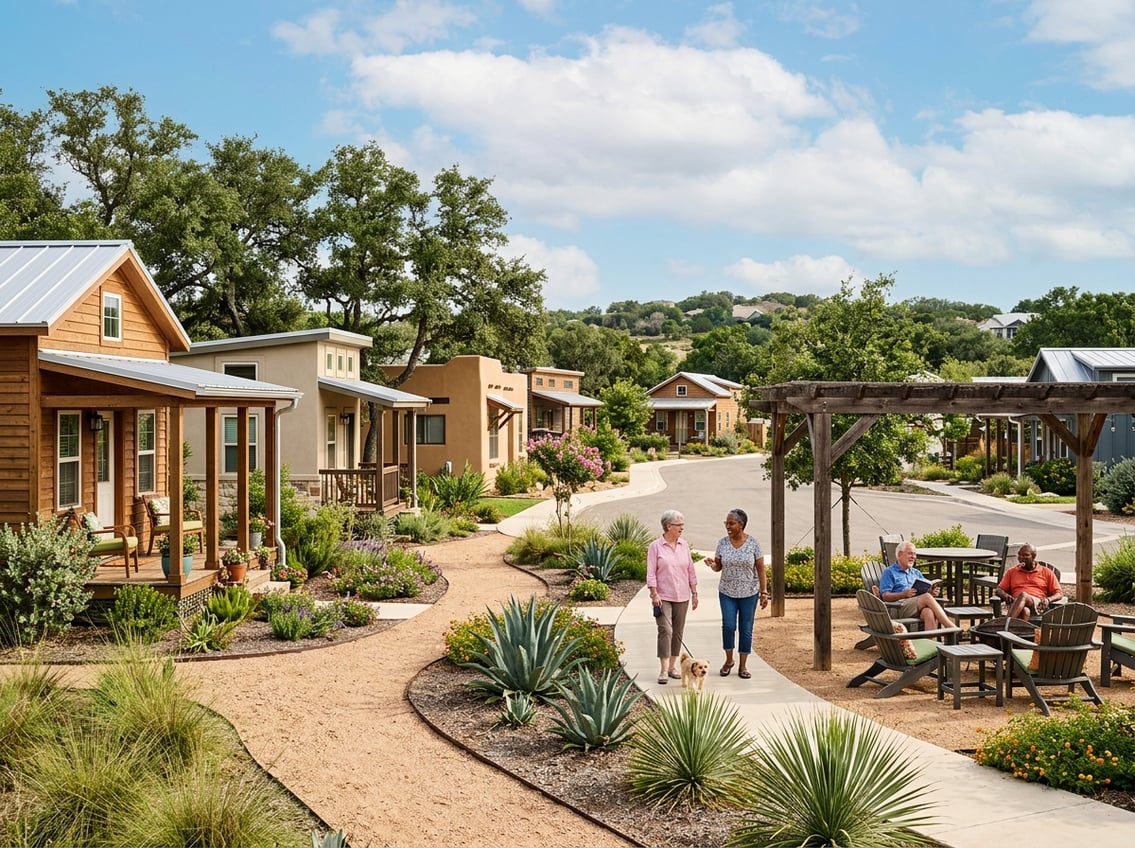
This guide walks through the standout communities worth touring, plus the questions you should ask before signing a lot lease or writing a check for a park-model home. Some communities sit close to New Braunfels and Canyon Lake, others lean toward Austin or DFW commutes. Location changes everything about daily life here, so we’ll break down drive times, costs, and lifestyle fit for each one.
Why Texas Is a Top State for 55+ Tiny Home Living
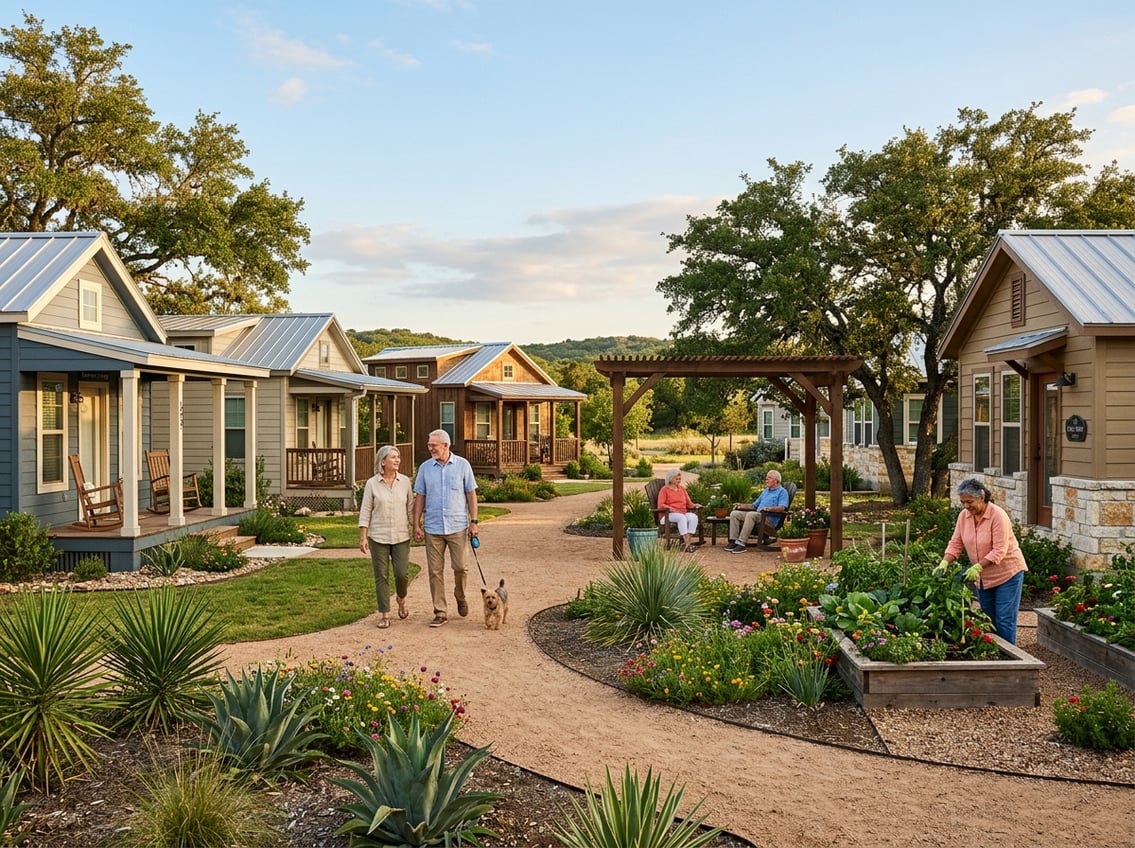
Texas draws retirees for practical reasons, not just weather. There’s no state income tax, which stretches a fixed retirement budget further than in many other states. Land costs also remain lower than coastal markets, which keeps lot rent and home prices more reasonable.
The climate matters too. Mild winters mean fewer weather-related move-ins or move-outs, and outdoor common areas stay usable most of the year. Hill Country, Lake Conroe, and North Texas each offer a different flavor of that year-round outdoor living.
Beyond weather and taxes, Texas simply has more established communities to choose from than most states. That gives buyers real options instead of a handful of scattered developments.
Why Texas Is a Top State for 55+ Tiny Home Living
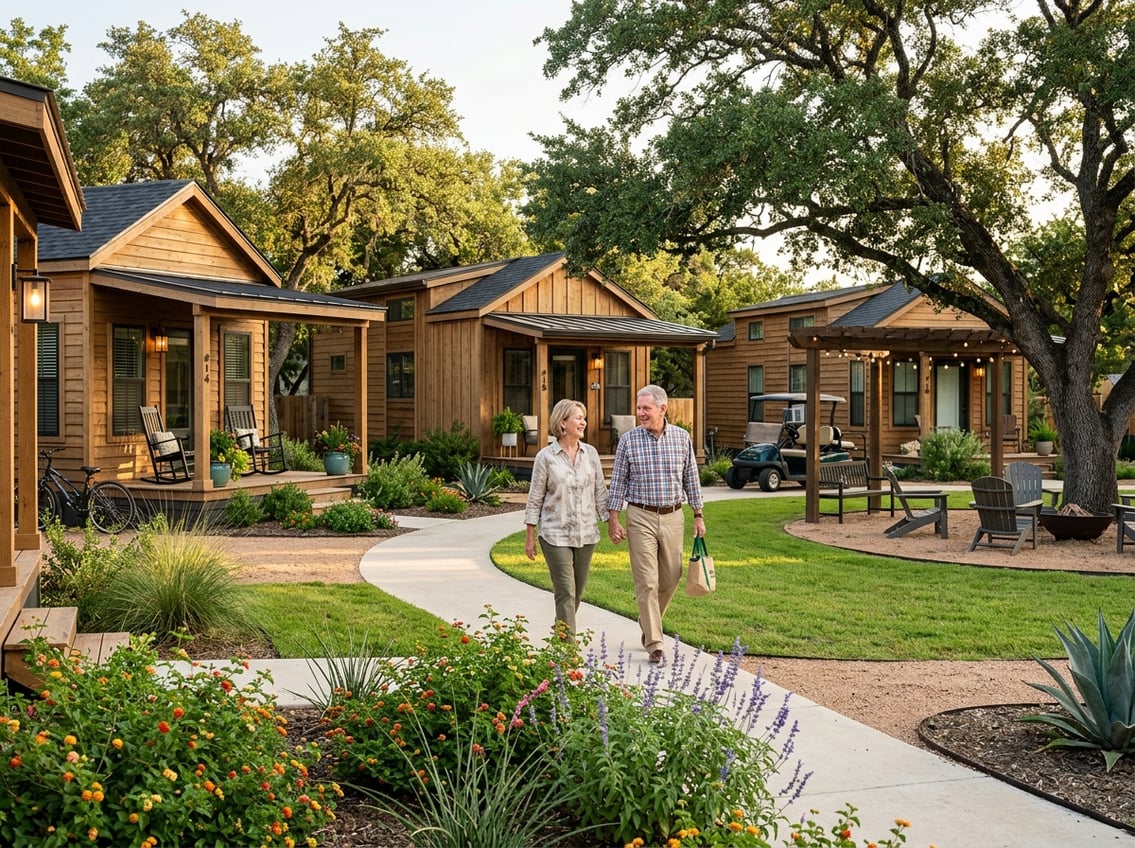
A growing tiny home builder network across the state also plays a role. More builders means more competition on price and design, and more communities willing to accept an owner-supplied home rather than requiring an on-site purchase.
Proximity to major metros is another advantage specific to Texas. Many 55+ tiny home communities sit close enough to Austin, San Antonio, or Dallas-Fort Worth for regular medical appointments, family visits, or the occasional concert or ballgame, without the cost of living inside the city limits.
Healthcare access tends to follow population centers, so communities within thirty to forty-five minutes of a regional hospital system offer real peace of mind as residents age in place. That’s worth weighing against the appeal of a more remote, scenic setting.
How We Chose These Communities
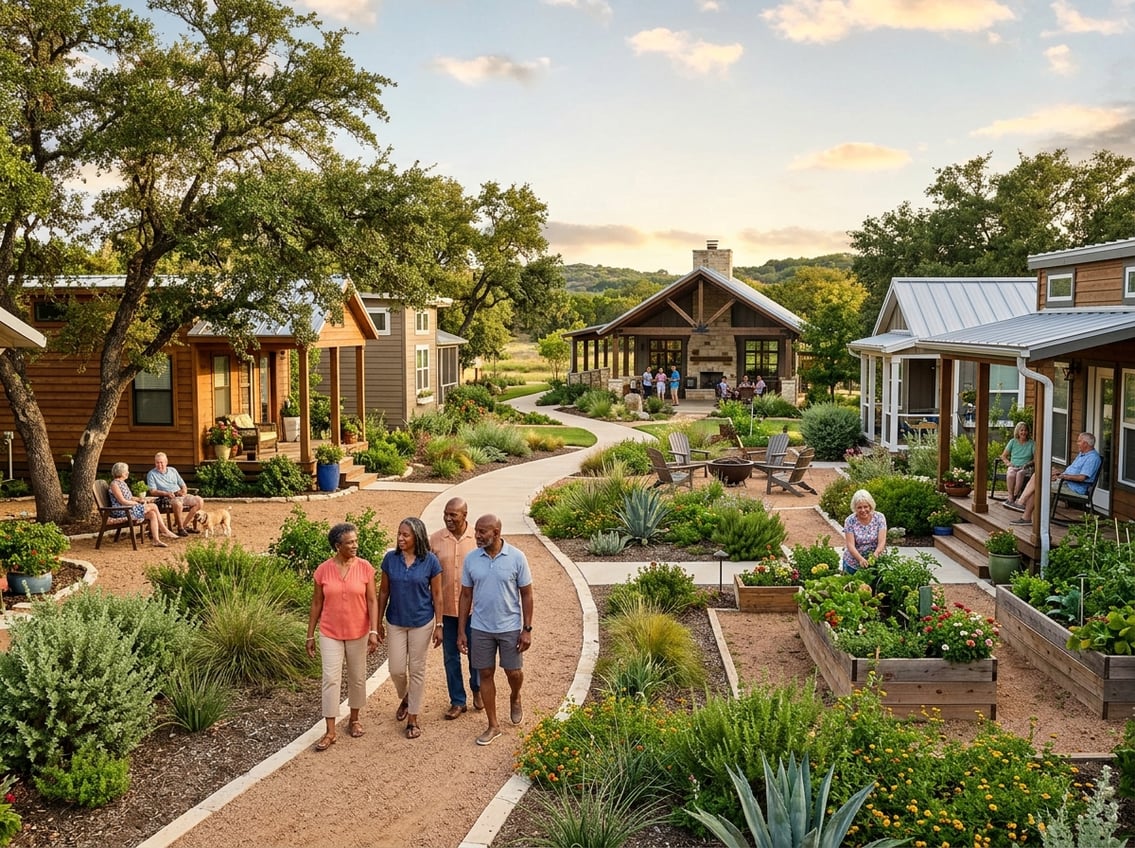
Every community on this list had to meet a few baseline criteria. First, it needed a genuine age restriction, not just marketing language aimed at retirees.
Second, we looked at drive time to a real city, since access to a grocery store, pharmacy, and hospital shouldn’t require a forty-five-minute drive on a two-lane road. Third, we checked whether pricing information is publicly available or at least reasonably estimable, since transparency matters when you’re comparing lot rent against ownership costs.
We also weighed amenities, but not as the deciding factor. A clubhouse and a fishing pond matter less than knowing whether the community allows owner-supplied homes, what the pet policy looks like, and how long guests can stay.
Rates, availability, and community rules change often. Treat every detail here as a starting point for your own conversation with each community’s management, not a locked-in fact.
1) County Line Cottages, Liberty Hill
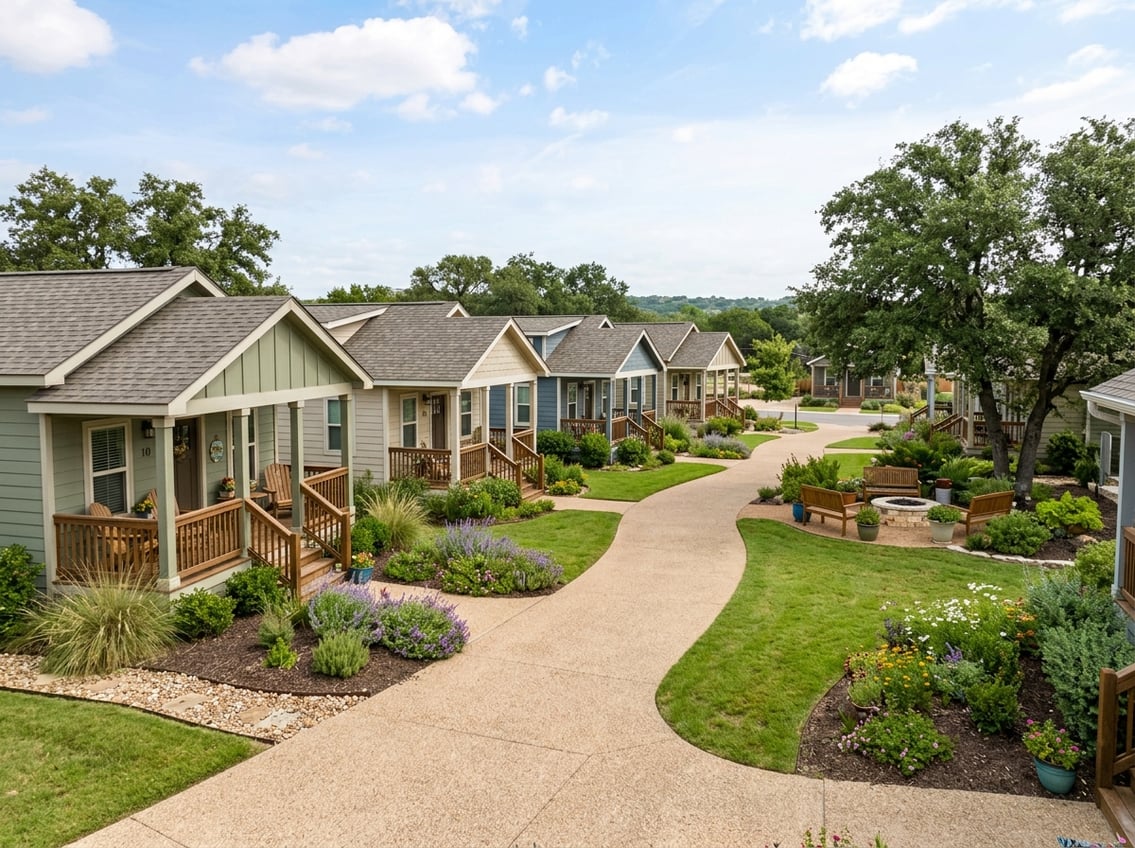
County Line Cottages sits in the Texas Hill Country near Liberty Hill, within a reasonable drive of Cedar Park, Burnet, Marble Falls, and Georgetown. That puts Austin’s northern suburbs and their hospital systems within reach without living inside the metro itself.
This is a genuine 55+ community, and the rural setting appeals to buyers who want quiet over walkability. Expect a slower pace here compared to communities closer to Austin proper.
Hill Country scenery is the draw: rolling land, big skies, and distance from heavy traffic. If you want easy access to Austin’s airport or entertainment scene on a regular basis, the drive time here is longer than communities closer to the city center.
Ask directly about lot lease terms, whether owner-supplied tiny homes are permitted, and current utility hookup costs. Confirm pet limits and guest-stay rules before touring, since Hill Country communities often set these policies differently than urban-adjacent parks.
2) Liberty Tiny Village, Aubrey
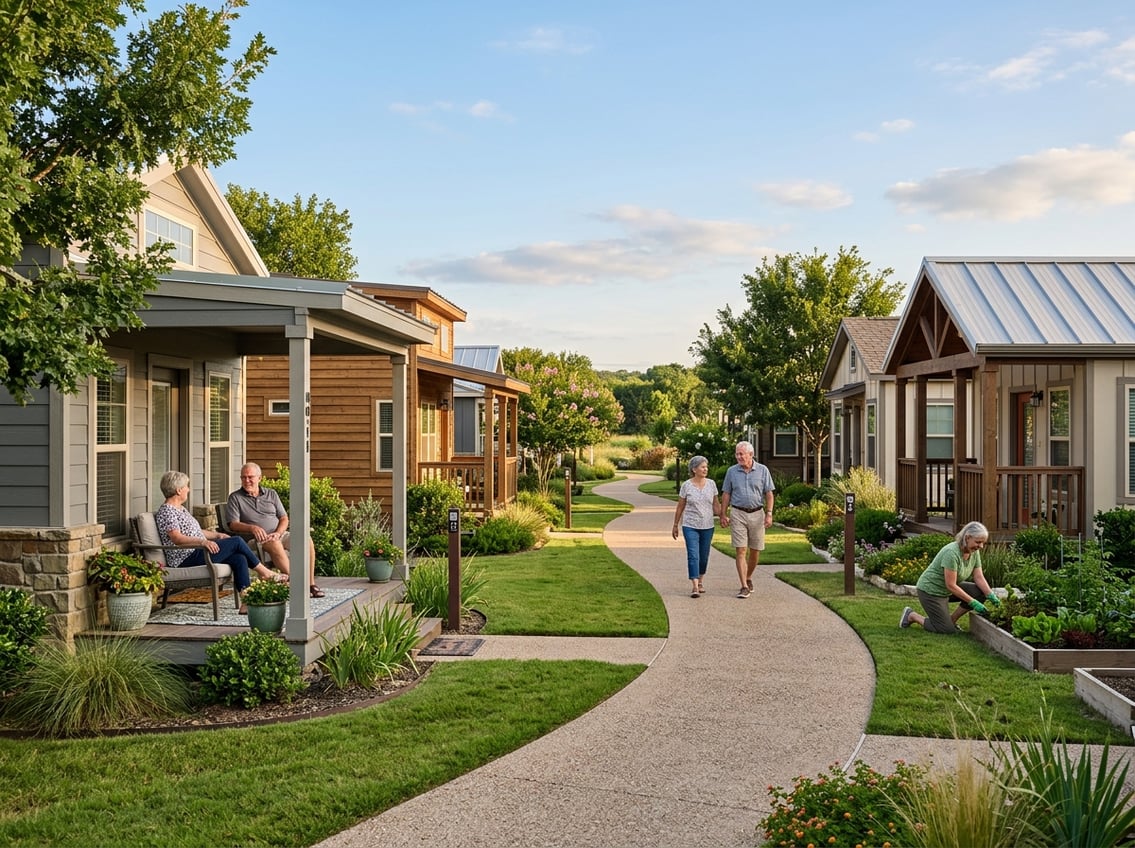
Liberty Tiny Village markets itself as a boutique resort-style community exclusively for adults 55 and older, located minutes from the Dallas-Fort Worth metroplex. That proximity is the main selling point for buyers who want small-town quiet with a short drive to big-city healthcare and shopping.
Homes here emphasize modern layouts and efficient design rather than rustic charm. The community leans toward a more polished, resort feel compared to rural Hill Country options.
For retirees relocating from out of state, DFW access means direct flights, major hospital systems, and family visits without a long drive. Aubrey itself remains a smaller North Texas town, so daily errands may still mean a short trip toward Denton or the broader metroplex.
Confirm whether the 55+ rule applies to every resident or just the primary homeowner. Ask about lot rent, HOA-style fees, and whether the community allows homes purchased elsewhere to be moved in.
3) Village Farm Austin, Austin
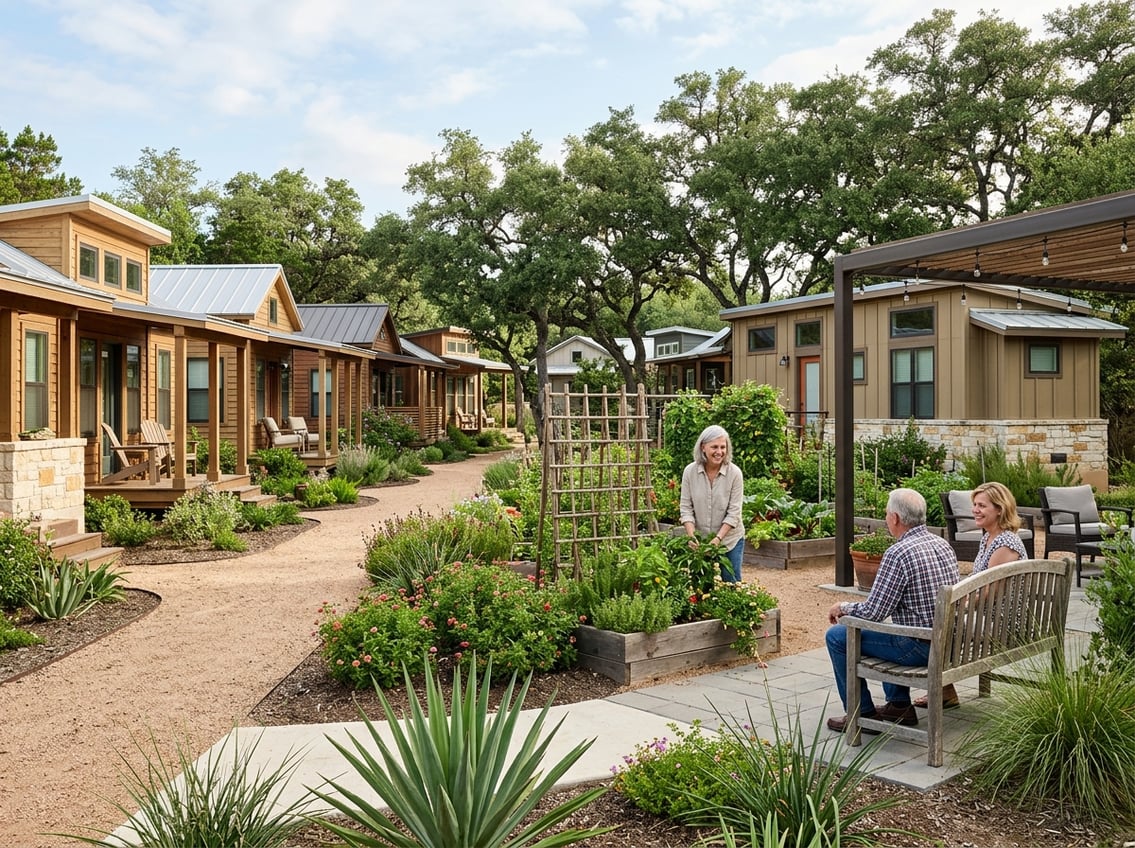
Village Farm sits close enough to Austin to make city amenities, medical centers, and cultural life part of daily routine rather than an occasional trip. That’s the tradeoff worth understanding upfront: urban proximity generally means higher lot rent or purchase prices than rural Hill Country options.
This community suits buyers who want walkability, community gardens, and a socially active setting without giving up small-home simplicity. Austin’s growth has pushed prices up across the board, and tiny home living here is no exception.
Not every Austin-area tiny home development enforces a strict age restriction, so confirm this detail directly rather than assuming. Some communities blend 55+ sections with general-occupancy lots.
For retirees prioritizing healthcare access, museums, live music, and an active social calendar over rural quiet, this location makes a strong case. Budget-conscious buyers should compare costs carefully against North Texas or East Texas alternatives before deciding.
4) Majestic Hills, Near Lake Conroe
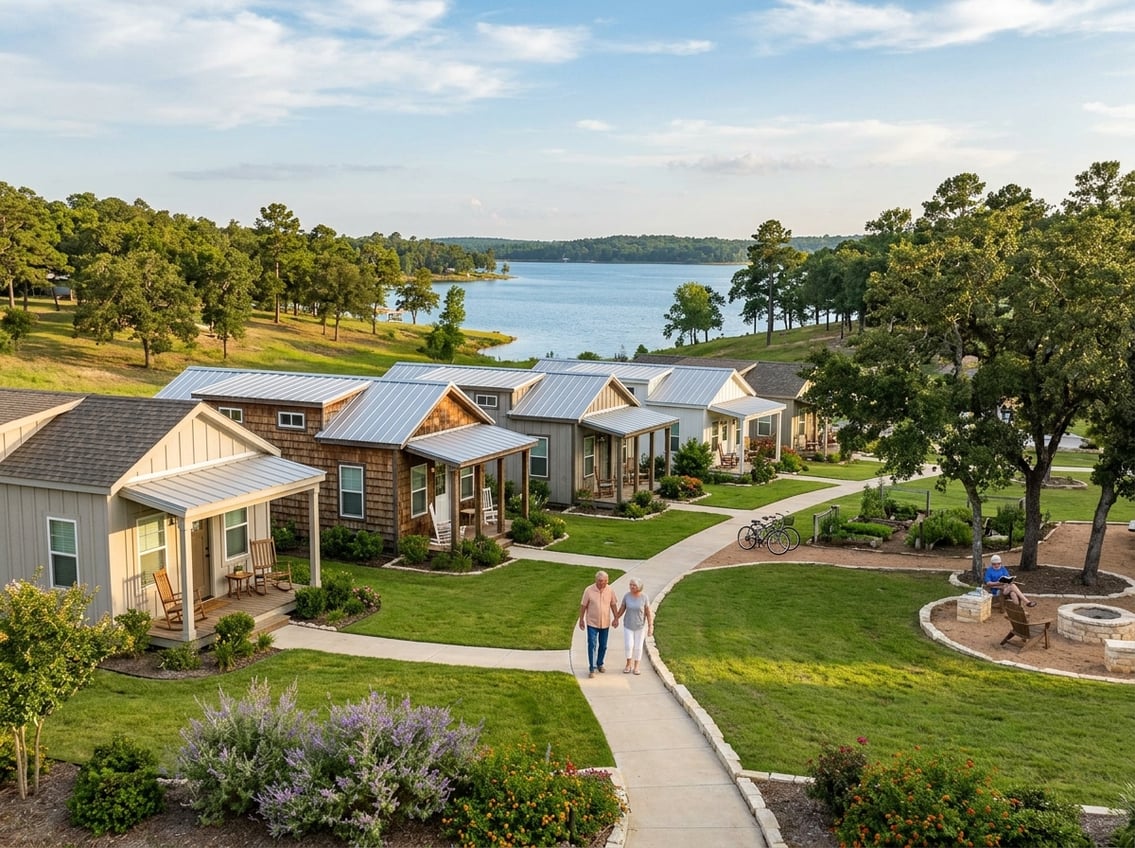
Majestic Hills sits near Lake Conroe, northwest of Houston, giving residents lake access alongside proximity to a major metro’s healthcare and shopping infrastructure. This region has become known for lakeside retiree communities, and Majestic Hills fits that pattern.
Full-time living here works well for buyers who want water recreation as a daily option rather than a vacation activity. Fishing, walking trails, and a slower pace define the setting.
Houston’s medical centers are a manageable drive away, which matters as residents age in place and need more frequent specialist visits. Willis and Conroe offer closer, smaller-scale grocery and pharmacy options for routine errands.
Confirm whether the community is formally age-restricted or simply popular with retirees, since Southeast Texas lakeside developments vary on this point. Ask about flood zone status given the lake proximity, along with standard lot rent and utility questions.
5) Lake Dallas Tiny Home Village, Lake Dallas
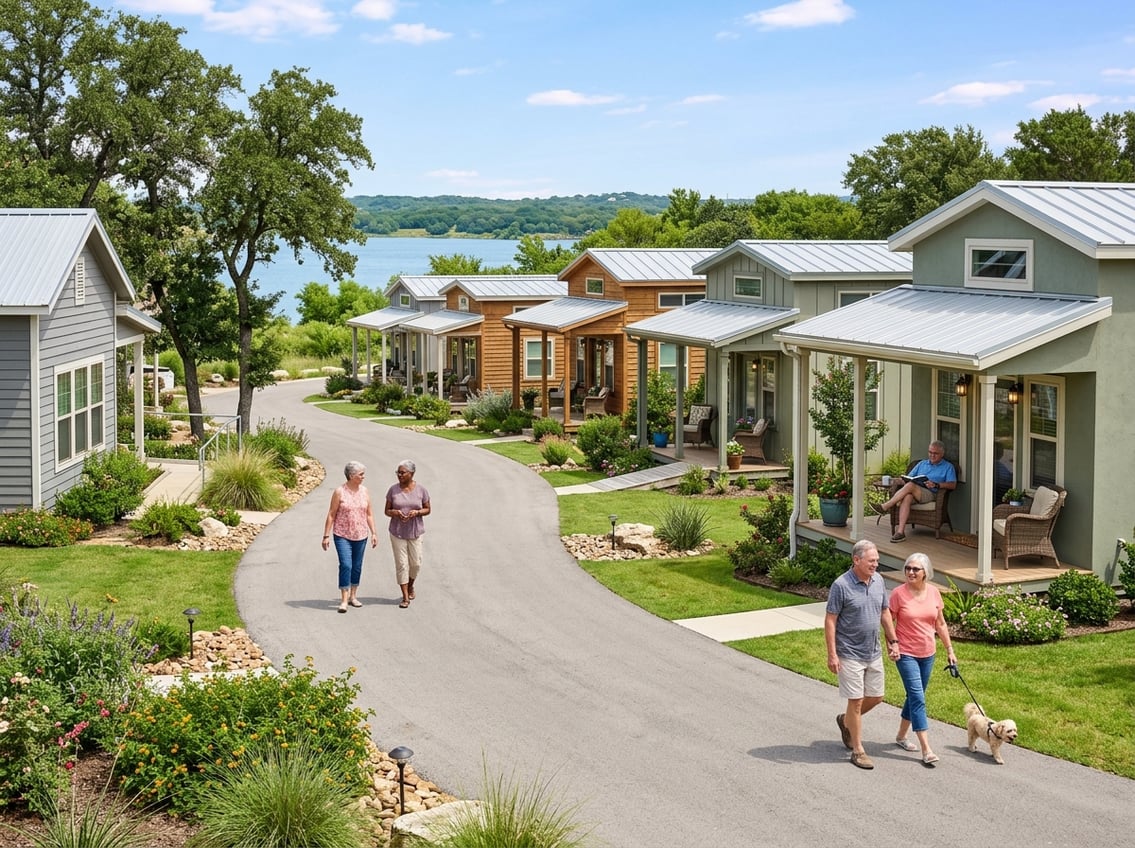
Lake Dallas Tiny Home Village puts residents close to Lewisville Lake and within a reasonable commute of the northern DFW metroplex. That combination of water access and metro proximity appeals to retirees who want both recreation and city convenience.
The North Texas setting means four mild seasons rather than the near-constant heat of South Texas, which some buyers prefer. Denton is a short drive away for larger grocery stores, hospitals, and specialty shopping.
This area has become a recognized hub for 55+ and family-friendly tiny home development alike, so verify which sections or phases of the community actually enforce age restrictions. Policies can differ block by block in mixed developments.
Ask about lot lease length, whether the community accepts homes bought elsewhere, and what the pet and guest policies allow. DFW’s size means healthcare options are strong, but traffic patterns can add time to what looks like a short drive on a map.
6) Bluebonnet Tiny Home Village, Cedar Creek
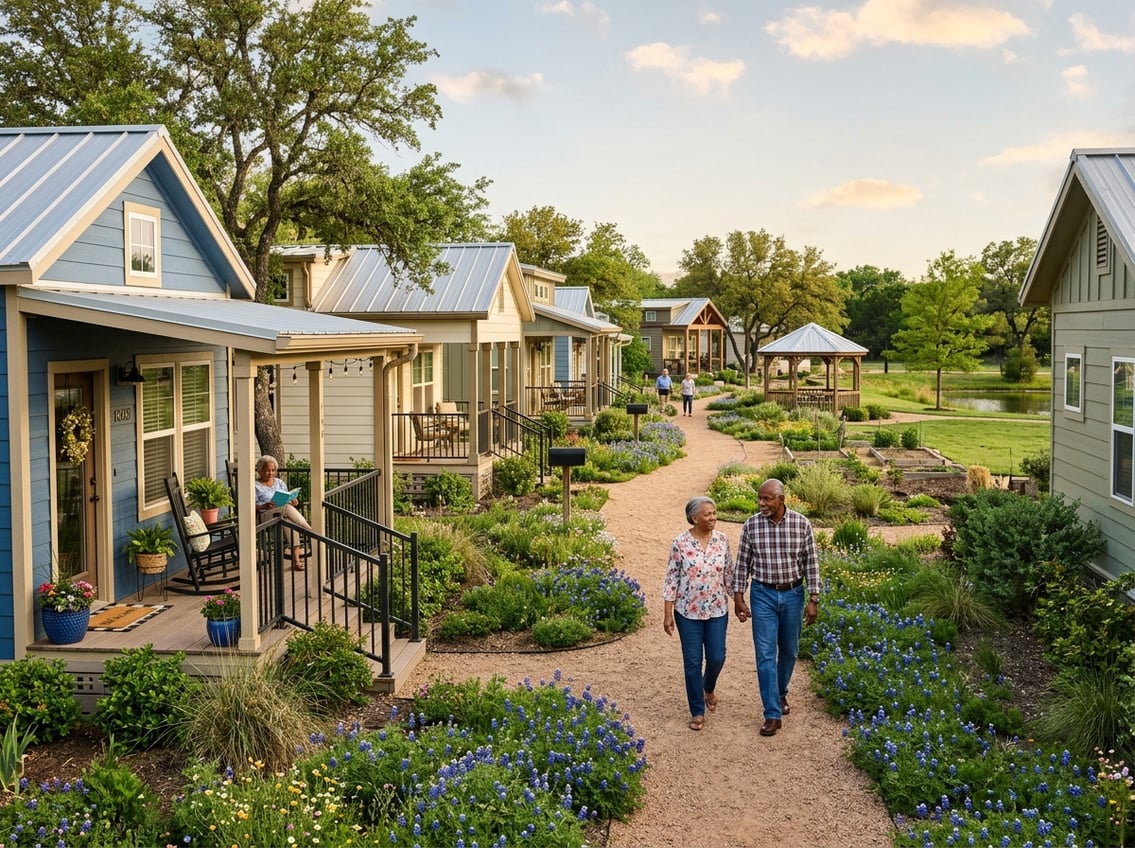
Bluebonnet Tiny Home Village sits in Cedar Creek, east of Austin, offering a quieter alternative to in-city communities while still keeping Austin within a reasonable drive. The name nods to the wildflowers that define this stretch of Central Texas each spring.
This location suits buyers who want small-town pace without giving up access to a major metro’s hospitals and airport. Bastrop is nearby for closer grocery and pharmacy needs.
Land here tends to cost less than inside Austin’s city limits, which can translate to lower lot rent or purchase prices depending on the community’s setup. That makes it worth comparing directly against Village Farm for buyers weighing budget against convenience.
Confirm the specific age-restriction rules, since Cedar Creek and the broader Bastrop County area include a mix of tiny home developments with different occupancy policies. Ask about utility hookups, since some rural Central Texas lots rely on well water or septic systems rather than municipal service.
How To Compare 55+ Tiny Home Communities
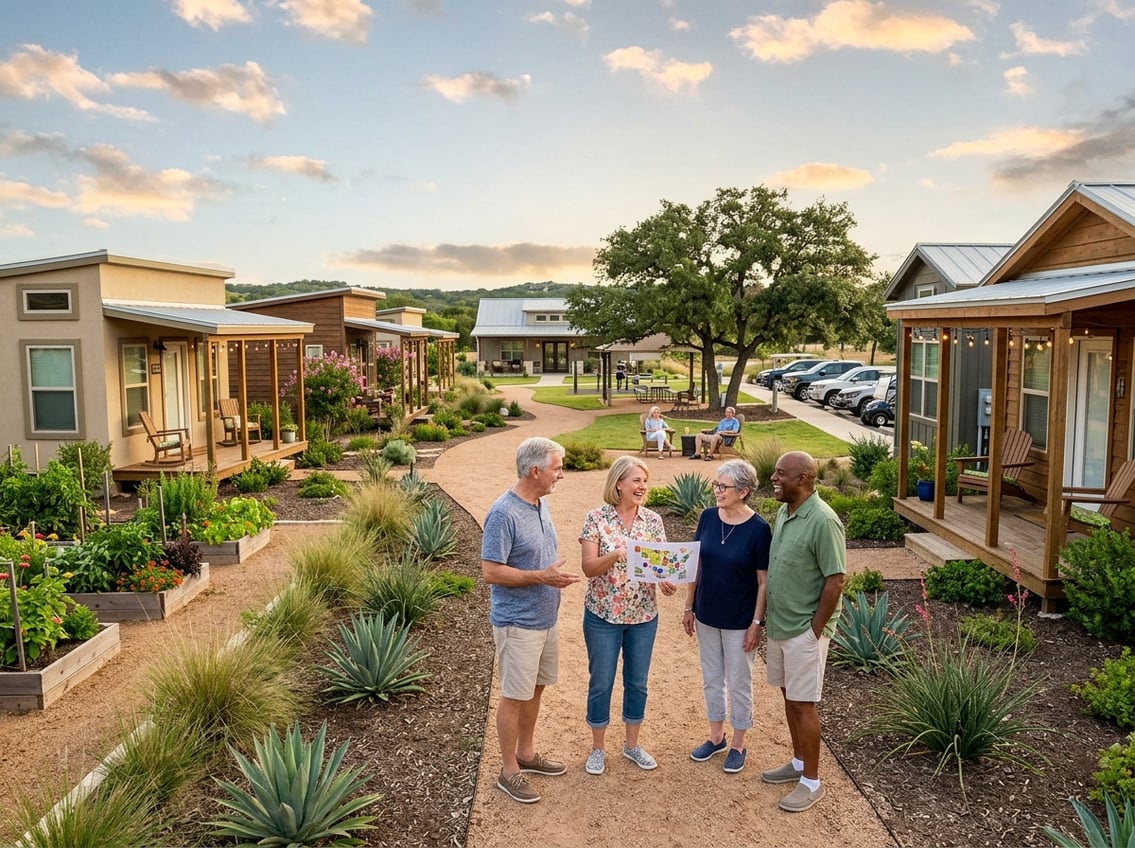
Comparing communities takes more than a glance at photos and a starting price. The real cost of living in any tiny home community comes from stacking the purchase price against every recurring fee.
Purchase Price Versus Monthly Lot Rent
A tiny home itself typically runs $40,000 to $150,000 or more, depending on size and finish level. Lot rent runs separately, often $700 to $1,300 a month in 55+ communities, and covers your spot on the land rather than the home itself.
Some communities bundle lot rent with amenities and utilities. Others charge these separately, so ask for an itemized breakdown before comparing two properties side by side.
Utilities, HOA Fees, And Other Recurring Costs
Water, sewer, electric, and trash pickup may be included in lot rent or billed separately. HOA-style fees or resort fees can add another layer on top of lot rent in more amenity-heavy communities.
Ask for a full list of monthly costs in writing. A low lot rent with high separate utility bills can end up costing more than a higher all-inclusive rate.
Age Rules, Pet Policies, And Guest Restrictions
Confirm whether every resident must be 55 or older, or just one household member. Pet policies vary by size, breed, and number allowed, and guest-stay limits can range from a few days to several weeks before requiring approval.
Bring-Your-Own-Home Rules And Home Specifications
Some communities require homes purchased through an approved builder or on-site. Others allow owner-supplied tiny homes, provided they meet size, foundation, and safety specifications. Get these requirements in writing before ordering or moving a home.
What Makes a Tiny Home Community “55+” in Texas
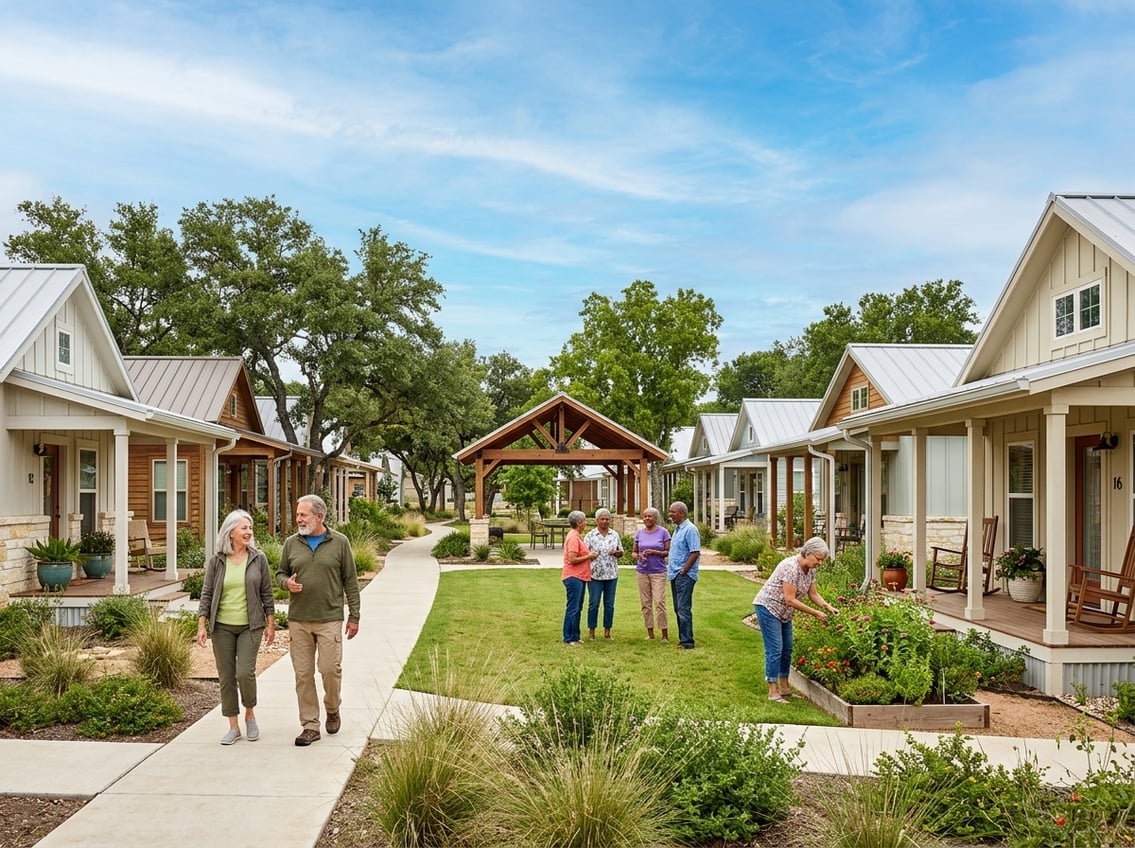
A true 55+ community follows federal Housing for Older Persons Act guidelines, meaning at least 80 percent of occupied homes have one resident aged 55 or older. This isn’t just marketing language, it’s a legal classification that allows the community to restrict occupancy by age.
Some communities require every adult resident to meet the age minimum. Others only require the primary homeowner or one household member to qualify, which allows a younger spouse or partner to live there too.
This distinction matters for couples with an age gap, or for anyone planning to have adult children stay for extended periods. Always ask the community directly which version of the rule applies, since this detail rarely shows up clearly in marketing materials.
Genuine 55+ communities also tend to build their amenities around that population. Expect clubhouses, walking trails, fishing ponds, and organized social events rather than playgrounds or family-oriented recreation.
Gated access is common in these communities too, offering an added layer of security that appeals to residents living alone or splitting time between Texas and another state. Confirm gate hours and visitor procedures if security is a priority for you.
How Much Do 55+ Tiny Home Communities in Texas Cost
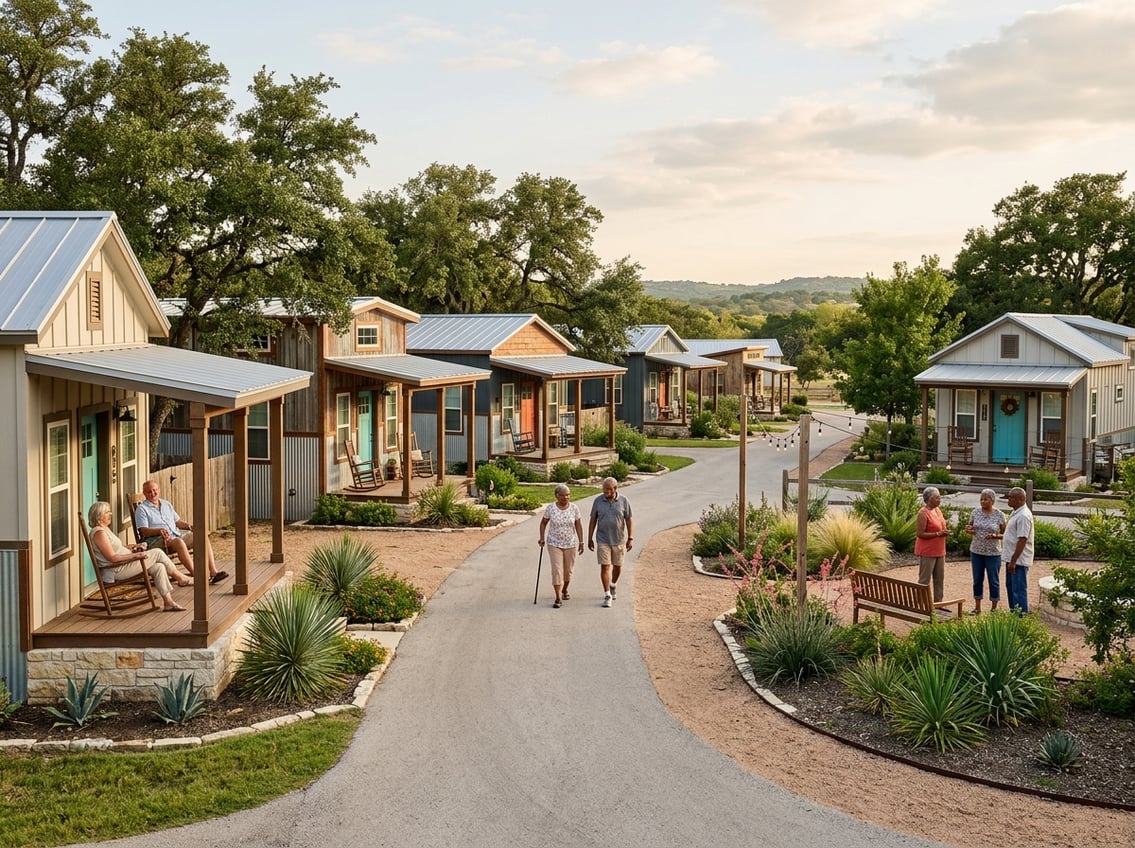
Expect a tiny home purchase price between $40,000 and $150,000 or more, depending on size, finish quality, and whether it’s site-built or factory-built. Luxury communities near Austin or Lake Conroe tend to sit at the higher end of that range.
Monthly lot rent for 55+ communities typically runs $700 to $1,300, which is generally higher than general-occupancy tiny home parks. That premium usually reflects added security, age-restricted amenities, and lower-density living.
Rural East Texas and North Texas locations tend to offer the most affordable combination of home price and lot rent. Hill Country and lakeside communities near Austin or Houston generally cost more due to land values and demand.
Utilities, HOA-style fees, and resort fees can add $100 to $300 or more per month on top of base lot rent. Always request a full written cost breakdown rather than relying on an advertised starting price.
Are These Legally Tiny Homes or RV Parks
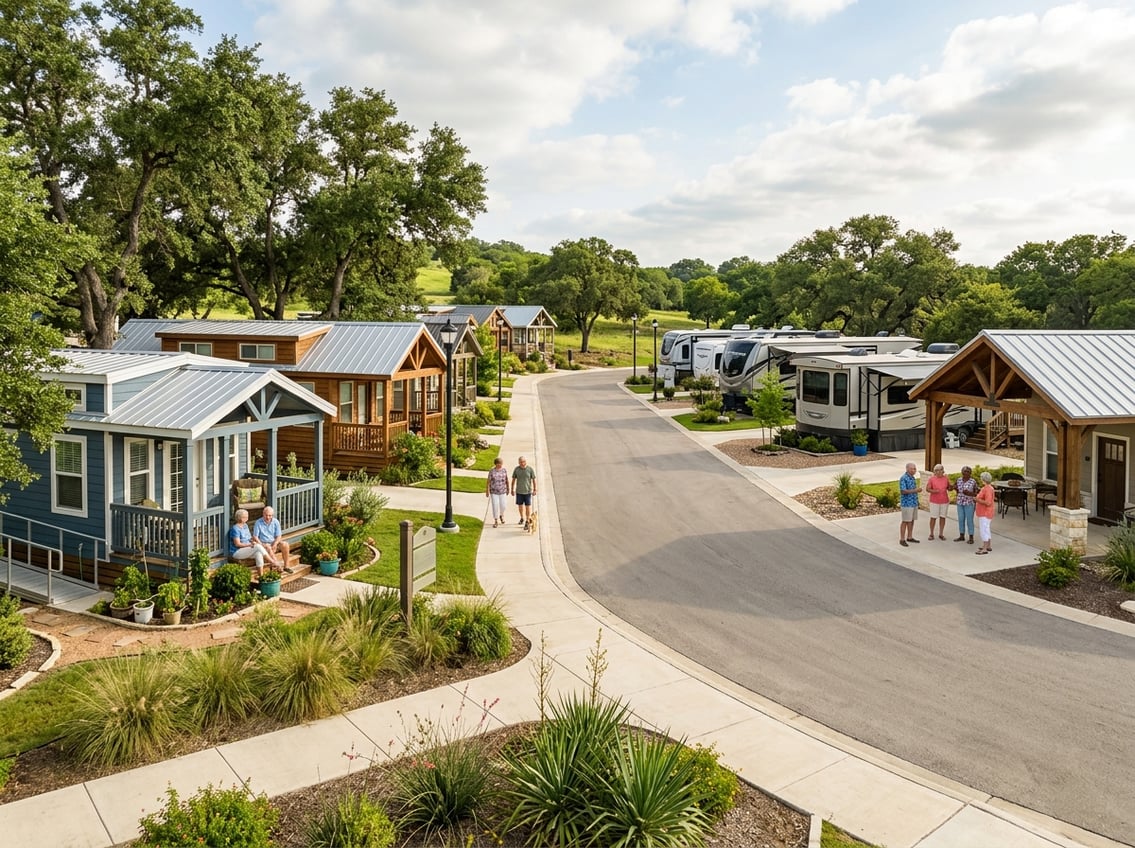
Texas doesn’t have one uniform legal definition for tiny homes, so classification depends on how each home is built and titled. A home built on a permanent foundation typically falls under standard residential building codes. A home built on a trailer chassis is often classified and titled as a park-model RV, even if it looks like a small house.
This distinction affects financing, insurance, and where you’re legally allowed to place the home. Some counties restrict RV-classified homes to designated RV parks or campgrounds rather than residential zones.
Many 55+ communities operate as licensed RV parks or manufactured home communities under Texas law, even when marketed as “tiny home villages.” That’s not a red flag by itself, but it does affect your rights as a resident and how the property is taxed.
Ask each community directly how homes are classified and titled, and confirm this with the county before assuming full residential protections apply. This matters most if you’re financing the home or planning to stay long-term.
Bring Your Own Tiny Home vs Buying On-Site
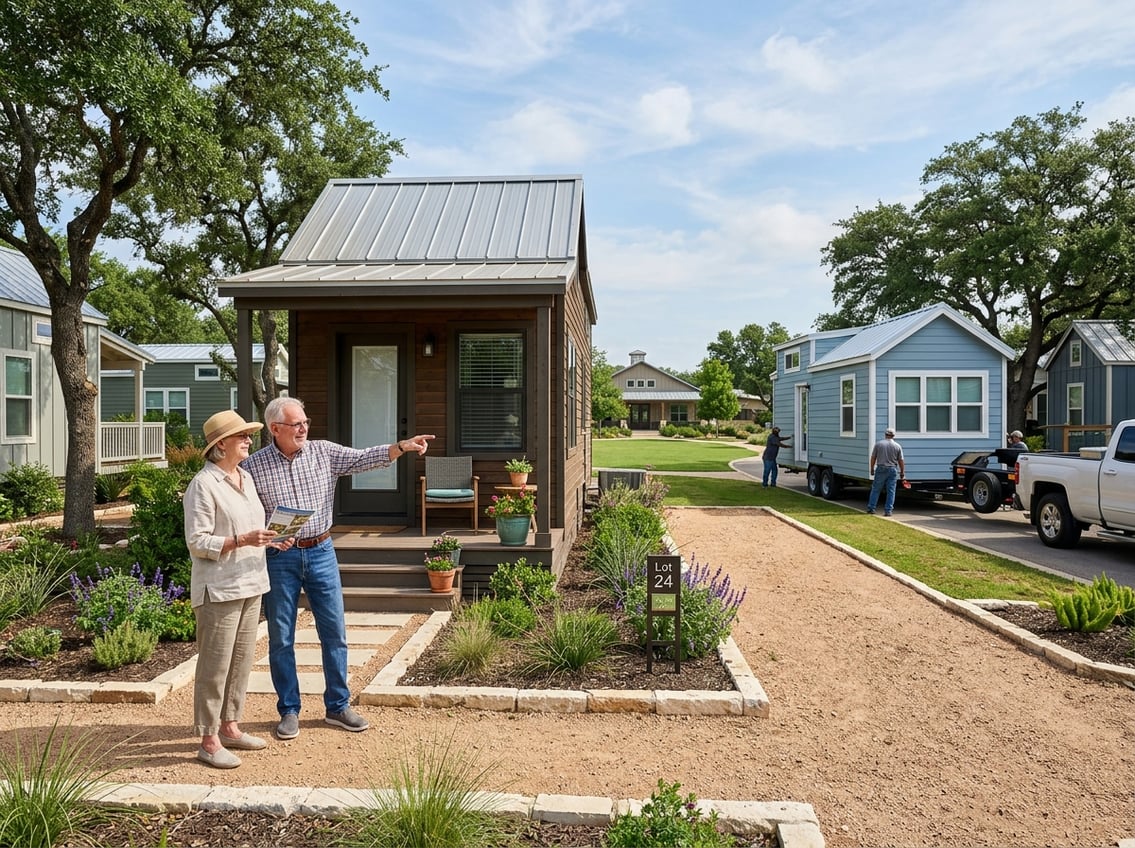
Buying a home already built and placed by the community developer is often the simpler path. You typically get a warranty, a home matched to the community’s design standards, and fewer logistics to manage during the move-in process.
Bringing your own tiny home can save money if you already own one or can buy from a builder at a lower cost. It requires more coordination, though: transport logistics, foundation or hookup work, and approval from the community before the home ever arrives on-site.
Not every community accepts owner-supplied homes. Those that do usually set specific requirements around size, age of the home, exterior finish, and safety certifications.
Get every home specification requirement in writing before ordering a tiny home for a specific community. A home that doesn’t meet size or foundation rules can mean costly modifications or a rejected application after the fact.
Ask about the approval timeline too. Some communities need weeks to review and approve an owner-supplied home before it can be delivered.
Amenities to Look for in a 55+ Tiny Home Community
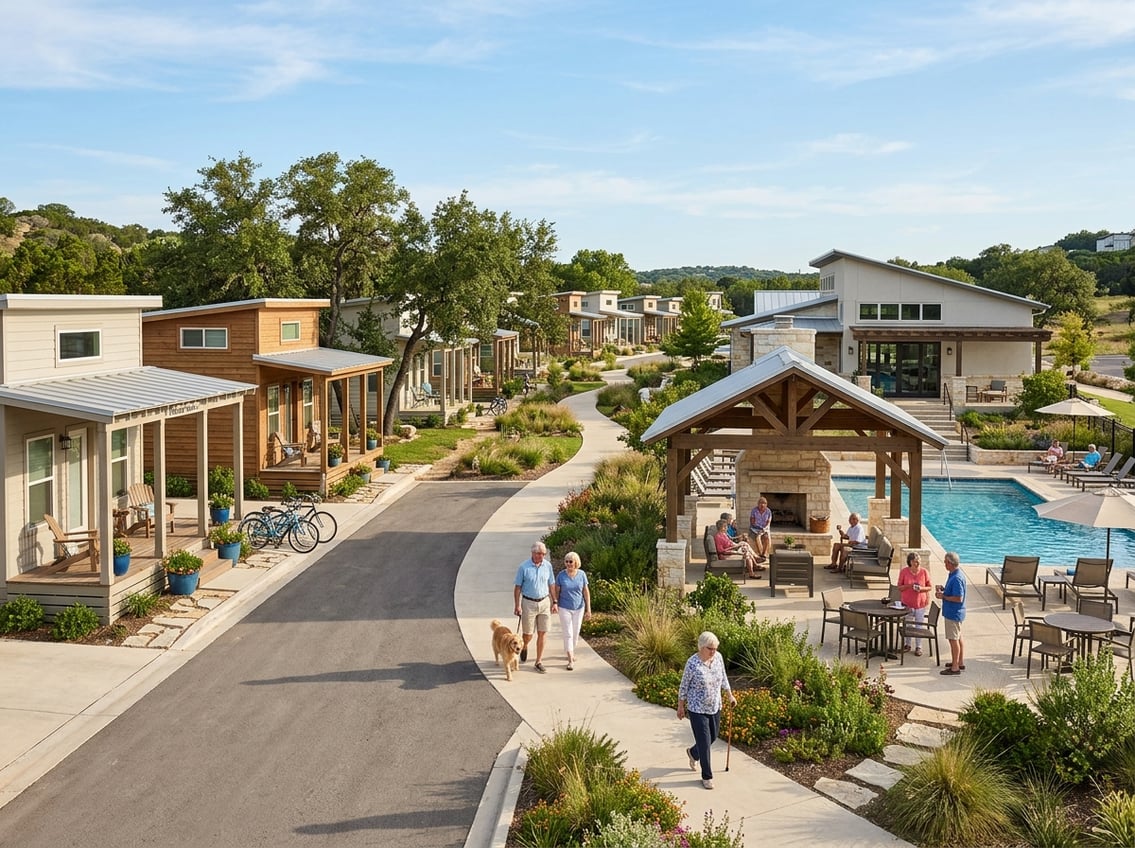
The most useful amenities in a 55+ community tend to be practical rather than flashy. A clubhouse with regular social events helps build connections quickly, especially for buyers relocating without a local network already in place.
Walking trails and shared green space support daily movement without needing a car. Fishing ponds or lake access add a low-cost recreation option that many retirees use often.
Gated entry adds security, which matters more for residents living alone or traveling frequently. Ask about gate hours and whether the gate is staffed or automated.
On-site laundry and maintenance support reduce the physical upkeep that comes with a traditional house. Look for communities that pair these amenities with proximity to a pharmacy, grocery store, and hospital, since convenience amenities matter less if daily errands require a long drive.
Pet-friendly spaces, dog parks, and clear pet policies matter for buyers relocating with animals. Confirm size and breed restrictions directly, since these vary widely between communities.
Pros and Cons of 55+ Tiny Home Living in Texas
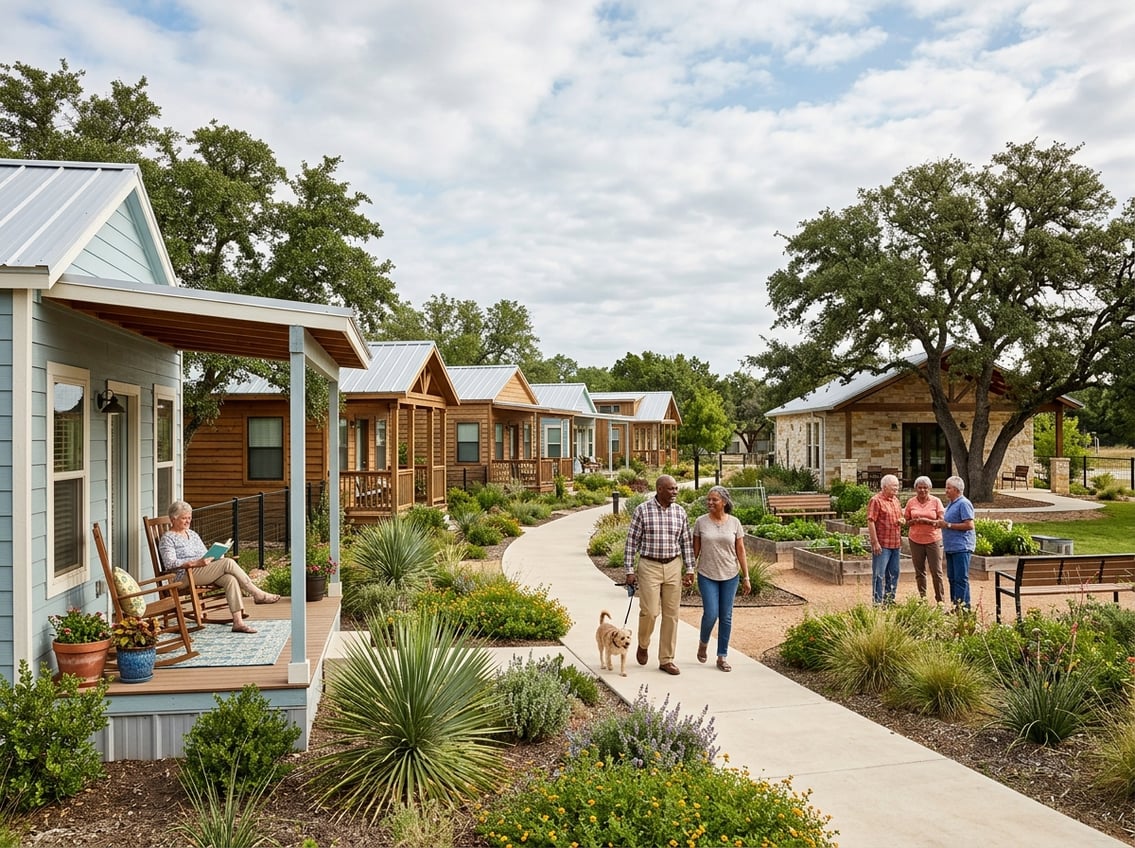
Smaller homes mean lower utility bills, less maintenance, and often a lower overall cost of living compared to a traditional house. No state income tax adds another financial advantage for retirees on a fixed budget.
Age-restricted communities offer a quieter, more settled social environment, with neighbors generally at a similar life stage. Built-in amenities and organized events also make it easier to build a social circle after a move.
Smaller living spaces mean less storage and can require real downsizing before the move. Lot rent is an ongoing cost that never goes away, unlike a paid-off mortgage on traditional real estate.
Some communities classify homes as RVs rather than traditional residences, which can affect financing options and long-term equity building. Rural locations offering the most scenic settings often come with longer drives to hospitals and major grocery stores.
Weigh these tradeoffs against your own priorities: budget, healthcare access, social setting, and how much land and scenery matter to your daily life.
Choose A Location Around Your Lifestyle
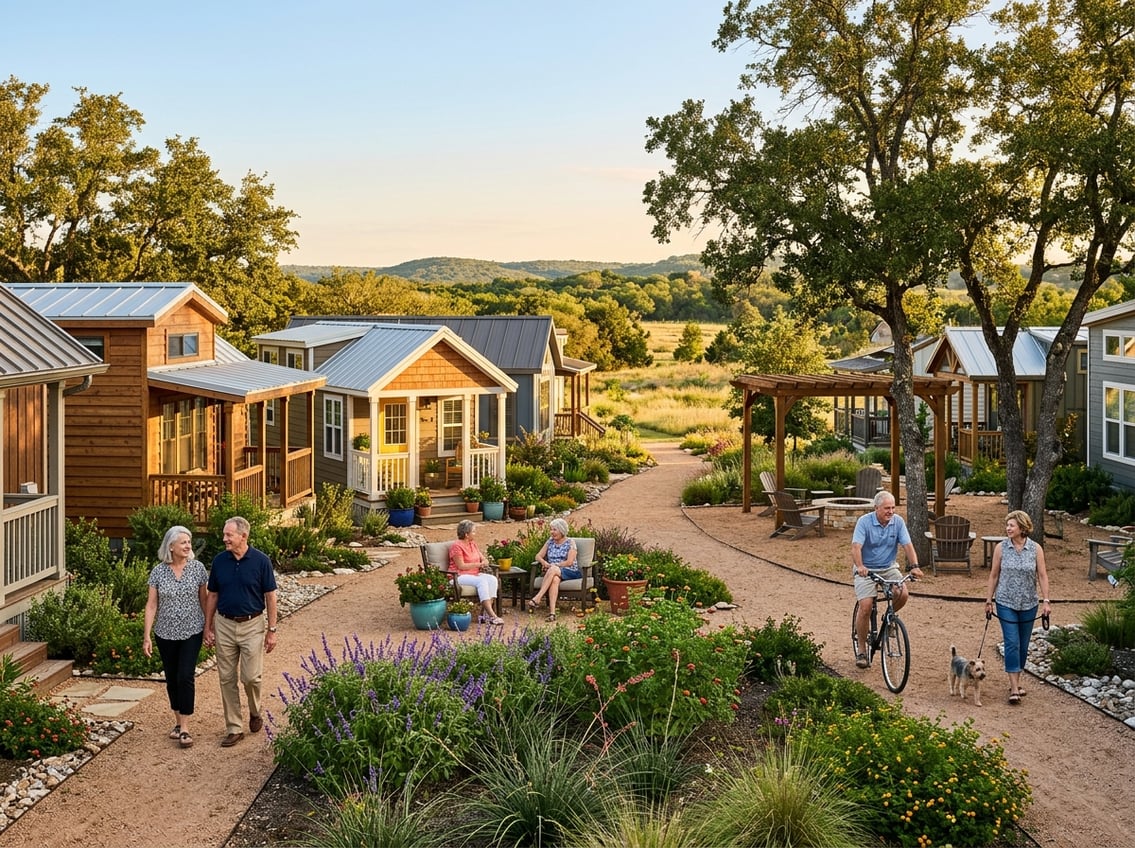
Location drives almost every other decision in this process, more than floor plan or amenity list. Where a community sits determines your drive time to family, healthcare, and daily errands for as long as you live there.
Hill Country Living And New Braunfels Access
Communities near Liberty Hill, Dripping Springs, or the broader Hill Country offer scenery and quiet that’s hard to match elsewhere in the state. New Braunfels sits within reach for groceries, dining, and healthcare, without living inside a dense metro area.
Canyon Lake Recreation And Weekend Travel
Buyers who want regular access to water recreation should weigh proximity to Canyon Lake specifically. Even communities not directly on the lake can put weekend boating, fishing, or lake-day trips within a short drive.
San Antonio, Austin, And Dallas-Fort Worth Commutes
Retirees who still travel for family visits, medical specialists, or occasional city outings should map realistic drive times to San Antonio, Austin, or DFW. A community that looks close on a map can mean forty-five minutes or more once traffic patterns are factored in.
Healthcare, Groceries, And Everyday Services
Proximity to a hospital system matters more as residents age in place. Confirm distance to the nearest pharmacy, grocery store, and urgent care before finalizing a decision, not just distance to the nearest big city.
Frequently Asked Questions
What are the best 55+ tiny home communities in Texas for retirees?
County Line Cottages near Liberty Hill, Liberty Tiny Village near Aubrey, and Bluebonnet Tiny Home Village in Cedar Creek stand out for genuine age restrictions and reasonable metro access. Each suits a different priority, from Hill Country quiet to DFW proximity.
Are there 55+ tiny home communities in Texas with homes for sale?
Yes, many communities sell tiny homes on-site rather than only leasing lots. Availability and pricing change often, so confirm current inventory directly with each community before planning a visit.
Do I have to be 55 to live there
It depends on the community’s specific rule. Some require every resident to be 55 or older, while others only require one household member to meet that age, allowing a younger spouse or partner to live there too.
Can I rent a tiny home in a senior community in Texas?
Some communities offer rental units alongside homes for purchase, though purchase options are more common in dedicated 55+ tiny home villages. Ask each community directly, since rental availability changes frequently.
Which Texas tiny home communities are located near Houston, Conroe, and Katy?
Majestic Hills near Lake Conroe is the clearest option in this guide for Southeast Texas access to Houston’s healthcare and shopping. Confirm current age-restriction status directly, since Lake Conroe area communities vary on this point.
What amenities are typically available in 55+ tiny home communities in Texas?
Clubhouses, walking trails, fishing ponds, gated entry, and organized social events are common. Pet-friendly spaces and on-site laundry or maintenance support also appear frequently in these communities.
How much does it cost to buy or rent a tiny home in a Texas 55+ community?
A tiny home purchase typically runs $40,000 to $150,000 or more, while monthly lot rent for 55+ communities generally falls between $700 and $1,300. Utilities and HOA-style fees can add another $100 to $300 or more per month.