
Modern Victorian Bedroom Design Ideas For A Timeless Aesthetic: 7 Inspiring Ways To Blend Classic And Contemporary Styles

Modern Victorian bedroom design blends historic charm with modern simplicity to create a space that feels both elegant and livable. It draws inspiration from the ornate details and rich materials of the Victorian era while softening the look with clean lines and balanced proportions. This style offers a way to enjoy timeless beauty without sacrificing comfort or contemporary taste.
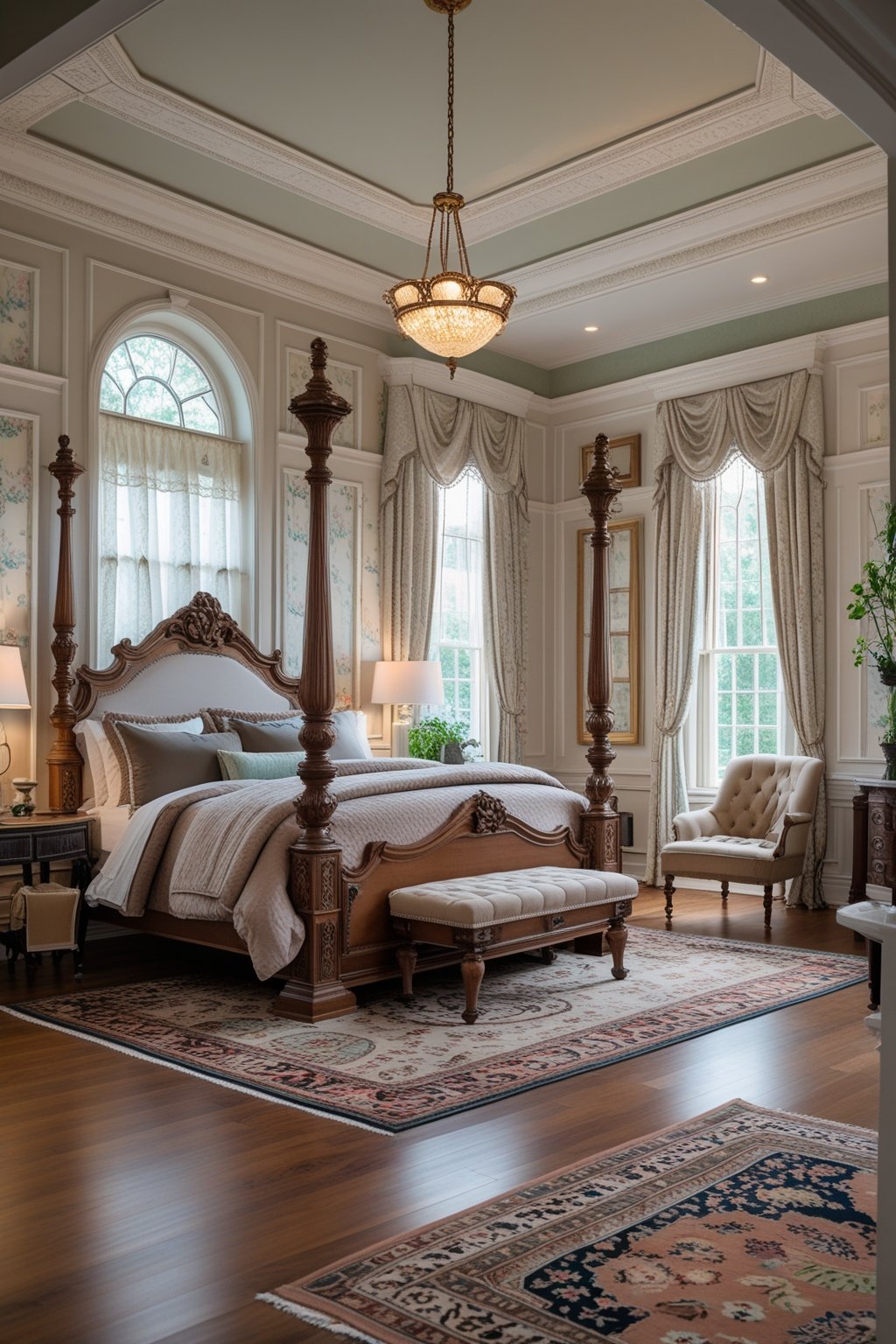
Through thoughtful choices in furniture, fabrics, and finishes, a modern Victorian bedroom transforms into a place that honors tradition while fitting today’s lifestyles. It values craftsmanship, texture, and balance, creating harmony between old-world sophistication and current design sensibilities.
1) Incorporate a grand four-poster bed with velvet drapery in deep jewel tones
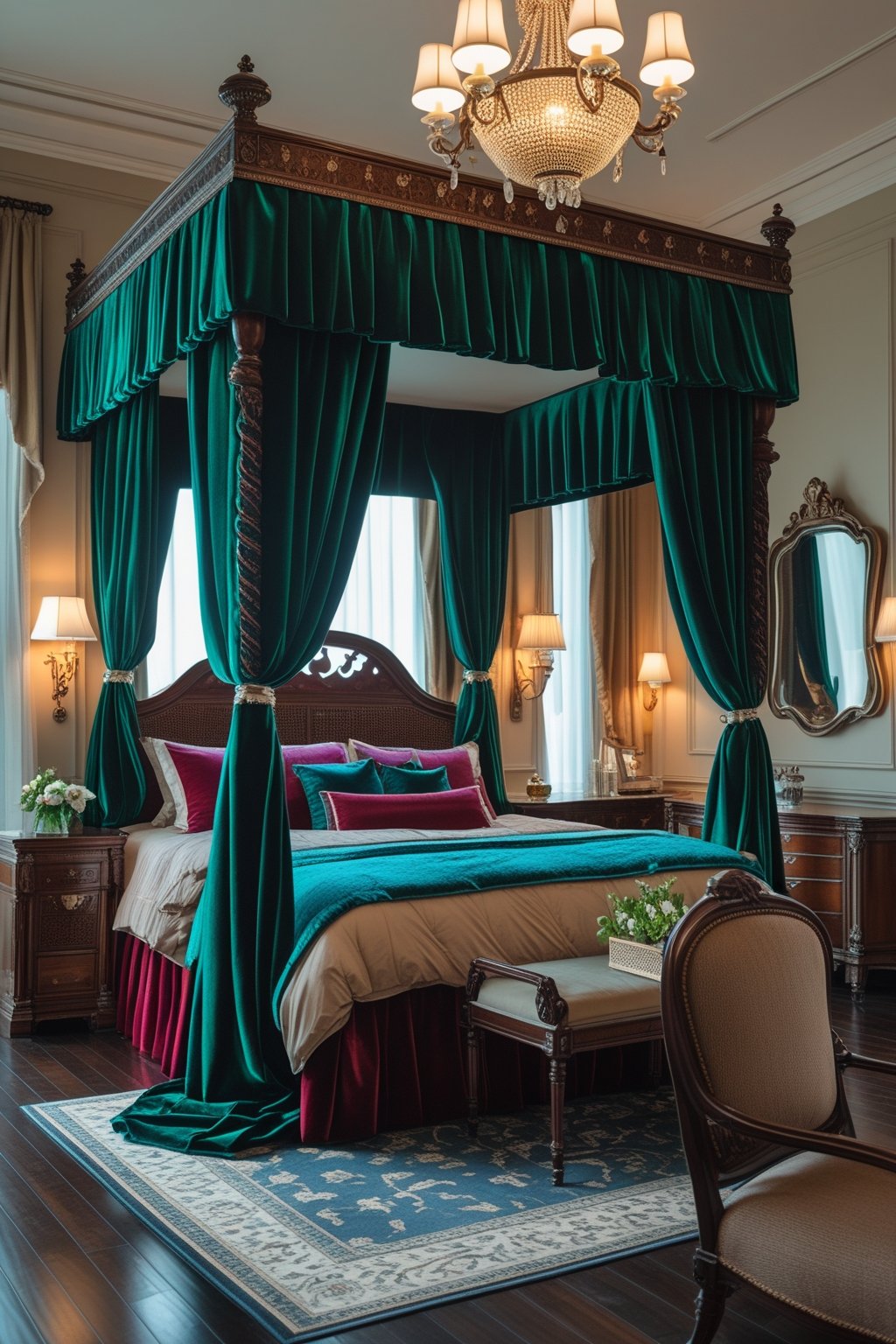
A four-poster bed instantly becomes the focal point of a modern Victorian bedroom. Its tall frame adds height and presence, grounding the room with classic style.
Velvet drapery in deep jewel tones, such as emerald, sapphire, or burgundy, enhances the sense of luxury. The soft fabric adds texture and warmth while echoing Victorian influences.
Pairing the bed with coordinating linens or antique-style hardware helps tie the look together. This creates a balanced mix of old-world elegance and modern comfort.
2) Use intricate floral or damask patterned wallpaper for a Victorian touch
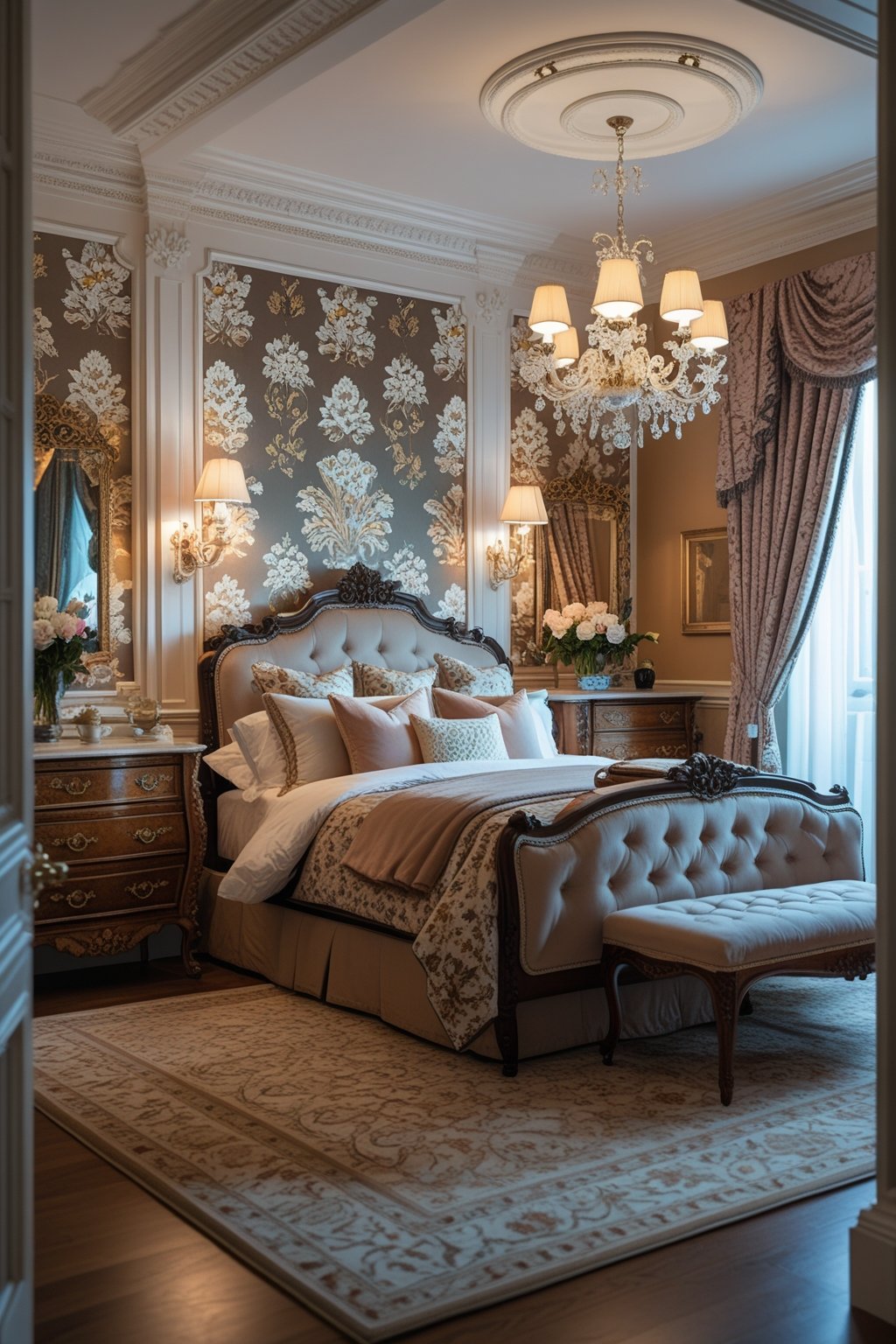
Victorian bedrooms often feature wallpaper with detailed floral or damask designs. These patterns bring a sense of history and craftsmanship to the space.
Soft tones like cream, sage, or burgundy work well for a calm and elegant look. Patterns with subtle textures or metallic accents add depth without overwhelming the room.
Using wallpaper on one wall or throughout the room can highlight the architecture and create a cohesive design that feels both classic and refined.
3) Add a crystal chandelier to elevate elegance and introduce ambient lighting
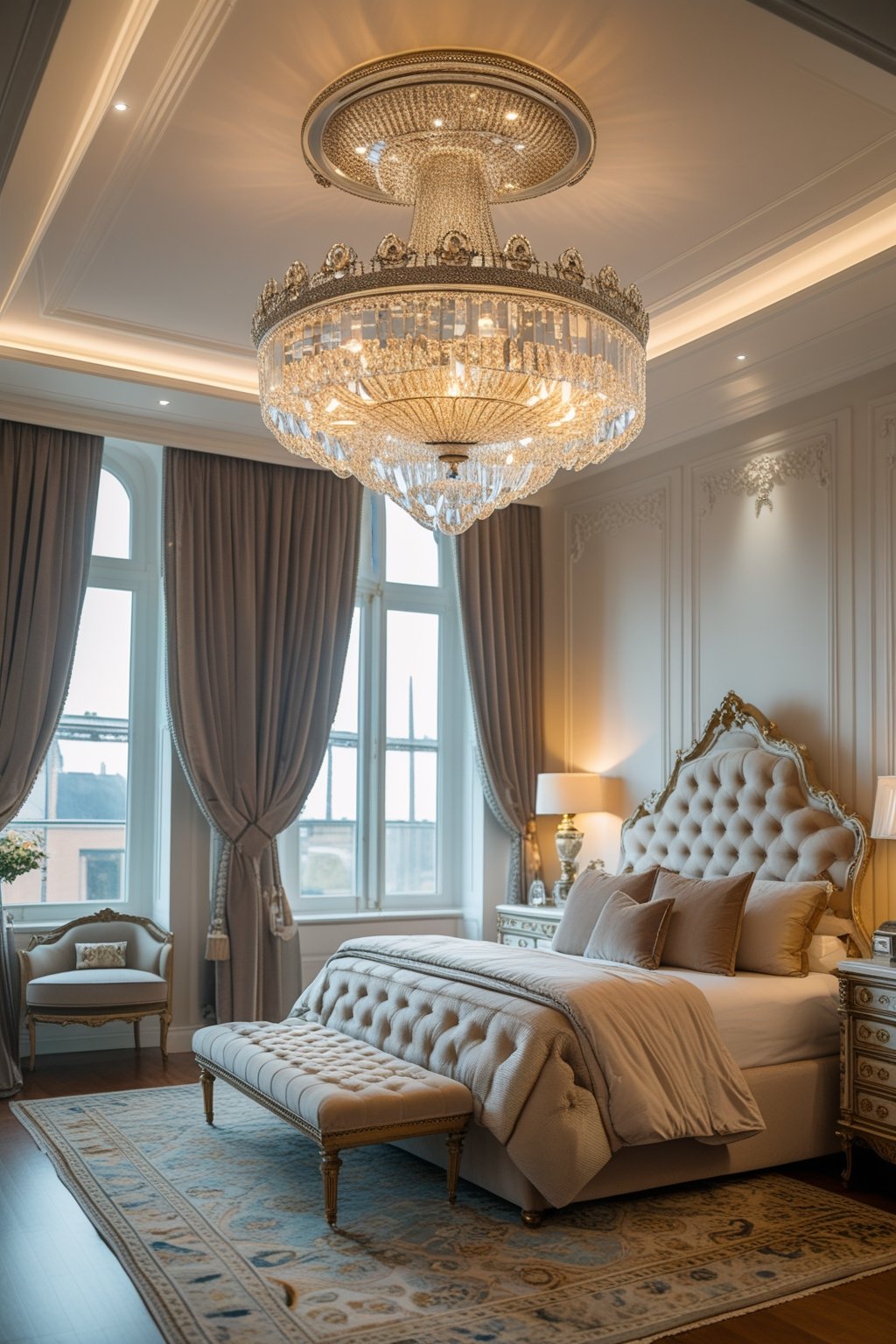
A crystal chandelier brings refined charm to a modern Victorian bedroom. Its reflective surfaces catch light and add depth to the room’s classic details.
Placing the chandelier at the center of the ceiling creates balanced illumination. It softens the atmosphere while highlighting molding, wallpaper, or metal accents.
Choosing a design with subtle geometry or antique brass finishes blends old and new elements. This approach keeps the space elegant without feeling dated or overly ornate.
4) Choose rich wood furniture with ornate carvings and dark finishes
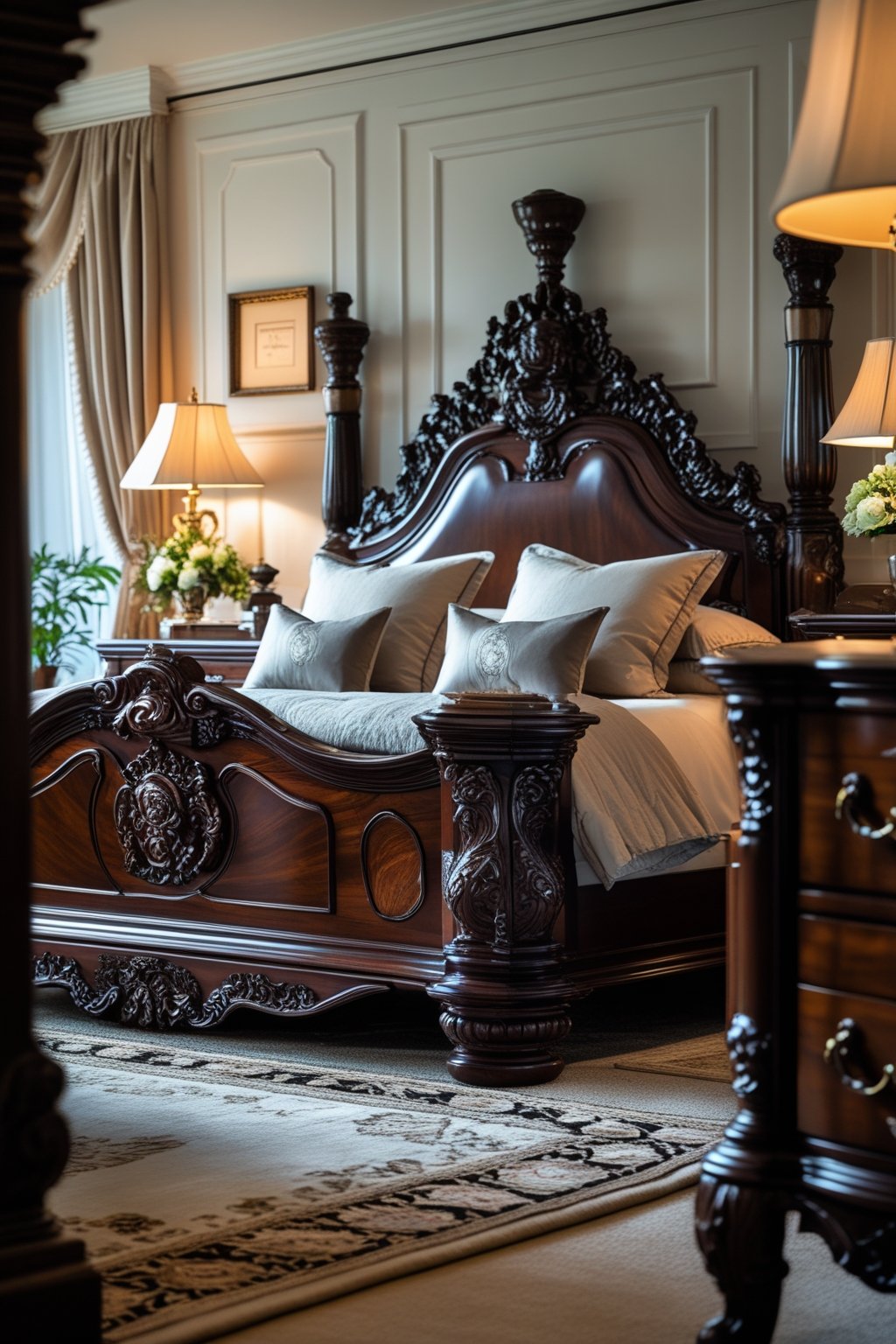
Dark woods like mahogany, walnut, and cherry bring depth and warmth to a modern Victorian bedroom. Their natural tones create a balanced contrast against lighter walls or decorative fabrics.
Pieces with carved details, such as dressers, bed frames, and mirrors, highlight craftsmanship and historical influence. These details add texture and visual interest without overwhelming the space.
When paired with soft upholstery and subtle lighting, rich wood furniture helps the room feel cohesive and refined. The result is a timeless look that blends vintage charm with modern comfort.
5) Blend vintage accents with minimalist modern décor elements
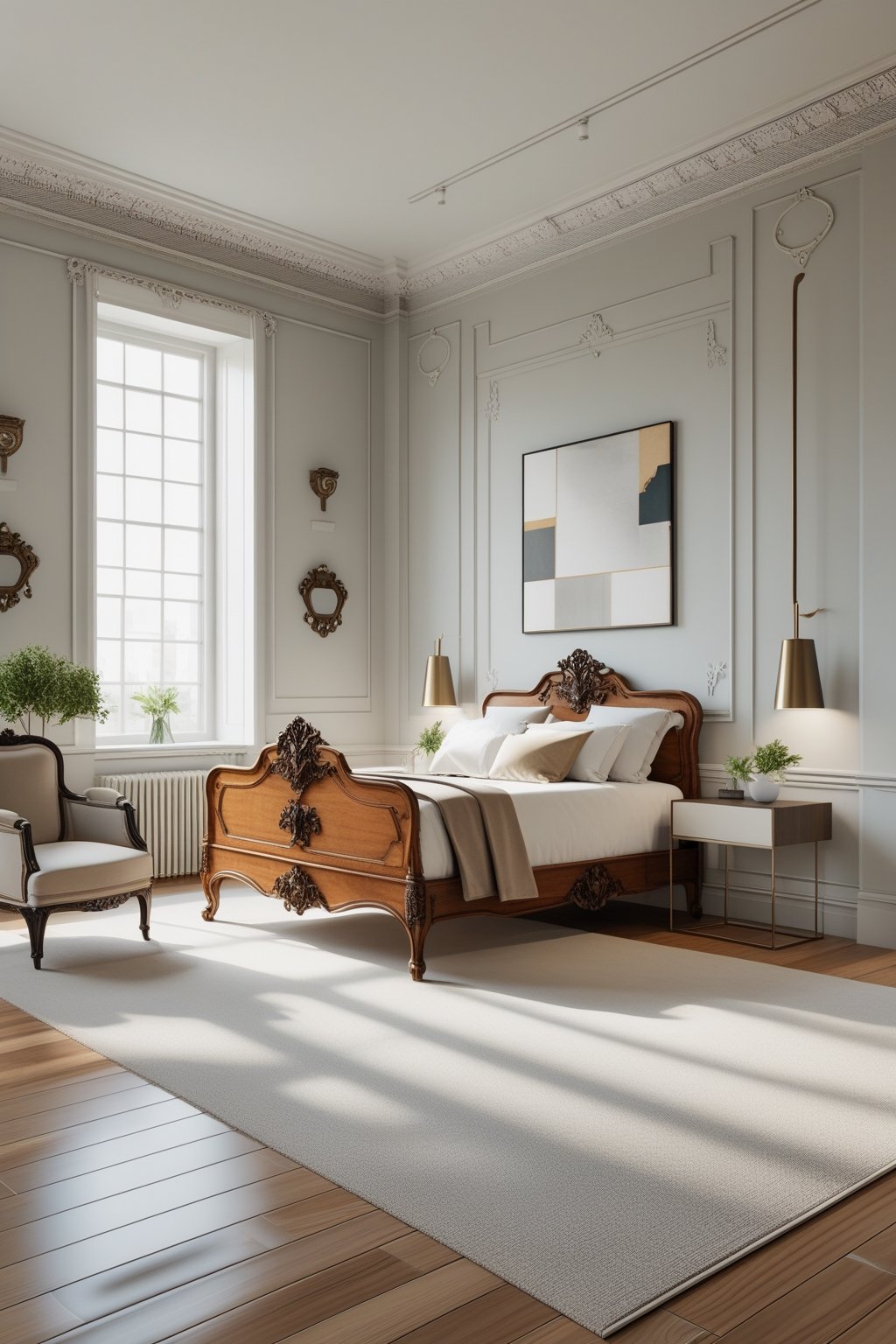
A modern Victorian bedroom feels balanced when vintage décor meets simple modern design. They can pair ornate furniture with clean-lined pieces to keep the space from feeling heavy.
A tufted armchair or an antique mirror can add charm without overpowering sleek lighting or plain walls. Subtle details like brass handles or carved wood frames bring warmth and texture.
Using a neutral base lets these accents stand out while maintaining a crisp look. This mix highlights the room’s character and keeps it both refined and uncluttered.
6) Use luxurious fabrics like silk or velvet for bedding and curtains
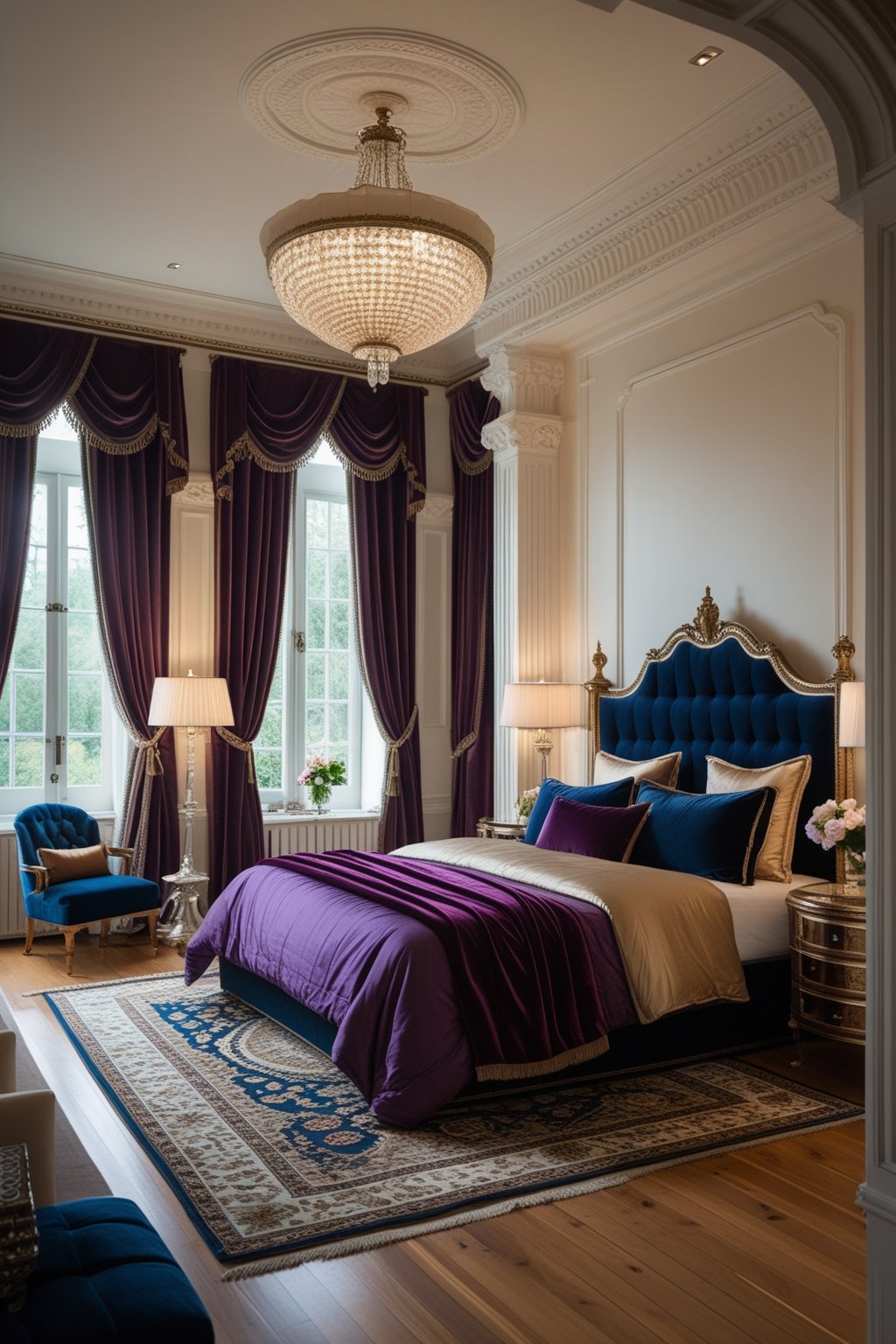
Silk and velvet bring depth and warmth to a modern Victorian bedroom. Their smooth and rich textures create a balanced look that feels elegant without being overwhelming.
Velvet curtains can block light while adding visual weight to the room. Silk bedding offers a soft finish that reflects light in a subtle way, enhancing the room’s classic appeal.
Combining both fabrics in complementary colors ties the space together. Even small accents, like a velvet throw or silk pillows, can add refinement and comfort.
7) Integrate classic Victorian decorative moldings and trim work
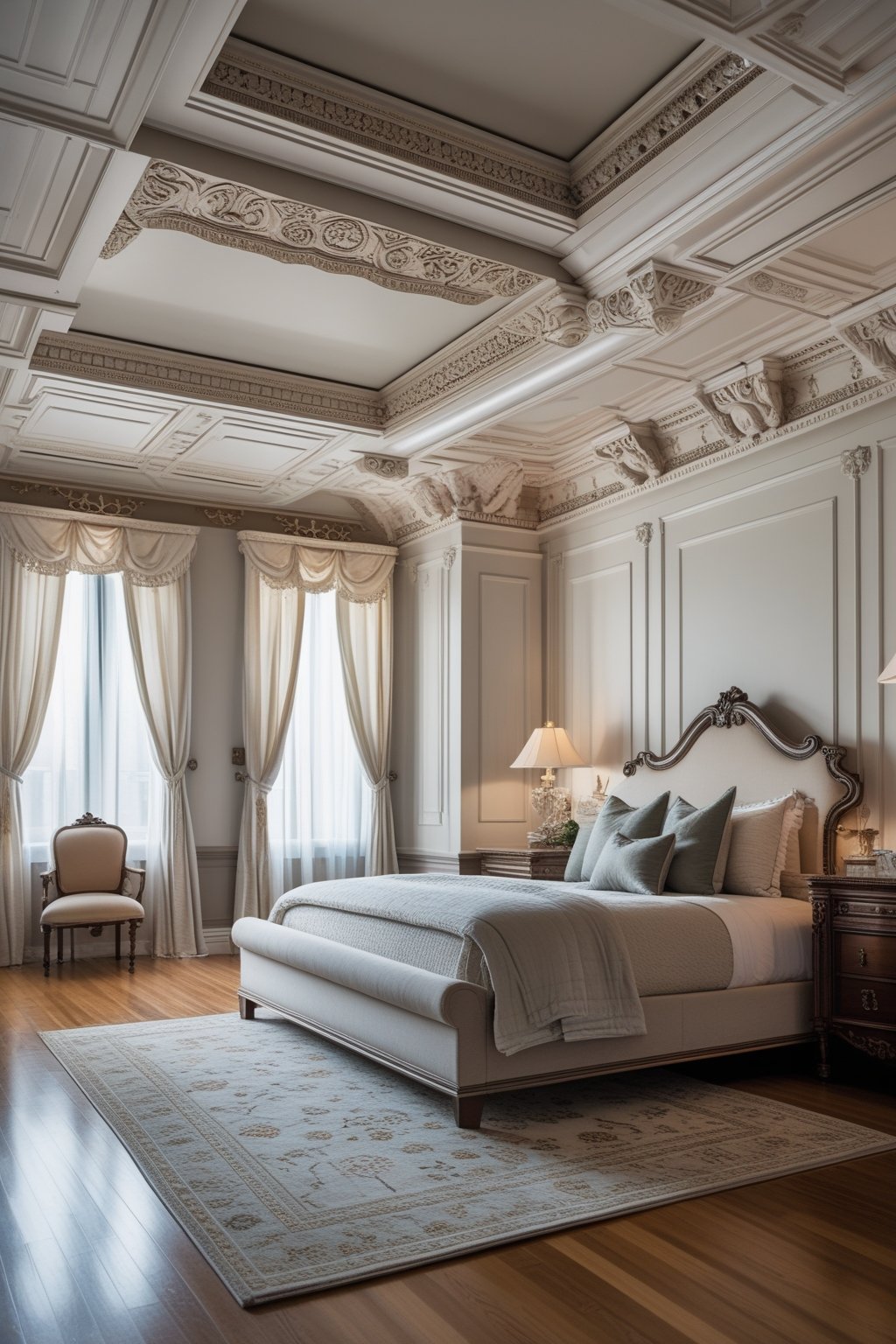
Decorative moldings and trim work define much of the Victorian style. They add texture, structure, and visual polish to a bedroom. Even simple rooms gain depth when baseboards and ceiling moldings frame the walls.
Using crown molding, wainscoting, or ceiling medallions helps connect modern furnishings with traditional architecture. These features create subtle elegance without overwhelming the space.
Painting trim in a muted or matching tone keeps it refined. Homeowners who use precise, clean lines can balance period details with a modern finish, maintaining harmony between old and new design elements.
Key Elements of Modern Victorian Bedrooms
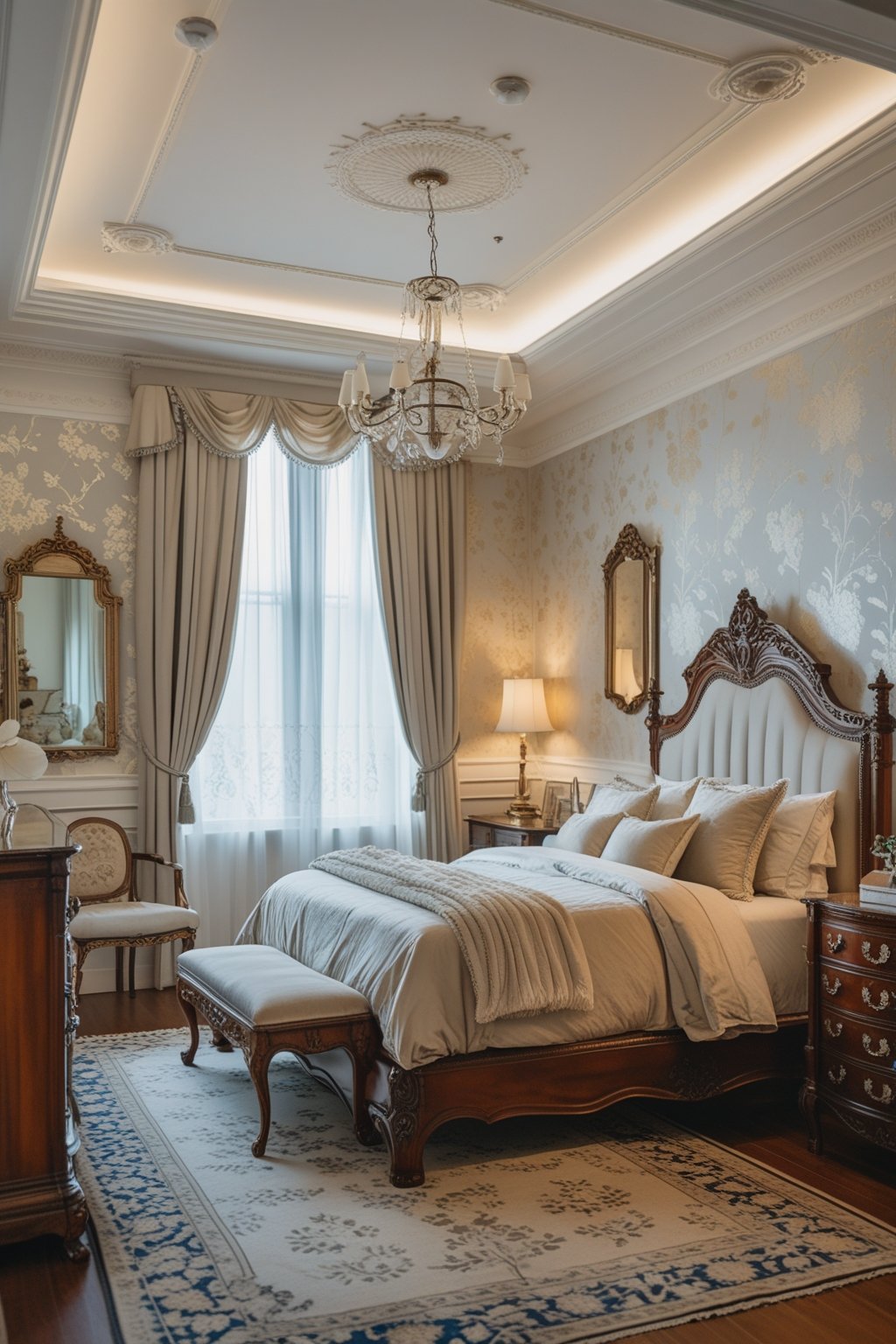
Modern Victorian bedrooms combine the rich detailing of the 19th century with the clean lines of modern design. They rely on careful selections in structure, color, and materials to create spaces that feel elegant, balanced, and comfortable.
Blending Traditional and Contemporary Features
Modern Victorian design layers period details with modern simplicity. This mix keeps the space grounded in history while avoiding clutter. Homeowners often retain traditional elements such as crown molding, paneling, or arched windows, then contrast them with sleek furniture or minimal hardware.
A simple approach uses bold vintage features—like a tufted headboard or carved mirror—paired with modern lighting or geometric side tables. This combination emphasizes craftsmanship while maintaining a restrained look.
Balance is key:
| Traditional Feature | Modern Counterpart |
|---|---|
| Ornate chandelier | Streamlined pendant light |
| Velvet chaise | Upholstered bench with clean lines |
| Antique dresser | Floating shelf or dresser with matte finish |
The result feels polished rather than overly ornate. The goal isn’t replication of the past but reinterpretation through modern design.
Color Palettes for a Timeless Victorian Look
Color plays a major role in setting the right mood. Victorian rooms often feature deep hues, but a modern update softens the palette for a lighter, airier feel. Designers use muted jewel tones, warm neutrals, and dusty pastels to link history and modern comfort.
A room might pair sage green walls with cream trim or navy bedding with brass accents. These combinations highlight architectural details without feeling heavy.
Accents in metallic finishes add understated shine. Avoid overpowering contrasts; instead, use a limited palette of three to four shades for harmony.
Example combinations:
- Plum, cream, and antique gold
- Charcoal, blush, and soft white
- Olive green, beige, and bronze
Each combination keeps the aesthetic refined and cohesive.
Selecting Textiles and Fabrics
Fabric choices help define the character of the room. Modern Victorian bedrooms use rich, tactile materials balanced with contemporary restraint. Velvet, silk, and linen often appear together, offering variety in both texture and finish.
Layering enhances comfort. A velvet headboard might pair with crisp cotton bedding and a wool throw. Patterned drapes—damask or floral—can coexist with simple, solid-colored cushions.
To keep the look current, choose fabrics in neutral or muted tones rather than overly ornate prints. Avoid heavy layering that makes the room feel dense. Using quality textiles in a few key places creates depth and interest without excess fuss.
Architectural Details That Define the Style
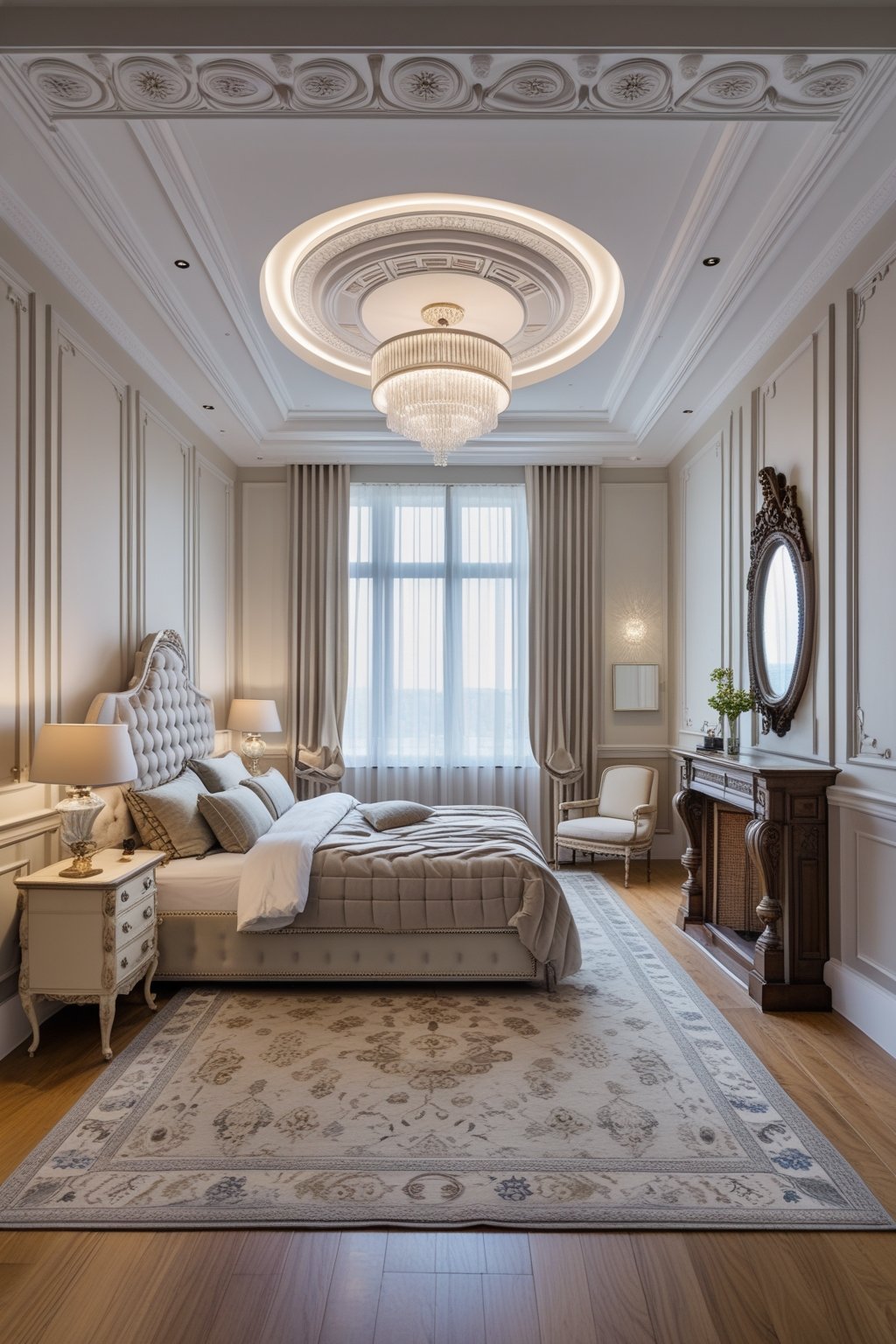
Modern Victorian bedrooms emphasize craftsmanship and historical character through carefully designed interior features. Decorative woodwork, layered textures, and structural elements restore the ornate charm of the 19th century while maintaining a clean, updated look suited for modern living.
Incorporating Statement Molding and Trim
Detailed molding and trim give the room structure and depth. Crown molding, picture rails, and baseboards outline walls and ceilings, creating a sense of height and finish. Homeowners often choose crisp white or muted neutral colors to balance intricate shapes with modern simplicity.
Layering trim around doors and windows adds visual interest. Wainscoting—panels on the lower wall—introduces texture and contrast, especially when painted in darker tones beneath light-colored walls.
Some designers combine traditional plaster designs with modern materials like MDF to achieve detailed profiles at a lower cost. When done effectively, this combination reinforces elegance without overwhelming small spaces.
| Type of Molding | Typical Placement | Design Effect |
|---|---|---|
| Crown Molding | Ceiling edges | Enhances height and formality |
| Picture Rail | Mid or upper wall | Allows artwork display without wall damage |
| Wainscoting | Lower wall | Adds texture and contrast |
Fireplaces and Mantel Accents
A fireplace often acts as the visual centerpiece. In Victorian-inspired bedrooms, even a decorative mantel or faux fireplace maintains the look’s balance between warmth and symmetry. Carved wood, marble, or cast iron surrounds reflect traditional craftsmanship.
Modern updates may feature electric or ethanol inserts surrounded by original-style mantels. This approach keeps the classic focal point but fits contemporary layouts.
Mantel styling stays simple—one or two framed artworks or a mirror above, paired with modest lighting like wall sconces. Brass and matte black finishes bring subtle sophistication, integrating past and present design sensibilities effortlessly.


