
13 Yurt Bathroom Ideas: Top 7 Designs for Functional and Stylish Spaces

Living in a yurt offers a unique way to connect with nature while enjoying the comfort of a cozy home. As more people choose yurt living, there is growing interest in adding modern conveniences, like bathrooms, to these circular spaces.
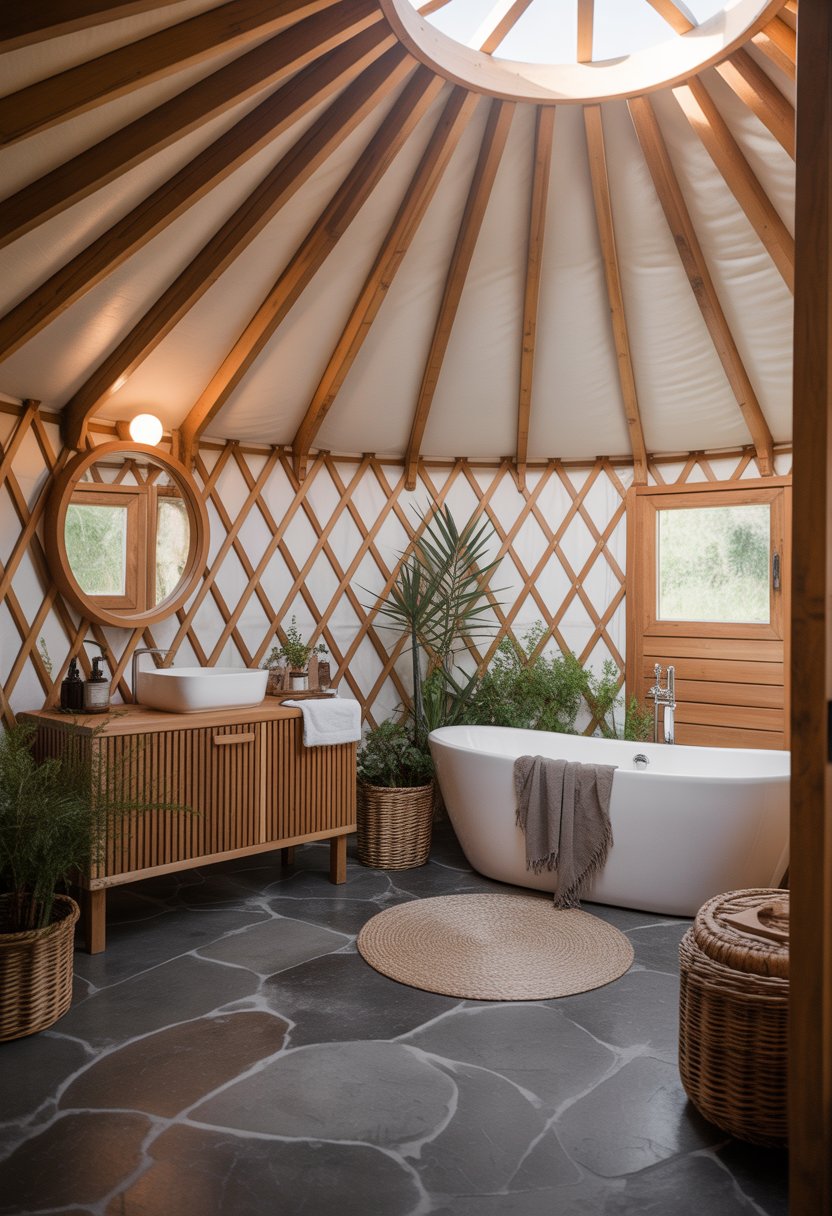
This article provides creative and practical bathroom ideas to help make a yurt more functional and comfortable. Readers will find useful inspiration for designing a bathroom that fits the style and space of a yurt.
1) Installing a composting toilet to maintain off-grid sustainability
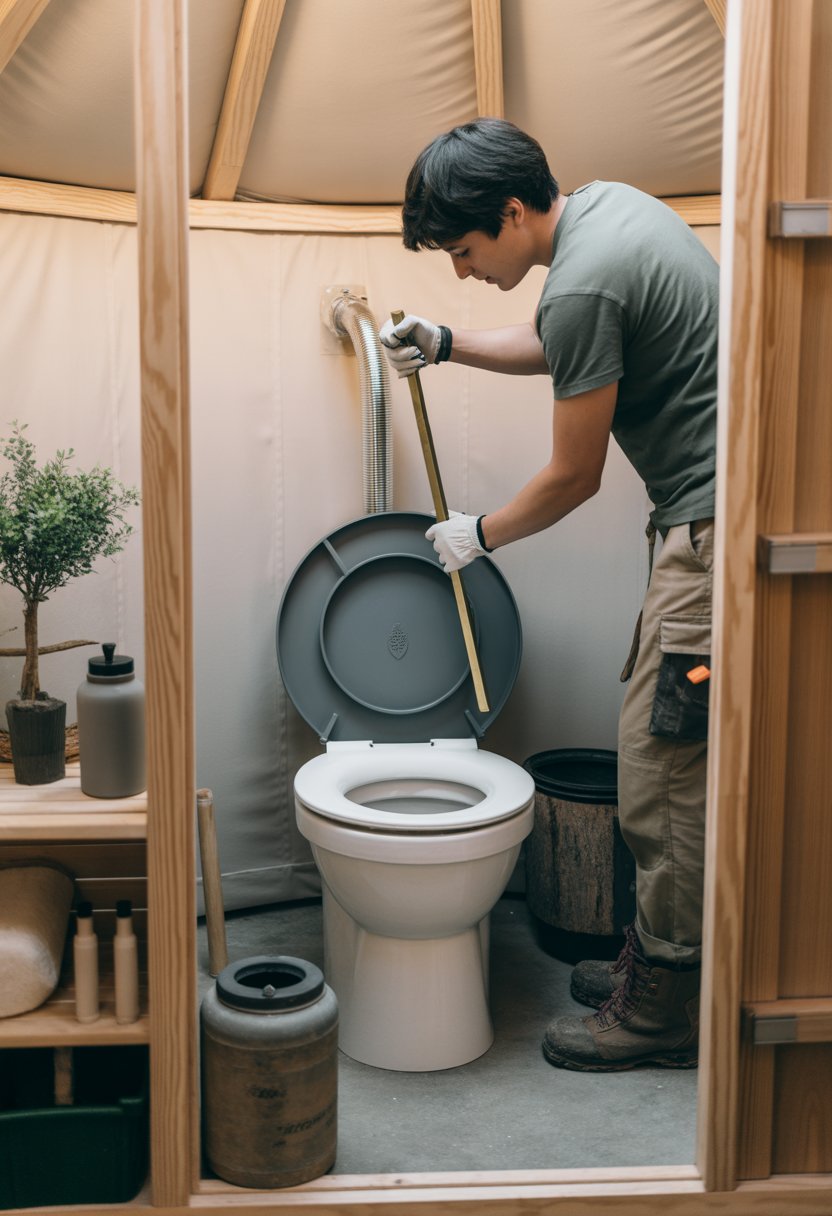
A composting toilet is a simple way to manage waste in a yurt bathroom. It uses no water and helps turn waste into compost. People often add materials like sawdust to help with the composting process.
Composting toilets work well for off-grid setups because they do not need plumbing. This can help save water and reduce environmental impact.
2) Using a small, site-built exterior bathhouse adjacent to the yurt
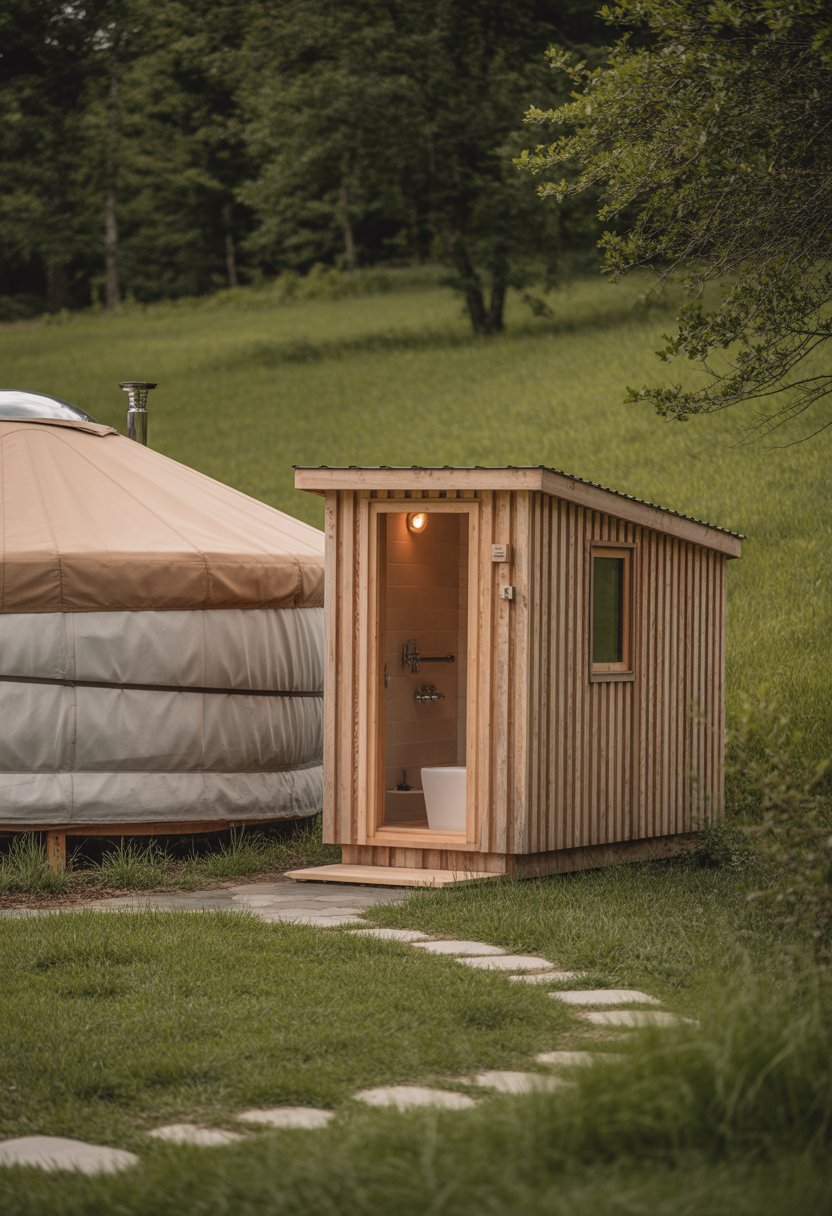
Building a small bathhouse next to the yurt is a practical option. This setup keeps moisture and plumbing hassles outside the main living area. It also allows for more space and privacy, especially in smaller yurts.
3) Incorporating a curved wall partition to preserve yurt’s traditional shape
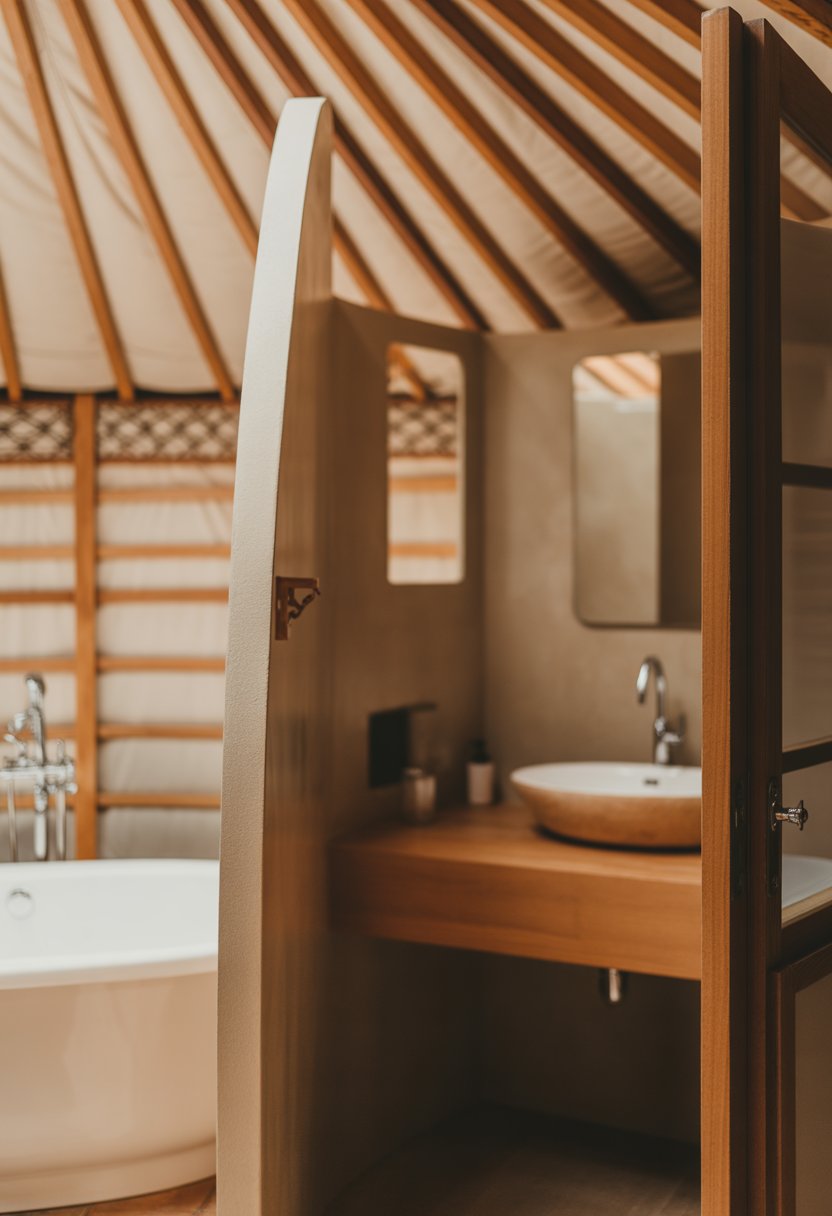
A curved wall partition follows the round lines of the yurt, helping to keep its classic look. This type of wall separates the bathroom without breaking up the flow of the space.
Using a curved partition also makes it easier to work with the yurt’s structure and can save space.
4) Upcycling vintage sinks and fixtures to enhance rustic luxury
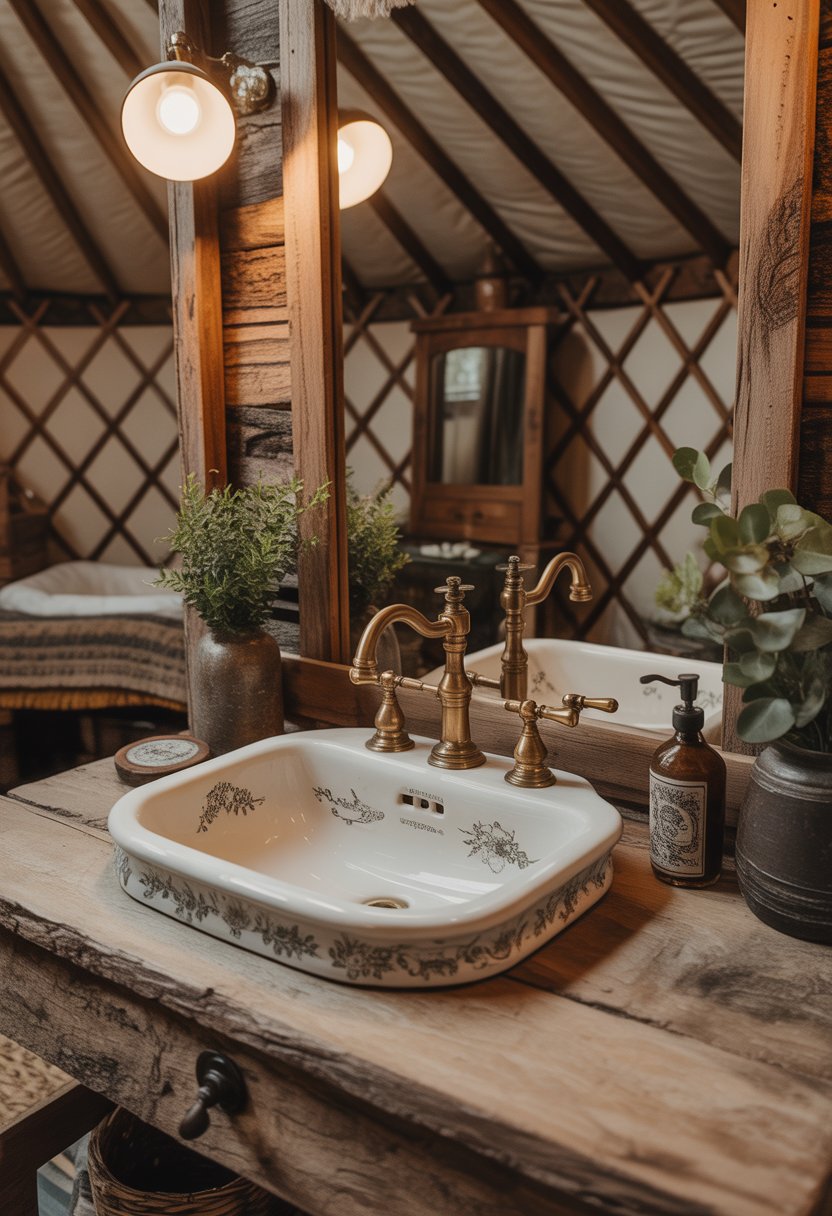
Using old sinks and vintage fixtures adds true character to a yurt bathroom. Many choose materials like copper or porcelain for a classic, weathered look.
Reusing faucets and towel bars with aged finishes brings subtle nostalgia. These sturdy pieces often last longer than new options and create a warm, inviting space.
5) Adding a skylight above the bathroom area for natural light
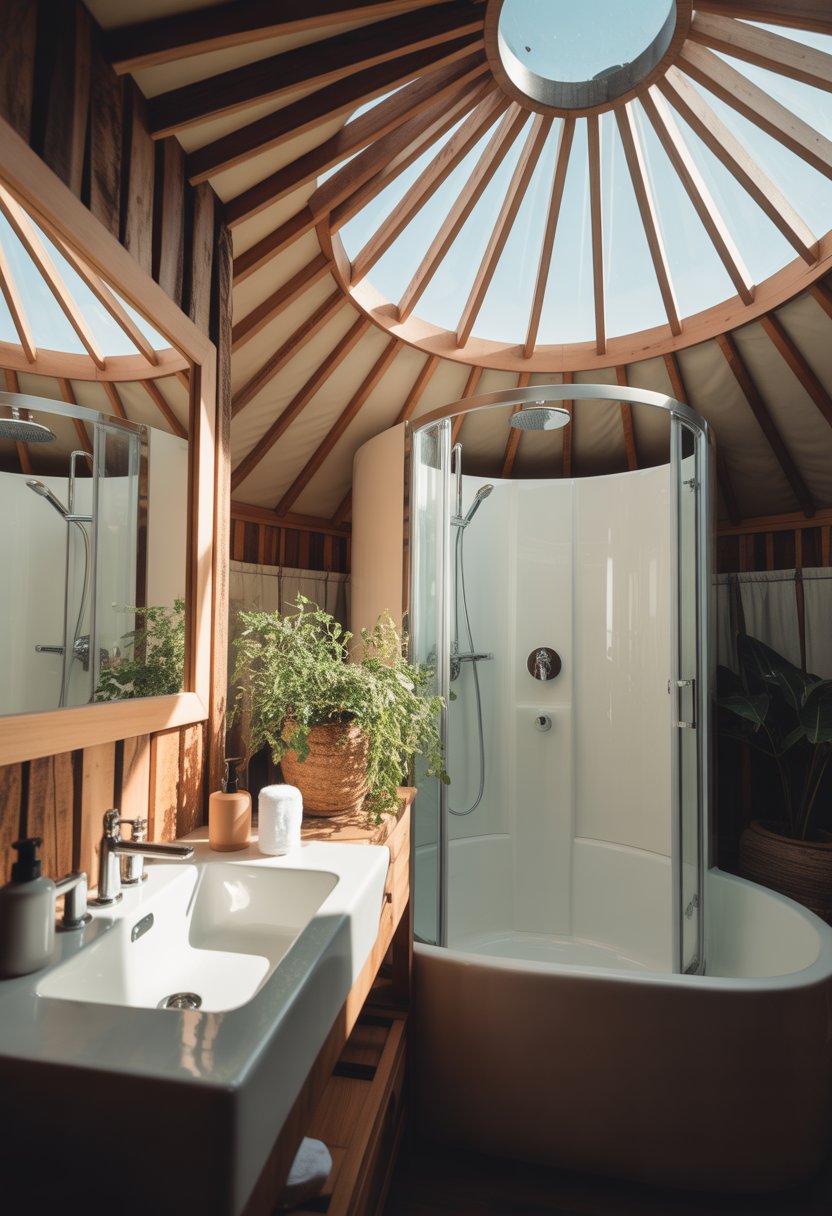
A skylight above the yurt bathroom brings in daylight from above. This makes the area feel brighter and more open.
Natural light also helps reduce the need for electric lighting during the day. Ventilated skylights can help with air flow if needed.
This is a practical way to improve both lighting and comfort.
6) Including a hand-washing station with water-saving taps
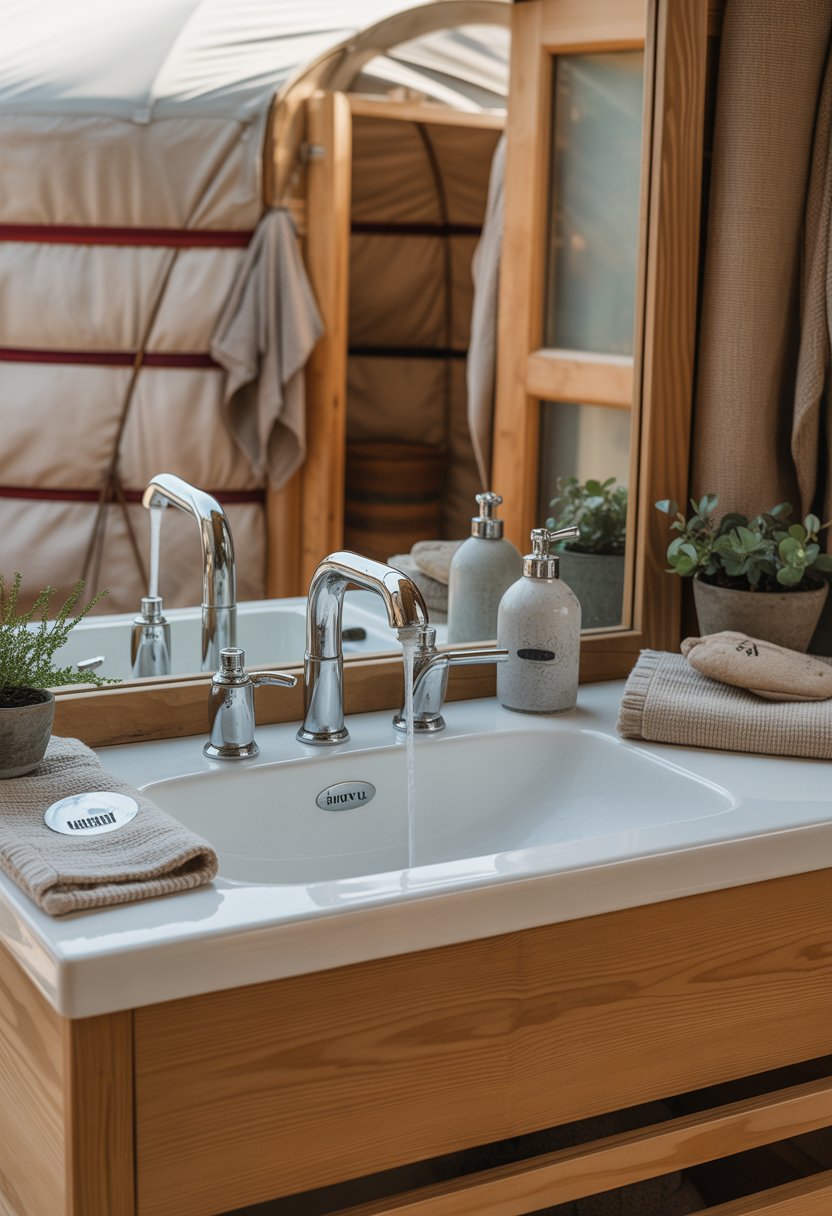
A hand-washing station adds convenience and helps keep yurt living hygienic. Water-saving taps, like flow regulators or mist nozzles, use less water with each use. This lets residents wash hands effectively while also reducing waste.
Portable or fixed stations can be chosen depending on the yurt’s size and layout.
7) Using a solar water heating system for efficient hot water
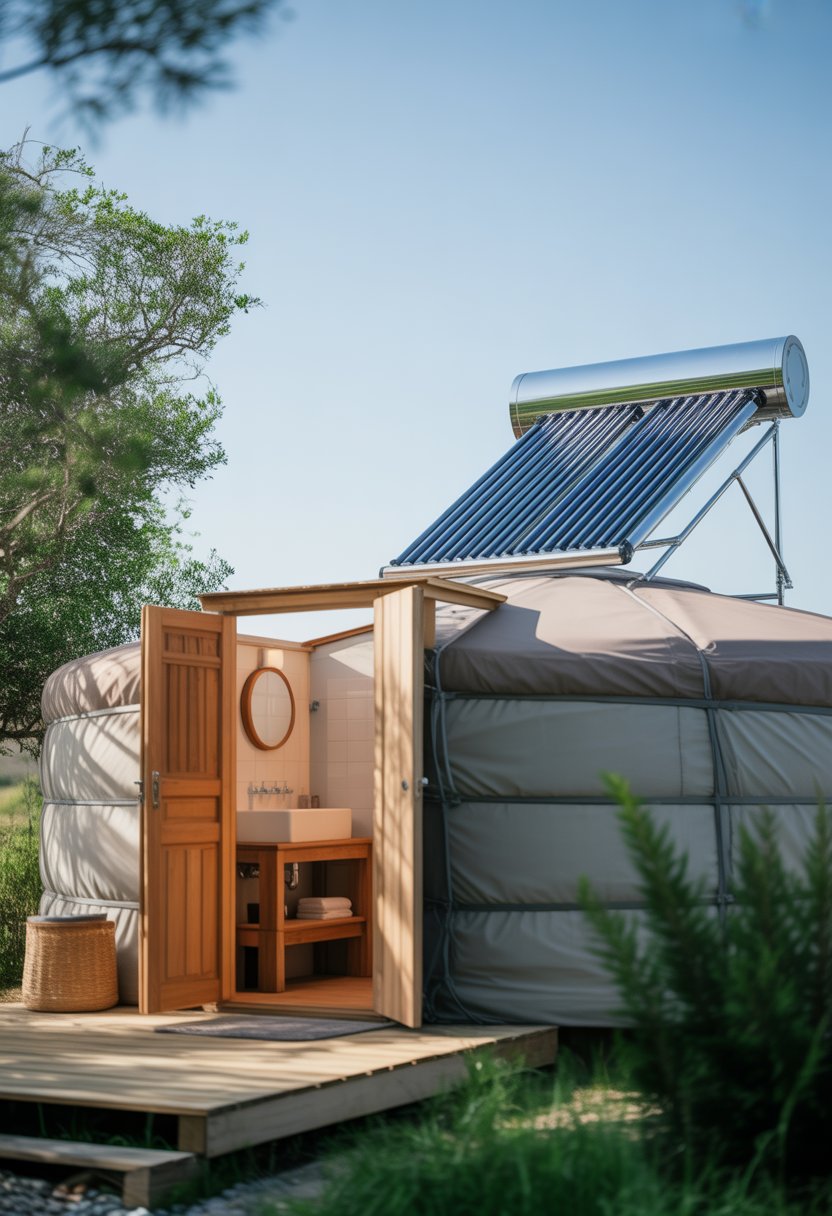
A solar water heating system uses the sun’s energy to heat water for showers and sinks. It typically includes solar panels, a storage tank, and simple plumbing.
These systems can reduce energy bills and work well in sunny locations. Many yurt owners choose solar for reliable hot water with lower costs.
Practical Considerations for Yurt Bathrooms
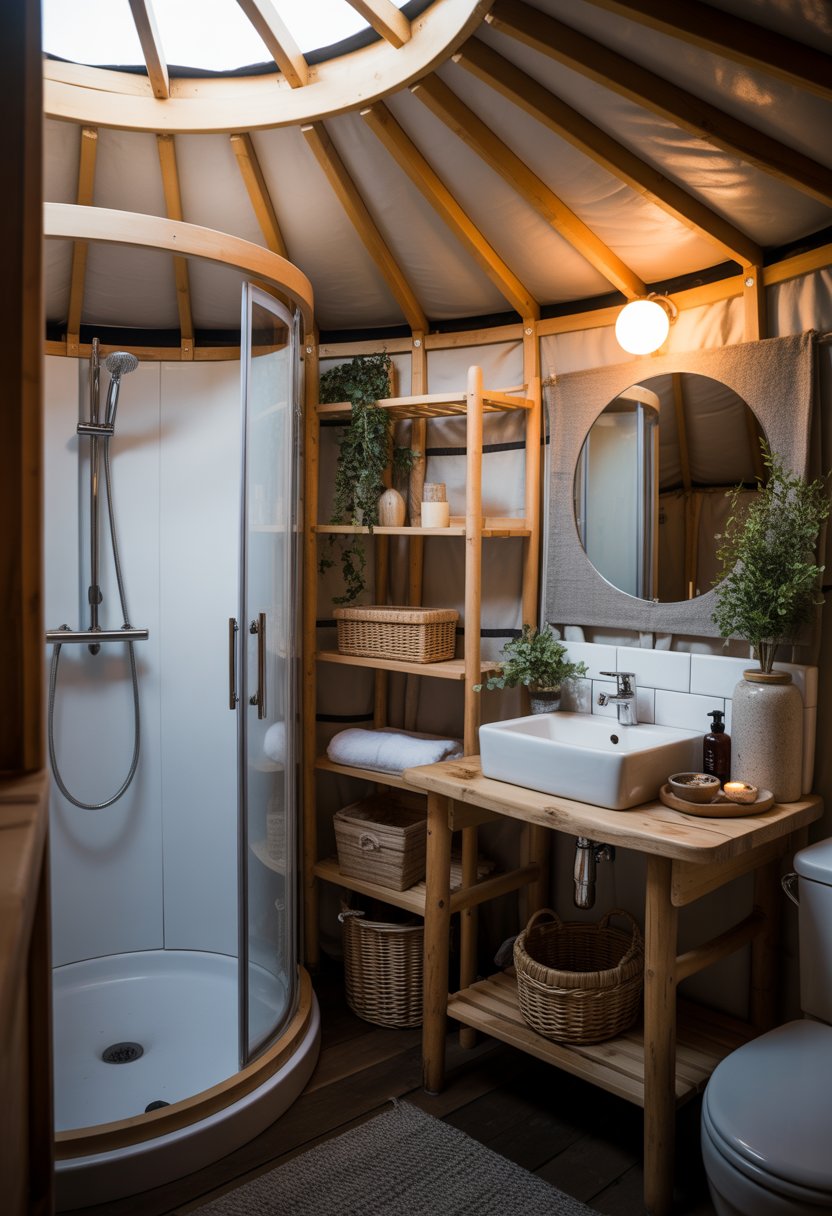
Yurt bathrooms need special attention due to the round shape, fabric walls, and limited space. Key factors include keeping water out of the living area, providing fresh air, and choosing plumbing methods that suit remote sites.
Waterproofing and Ventilation
Waterproofing is critical because yurts have wood floors and fabric or canvas walls. Even a small leak can cause mold, wood rot, or smells. Install a waterproof barrier beneath the bathroom floor and use water-resistant wall panels around showers or tubs.
Seal all joints and seams, especially where plumbing comes through the floor. Caulks and flexible waterproof tapes can help prevent water from seeping into tricky areas.
Ventilation is also necessary to reduce moisture and avoid condensation. A vent fan or a small window can help move damp air outside. Without proper airflow, steam from showers can damage yurt materials. Dehumidifiers are useful if window or fan options are limited.
Plumbing Solutions for Off-Grid Yurts
Traditional plumbing is usually possible if the yurt is on-grid, but many owners choose off-grid setups. For water supply, popular options are gravity-fed tanks, water barrels, or rainwater catchment systems. Water pumps may be needed for pressure.
Wastewater can be managed using composting or incinerating toilets. These do not require a septic system and are easy to install in a yurt. Portable greywater tanks collect wastewater from sinks and showers if septic or sewer is not available.
Heat-taped pipes and insulated skirts are useful in cold areas to prevent freezing. All plumbing should be planned before building to avoid moving floors or walls later.
Optimizing Space in Compact Designs
Bathrooms in yurts are often small and must use space wisely. Corner sinks, compact toilets, and shower stalls are good choices. Sliding or barn-style doors take up less room than traditional swinging doors.
A well-organized space uses wall-hung shelves, hooks, and baskets for storage. Consider multi-use furniture, such as a bench with built-in storage for towels or toiletries.
For privacy, lightweight partitions or partial walls work better than thick framed walls because they are easier to install and don’t weigh much. Simple folding screens can also create a private area without blocking light or airflow.
Enhancing Comfort and Sustainability
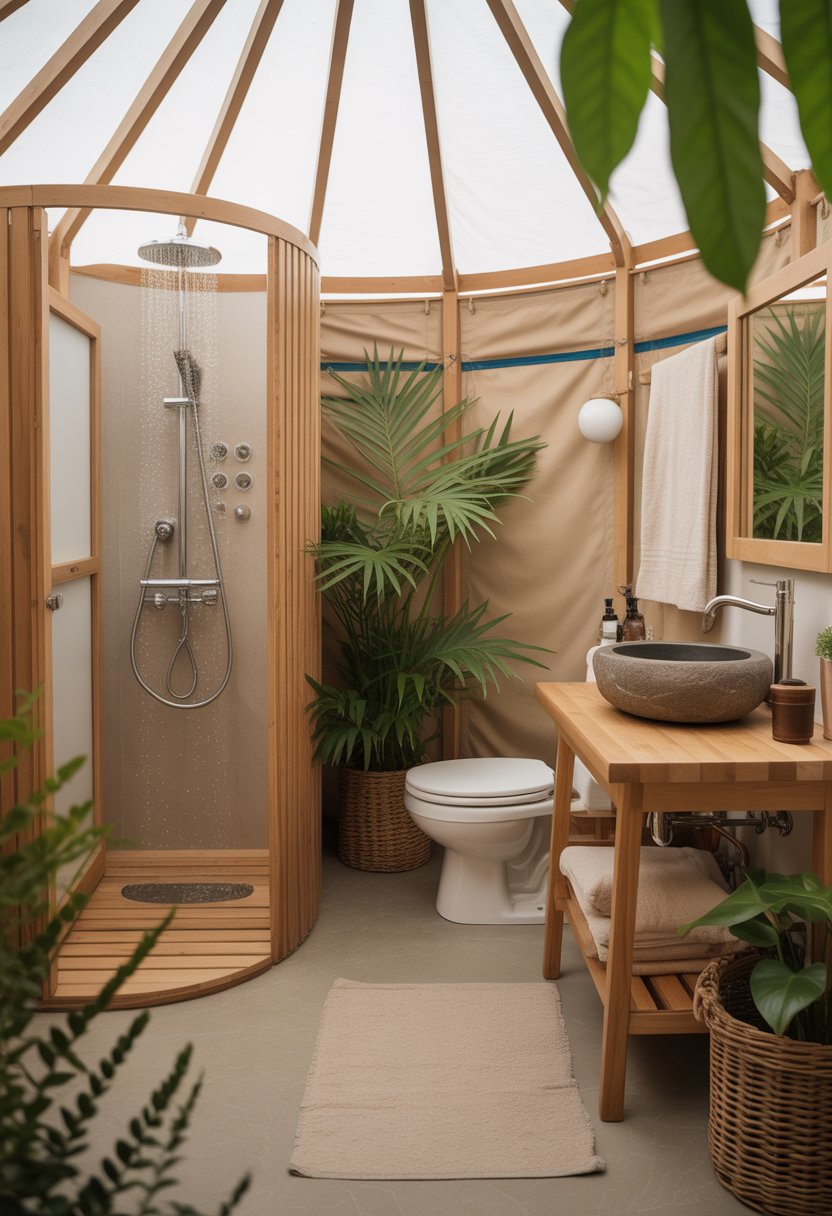
Making a yurt bathroom both comfortable and sustainable often means careful choices in materials, fixtures, and temperature management. Prioritizing eco-friendly products and proper insulation creates a healthier and more efficient space.
Eco-Friendly Materials and Fixtures
Selecting green building materials helps reduce the bathroom’s environmental impact. Bamboo, reclaimed wood, and other renewable options work well for floors or counters. For walls, recycled tiles or sustainably sourced stone add character and strength.
Fixtures designed to save water are especially important in a yurt. Low-flow toilets and water-saving showerheads limit waste without sacrificing function. These fixtures not only help conserve water but also lower utility costs. Installing an on-demand water heater ensures hot water while using less energy.
To further increase sustainability, choose nontoxic paints and finishes. Place a small recycling bin in the bathroom for paper packaging or toiletry containers. Sourcing products locally reduces transportation emissions and supports nearby businesses.
Heating and Insulation Tips
A yurt’s round shape and simple walls can create challenges for maintaining steady bathroom temperatures. Insulating the walls and floor with sheep wool or rigid foam helps keep warmth inside during cold weather and blocks summer heat. Use moisture-resistant insulation to prevent mold and mildew.
For warmth, consider electric radiant floor heating or a small, energy-efficient wall heater. These options provide consistent heat without using much space or energy. Install a quality ventilation fan to manage humidity and stop condensation from damaging the structure.
Adding a thick, waterproof bath mat further blocks cold from the floor. Weatherstripping around doors and windows also helps prevent drafts and maintain a comfortable temperature year-round.
Frequently Asked Questions
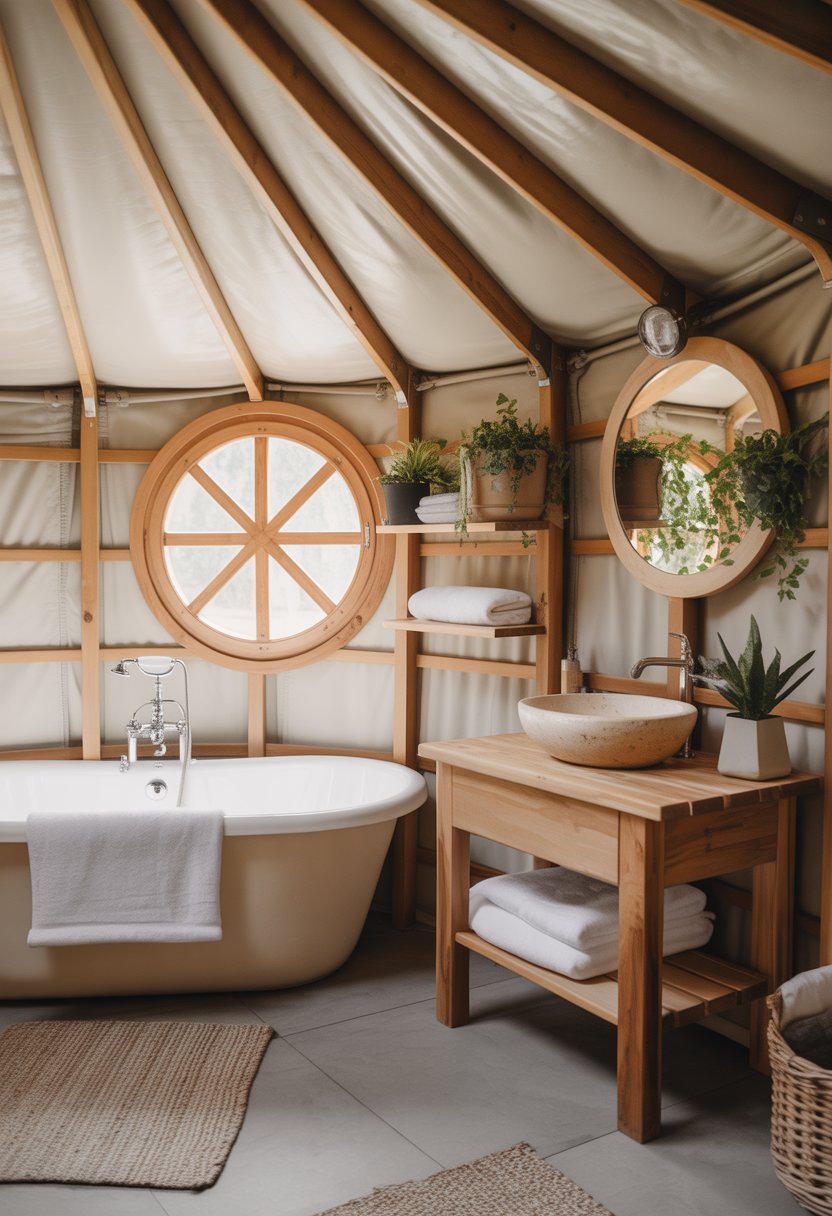
Yurt bathrooms need special attention for plumbing, layout, and ventilation because yurts have minimal fixed infrastructure. Creative space-saving ideas, efficient water use, and controlling moisture are essential in making the space work.
How can I incorporate plumbing into a yurt for bathroom facilities?
Plumbing for a yurt bathroom often comes up through the floor into the bath area. Pressurized water can be supplied with well, cistern, or city hookups. Wastewater drains must run to a septic tank, sewer, or composting system.
Pipes should be insulated in cold climates to prevent freezing. When local codes allow, waterless systems, such as composting toilets, can reduce plumbing needs.
What are some space-saving bathroom designs suitable for a yurt?
Corner showers and compact sinks fit small footprints well. Installing a bathroom along a curved wall helps preserve the yurt’s round shape. Pocket doors or curtains take up less space than swinging doors.
A freestanding bathtub can double as both a shower and tub area. Combining storage into vertical spaces helps reduce clutter in tight quarters.
Can I install a full shower in a yurt bathroom, and what are the best practices?
A full shower can fit in a yurt bathroom if planned carefully. Use lightweight and water-resistant materials for walls and floors. Prefab shower kits are easy to install and minimize leaks.
Make sure the shower area drains well and is sealed properly. An overhead skylight above the shower can increase natural light without taking up extra wall space.
What are the most efficient water heating options for a yurt bathroom?
Electric tankless water heaters and propane on-demand units both work well for yurts because they save space and provide hot water only when needed. Solar water heaters are also possible if the yurt gets plenty of sun.
Insulate pipes and heaters to cut down on heat loss and reduce energy use. Choose a unit sized for low-flow fixtures to maximize efficiency.
How do you ensure proper ventilation in a yurt bathroom to prevent moisture issues?
Install an exhaust fan to move moist air outside. Down-draft vents through the floor or out the wall are common methods. Openable windows or the yurt’s dome skylight also help.
Good ventilation prevents mold, mildew, and water damage. Keep vents and fans clear of blockages for the best results.
What type of toilet solutions are recommended for yurt bathrooms?
Composting toilets are popular for off-grid yurts. They reduce water use and don’t need a sewer line. Standard flush toilets are possible if you have a water source and septic system.
Incinerating toilets offer another waterless solution, though they require electricity or fuel. Choose the toilet that best fits the site’s needs and code requirements.


