Tiny Bathroom Smart Space-Saving Ideas: 7 Practical Solutions That Work
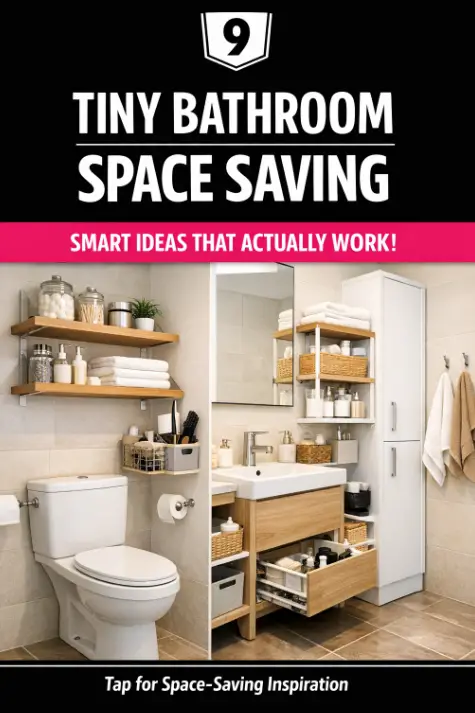
Small bathrooms often feel tight, cluttered, and hard to use. With the right approach, they can support daily routines and still look clean and calm. Smart space-saving ideas help small bathrooms feel organized and open without adding square footage.
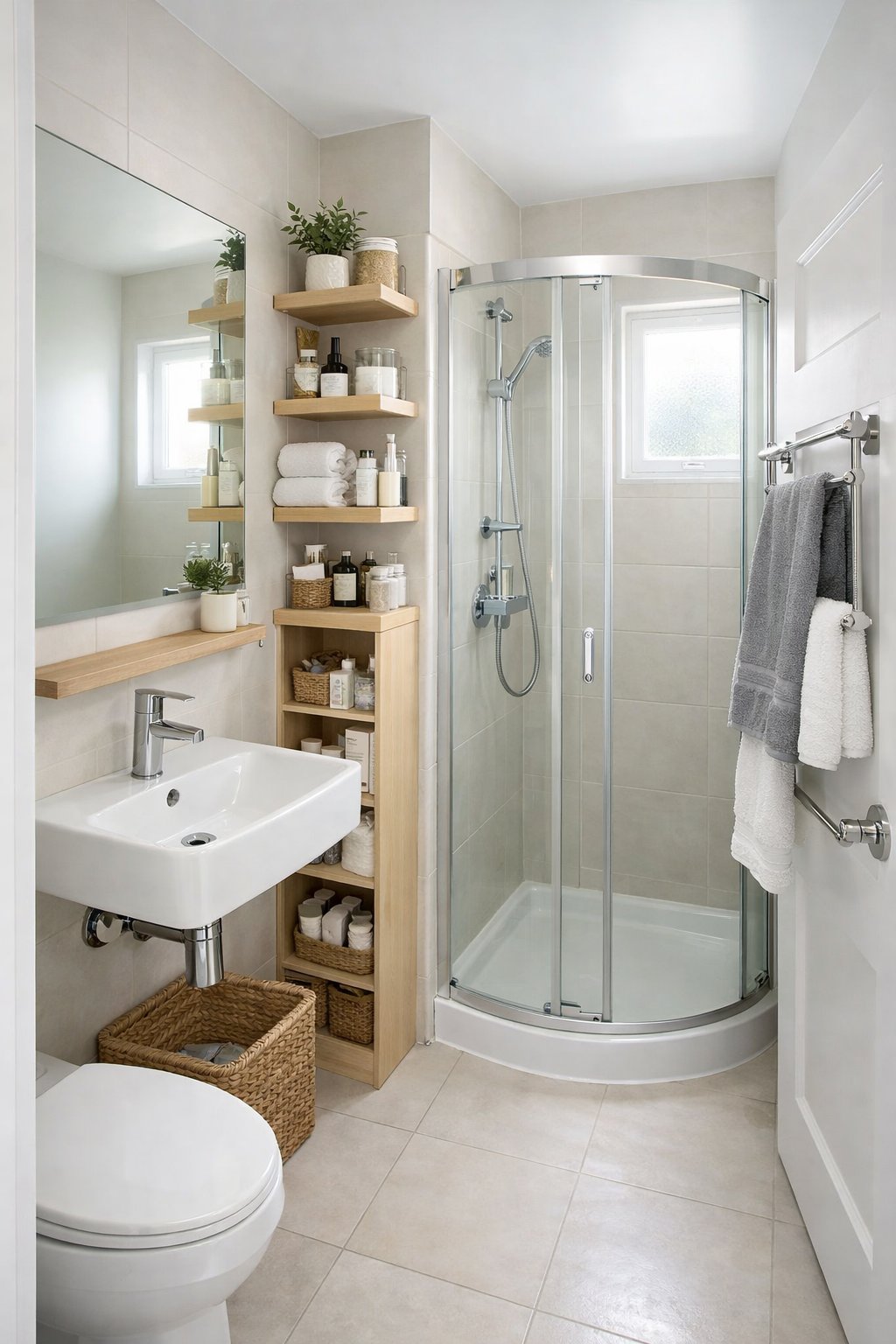
This article explores how thoughtful layout choices, built-in storage, and visual balance improve function in limited space. It also explains how basic design rules and better lighting choices support comfort and ease in a tiny bathroom.
1) Wall-mounted sink with integrated storage
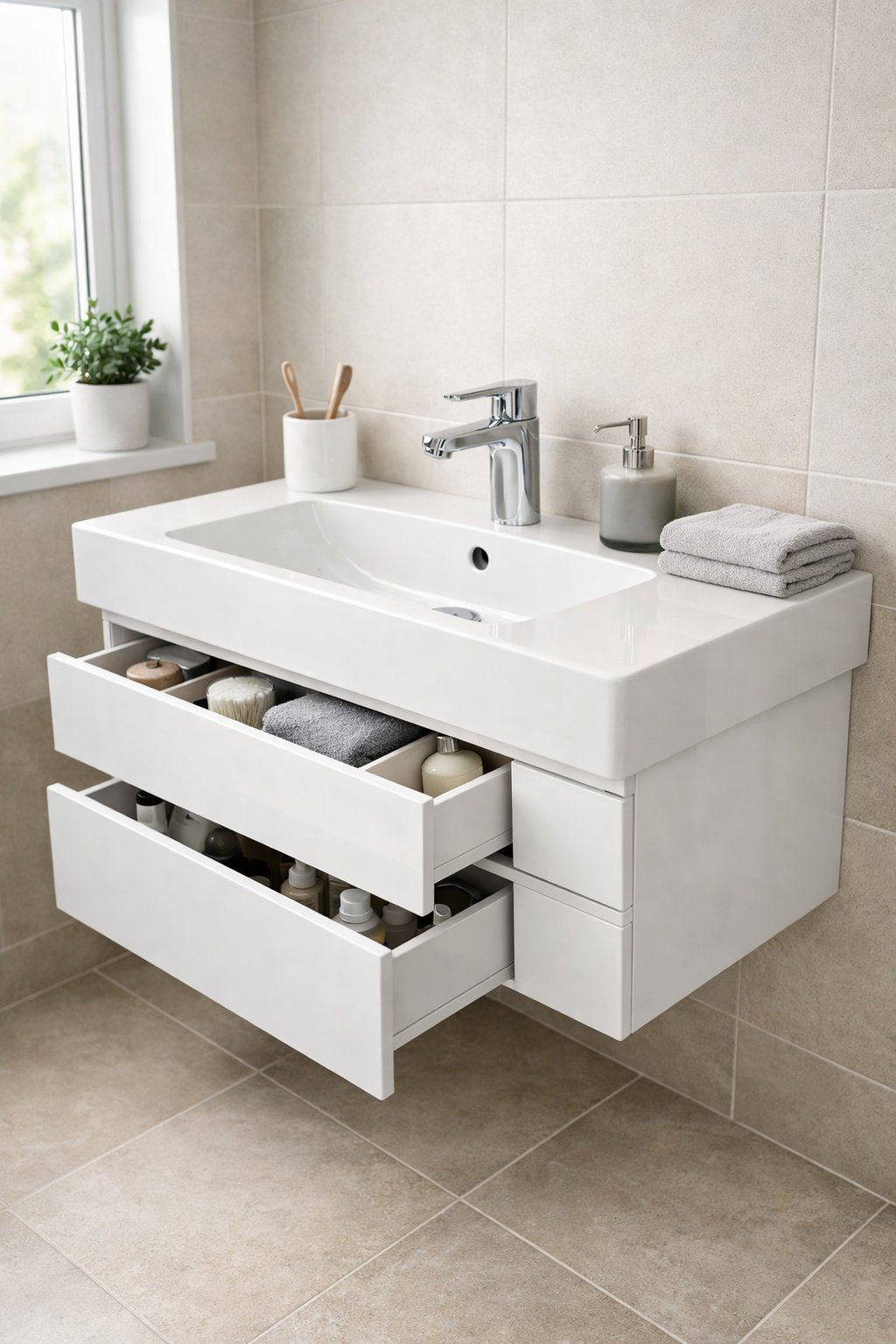
A wall-mounted sink frees floor space and improves movement. Integrated shelves or drawers keep daily items close without extra furniture.
These sinks work well in tiny bathrooms and powder rooms. They hold soap, towels, and small supplies while keeping a clean look.
Install height and plumbing matter. Proper placement supports comfort and easy cleaning.
2) Floating vanity with built-in drawers
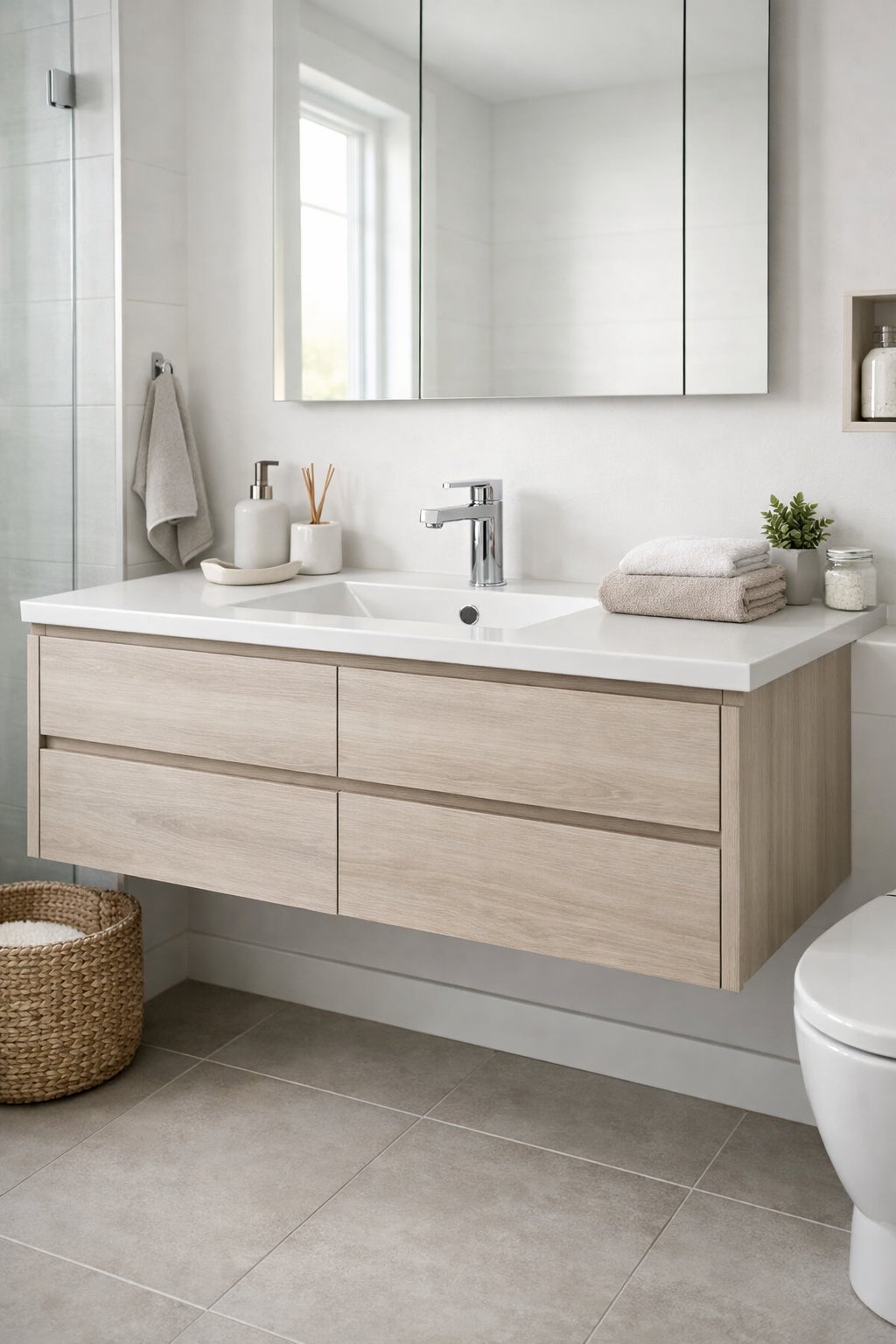
A floating vanity mounts to the wall and keeps the floor clear. It helps a tiny bathroom feel open and easier to clean.
Built-in drawers add storage without adding bulk. Full-extension drawers let users reach items fast and keep small supplies organized.
This design fits tight layouts well. It pairs clean lines with practical storage and works in modern or simple bathrooms.
3) Over-the-toilet shelving unit
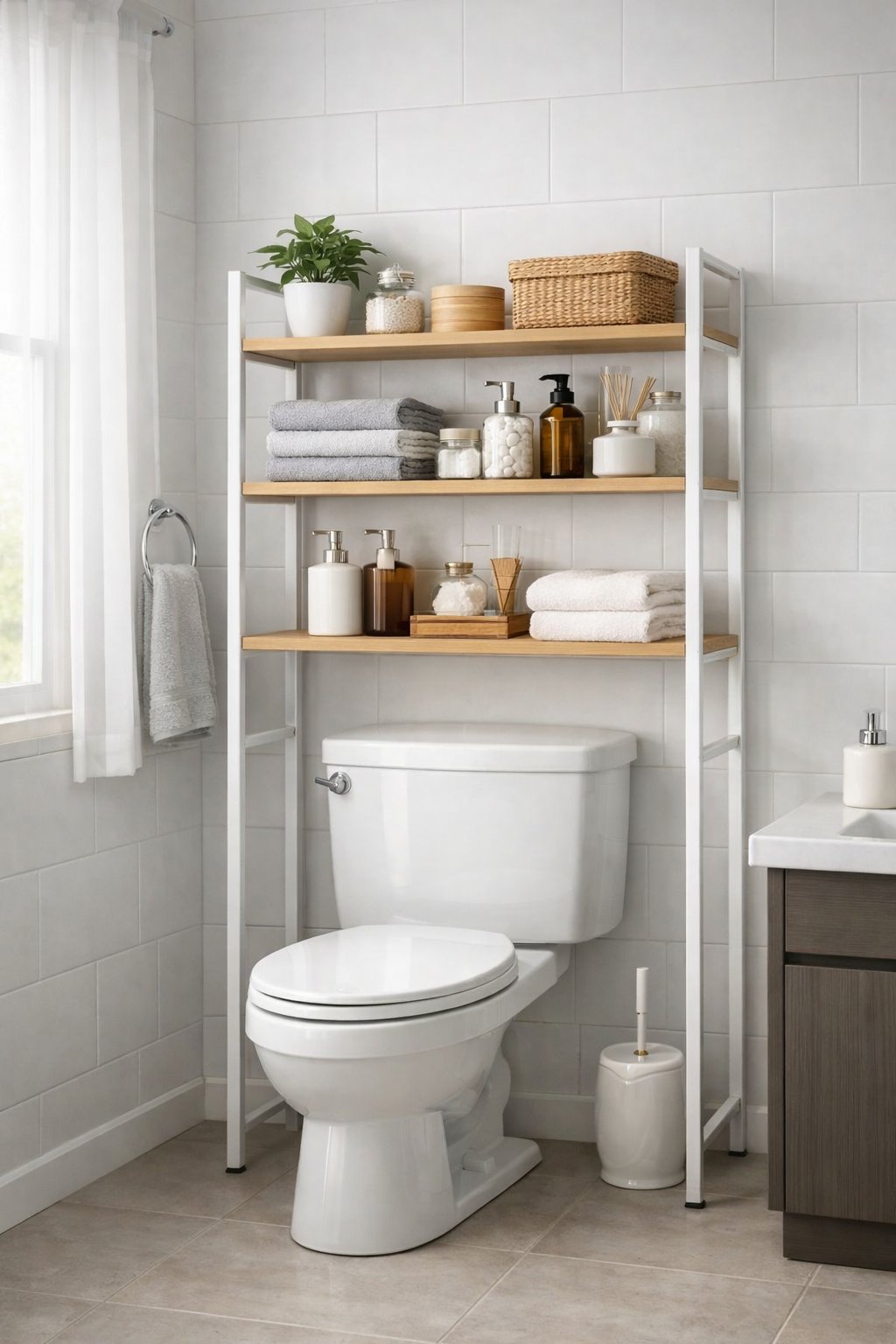
An over-the-toilet shelving unit uses empty wall space above the tank. It adds storage without taking floor space.
Open shelves hold towels, paper, and daily items. Cabinets hide clutter and keep a clean look.
Many units fit small baths and install with basic tools. Wood or metal finishes match most styles.
Adjustable shelves help avoid pipes and flush handles.
4) Corner-mounted towel rack
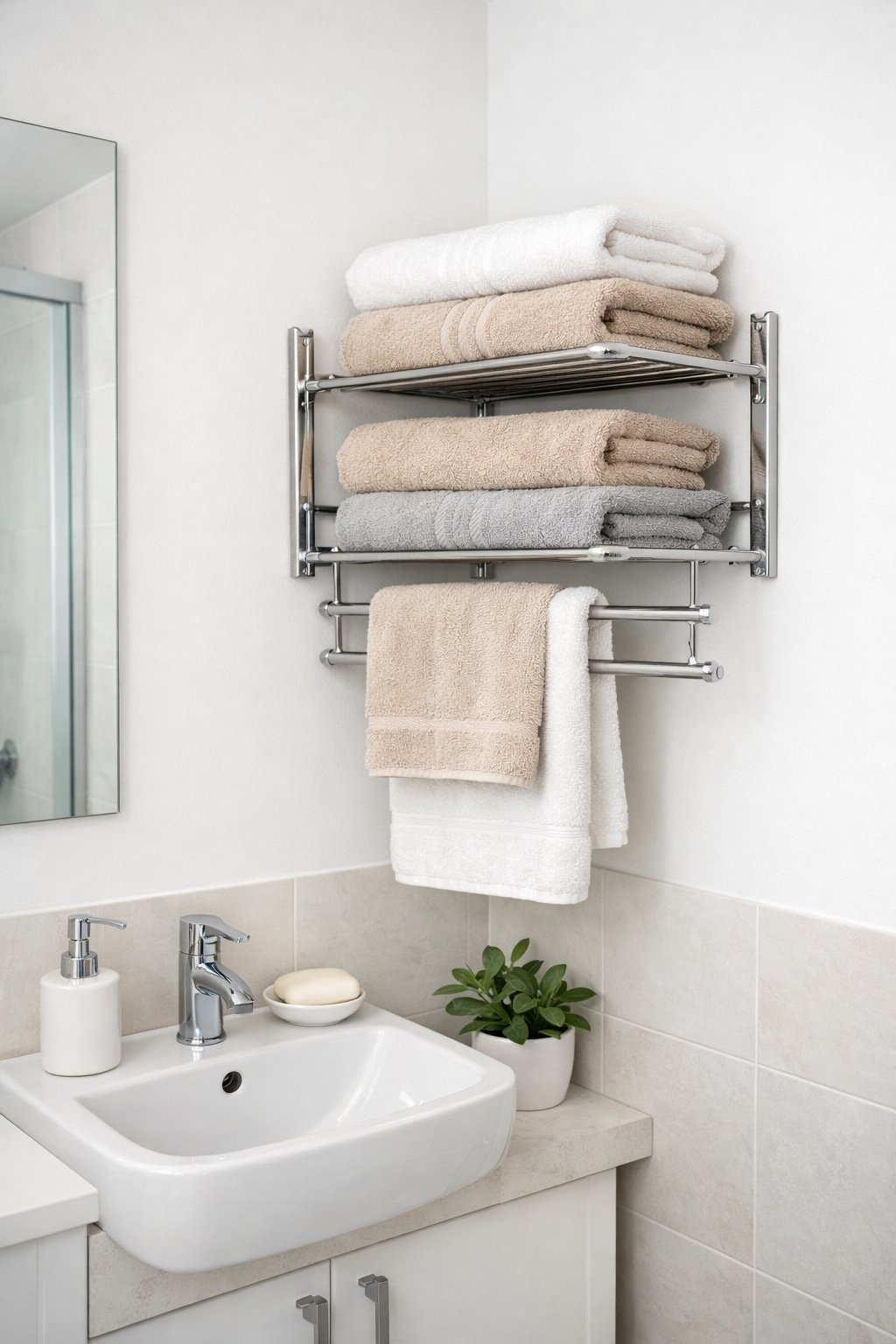
A corner-mounted towel rack uses space that often stays empty. It fits where two walls meet, so it does not crowd the room.
This rack keeps towels off the floor and within easy reach. Many designs mount high on the wall, which helps towels dry faster in tight bathrooms.
It works well near showers or sinks in small layouts. The rack adds storage without changing the room’s footprint.
5) Recessed medicine cabinet with mirrored door
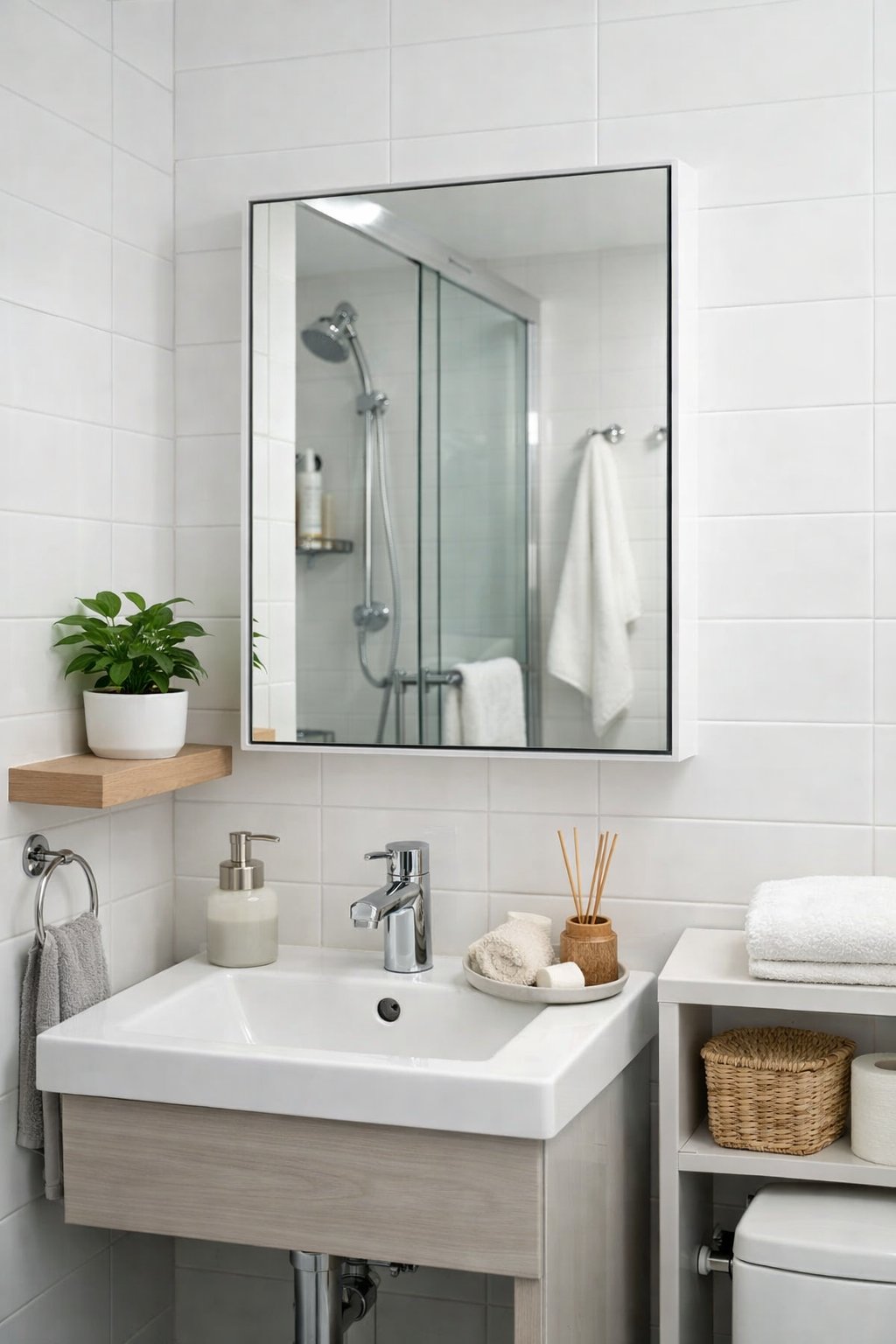
A recessed medicine cabinet sits inside the wall, so it does not stick out. This design saves space and keeps walkways clear in a tiny bathroom.
The mirrored door reflects light and helps the room feel brighter. It also replaces a separate wall mirror.
Many models fit between wall studs and include adjustable shelves. Some offer surface-mount options when recessing is not possible.
6) Sliding bathroom door to save floor space
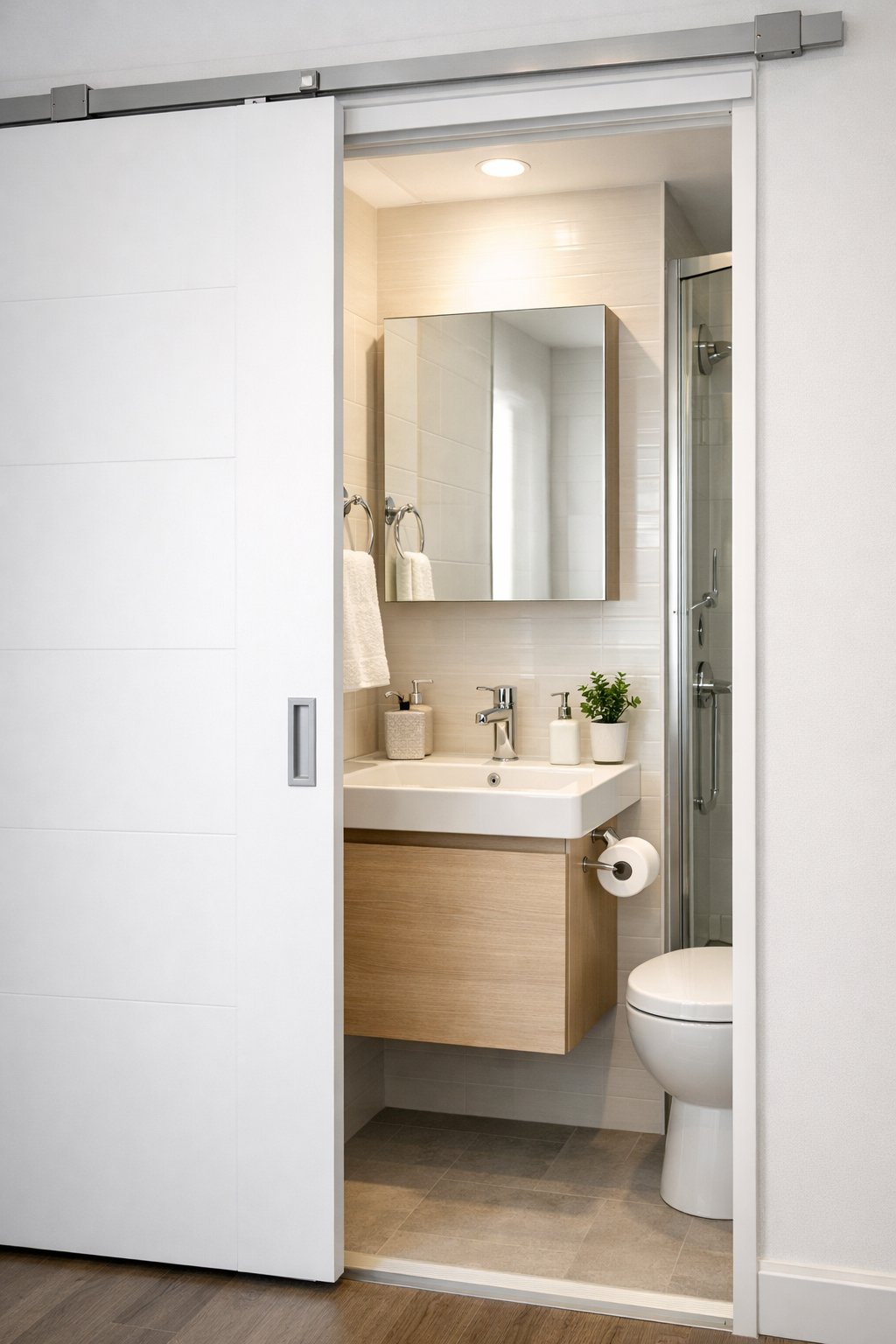
A sliding bathroom door removes the swing space of a standard door. This change frees up floor area for storage, fixtures, or easier movement in a tiny bathroom.
Sliding options include pocket doors, barn-style doors, and track-mounted panels. Each style suits small layouts where every inch matters and helps keep the room feeling open.
These doors work well in narrow bathrooms or tight hallways. Proper installation ensures smooth movement and reliable privacy without crowding the space.
7) Multi-tiered hanging baskets
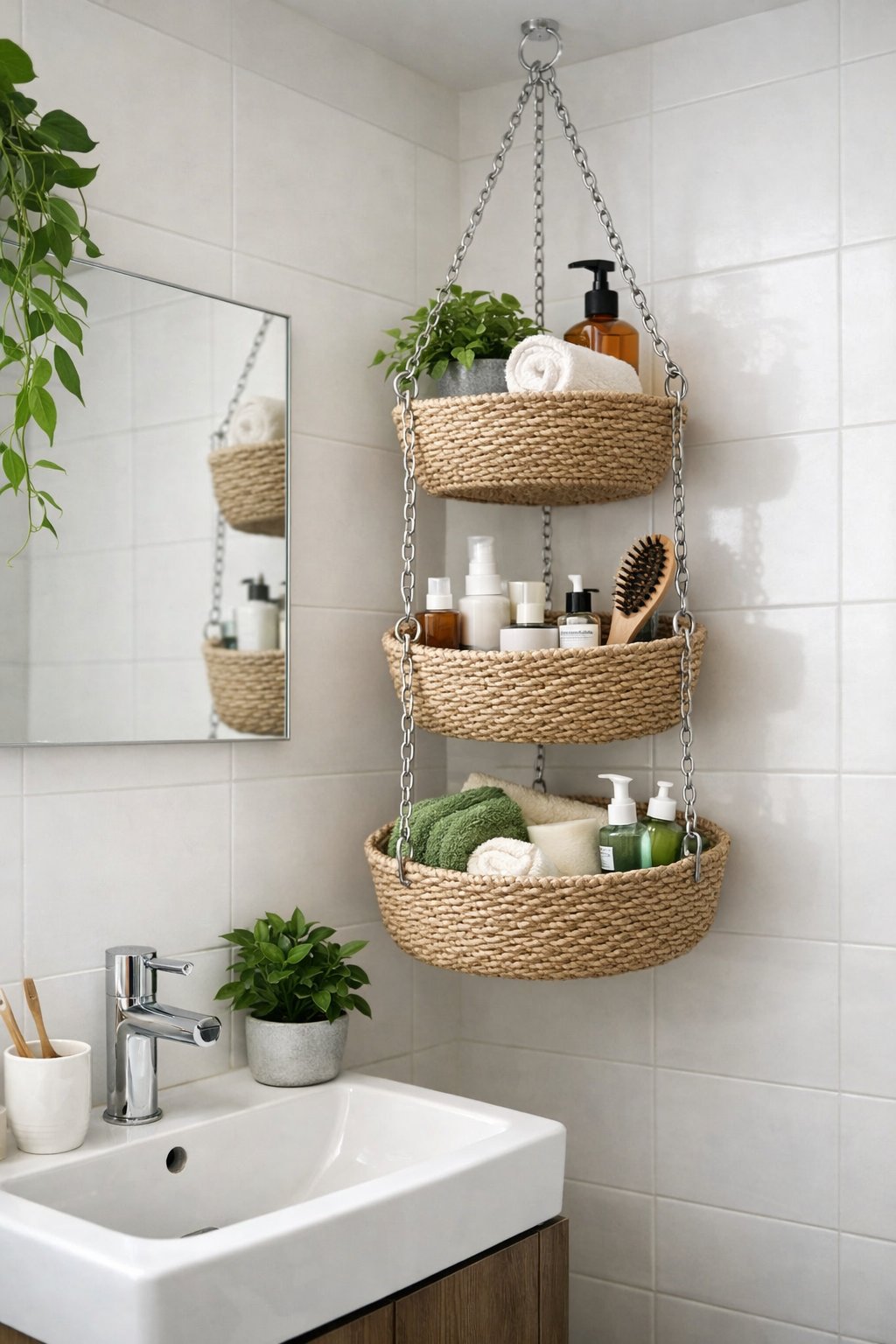
Multi-tiered hanging baskets use vertical space on doors or walls. They keep items off counters and free up room around sinks and toilets.
They organize daily items by level, such as towels, toiletries, and cleaning supplies. People place often-used items at eye level for quick access.
Many designs hang without tools and fit small gaps. Labels help shared bathrooms stay neat and easy to use.
Fundamental Principles of Small Bathroom Design
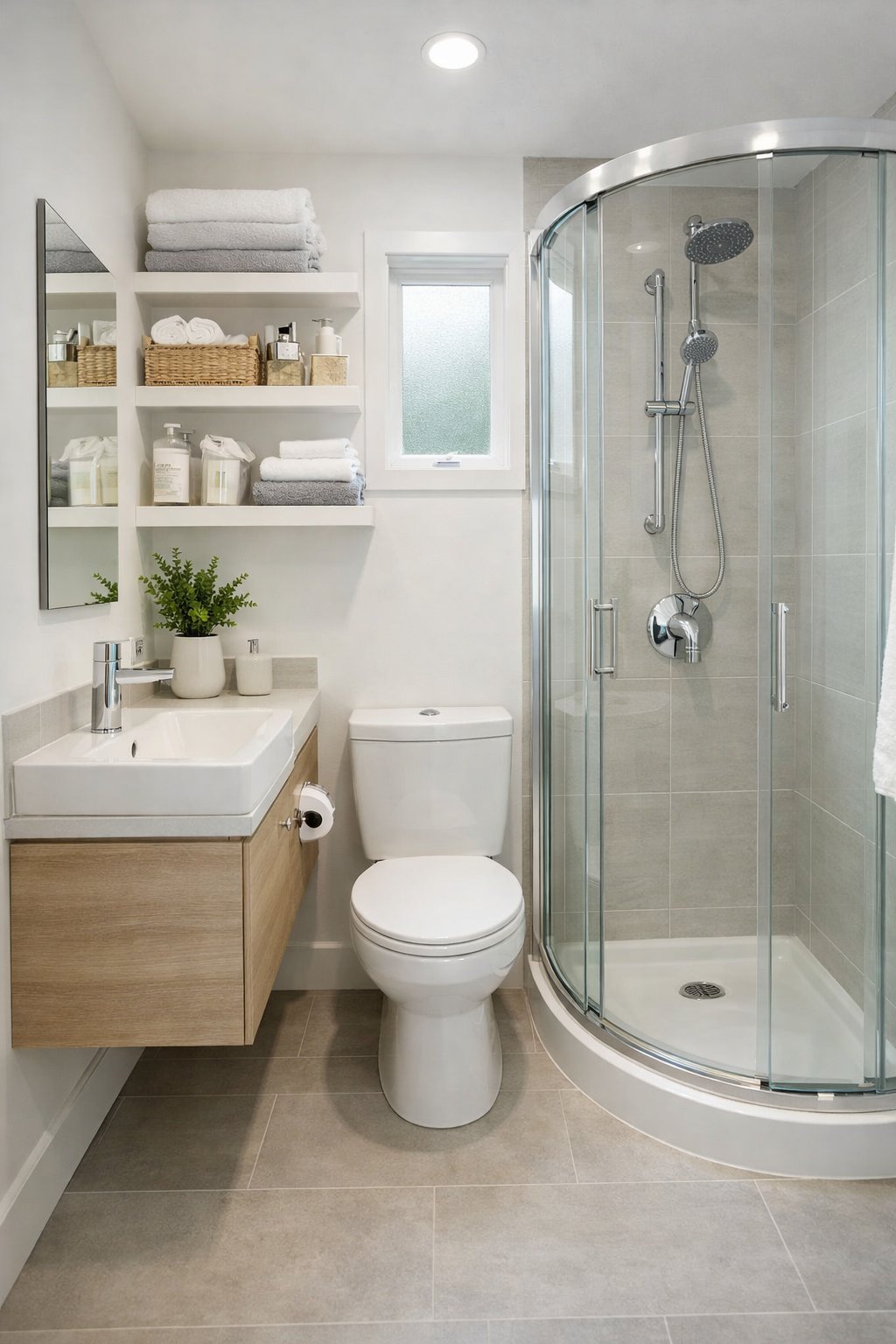
Smart small bathroom design relies on clear layout choices and practical fixture use. Designers focus on how each inch works and how daily tasks stay easy and safe.
Understanding Space Utilization
Effective space use starts with an accurate layout. Designers measure wall length, door swing, and fixture depth before choosing any products. They often place the sink and toilet along one wall to keep a clear path.
Vertical space matters as much as floor space. Wall-mounted cabinets, recessed shelves, and tall mirrors reduce clutter while keeping items within reach. Light colors and reflective surfaces help the room feel open without adding bulk.
| Design Choice | Space Benefit |
|---|---|
| Wall-mounted sink | Frees floor area |
| Pocket or sliding door | Removes door swing |
| Large mirror | Improves light spread |
Designers avoid oversized fixtures. Compact toilets and narrow vanities fit better and leave room to move.
Prioritizing Functionality Over Aesthetics
Function leads every design choice in a tiny bathroom. Fixtures must support daily use before style enters the plan. A shower with a clear glass panel works better than a tub in most small layouts.
Storage stays simple and reachable. Open shelves near the sink hold daily items, while closed cabinets hide cleaning supplies. Designers avoid deep drawers that block movement.
Safety also plays a role. Non-slip floors, rounded corners, and good lighting reduce risk in tight spaces. Style still matters, but it follows function. Clean lines, simple tile, and basic finishes keep the room easy to maintain and use.
Enhancing Visual Space and Lighting
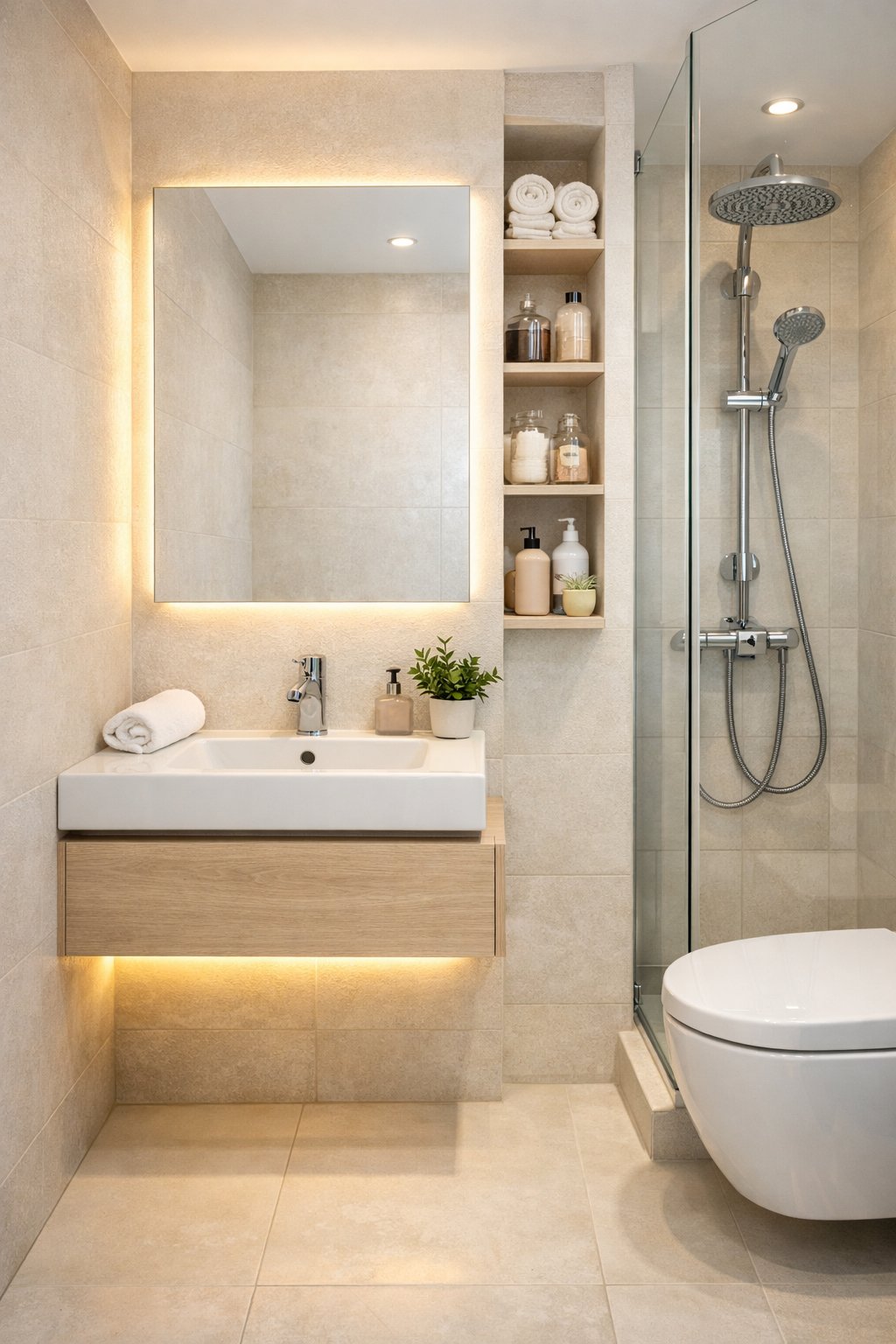
Smart use of mirrors, glass, and light can make a tiny bathroom feel larger and easier to use. Clear sight lines and balanced lighting reduce shadows and visual clutter.
Using Mirrors and Glass Elements
Mirrors expand visual space by reflecting light and surfaces. A large wall mirror above the sink works better than several small mirrors. It creates one clean reflection instead of broken views.
Frameless mirrors keep edges simple and reduce visual noise. Medicine cabinets with mirrored fronts add storage without adding bulk. They keep daily items out of sight.
Glass elements also help. A clear glass shower door opens the room more than a curtain or frosted panel. It allows the eye to travel across the full space.
Best choices for small bathrooms:
- Wall-to-wall mirrors over vanities
- Frameless glass shower doors
- Clear shelves instead of solid ones
Avoid dark frames and heavy textures. They stop light and make walls feel closer.
Maximizing Natural and Artificial Light
Natural light makes small rooms feel open and clean. If a window exists, keep it clear or use sheer coverings. Avoid heavy blinds that block light.
Artificial lighting should remove shadows. One ceiling light rarely works alone. Use layers to brighten key areas.
| Area | Light Type | Purpose |
|---|---|---|
| Ceiling | Flush or recessed | Even room light |
| Vanity | Side sconces | Reduce face shadows |
| Shower | Wet-rated light | Improve safety |
Choose bright, neutral bulbs. White walls and light tile reflect light and boost brightness without extra fixtures.