7 A Frame Cabin Ideas for Stylish and Functional Small Homes
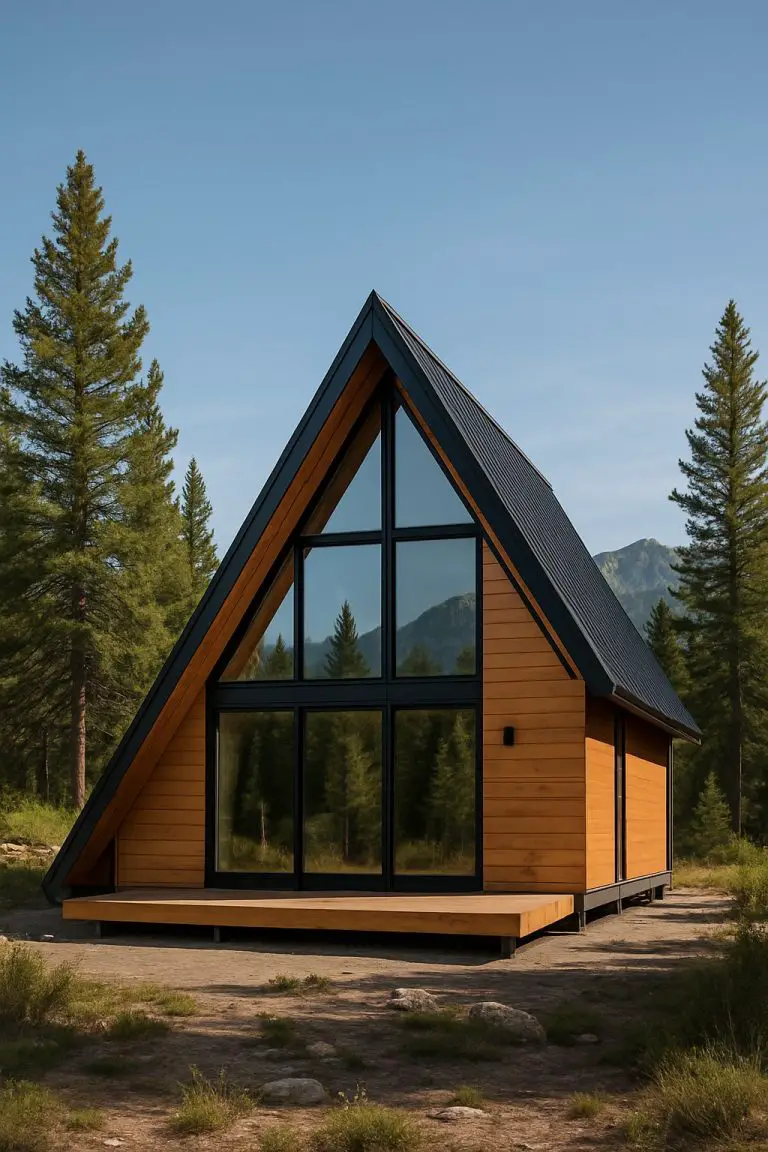
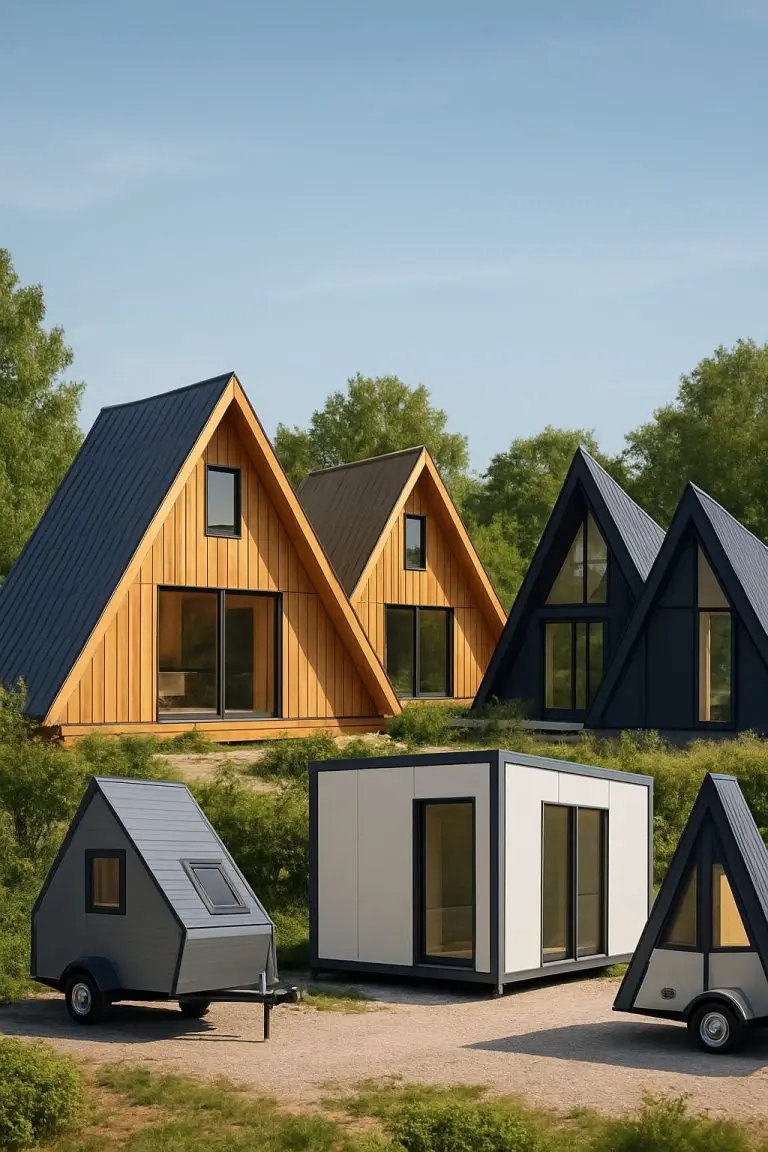
A-frame cabins are a popular choice for those looking to build a simple and stylish retreat. Their steep, triangular design offers a unique look and efficient use of space. Many people appreciate how the shape naturally sheds snow and rain, making it practical in various climates.
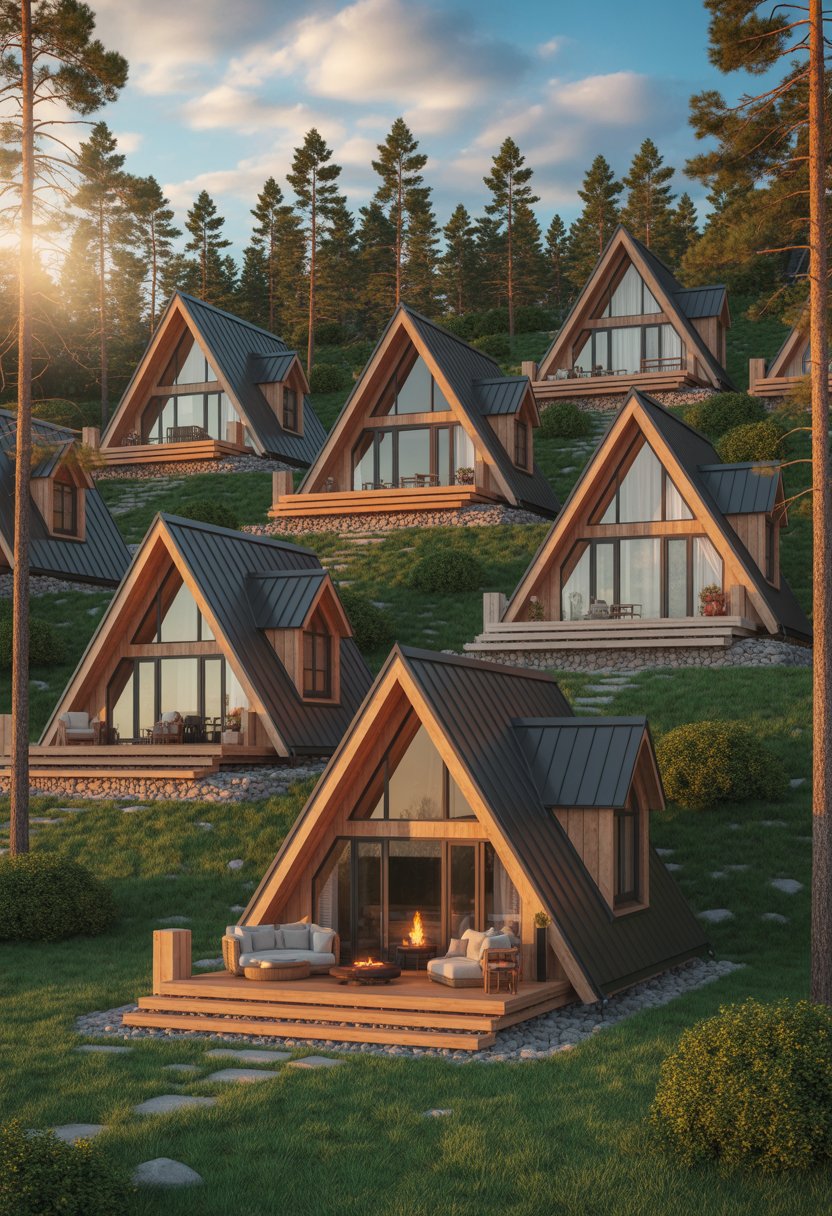
This article presents seven different A-frame cabin ideas to inspire anyone interested in this architectural style. Each idea highlights various ways to adapt the basic design to fit different needs and tastes while keeping the charm that makes A-frame cabins special.
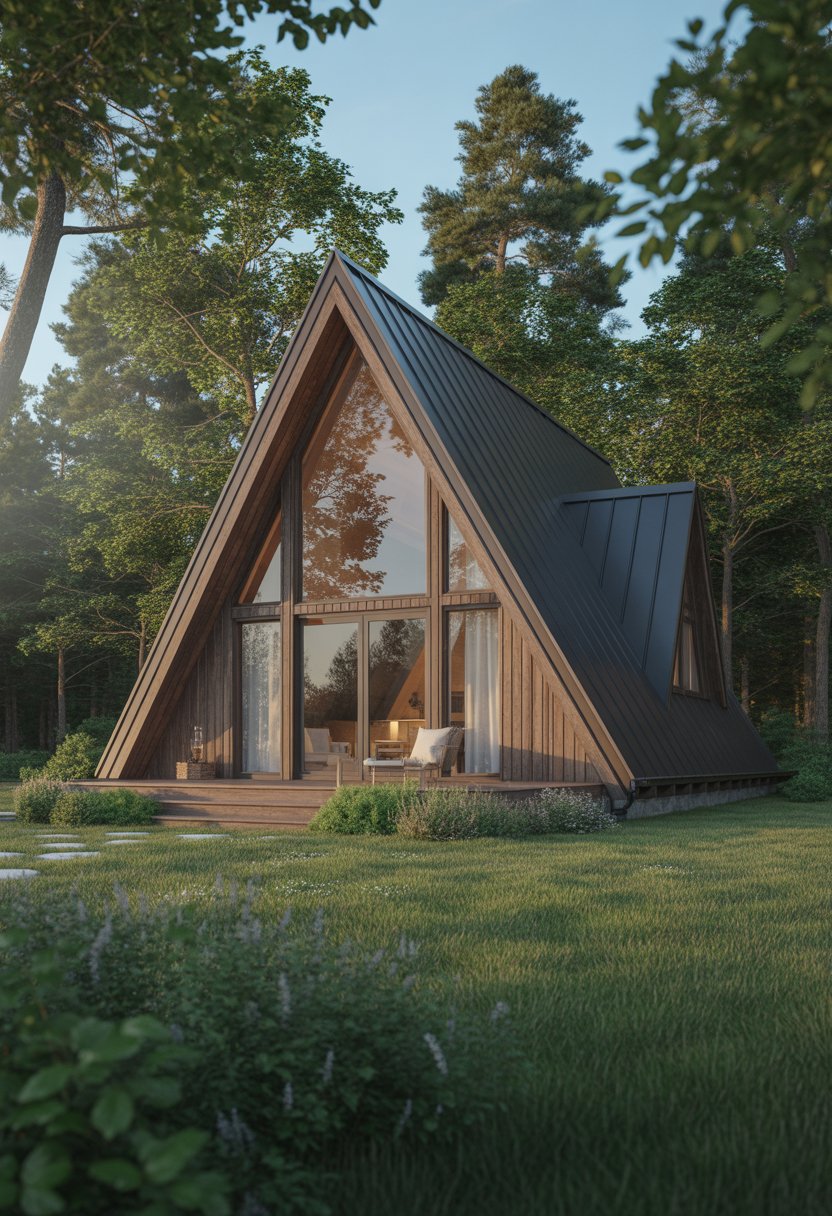
1) Floor-to-ceiling windows for natural light and views
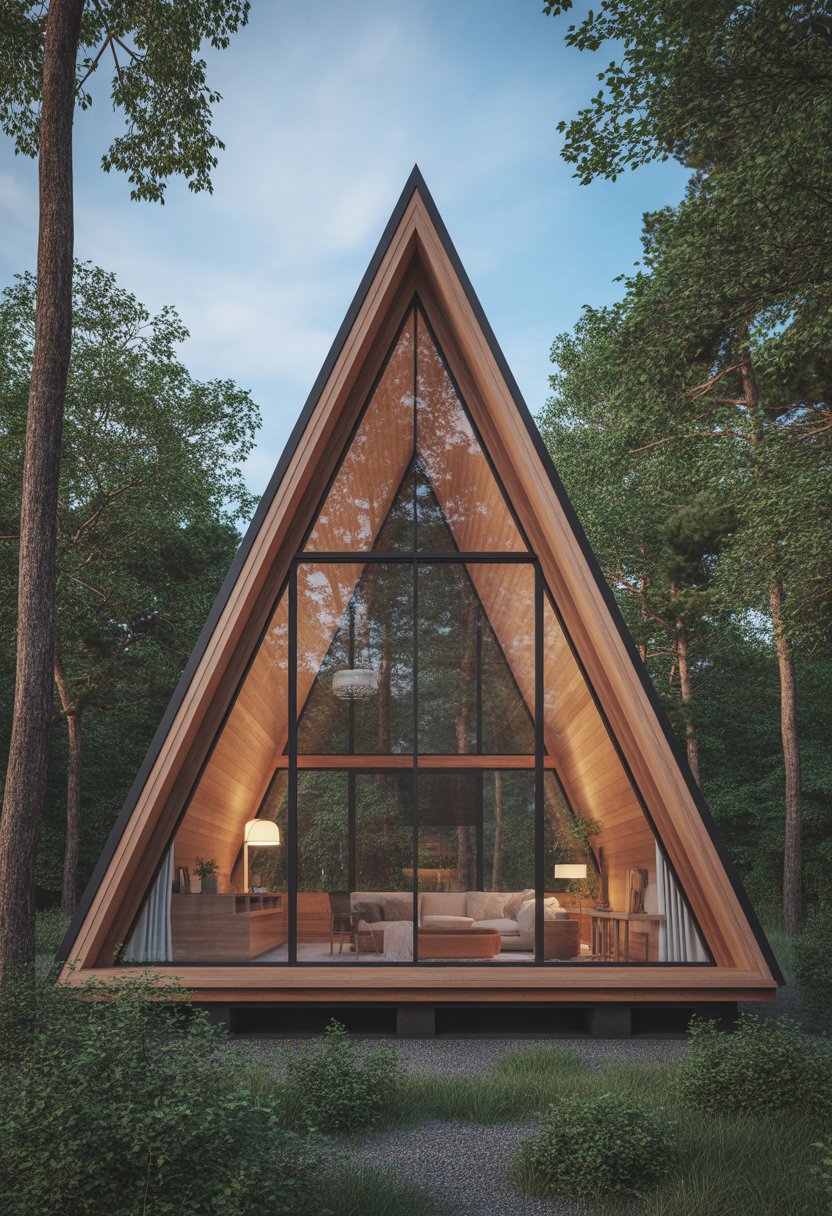
Floor-to-ceiling windows bring in plenty of natural light, making the cabin feel open and bright. They also offer wide views of the surroundings, connecting the indoors with nature.
These windows help create a peaceful atmosphere by letting in fresh air when opened. Proper insulation can keep the cabin comfortable year-round.
2) Open floor plan to maximize space and flexibility
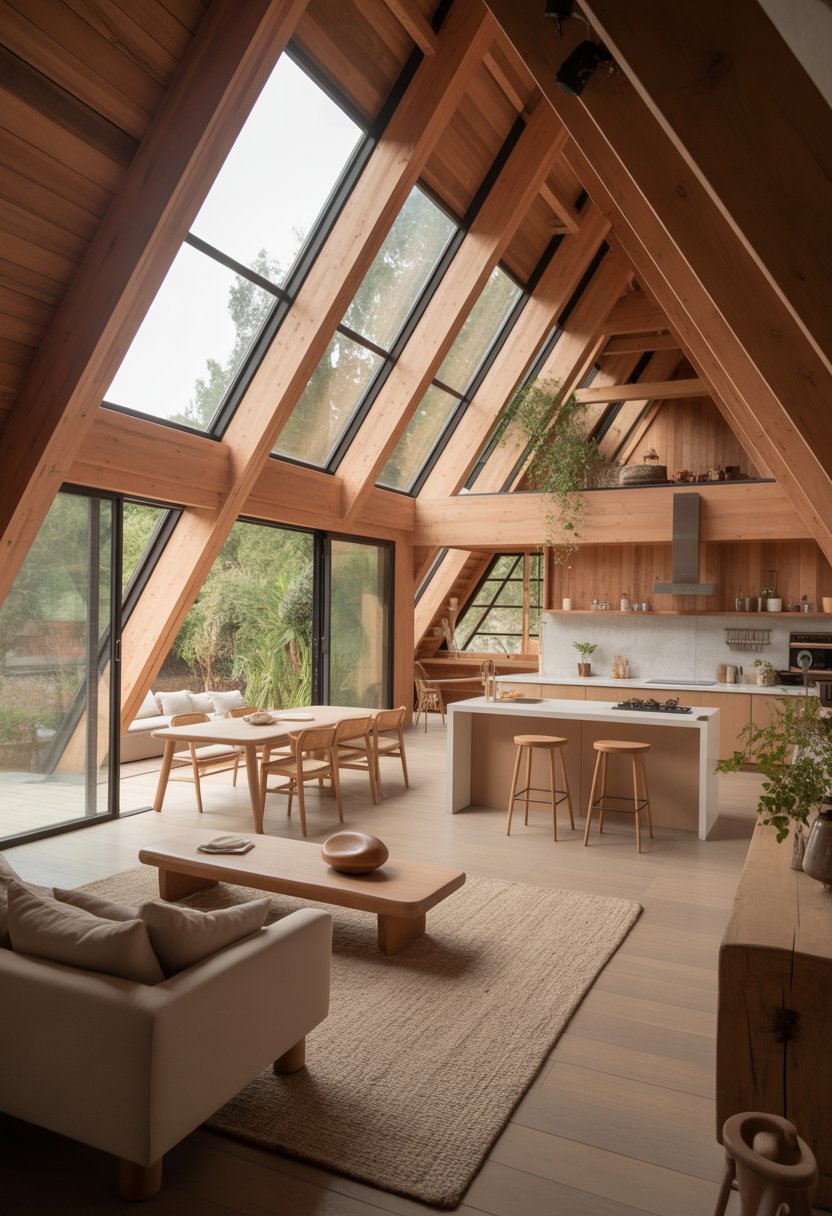
An open floor plan in an A-frame cabin creates a spacious main area. This design connects the kitchen, living, and dining spaces without walls. It allows for easy movement and flexible use of space. Natural light flows freely, making the cabin feel larger and more inviting.
3) Vaulted ceilings for an airy, spacious feel
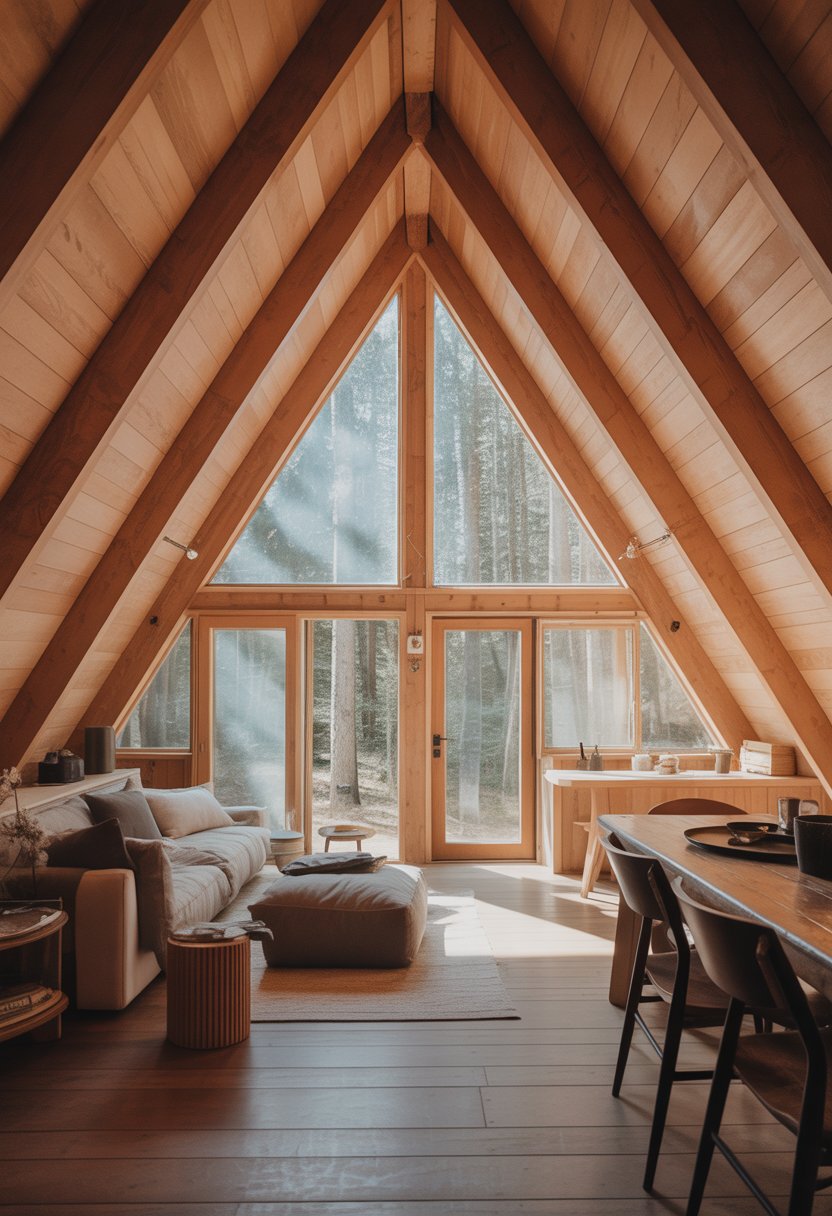
Vaulted ceilings open up the space and make rooms feel larger. They let in more natural light, which brightens the area.
In A-frame cabins, these ceilings highlight the structure’s shape and create a modern, open look. Light colors on the ceiling can enhance the airy feeling.
4) Rustic wood interiors to enhance cabin charm
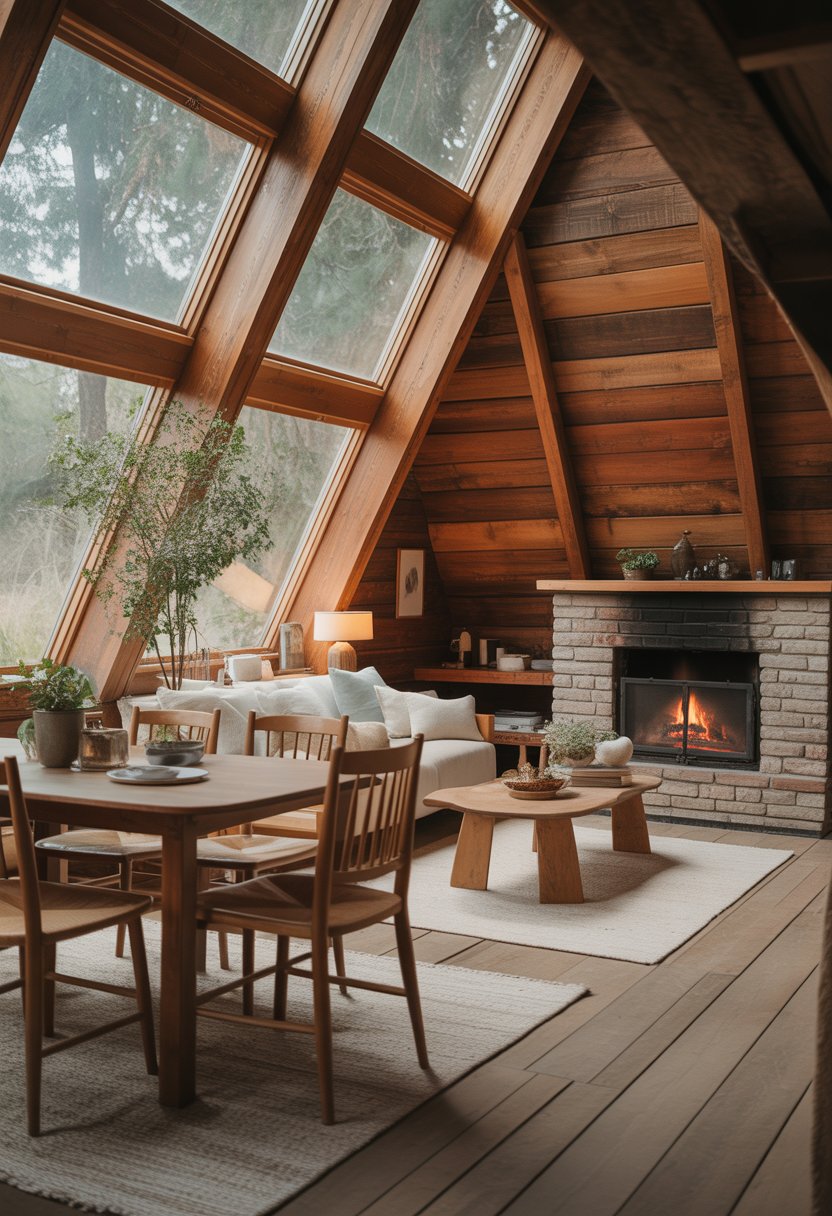
Rustic wood interiors use natural wood beams and rough finishes to create a warm, inviting space. This style highlights the cabin’s natural beauty without feeling too polished. Simple, sturdy furniture pairs well with the wood, adding to the cozy and authentic cabin feel.
5) Modern minimalist decor for sleek simplicity
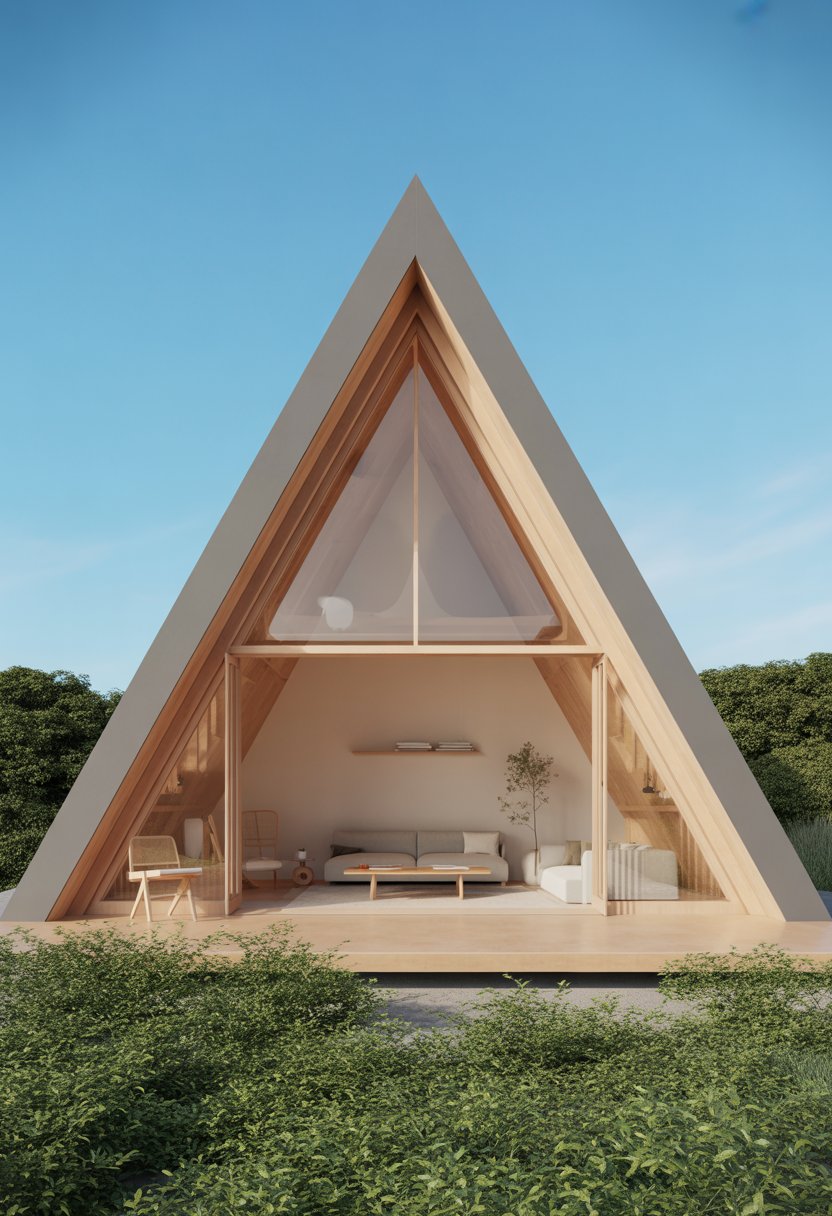
Modern minimalist decor uses clean lines and simple shapes. It helps keep the A-frame cabin feeling open and uncluttered. Natural materials like wood and stone add warmth without overwhelming the space. Light colors and minimal furniture create a calm and inviting atmosphere.
6) Bohemian chic textiles to add color and warmth
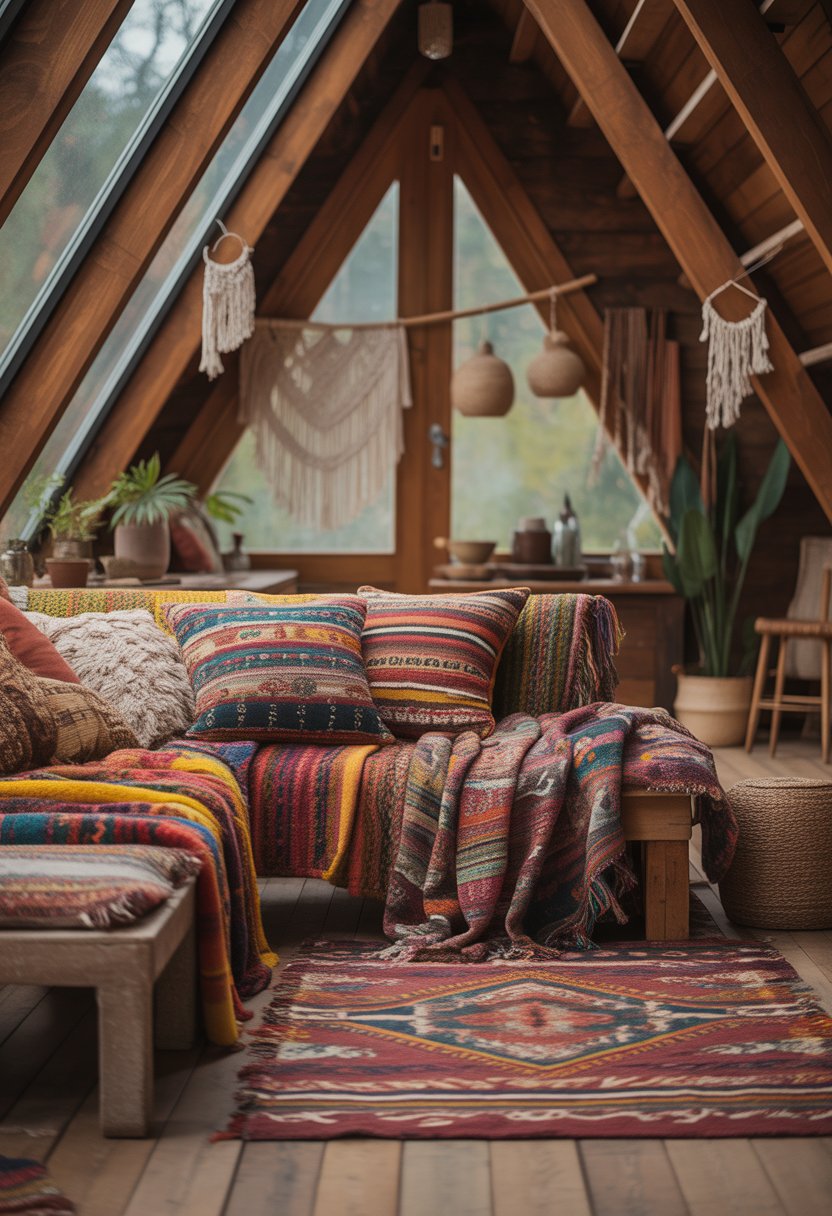
They can use bohemian textiles to bring color and texture into the cabin. Layering rugs, pillows, and throws with vibrant patterns creates a cozy and inviting space. Mixing different fabrics adds warmth and gives the cabin a unique, personal touch.
7) Built-in shelving for efficient storage solutions
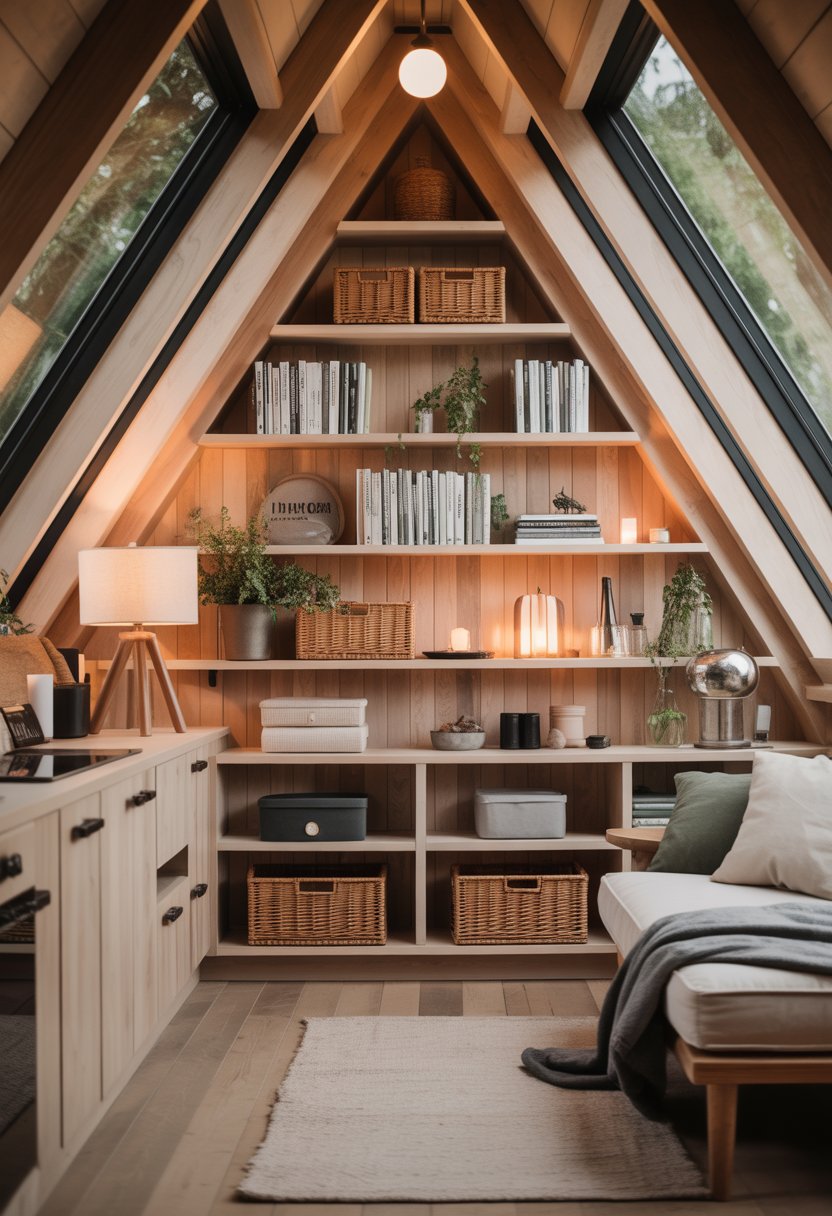
Built-in shelving uses space well, especially in small A-frame cabins. It fits into walls or awkward corners, providing storage without taking up floor space. This approach helps keep rooms organized while maintaining a clean look. It is practical and adds to the cabin’s functionality.
Design Principles for A Frame Cabins
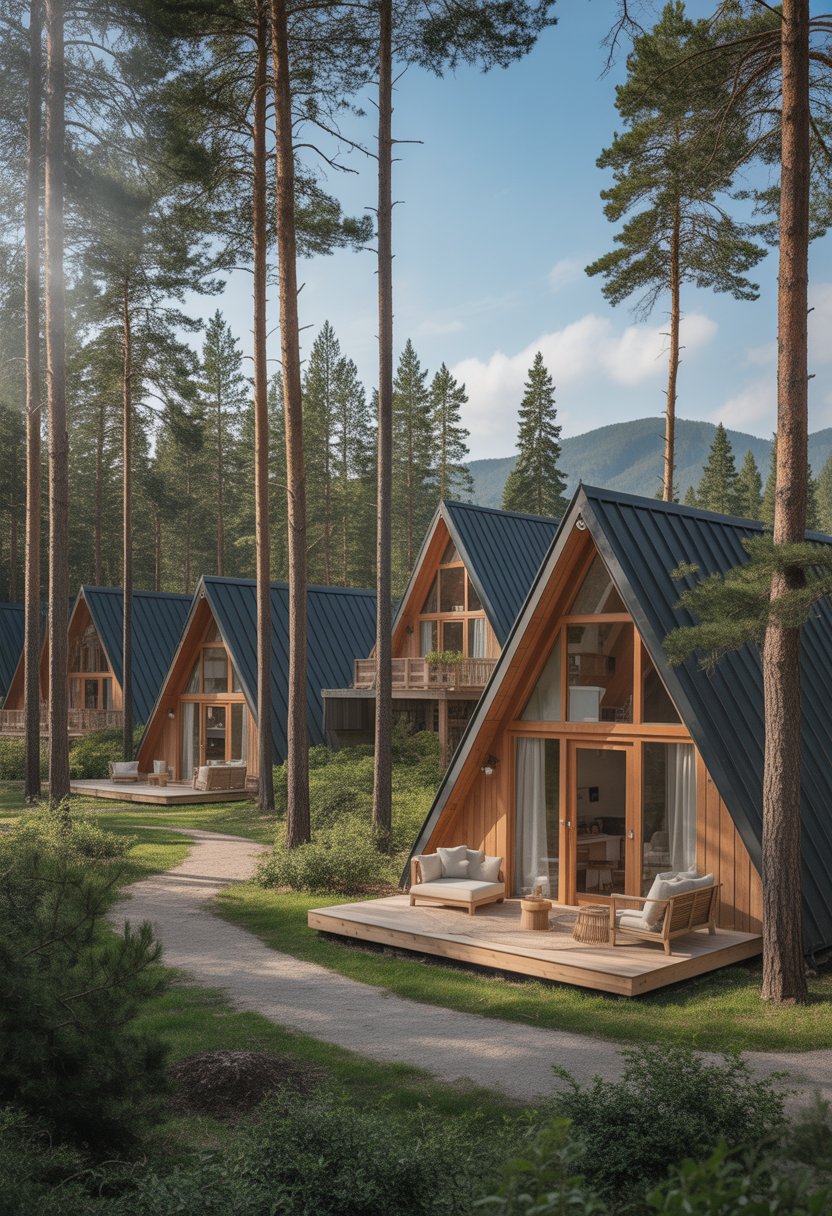
A-frame cabins focus on simplicity and function. Their triangular shape defines many design choices, from light placement to materials. These choices impact comfort, energy use, and durability.
Maximizing Natural Light
Natural light is key in A-frame cabins because of the steep roof and tall walls. Large, floor-to-ceiling windows are common to bring in sunlight and open views. Placing windows on the front and back faces helps sunlight reach deep inside.
Skylights or clerestory windows can add extra light near the peak of the roof. This reduces the need for artificial lighting during the day. It also creates a bright and open atmosphere, making small spaces feel bigger.
Proper window placement helps with passive solar heating too. South-facing windows can capture warmth in cold months, while overhangs or shades block excess heat in summer.
Choosing Sustainable Materials
Sustainability is important when building an A-frame cabin. Materials should be durable, eco-friendly, and energy-efficient. Common choices include reclaimed wood, bamboo, and recycled steel.
Using local materials lowers transportation impact and supports the community. Wood sourced from well-managed forests is renewable and has good insulation properties. Insulated panels for walls and roofs reduce heat loss and improve energy use.
Finishes with low volatile organic compounds (VOCs) improve indoor air quality. Solar panels and rainwater collection systems can also be integrated without disrupting the cabin’s clean design.
Decor and Interior Styling Tips
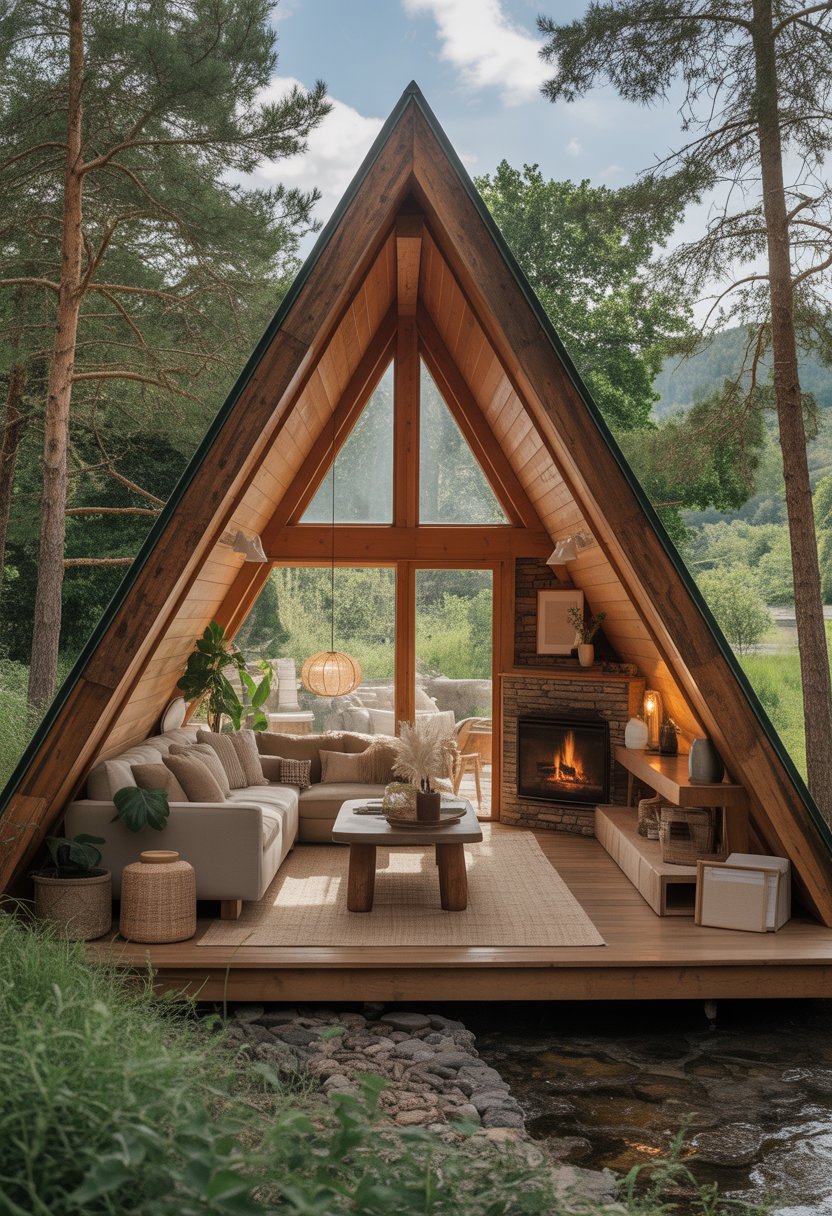
Effective decor and styling in an A-frame cabin focus on using the unique shape to its advantage and blending comfort with style. Maximizing vertical space and choosing the right materials create inviting, practical interiors. Thoughtful touches balance rustic charm with modern design.
Creating Cozy Loft Spaces
Lofts in A-frame cabins often have sloped ceilings and tight spaces. Using low-profile furniture keeps the area open and functional. Simple beds, cushions, or floor seating work well under angled walls.
Warm wood paneling adds a snug atmosphere, while soft lighting like string lights or small lamps creates a calming glow. Adding textiles such as rugs and blankets enhances comfort.
Storage is important; built-in shelves or under-bed drawers fit neatly without crowding the space. Windows or skylights help light the loft and connect it to the outdoors, making the space feel larger and more airy.
Incorporating Modern Rustic Elements
Modern rustic decor combines natural materials with clean lines. Wood and stone bring warmth, while sleek metal fixtures offer contrast. This balance suits the A-frame’s architectural style.
Furniture should be simple and functional. Leather sofas, metal light fixtures, and exposed beams highlight rustic roots without clutter.
Neutral colors like gray, beige, or white allow textures to stand out. Adding green plants introduces life and color. Layering materials — wool throws, linen pillows, rough wood — results in a tactile and grounded space that feels fresh and lived-in.
Frequently Asked Questions
Space can be improved by using open layouts and choosing features that make the cabin feel larger. Design trends often mix natural elements with modern touches. Floor plans vary based on lifestyle needs, while costs can be lowered by material choices and construction methods. Structural safety is key in taller A-frames, and innovative cabins often blend style with functionality.
How can I maximize space in a small A-frame cabin design?
Using an open floor plan helps make small spaces feel bigger and more flexible. Floor-to-ceiling windows add natural light and create a connection with the outdoors. Loft areas can serve as extra storage or sleeping space without taking up the main floor.
What are some modern design trends for A-frame cabins?
Modern designs add minimalist decor and clean lines to the traditional rustic look. Natural materials like wood remain popular but are paired with metal and glass for a sleek contrast. Neutral and earthy tones create warmth without overwhelming the space.
What should be considered when selecting A-frame cabin floor plans?
Floor plans must include vaulted ceilings to keep the space airy. It is important to balance open areas with enough private rooms or storage. Consider how the layout will handle heating and cooling, especially with large windows.
Are there cost-effective strategies for building an A-frame cabin?
Choosing prefab kits or using locally sourced wood can reduce expenses. Building smaller and focusing on essential features lowers costs. Simple designs with minimal custom work often are more affordable.
What structural considerations are important for a three-story A-frame house?
The foundation must support the extra weight and maintain stability. Proper bracing and quality materials help resist wind and snow loads. Each level needs careful planning for safe access and usable space.
What elements define cool and innovative cabin plans?
Smart use of natural light and creative storage solutions stand out. Combining rustic wood interiors with modern materials adds interest. Flexible spaces that adapt for different uses show innovation in cabin design.