Victorian Garden Playhouse Ideas: 7 Inspiring Designs for Timeless Charm
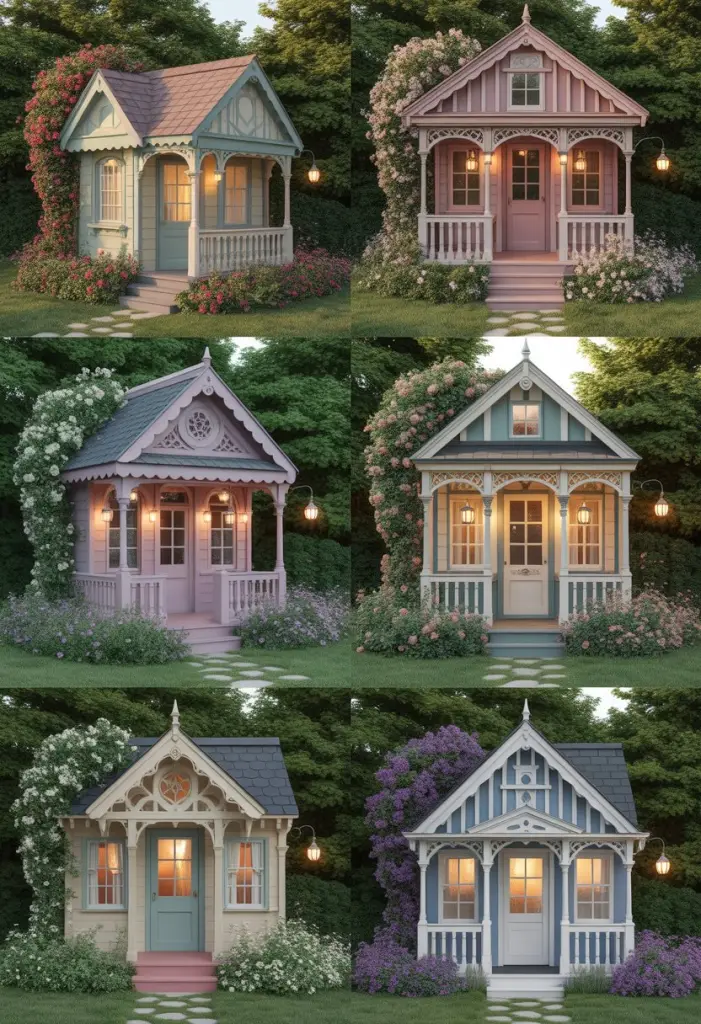
A Victorian garden playhouse blends the charm of 19th-century design with the joy of a backyard retreat. It creates a space where ornate details, natural beauty, and playful architecture come together in a timeless style. It offers a way to combine classic garden elegance with a functional play space that feels both inviting and unique.
From decorative ironwork to climbing roses, every element can contribute to a cohesive and historically inspired setting. The right design choices can make the playhouse feel like a natural part of the garden while still standing out as a focal point. This approach allows both the structure and its surroundings to complement each other beautifully.
1) Ornate wrought iron garden benches

Victorian gardens often feature wrought iron benches with detailed patterns and curved lines.
These benches can include designs such as grapevines, floral motifs, or fan-shaped backs.
They provide durable seating while matching the decorative style of a Victorian playhouse setting.
2) Victorian-style wooden playhouse with turrets
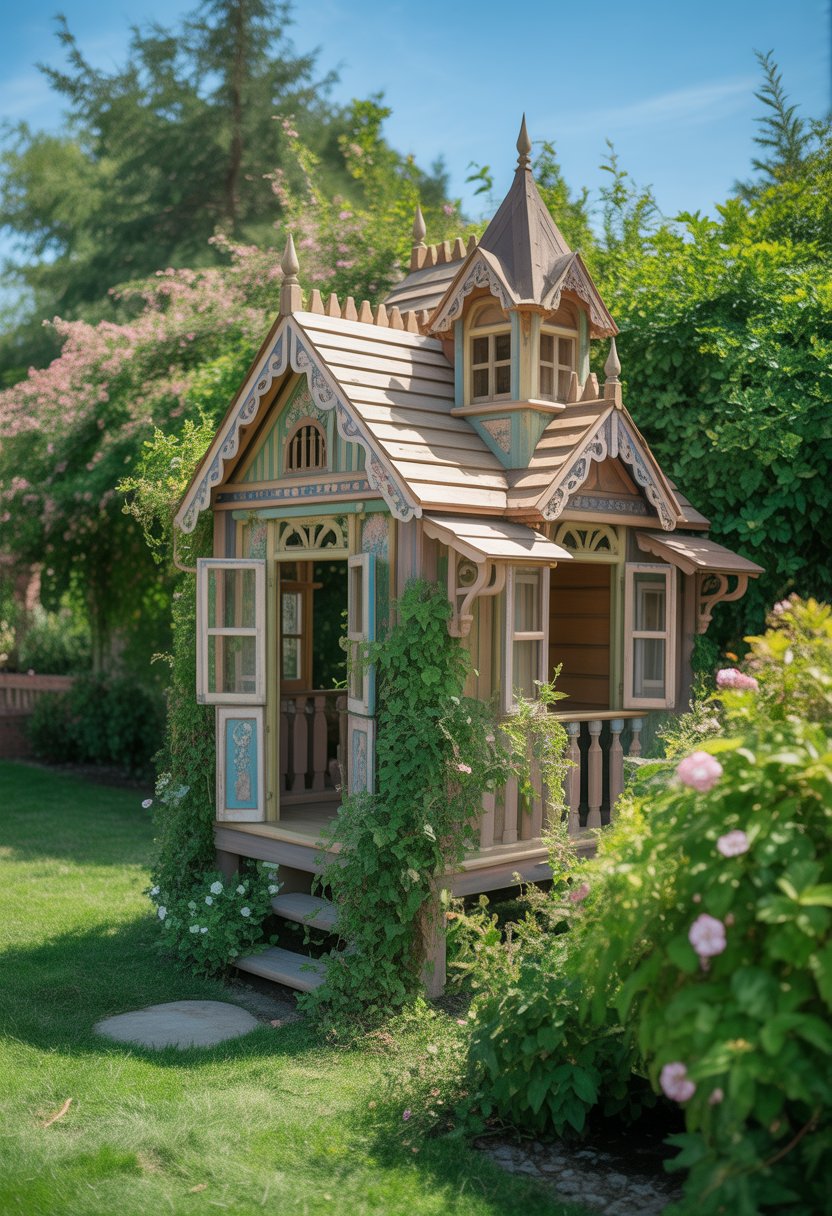
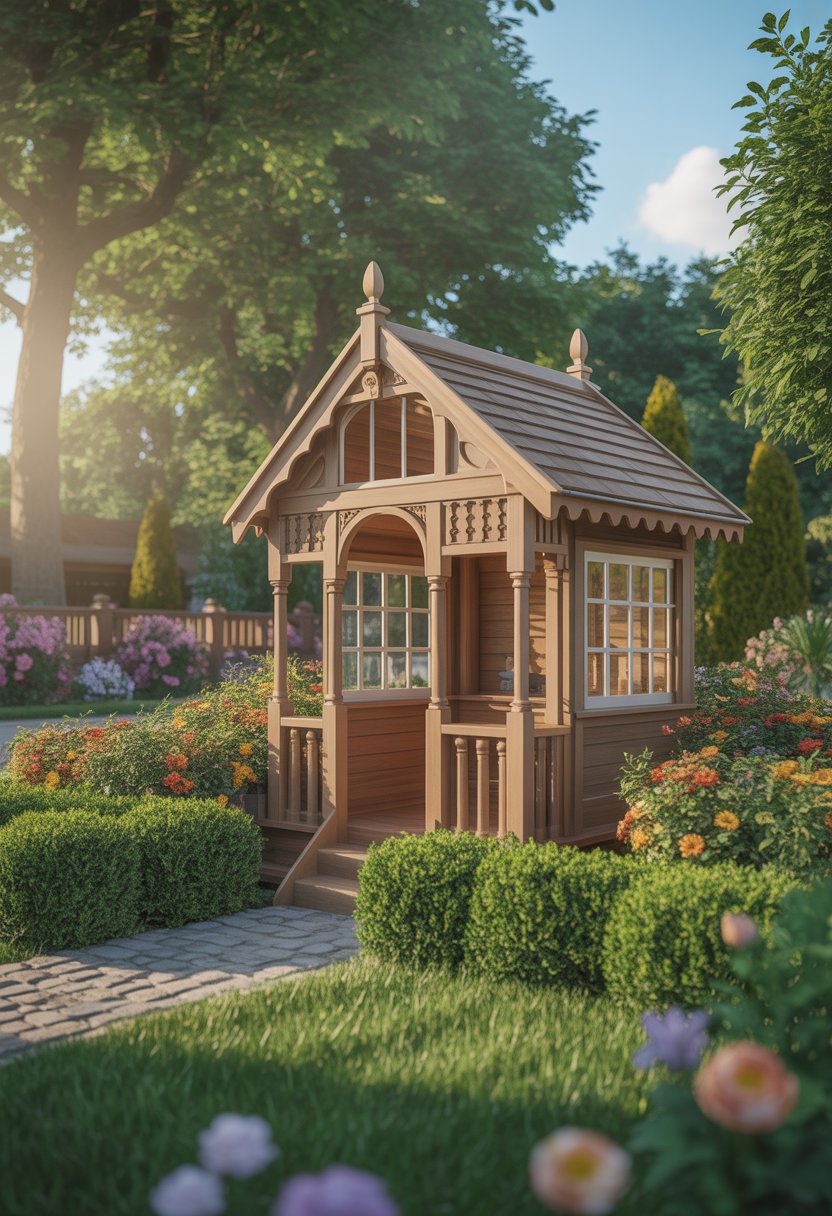
A Victorian-style wooden playhouse with turrets offers a classic, detailed design.
The turrets add height and visual interest, while features like gingerbread trim and flower boxes enhance its charm.
Many models include functional windows, doors, and small porches, creating a realistic and inviting play space for children.
3) Decorative cast iron garden fountains
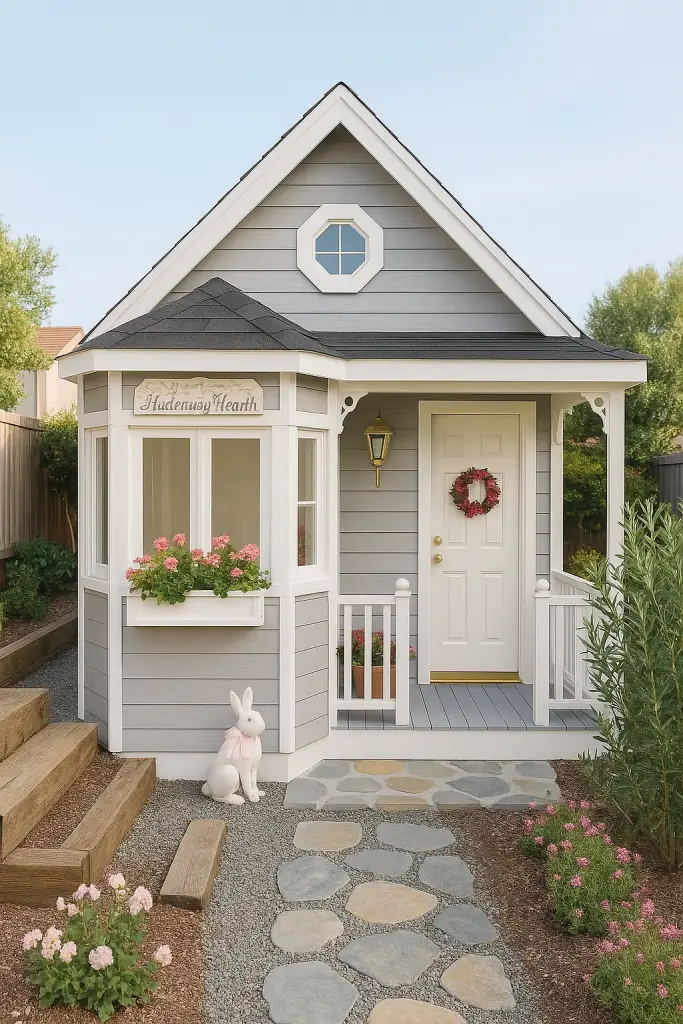
Cast iron garden fountains were common in Victorian landscapes. They often featured intricate patterns and detailed craftsmanship.
These fountains added a focal point to garden spaces while providing a steady water flow. Their durable material made them suitable for outdoor use in various weather conditions.
4) Lush climbing roses and ivy on trellises
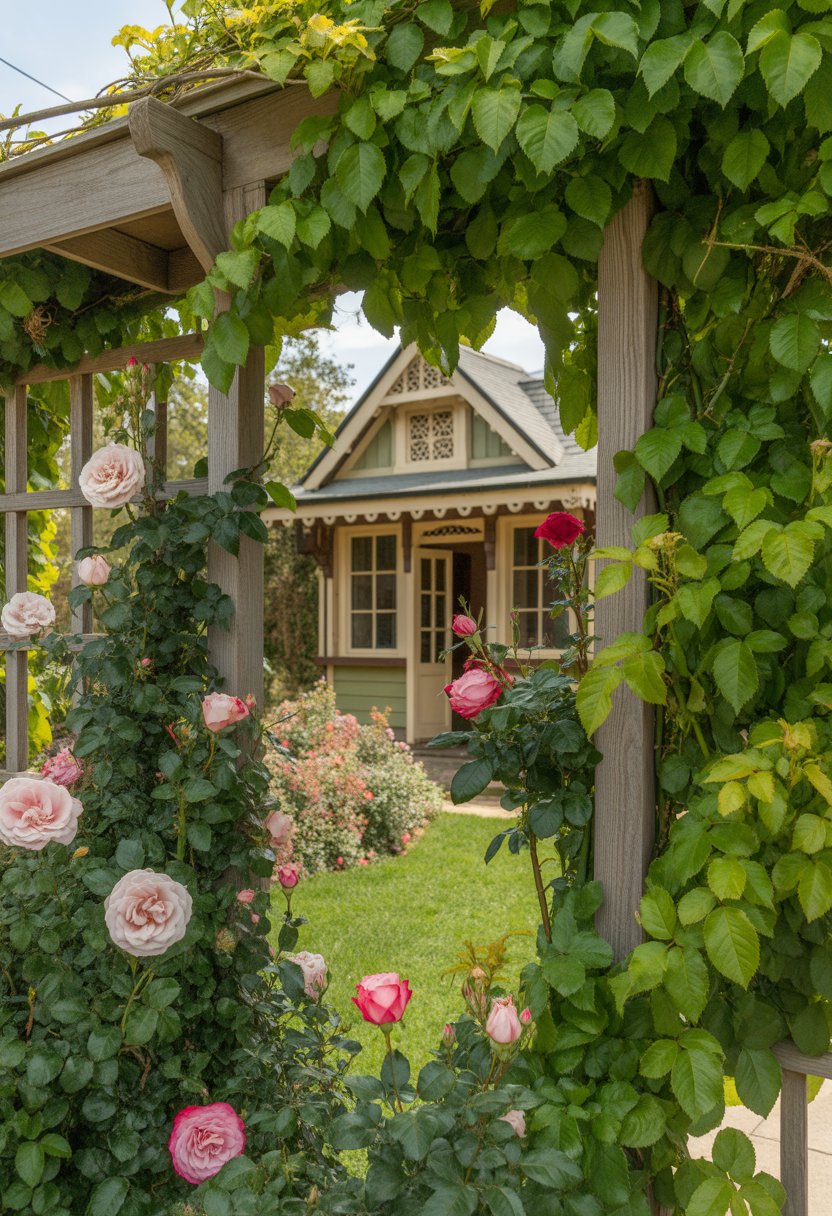
Climbing roses and ivy can frame a playhouse with natural color and texture.
A simple wooden or metal trellis supports the plants as they grow upward.
This approach adds vertical interest while keeping the base of the playhouse open and accessible.
5) Intricate latticework on garden fences
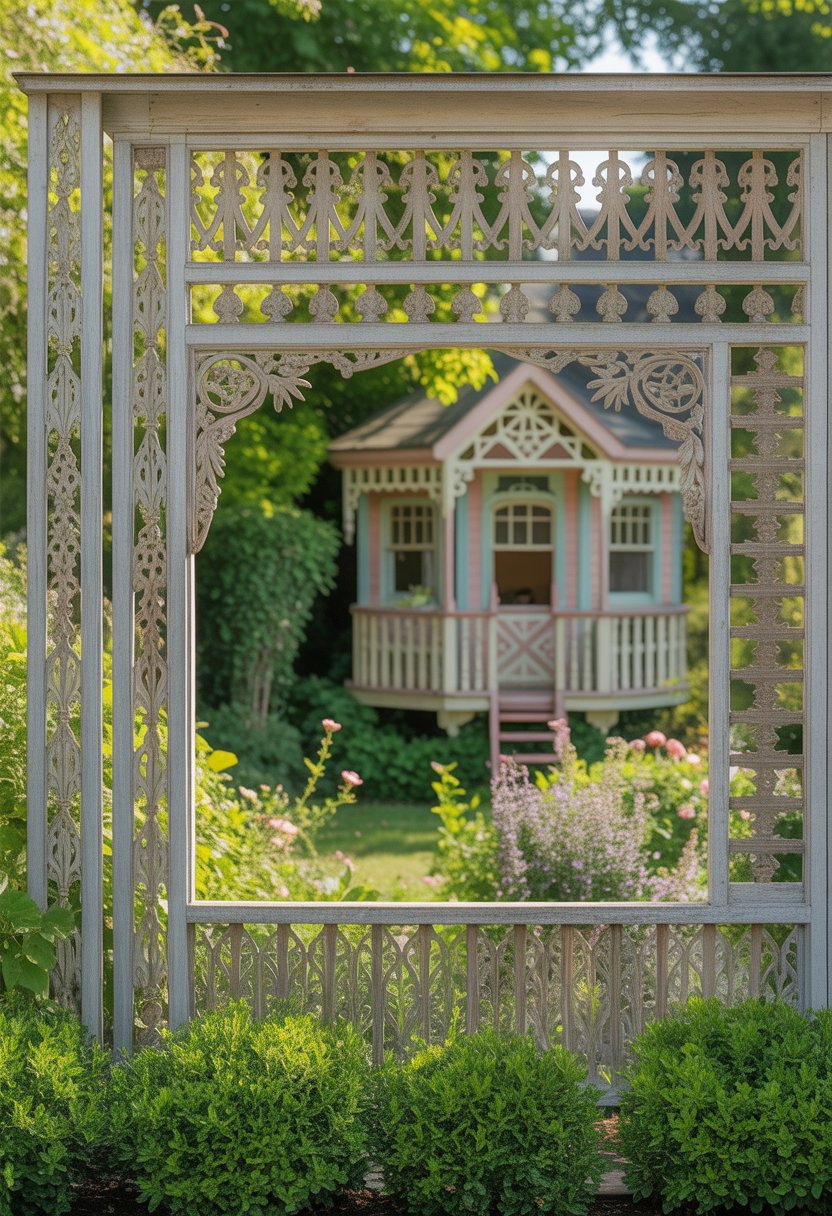
Victorian garden fences often featured wooden or metal lattice panels with precise, repeating patterns.
These designs allowed light and air to pass through while still providing a defined boundary.
Latticework also served as a support for climbing plants, adding both function and decorative detail to the garden space.
6) Vintage-style lanterns for pathway lighting
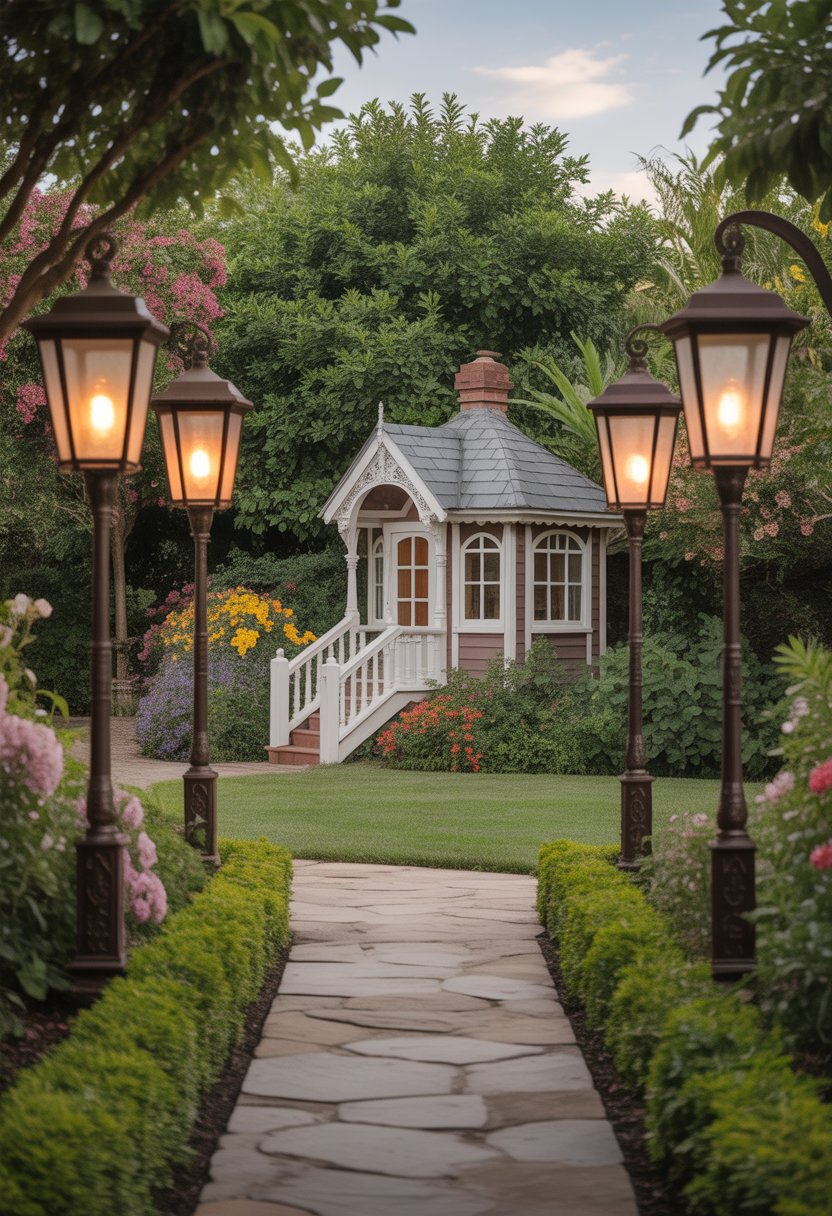
Vintage-style lanterns can help guide visitors along garden paths.
Their classic design matches the Victorian aesthetic of a playhouse setting.
Placing them at regular intervals improves visibility and adds a consistent decorative element.
7) Multi-level Victorian mansion playhouse design
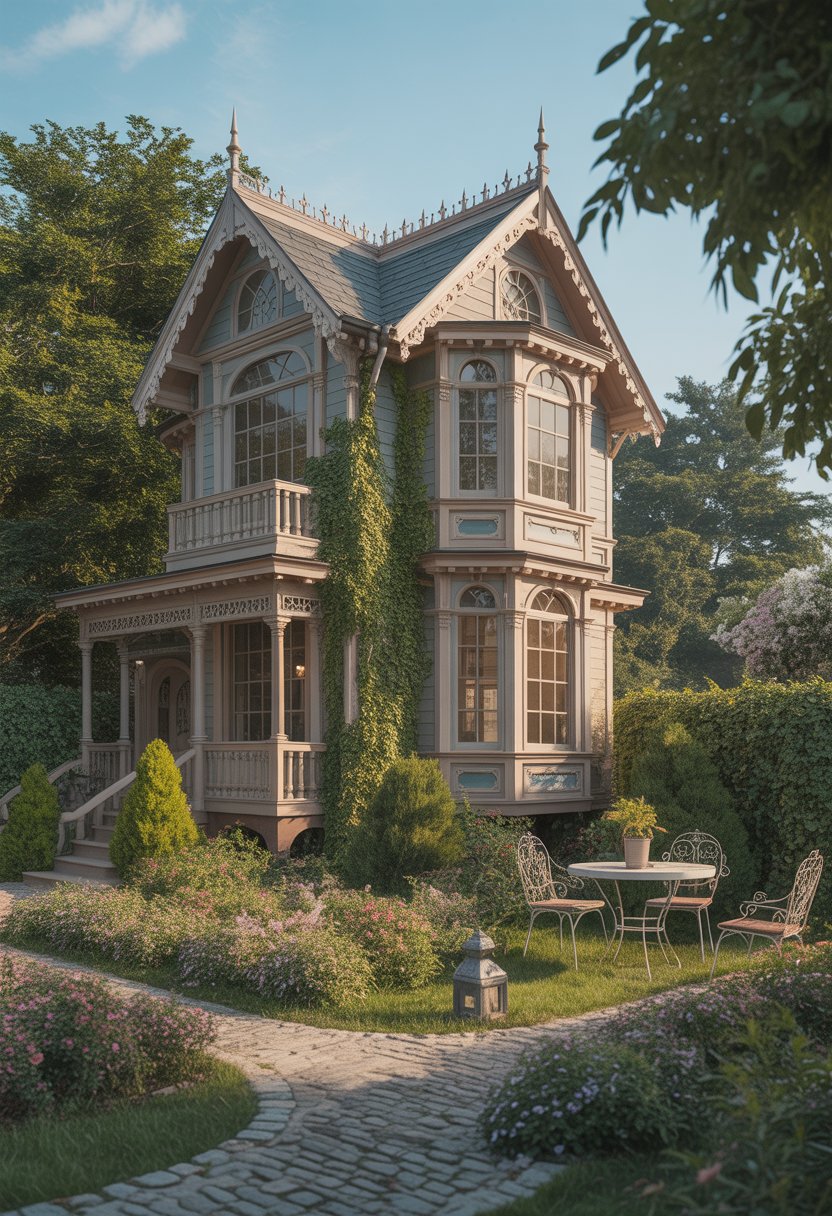
A multi-level Victorian mansion playhouse often includes two or three floors for added space.
Designs may feature tall ceilings, loft areas, and multiple rooms for varied use.
Decorative elements like gingerbread trim, flower boxes, and scalloped shingles enhance its classic appearance.
Design Principles for Victorian Garden Playhouses
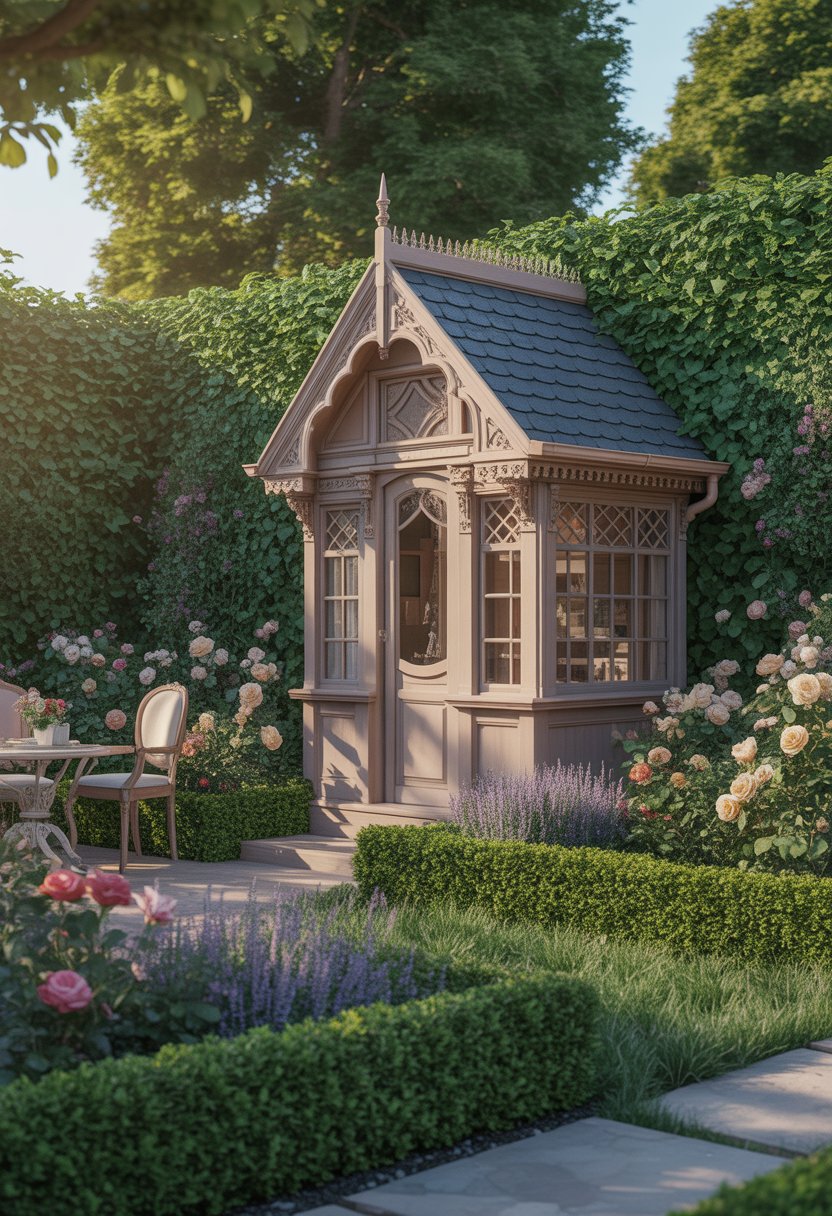
Victorian garden playhouses often combine ornate architecture with natural surroundings. They use detailed trim, balanced proportions, and a blend of decorative and functional features to create a space that feels both charming and practical. Materials, colors, and landscaping choices work together to reflect the style’s historic roots.
Architectural Elements
Victorian playhouses often feature steep gable roofs, decorative trim, and arched or multi-pane windows. These details give the structure a distinct period look.
Many designs include small covered porches with turned posts or spindle work. These add visual interest while providing a shaded entry.
Symmetry is common, but some designs use asymmetrical layouts with towers or bay windows. This creates variety while still keeping proportions balanced.
Key architectural features may include:
- Gingerbread trim along roof edges
- Decorative brackets under eaves
- Wooden railings with simple or ornate patterns
Even in a small footprint, these elements can be scaled down to maintain authenticity without overwhelming the space.
Color Palettes and Materials
Victorian playhouses often use contrasting colors to highlight trim and decorative details. A common approach is a three-color scheme:
- Main body color – often muted greens, creams, or soft yellows
- Trim color – white or a lighter tone for contrast
- Accent color – deeper reds, blues, or burgundy for doors and details
Wood remains the most common building material, as it allows for carved details and painted finishes. Cedar or pine is often used for siding.
For roofing, wood shingles or composite materials that mimic them work well. Hardware such as hinges and handles can be finished in black or brass to match the period style.
Paint finishes should be weather-resistant to protect against outdoor conditions.
Landscaping Integration
The surrounding garden plays a major role in the overall look. Victorian gardens often feature symmetrical layouts, flower borders, and ornamental shrubs.
Placing the playhouse as a focal point at the end of a path creates a sense of arrival. Gravel, brick, or stone walkways work well with the style.
Plant choices may include:
- Roses, hydrangeas, and peonies for color
- Boxwood hedges for structure
- Climbing vines such as clematis or wisteria for vertical interest
Small seating areas or a nearby bench can make the space more inviting for both children and adults.
Decorative Features and Finishing Touches
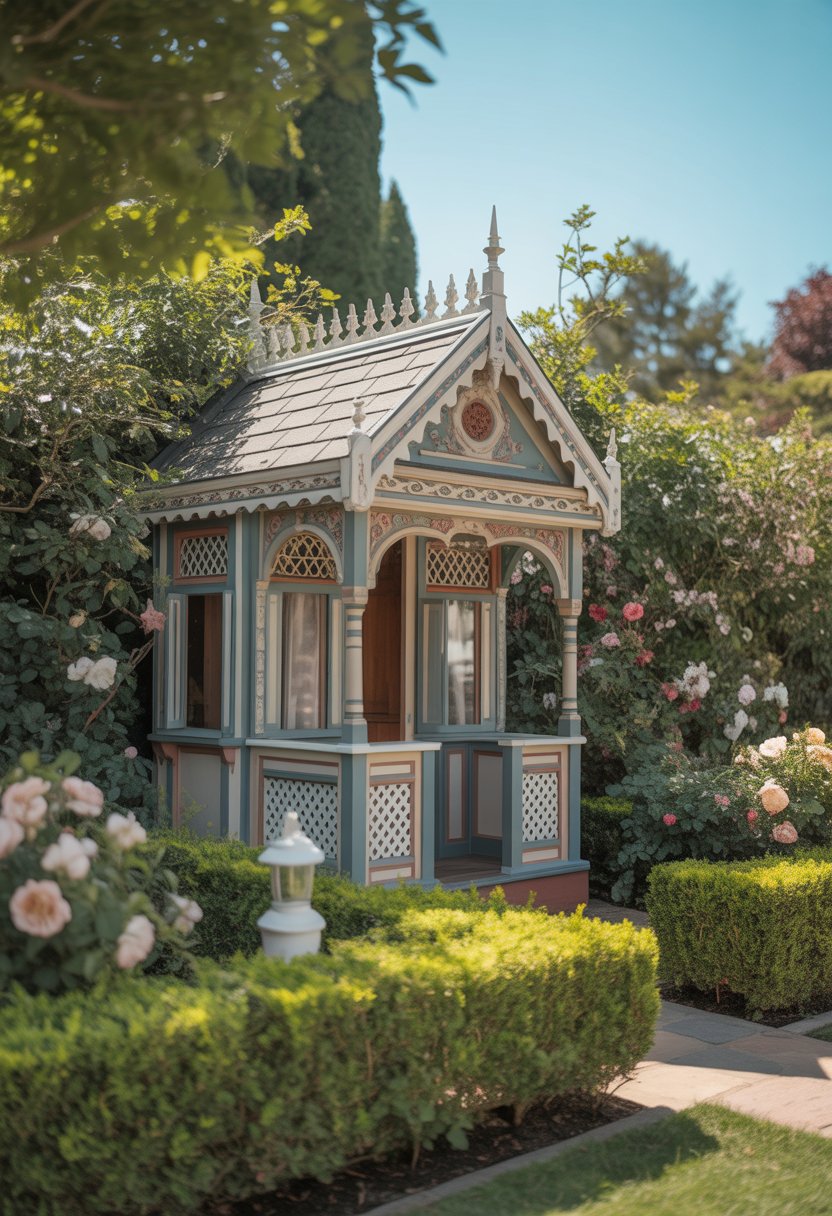
A Victorian garden playhouse stands out through its detailed woodwork, authentic furniture choices, and carefully placed outdoor accents. Each element works together to create a cohesive look that reflects the style of the late 19th century while remaining practical for modern use.
Victorian-Inspired Trim and Details
Decorative trim is one of the most recognizable features of Victorian design. Playhouses often use gingerbread-style woodwork, carved brackets, and scalloped edging to add visual interest.
Builders can create this look with painted pine or cedar boards cut into ornate patterns. White or pastel paint colors help highlight the details, while darker shades can make them appear more formal.
Windows may include arched frames or small panes separated by narrow muntins. Adding shutters with cutout shapes, such as hearts or diamonds, can bring a playful but period-appropriate touch.
For the roofline, fish-scale shingles or patterned tin panels can replicate the textures seen on historic homes. Even small-scale versions of these materials can make a noticeable difference in authenticity.
Period-Appropriate Furnishings
Furniture inside a Victorian-style playhouse should be scaled for the space but still reflect the era’s design. Small wooden chairs, spindle-back benches, and tables with turned legs are fitting choices.
Upholstered cushions in floral or damask fabrics add comfort and complement the garden surroundings. Lace or crochet tablecloths can soften hard surfaces and bring in more texture.
Storage pieces, such as narrow cabinets or small sideboards, can serve both decorative and functional purposes. Placing a few framed botanical prints or vintage-style mirrors on the walls can enhance the interior without overcrowding it.
Lighting can include oil lamp replicas or battery-operated lanterns with a warm glow. These keep the look consistent while remaining safe for a child-friendly space.
Garden Accessories and Accents
The exterior of the playhouse benefits from accessories that connect it to the surrounding garden. A wrought-iron bench or small bistro set nearby creates a sitting area for adults and children.
Hanging baskets filled with trailing flowers, such as ivy geraniums, add color and soften the building’s edges. Window boxes with seasonal blooms can be changed throughout the year for variety.
Other fitting accents include arched arbors at the entrance, small birdbaths, or a scaled-down fountain. These elements reflect the Victorian love of decorative garden features while keeping the proportions suitable for a playhouse setting.
Frequently Asked Questions
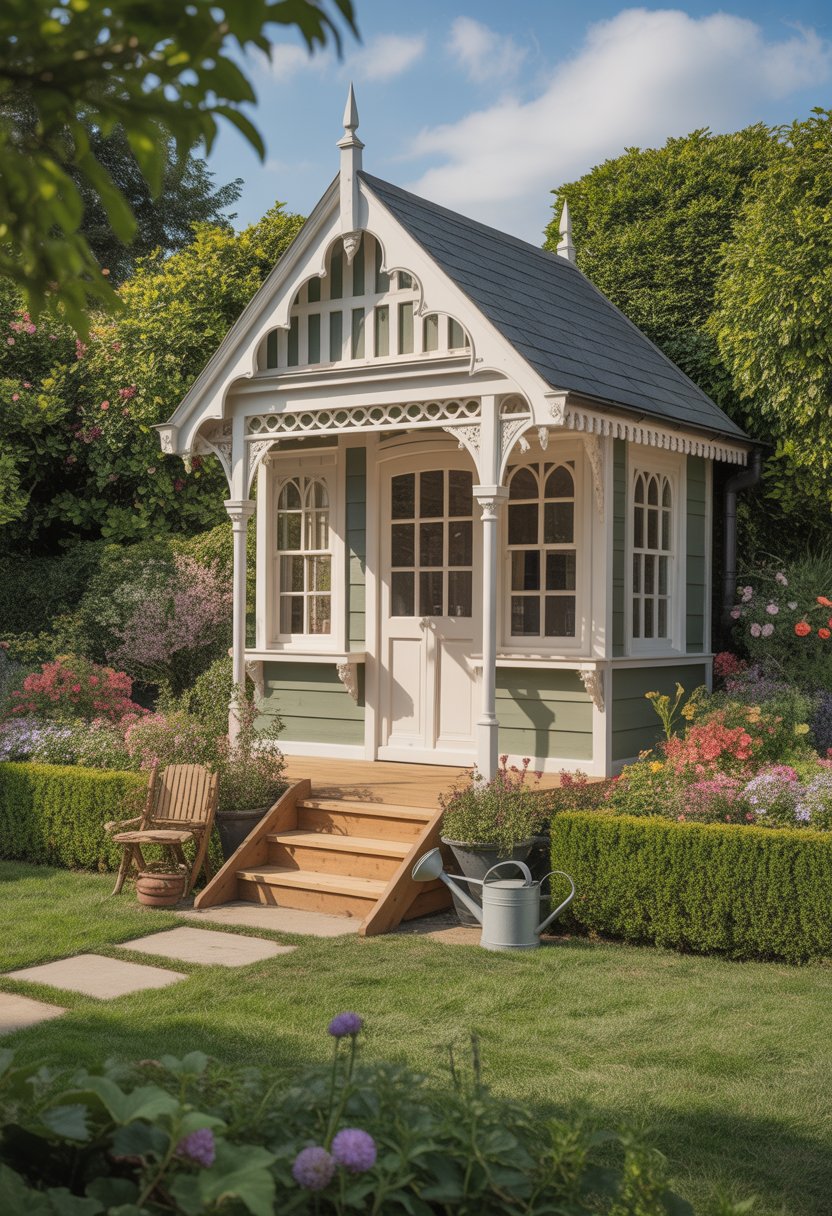
Victorian garden playhouses often blend detailed architecture with period-appropriate landscaping. Durable materials, safety-focused design, and thoughtful use of color help create a structure that is both attractive and functional for children.
What are some authentic Victorian-era features to include in a garden playhouse?
A Victorian-style garden playhouse can feature turrets, steep gable roofs, and intricate latticework. Adding ornate wrought iron benches or decorative cast iron fountains nearby enhances authenticity. Climbing roses or ivy on trellises can complete the period look.
How can I incorporate educational elements into a Victorian garden playhouse design?
Educational features can include a small reading nook stocked with books about the Victorian era. A chalkboard wall or built-in desk can encourage writing and drawing. A miniature garden area can teach children about plants and seasonal care.
What are the best materials to use for building a durable Victorian-style garden playhouse?
Pressure-treated wood resists rot and insect damage, making it a solid choice for the main structure. Exterior-grade plywood can provide strength for walls and floors. Use weather-resistant paint and sealants to protect decorative trim and latticework from moisture.
Can you suggest some color schemes or decorative elements that are typical of the Victorian period for a playhouse?
Common Victorian colors include deep greens, burgundy, cream, and muted gold. Contrasting trim can highlight architectural details. Adding stained glass-style window film or lace curtains can give the playhouse a more authentic appearance.
What safety considerations should I keep in mind when designing a Victorian garden playhouse for children?
Ensure all surfaces are smooth and free from splinters. Windows should use shatter-resistant materials. Steps or ladders must have sturdy railings, and the playhouse should sit on a stable, level base to prevent tipping or shifting.
How can I create a Victorian garden playhouse on a budget without compromising on style and quality?
Repurpose salvaged wood, vintage hardware, or second-hand garden furniture to reduce costs. Simple painted plywood can mimic more expensive paneling. Decorative elements like lattice panels or trellises can be made from affordable materials while still adding Victorian charm.