Twin Bedroom Ideas For Couples: 5 Practical Layouts

Sharing a bedroom with twin beds can feel both practical and personal when you design it with care. You want a space that supports rest, balance, and daily routines without giving up style or comfort. This topic explores how twin bedroom layouts can work well for couples who value both connection and personal space.
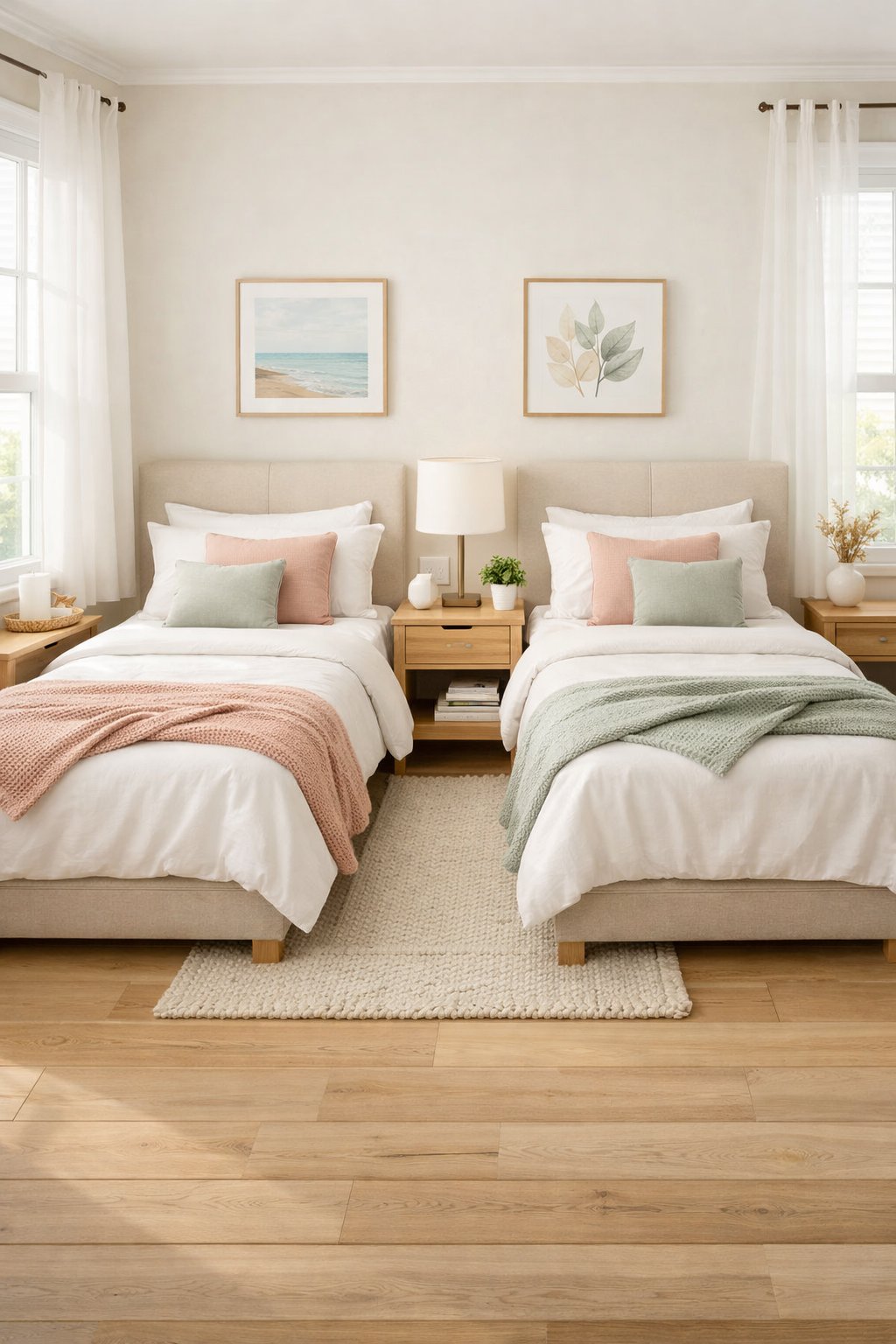
You can create a twin bedroom that feels calm, balanced, and comfortable for both of you by focusing on smart layout choices, simple design rules, and shared function. The ideas ahead guide you toward visual harmony, ease of movement, and a setup that fits real life, not just looks good in photos.
1) Use matching twin beds with elegant headboards for a cohesive look

You create a calm and balanced room when you use matching twin beds. Choose beds with the same size, height, and frame style. This choice helps the room feel organized and shared, not split.
Elegant headboards add structure and comfort. You can pick upholstered, wood, or simple panel designs. Keep the color soft and neutral so the beds blend into the room instead of standing out too much.
You strengthen the look when both headboards match in shape and finish. This detail keeps the space from feeling busy. It also helps the room feel fair and equal for both of you.
You can place the beds parallel with even space between them. Add a shared nightstand or two matching ones to keep balance. A single lamp or a pair of matching lamps works well.
You finish the look with simple bedding. Use similar colors and textures, then add small personal touches to each bed.
2) Incorporate a shared nightstand with dual lamps for balance and functionality

You can save space by using one shared nightstand between two twin beds. This setup works well in smaller rooms where floor space matters. It keeps the layout clean and avoids extra furniture.
Choose a nightstand with drawers or shelves on both sides. Each person gets a place for books, a phone, or personal items. This helps reduce clutter and keeps the room organized.
Add two lamps to create balance and personal control. Each of you can adjust your own light for reading or winding down. Matching lamps support a calm look, while different shades can reflect personal style.
Place the nightstand so it sits evenly between the beds. This keeps the room feeling fair and planned. A centered setup also improves access and makes daily use easier.
3) Choose a calming color palette with soft blues or muted neutrals

Color sets the mood in a twin bedroom you share. Soft blues, muted greens, and gentle grays help the room feel calm and balanced. These shades connect to nature and support rest without drawing too much attention.
Muted neutrals also work well for couples with different tastes. Warm whites, light taupe, and soft beige create a clean base that feels cozy. You can layer bedding, rugs, and curtains without making the room feel busy.
Use the same wall color across the room to keep both sides visually equal. This choice helps the space feel unified, even when each bed has its own style. A shared palette reduces visual noise and supports a relaxed feel.
Add contrast in small ways. Use deeper blue pillows, natural wood furniture, or soft gray accents. These touches add depth while keeping the room calm and easy to live in.
4) Add layered bedding featuring decorative pillows to enhance comfort

Layered bedding helps a twin bed feel more comfortable when two people share the space. You create depth and softness by combining sheets, a light quilt or duvet, and a throw. This setup lets you adjust warmth without changing the whole bed.
Start with smooth, breathable sheets that feel good against your skin. Add a quilt or duvet in a neutral color to keep the bed calm and easy to match. A folded throw at the foot of the bed adds warmth and texture without taking up space.
Decorative pillows improve both comfort and style. Place standard sleeping pillows at the back, then add one or two smaller decorative pillows in front. Choose pillows with soft covers so they feel good when you sit or lean.
Limit the number of pillows so the bed stays easy to use. A clean, layered look helps your twin bed feel inviting while still working for daily rest.
5) Position beds with ample space between for privacy and ease of movement
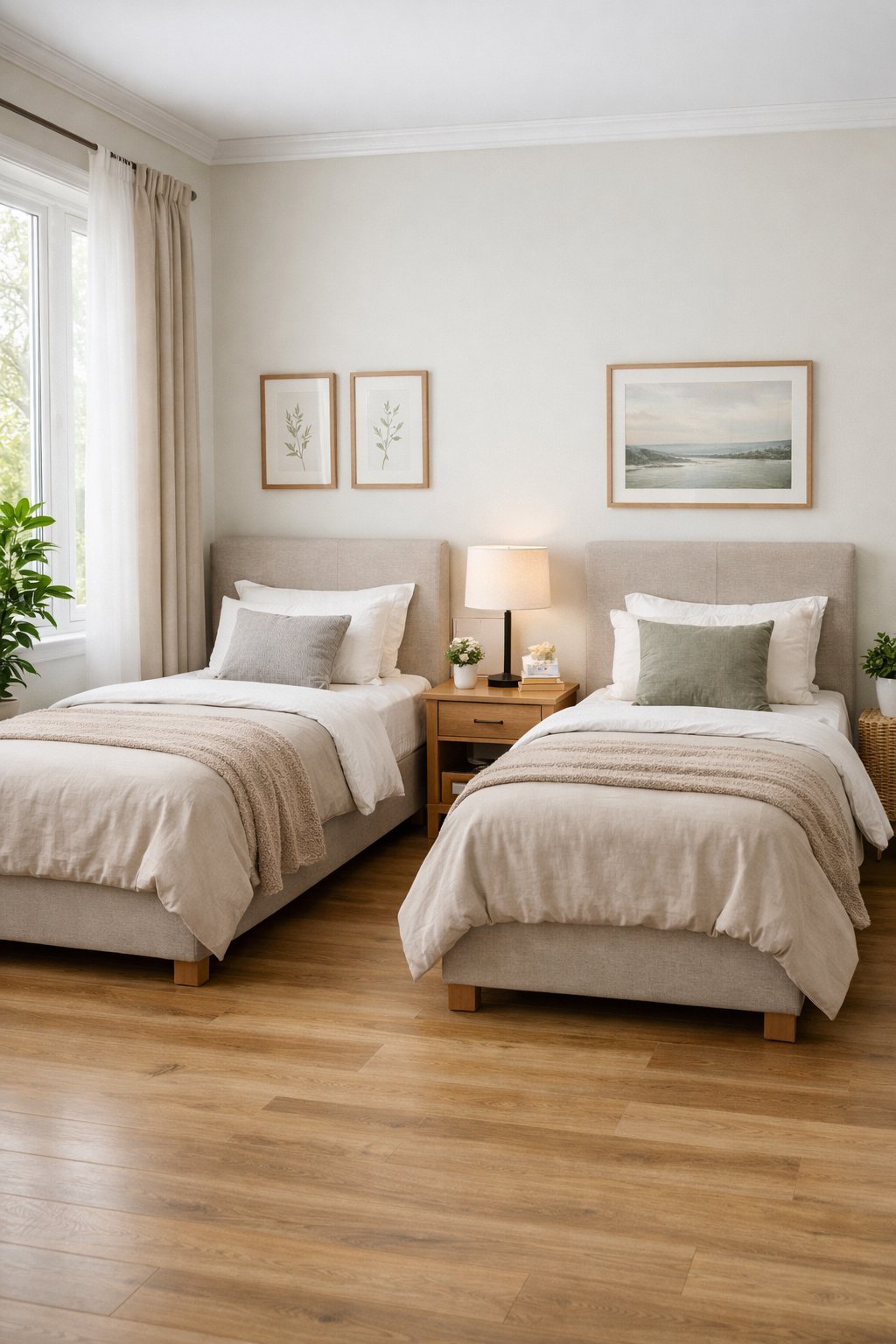
Place each twin bed with enough space between them so you can move with ease. Aim for at least 24 to 30 inches between beds or between a bed and the wall. This spacing supports daily routines and reduces bumps during the night.
Use the gap to create a clear walkway. You can add a small shared nightstand, a narrow bench, or a slim lamp. These items help define personal zones without crowding the room.
Keep headboards aligned on the same wall when possible. This setup feels balanced and helps both sleepers feel equal in the space. It also keeps pathways open on the sides and at the foot of each bed.
If the room feels tight, push beds slightly toward opposite walls. This choice increases privacy while keeping access clear. You maintain comfort without closing off the room.
Design Principles for Shared Twin Bedrooms

A shared twin bedroom works best when you plan for comfort, order, and personal space. Clear layout choices, matched basics, and small custom touches help the room feel calm and fair for both of you.
Balancing Style and Comfort
You create balance by keeping the room visually even while meeting daily comfort needs. Start with two matching twin beds or frames to set symmetry. Use the same bedding style, then vary color accents to avoid a flat look.
Choose a shared color palette with two or three main colors. Neutral walls help the room feel larger and calmer. Add texture with throws, rugs, or wood tones to soften the space.
Comfort matters as much as style. Pick supportive mattresses and place beds with clear walk paths. Use nightstands with drawers so each of you can store essentials.
Smart choices that support balance:
| Element | What to Do |
|---|---|
| Beds | Match size and height |
| Lighting | Use equal bedside lamps |
| Decor | Mirror placement, vary details |
Maximizing Privacy and Personalization
You can share a room without giving up personal space. Start by defining zones. Place beds parallel with a gap, or use a low shelf or curtain between them if space allows.
Give each person a clear area for personal items. Wall shelves, pin boards, or framed photos help mark your side. Keep shared decor in the center to avoid visual clutter.
Control light and noise where possible. Use individual reading lights and separate alarm clocks. Soft rugs and fabric panels reduce sound and add comfort.
Ways to add privacy without walls:
- Area rugs under each bed
- Separate bedside storage
- Headboards that block sightlines
These steps let you share the room while keeping daily routines smooth.
Enhancing Functionality in Couple Twin Bedrooms

You can make a twin bedroom work well for two adults by planning storage and layout with care. Smart choices help you save space, keep order, and respect each person’s daily habits.
Storage Solutions
You need storage that serves two people without crowding the room. Use under-bed drawers or lift-up frames to store clothes, shoes, or spare linens. This keeps large items out of sight and frees wall space.
Place a nightstand for each bed, even if it is small. Each person needs a surface for a lamp, phone, and book. If floor space feels tight, mount wall shelves above each bed instead.
Shared storage works best when it stays balanced.
| Storage Type | Best Use |
|---|---|
| Under-bed bins | Seasonal clothes |
| Slim dressers | Daily clothing |
| Wall hooks | Bags and robes |
Label shared bins to avoid mix-ups and save time.
Optimizing Room Layout
You should arrange twin beds to support movement and privacy. Place beds parallel with a clear walkway between them when space allows. This layout feels open and keeps both sides equal.
In narrow rooms, push beds against opposite walls. Add a narrow rug between them to soften the gap and reduce noise. Use matching headboards to create a clean look without forcing the same style.
Keep doors, closets, and windows easy to reach. Avoid blocking them with furniture. If one of you wakes earlier, place that bed closer to the door to reduce disruption. Small layout changes can improve daily comfort.