
Minimalist Bathroom Setup: 7 Essential Elements for a Clean, Functional Space
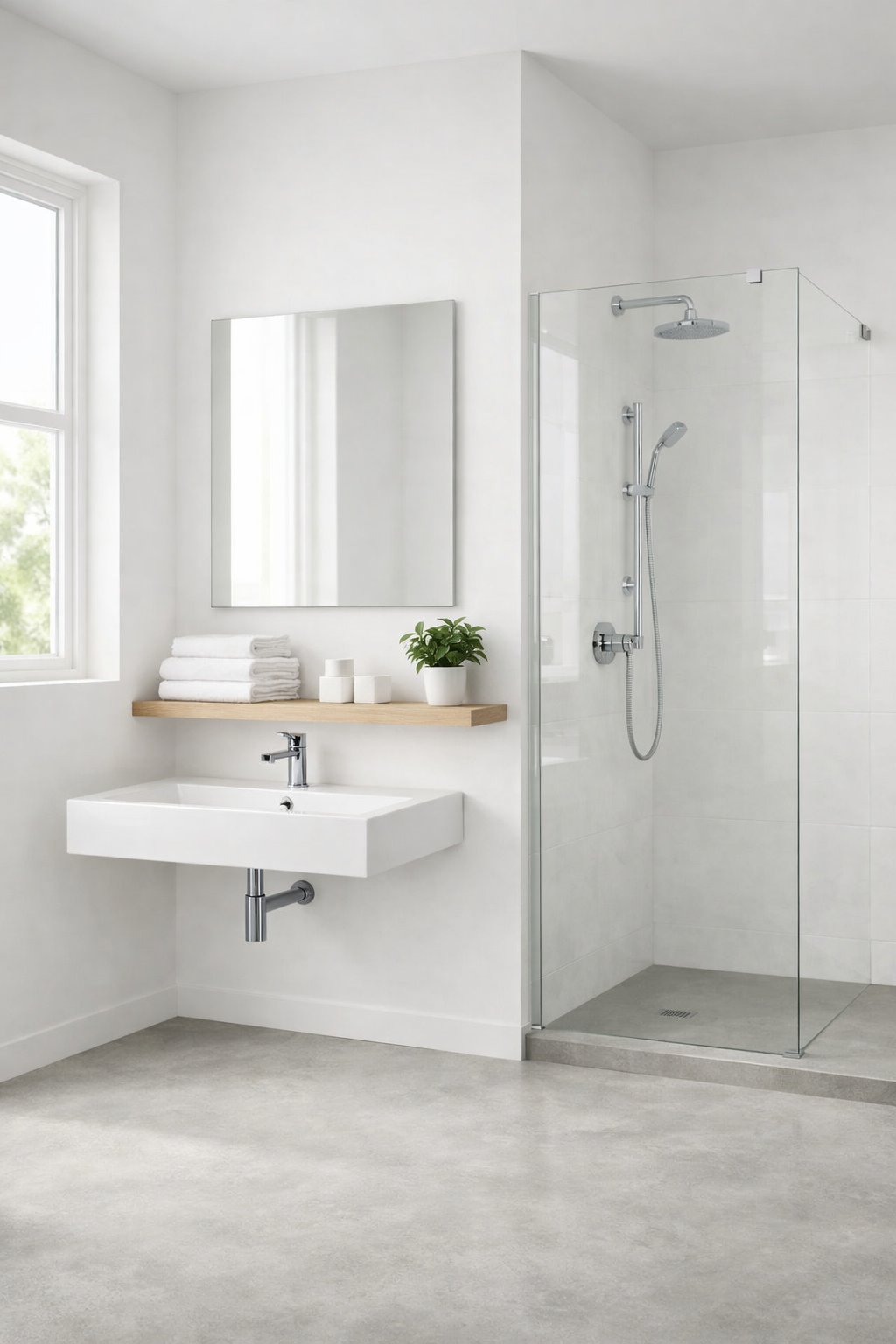
A minimalist bathroom setup focuses on calm, order, and function. It removes visual noise and keeps only what serves a purpose. A well-planned minimalist bathroom creates a clean, calm space that feels open and easy to use every day.
This article explores how thoughtful choices in layout, materials, lighting, and storage support that goal. It also explains the core ideas behind minimalist design and how simple upkeep keeps the space looking fresh over time.
1) Use large format neutral tiles for a sleek, clean look
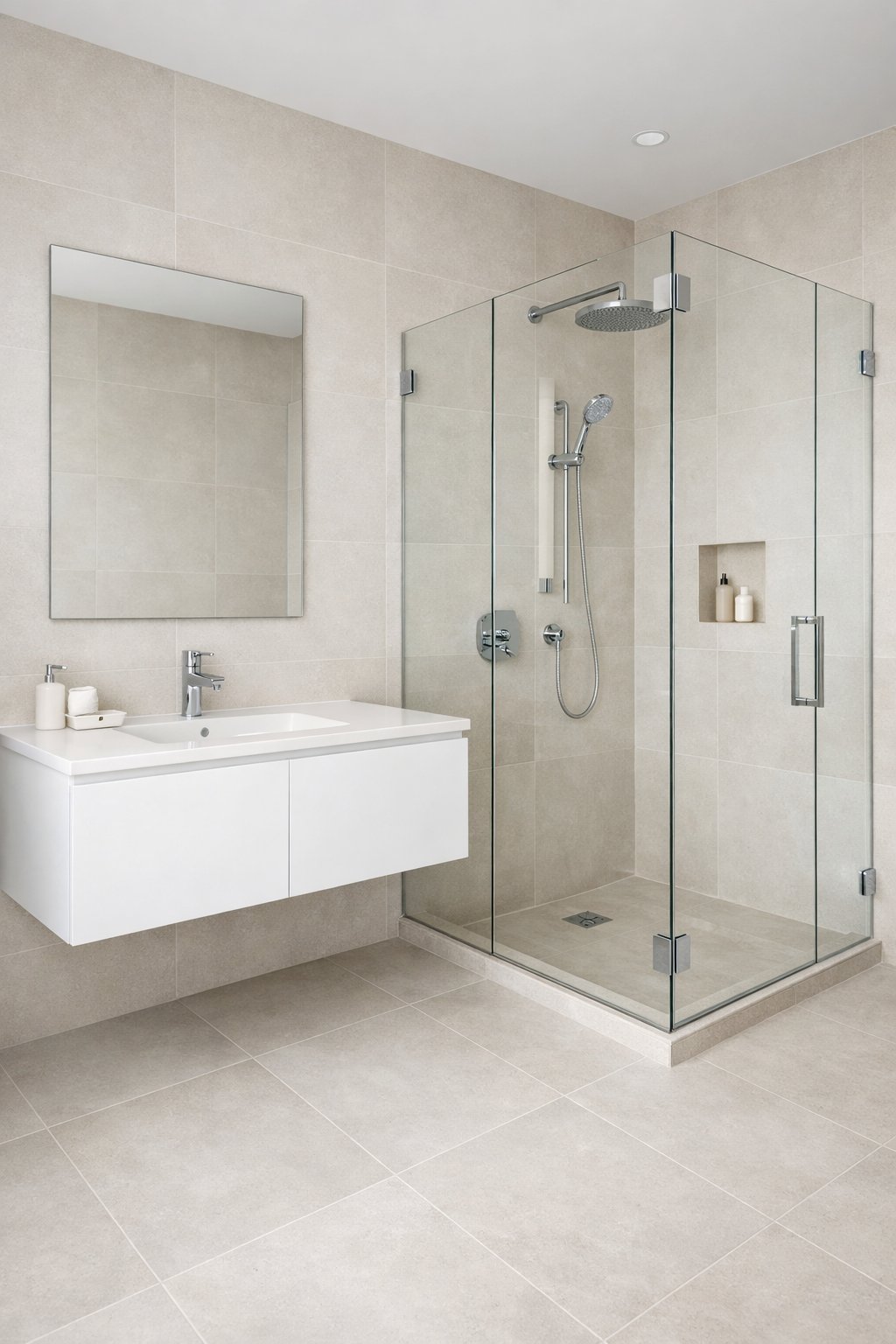
Large format neutral tiles create a smooth, simple base for a minimalist bathroom. Fewer grout lines reduce visual noise and make surfaces look cleaner.
Soft shades like white, beige, or light gray keep the room calm and bright. These colors pair well with wood, stone, and matte fixtures.
Large tiles on floors and walls also help the space feel more open.
2) Install wall-mounted faucets to save counter space
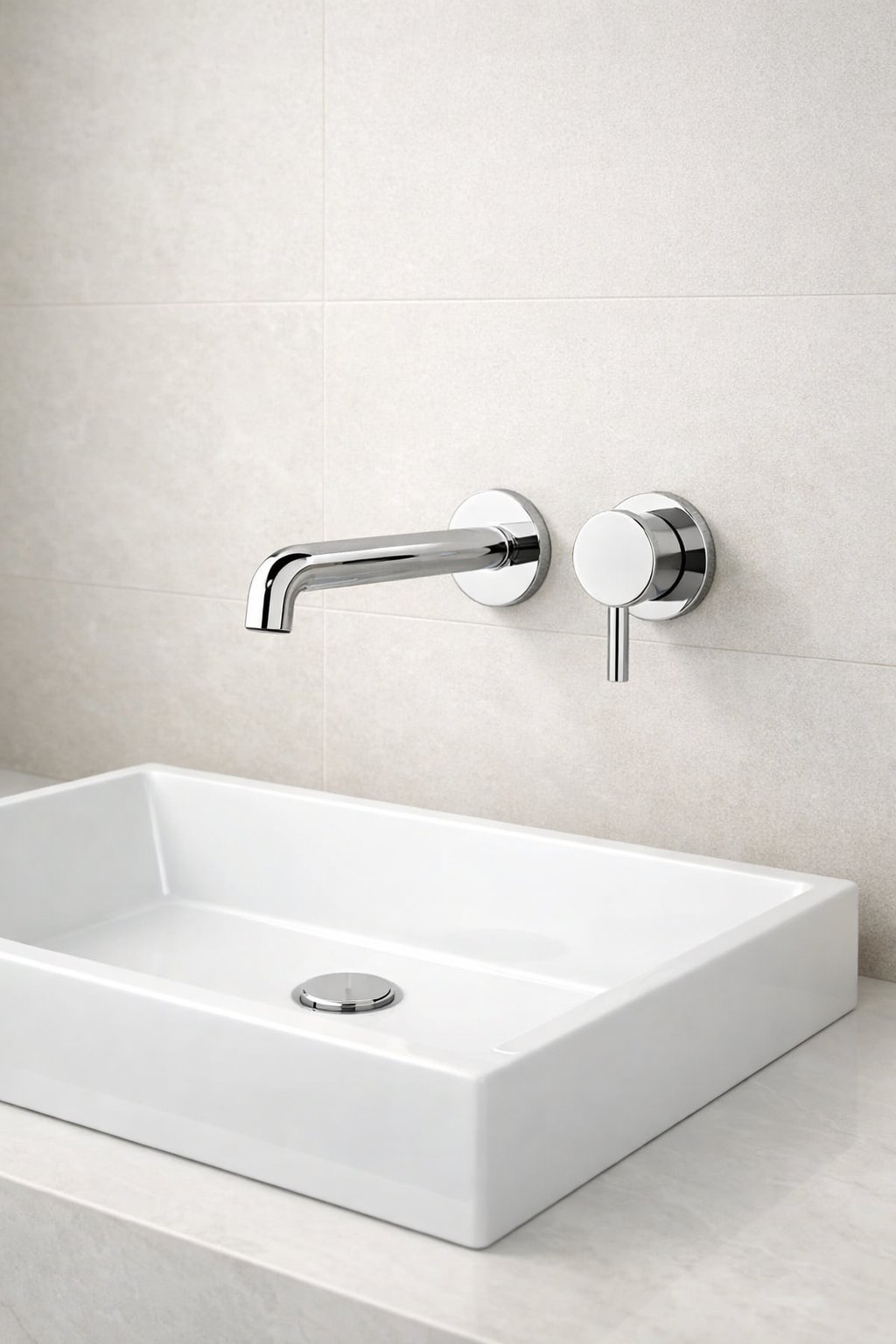
Wall-mounted faucets attach to the wall instead of the sink. This setup clears the counter and supports a clean, simple layout.
The open surface makes daily cleaning easier. It also leaves more room for basic items like soap or a small tray.
These faucets fit well with vessel or undermount sinks. They work best when planned during a remodel, since plumbing sits inside the wall.
3) Incorporate floating vanity with hidden storage
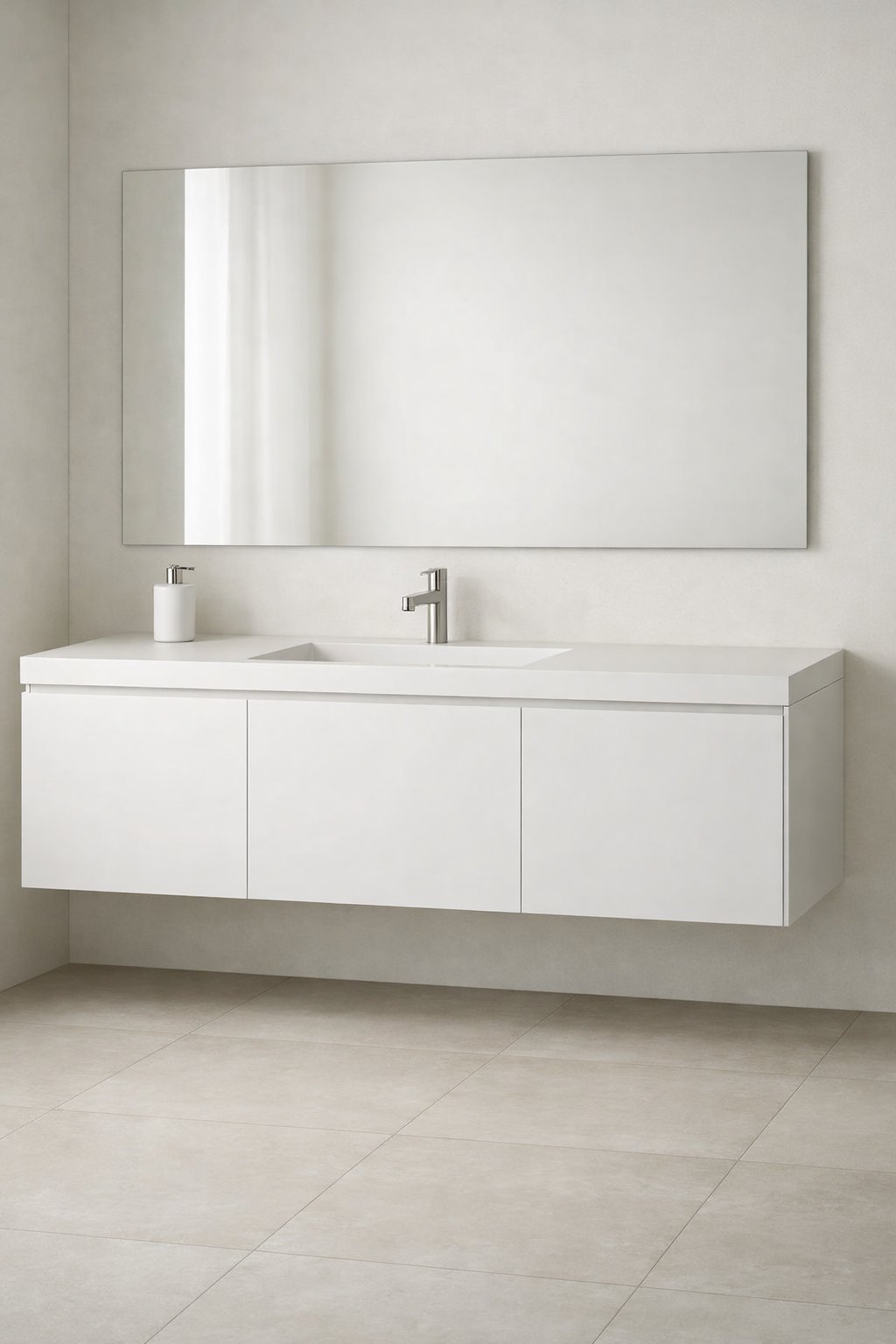
A floating vanity mounts to the wall and keeps the floor clear. It supports a clean, simple look that suits minimalist bathrooms.
Hidden drawers and inner shelves store daily items out of sight. Clear surfaces reduce visual clutter and support easy routines.
The wall-mounted design makes cleaning easier and helps small rooms feel open. It works well with neutral finishes and simple hardware.
4) Choose matte black fixtures for modern contrast
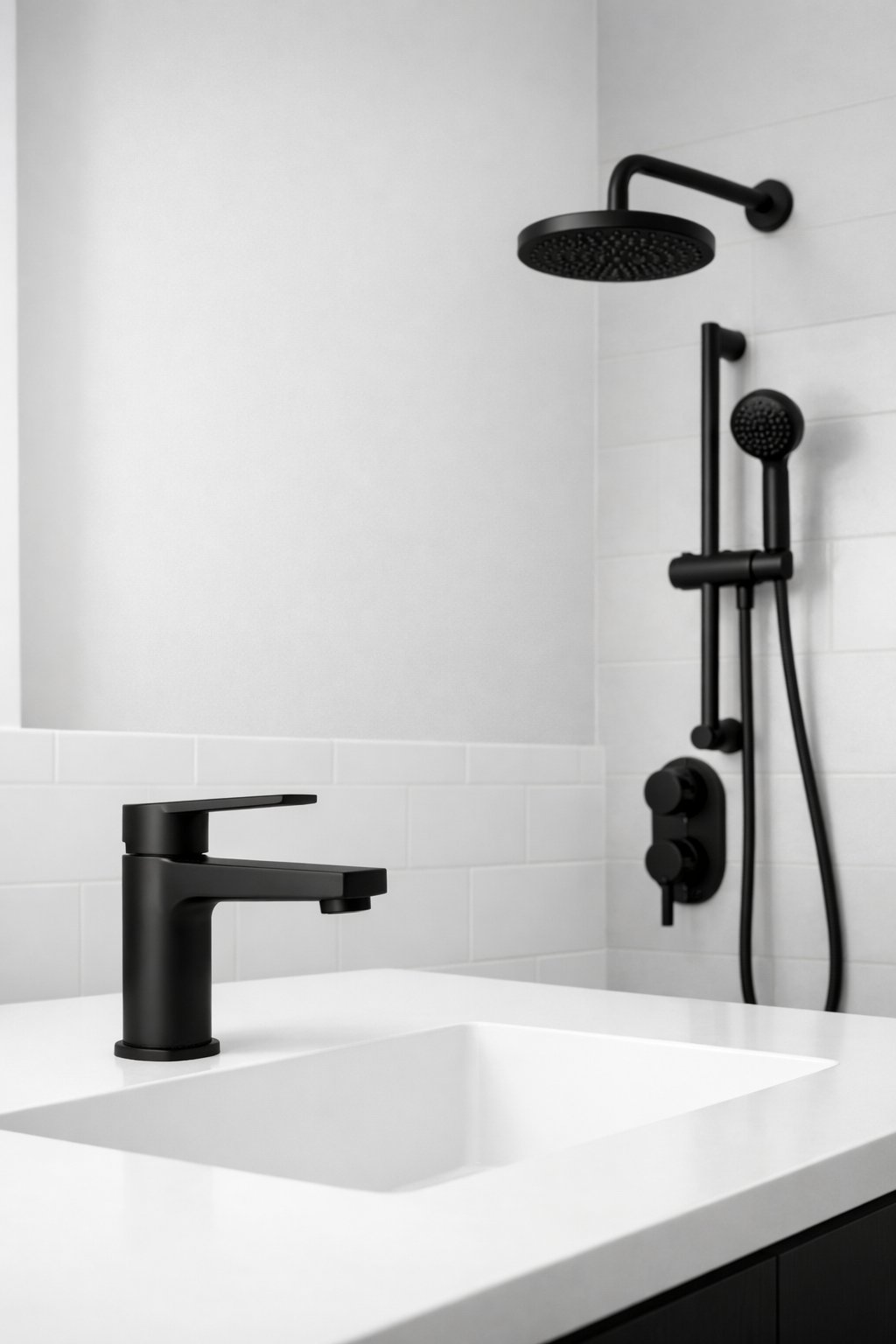
Matte black fixtures add clean contrast without clutter. They stand out against white tile, stone, or light walls.
Faucets, shower frames, and handles in matte black keep lines sharp and simple. The finish reduces glare and hides water spots.
Black-framed mirrors and slim light fixtures support a modern look. They anchor the space while keeping the design calm and minimal.
5) Add a frameless glass shower enclosure
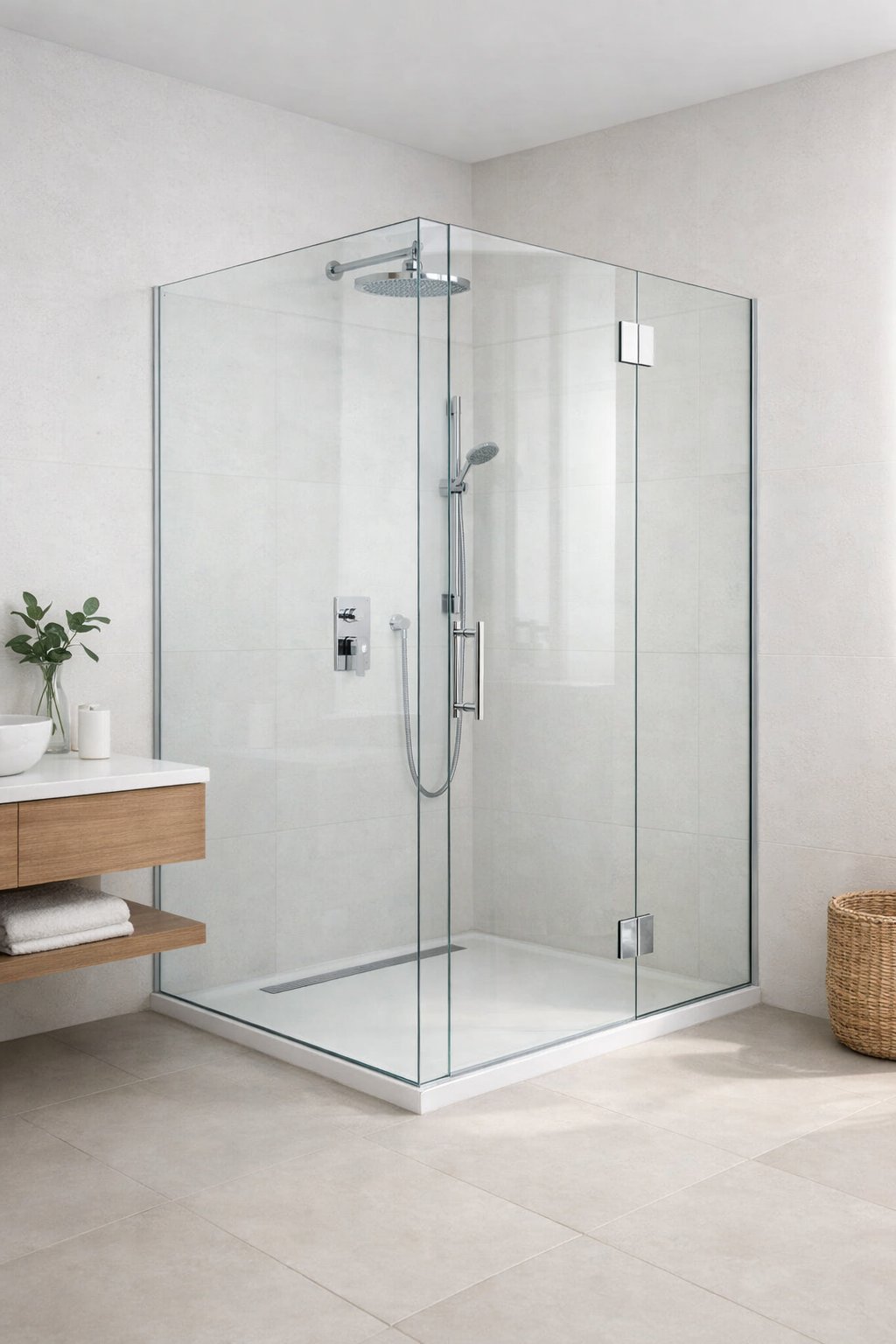
A frameless glass shower supports a minimalist bathroom. Clear panels remove visual breaks and keep the room feeling open. The design fits small and large spaces.
Installers use thick, tempered safety glass for strength. Minimal hardware keeps lines clean and simple. The glass often measures between 3/8 and 1/2 inch.
Precise measurements matter for a proper fit. Easy-clean coatings help reduce spots and daily upkeep.
6) Use warm wood paneling for subtle texture
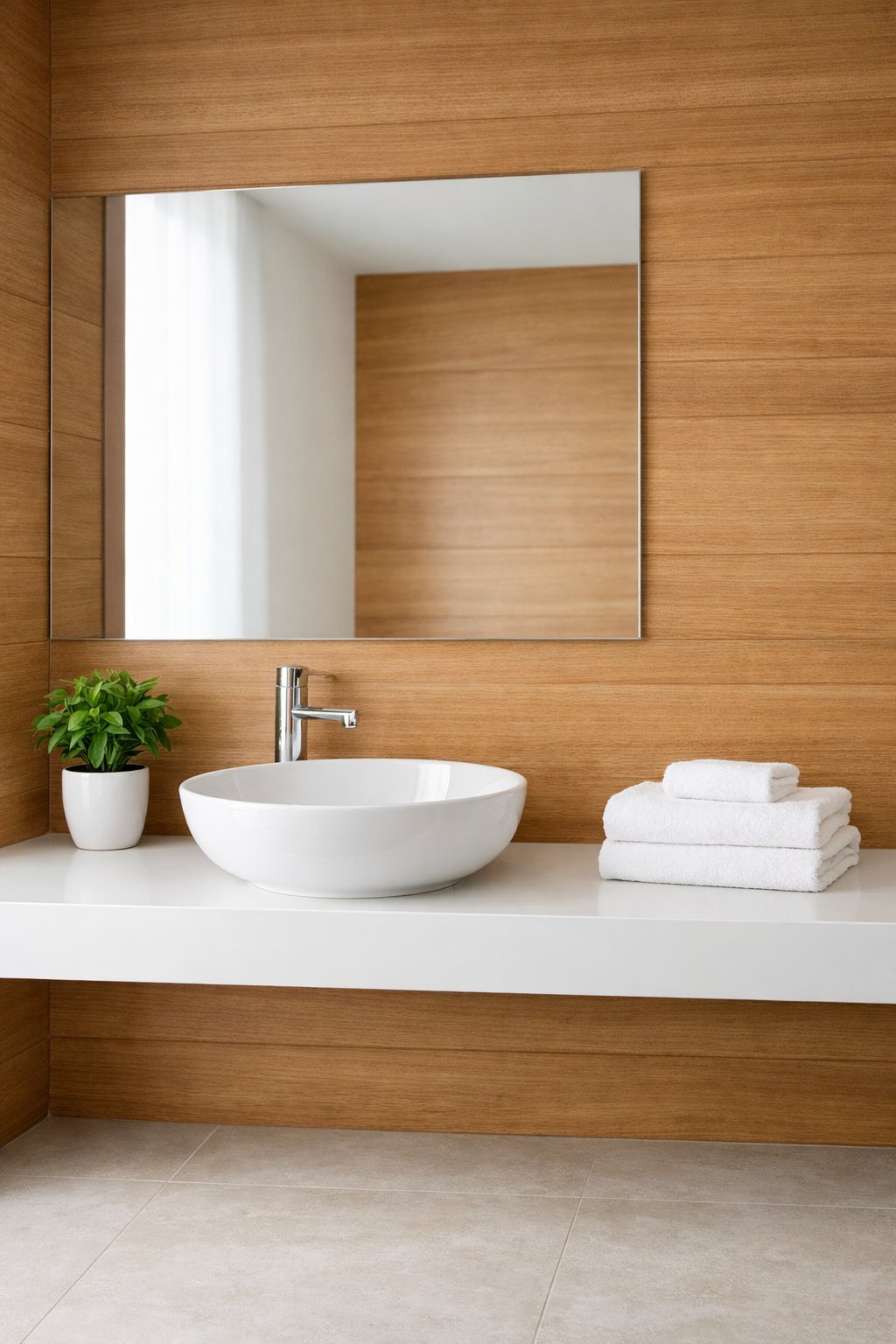
Warm wood paneling adds soft texture without clutter. It brings a natural tone that balances clean lines and simple fixtures.
Light or mid-tone wood works best in minimalist bathrooms. Vertical panels can make walls feel taller, while horizontal panels feel calm and grounded.
Moisture-resistant finishes help wood last in humid spaces. Used on one wall or as wainscoting, it keeps the room simple and calm.
7) Opt for recessed LED lighting for even illumination
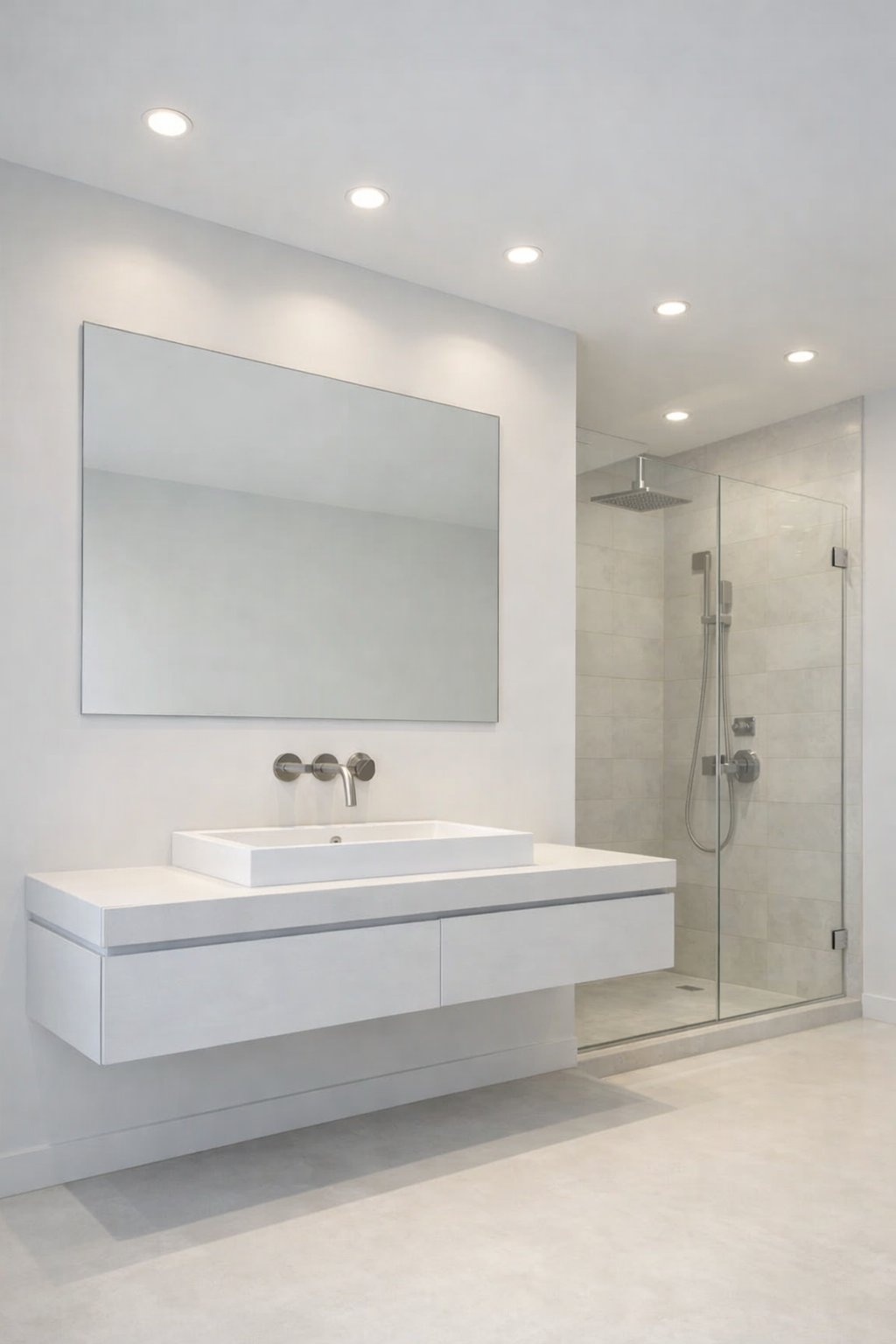
Recessed LED lighting supports a clean, minimalist bathroom layout. The fixtures sit flush with the ceiling, which reduces visual clutter and keeps lines simple.
These lights spread even illumination across the room. Proper placement above the vanity and shower helps limit shadows and improves daily tasks like grooming.
LED recessed lights also use less energy and last longer than many other options. Many models suit damp or wet areas, which makes them practical for bathroom use.
Core Principles of Minimalist Bathroom Design
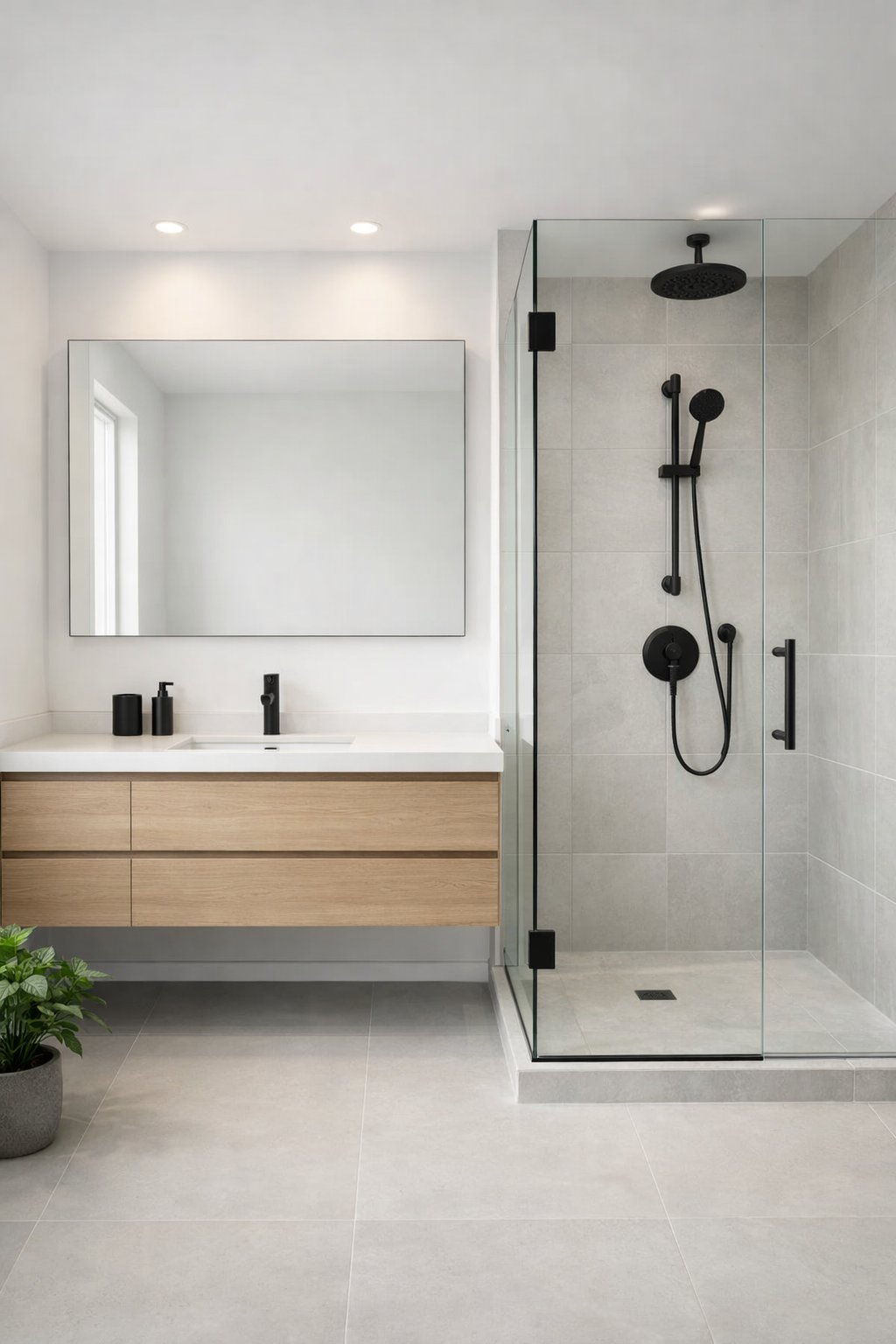
Minimalist bathroom design relies on clear choices that support daily use. It favors useful features, open layouts, and calm colors that reduce visual noise and ease cleaning.
### Simplicity and Functionality
Minimalist bathrooms remove anything that does not serve a clear purpose. Every item earns its place through daily use. Designers often choose wall-mounted vanities, single-handle faucets, and built-in storage to reduce clutter.
Storage stays hidden to keep surfaces clear. Drawers replace open shelves, and recessed niches replace bulky racks. Fixtures use simple shapes and smooth finishes to stay easy to clean.
Key priorities include:
- Fewer items on counters
- Fixtures with clean lines
- Storage that hides daily supplies
This approach saves time during cleaning and supports a calm routine. The bathroom feels orderly because it avoids extra decor and complex features.
### The Importance of Open Space
Open space makes a bathroom feel larger and easier to move through. Minimalist design limits visual breaks by using fewer materials and clear sightlines. Frameless showers and floating fixtures help keep the floor visible.
Designers often avoid crowding the room with furniture. They leave space around sinks, toilets, and tubs so the room feels balanced. Even small bathrooms benefit from this approach.
Common ways to increase openness:
- Glass shower panels instead of curtains
- Wall-hung toilets and vanities
- Large mirrors to reflect light
Open space improves comfort and safety. It also helps light travel across the room, which supports a clean and calm look.
### Neutral Color Palettes
Neutral colors anchor minimalist bathroom design. Shades like white, beige, gray, and soft stone create a steady and quiet backdrop. These colors reduce contrast and help the space feel cohesive.
Designers usually limit the palette to two or three tones. This choice keeps the room from feeling busy. Texture adds interest without adding color, such as matte tile or natural stone.
| Color Type | Purpose |
|---|---|
| White | Brightens and opens the space |
| Gray | Adds depth without noise |
| Beige | Brings warmth and balance |
Neutral colors also age well. They allow fixtures and layouts to stay relevant over time without frequent updates.
Maintenance and Cleaning for Minimalist Bathrooms
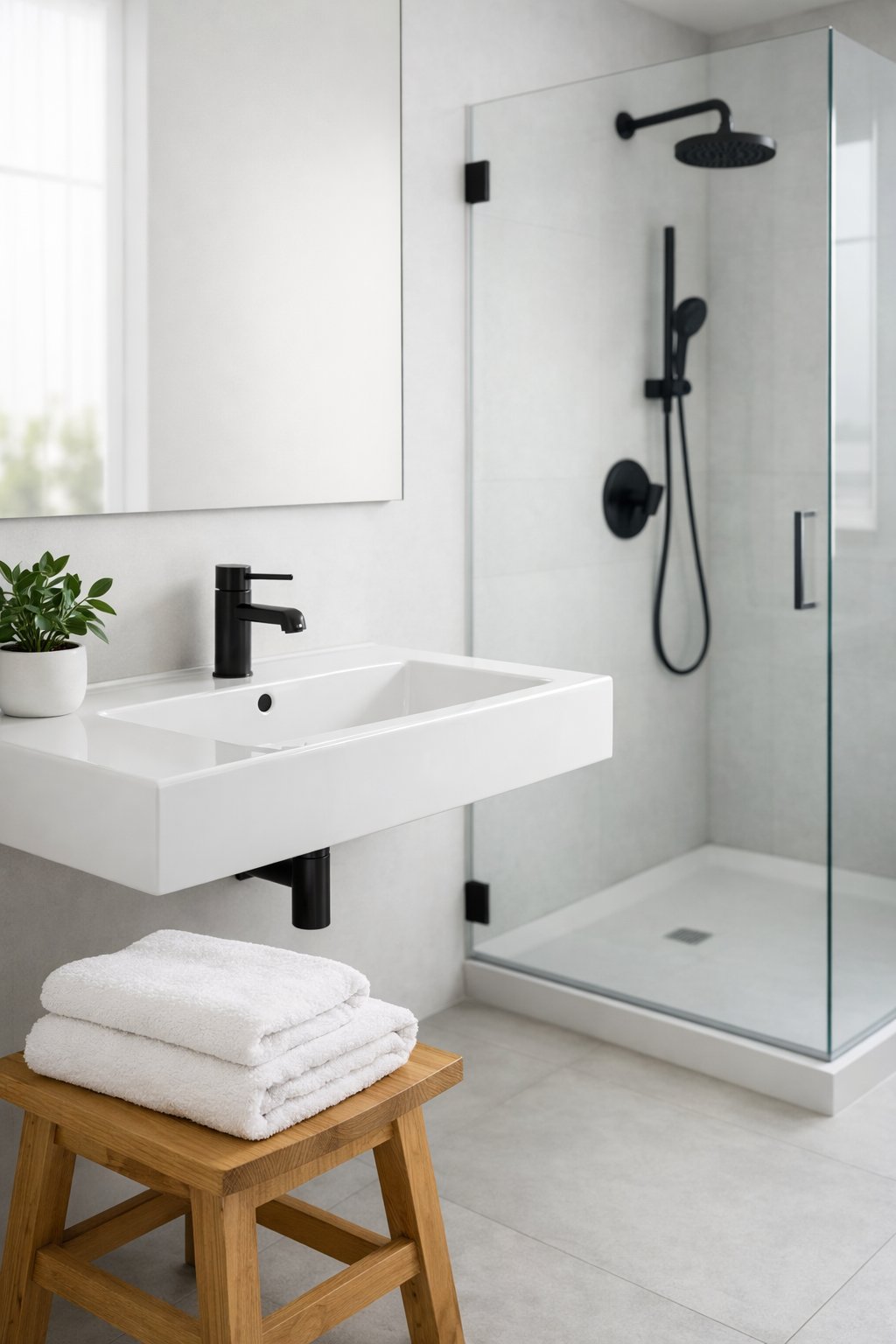
A minimalist bathroom stays clean through smart organization and durable materials. Clear storage limits clutter, while simple surfaces cut cleaning time and effort.
Effective Organization Strategies
They keep only items used each day on open surfaces. Everything else goes into drawers or cabinets. This choice reduces dust and water spots.
They group items by use, such as daily care, cleaning, and extras. Small bins or trays prevent items from spreading. Clear labels help everyone put things back.
They edit products often. Old bottles and duplicates leave the space. Fewer items mean faster wipe-downs and fewer spills.
Practical tips
- Store backups under the sink, not on counters.
- Use wall-mounted holders for soap and brushes.
- Choose closed storage near the toilet to hide supplies.
A simple rule works well: if an item does not get weekly use, it stays out of sight.
Choosing Low-Maintenance Materials
They select materials that resist water, stains, and mold. Smooth surfaces clean faster and need fewer products.
Common low-maintenance choices
| Area | Material | Reason |
|---|---|---|
| Floors | Porcelain tile | Hard, water-safe, easy to mop |
| Walls | Large-format tile | Fewer grout lines |
| Countertops | Quartz | Non-porous and stain-resistant |
| Fixtures | Matte metal | Shows fewer fingerprints |
They avoid deep grout lines and rough stone. These trap dirt and need more scrubbing.
They pick neutral colors with light texture. These hide water marks without looking busy. Simple finishes keep the space calm and easy to care for.