
Best Barndominium Builders in Georgia: Top 5 Trusted Options

Building a barndominium in Georgia has become a popular choice for those who want a mix of modern living and practical design. These homes combine the durability of metal structures with the comfort of traditional interiors, making them a smart option for families, individuals, and anyone looking for a custom space. Knowing the best builders in Georgia helps ensure the project runs smoothly and results in a home that fits both style and budget.
This article explores trusted builders in Georgia, what to look for when choosing the right company, and the steps involved in the construction process. It also addresses common questions, giving clear information to help anyone considering a barndominium make informed decisions.
1) Barndominiums of Georgia
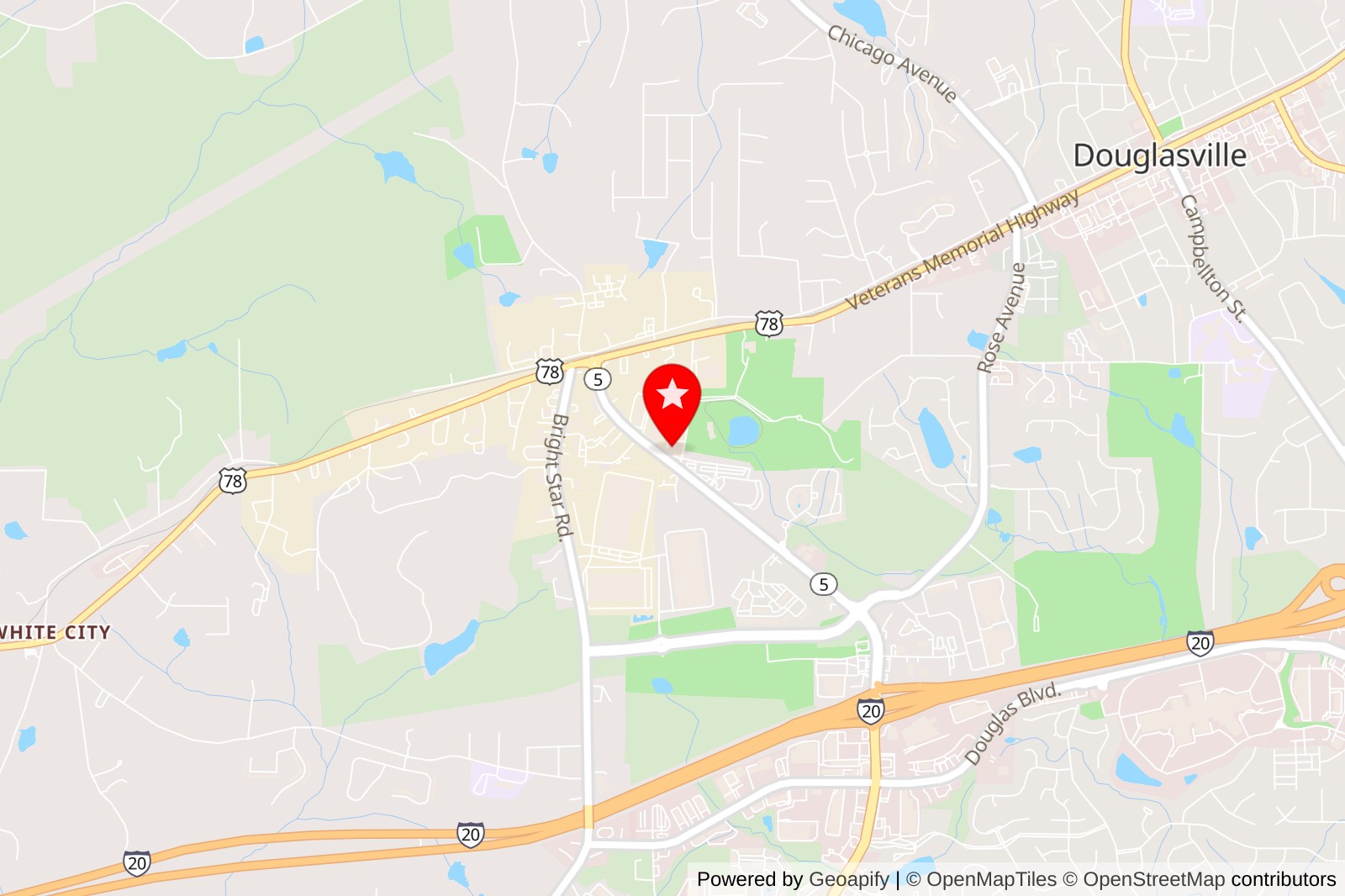
Barndominiums of Georgia designs and builds custom homes that combine barn-style structures with modern living spaces. They offer flexible options for homeowners who want anything from a rustic farmhouse look to a more industrial style.
The company provides both traditional stick framing and pole barn framing to fit different budgets and needs. Their designs can include vaulted ceilings with exposed beams or classic finishes like shiplap ceilings.
All design work is handled in-house, which helps speed up the process and makes it easier to adjust plans. Their project workbooks guide clients through choosing layouts, finishes, and structural details.
They also offer site visits to help homeowners understand what is needed to bring their plans to life. Floor plans, plumbing and electrical layouts, and renderings are included in their design packages.
Rating: 4.4 (7 reviews)
Location: 8990 GA-5 Suite 100, Douglasville, GA 30134
Contact: (678) 562-6453
Website: Visit Website
Key Considerations When Choosing a Barndominium Builder

Selecting the right builder involves more than comparing prices. Homeowners need to look at legal credentials, knowledge of state-specific building rules, and the ability to adapt plans to personal needs. These factors directly affect project quality, safety, and long-term value.
Licensing and Insurance Requirements
A reliable builder in Georgia should hold all required state and local licenses. Licensing shows that the builder meets minimum qualifications and follows construction standards. Without proper licensing, the homeowner risks fines, delays, or even unsafe construction.
Insurance is just as important. A builder should carry both general liability insurance and workers’ compensation coverage. Liability insurance protects the homeowner if property damage occurs during construction. Workers’ compensation ensures that the homeowner is not held responsible if a worker gets injured on site.
Before signing a contract, it is best to ask for proof of both licensing and insurance. Homeowners should verify documents with the issuing agencies instead of relying only on copies. This step reduces the chance of legal or financial problems later.
Experience With Georgia Building Codes
Georgia has specific building codes that cover structural safety, electrical systems, plumbing, and energy efficiency. A builder with local experience understands these codes and knows how to apply them correctly. This knowledge helps avoid failed inspections and costly rework.
Counties and cities in Georgia may also have their own requirements. For example, rural areas may focus more on septic systems, while urban counties may enforce stricter energy standards. A builder familiar with these differences can adapt plans without delay.
Working with a builder who has completed projects in Georgia gives homeowners confidence that the barndominium will pass inspections and meet long-term safety standards. Local experience also helps the builder maintain good relationships with inspectors and subcontractors.
Customization Options and Design Flexibility
Every homeowner has different needs for layout, finishes, and features. Some want large open spans for workshops, while others prioritize energy-efficient living spaces. A good builder offers flexible design choices instead of forcing clients into fixed templates.
Builders should be able to adjust floor plans, roofing materials, and interior finishes to match both function and style. They should also explain how each option affects cost and timeline. Clear communication about choices helps homeowners make informed decisions.
In Georgia, where climate and land conditions vary, customization can also mean adapting insulation, ventilation, or foundation types. A builder who understands these factors can create a design that fits both the property and the homeowner’s lifestyle.
Barndominium Construction Process in Georgia
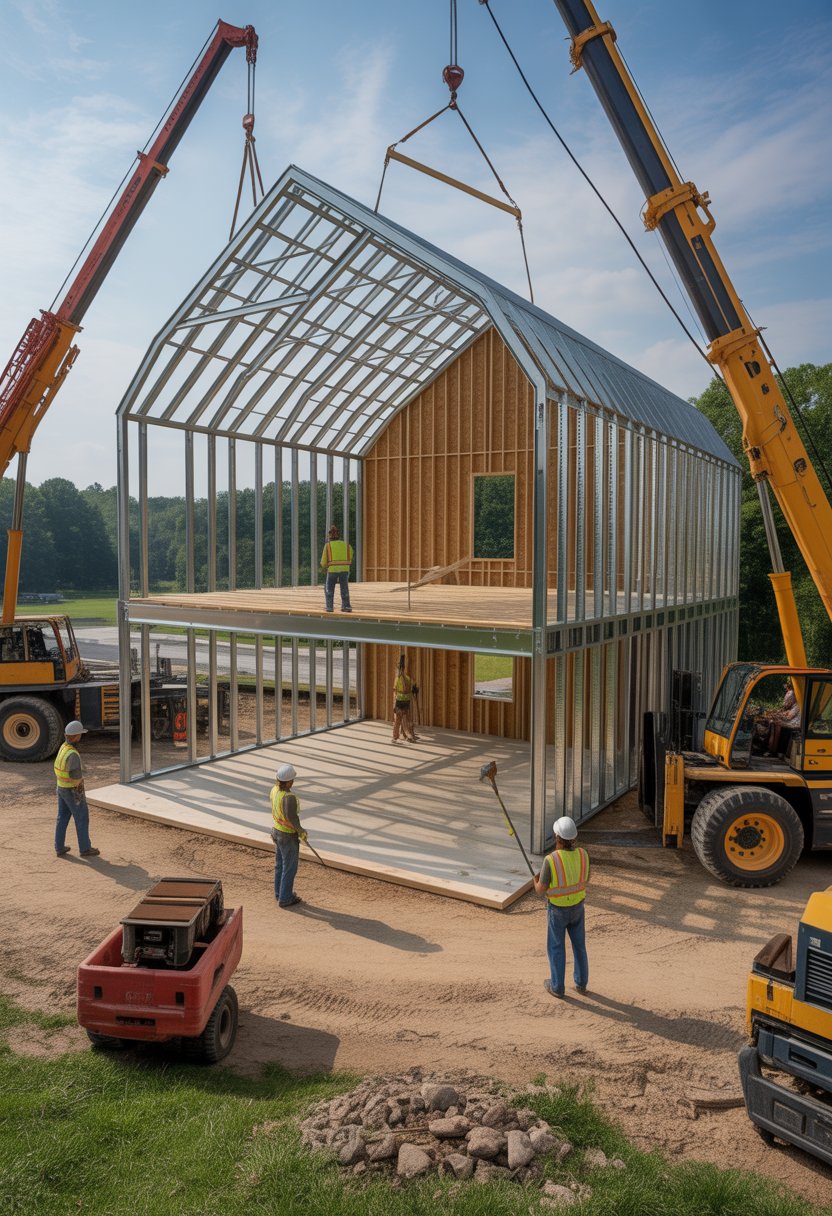
Building a barndominium in Georgia involves preparing the land, securing permits, and managing each stage of construction with a clear schedule. The process often moves faster than a traditional home build due to prefabricated materials and streamlined methods, but timing still depends on design complexity and contractor coordination.
Site Preparation and Permitting
The first step is clearing and grading the land to create a stable foundation. Builders often bring in heavy equipment to remove trees, level the ground, and ensure proper drainage. Soil testing may also be required to confirm the site can support the structure.
Permitting is handled at the county or city level. Homeowners must submit building plans for approval, which usually include floor layouts, foundation details, and utility connections. Local codes in Georgia vary, so requirements in rural counties may differ from those in metro areas like Atlanta.
Utility planning is another key part of preparation. This includes arranging water, septic, and electrical service before the slab or pier foundation is poured. Skipping these steps can delay construction and increase costs.
Timeline and Project Management
The timeline depends on the size of the barndominium and the level of customization. A smaller, prefabricated design may take only a few months, while a large custom home can extend closer to a year. Weather and permit approval times also affect scheduling.
Project management is usually handled by the builder. They coordinate subcontractors for framing, roofing, plumbing, and electrical work. Clear scheduling helps prevent delays when multiple trades need access to the site.
Many Georgia builders offer turnkey services, meaning they handle every stage from design to final inspection. This reduces the risk of miscommunication and gives the homeowner a single point of contact throughout the project.
Frequently Asked Questions
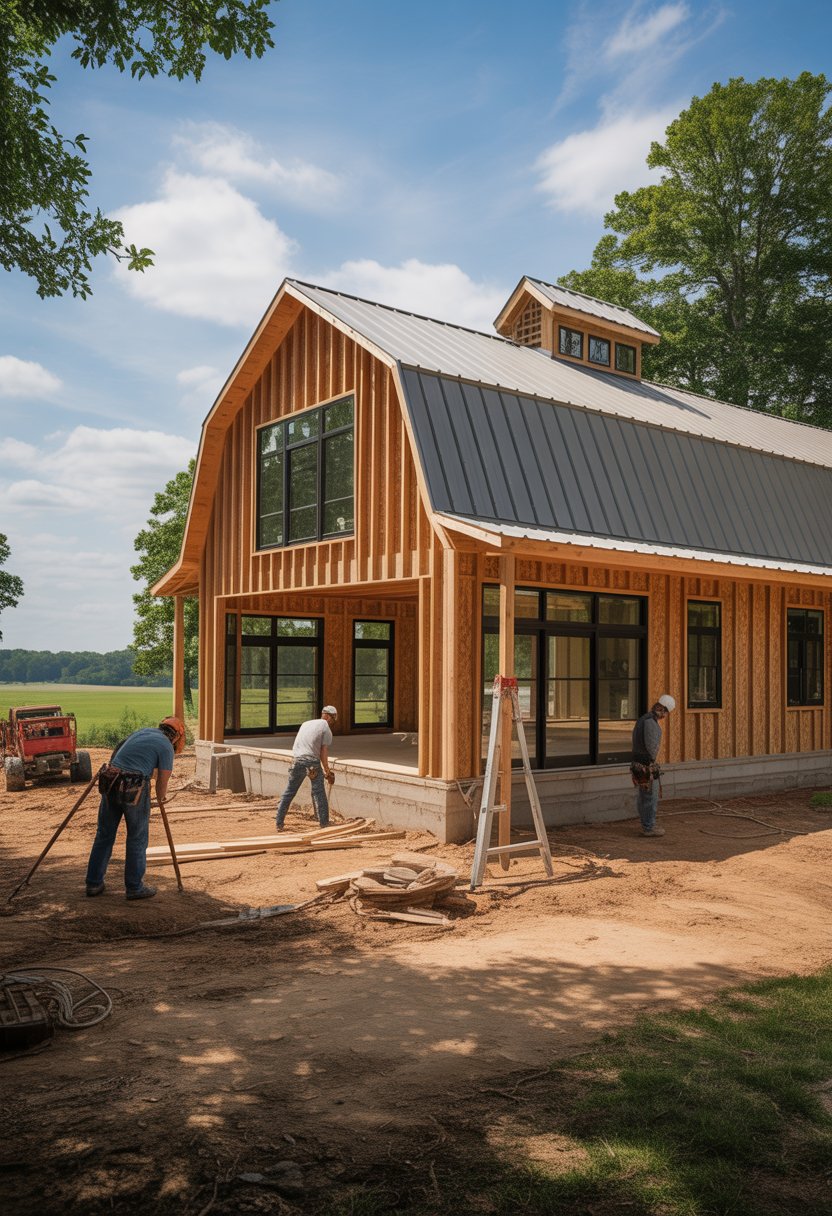
Building a barndominium in Georgia involves knowing which builders have strong reputations, how much the project may cost, and what rules apply. Buyers also want to understand floor plan options, kit availability, and the qualities that make a builder reliable.
What are the top-rated barndominium builders in Georgia?
Barndominiums of Georgia is one of the most recognized builders in the state, covering more than 50 counties. They focus on post-frame home construction and have experience with both custom and stock designs.
Other builders in Georgia also specialize in barndominiums, but Barndominiums of Georgia stands out for its statewide reach and established presence.
How much does it typically cost to build a barndominium in Georgia?
The average cost often ranges between $100 to $150 per square foot, depending on materials, finishes, and location. Higher-end builds with custom features may push costs above this range.
Land preparation, permits, and utility hookups add to the total budget.
Are there any specific legal requirements for building a barndominium in Georgia?
Georgia follows state building codes and county zoning laws that apply to all residential structures. Each county may have different rules for minimum square footage, roof pitch, and exterior appearance.
Permits are required for both construction and utility connections, so checking with local planning offices is essential before starting.
What are the most popular barndominium floor plans in Georgia?
Open-concept layouts with large living areas and attached workshops are common. Many homeowners choose designs that combine living space with garages or storage areas.
Two- to four-bedroom floor plans with flexible space for offices or guest rooms remain popular choices across the state.
Can you recommend barndominium builders who also offer kits in Georgia?
Some Georgia builders provide barndominium kits that include pre-engineered materials for faster assembly. These kits allow buyers to save on labor or take a hybrid approach by hiring a contractor for finishing work.
Barndominiums of Georgia and similar companies may offer both full builds and kit options depending on customer needs.
What should I look for in a builder when planning to construct a barndominium in Georgia?
A reliable builder should have experience with post-frame or steel-frame construction and knowledge of Georgia’s building codes.
It is important to review past projects, confirm licensing and insurance, and ask for clear timelines and cost estimates.
Strong communication and the ability to customize floor plans are also key signs of a trustworthy builder.


