
Foldable Dining Table Ideas for Small Spaces: 5 Smart, Space-Saving Solutions
Small spaces demand smart furniture choices. A foldable dining table helps them create a place to eat, work, or gather without giving up valuable floor space. They can use foldable dining table ideas to make a small room feel organized, flexible, and comfortable.
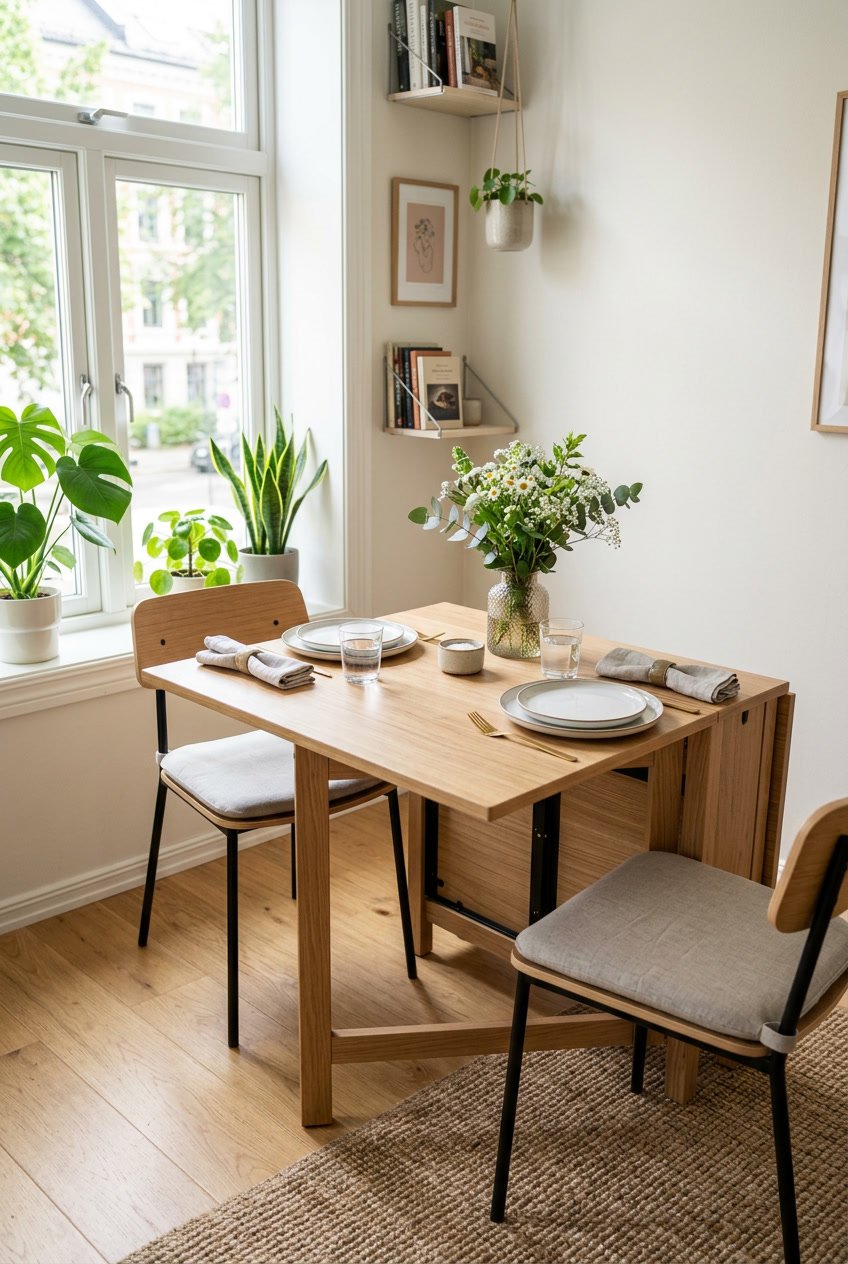
This guide explores practical options that fit apartments, studios, and compact homes. It looks at space-saving designs, simple planning tips, and ways to use one table for many daily needs.
1) IKEA NORDEN Gateleg Table

The IKEA NORDEN Gateleg Table works well in small dining areas. It uses a double drop-leaf design, so they can fold down one or both sides when they need more floor space.
The table seats two to four people. A narrow center section holds drawers for flatware or napkins, which adds useful storage.
It comes in finishes like birch and white. The simple Scandinavian style fits most apartments without taking over the room.
2) Wall-mounted drop-leaf table (fold-down breakfast bar)

A wall-mounted drop-leaf table gives a small home a usable dining surface without taking up floor space. It folds up when needed and drops flat against the wall when not in use. This design works well in studio apartments and narrow kitchens.
Many models use strong wood tops with metal brackets for support. Options like Wall Mounted Drop Leaf Table offer simple installation and a clean look.
Homeowners can mount it at table or bar height. Add two folding chairs to create a compact breakfast bar.
3) Murphy-style folding dining table with built-in storage

A Murphy-style folding dining table mounts to the wall and folds down when needed. When closed, it looks like a slim cabinet and frees up floor space. Many models include shelves or small drawers for dishes and tools.
Some designs seat two to four people and fold back into a cabinet after meals. Options like the Murphy Dining Table show how this style works in small apartments.
He or she can store placemats, napkins, or cookware inside the built-in compartments. This setup keeps the room tidy and ready for other daily tasks.
4) Drop-leaf farmhouse gateleg table (solid wood)

A drop-leaf farmhouse gateleg table offers strong support and classic style. It uses solid wood, often oak or similar hardwood, for daily use. The gateleg swings out to hold the leaf when needed.
When folded down, it fits against a wall or in a corner. This design works well in small kitchens and apartments. Many models seat two when closed and four when open.
Options like the Gate Leg Drop Leaf Table include added storage or wheels for easy movement. The simple farmhouse look blends with rustic or modern spaces.
5) Extendable flip-top bistro table on casters

An extendable flip-top bistro table on casters fits tight kitchens and studio apartments. It stays compact for daily meals, then flips open to seat more guests. Some designs use engineered wood with an oak veneer for a warm, classic look.
Locking wheels let them roll the table against a wall when not in use. Many models include drop-leaf or gateleg supports for added stability. Options like Flip Top Dining Table show how this style blends function and simple design.
This table works well as a dining spot or small desk.
Space Planning and Measurements

Good space planning prevents crowding and makes a foldable dining table easy to use. Accurate measurements and clear paths matter as much as the table style.
Assessing Layout Constraints
Start by measuring the room’s length, width, and ceiling height. Then measure the exact wall area where the table will sit, especially for wall-mounted drop-leaf models.
In very small kitchens, a table may need to sit against a wall or under a window. A wall-mounted option like a Wall Mounted Drop Leaf Dining Table works well in narrow rooms because it folds flat when not in use.
He or she should also check nearby doors, cabinets, and appliances. Make sure cabinet doors and drawers can still open fully when the table is extended.
For studio apartments, note the distance between the sofa and the kitchen area. A slim console-style folding table can act as both a desk and a dining spot. Measure both the folded and fully open sizes before buying.
Keep a simple checklist:
- Folded depth
- Fully extended length and width
- Wall clearance
- Nearby furniture spacing
Small mistakes in measurement can make the space feel cramped.
Clearance and Accessibility
Leave enough space around the table for safe movement. Most people need at least 30 to 36 inches of clearance to walk behind a seated person.
If the table sits in a main walkway, aim for closer to 36 inches. In tight corners, 30 inches may work, but anything less will feel tight.
Chairs also need space. Measure the chair depth and add about 18 inches for someone to sit and stand comfortably. For extendable models like a Extendable Folding Dining Table, check clearance in both compact and expanded forms.
Wheels can improve access in small homes. A folding table with casters lets them move it aside after meals, which helps in multi-use rooms.
Always test the layout with painter’s tape on the floor. Outline the table’s full size and walk around it. This step shows real-life flow before they commit to the purchase.
Maximizing Versatility in Multi-Use Areas

A foldable dining table can shift from daily meals to work tasks or social events in minutes. The right design helps small rooms serve more than one purpose without feeling crowded.
Transforming Dining to Workspace
Many small homes use one area for eating, working, and studying. A foldable table makes this change simple and fast.
A wall-mounted drop-leaf table works well in tight rooms. When folded down, it leaves open floor space. When lifted, it creates a firm surface for a laptop, books, or paperwork. Options like a Wall Mounted Drop Leaf Table fit narrow kitchens or studio apartments.
Storage matters in a shared space. Choose a folding table with built-in shelves or drawers to hold pens, chargers, and notebooks. This keeps work items close but out of sight during meals.
Lockable wheels add more flexibility. They let users roll the table near a window for natural light, then move it back against the wall after work. A stable frame and smooth folding hinges prevent wobbling during typing or writing.
Adapting for Entertaining Guests
A foldable table should expand easily when guests arrive. Extendable or gateleg designs add surface space without taking up room every day.
Some models open from a compact cabinet into a table that seats four. Others use hinged leaves that lift and lock into place. A practical example is a Extendable Folding Dining Table, which adjusts to different group sizes.
Seating also needs a plan. Store folding chairs in a closet or stack them against a wall. Bring them out only when needed to keep the area clear.
Place the table near a wall for daily use, then pull it toward the center of the room for gatherings. This simple shift improves traffic flow and gives guests enough elbow room without changing the layout of the entire space.


