
25 Bathroom Remodel Ideas On A Budget: 5 Smart, Affordable Updates
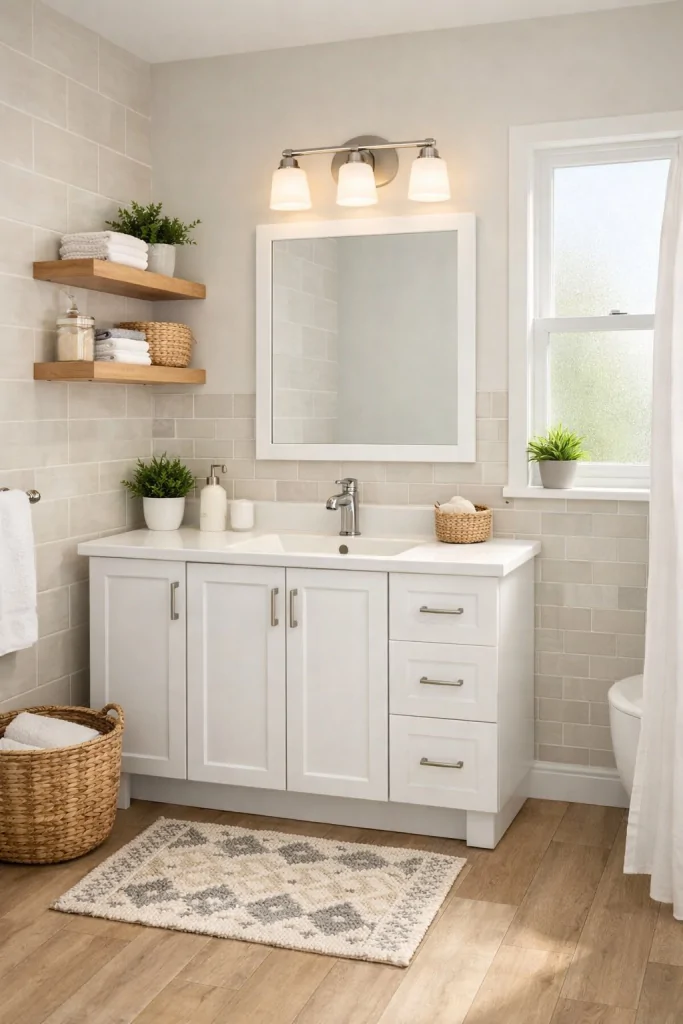
A bathroom update does not need a large budget or a full rebuild. Many homes gain a cleaner look and better function through smart choices and simple changes. This article shows how a bathroom remodel can look modern and polished while keeping costs under control.
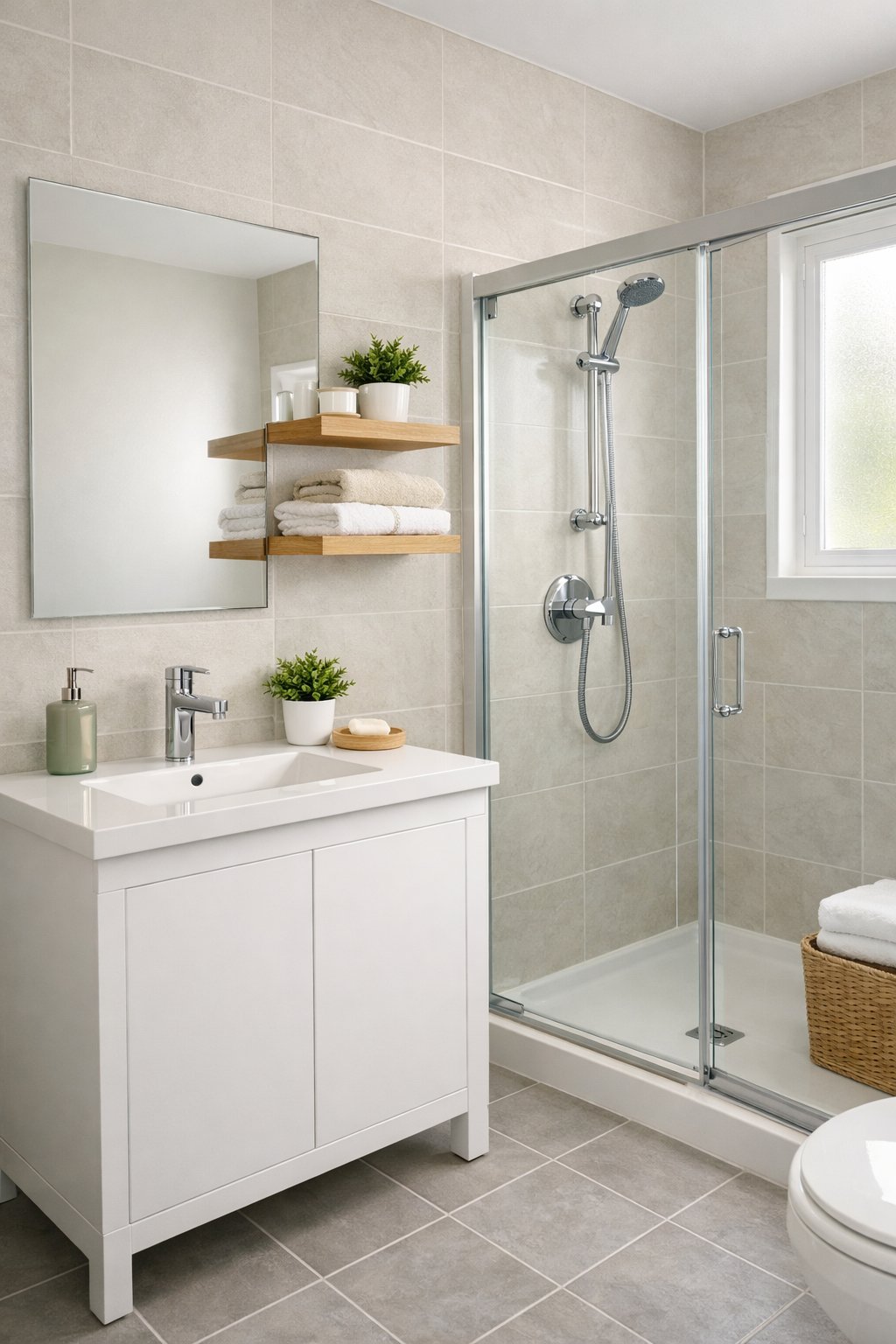
The ideas ahead focus on practical upgrades, flexible plans, and careful spending. They cover shared baths and main bathrooms, store-bought fixes and do-it-yourself work, and ways to keep quality high without extra cost. Each section helps guide smart decisions that fit real homes and real budgets.
Bathroom Remodel Ideas On A Budget
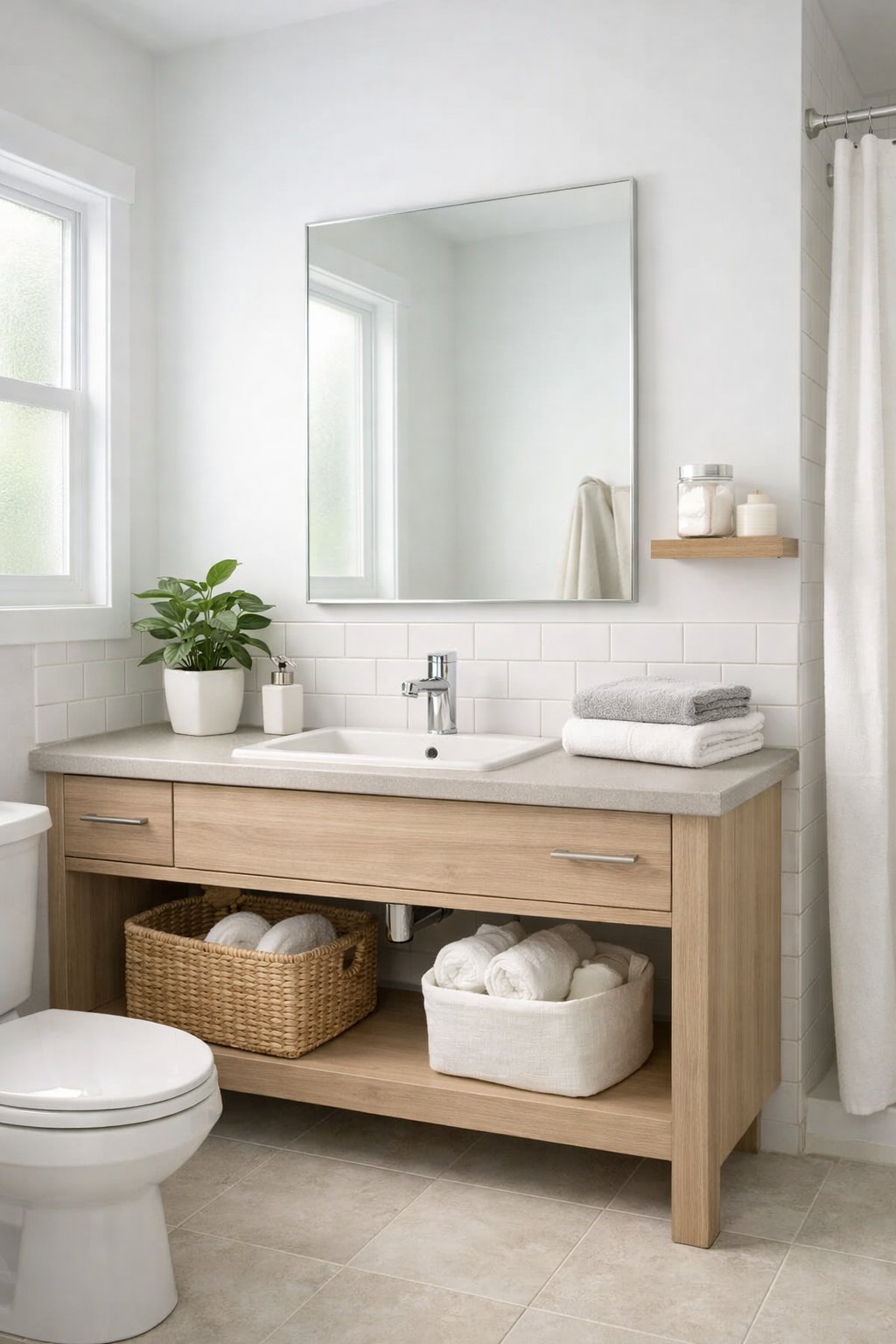
A budget bathroom remodel focuses on small changes with clear impact. Paint, lighting, and hardware updates often deliver the best value. These projects need basic tools and limited time.
Fresh paint changes the room fast. Light colors make small bathrooms feel larger. Moisture‑resistant paint helps walls last longer.
Simple swaps improve function and style. New faucets, towel bars, and cabinet pulls cost little and install quickly. Matching finishes create a clean look.
Low-cost updates to consider:
- Replace old light fixtures with LED models
- Add peel-and-stick tile to floors or backsplashes
- Install open shelves for storage
- Update mirrors or frames
- Reseal grout and caulk
Storage upgrades reduce clutter. Wall shelves, baskets, and over‑toilet units add space without floor work. These options work well for renters.
Typical budget ranges:
| Update Type | Common Cost Range |
|---|---|
| Paint and supplies | $40–$120 |
| Lighting fixture | $50–$150 |
| Hardware set | $30–$100 |
| Peel-and-stick tile | $1–$5 per sq. ft. |
DIY vanity refreshes save money. Sanding and painting cabinets costs less than replacement. New knobs complete the change.
Textiles add warmth and color. Shower curtains, rugs, and towels refresh the space with little effort. Neutral basics with one accent color stay easy to update later.
Master bathroom remodel ideas on a budget
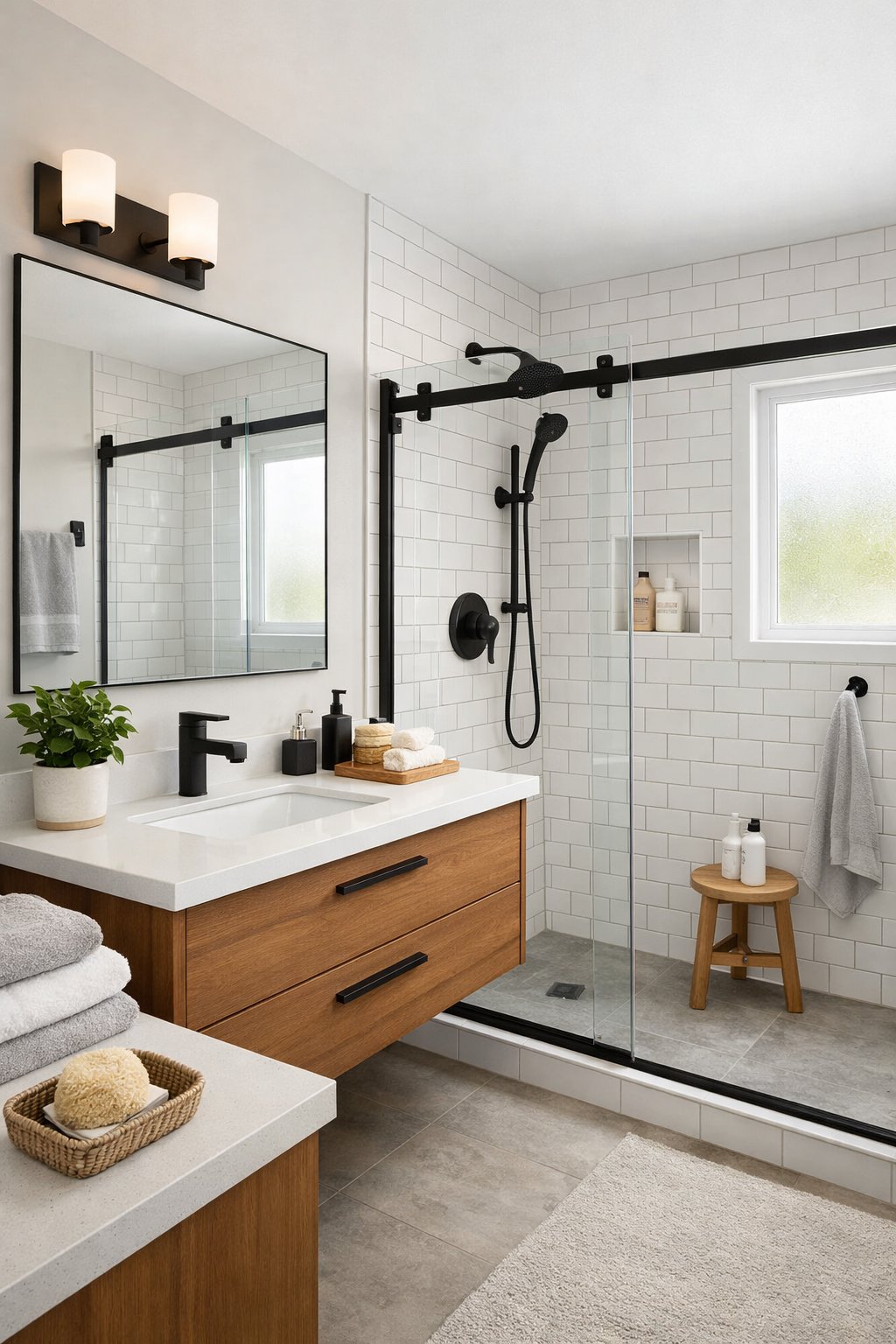
A master bathroom can feel updated without a full remodel. They can focus on small changes that improve function and style while keeping costs low.
They often start with paint and lighting. Light, neutral paint makes the room feel larger. A new LED light bar or wall sconces improve visibility and cut energy use.
High-impact, low-cost updates include:
- Replacing cabinet hardware with simple metal pulls
- Swapping an old faucet for a modern, water-saving model
- Adding peel-and-stick tile as a backsplash or floor accent
- Updating mirrors with framed or rounded styles
Storage upgrades also help. Open shelves or a slim cabinet add space without moving walls. They keep daily items easy to reach and reduce clutter on the vanity.
A vanity refresh costs less than a full replacement. They can paint the cabinet, change the top, or add a new sink. These steps improve the look while using the existing layout.
| Upgrade | Why it works | Typical cost range |
|---|---|---|
| Paint walls or vanity | Fast visual change | Low |
| New fixtures | Better use and style | Low to mid |
| Open shelving | Adds storage | Low |
| Mirror upgrade | Improves light | Low |
Textiles finish the space. New towels, a shower curtain, and a bath mat add color and comfort without a major expense.
Best Budget Bathroom Makeovers
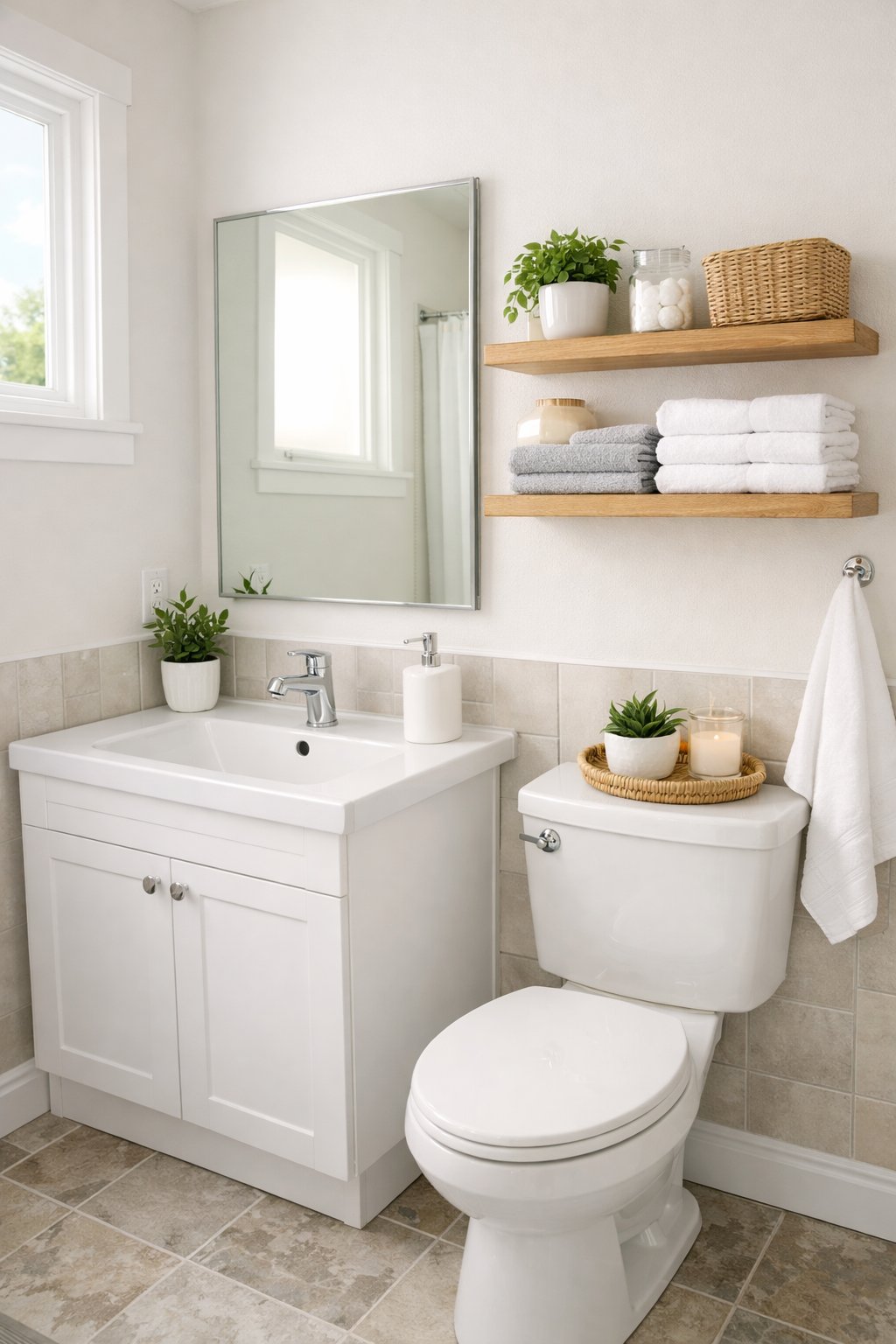
They focus on small changes that deliver visible results. Paint leads the list because it costs little and changes the room fast. Light, neutral colors make small bathrooms feel larger, while darker tones add contrast when used on one wall or a vanity.
They often swap surfaces instead of replacing them. Peel-and-stick tile updates floors or backsplashes without tools. Vinyl plank flooring resists water and installs over old surfaces, which saves time and money.
They refresh fixtures to modernize the space. New faucets, towel bars, and cabinet pulls cost less than full replacements. Brushed nickel or matte black finishes create a clean, current look.
They improve lighting to boost function and style. A new vanity light or warmer bulbs reduce shadows. Mirrors with thin frames reflect more light and cost less than custom options.
Common upgrades and impact
| Update | Cost Range | Visual Impact |
|---|---|---|
| Paint walls or vanity | Low | High |
| Peel-and-stick tile | Low–Medium | High |
| Hardware swap | Low | Medium |
| Lighting update | Medium | High |
They add storage without remodeling. Floating shelves, over-the-toilet units, and baskets keep counters clear. Simple accessories, like matching soap pumps and towels, tie the look together without extra cost.
Diy bathroom remodel ideas on a budget
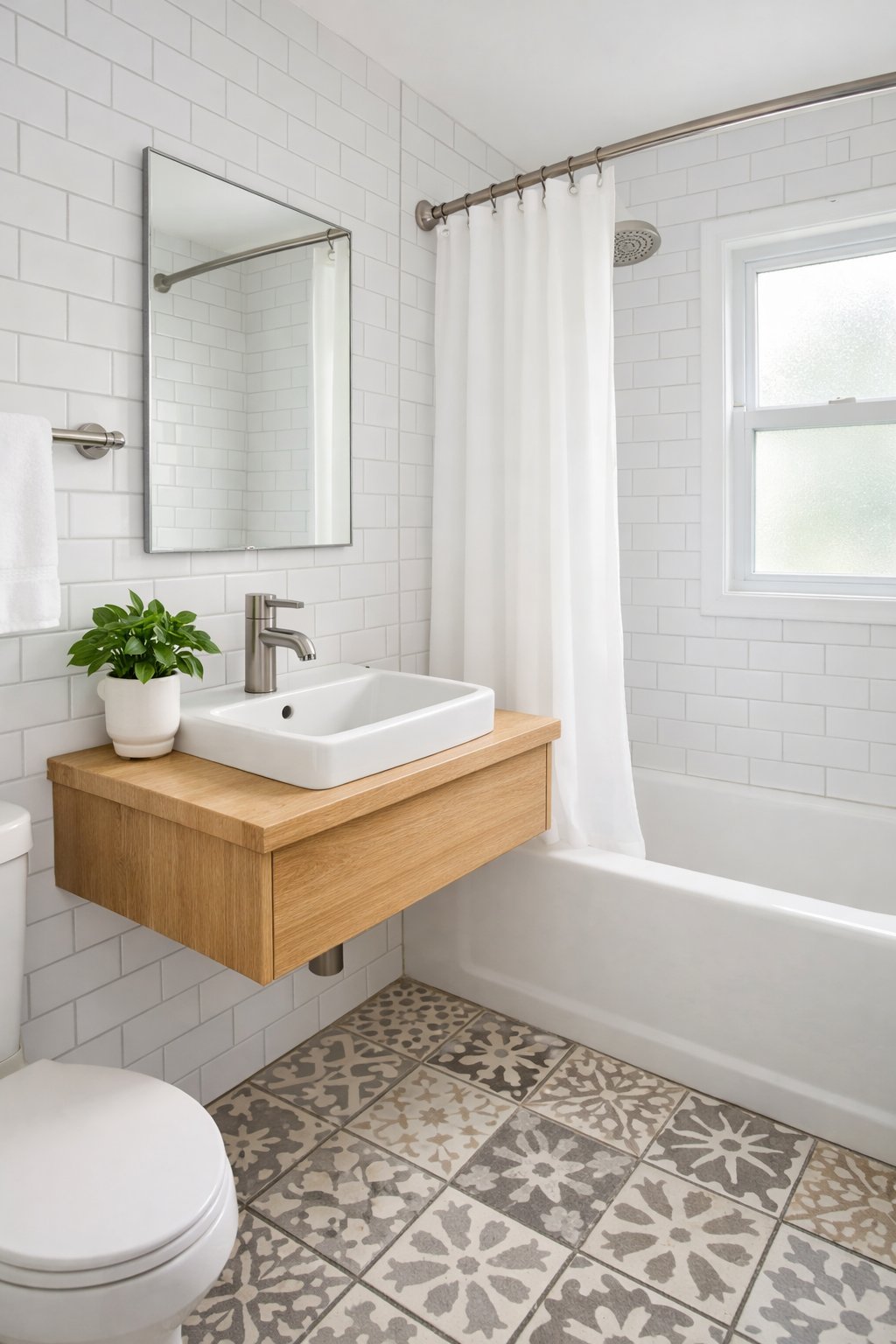
DIY updates can change a bathroom without high costs. Many projects need basic tools and simple skills. They also work well for renters or small spaces.
A fresh coat of paint gives fast results. Light colors make small bathrooms feel larger. Moisture‑resistant paint helps walls last longer.
Peel‑and‑stick materials offer an easy upgrade. Homeowners use them for floors, backsplashes, and accent walls. They install quickly and remove with less damage.
Simple DIY projects that save money:
- Replace cabinet knobs and drawer pulls
- Swap an old mirror for a framed one
- Add open shelves for storage
- Install a new shower curtain and liner
- Update towel bars and toilet paper holders
Small changes to fixtures also help. A new faucet or showerhead improves daily use. Many models install with basic tools.
They can refresh a vanity without replacing it. Paint, new hardware, or a new countertop cover can change the look. These updates cost far less than a full vanity swap.
Cost vs. impact examples:
| Project | Cost Range | Visual Impact |
|---|---|---|
| Paint walls | Low | Medium |
| Hardware swap | Low | Medium |
| Peel‑and‑stick tile | Low–Medium | High |
| New mirror | Medium | Medium |
| Open shelving | Low | Medium |
Lighting matters in small rooms. They can replace dated light fixtures with simple LED options. Better light improves function and appearance.
1) Apply a fresh coat of waterproof, washable paint for an instant refresh.
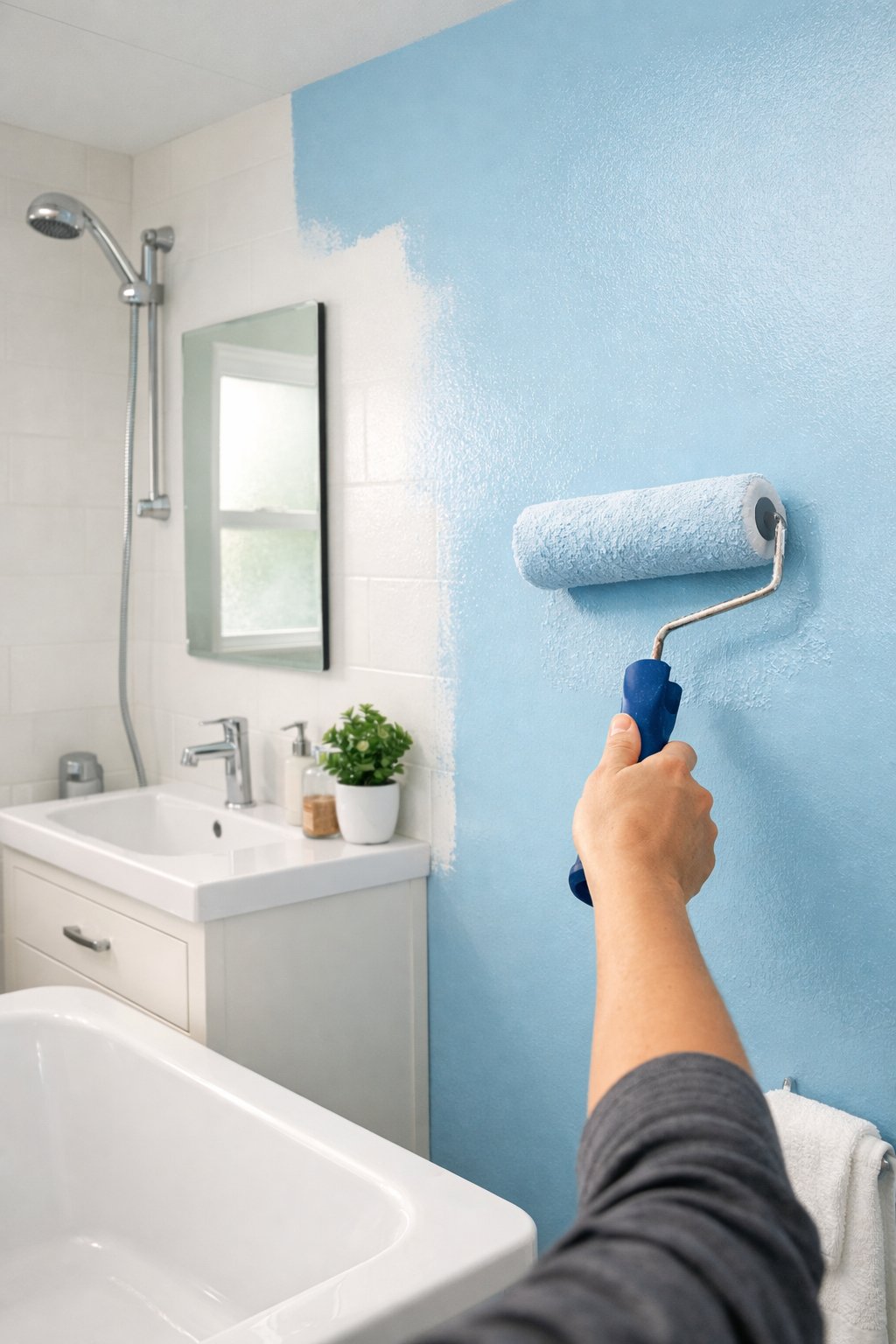
A fresh coat of paint gives a bathroom a clean, updated look at a low cost. Waterproof, washable paint works well in humid rooms and helps protect walls from moisture.
They should choose paint made for bathrooms or kitchens. These paints resist mildew and clean easily, which helps the finish last longer.
Light colors can make a small bathroom feel brighter. Darker shades can add contrast when used on one wall or trim.
This update fits most budgets and does not require special tools or skills.
2) Install peel-and-stick backsplash tiles for an easy, stylish upgrade.
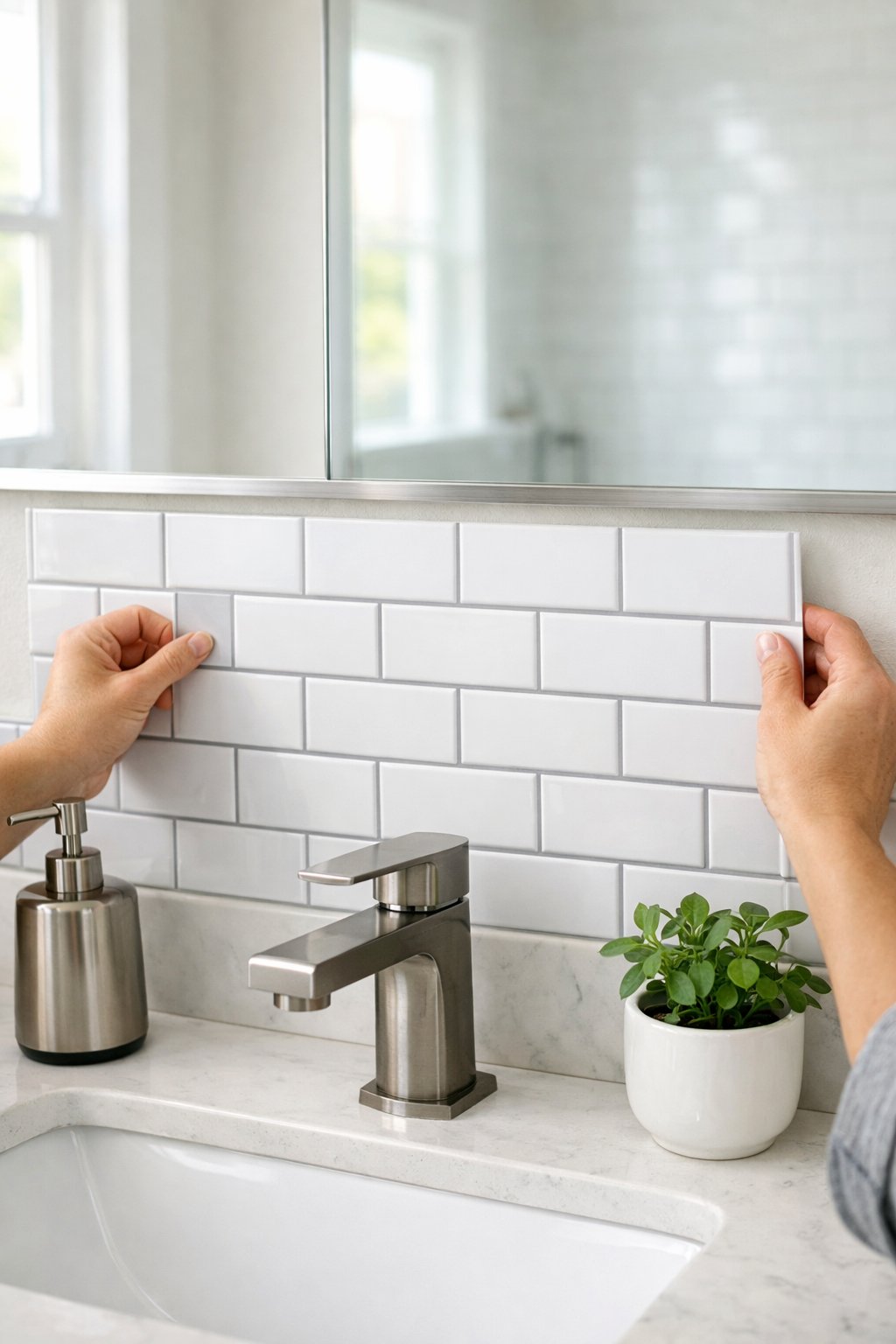
Peel-and-stick backsplash tiles offer a simple way to refresh a bathroom. They work well behind sinks and vanities. Many styles copy real tile without grout or mortar.
Most people install them in a few hours. The tiles stick to clean, smooth walls. A ruler and utility knife help with straight cuts.
These tiles cost less than traditional tile. Renters often choose them because removal causes little damage.
3) Replace outdated fixtures with affordable brushed nickel or matte black options.
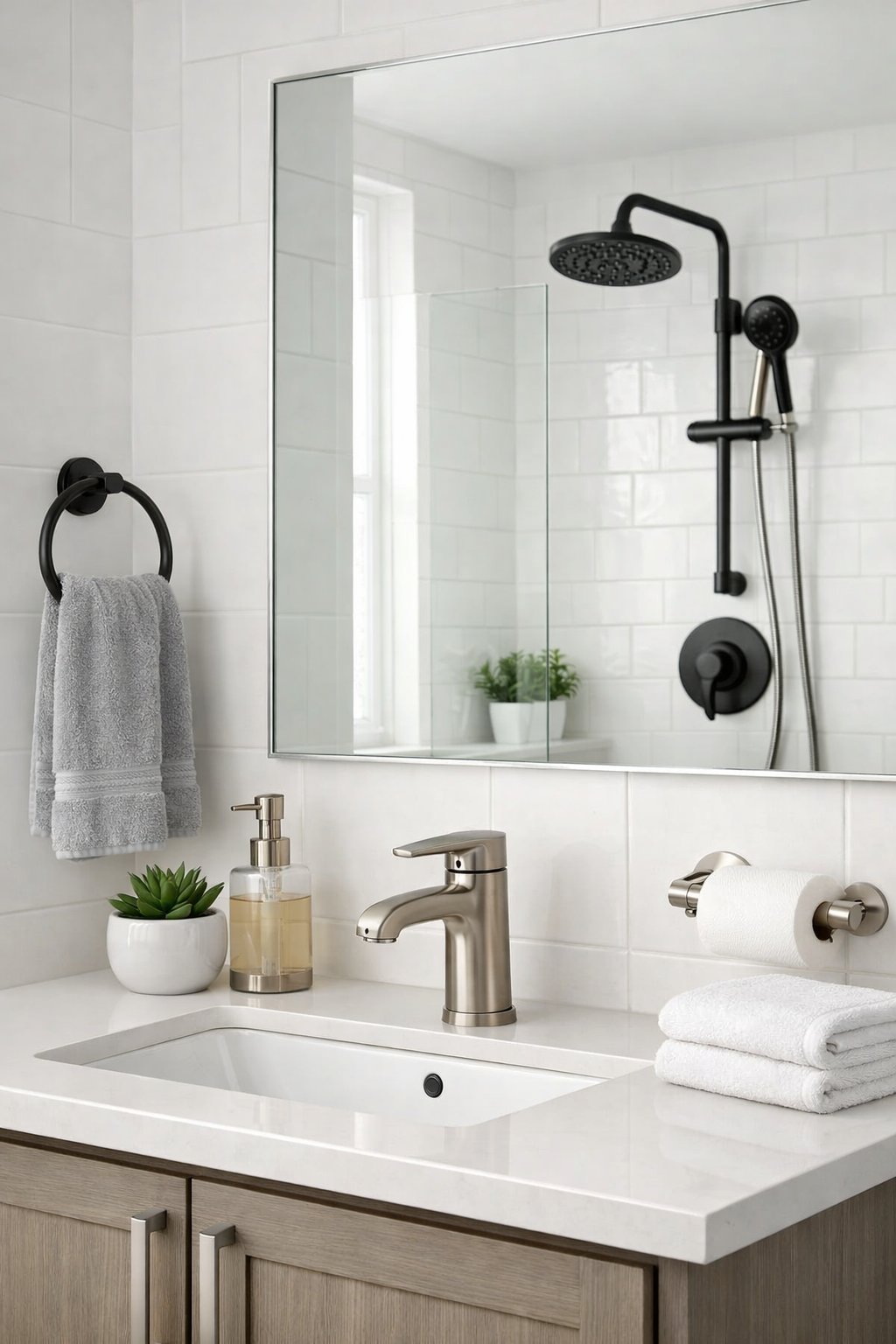
Old faucets and handles can date a bathroom fast. They can swap them for brushed nickel or matte black to get a clean, modern look without high cost.
Many budget fixtures install with basic tools. They should check hole spacing to avoid extra work and repairs.
Brushed nickel hides water spots and wear. Matte black adds contrast and works well with white or neutral spaces.
They can replace towel bars and shower hardware to match. Keeping one or two finishes helps the room feel planned.
4) Add open shelving using reclaimed wood to increase storage and visual interest.
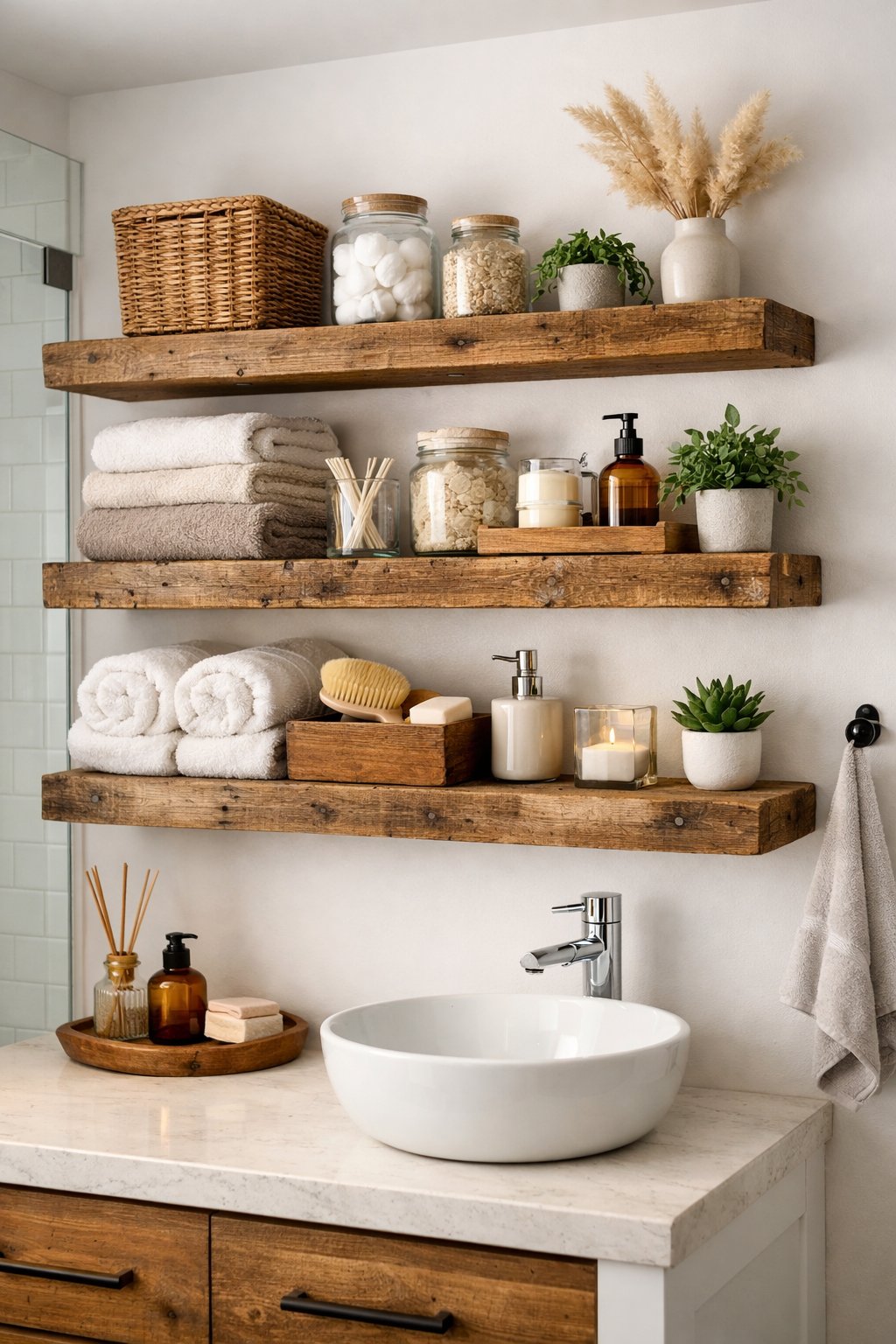
Open shelving made from reclaimed wood adds storage without raising costs. It uses simple materials and avoids bulky cabinets.
They can hold towels, jars, and daily items. Open shelves keep essentials within reach and reduce clutter on counters.
Reclaimed wood brings texture and warmth to the room. Each board shows natural marks that add character without extra decor.
Install floating shelves or basic brackets for a clean look. This approach works well in small bathrooms with limited space.
5) Swap out old cabinet hardware for modern knobs and pulls
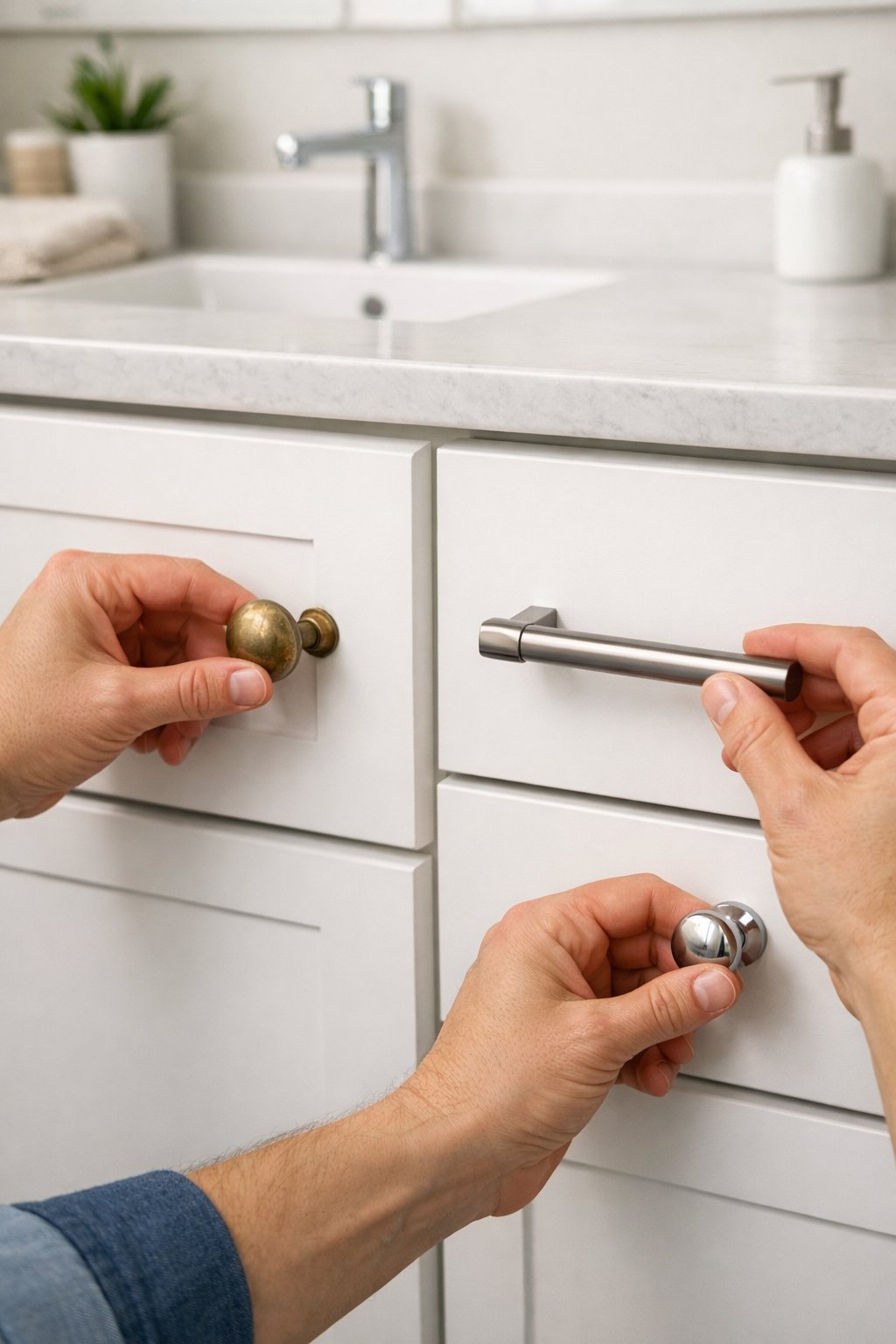
Old cabinet hardware can make a bathroom feel dated. Replacing knobs and pulls offers a fast update without major work or high cost.
Most bathrooms use standard screw sizes, so new hardware often fits existing holes. This keeps the project simple and limits the need for tools.
Modern finishes like matte black, brushed nickel, or brass can change the look of cabinets right away. The update works well on vanities, drawers, and even linen cabinets.
Many people complete this swap in under an hour. It works as a weekend task with low risk and clear results.
Budget Planning for Your Bathroom Remodel
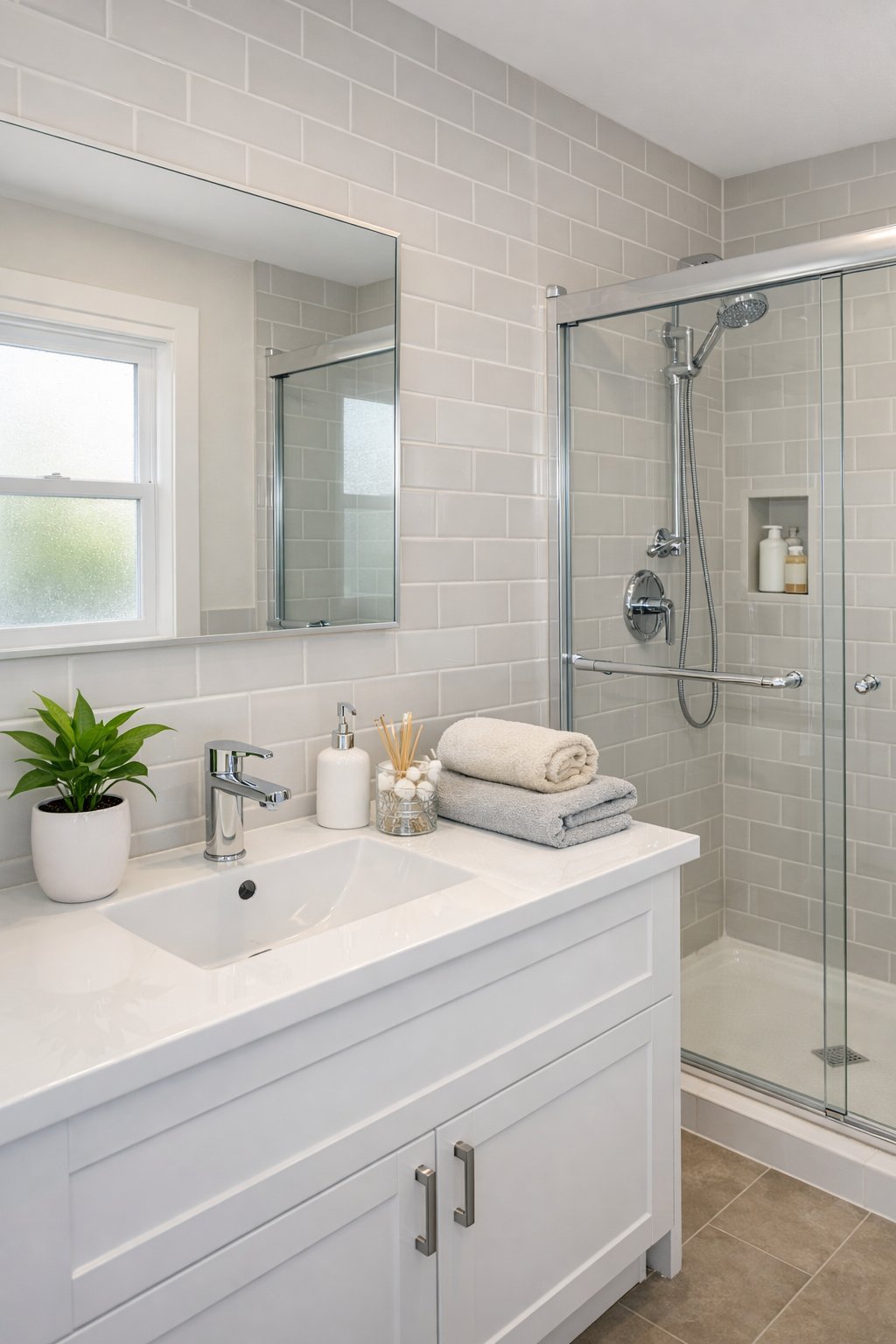
A clear budget keeps costs under control and prevents delays. Smart planning helps focus spending on changes that improve function, comfort, and appearance.
Setting a Realistic Bathroom Renovation Budget
They should start by setting a firm dollar range before shopping or planning layouts. A common low-cost remodel often falls between $3,000 and $7,000, depending on size and labor needs. This range usually covers paint, fixtures, lighting, and minor repairs.
They should list fixed costs first. These include plumbing work, permits, and basic materials. Labor often takes 40–50% of the budget when professionals handle the work.
| Cost Type | Typical Share |
|---|---|
| Labor | 40–50% |
| Fixtures | 20–25% |
| Materials | 20–30% |
| Buffer | 10% |
They should keep a 10% buffer for hidden issues like water damage. Older bathrooms often hide problems behind walls or floors.
How to Prioritize Remodel Expenses
They should spend money where it improves daily use. Items touched every day deserve more budget than decor. A leaking toilet or weak fan causes long-term issues if ignored.
Priority items usually include:
- Plumbing fixtures like faucets and toilets
- Ventilation fans to control moisture
- Lighting near the mirror and shower
They can save on items with low impact. Towel bars, mirrors, and shelves often cost less and install easily. Paint offers one of the highest returns for the lowest cost.
They should avoid moving plumbing or walls. These changes raise labor and permit costs fast. Keeping the layout intact allows more budget for visible upgrades.
Maximizing Savings with Smart Purchases
They can cut costs by choosing standard sizes for tubs, vanities, and mirrors. Custom sizes raise prices and limit options. Stock items ship faster and cost less.
They should watch for sales at home stores and online shops. Holiday sales often reduce fixture prices by 20–40%. Buying floor models can save even more.
They can also mix price levels:
- Spend more on faucets and showerheads
- Save on tile patterns by using simple designs
- Choose peel-and-stick or vinyl flooring for low-cost installs
They should compare prices across at least three sellers. Small savings across many items add up fast.
Maintaining Quality and Style on a Budget
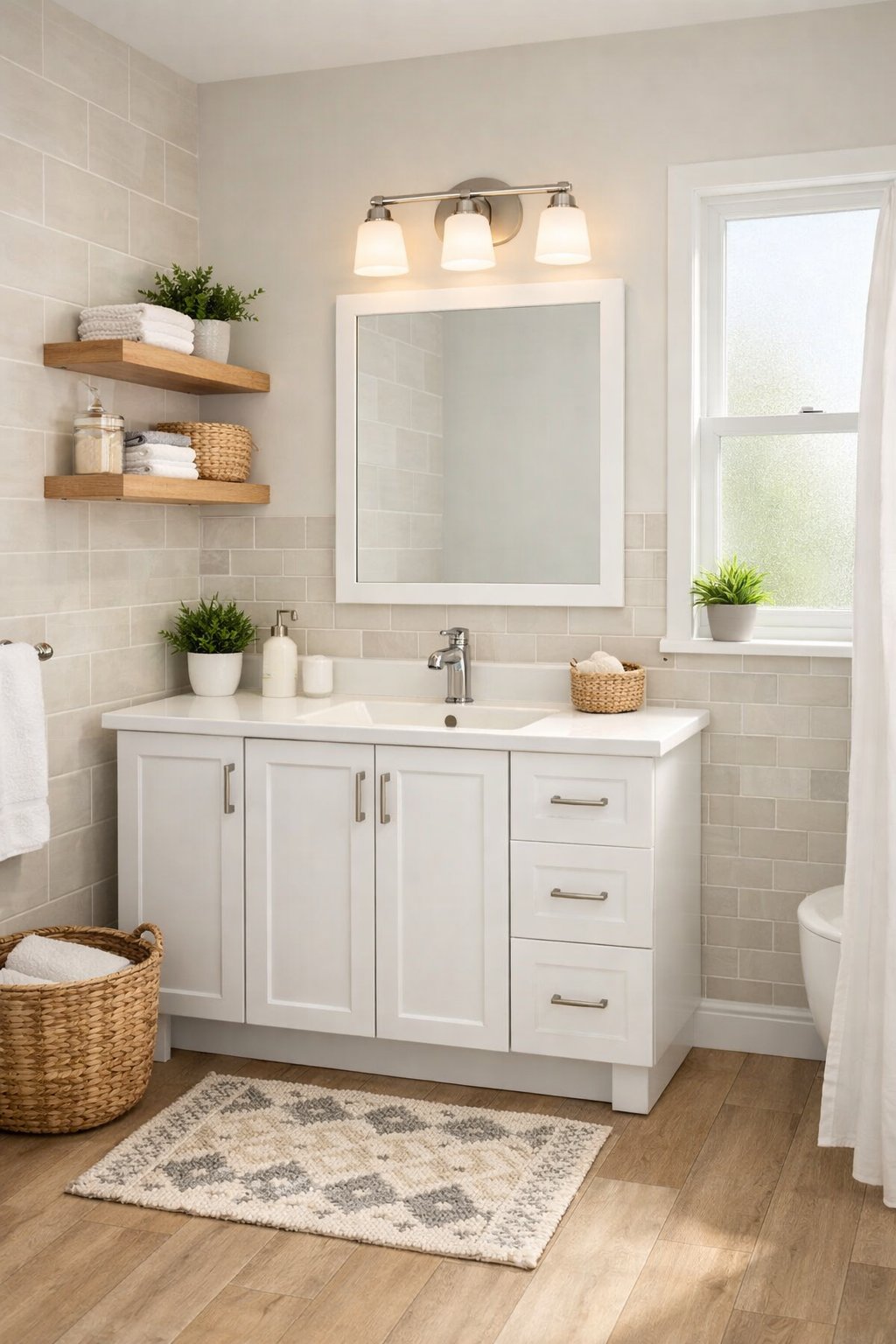
A smart bathroom remodel protects daily use, looks clean, and avoids repeat costs. Careful material choices, the right mix of DIY and pro work, and simple upkeep decisions help the space last longer without raising the budget.
Choosing Cost-Effective Materials
They can save money by picking materials that balance price, durability, and easy care. Porcelain tile costs less than natural stone and resists water and stains. Luxury vinyl plank works well for floors because it handles moisture and installs fast.
Fixtures also matter. Brushed nickel and chrome finishes cost less than specialty metals and stay in style longer. They also hide water spots better.
High-impact swaps often include:
- Prefab vanities instead of custom builds
- Acrylic tubs instead of cast iron
- Laminate counters that mimic stone
| Material | Why It Works | Typical Use |
|---|---|---|
| Porcelain tile | Strong and water-safe | Floors, walls |
| Vinyl plank | Low cost, easy install | Floors |
| Laminate | Clean look, low price | Counters |
DIY vs. Professional Help
They can cut costs by handling simple tasks, but skilled work protects long-term value. Painting, hardware swaps, and mirror installs suit most DIY skill levels. These updates change the look fast with low risk.
Licensed pros should handle plumbing, electrical, and structural work. Mistakes in these areas lead to leaks, code issues, and repairs that cost more later. Many budget remodels succeed by mixing both approaches.
A common approach:
- DIY: paint, shelving, trim, accessories
- Pro: wiring, pipe moves, waterproofing
Clear task limits keep timelines short and costs controlled.
Sustaining Value After the Remodel
They protect the remodel by choosing finishes that age well and need little care. Neutral colors, simple tile patterns, and standard fixture sizes make future updates easier and cheaper.
Routine care also matters. Sealing grout once a year and fixing small leaks early prevents damage. Vent fans reduce moisture and help paint and fixtures last longer.
Storage choices support long-term use. Wall cabinets and vanity drawers reduce clutter and limit surface wear. When the space stays organized and dry, materials last longer and the bathroom keeps its value.