
Twin Boys Bedroom Ideas For Small Room: 7 Smart Designs To Maximize Space

Designing a shared bedroom for twin boys in a small space can feel like a puzzle, but the right mix of creativity and practicality turns limited square footage into a well-balanced room. Smart layouts and space-saving furniture can keep the room open while supporting both rest and play. The key to success is finding ideas that make the most of every inch without sacrificing comfort or personality.
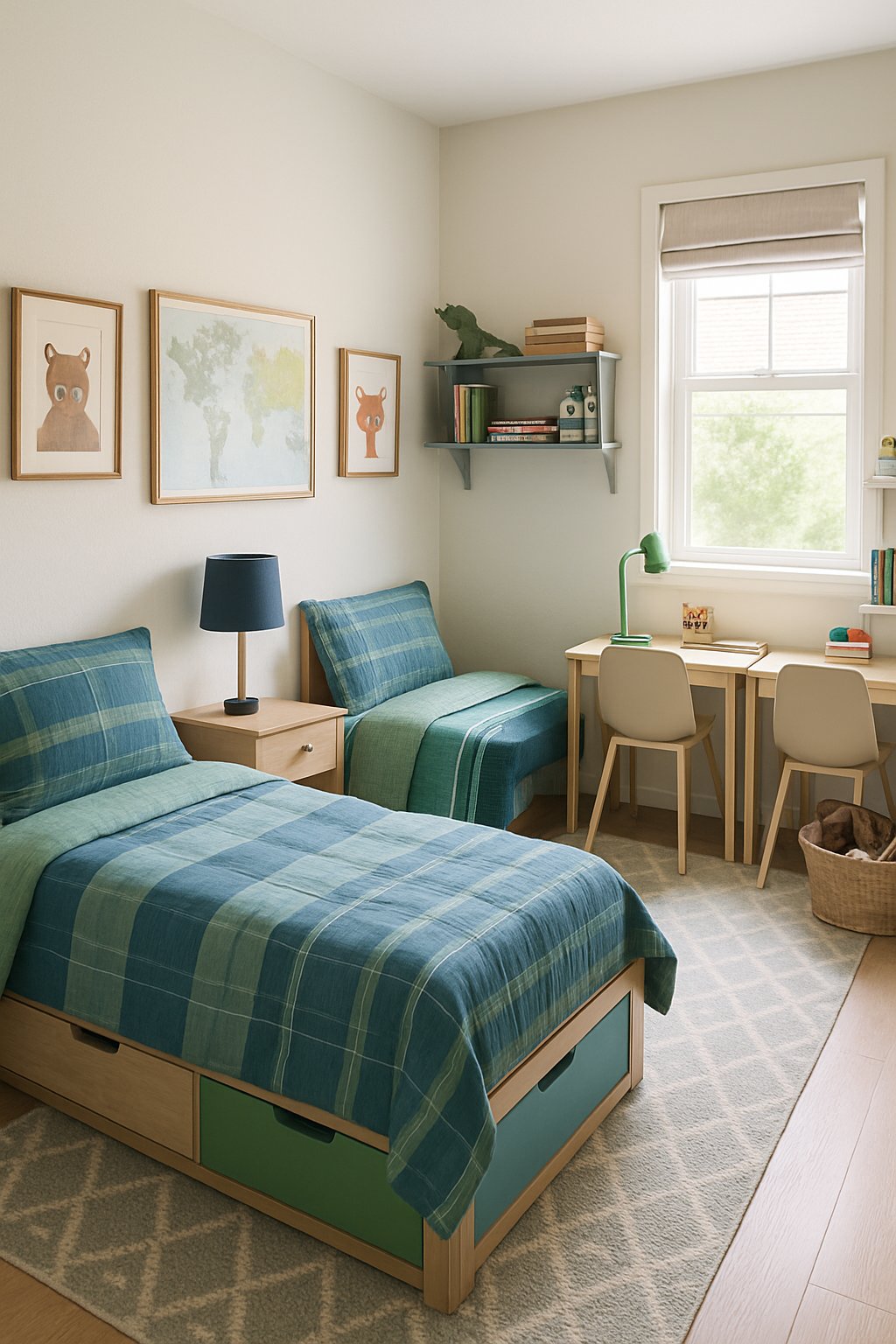
From loft beds that open up floor space to storage designs that cut clutter, each choice shapes how a small room functions and feels. Clean lines, neutral tones, and simple accents can tie the space together while giving each child a sense of individuality. With careful planning, a small twin boys’ bedroom can easily be both functional and fun.
1) Loft Beds with Built-in Desks to Maximize Floor Space
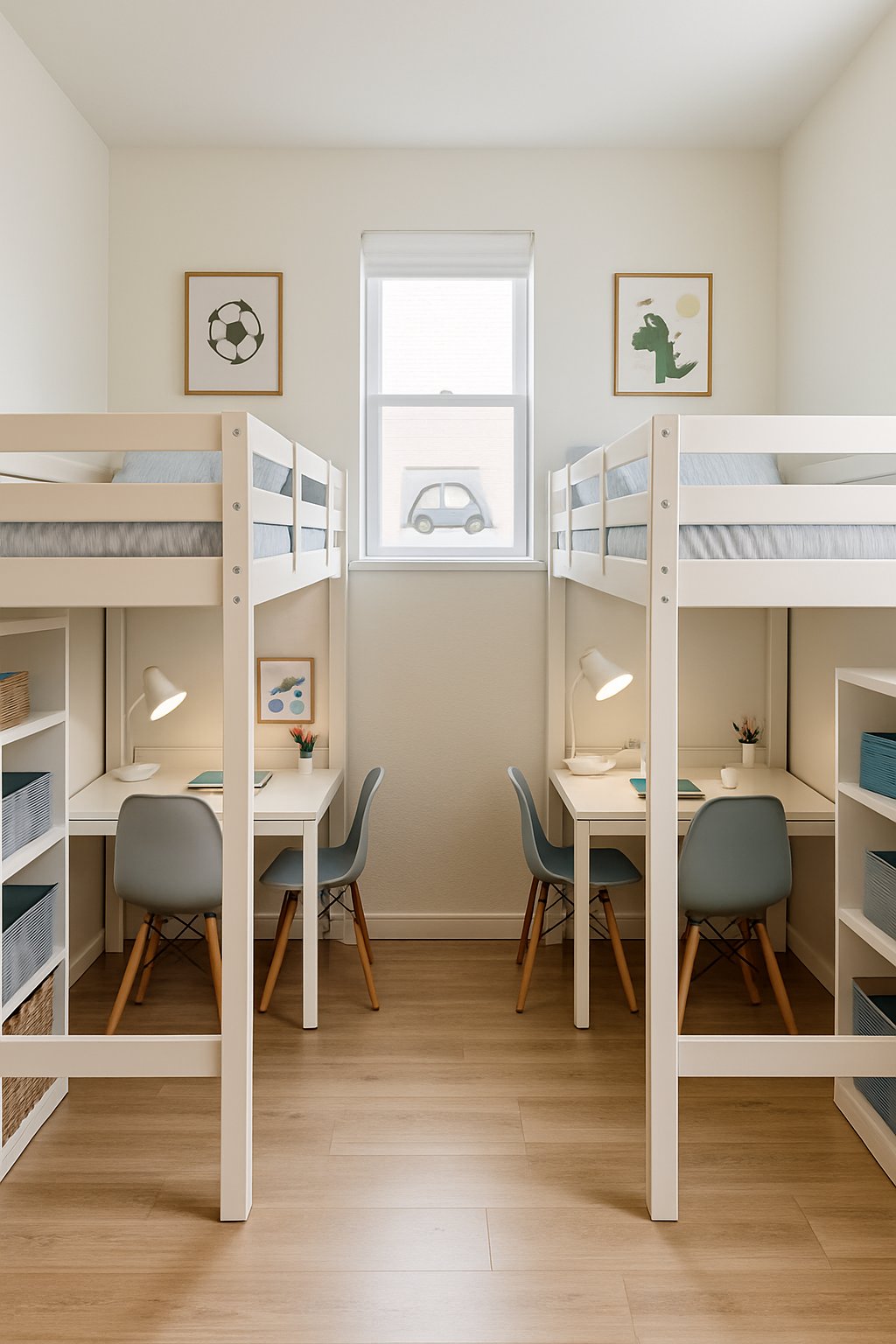
Loft beds with built-in desks help twin boys share a small room without feeling crowded. By lifting the beds off the floor, they open up space underneath for study or play.
Many designs include shelves or drawers that keep school supplies and clothes organized. This setup makes the room look tidy and provides a dedicated place for homework.
Metal and wood frames come in different styles to match various room themes. Families can choose setups that balance function, comfort, and space efficiency for growing children.
2) Bunk Beds with Under-bed Storage Drawers
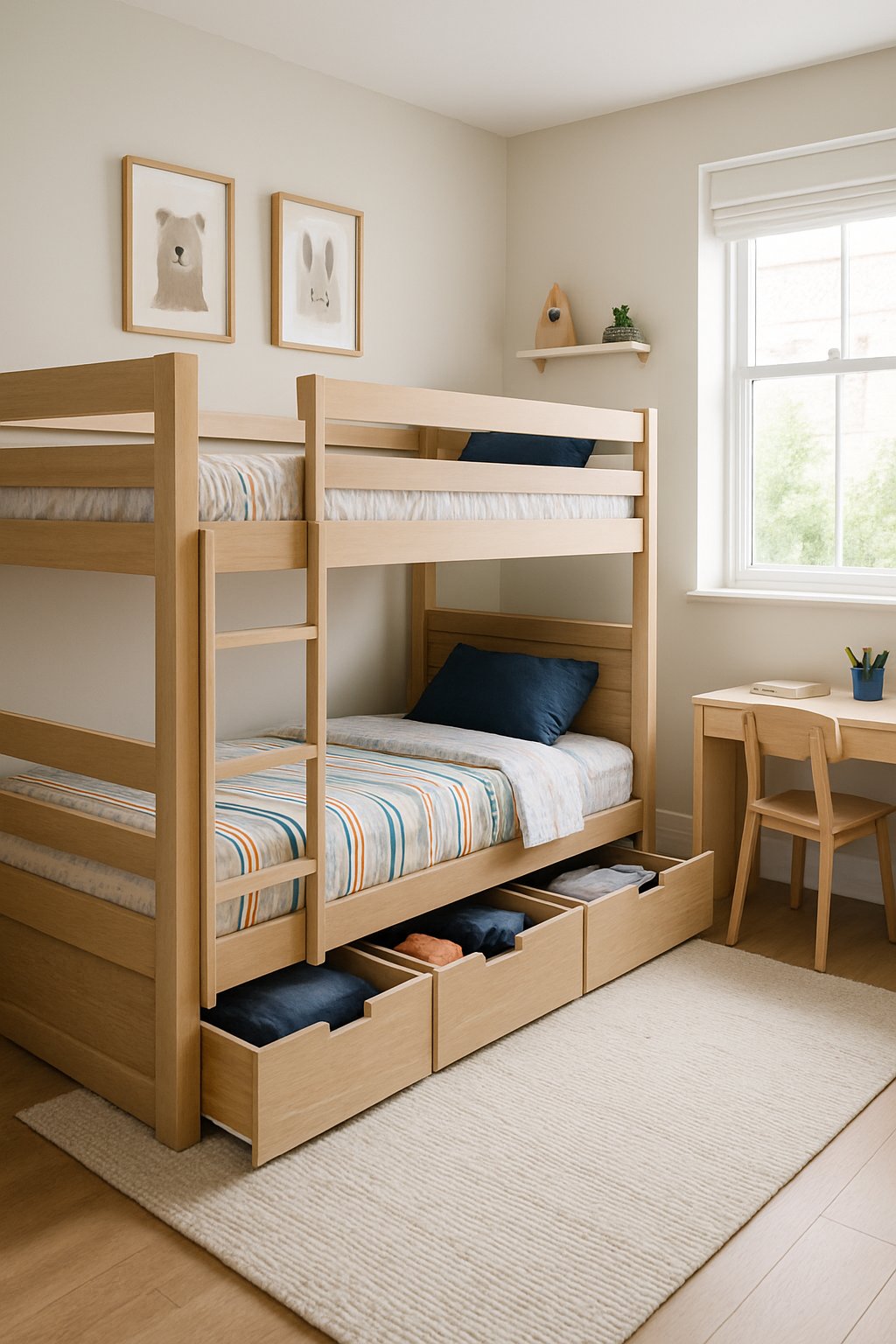
Bunk beds with built-in drawers use space efficiently and keep small rooms organized. The drawers fit neatly under the lower bunk, offering room for clothes, toys, or bedding.
This setup works well for twin boys sharing a compact bedroom. It reduces clutter and keeps essentials within easy reach.
Many designs come in wood or metal finishes, allowing families to match existing décor. By combining sleeping and storage space, these bunk beds make the most of every inch in a shared room.
3) Twin Beds Arranged in an L-Shape for Corner Utilization
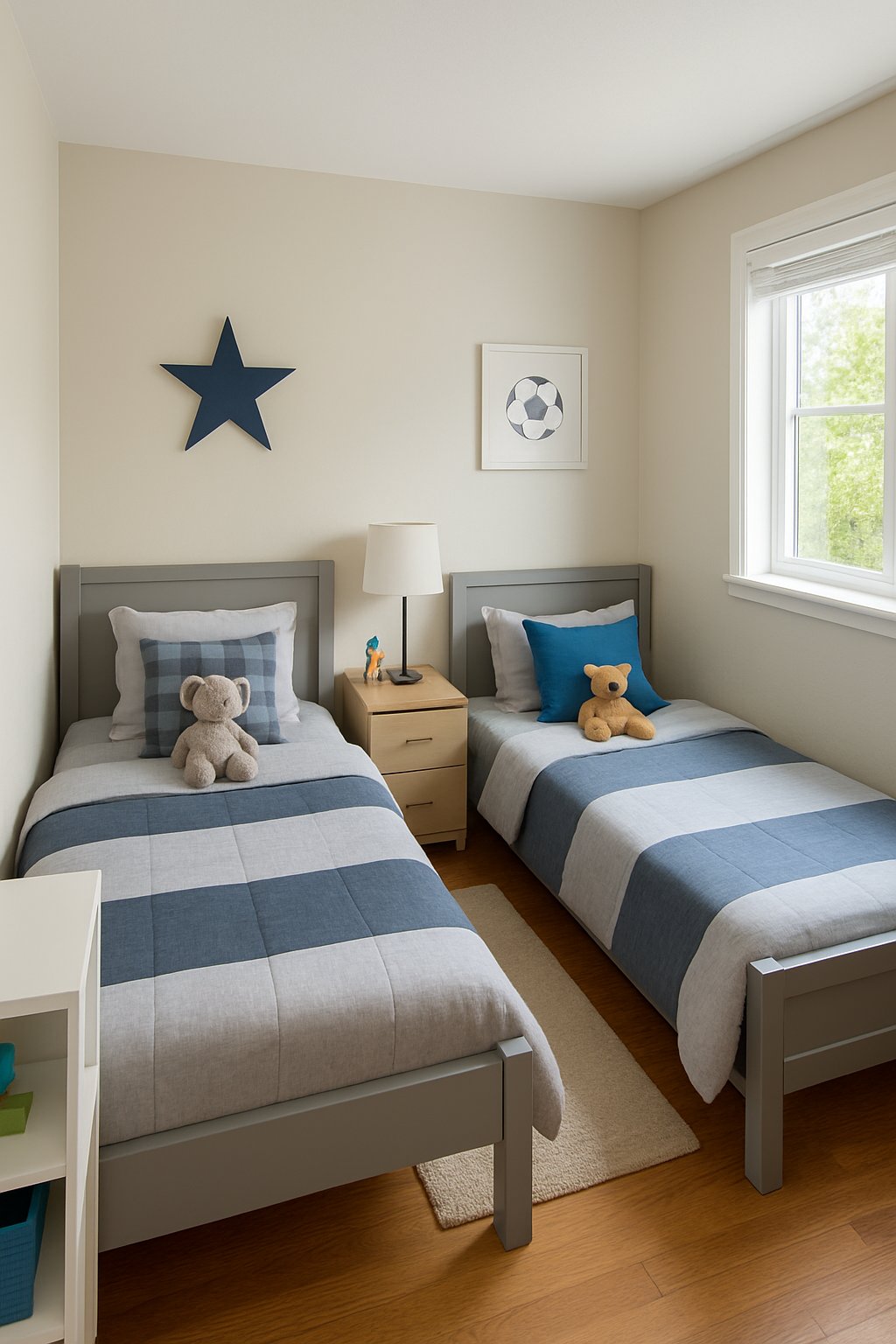
Placing twin beds in an L-shape helps make the most of a small shared room. By fitting the beds into a corner, the layout opens up floor space for play, study, or storage.
This setup works well for siblings because it gives each child a personal area while keeping the room tidy. Some designs include built-in drawers, shelves, or a shared desk in the corner.
Choosing an L-shaped configuration can create a balanced look that feels spacious and functional without sacrificing comfort.
4) Wall-mounted Shelves for Books and Toys
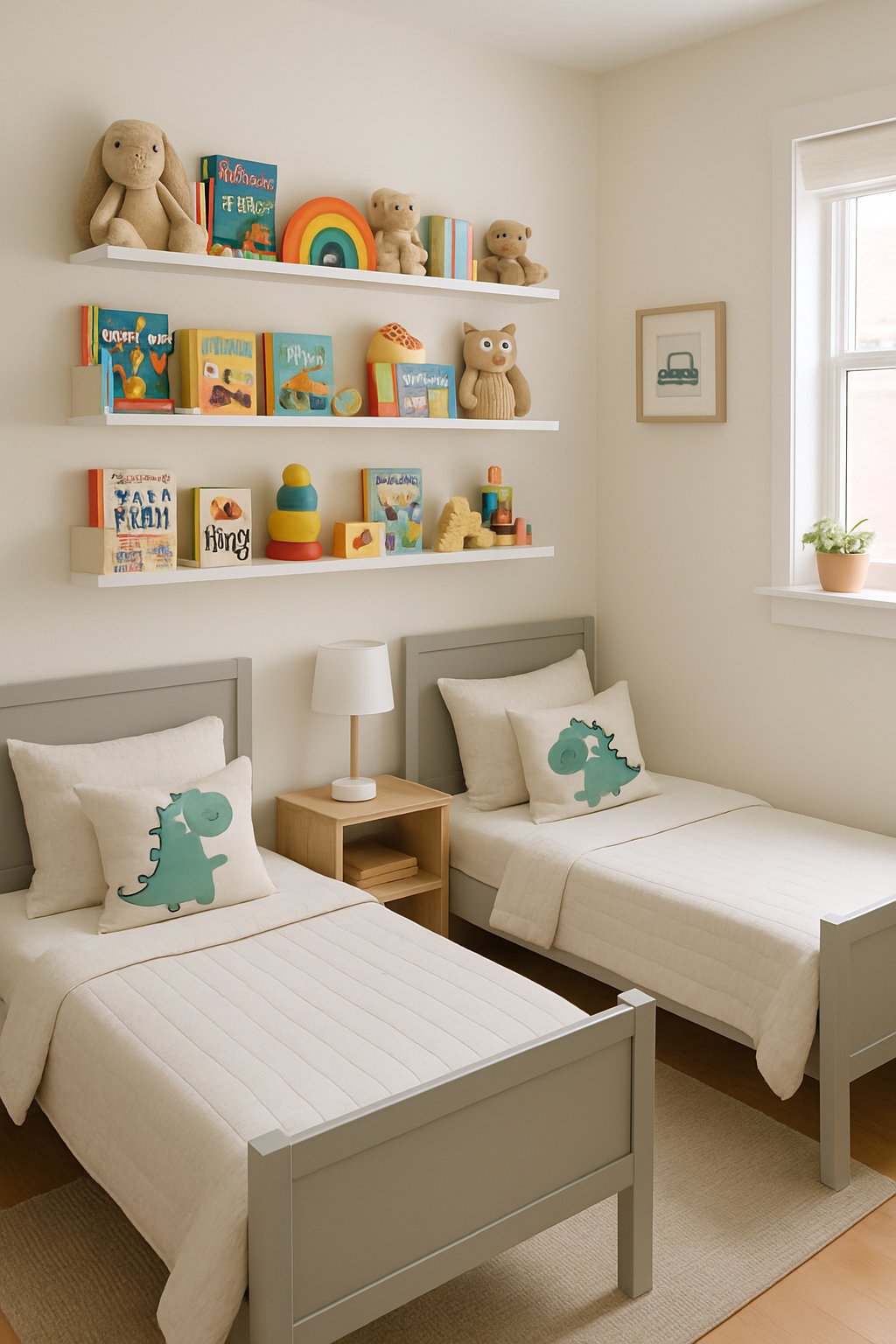
Wall-mounted shelves make smart use of vertical space in a small twin boys’ room. They keep books and toys organized and off the floor, helping the room look tidy.
Floating shelves fit well above desks, beds, or play areas. They provide storage without taking up valuable floor space.
Sturdy wooden or metal shelves work best for safety and durability. Shelves at child-friendly heights let kids reach their favorite books and toys easily while keeping heavier items higher up.
5) Under-bed Rolling Storage Bins
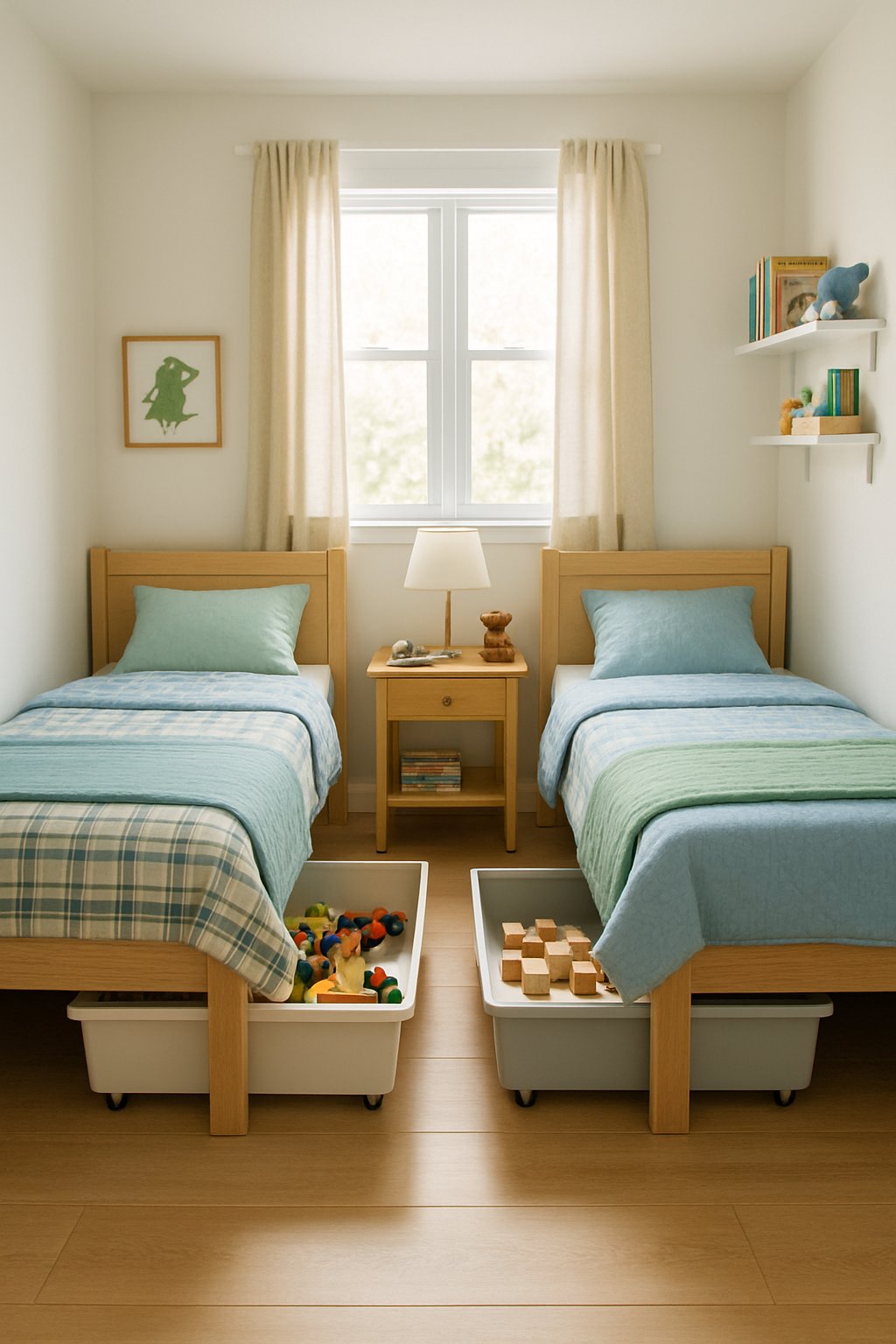
Rolling storage bins use the open space under twin beds to reduce clutter in small rooms. They keep toys, clothes, or bedding organized and within easy reach.
Clear lids or labels help kids see what’s inside without pulling everything out. Bins with wheels slide smoothly on hardwood or carpet, making clean-up quicker.
Families can choose plastic containers, low drawers, or trundle-style boxes to match their needs. This simple setup helps keep the bedroom tidy while leaving more floor space for play or study.
6) Adventure-themed Decor like Space or Race Cars
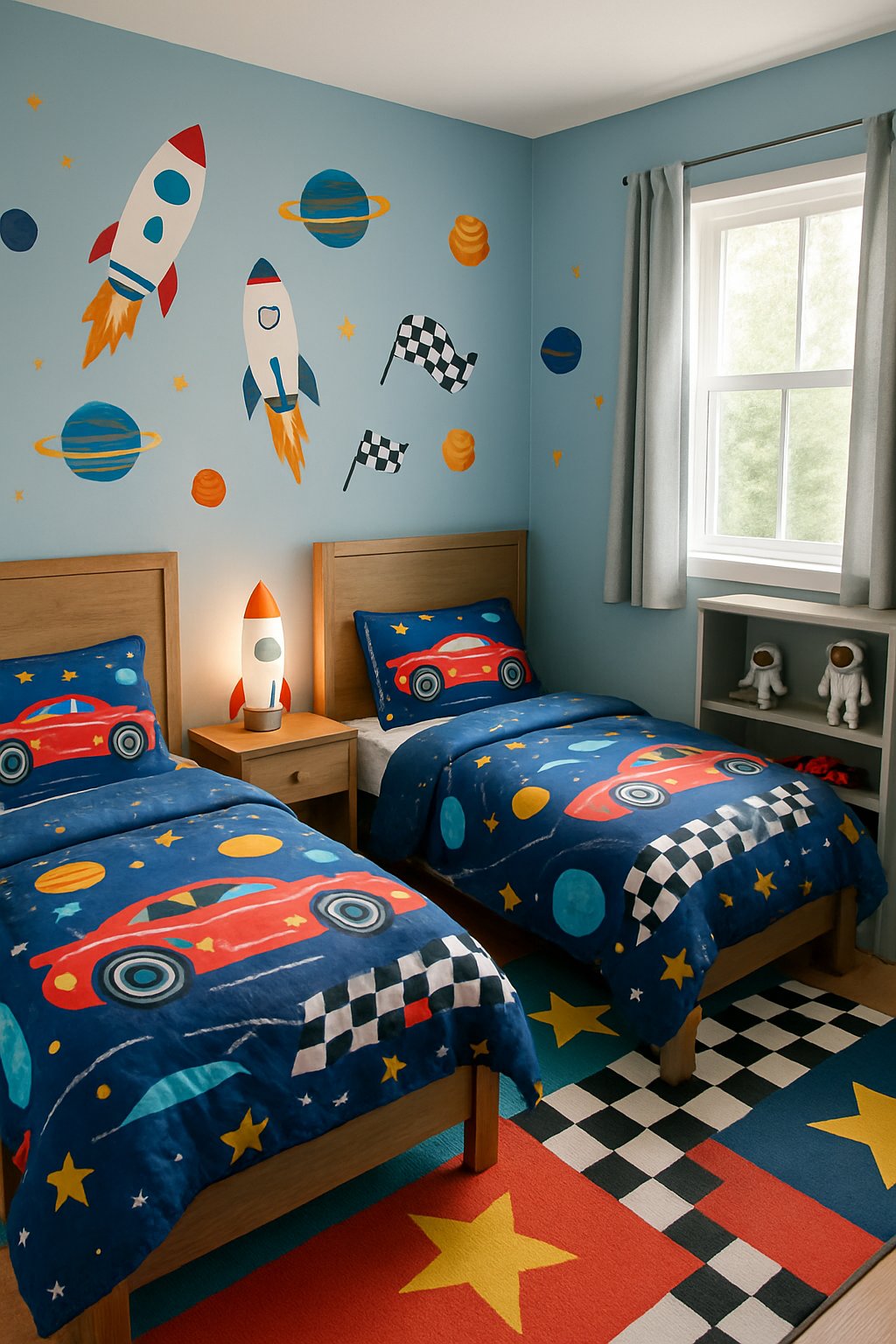
Adventure-themed designs bring energy and creativity to a small twin boys’ room. A space theme can use dark blue walls, glow-in-the-dark stars, and rocket decals to create a simple cosmic look.
A race car theme adds excitement with bold colors, striped bedding, and small car models on shelves. Twin beds can resemble cars or sit under a shared mural of a racing track.
Both themes fit well in tight spaces when using multi-functional furniture and minimal clutter. Each style encourages imagination while keeping the room organized and inviting.
7) Neutral Color Schemes with Pops of Bright Accents
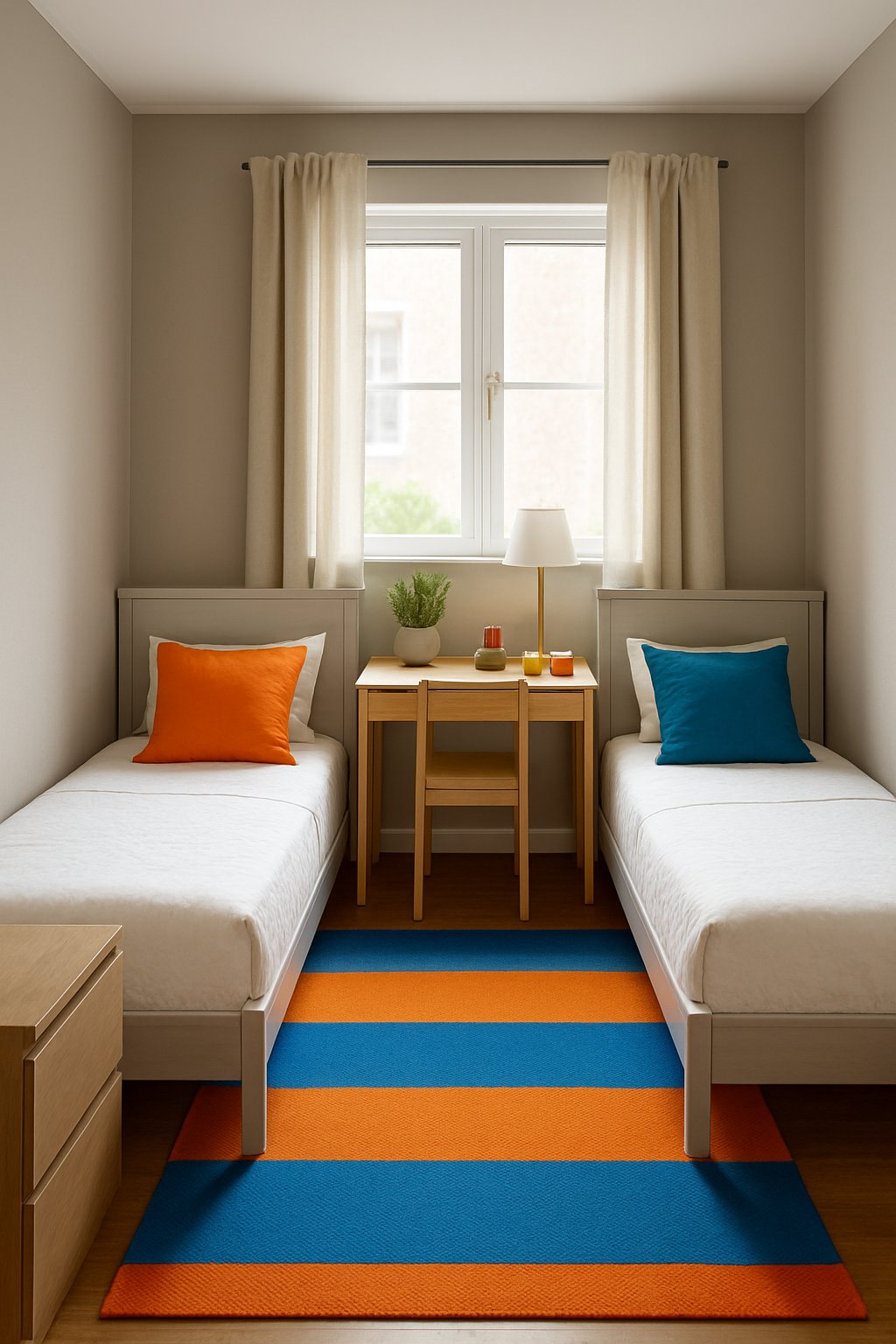
Neutral color schemes help small twin rooms feel calm and organized. Shades like beige, gray, and soft white create a clean base that makes a space look larger and brighter.
Adding small pops of color brings energy without overwhelming the room. Bright pillows, artwork, or bedding in blue, green, or yellow can give each twin a bit of personality.
Natural textures such as wood or woven baskets add warmth and interest. This balance of muted tones and bold accents keeps the room fresh, simple, and easy to update as the twins grow.
Maximizing Small Spaces for Twin Boys
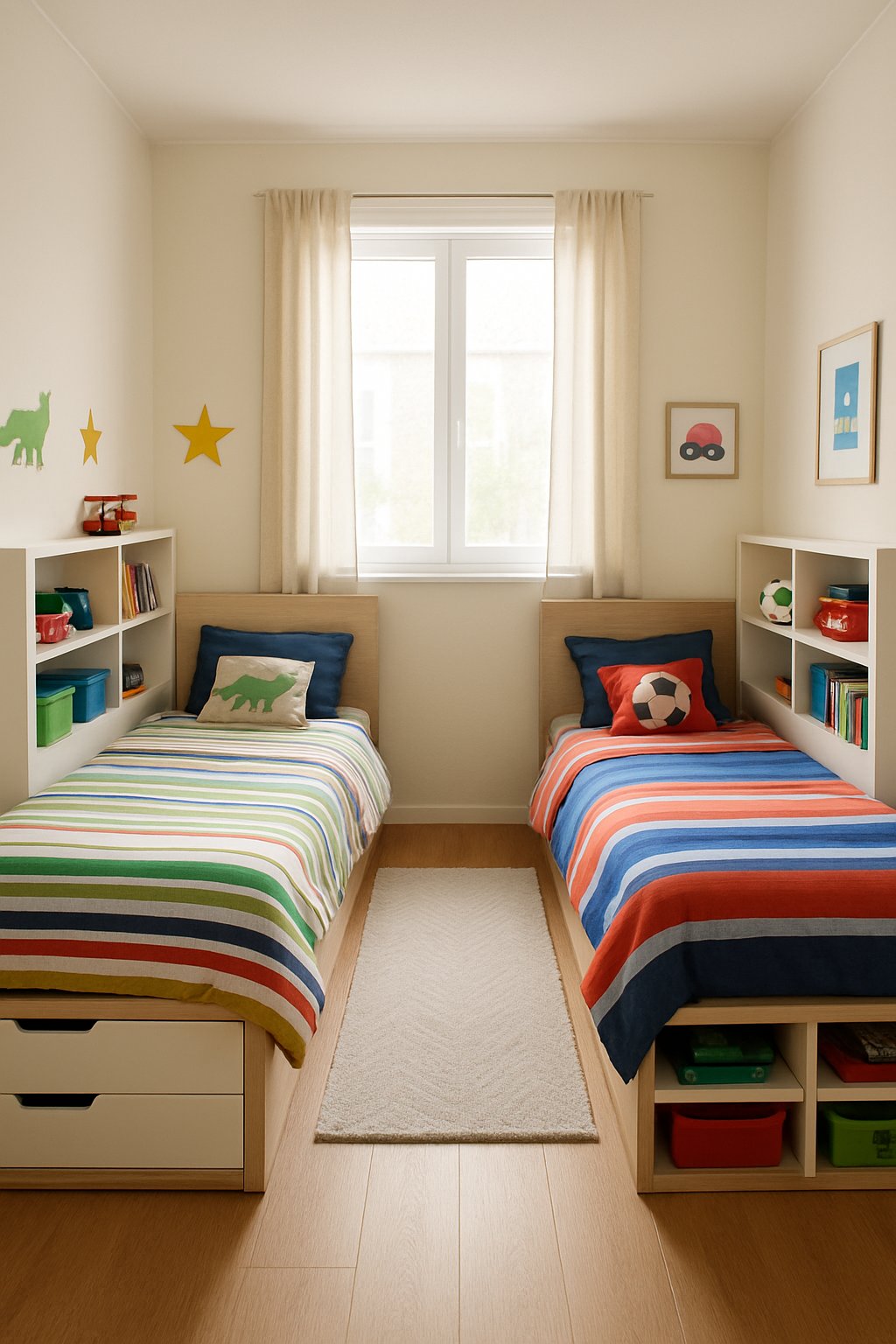
Designing a small bedroom for twin boys requires balanced planning between play, sleep, and storage. The best results come from using every inch wisely—choosing furniture that serves more than one purpose, adding smart storage, and taking advantage of vertical areas.
Furniture Arrangement Strategies
Good furniture placement improves how the room feels and functions. Bunk beds are a top choice for twin rooms because they free up valuable floor space for desks or a play area. If bunk beds aren’t preferred, two twin beds can be placed in an L-shape to open up a corner for storage or a small table.
Choose multi-use furniture. A desk with drawers, a bed with built-in storage, or a fold-down table can reduce clutter and keep essentials close. Leave enough walking space so the room doesn’t feel tight.
For visual balance, arrange heavier furniture, like dressers or bookshelves, along one wall. This keeps the center open for movement or play, making a small room appear larger and tidier.
Clever Storage Solutions
In compact twin bedrooms, storage determines how organized the space stays. Under-bed drawers or rolling bins are easy ways to hide toys, clothes, or extra bedding. Choosing stackable containers that fit neatly under furniture keeps items out of sight but still easy to reach.
Add floating shelves for books and collectibles. These keep surfaces clear while adding a personal touch. A shared dresser with labeled drawers helps each child keep track of belongings without confusion.
Consider built-in closets with adjustable shelves or cubbies. Using the upper section for seasonal items and the lower for daily needs prevents clutter and makes cleanup faster. Labeling baskets or bins can also help maintain order.
Utilizing Vertical Space
Walls offer major storage potential in small rooms. Tall shelving units, wall hooks, and pegboards turn unused wall space into functional zones. Shelves above desks or beds can hold books, trophies, or small toys safely off the floor.
Add wall-mounted lights instead of table lamps to free up surface space. If possible, choose beds with high headboards that include shelves for small items. Use over-the-door organizers for shoes, art supplies, or accessories.
Here’s a simple layout guide:
| Space | Best Use |
|---|---|
| Wall | Hooks, shelves, hanging storage |
| Ceiling height | Loft beds or tall cabinets |
| Behind door | Hanging organizers or hooks |
These vertical choices make the room feel open while keeping it functional for two active boys.
Personalizing Twin Boys’ Bedrooms
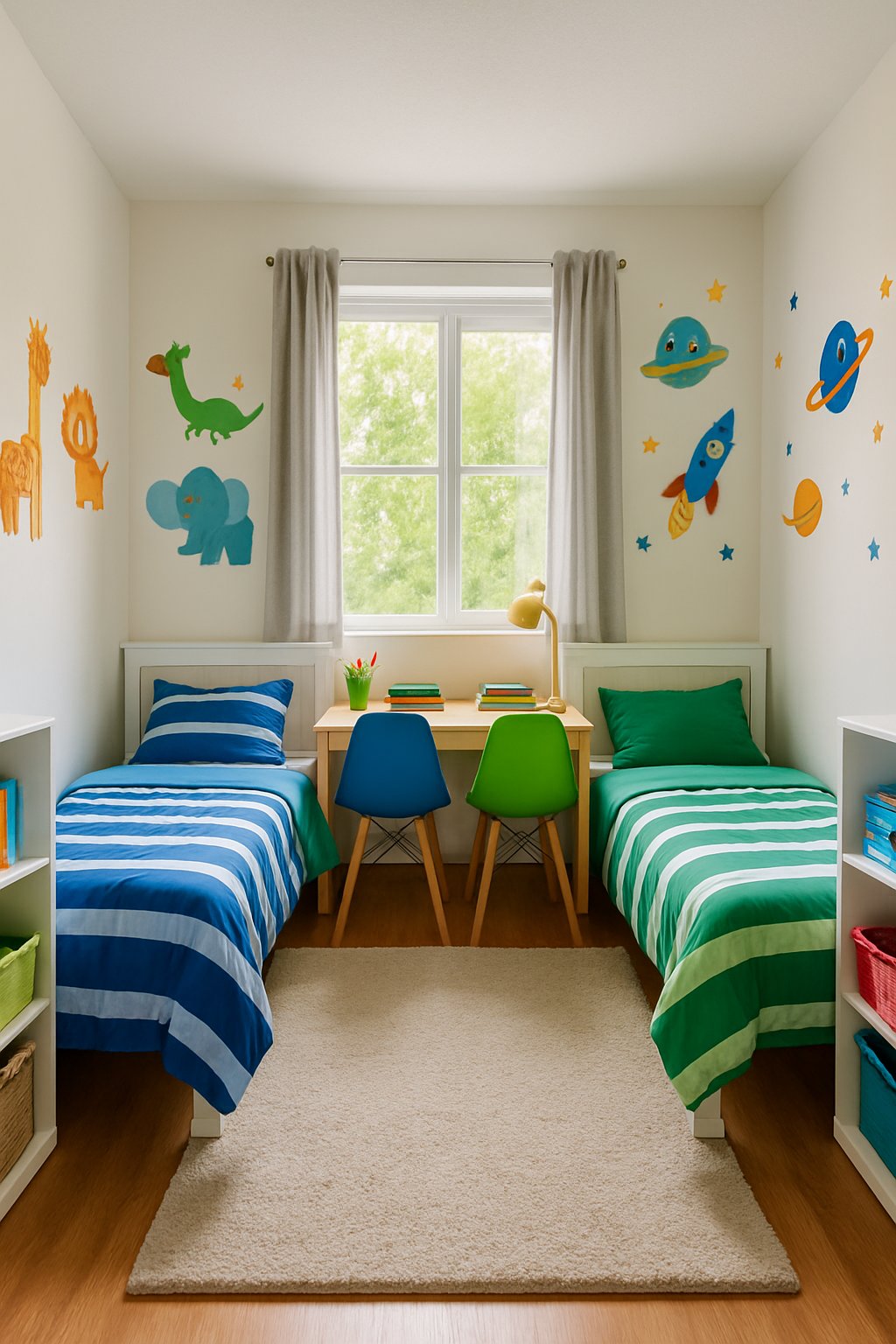
Designing a bedroom for twin boys in a small space works best when each child’s tastes and interests feel recognized but still blend naturally into one space. Practical design choices—like flexible furniture, unified color schemes, and individual decor accents—help create a room that looks cohesive while supporting personal comfort and identity.
Balancing Shared and Individual Styles
A shared room should make both children feel included. Each twin can have a defined area by separating beds with a low shelf, short divider, or rug that signals personal territory. Labeling drawers, wall hooks, or cubbies gives them ownership of their belongings and reduces clutter.
Small details add individuality. One twin might display framed art of his favorite sport, while the other showcases model cars or books. Choosing personal bedding sets in complementary patterns helps create unity without duplication.
Parents can involve both boys in selecting decor pieces. Making decisions together—such as where to place shelves or how to arrange toys—builds cooperation. The room then reflects shared decision-making along with unique preferences, creating a comfortable and balanced space.
Color and Theme Coordination
Color affects how small rooms feel. Light neutrals like soft gray, pale blue, or warm white make the room look larger, while bright accents highlight each twin’s side. A two-tone approach can define space effectively—for example, painting one wall with each boy’s accent color but keeping furniture and bedding similar in tone.
Themes connect the design visually. Boys who love different subjects can still coordinate choices: one might choose outer space prints, the other racing designs, but both share similar color groups. Matching storage bins, framed art in equal sizes, and repeated patterns create consistency.
Patterns or themes should stay simple to avoid visual clutter. When color and design flow together, even a small twin bedroom feels open, well-organized, and personalized.


