
The Best Girl And Boy Shared Bedroom Design Ideas: 7 Inspiring Ways To Create Balanced Spaces

Designing a shared bedroom for a boy and a girl can feel challenging, but it also offers a chance to get creative with balance, function, and personality. The right design helps both children enjoy their space while giving them room to express their own styles. A well-planned shared bedroom can reflect each child’s identity without losing a sense of unity and comfort.
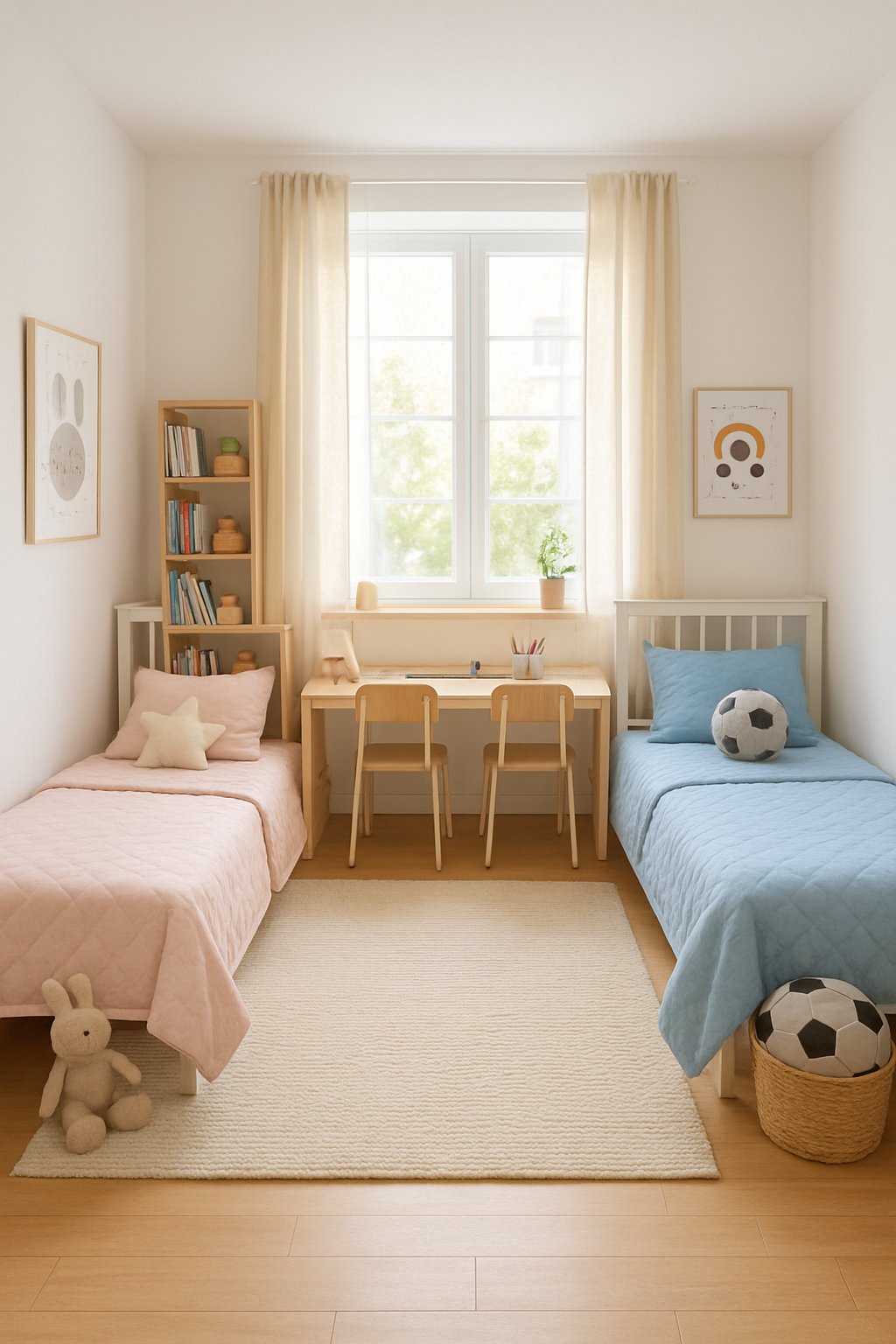
This article explores simple and practical ways to design a shared space that works for both kids. It looks at color choices, furniture layouts, storage ideas, and thoughtful design touches that grow with them over time. The goal is to help families create a balanced room that feels fair, organized, and welcoming for everyone.
1) Neutral Base Colors with Personalized Accents
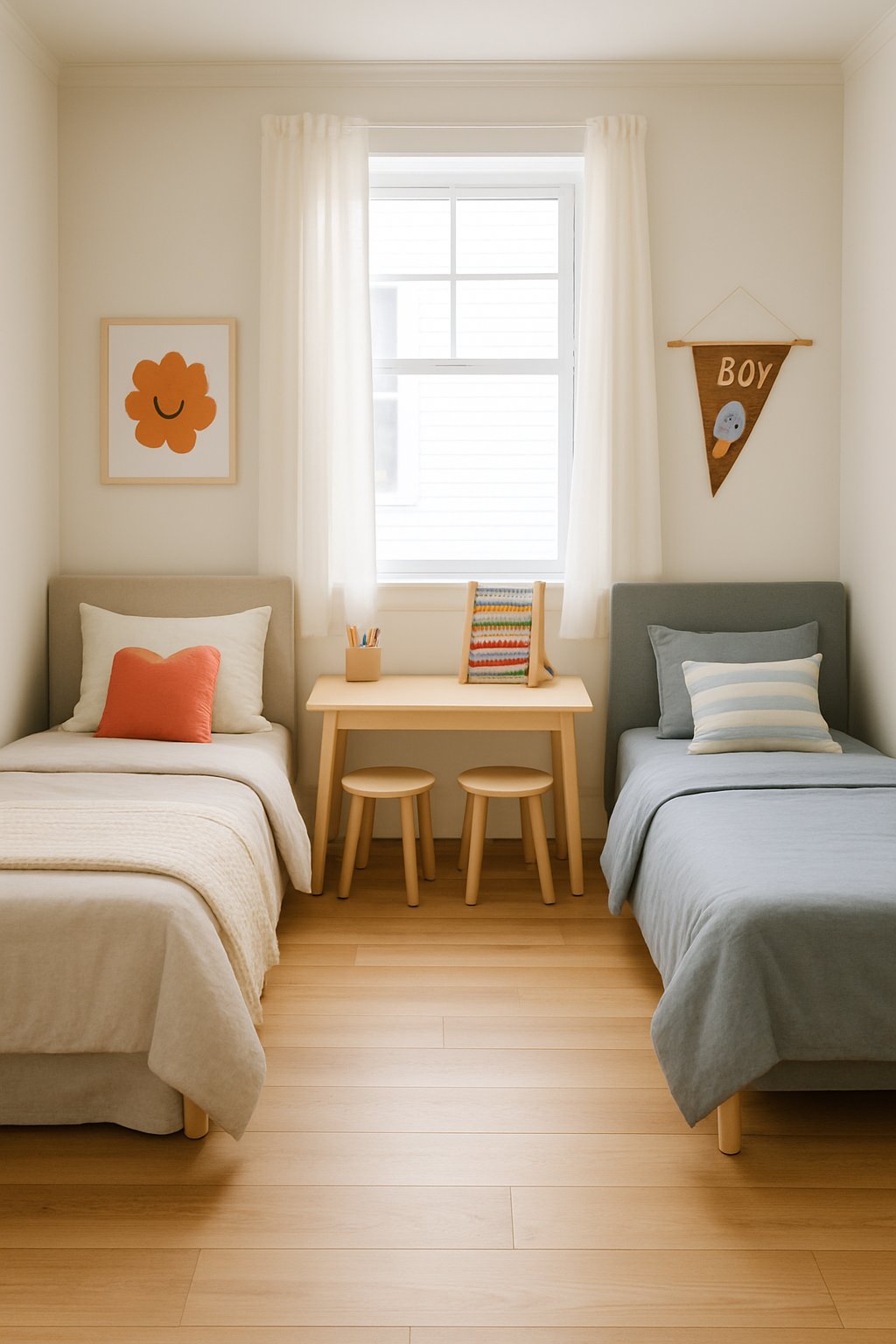
A neutral base gives both children an equal starting point. Soft shades like white, gray, beige, or light green help the room feel calm and balanced. These tones also make the space look cleaner and easier to maintain.
Each child can then add personal touches without clashing. Bedding, wall art, and small décor items let their personalities show through. By keeping the main elements simple, families can refresh the look as children grow or their tastes change.
2) Zoned Areas Using Curtains or Bookshelves
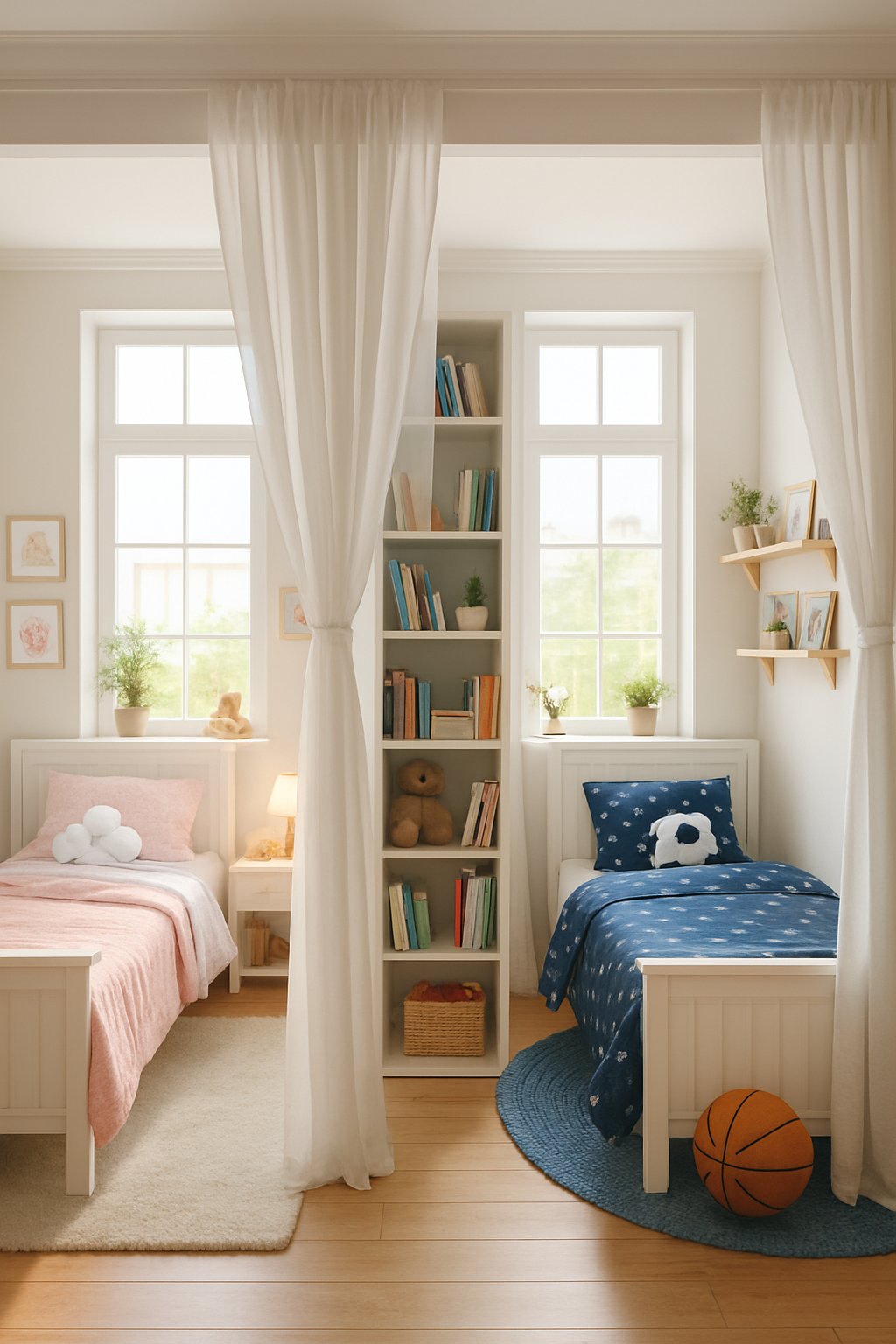
Creating zones helps each child have personal space in a shared bedroom. Curtains or bookshelves make simple and effective dividers without needing permanent walls.
A tall bookshelf between beds can provide both privacy and storage. It allows each side to feel separate while keeping the room organized.
Light curtains offer a softer look and can open or close as needed. They give flexibility for bedtime, reading, or quiet play while keeping the room bright and open.
3) Twin Beds with Coordinated Bedding
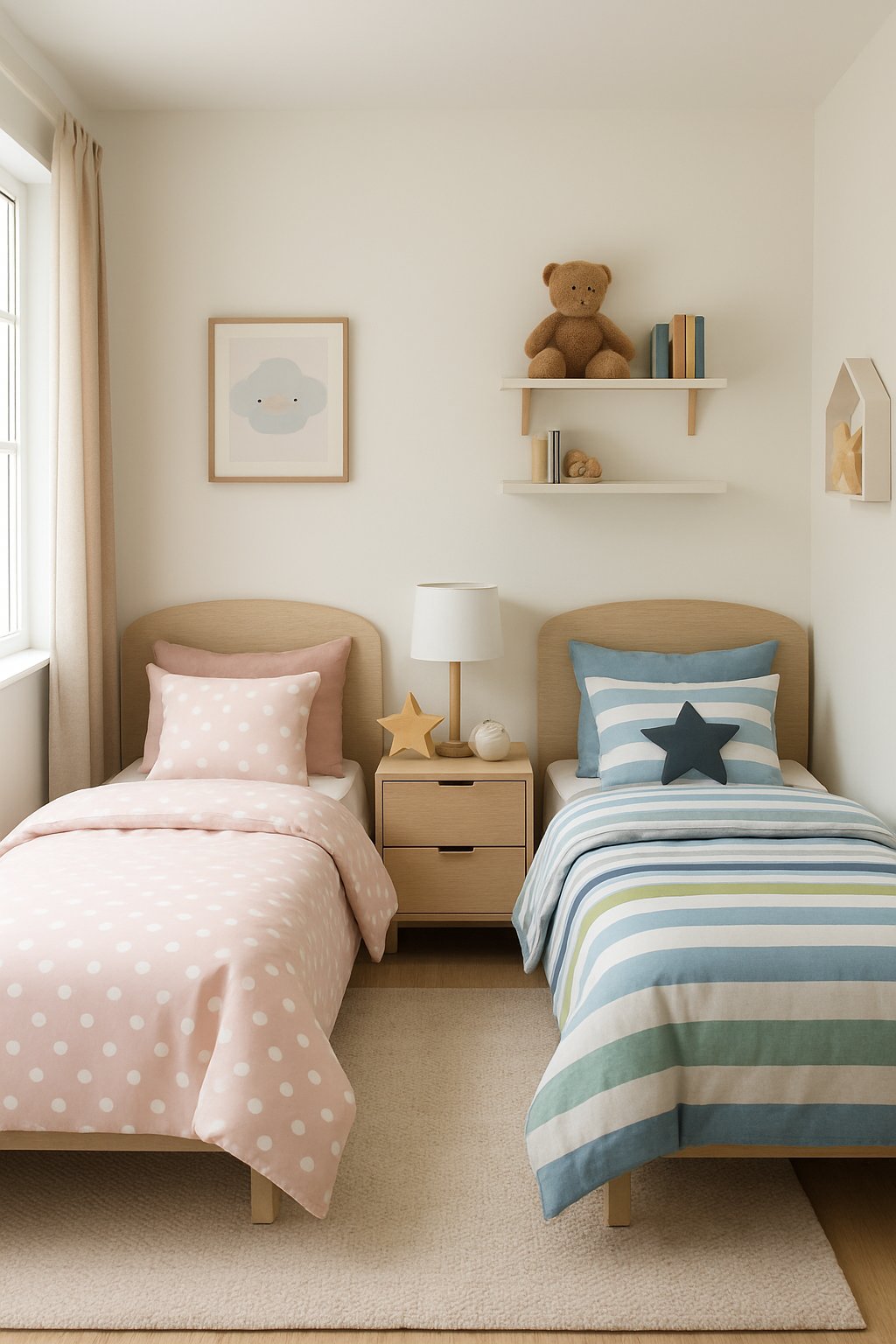
Twin beds offer a simple way to give each child their own space while keeping the room balanced. Matching or coordinated bedding helps the room feel calm and organized.
Using the same style of bed frames or linens in different colors can show each child’s personality. For example, muted tones or gentle patterns can look cohesive without feeling too uniform.
Adding small differences, like pillow designs or throw blankets, keeps the room shared but still personal. This approach suits both small and medium-sized bedrooms.
4) Loft Bunk Beds with Study Space Below
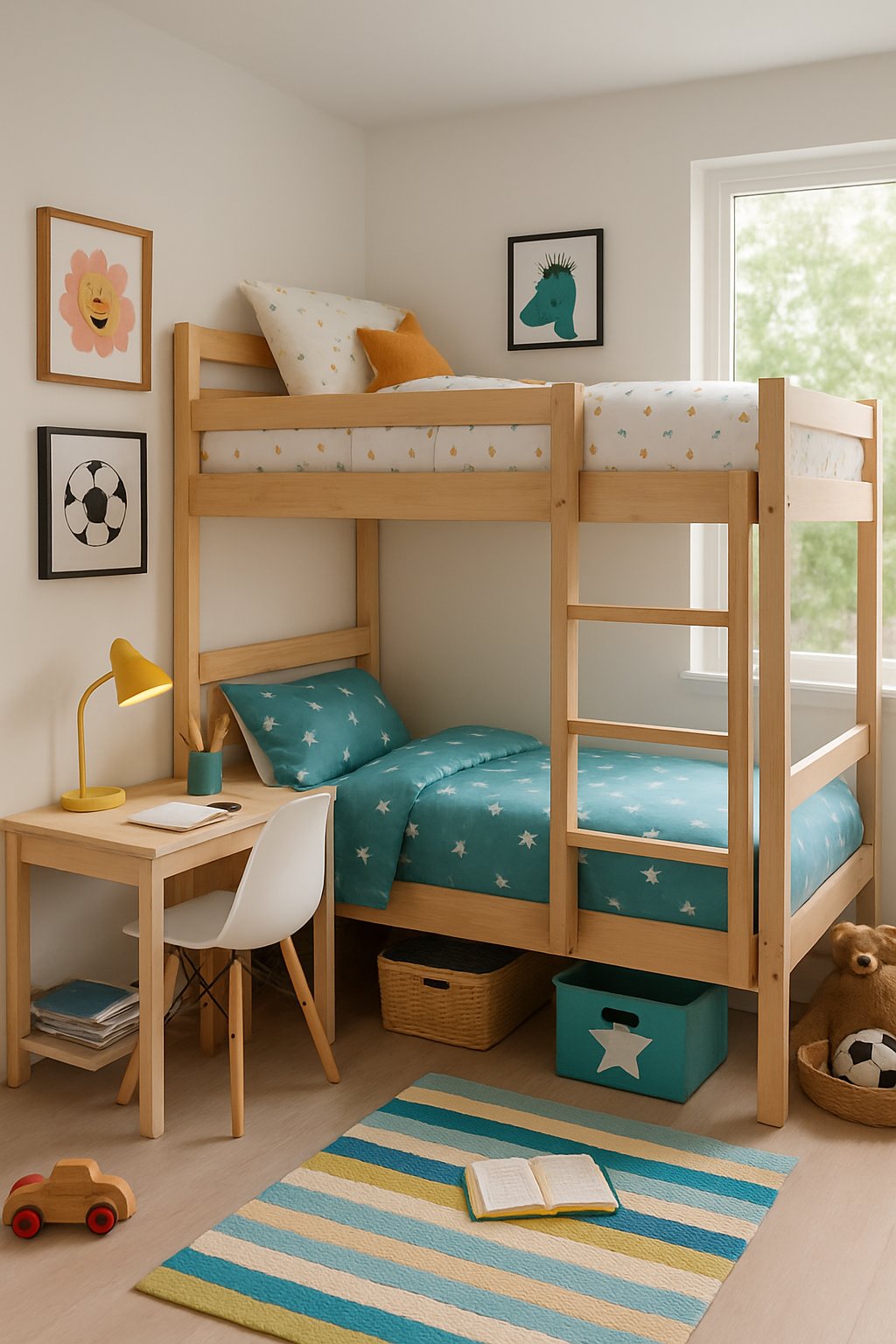
Loft bunk beds use vertical space to create both sleeping and study areas. They work well in small shared rooms where floor space is limited.
Many designs include a desk or shelving under the top bunk, giving each child a private space to read or complete homework.
This layout helps separate rest and work zones while keeping the room organized. It also gives each child a clear area for personal use, making the room feel balanced and efficient.
5) Adaptable Furniture for Growing Kids
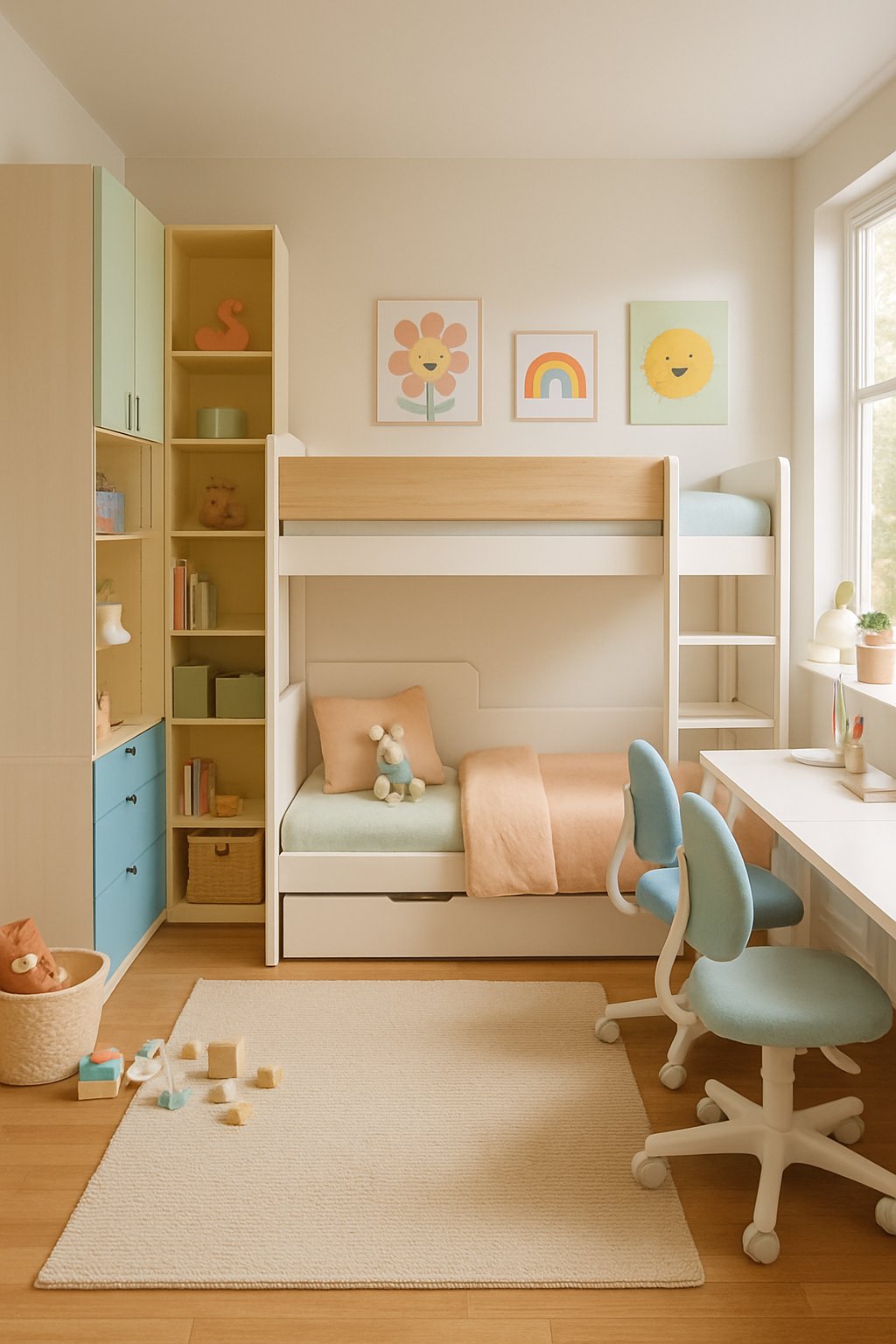
Adaptable furniture helps a shared bedroom stay useful as children grow. Pieces like bunk beds that convert into twin beds or desks that adjust in height make updates easier.
Storage beds, modular shelving, and movable dressers help kids stay organized without crowding the room. This flexibility allows space to shift from play to study.
Neutral furniture styles also make redesigns simpler when tastes change. Choosing sturdy materials ensures that each piece lasts through many stages of childhood.
6) Shared Storage Solutions with Individual Bins
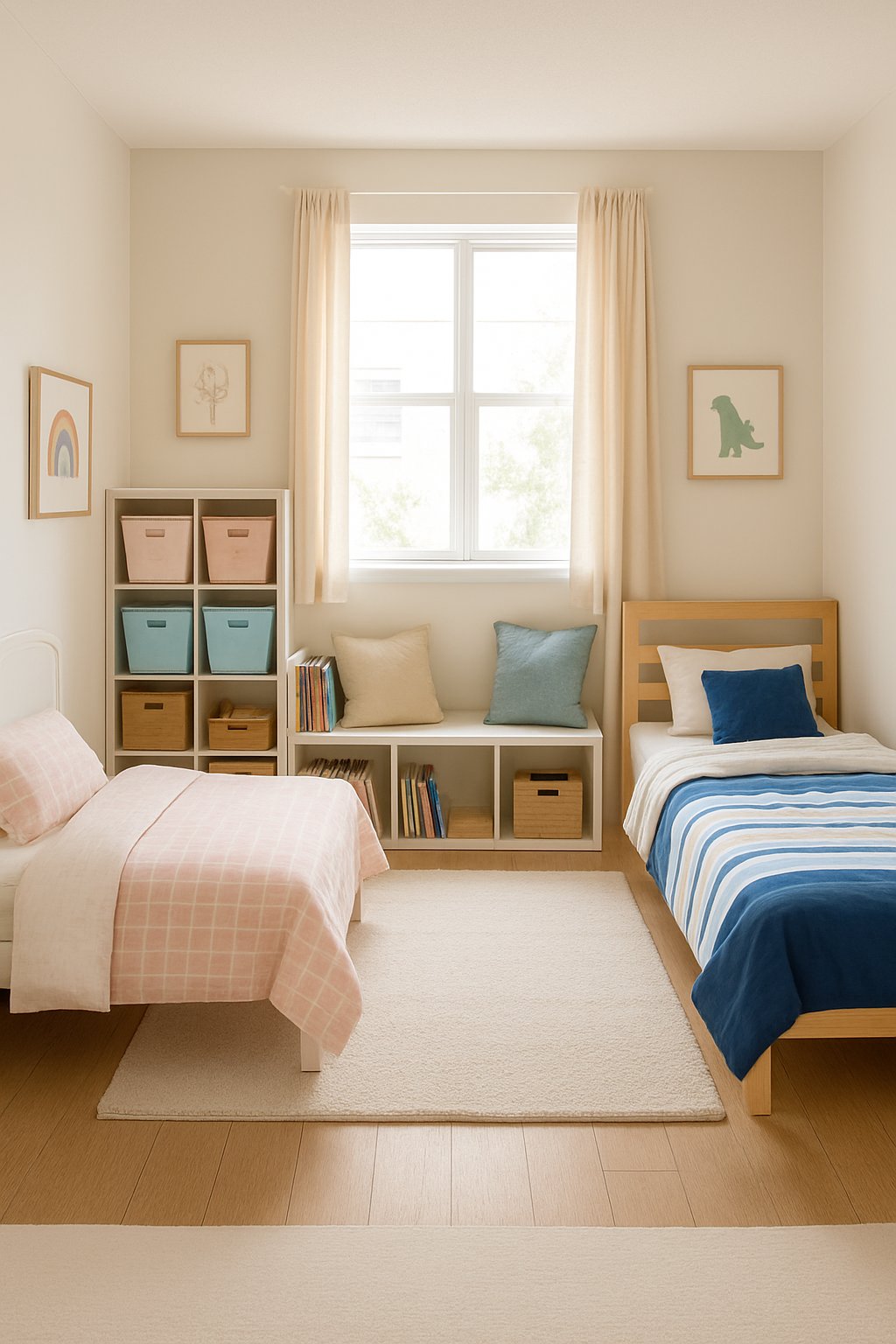
Shared bedrooms benefit from clear organization that gives each child a sense of ownership. Individual storage bins help keep toys, books, and clothes separate while maintaining a tidy space.
Labeling bins by name or color makes it easy for kids to find and return their belongings. This reduces clutter and promotes responsibility.
Stackable bins, baskets under beds, or shelves with assigned compartments work well in small rooms. Using consistent, neutral storage keeps the room balanced and visually calm while still reflecting each child’s personal area.
7) Creative Wall Art Reflecting Each Child’s Interests
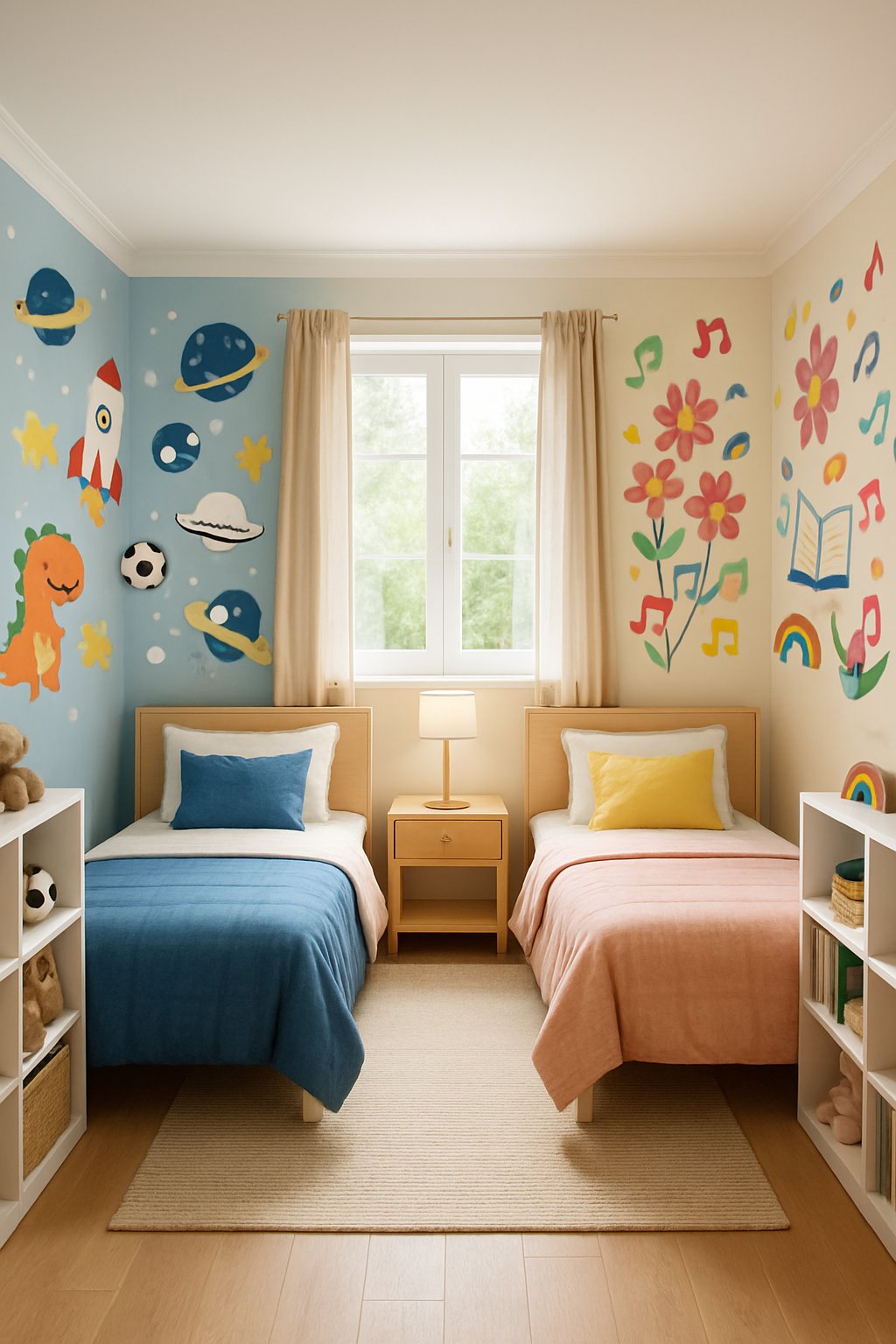
Wall art helps each child feel represented in a shared bedroom. Choosing artwork that matches their hobbies or favorite themes adds personality without crowding the space.
They can hang framed prints, simple decals, or small canvases that show sports, nature, or animals. Personalized pieces such as name signs or custom illustrations make the room feel special.
Keeping colors coordinated ensures the wall décor looks balanced. This approach gives both children a sense of ownership and creates a room that reflects who they are while staying visually cohesive.
Design Principles for Shared Sibling Bedrooms
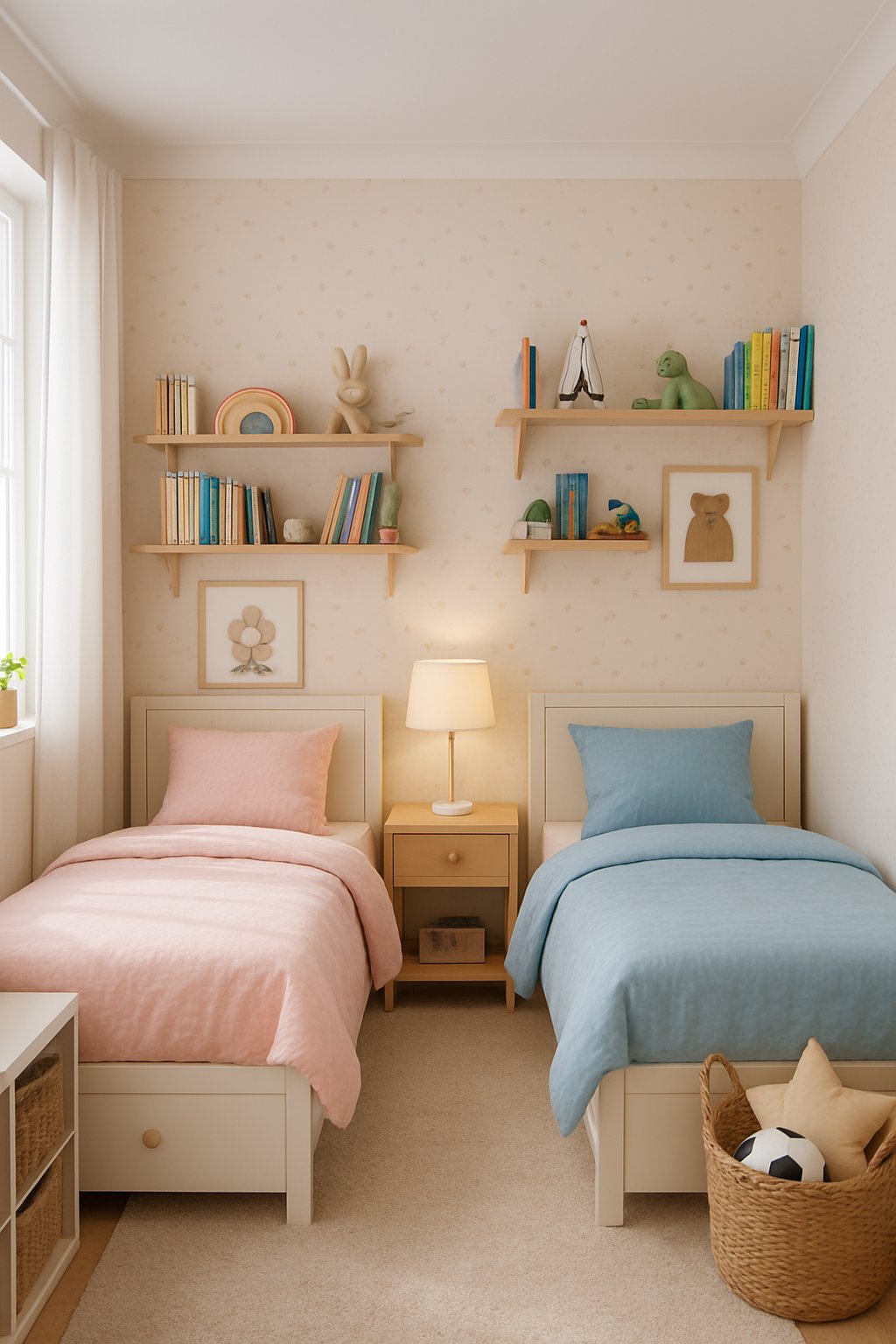
A successful shared bedroom lets each child feel independent while keeping the space organized and welcoming. The design should allow both comfort and function by dividing areas wisely, using efficient storage, and encouraging good routines.
Balancing Privacy and Togetherness
Children sharing a bedroom need both connection and personal space. Designers often achieve this with defined zones that mark ownership without building walls. For example, placing beds on opposite sides and adding a shared dresser or shelf in between gives both separation and shared function.
Curtains, folding screens, or bookcases can also act as light dividers without making the room feel smaller. Each child can personalize their side through bedding, wall art, or colors they choose, giving them a sense of control.
Even small adjustments—like labeling bins or drawers with each child’s name—reduce conflicts and build personal responsibility. The goal is balance: enough privacy for individuality and enough openness for shared play and communication.
Space Planning Strategies
Room layout matters most when space is tight. Vertical design helps maximize every inch. Loft beds or bunk beds create free floor area for desks, reading nooks, or play zones underneath. This makes one room serve multiple purposes without feeling crowded.
Keeping a clear traffic path avoids clutter and accidents. Items used often, such as toys or clothes, should be easy to reach. Less‑used items can go higher up or under furniture.
A simple floor plan example:
| Zone | Function | Key Features |
|---|---|---|
| Sleeping | Rest and comfort | Bunk or twin beds with shared nightstand |
| Study | Homework or reading | Desk under loft bed, good lighting |
| Storage | Clothes, toys | Built-in closet, labeled bins |
Grouping areas by function helps both kids focus and keeps the room orderly.
Smart Storage Solutions
Efficient storage keeps the room tidy and fosters independence. Multi-use furniture such as beds with drawers, benches with compartments, or stackable bins saves space while staying practical.
Shelving above desks or doors adds extra storage without taking up the floor. For shared spaces, it helps to divide storage fairly—each child gets designated drawers, cubbies, or basket colors.
Clear containers make it easy to find items at a glance. A small system of rotation—storing off-season clothes or lesser-used toys—helps manage clutter through the year. With these methods, the room stays organized, manageable, and adaptable as children grow.
Color Schemes and Decor Tips
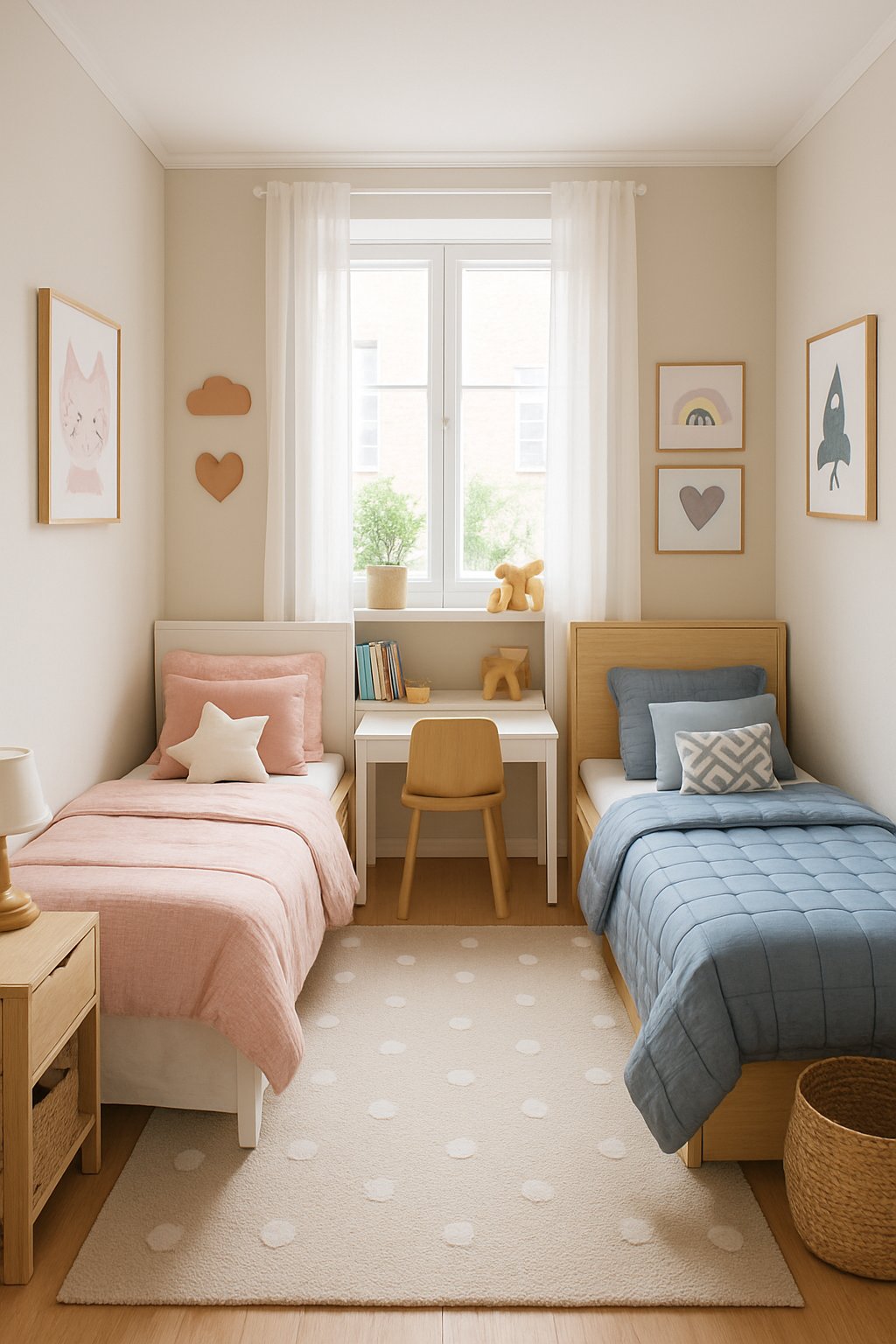
A balanced shared bedroom depends on colors and decor that make the space feel inviting while respecting each child’s preferences. Using neutral tones for the base design and adding personal touches through décor helps create harmony and style without overwhelming the room.
Gender-Neutral Palettes
Neutral color schemes provide flexibility and appeal to both boys and girls. Shades like gray, white, beige, or soft green make an ideal foundation, allowing decorative accents to stand out. These tones also adapt well as children grow, reducing the need for frequent redesigns.
Adding pops of color through textiles—such as rugs, curtains, or bedding—brings warmth and interest. Small doses of yellow, navy, or teal work well for energy without strong gender associations. A shared theme like nature, space, or geometric patterns keeps the look cohesive.
Here’s a simple pairing guide for a calm, shared look:
| Base Color | Accent Colors | Effect |
|---|---|---|
| Light Gray | Mustard, Teal | Warm and lively |
| Soft White | Navy, Sage | Clean and fresh |
| Beige | Terracotta, Green | Cozy and earthy |
Even lighting affects how colors feel. Warm-toned bulbs create comfort, while cooler lighting enhances brightness and modern appeal.
Personalizing Each Child’s Area
Each child should have a space that reflects their personality. Simple design cues, like different bedding sets in compatible colors, help define individual areas without clashing. Matching bed frames or shared furniture keep the room visually balanced.
Wall art, photos, or name initials above each bed make the space more personal. Many families use storage bins or shelves labeled by child to help with organization. This prevents mix-ups and promotes a sense of ownership.
If space allows, setting up small décor zones—like a reading corner or a craft station—encourages independence. Personal touches should stay within the shared color plan for continuity while still feeling unique for each child.


