
7 Tiny Bedroom Ideas for Couples to Maximize Space and Style
They want a bedroom that feels roomy, cozy, and useful even when floor space is tight. This article shows simple, practical ways to stretch space and keep the room comfortable for two, so couples can sleep, store, and relax without feeling cramped.
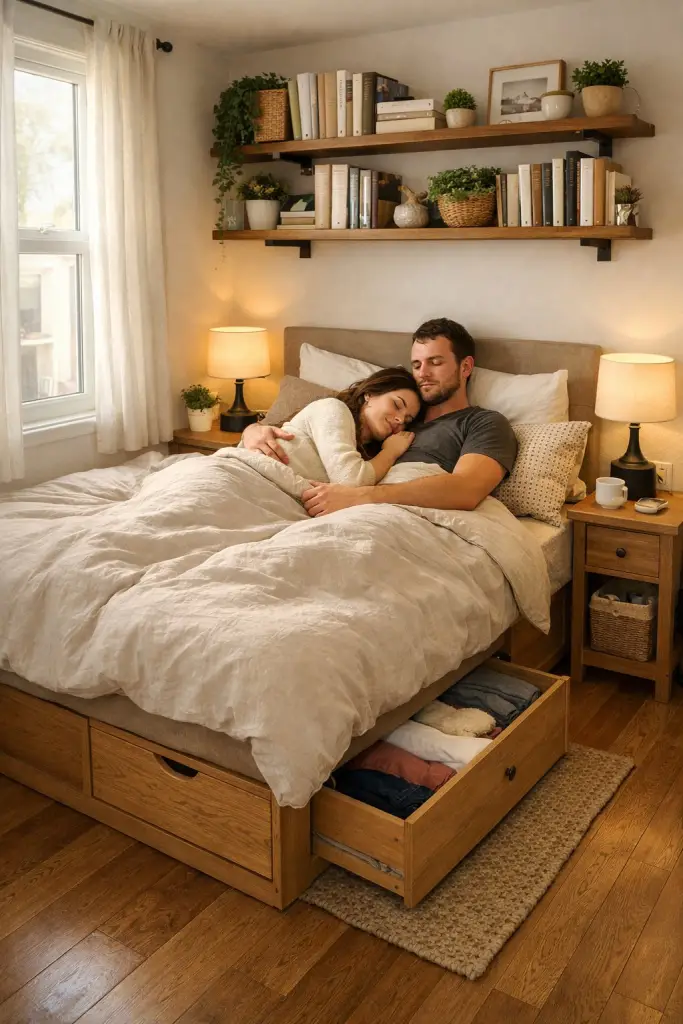
It guides them through smart choices—from flexible furniture and hidden storage to color and layout tips—that work together to open up a small bedroom. The ideas focus on real solutions that make daily life easier while keeping the space personal and inviting.
1) Use a Murphy bed to save floor space and create flexibility

They fold up against the wall to free floor space for daytime activities. Couples can use the cleared area for a home office, workout spot, or extra seating.
Many models add built-in storage like shelves or drawers. This keeps bedding and clothes tucked away, so the room stays tidy without extra furniture.
2) Install wall-mounted nightstands to reduce clutter
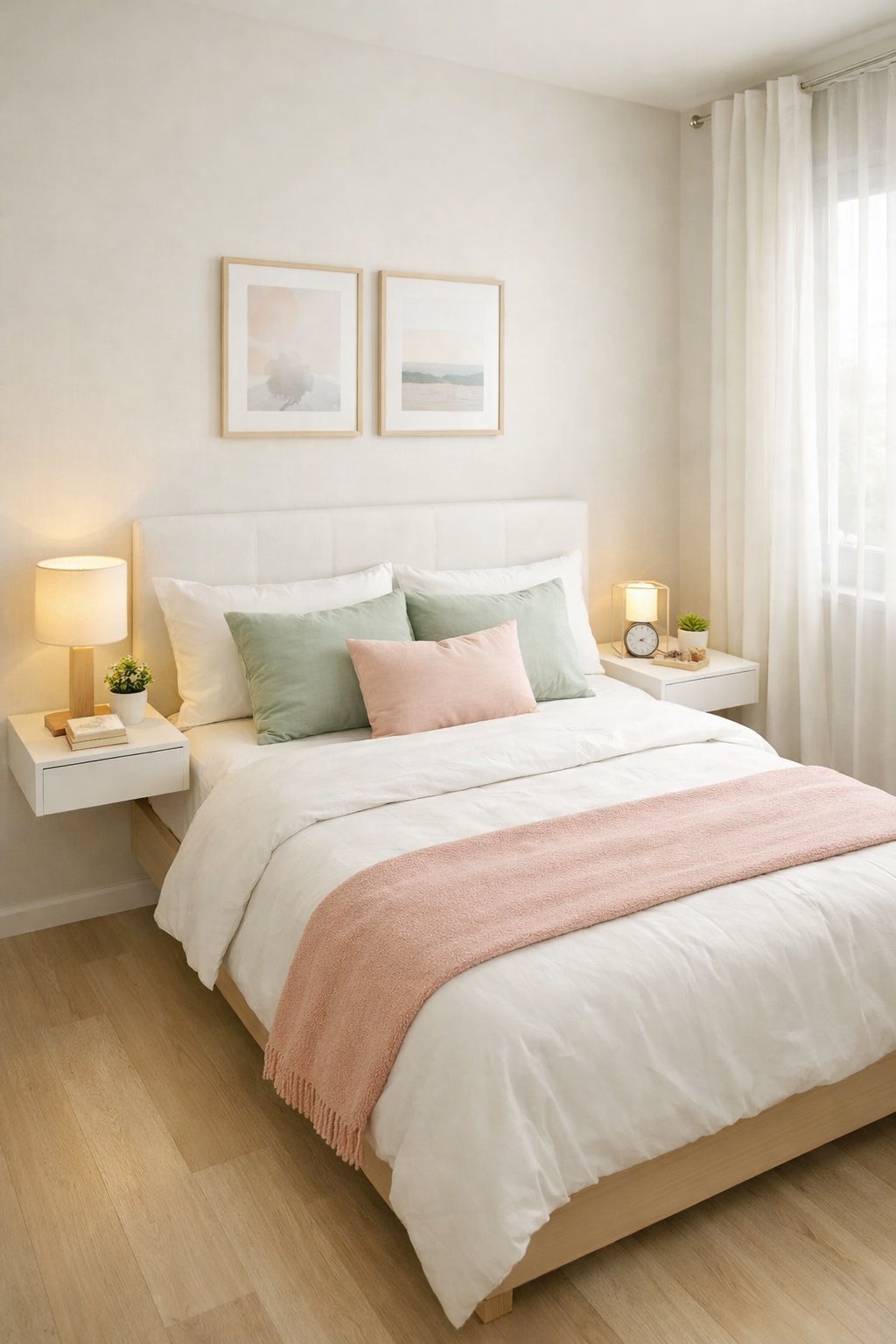
They free up floor space, making a small bedroom feel larger and easier to navigate. Wall-mounted nightstands keep items like phones, books, and glasses within reach without bulky furniture.
Choose models with a drawer or hidden shelf to hide chargers and small items. Proper mounting and cable management maintain a tidy look and prevent safety issues.
3) Choose light, neutral colors to make the room feel larger
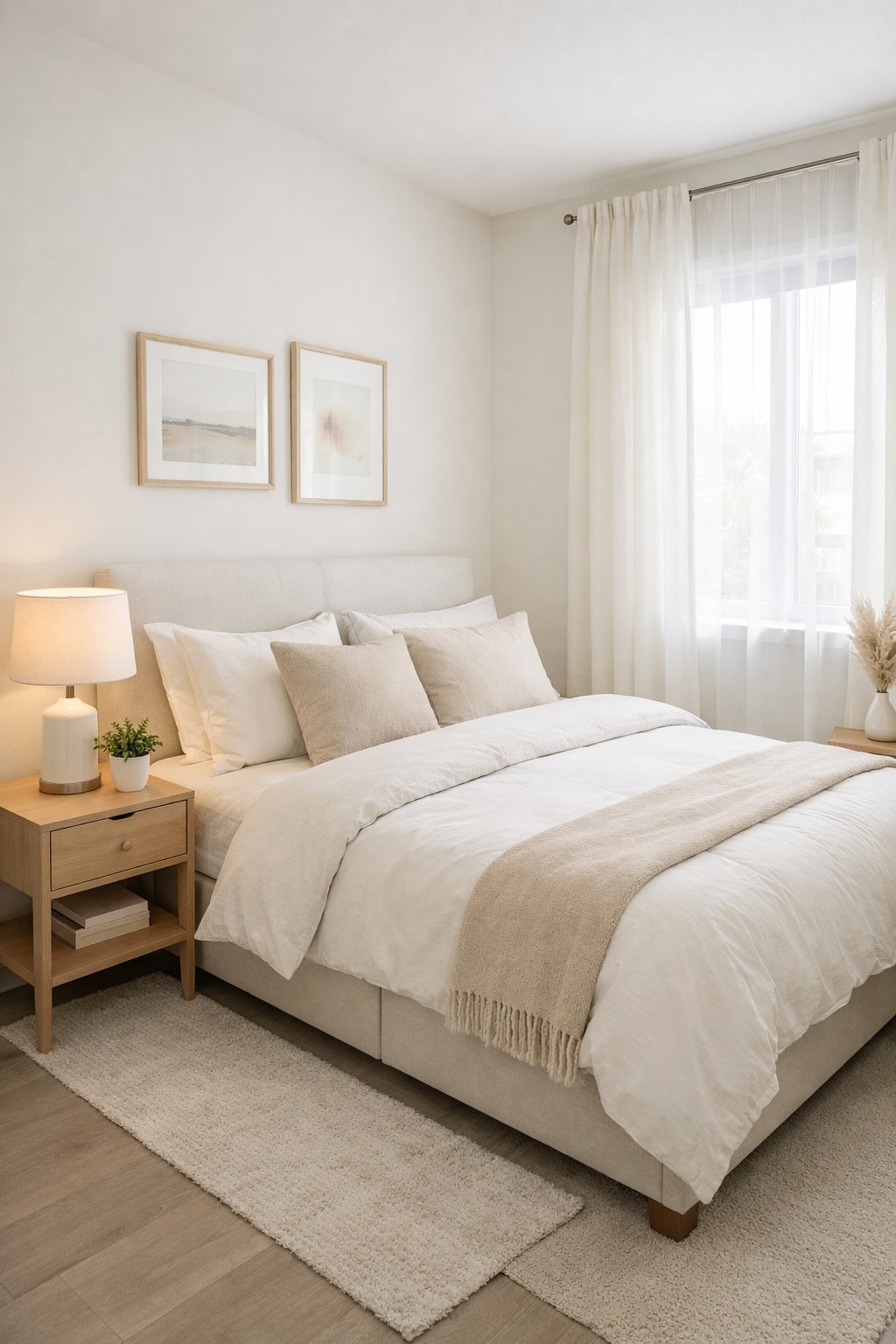
They should pick soft whites, pale grays, or warm beiges to reflect light and open the space. These tones reduce visual clutter and make walls recede.
A consistent palette across walls, trim, and ceiling helps unify the room. This creates a calm backdrop for furniture and small accents.
They can add contrast with pillows or a rug instead of bold wall colors. Small pops of color draw attention without shrinking the room.
4) Incorporate under-bed storage drawers or bins
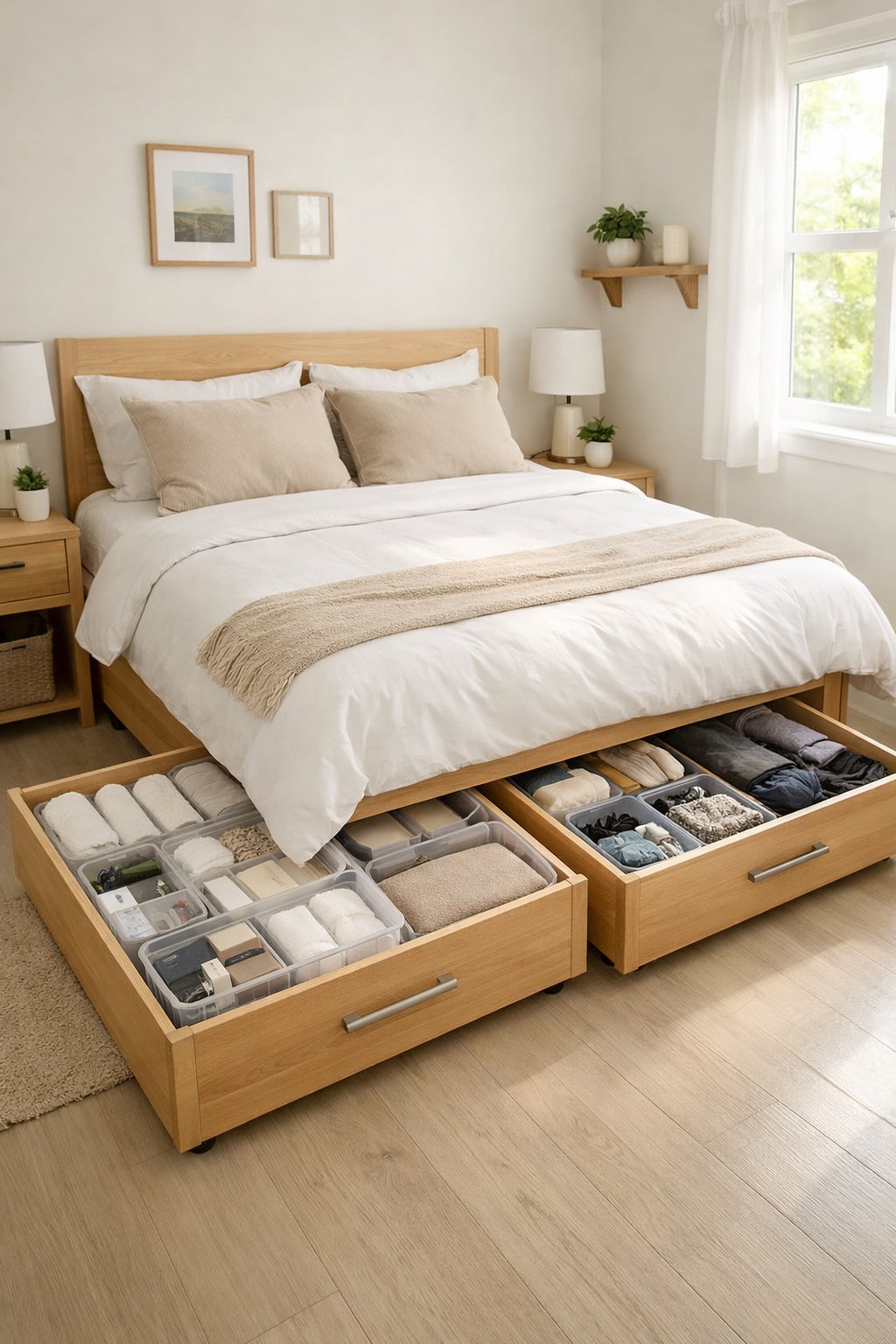
They add hidden space for clothes, shoes, and extra bedding without crowding the room. Rolling drawers slide out easily, so accessing items stays quick and simple.
Choose shallow bins for shoes and deep drawers for seasonal items. Labeling containers keeps things tidy and saves time when both partners look for things.
5) Use multi-functional furniture like ottomans with hidden storage
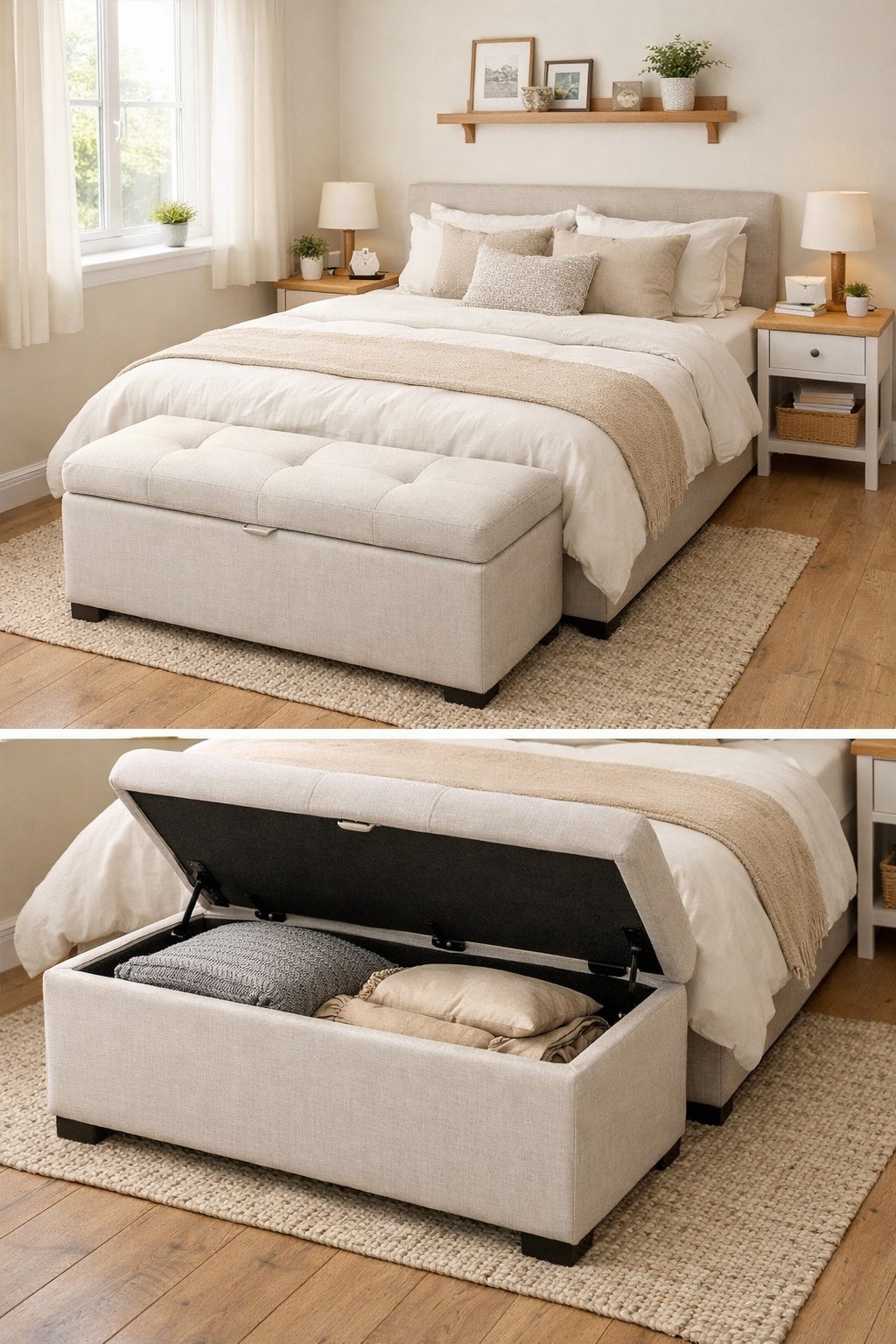
They pick ottomans that serve as seating, footrests, and storage to save floor space.
A lift-top or reversible lid hides blankets, shoes, and chargers while keeping surfaces tidy.
They choose pieces with durable fabric and casters for easy movement.
This lets them adapt the layout for guests or nightly routines without clutter.
6) Add floating shelves for personal items and decor
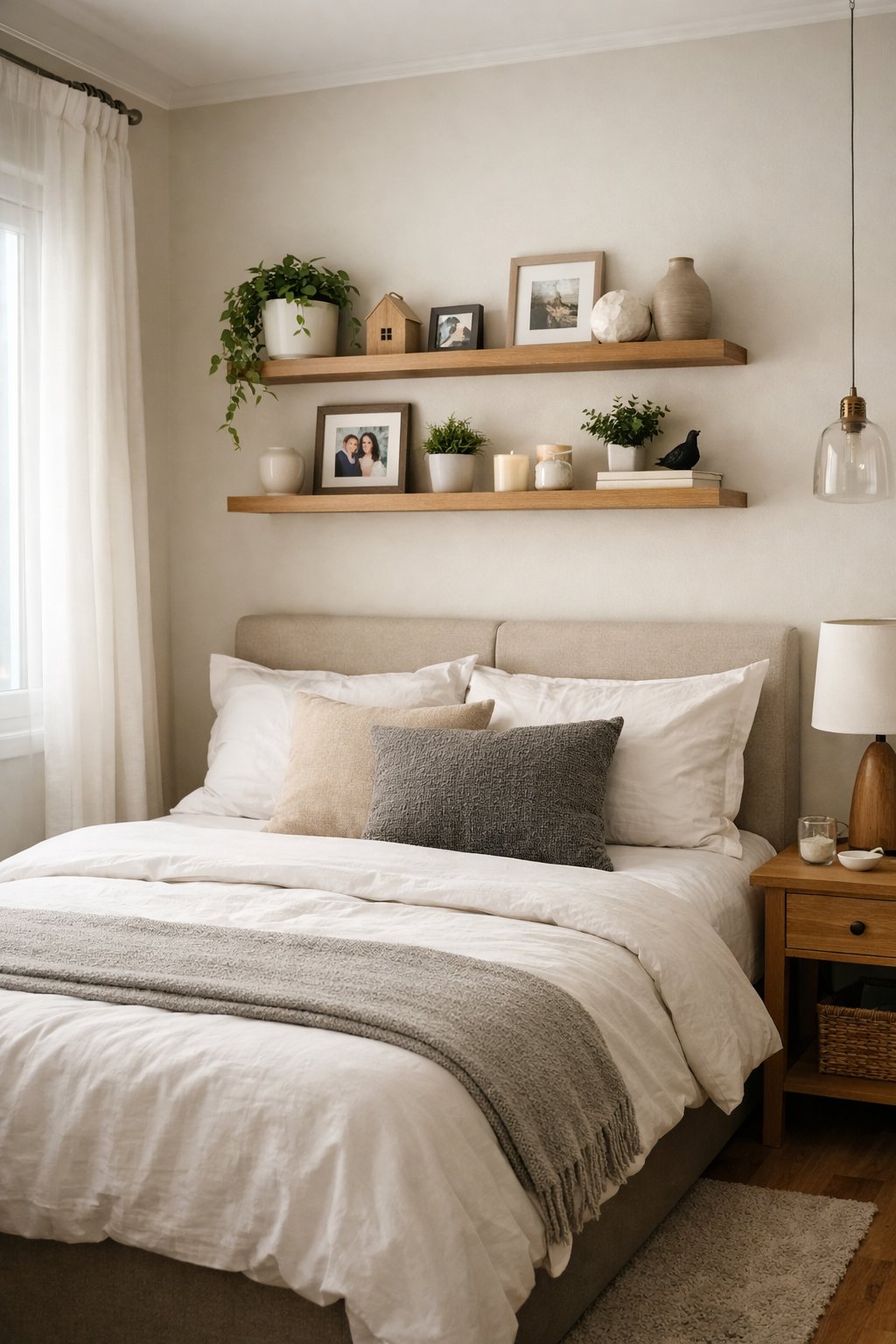
They free up floor space while giving each person a spot for small items like books, glasses, or a phone.
Place shelves at different heights to keep things balanced and easy to reach.
Use narrow or staggered shelves to avoid crowding the room.
Add baskets or trays to keep small items tidy and make the display feel intentional.
7) Opt for a sliding door to maximize usable space
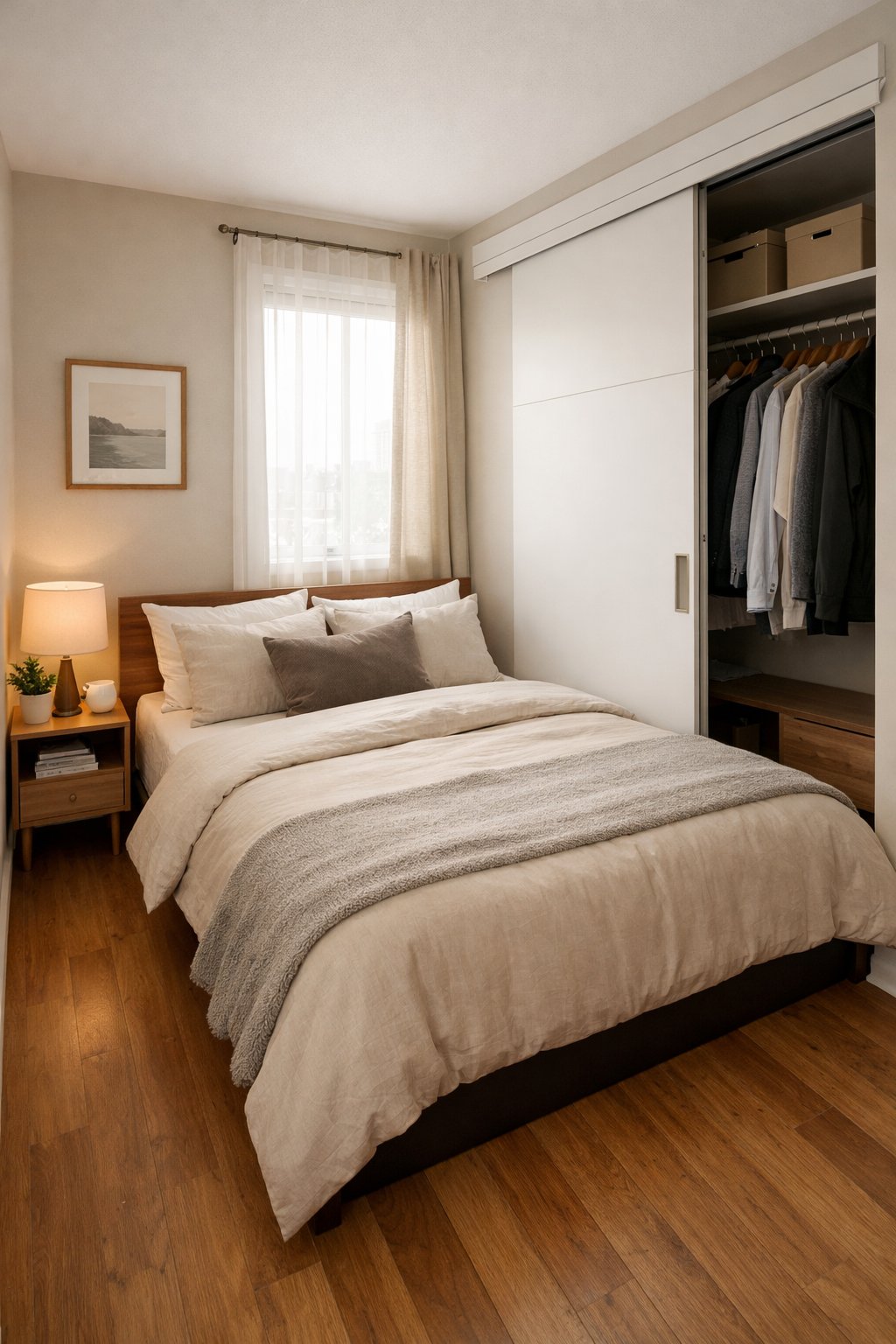
They replace swing doors that eat into floor and furniture area. A sliding or pocket door frees up about 10–15 sq ft per doorway in many layouts.
They suit tight closets, en suite bathrooms, and narrow walkways. Choose a solid door for privacy or glass for light, and pick hardware that glides smoothly for daily use.
Key Design Principles for Small Shared Bedrooms
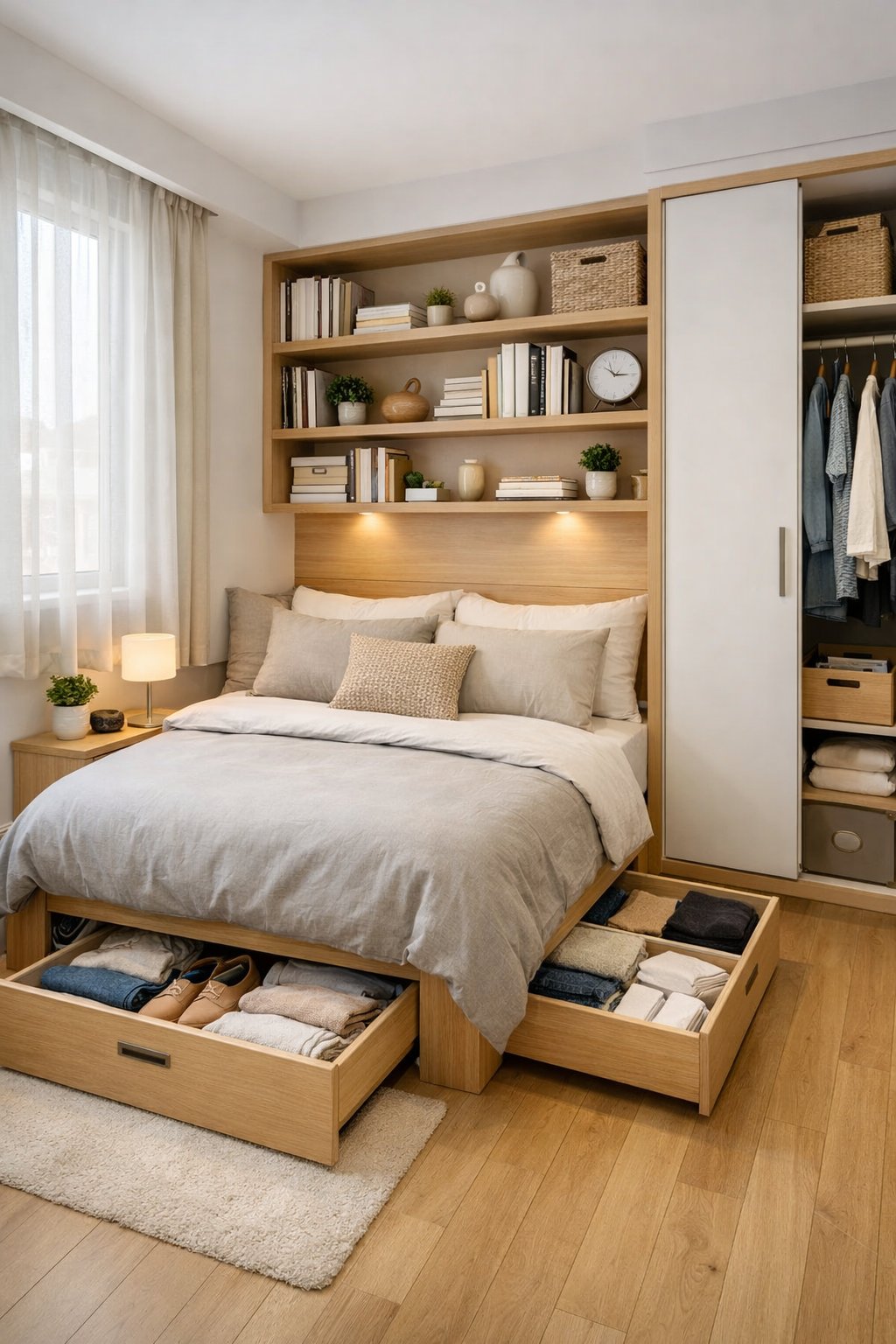
Start with a clear plan for storage, layout, and chosen furniture. Prioritize floor space, sleeping comfort, and easy access to shared items.
Maximizing Vertical Space
Vertical storage frees floor area and keeps the room tidy. Install wall-mounted shelves above the bed and along unused walls to store books, baskets, and night items. Use closed cabinets up high for seasonal clothing and open shelves lower for daily items so both partners reach what they need.
Choose tall wardrobes with narrow footprints. Add a hanging rail inside for shirts and a top shelf for boxes. Use over-door hooks for robes and bags. Consider a lofted bed or raised platform with storage underneath to create usable floor area for a small desk or seating.
Use wall hooks and pegboards for frequently used items like headphones, keys, and jewelry. Mount lights and bedside controls on the wall to avoid bedside tables taking up space. Keep everything at reachable heights and label bins to avoid clutter.
Choosing Multipurpose Furniture
Multipurpose furniture reduces the number of pieces needed and increases function. Pick a bed with built-in drawers or a hydraulic lift mattress for large under-bed storage. A fold-down desk that doubles as a nightstand saves space and creates a work area when needed.
Select a sofa or bench with hidden storage for extra bedding and pillows. Choose a dresser that can serve as a TV stand or room divider if the layout needs zoning. For seating, use stackable stools or poufs that tuck away under a table.
Focus on quality mechanisms and easy access. Test drawer glides, lift pistons, and hinge smoothness before buying. Match sizes to the room: avoid oversized multipurpose pieces that dominate the space.
Personalization and Comfort in Limited Spaces
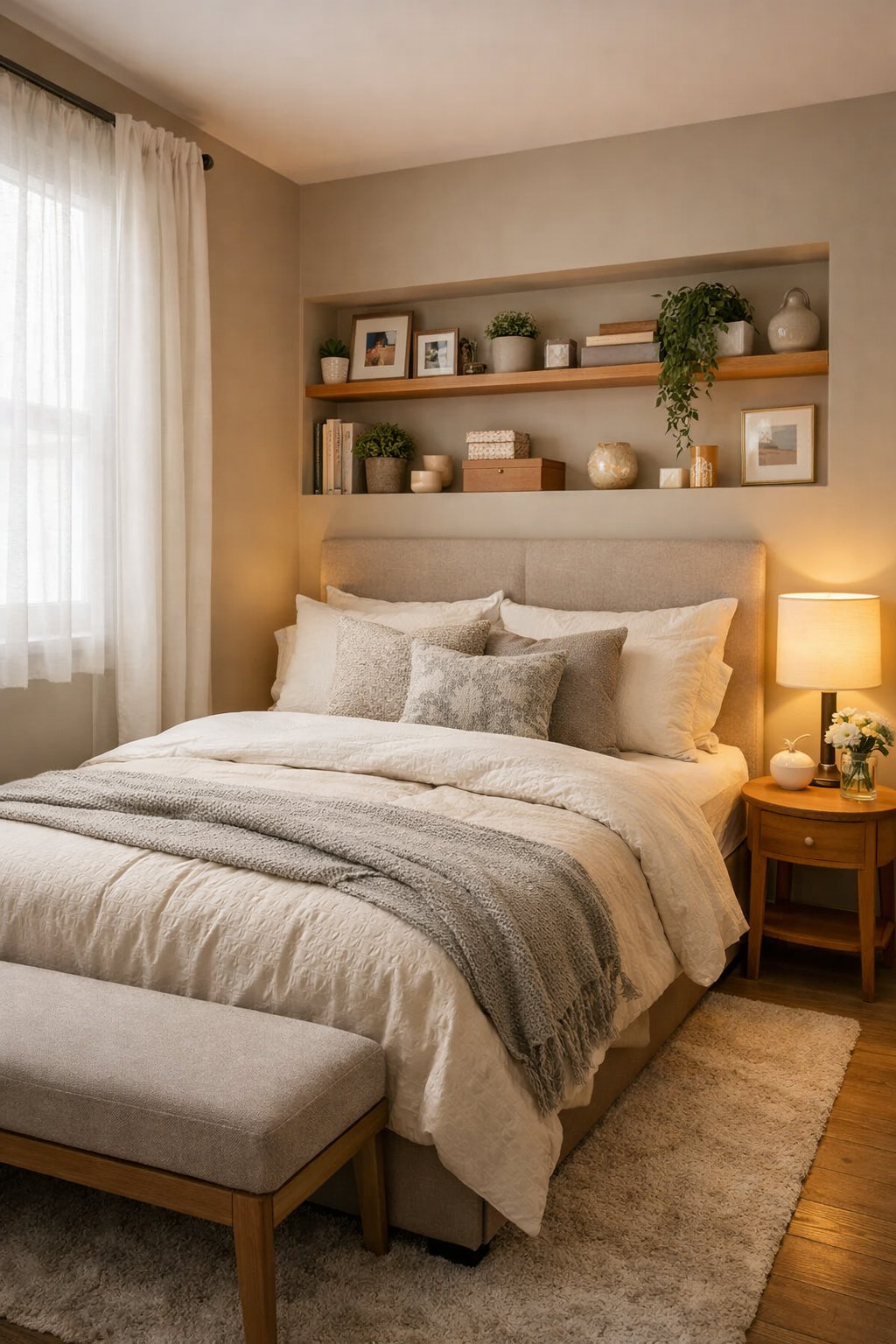
Choose a simple palette and soft layers to make a small bedroom feel like a shared retreat. Focus on two or three colors, a few tactile fabrics, and a handful of personal items that both people love.
Coordinating Color Schemes
Pick one main neutral, one accent, and one small pop color to keep the room cohesive without feeling crowded. For example: warm gray as the neutral, muted teal as the accent, and mustard as the pop. Use the neutral on walls and large furniture, the accent on bedding or a single wall, and the pop in pillows, artwork, or a small lamp.
Match tones rather than exact shades to let each partner keep a few personal items. If one likes warmer hues and the other cooler tones, choose a neutral base plus an accent that bridges both—like a soft taupe with dusty blue. Keep patterns minimal: one bold pattern and one simple stripe or geometric for balance.
Adding Cozy Textiles
Layer textiles to add warmth and comfort without using floor space. Start with a high-quality fitted sheet and a mid-weight duvet, then add a quilt or throw folded at the foot of the bed. Use two sets of pillows—one for sleeping and one decorative—to keep nightly needs and style separate.
Choose fabrics that feel good and wash easily. Cotton or linen blends work for sheets; a washable microfleece or wool blend is good for throws. Add a small upholstered headboard or a pair of wall-mounted reading lights with adjustable arms to create a cozy, shared reading nook without bulky furniture.