
Throw Pillow Combination Ideas: 5 Designer-Approved Pairings for Any Sofa
Throw pillow combination ideas help turn a plain sofa into a space that feels finished and pulled together. They guide how someone can mix color, pattern, size, and texture in a simple and clear way. They show how to combine pillows so a sofa looks balanced, stylish, and connected to the rest of the room.
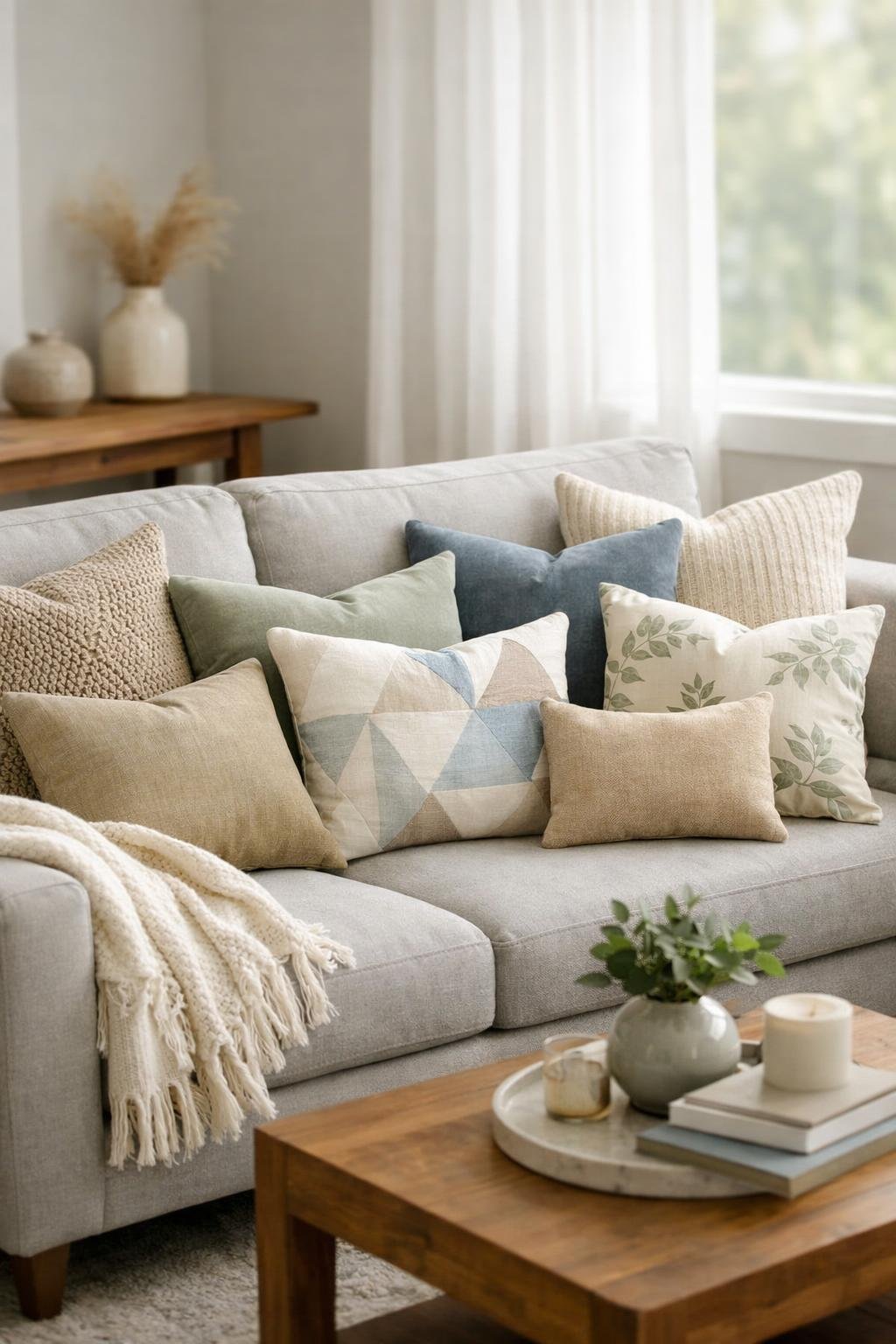
This article explains how to build a strong base, layer in patterns, and add texture for depth. It also explores size, color harmony, and the basic rules of visual balance so every pillow works as part of a complete look.
1) Start with a base of solid-colored pillows that complement your sofa color.
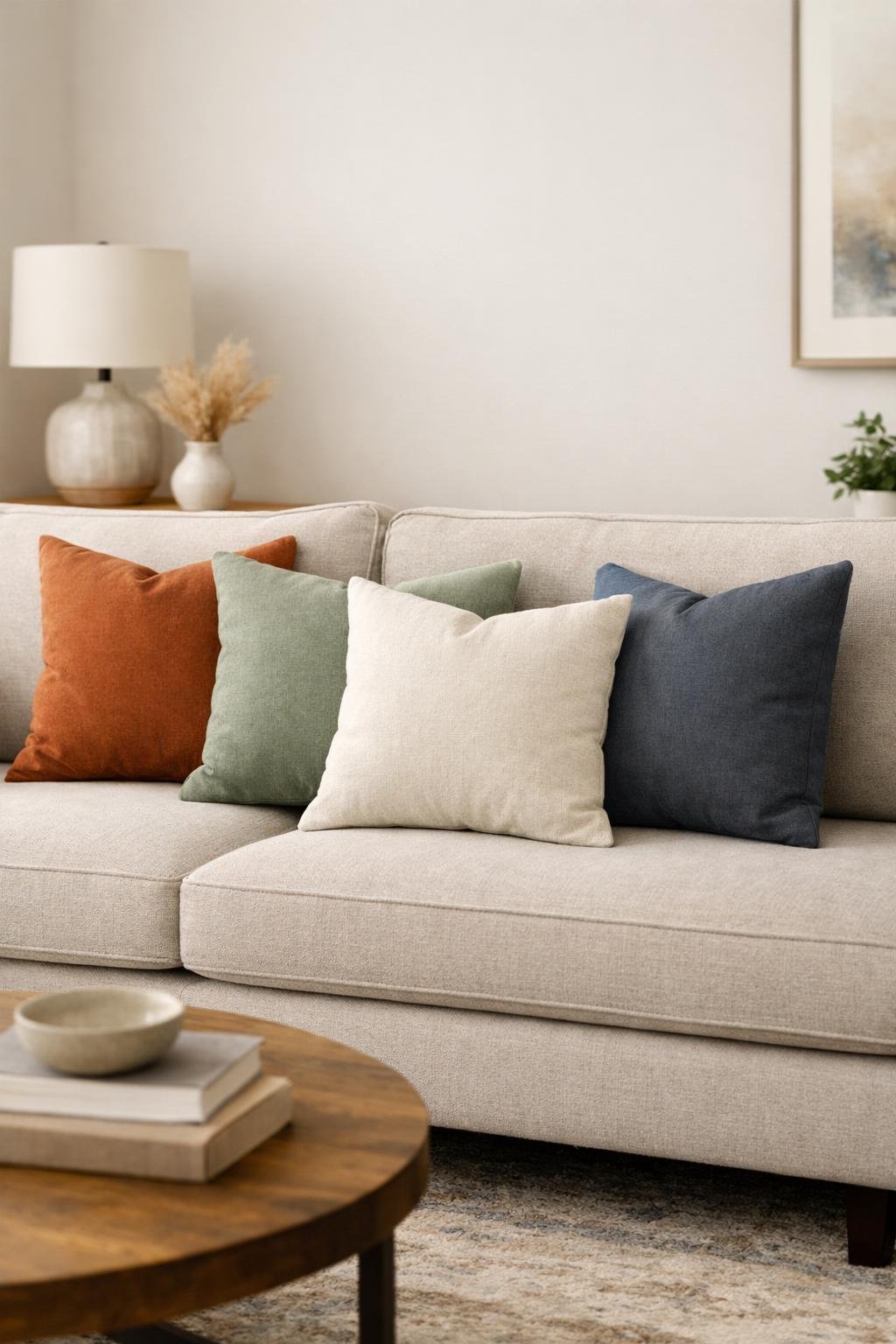
They should begin with solid pillows that match or complement the sofa color. This step creates a calm base and keeps the look organized.
A neutral sofa pairs well with solids in soft gray, cream, tan, or muted blue. A bold sofa works best with solids in one or two tones pulled from the room.
Many designers use larger solid pillows, such as 22×22 or 24×24 inches, to anchor the corners. These pillows set the tone and make it easier to layer patterns and textures later.
2) Mix patterns by combining stripes, florals, and geometrics for visual interest.
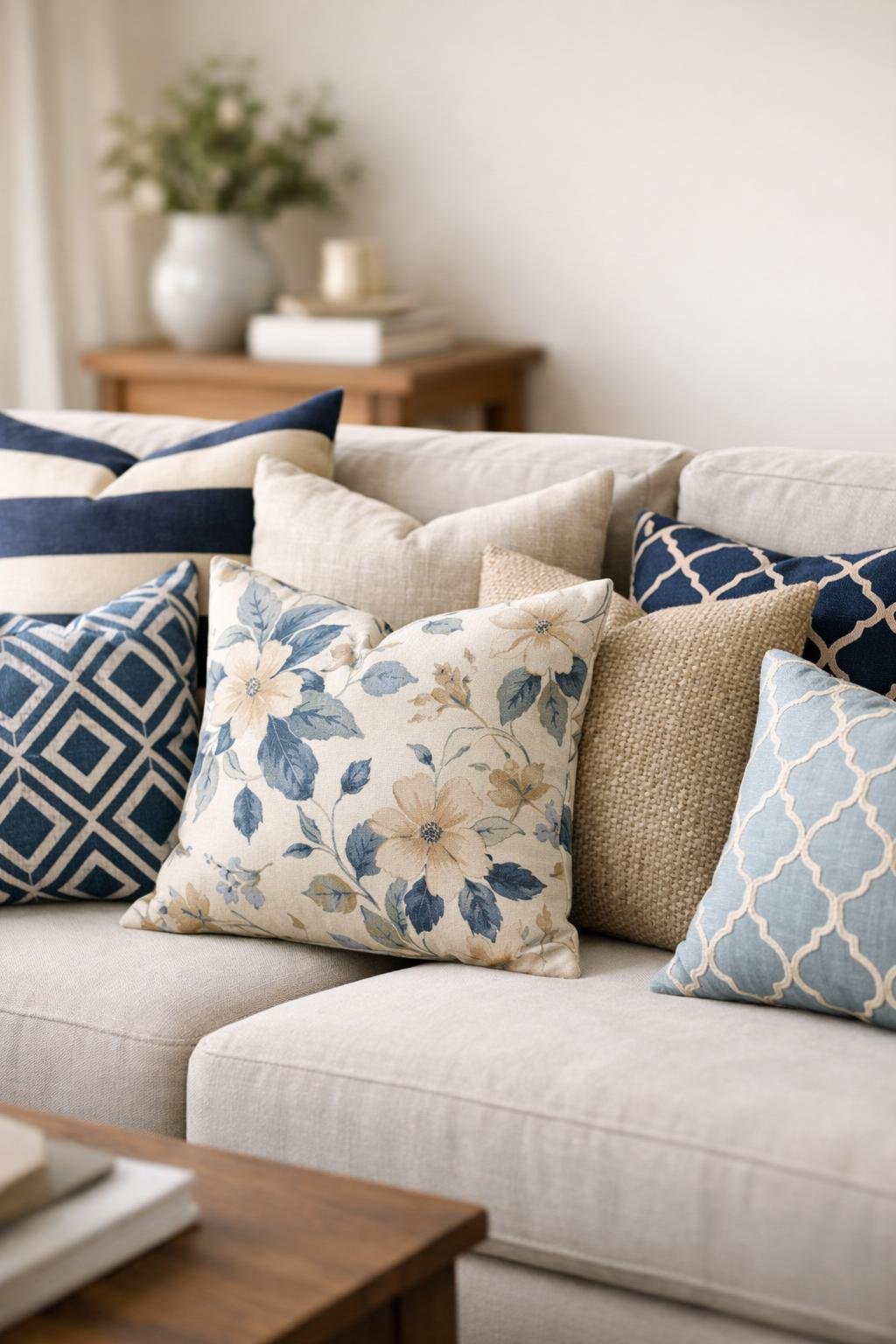
They can create a lively look by pairing stripes, florals, and geometric prints on the same sofa. Each pattern adds a different shape and rhythm, which keeps the space from feeling flat.
They should vary the scale of the prints. A large floral works well with a thin stripe and a small geometric design. This balance helps the patterns feel planned instead of random.
They can also keep a shared color palette across all pillows. When the colors connect, the mix looks cohesive and easy to style.
3) Incorporate different textures like velvet, linen, and faux fur for depth.
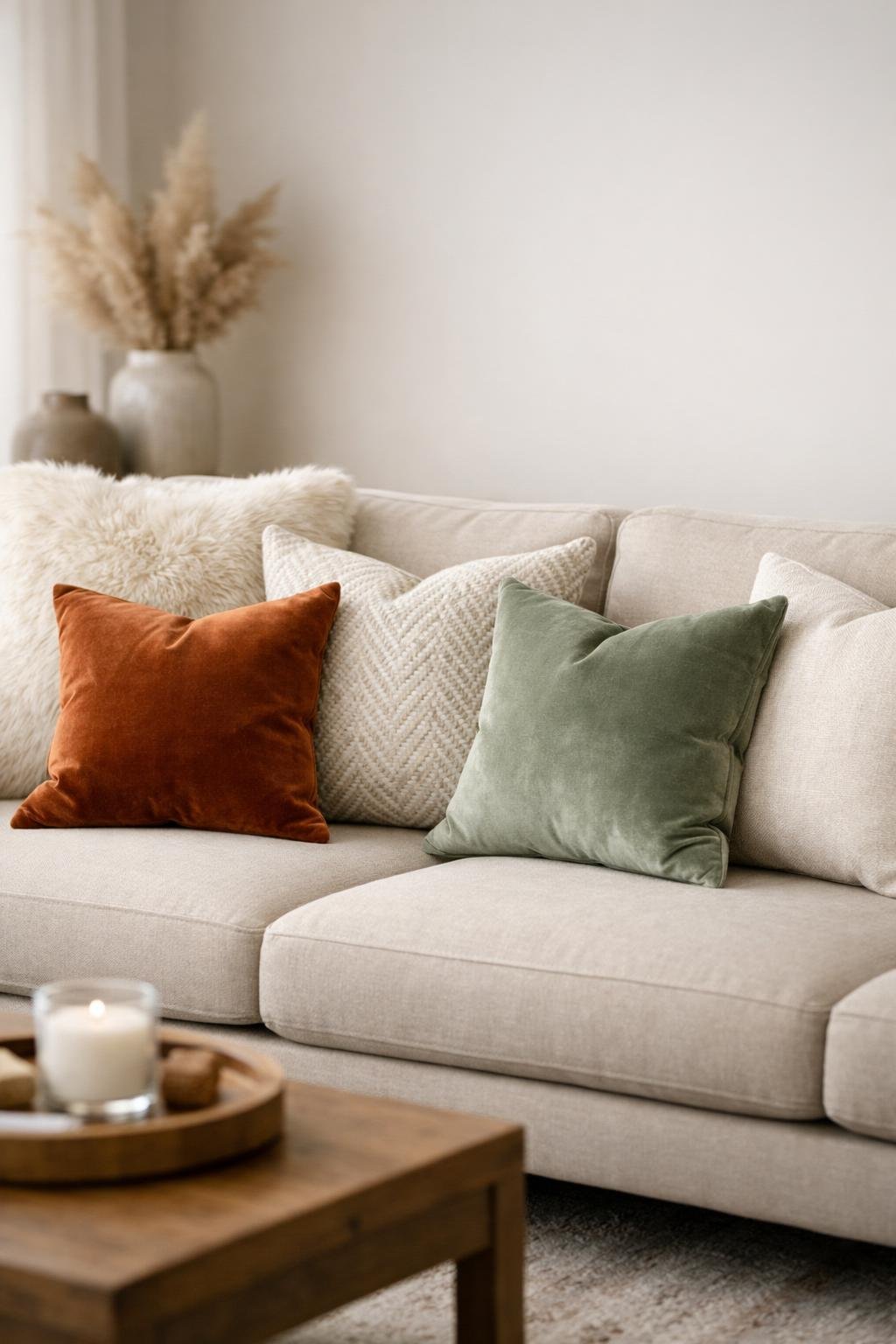
They can create depth by mixing pillows in different fabrics. Velvet adds a soft, smooth feel. Linen brings a light, natural texture.
Faux fur adds warmth and a plush touch. When they place it next to flat cotton or sleek leather, the contrast stands out. The space feels layered without looking busy.
They should vary the weight and finish of each fabric. A chunky knit pillow next to a smooth velvet one keeps the arrangement balanced and clear.
4) Vary pillow sizes for a balanced and layered look.
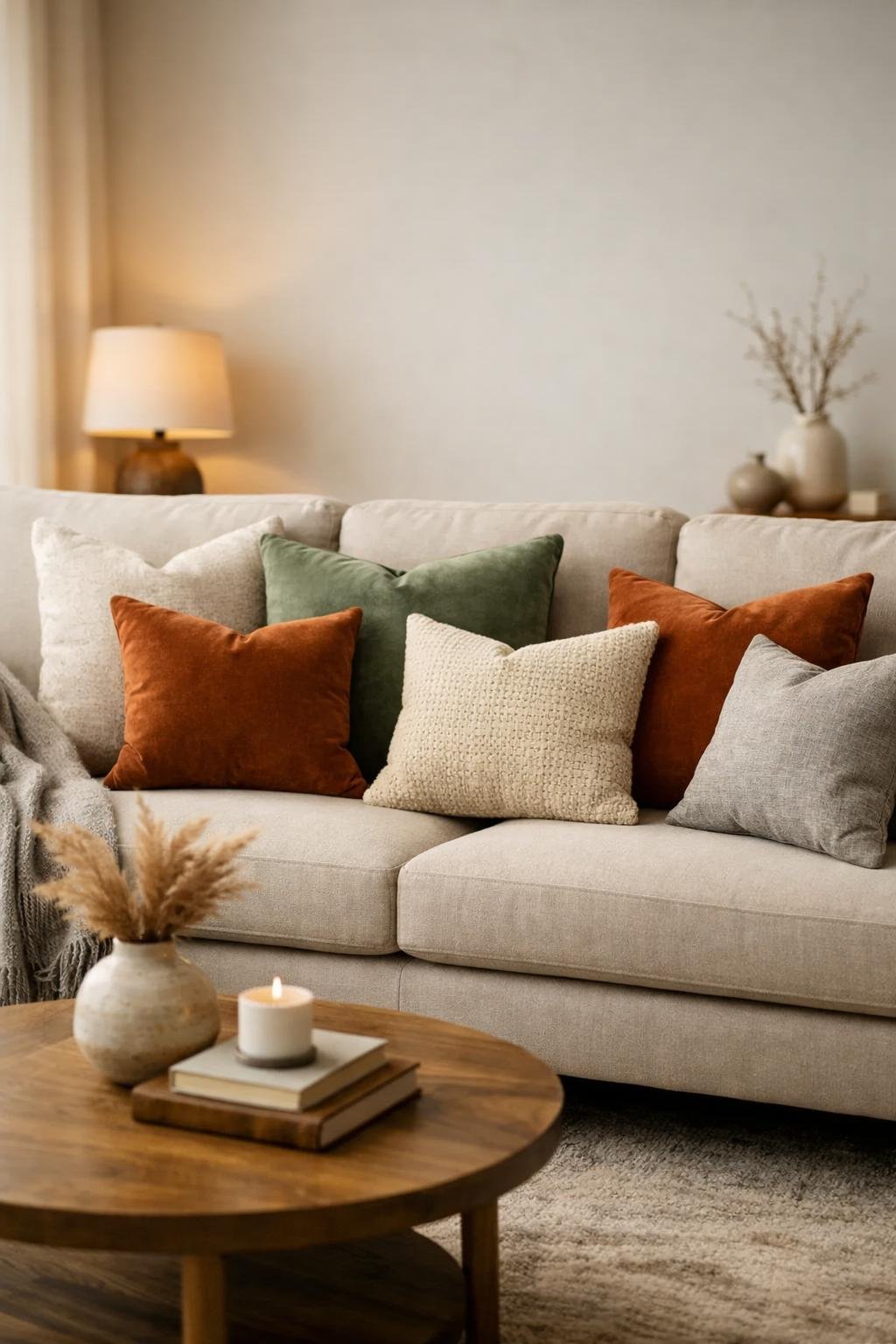
Varying pillow sizes creates depth and order. It helps the seating area look planned instead of flat. Designers often start with larger pillows in the back.
On a sofa, they may use 22×22 or 20×20 inch pillows as the base. Medium 18×18 inch pillows layer in front. Smaller lumbar pillows finish the front row.
This size shift guides the eye from back to front. It also adds comfort, since larger pillows support the back while smaller ones support the lower spine. Mixing sizes keeps the arrangement balanced without looking stiff.
5) Use a color palette drawn from your room to create cohesion.
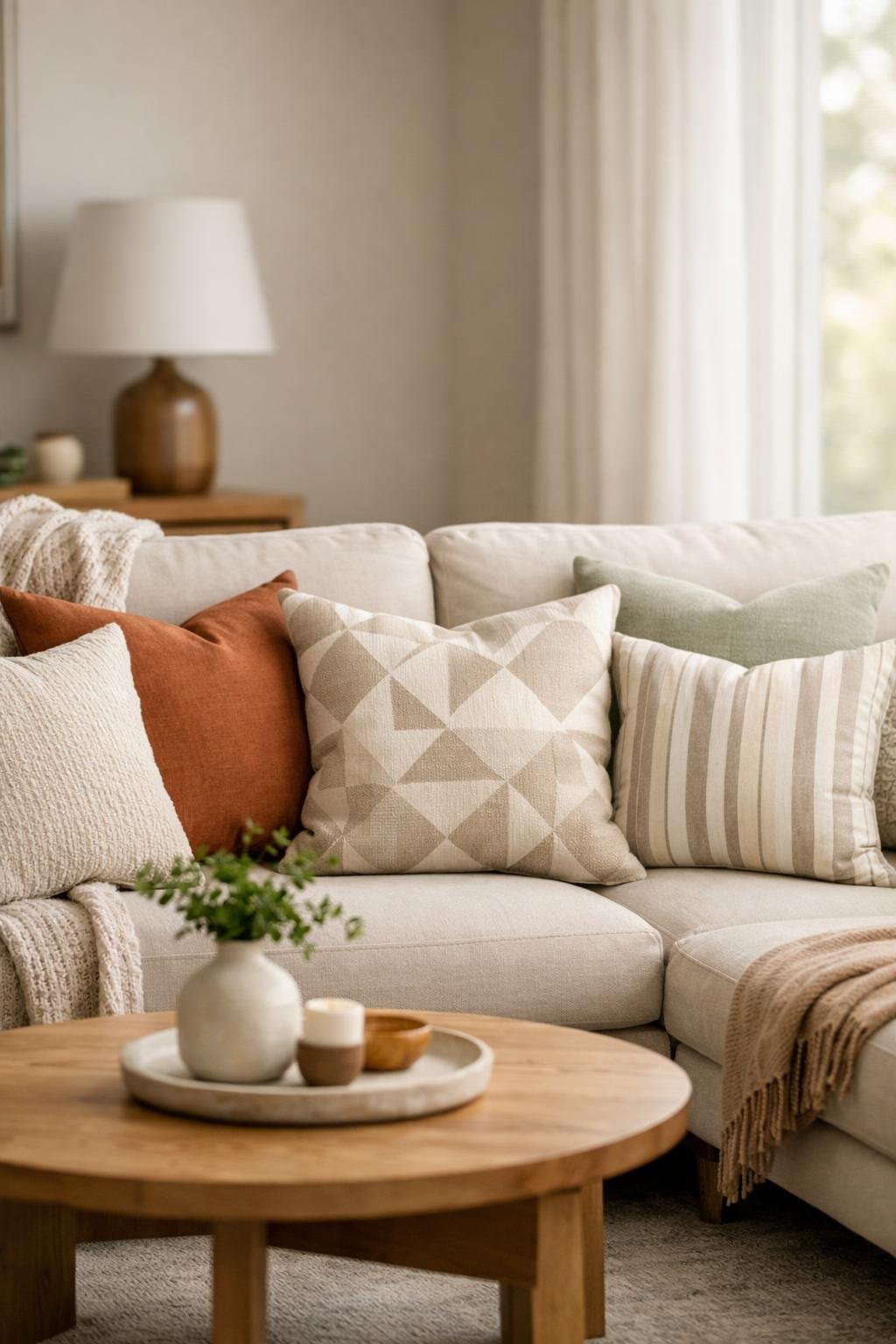
Choose pillow colors that already appear in the room. They can pull from the wall color, rug, curtains, or artwork. This keeps the space looking planned and connected.
Start with one or two main colors. Then add a pattern that includes those same shades. A solid pillow in a matching tone can balance a bold print.
Repeat an accent color in small doses across the space. This simple step helps the sofa feel tied to the rest of the room without adding clutter.
Principles Of Visual Balance
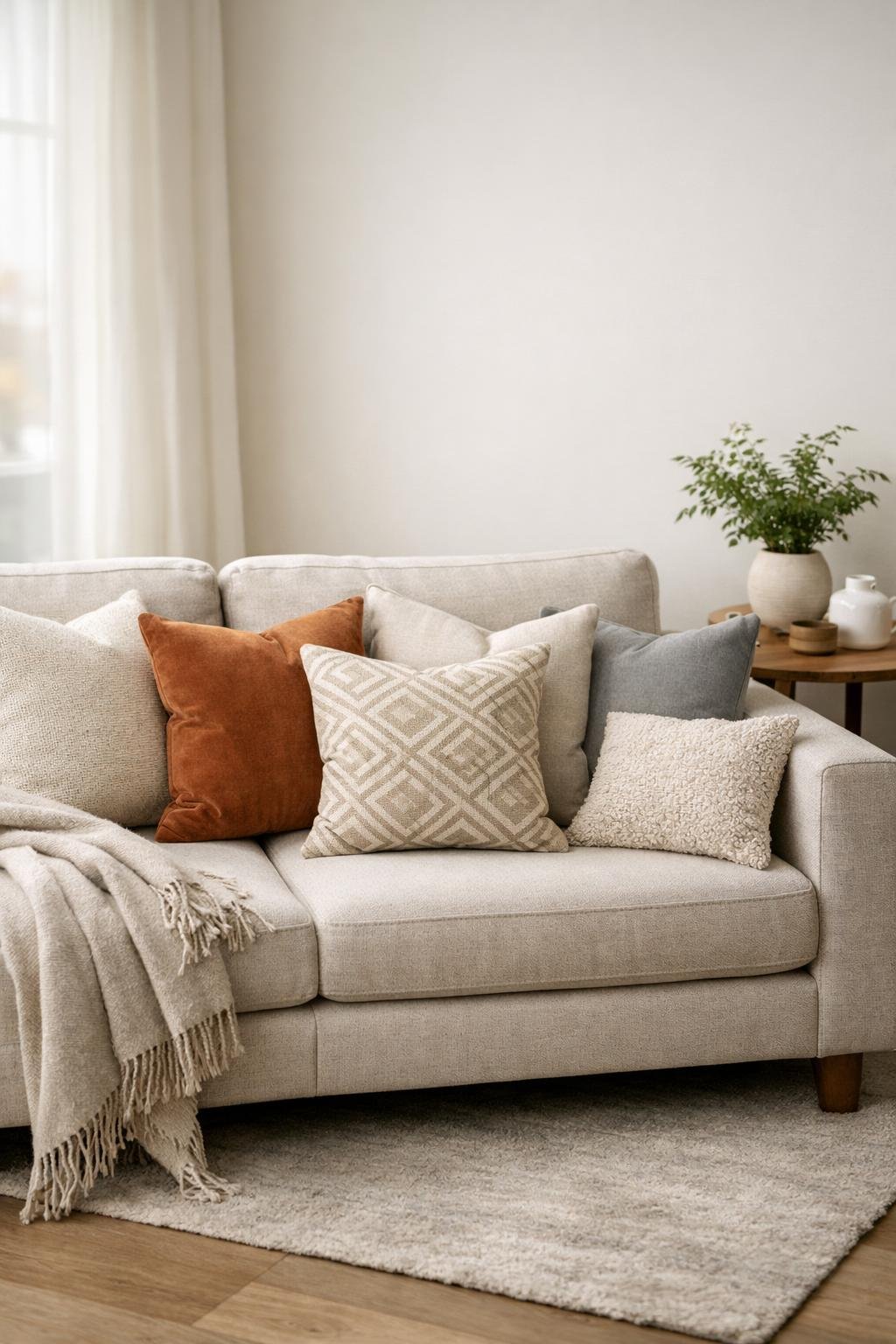
A strong pillow arrangement relies on balance. Designers use symmetry for order and asymmetry for energy, depending on the room’s layout and mood.
Utilizing Symmetry to Anchor a Space
Symmetry creates a calm and structured look. It works well in formal living rooms and primary bedrooms where order matters.
Designers often place matching pillows on each end of a sofa. They may use the same size, color, and pattern to frame the seating area. For example:
- Two 22-inch solid pillows on each corner
- Two smaller patterned pillows in front
- One lumbar pillow centered
This layout builds a clear focal point. The solid pillows act as a base, while patterns add detail without disrupting balance.
Symmetry also depends on even spacing and equal visual weight. If one side has a bold print, the other side should match its size or color intensity. Repeating colors from the rug or curtains strengthens the effect and ties the room together.
Incorporating Asymmetry for Dynamic Arrangements
Asymmetry creates movement and a relaxed feel. It suits casual spaces and modern interiors.
Instead of mirroring each side, designers vary size, pattern, or texture. One side of a sofa may hold two layered pillows, while the other side features one large pillow and a textured lumbar. The key lies in balancing visual weight, not exact placement.
Helpful guidelines include:
- Mix one solid pillow with one bold pattern
- Combine large and small sizes for contrast
- Add texture such as linen, velvet, or embroidery
A solid pillow can soften a strong print. Texture can replace pattern when the space already has bold colors.
Asymmetry works best when the color palette stays consistent. Two or three related colors keep the arrangement cohesive, even when shapes and patterns differ.
Harmonizing Patterns And Textures
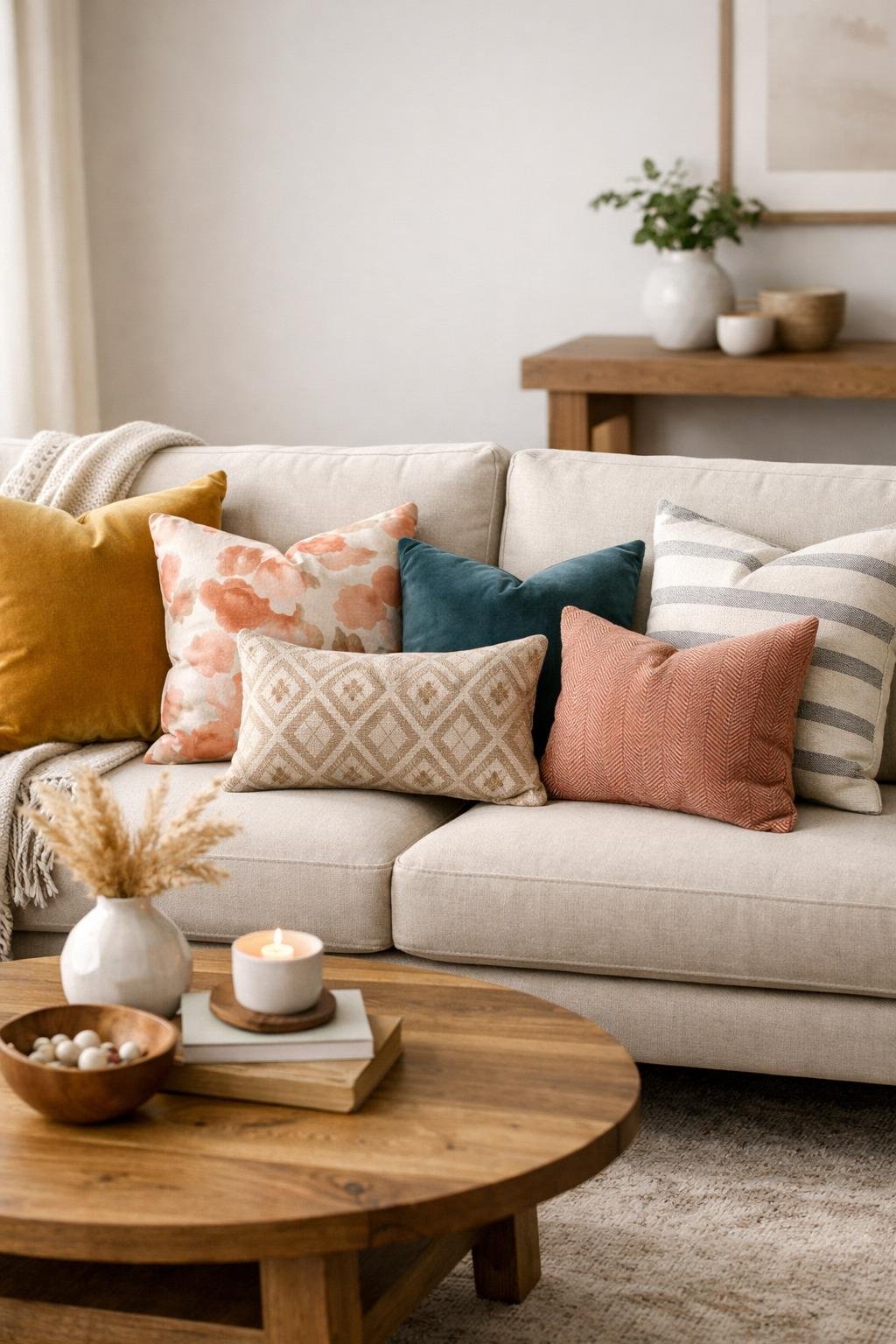
A strong pillow mix balances bold shapes with softer lines and blends smooth fabrics with rich weaves. Clear contrast and shared colors keep the look controlled instead of busy.
Mixing Geometric And Organic Designs
Geometric prints add structure. Stripes, grids, and chevron patterns create clean lines that anchor the sofa.
Organic designs, such as florals or abstract shapes, soften those lines. They add movement and prevent the space from feeling stiff.
To mix them well, follow a simple formula:
- 1 bold geometric pattern
- 1 softer organic print
- 1 solid or subtle texture
Keep at least one color consistent across all pillows. For example, a navy stripe can pair with a floral that also includes navy, even if it adds cream or rust.
Scale matters. If the geometric print is large and bold, choose a smaller, tighter organic pattern. This contrast helps each pillow stand out.
Avoid using two busy patterns in the same size. They compete and make the sofa look cluttered.
Combining Luxe, Woven, And Velvet Fabrics
Texture adds depth, even when the color palette stays simple. A mix of smooth and tactile fabrics creates a layered look.
Velvet feels soft and slightly shiny. It works well as a solid base pillow in deep tones like olive, navy, or charcoal.
Woven fabrics, such as linen or cotton blends, add a casual and relaxed feel. They balance the richness of velvet.
A practical combination often includes:
| Fabric Type | Role in the Mix | Best Use |
|---|---|---|
| Velvet | Adds depth and softness | Solid anchor pillow |
| Woven/Linen | Brings texture and ease | Neutral support pillow |
| Patterned Cotton or Jacquard | Adds detail | Accent pillow |
Limit shiny fabrics to one or two pillows. Too much sheen can look formal and heavy.
They should also vary the pillow sizes. A larger woven pillow in the back and a smaller velvet or patterned pillow in front creates clear layers and keeps the arrangement intentional.