Master Bedroom Ideas: Best Ways to Design Your Place
A master bedroom should feel calm, functional, and personal. It sets the tone for rest at the end of the day and focus at the start of a new one. With the right design choices, it can support both comfort and daily routines.
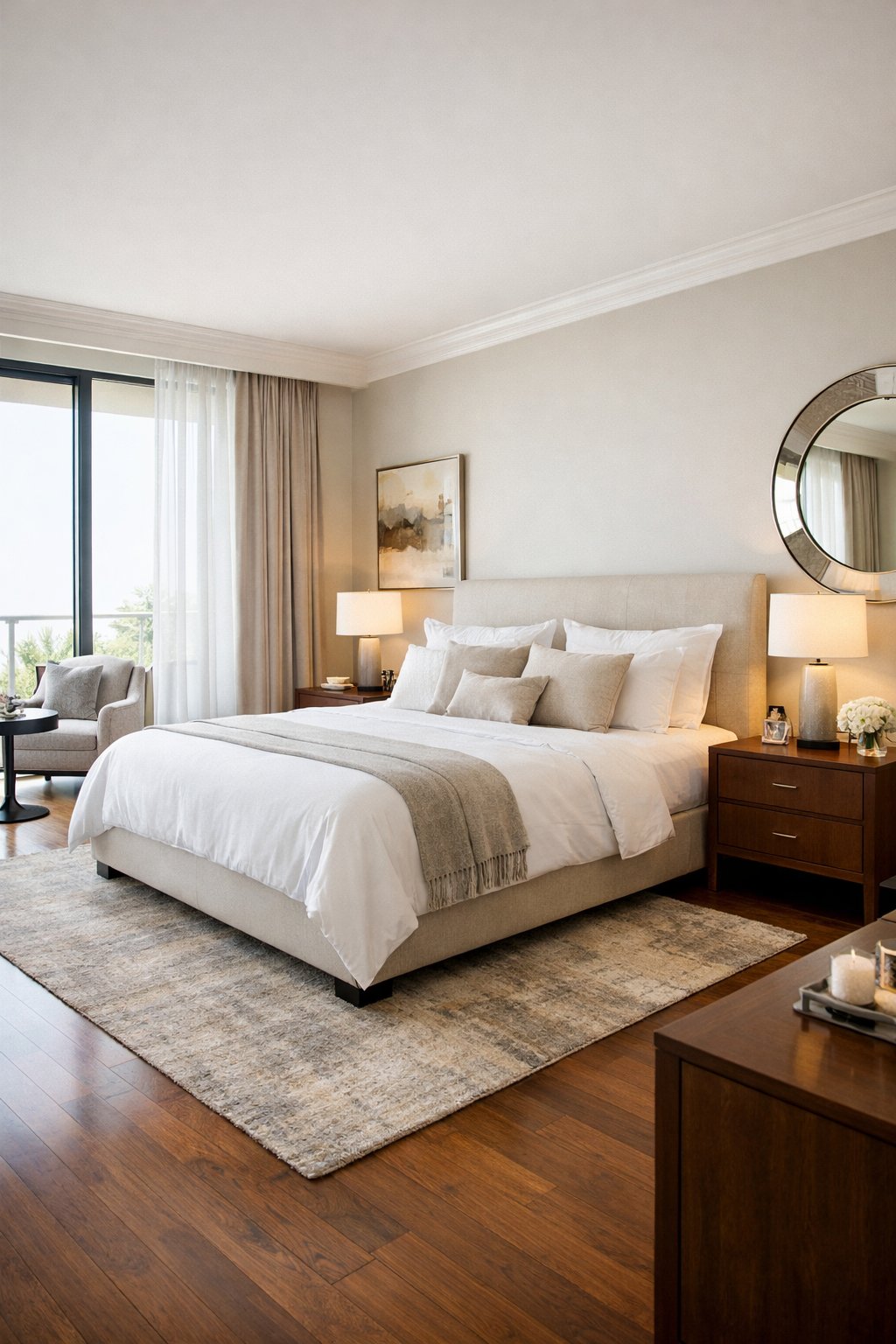
This guide shows how to shape a master bedroom that balances style, smart layout, practical storage, and balanced lighting. It explores how color, furniture, and thoughtful details work together to create a space that feels organized and inviting. Each idea helps turn an ordinary room into a well-planned retreat.
1) Layered lighting with dimmable bedside lamps and overhead fixtures
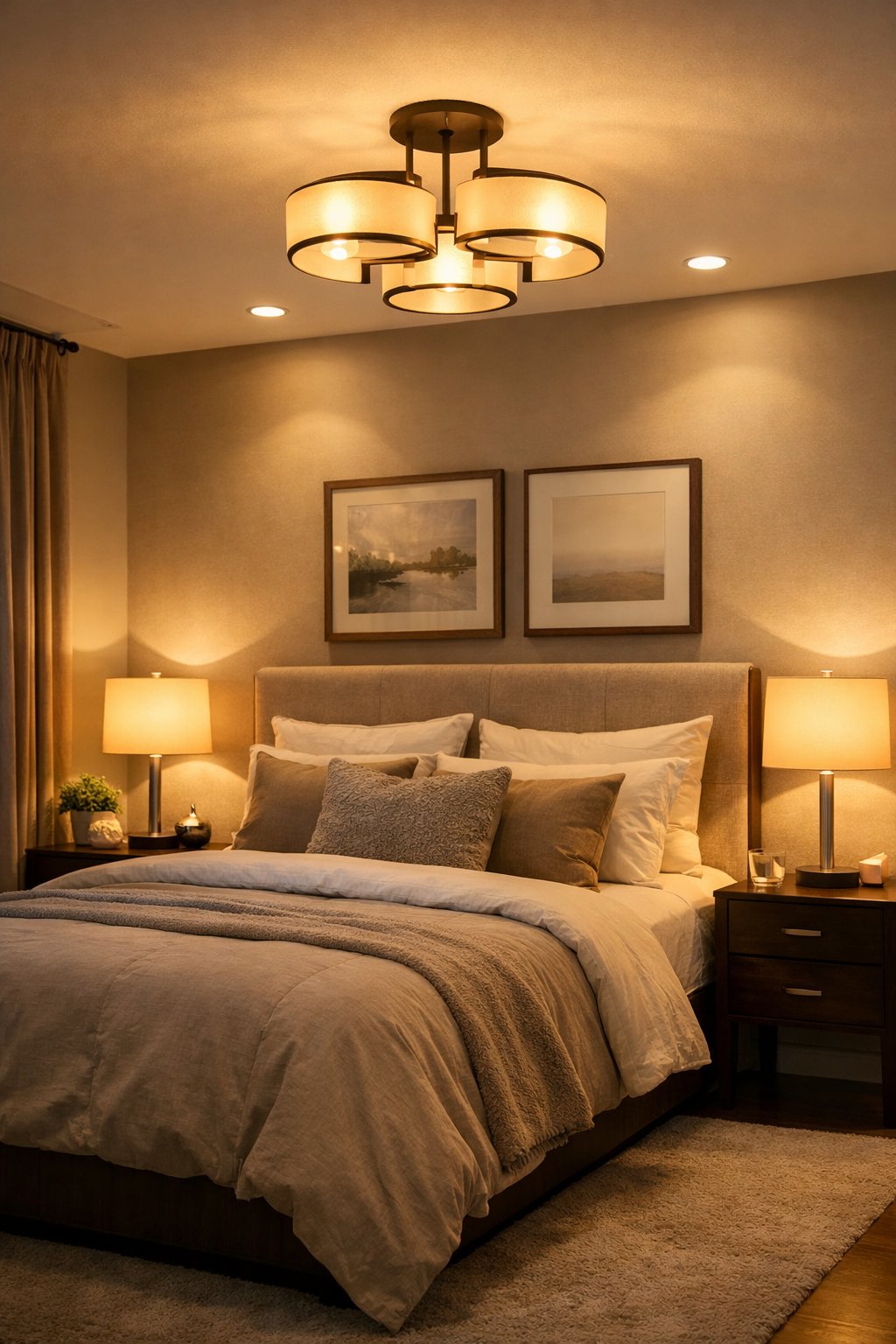
Layered lighting gives the master bedroom both comfort and function. It blends overhead fixtures with bedside lamps to create even light across the room. This setup prevents harsh shadows and dark corners.
Overhead lighting provides general brightness. A ceiling fixture or fan light should spread light evenly. Dimmers allow easy control from bright morning light to a softer evening glow.
Bedside lamps add focused task lighting. They support reading and reduce eye strain. Warm white bulbs, around 2700K to 3000K, help create a calm and restful mood.
2) Neutral color palette with textured accents like woven throws and rugs
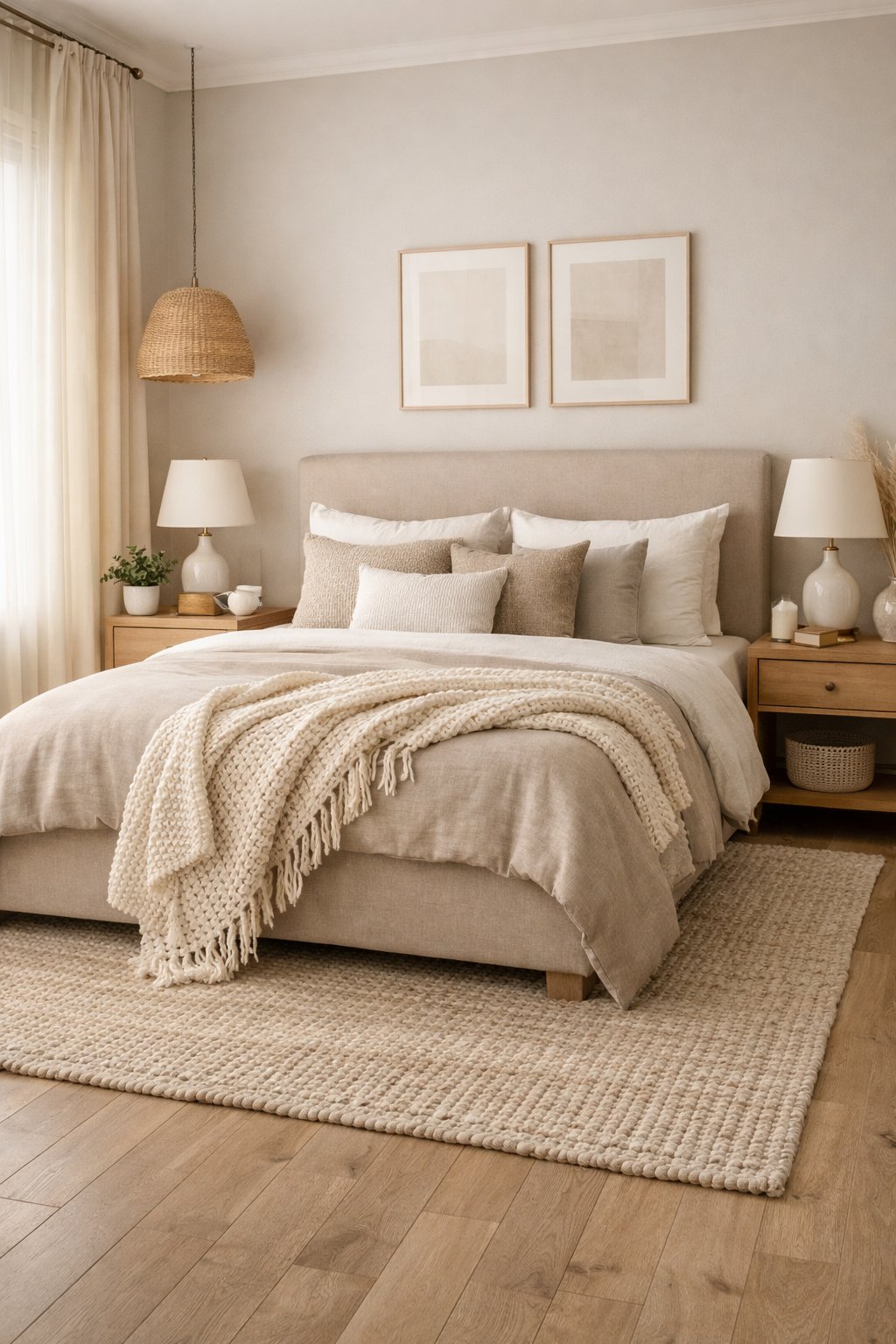
A neutral color palette creates a calm and balanced master bedroom. Designers often use shades like beige, cream, taupe, and soft gray to form a simple base. These tones make the room feel open and easy to update.
Texture adds depth without adding bold color. Woven throws, knitted blankets, and layered bedding give the bed a soft, inviting look. A woven or wool rug grounds the space and adds warmth underfoot.
They often mix matte and smooth finishes to avoid a flat look. Light wood furniture and subtle black or bronze accents keep the room modern and steady.
3) Built-in storage solutions including under-bed drawers and custom wardrobes
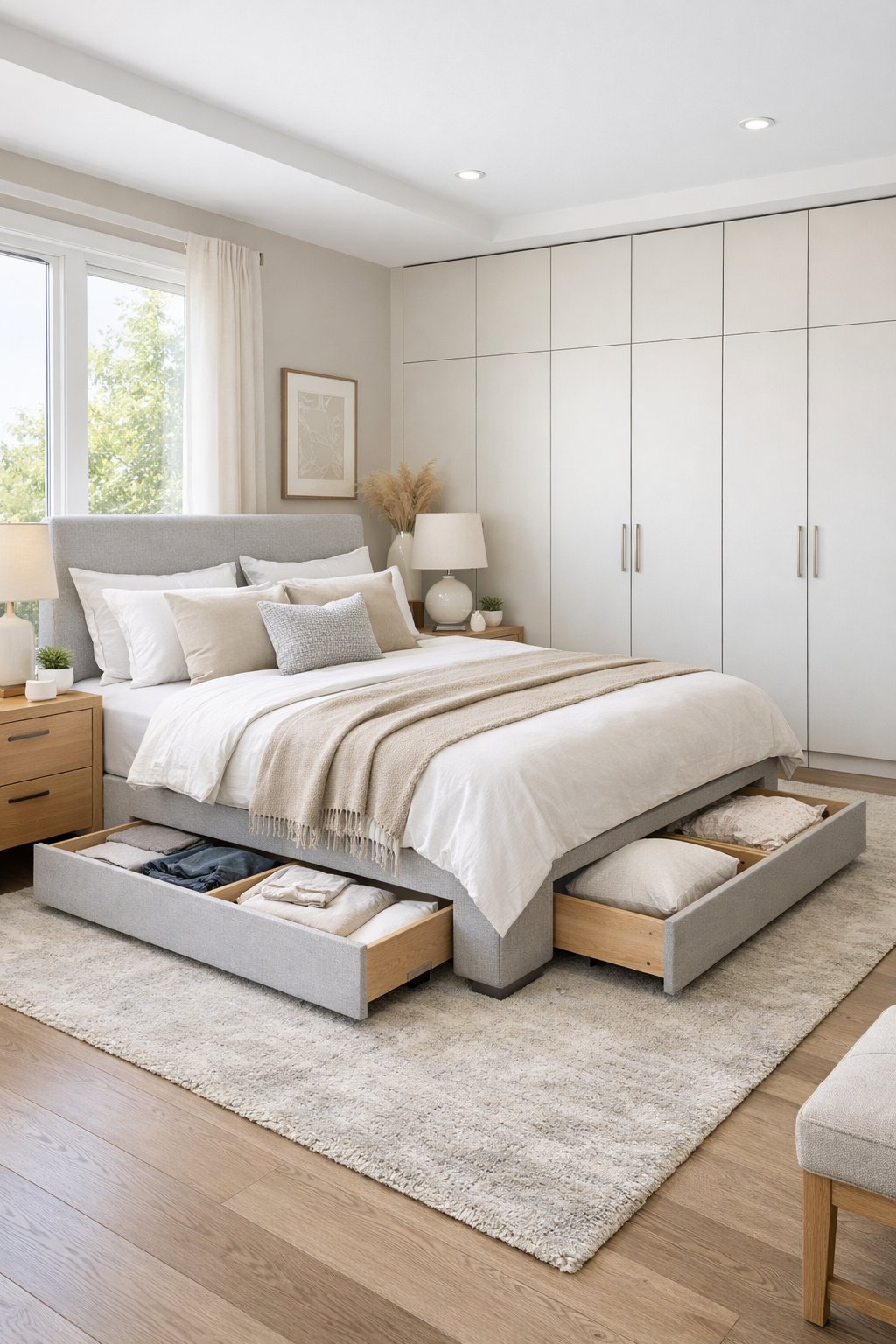
Built-in storage makes a master bedroom feel calm and organized. It uses wall space and floor space with purpose. Designers often add custom wardrobes, cabinets, and shelves to fit the exact size of the room.
Under-bed drawers create hidden storage without taking up extra space. Some beds include pull-out drawers, while others lift to reveal storage below. These options work well for linens, clothes, or seasonal items.
Custom wardrobes can frame the bed or fill an empty wall. They often include hanging space, shelves, and overhead cabinets. This layout keeps daily items easy to reach and reduces clutter.
4) Accent wall featuring wood paneling or a calming wallpaper design
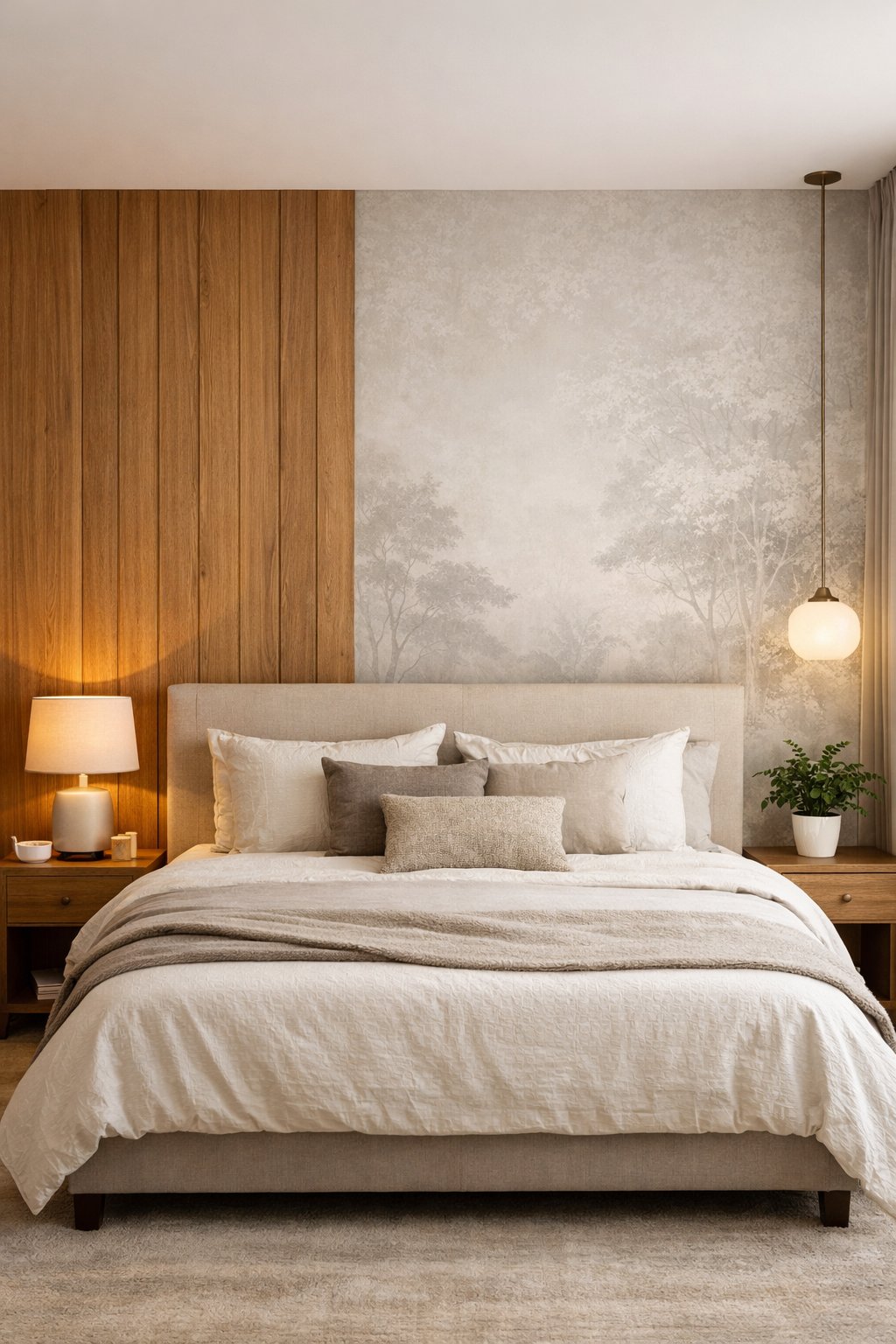
An accent wall adds focus without changing the whole room. Designers often place it behind the bed to frame the headboard and create balance.
Wood paneling brings warmth and texture. Options range from simple vertical boards to modern slats or painted panels. Natural wood tones feel cozy, while painted panels give a clean, tailored look.
Calming wallpaper offers another strong choice. Soft patterns, muted florals, or gentle geometric prints add interest without overpowering the space. Peel-and-stick styles also make updates easier and less permanent.
5) Minimalist furniture with clean lines, such as platform beds and floating nightstands
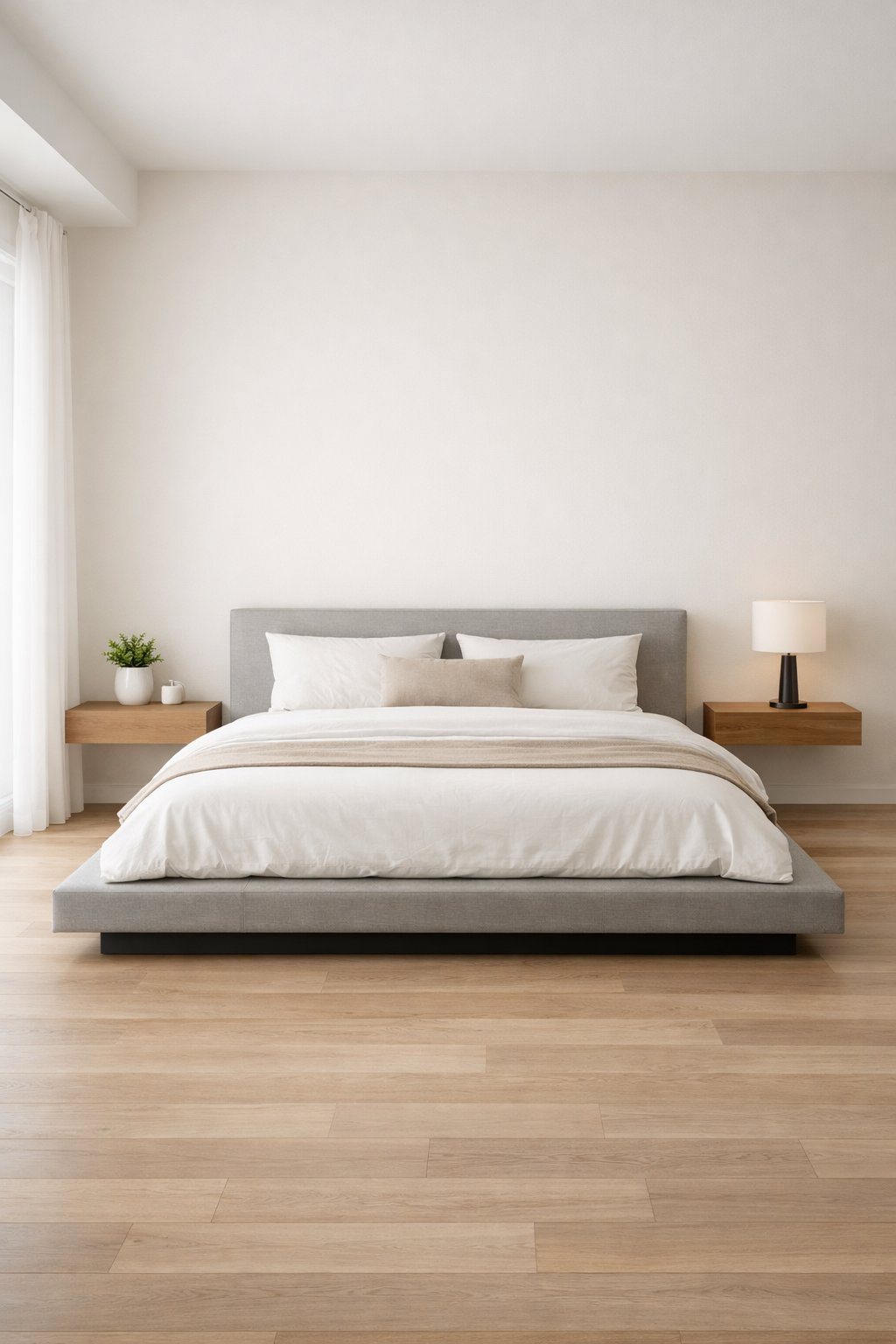
Minimalist furniture gives the master bedroom a calm and open look. Clean lines and simple shapes reduce visual clutter and make the space feel organized.
A platform bed works well in this style. It sits low to the ground and often skips bulky frames or heavy details. Many designs use wood or neutral upholstery to keep the look simple.
Floating nightstands add function without taking up floor space. They attach to the wall and keep surfaces clear. This setup supports a neat layout and makes daily use easy.
Master Bedroom Layout and Space Planning
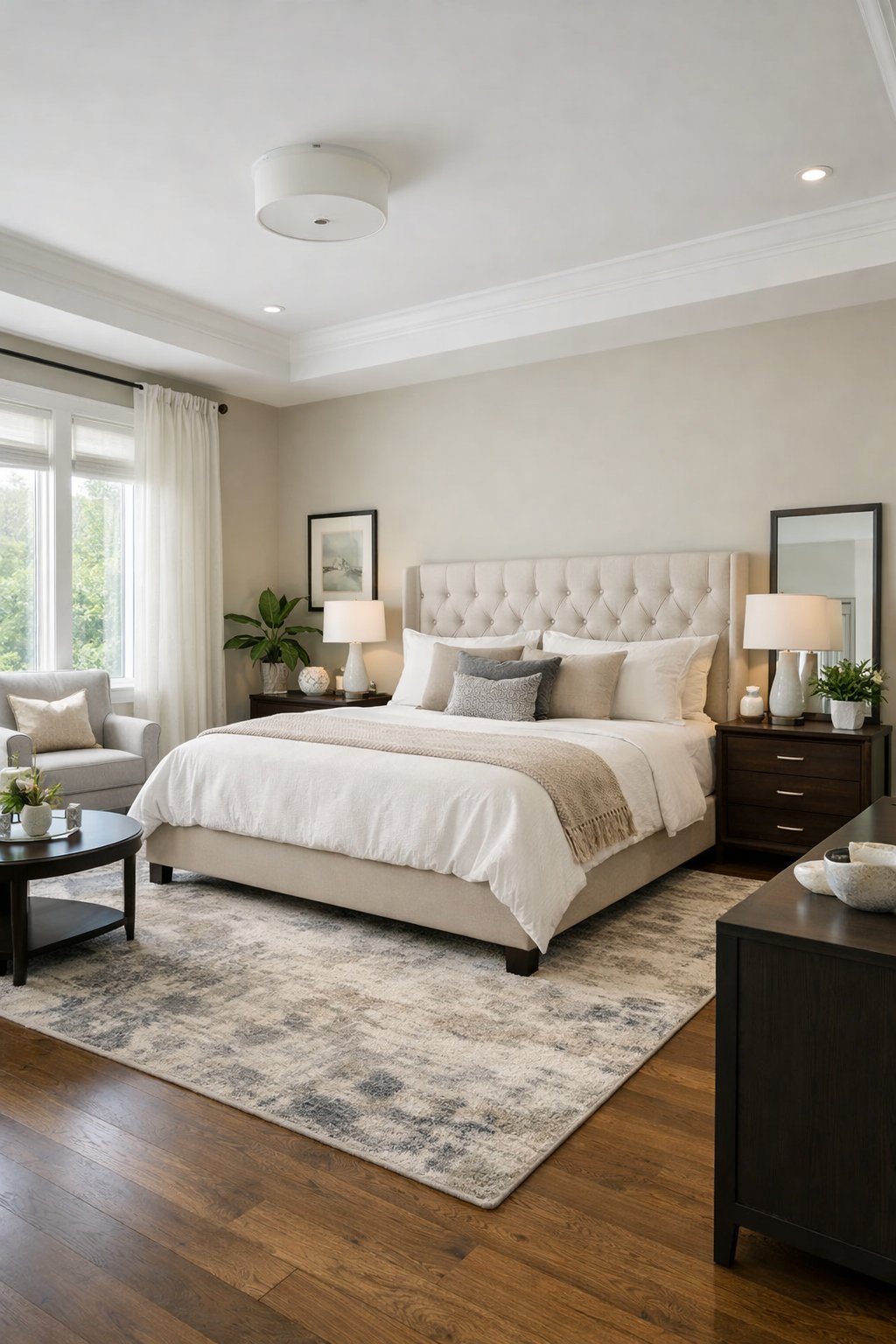
A strong layout makes the room easy to move through and comfortable to use every day. Smart spacing and balanced furniture placement help the room feel calm and organized.
Optimizing Flow and Functionality
Start with the bed placement. In most rooms, the bed works best on the longest wall, with space on both sides for walking and nightstands. Aim for at least 24–30 inches of walking space around the bed.
Keep clear paths between the bed, closet, and bathroom door. Avoid placing large dressers where they block natural traffic flow. If the room connects to a walk-in closet or bathroom, make sure doors can open fully without hitting furniture.
Use this quick spacing guide:
| Area | Recommended Clearance |
|---|---|
| Around bed sides | 24–30 inches |
| In front of dresser | 30–36 inches |
| Between seating and table | 18 inches |
In smaller rooms, choose multi-use pieces like a storage bench or wall-mounted shelves. In larger master suites, define zones. A rug can anchor the sleeping area, while a chair and side table can create a simple reading spot.
Every piece should serve a purpose. Remove items that limit movement or do not add function.
Creating Visual Balance
Visual balance keeps the room from feeling crowded on one side and empty on the other. The bed usually acts as the focal point, so center it on the wall when possible.
Use matching nightstands and lamps to frame the bed. If the layout does not allow symmetry, balance visual weight instead. For example, place a tall dresser on one side of the room and hang artwork or install shelves on the opposite wall.
Pay attention to scale. A large king bed needs substantial nightstands and lighting. Small furniture beside a large bed can look out of place.
Rugs also help create balance. The rug should extend at least 18–24 inches beyond the sides of the bed. This adds proportion and prevents the bed from looking isolated.
Keep wall decor aligned with furniture below it. When items relate in size and placement, the space feels steady and well planned.
Color Schemes and Lighting
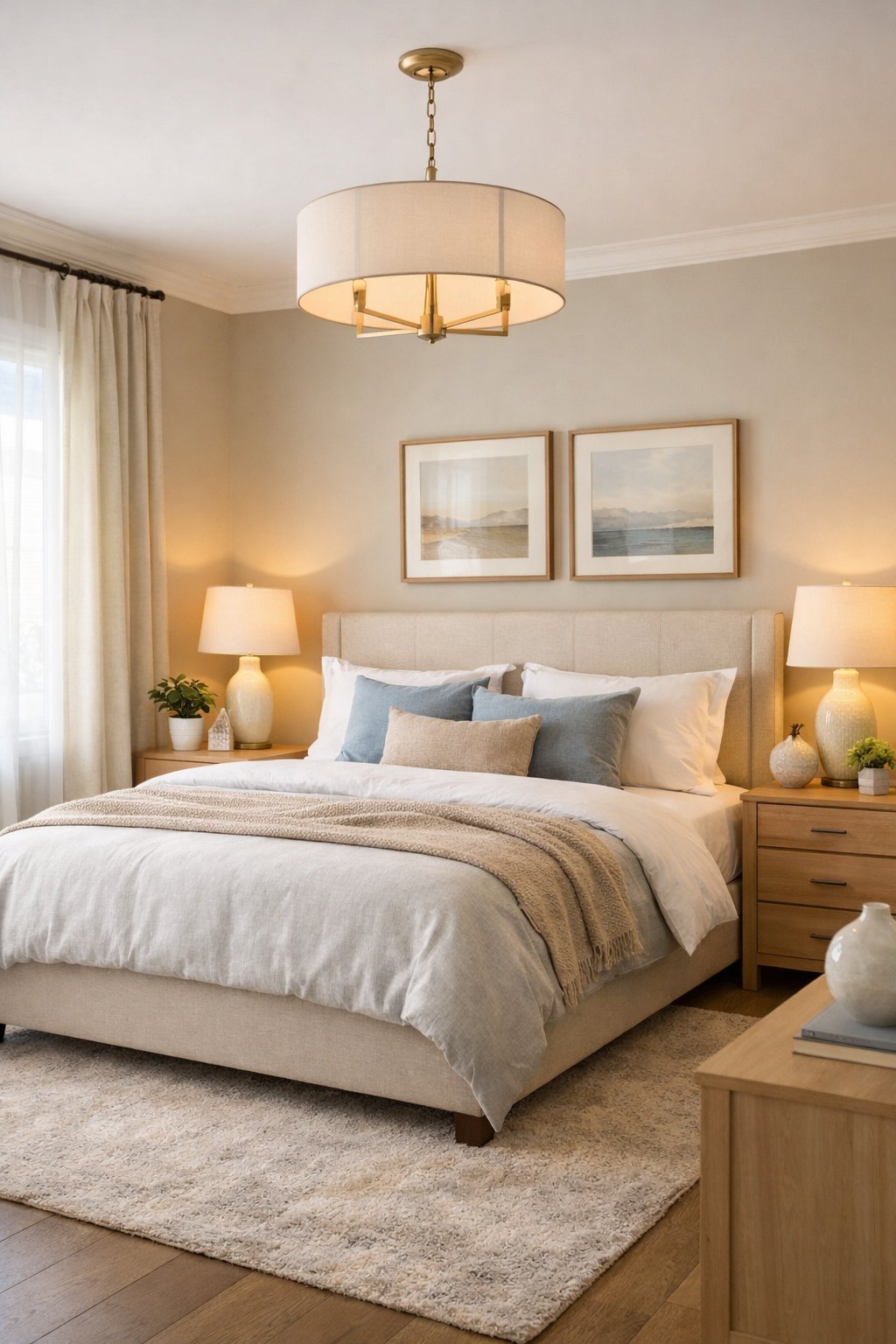
Color and light shape how a master bedroom feels at the end of the day. A calm palette paired with layered lighting supports rest, comfort, and daily routines without strain.
Choosing a Calming Palette
A master bedroom benefits from colors that reduce visual stress. Soft neutrals such as warm beige, light gray, and off‑white create a steady base that works with most furniture.
Many designers use muted tones like dusty blue, sage green, or pale taupe to add color without making the room feel busy. These shades reflect enough light to keep the space open while still feeling grounded.
For a simple structure, they often follow this balance:
- 60% main wall color
- 30% secondary color in bedding or rugs
- 10% accent color in pillows or art
Darker tones, such as navy or charcoal, work best on one accent wall or in textiles. This approach adds depth without closing in the room.
They should test paint samples on the wall and view them in both daylight and evening light. Natural and artificial light can shift how a color looks.
Layering Ambient and Task Lighting
A master bedroom needs more than one ceiling fixture. Strong overhead light alone creates harsh shadows and limits control.
Designers layer lighting in three parts:
- Ambient lighting: ceiling fixtures, flush mounts, or recessed lights for overall brightness
- Task lighting: bedside lamps or wall sconces for reading
- Accent lighting: small lamps or LED strips to highlight art or architectural details
Bedside lamps should sit at shoulder height when a person rests against the headboard. This position directs light onto a book without shining into the eyes.
Dimmer switches improve control. They allow bright light for cleaning and soft light for winding down.
Warm white bulbs between 2700K and 3000K support relaxation. Cooler bulbs often feel too bright and clinical for a sleep space.