
7 A Frame Tiny House Interior Design Ideas for Maximizing Space and Style
A-frame tiny houses offer a unique and efficient way to live small while feeling spacious inside. Their distinctive triangular shape creates interesting interior spaces that can be both cozy and functional. Many people choose this design for its blend of simplicity and charm.
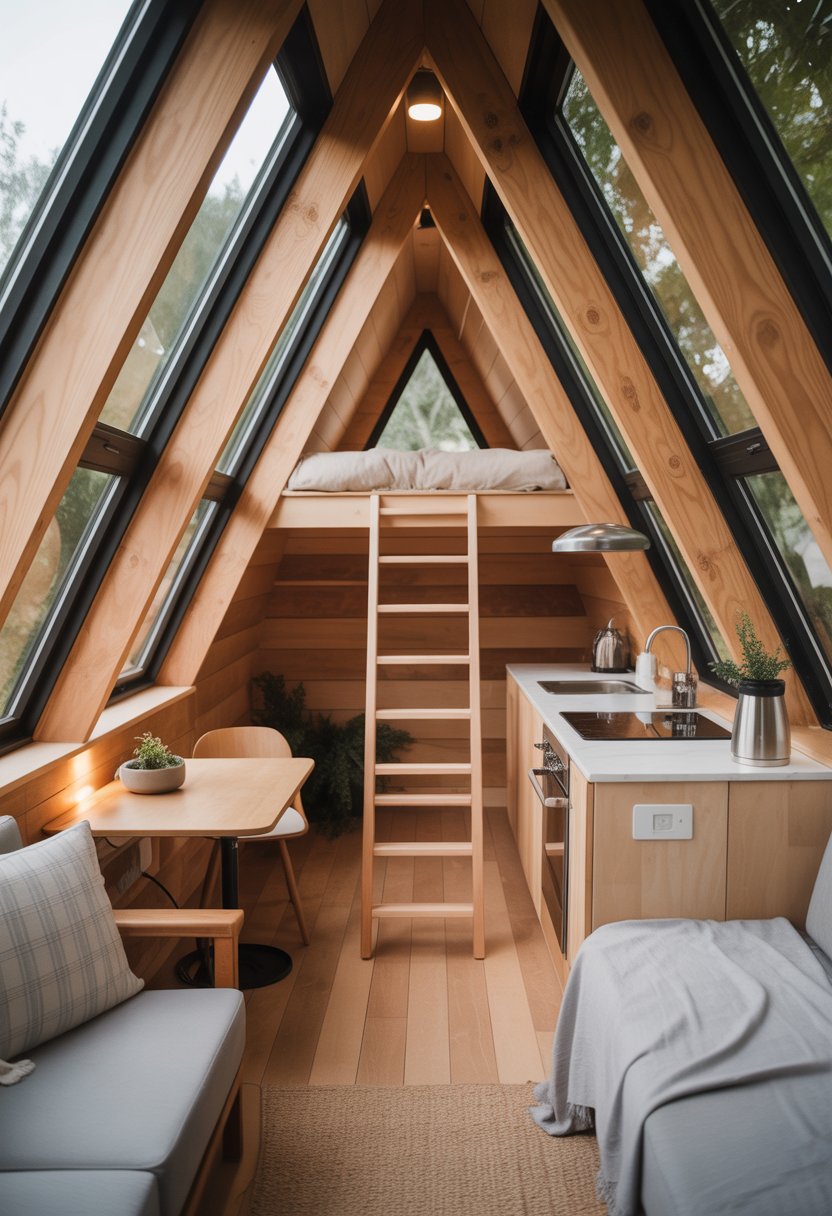
The key to a well-designed A-frame tiny house interior is making smart use of limited space while keeping the area bright and welcoming. This balance helps create a comfortable living environment that maximizes every corner without feeling cramped.
1) A frame tiny house interiors Ideas
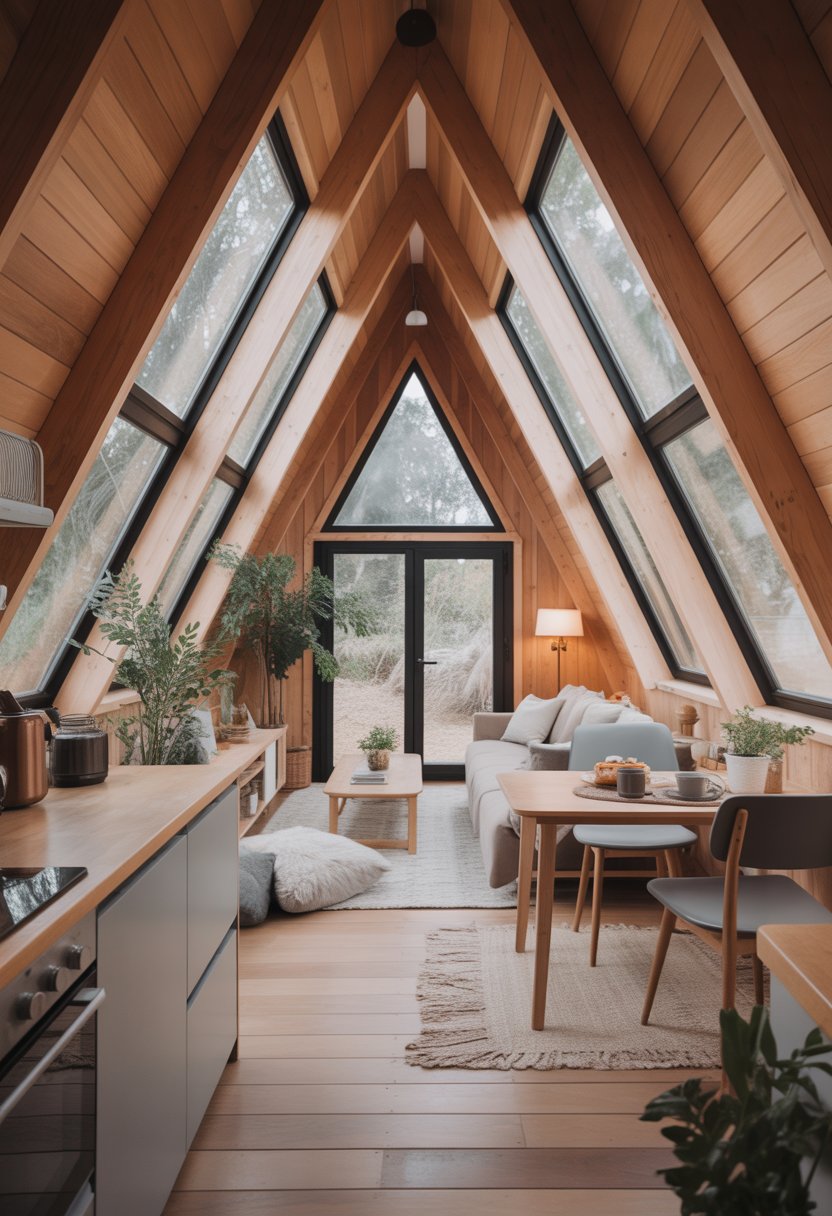
They use open layouts to make small spaces feel larger. Wood paneling adds warmth and a natural look. String lights or small lamps help create a cozy atmosphere without taking up space. Multi-functional furniture and dedicated nooks make the space more practical and comfortable.
2) A Frame Tiny House Interiors Design Ideas
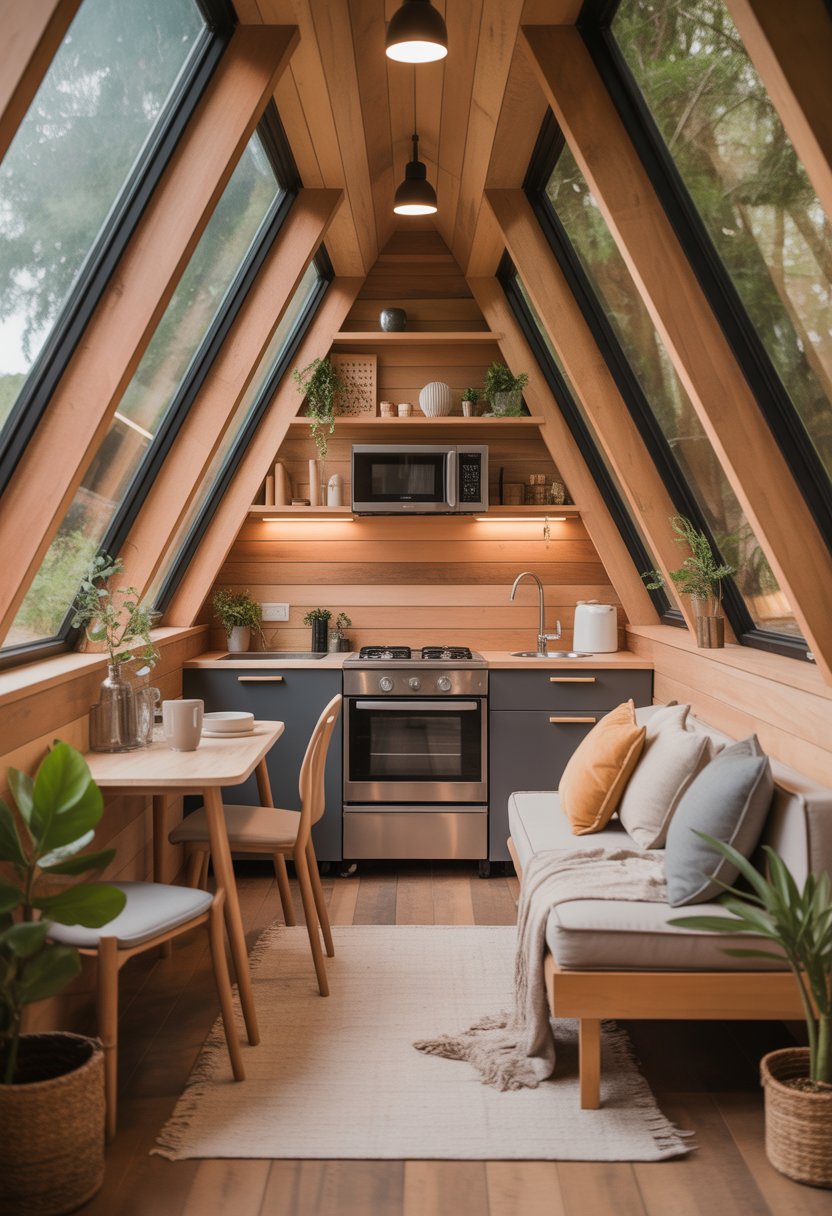
They should use light colors to make the space feel bigger and brighter. Minimal furniture helps avoid clutter in the small area. Large windows are important to bring in natural light and connect with the outside. Simple, functional design keeps the interior comfortable and efficient.
3) Open-concept living area to maximize space
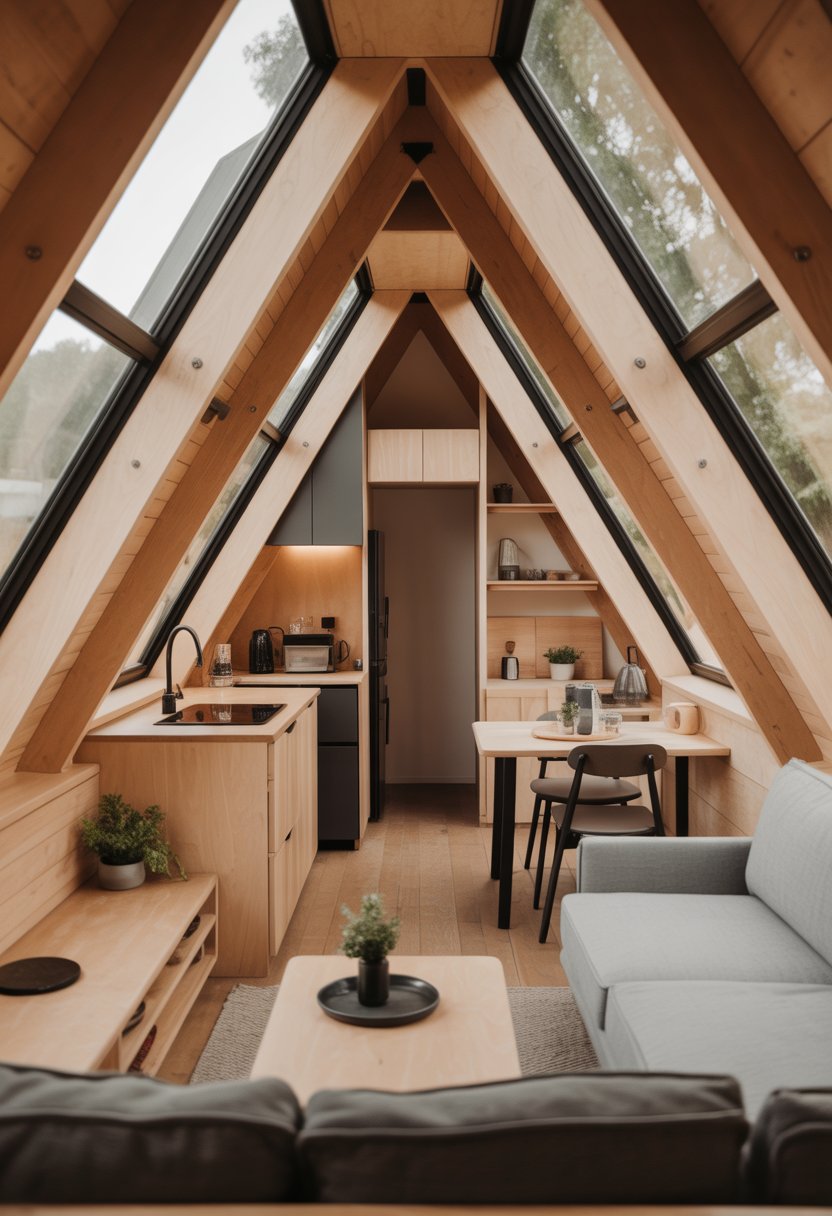
The open-concept design removes walls between the kitchen, dining, and living areas. This creates a larger, more flexible space. Natural light from large windows brightens the room, making it feel more open and airy. It helps avoid a cramped feeling in the small A-frame structure.
4) Vaulted ceilings for a spacious feel
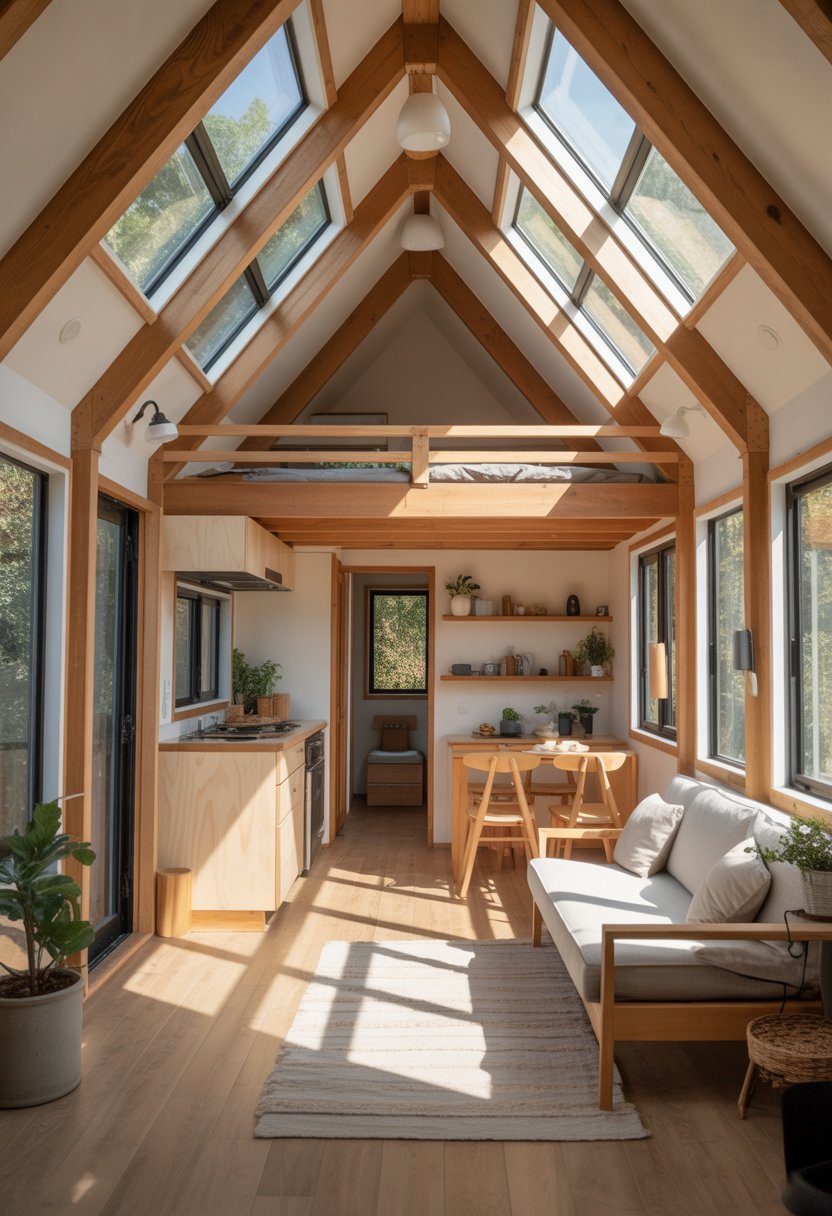
Vaulted ceilings help make a tiny A-frame house feel larger. By raising the ceiling height, they draw the eye upward and add vertical space. This creates an open and airy atmosphere inside a small footprint. Natural light can also flow better with taller ceilings.
5) Wall of windows for natural light
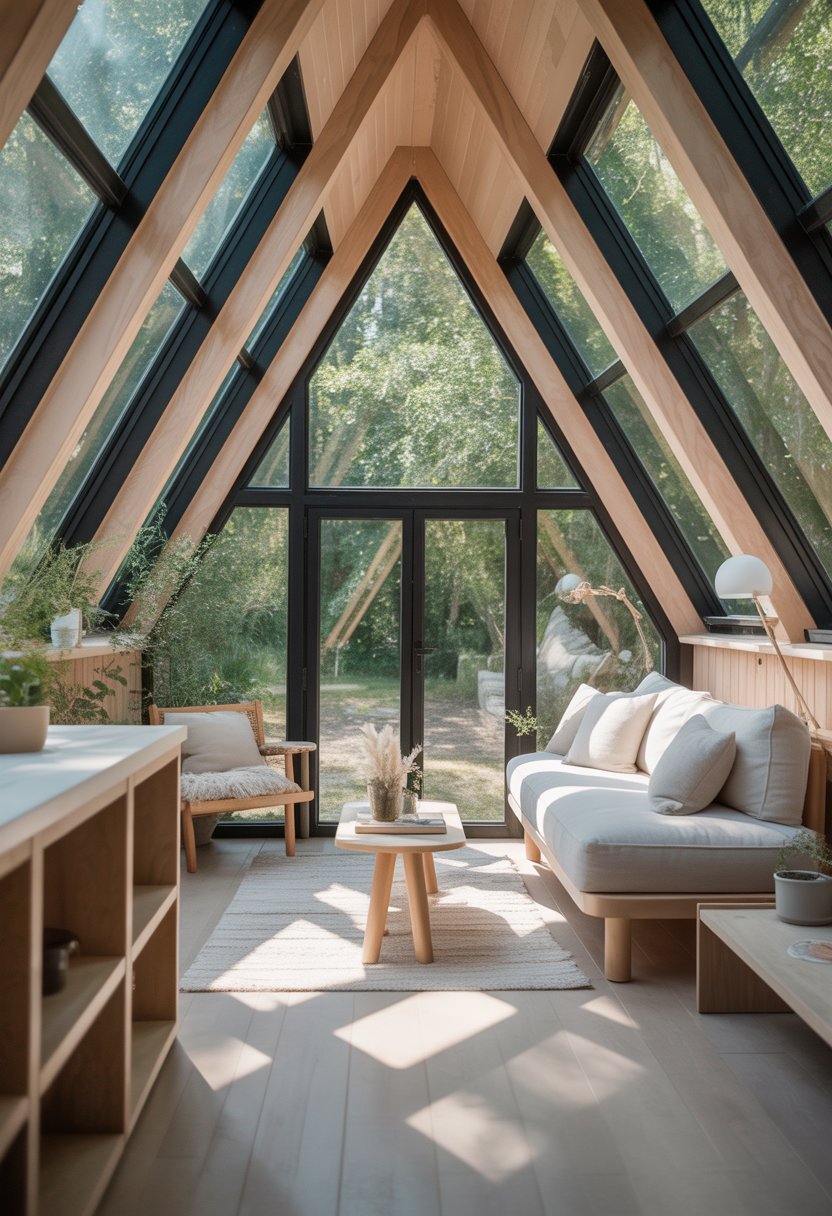
A wall of windows in an A-frame tiny house lets in plenty of natural light. It brightens the space and makes rooms feel larger. This design also connects the indoors to outdoor views, adding to the home’s appeal. Large windows help highlight the clean lines of the A-frame structure.
6) Light wood accents for warmth
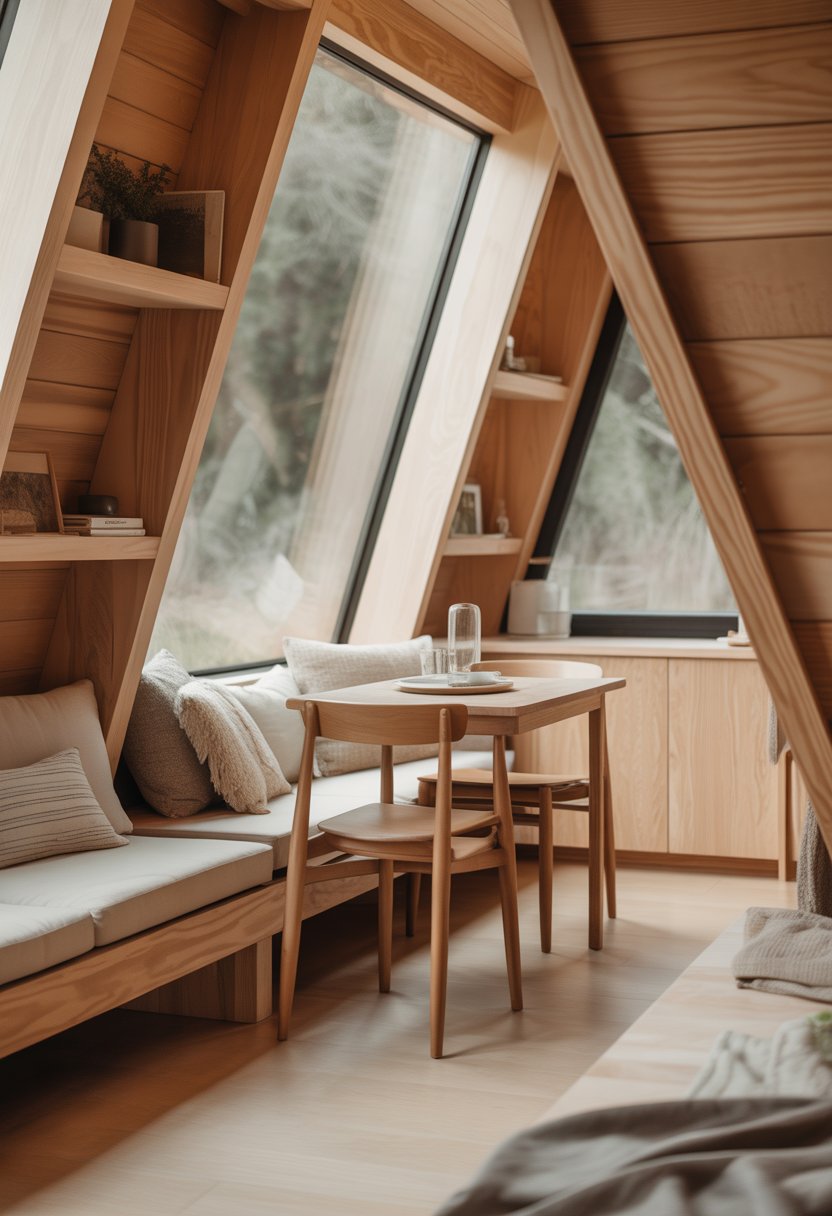
Light wood accents bring a natural warmth to A-frame tiny houses. They work well around windows, ceilings, and doors. These touches create a cozy feel without making the space look crowded or dark. The soft wood tones balance well with bright walls.
7) Integrated loft sleeping area
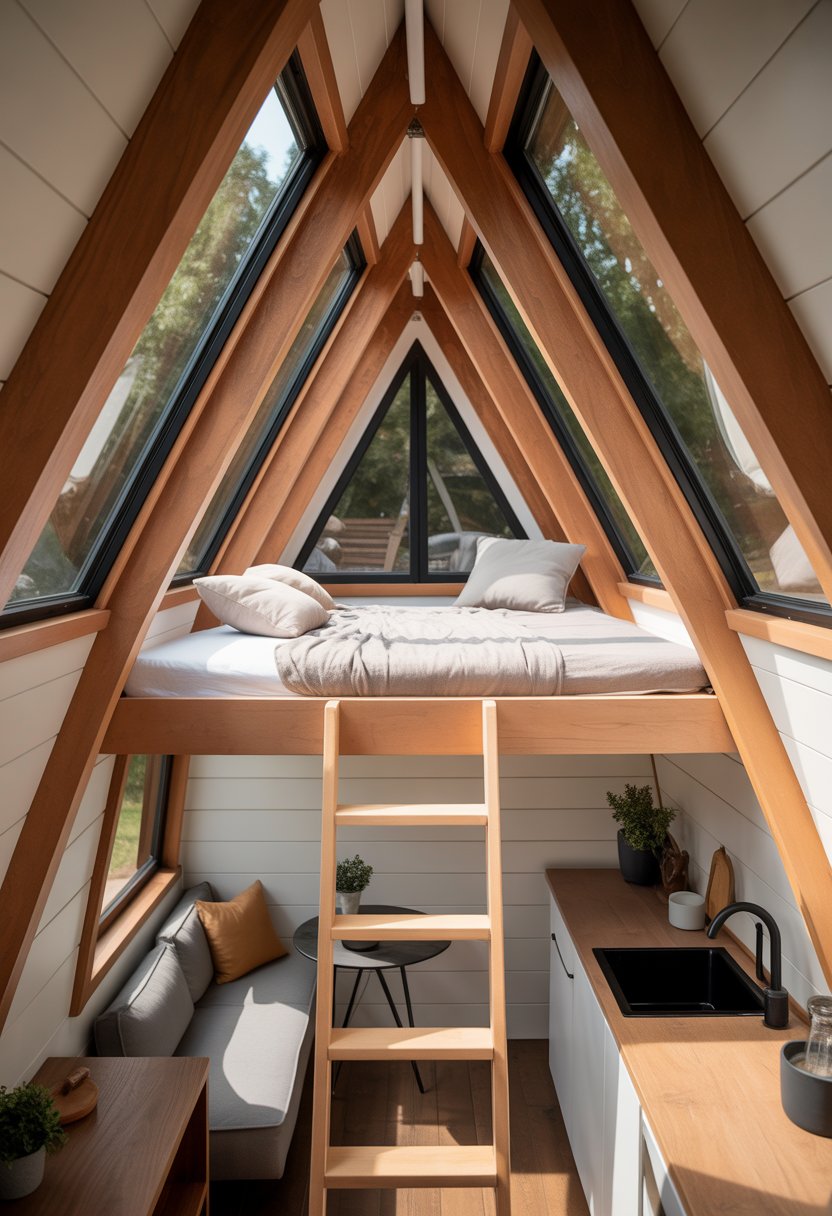
The loft sleeping area is raised above the main living space. It saves floor space and creates a private sleeping zone. Access is usually by ladder or stairs. This design makes the most of the A-frame’s vertical space.
8) Built-in shelving and storage solutions
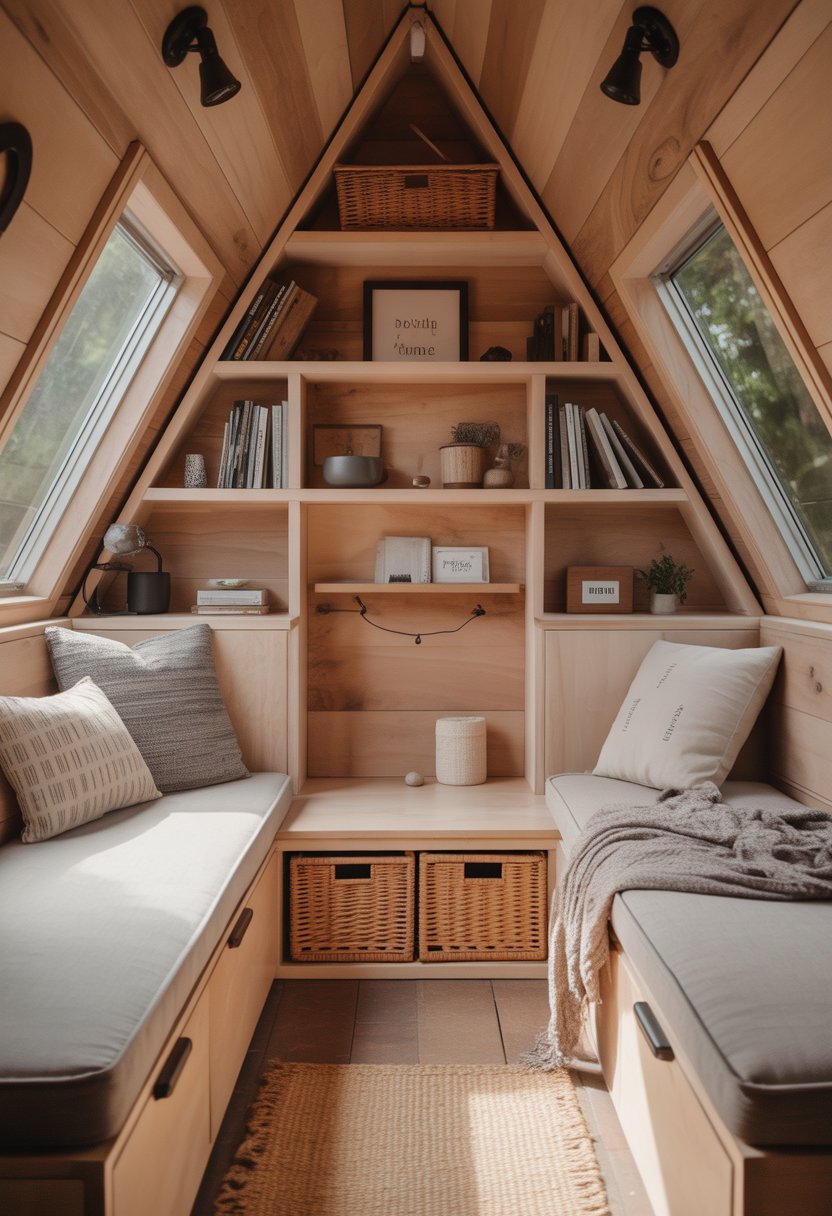
Built-in shelving helps use vertical space efficiently in A-frame tiny houses. It keeps items organized without taking up floor space. Hidden storage, like under stairs or inside walls, reduces clutter and fits the home’s small size. These solutions make the interior feel more open and functional.
9) Stone fireplace as a cozy focal point
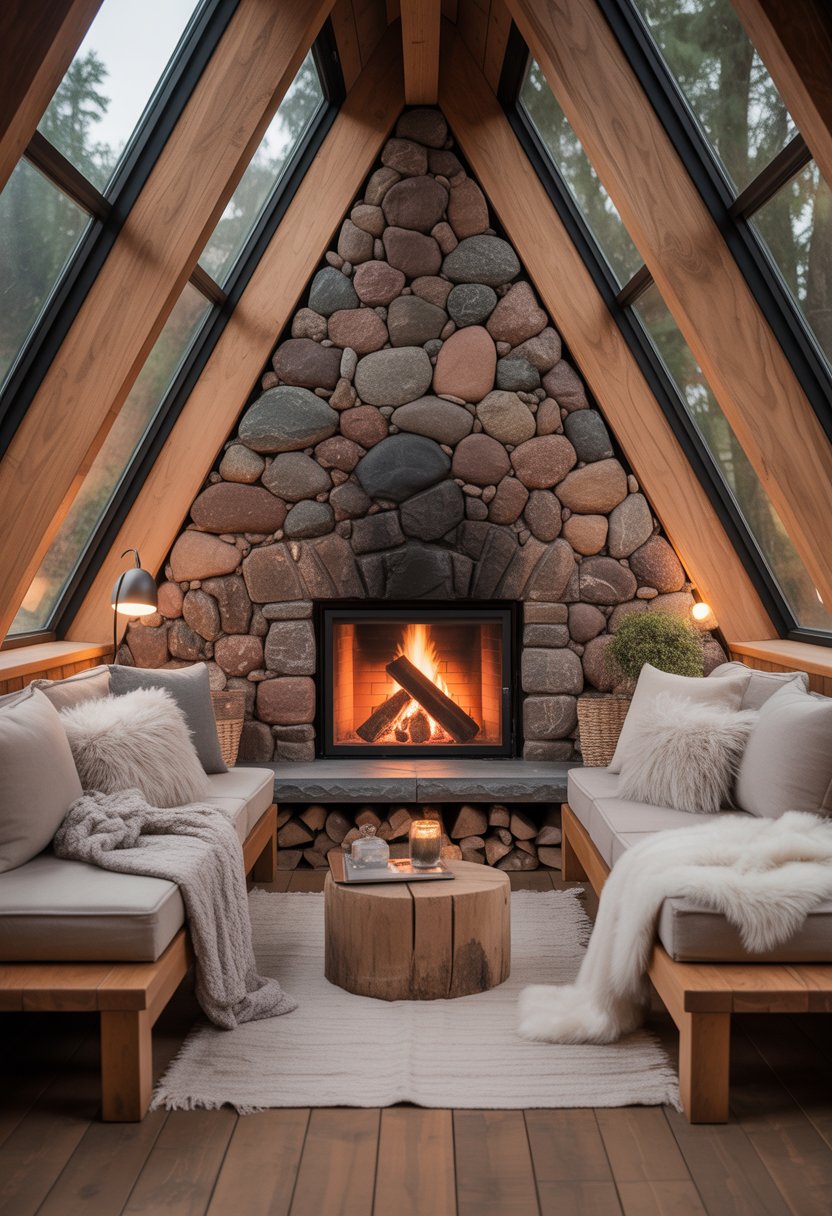
A stone fireplace adds warmth and a natural texture to an A-frame tiny house interior. It creates a clear focal point, making the living area feel inviting and comfortable. The stone material also brings a timeless, rustic look that fits well in small wood-based homes.
Key Principles of 7 A Frame Tiny House Interior Design
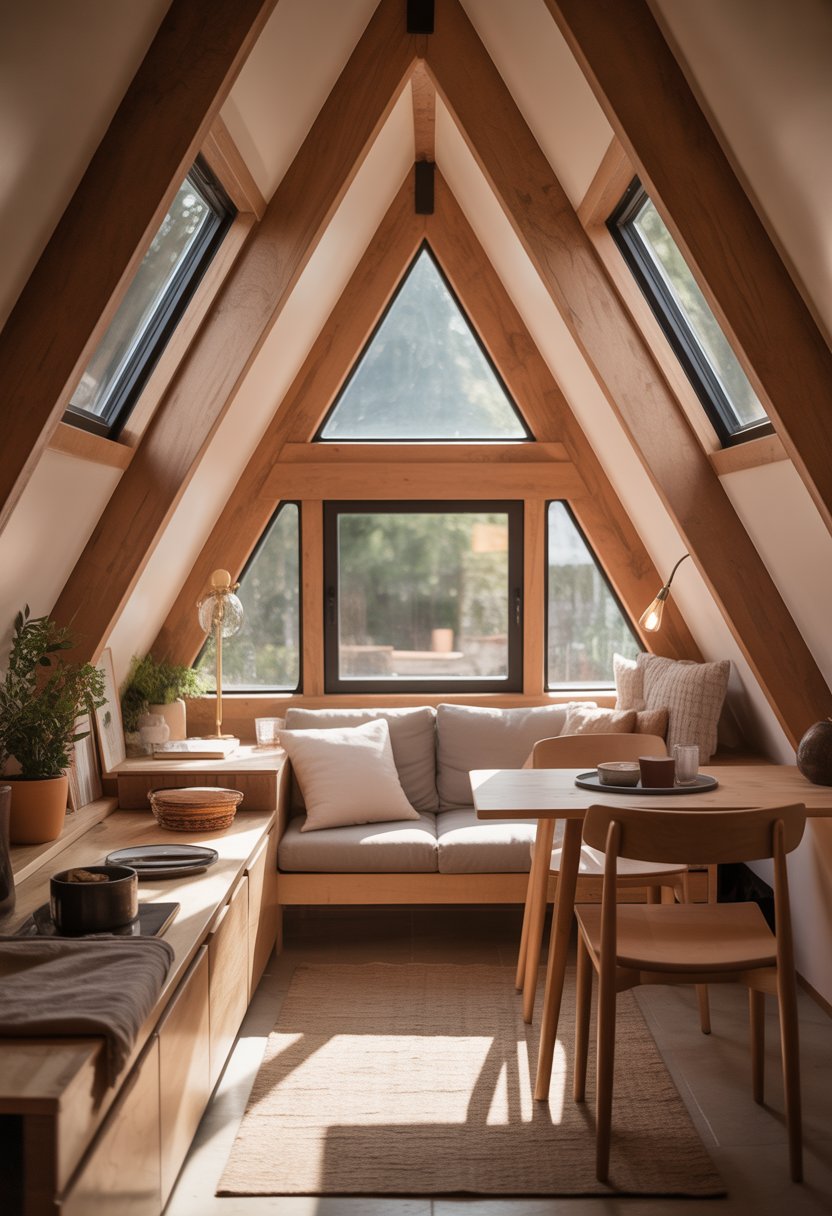
Designing the interior of a 7 A-frame tiny house requires careful attention to both light and space. Using natural light effectively enhances the feeling of openness. At the same time, planning how to use every inch of space ensures comfort and functionality.
Maximizing Natural Light
Large windows are a main feature in A-frame tiny houses. Floor-to-ceiling windows let in plenty of sunlight, brightening the space and making it feel larger.
Placing windows on both sides helps with cross-ventilation. This keeps the interior fresh and reduces the need for artificial cooling.
Light, neutral colors on walls and furniture reflect sunlight better. This choice improves brightness without extra electric lighting.
Using mirrors or glass surfaces inside can also increase the sense of space by bouncing natural light around the rooms.
Efficient Space Planning
Because space is limited, every area must serve a purpose. Multi-functional furniture, like sofa beds or fold-out tables, saves room and adds flexibility.
Vertical storage takes advantage of the high ceilings in A-frame houses. Shelves or cabinets can be built upwards instead of out, freeing floor space.
Open floor plans allow easy movement and make the interior feel less cramped. Avoiding unnecessary partitions helps maintain a flow in the small area.
Clear zoning of areas for sleeping, cooking, and relaxing helps keep the tiny house organized and usable.
Popular Color Palettes and Materials
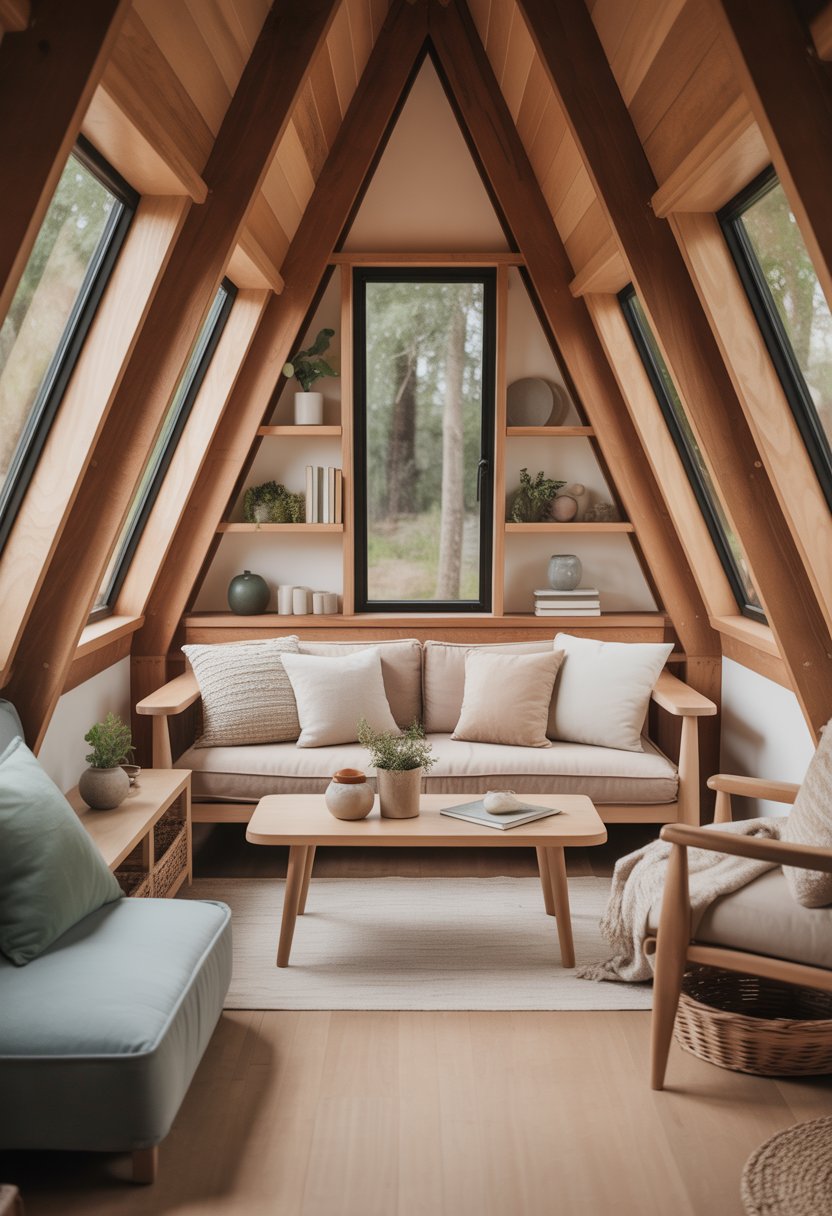
Color and material choices greatly impact the look and feel of an A-frame tiny house. Natural tones and sustainable materials often create a cozy, warm atmosphere. Strategic use of textures and accent walls can enhance this effect without overwhelming the small space.
Sustainable Material Choices
Sustainability is a key focus for many A-frame tiny house owners. Wood is the most common material, used both structurally and decoratively. Reclaimed wood beams or flooring add character and reduce environmental impact.
Bamboo and cork are popular alternatives for flooring and wall coverings. They are renewable, durable, and lightweight. These materials also provide natural insulation, helping regulate indoor temperature efficiently.
Using non-toxic paints and finishes supports a healthy indoor environment. Low-VOC (volatile organic compound) options reduce harmful fumes. Natural fabrics, such as cotton or wool, are preferred for upholstery and curtains to align with eco-friendly design principles.
Accent Walls and Textures
Accent walls in A-frame interiors often use darker wood tones or bold colors to highlight architectural features like steep ceiling angles or exposed beams.
Textures help break up monotony in small spaces. Common choices include wood paneling, stone veneer, or shiplap. These materials add visual interest and a tactile feel that complements minimalist furnishings.
Matte finishes on walls paired with smooth, polished surfaces for furniture create a balanced focus. Textured fabrics for cushions or rugs introduce warmth without cluttering the visual space.
Frequently Asked Questions
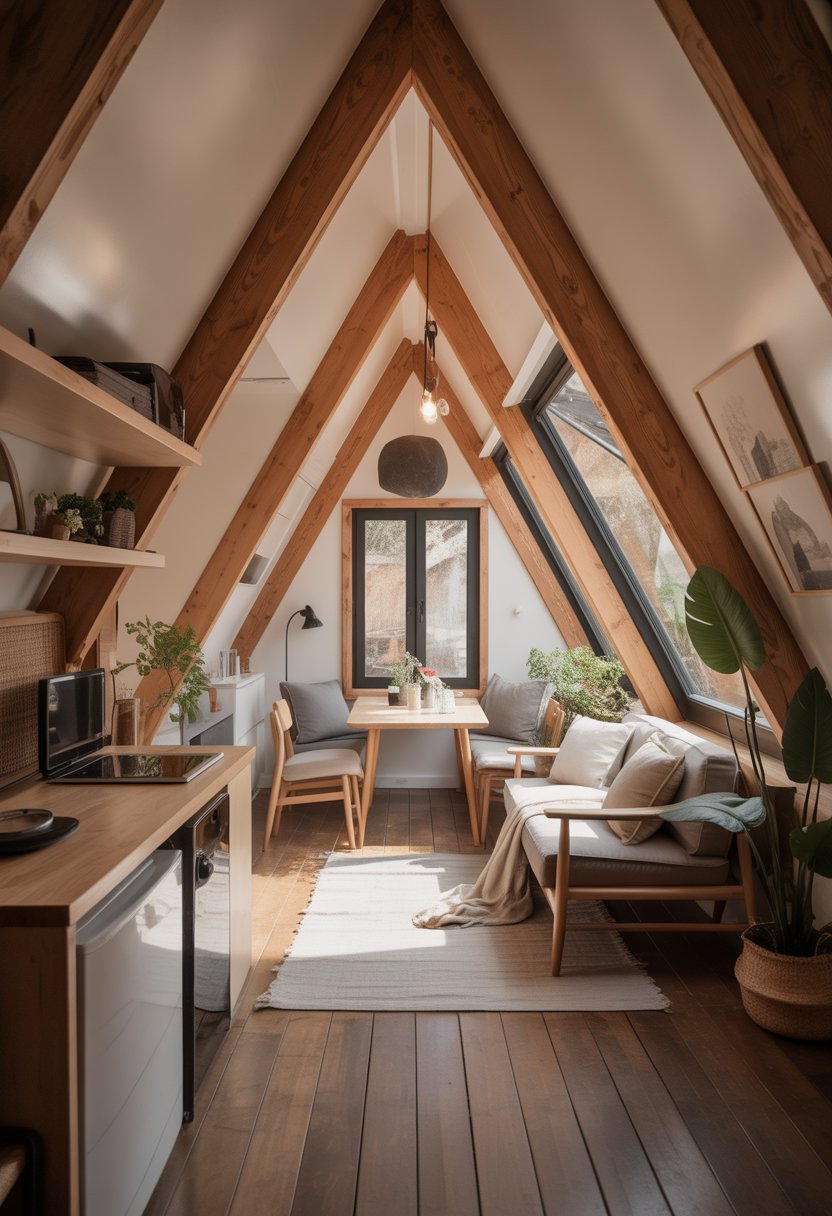
A-frame tiny house interiors focus on smart use of space and light. Open layouts, vaulted ceilings, and large windows are common features to create a sense of roominess while fitting everything essential into a small area.
What are innovative storage solutions for A-frame tiny house interiors?
Built-in shelves and under-floor storage make good use of limited space. Using vertical walls for hooks and cabinets helps keep clutter off the floor. Furniture with hidden storage, like beds with drawers, is also popular.
How do you maximize space in a small A-frame bedroom?
Choosing compact furniture and multi-functional pieces is key. Placing a bed under sloped ceilings or in a loft frees up floor area. Light colors and mirrors can make the room feel larger.
What are the essential elements of modern A-frame tiny house interior design?
Open-concept living areas create flow and reduce crowding. Vaulted ceilings add height and airiness. A wall of windows brings in natural light and connects to the outdoors.
What is the average cost to furnish an A-frame tiny house?
Costs vary, but furnishing a tiny house typically ranges from $3,000 to $10,000. Budget depends on the quality of furniture, appliances, and custom pieces chosen.
How can you effectively incorporate a loft in an A-frame interior design plan?
A loft uses vertical space well, especially for sleeping or storage. Stairs or ladders should be compact but safe. Adequate headroom is important to prevent cramped feeling.
What are common challenges when designing an A-frame tiny house interior?
Sloped ceilings limit usable wall space. Privacy can be an issue in open layouts. Fitting all functions into a small footprint takes careful planning.


