
Kids Bedroom Ideas: Creative & Fun Designs for 7 Smart Design Concepts

A child’s bedroom can support play, rest, and growth when the design feels thoughtful and fun. This article explores how creative choices can shape a space that feels welcoming, practical, and personal without feeling cluttered or overdone.
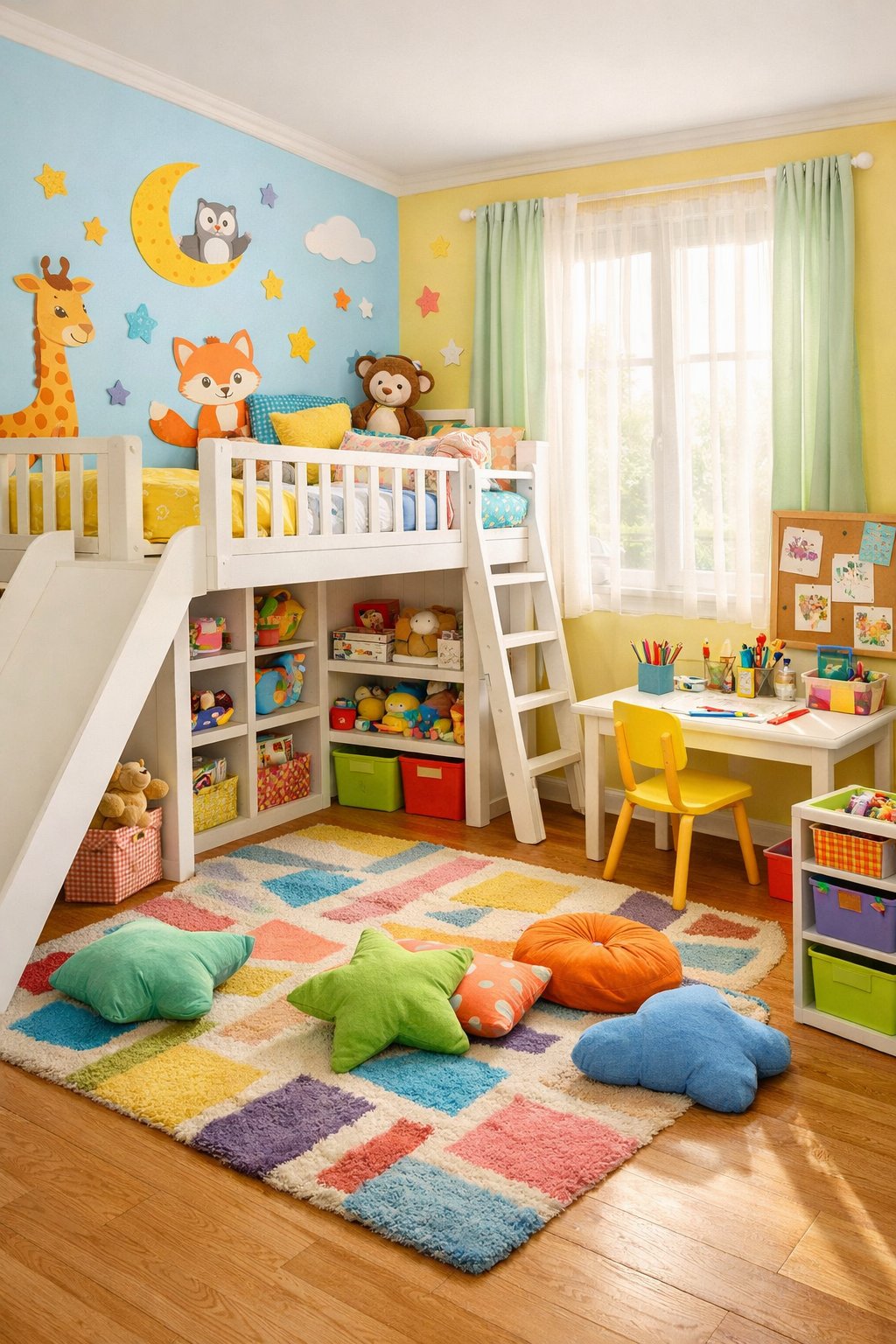
The right kids bedroom ideas help create a room that matches a child’s interests while still working well for daily life. From imagination-friendly features to comfort and smart layout, the ideas ahead show how design can balance creativity, function, and style as a child grows.
1) Themed beds like castle or pirate ship designs to spark imagination
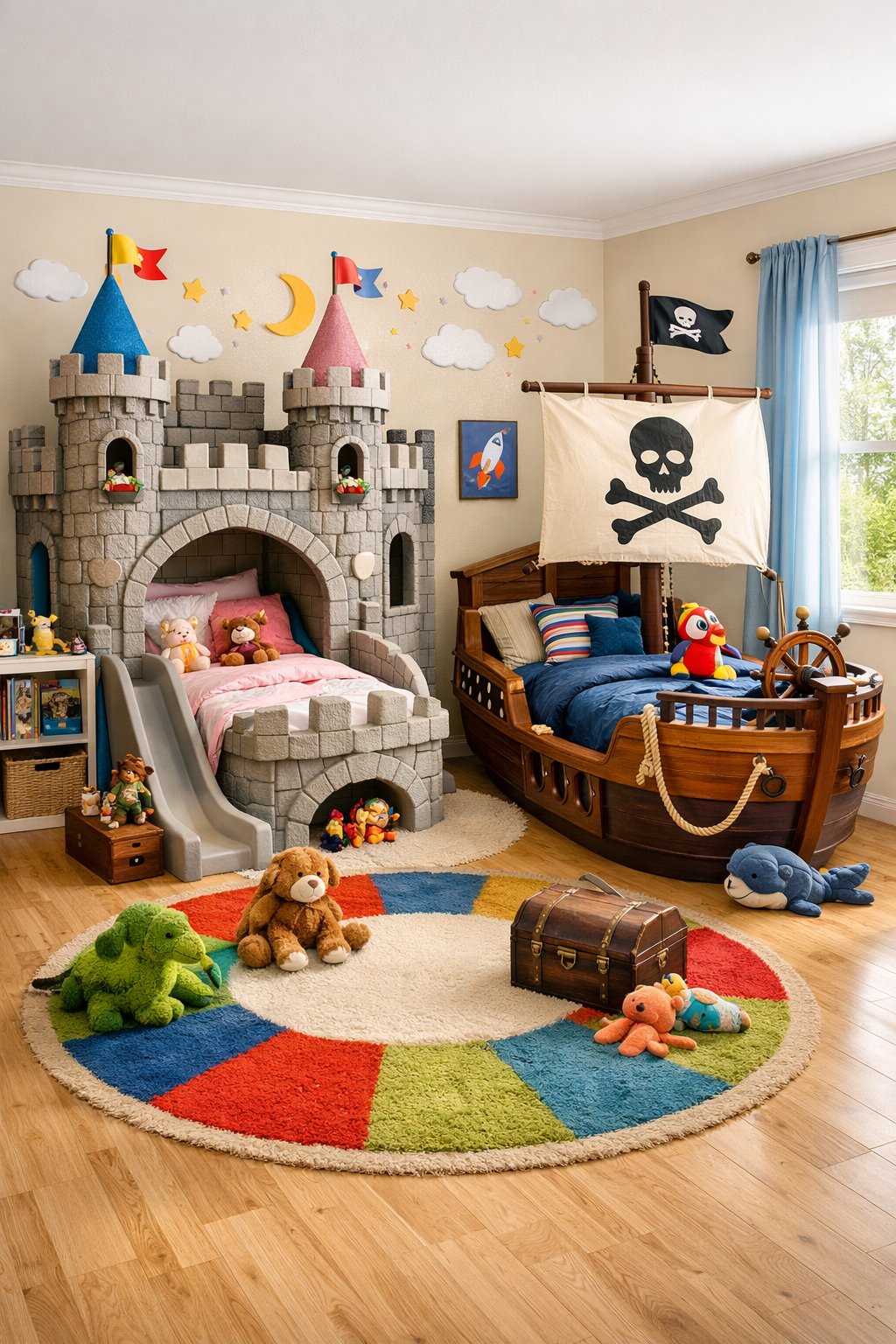
Themed beds shape the room and guide play. Castle beds suggest towers or slides, while pirate ship beds use rails, wheels, or sails.
These designs invite pretend play before and after sleep. Children act out stories, which supports creativity and routine.
Many models add storage under the frame or along the sides. Built-in shelves or chests help keep toys organized without breaking the theme.
2) Cozy reading nooks with built-in shelves and comfy seating
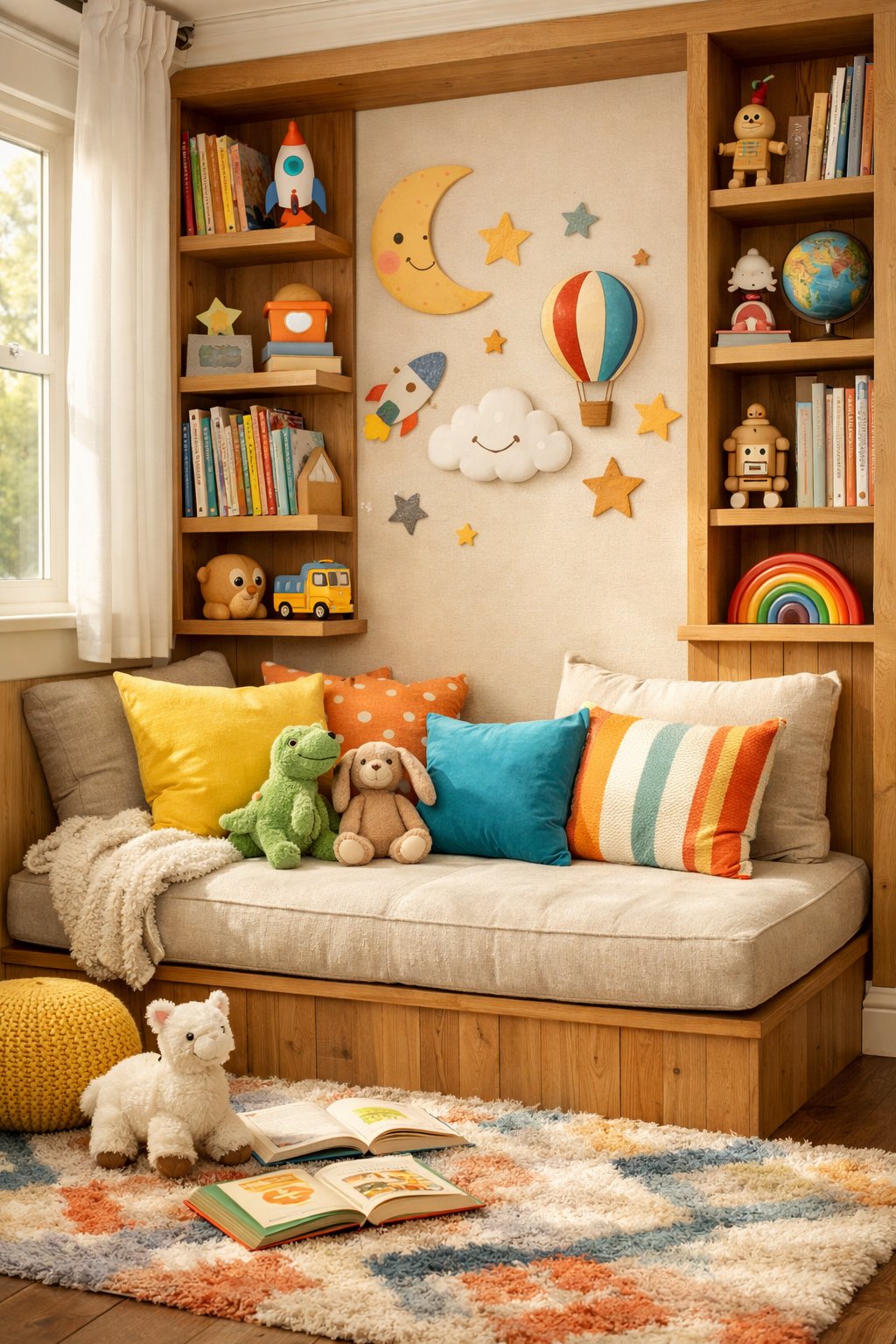
A cozy reading nook gives kids a quiet place to read and relax. Built-in shelves keep books within reach and reduce clutter.
Designers often use window seats or corner benches to save space. Cushions, soft pillows, and an ottoman support long reading sessions.
Good lighting matters for comfort and focus. A small side table holds a lamp or a glass of water.
3) Creative wall art such as murals or removable decals
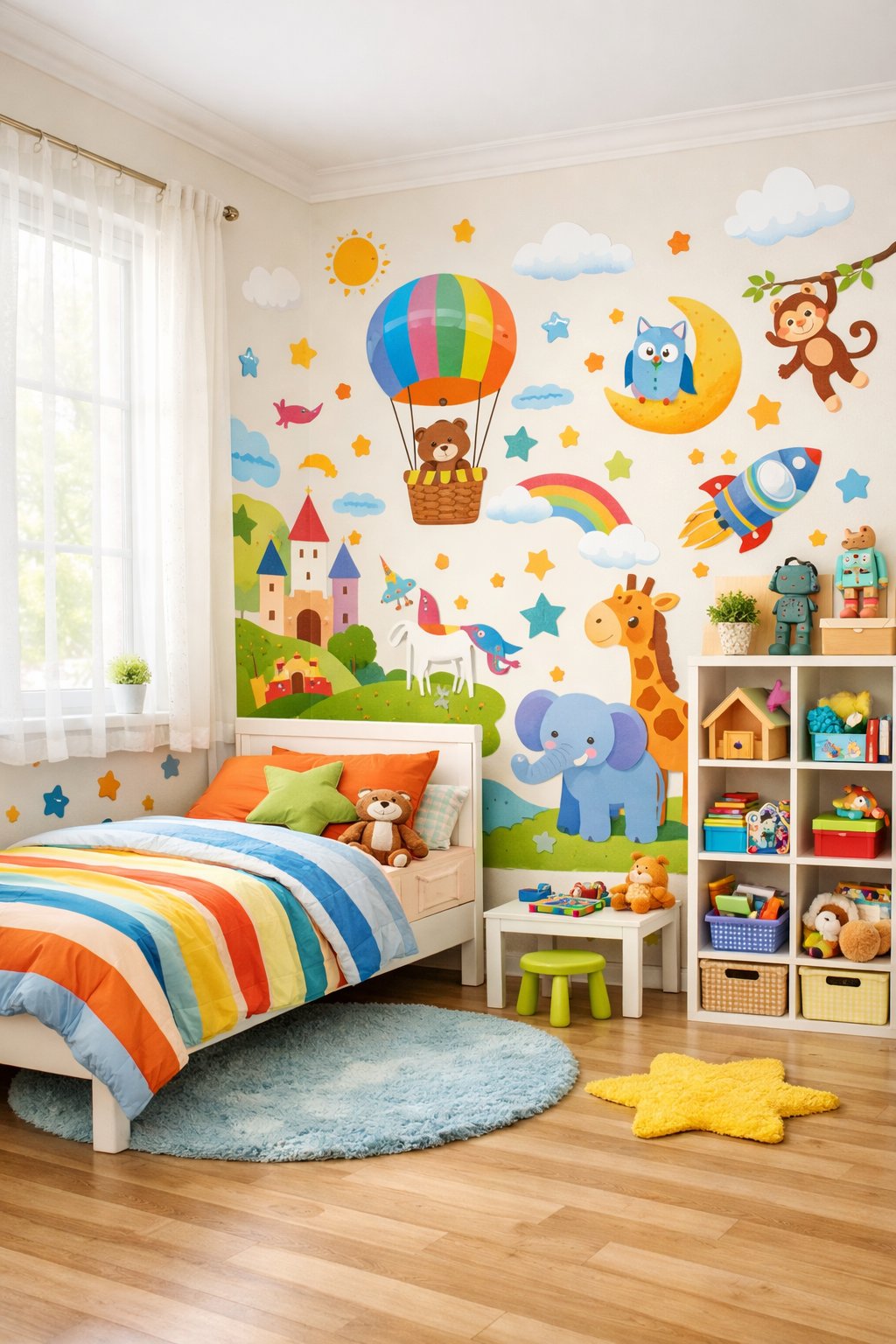
Murals and removable decals add color and personality to a kids’ bedroom. They turn plain walls into playful scenes without paint.
Peel-and-stick designs install fast and come off clean. Parents can change themes as tastes grow.
Popular options include animals, maps, sports, and storybook art. These choices work well in nurseries, playrooms, and shared rooms.
4) Smart storage solutions including under-bed drawers and toy organizers
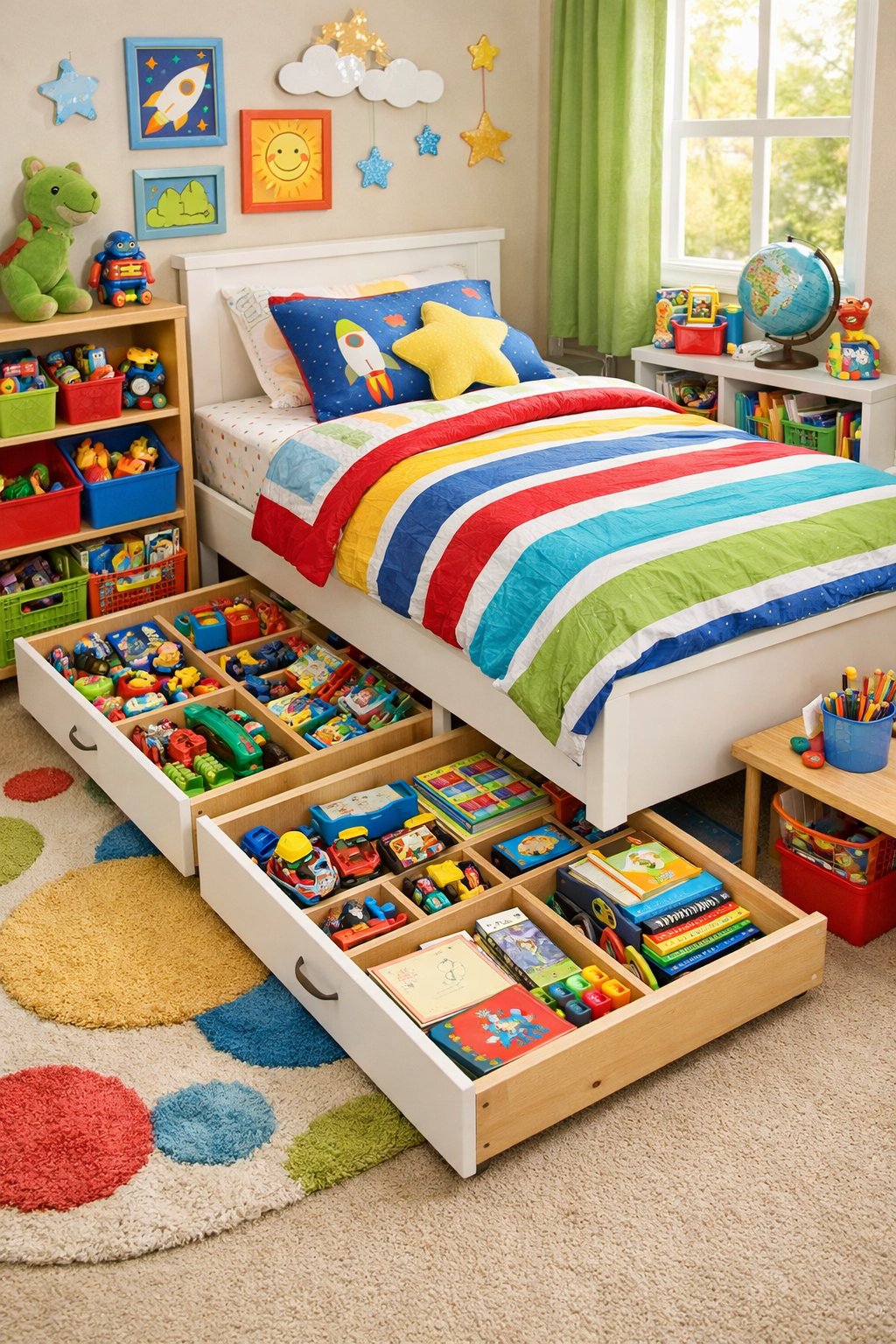
Smart storage helps keep a child’s bedroom tidy and easy to use. Under-bed drawers store clothes, toys, or extra bedding without taking floor space. Drawers with wheels slide in and out with little effort.
Toy organizers support daily cleanup. Open bins, labeled boxes, and low shelves let kids see and reach their items. This setup helps them learn where things belong and put them away on their own.
5) Vibrant, custom paint colors that reflect your child’s personality
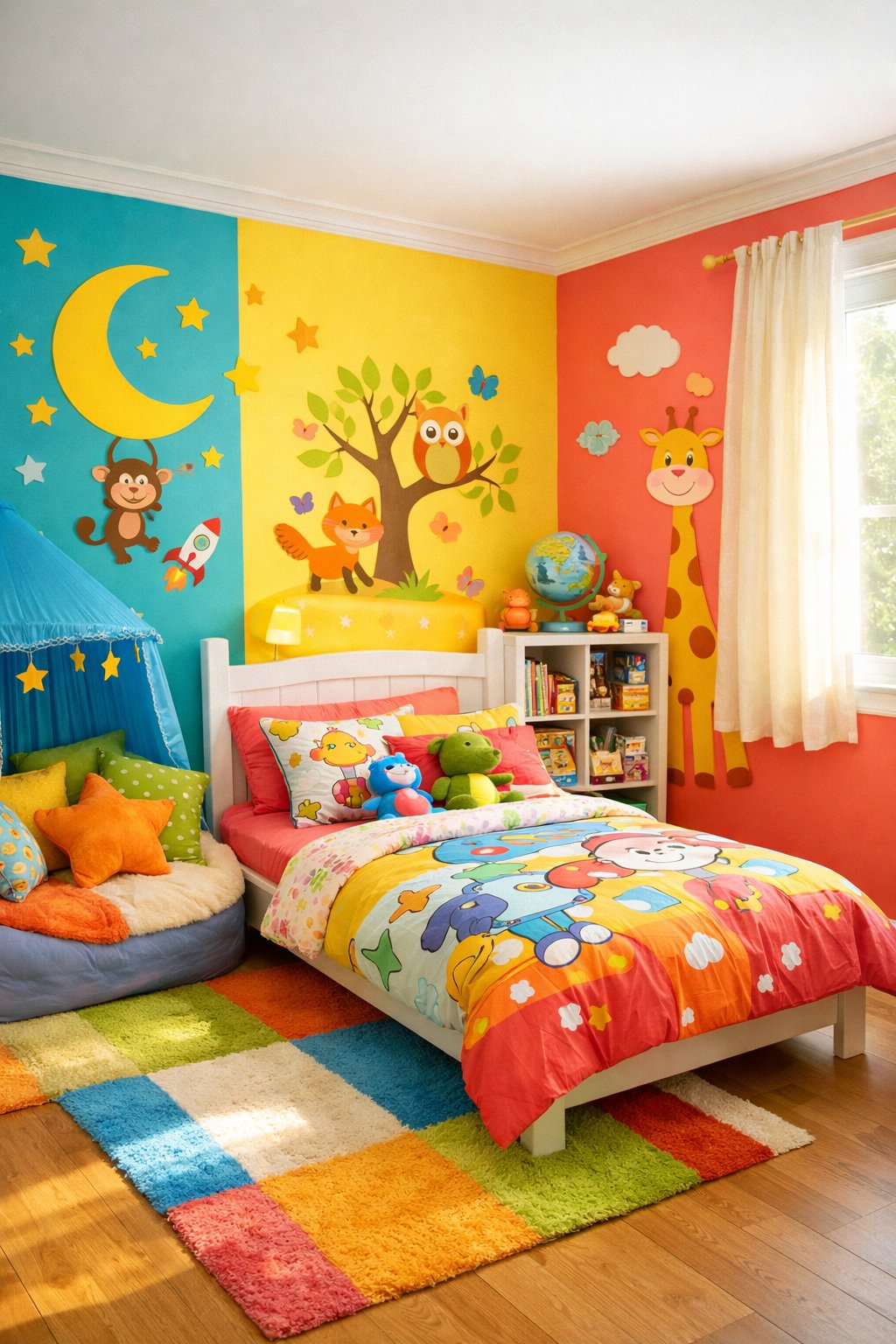
Custom paint colors help the room match the child’s interests and mood. Bright tones add energy, while soft blues and greens support calm play and rest.
Designers often use two-tone walls or bold accent walls to define zones for sleep and play. These choices keep the space lively without overwhelming it.
Chalkboard paint or simple murals invite creativity and change as the child grows. Parents can involve the child in color choices to reflect personality.
6) Soft, textured textiles like rugs, cushions, and curtains
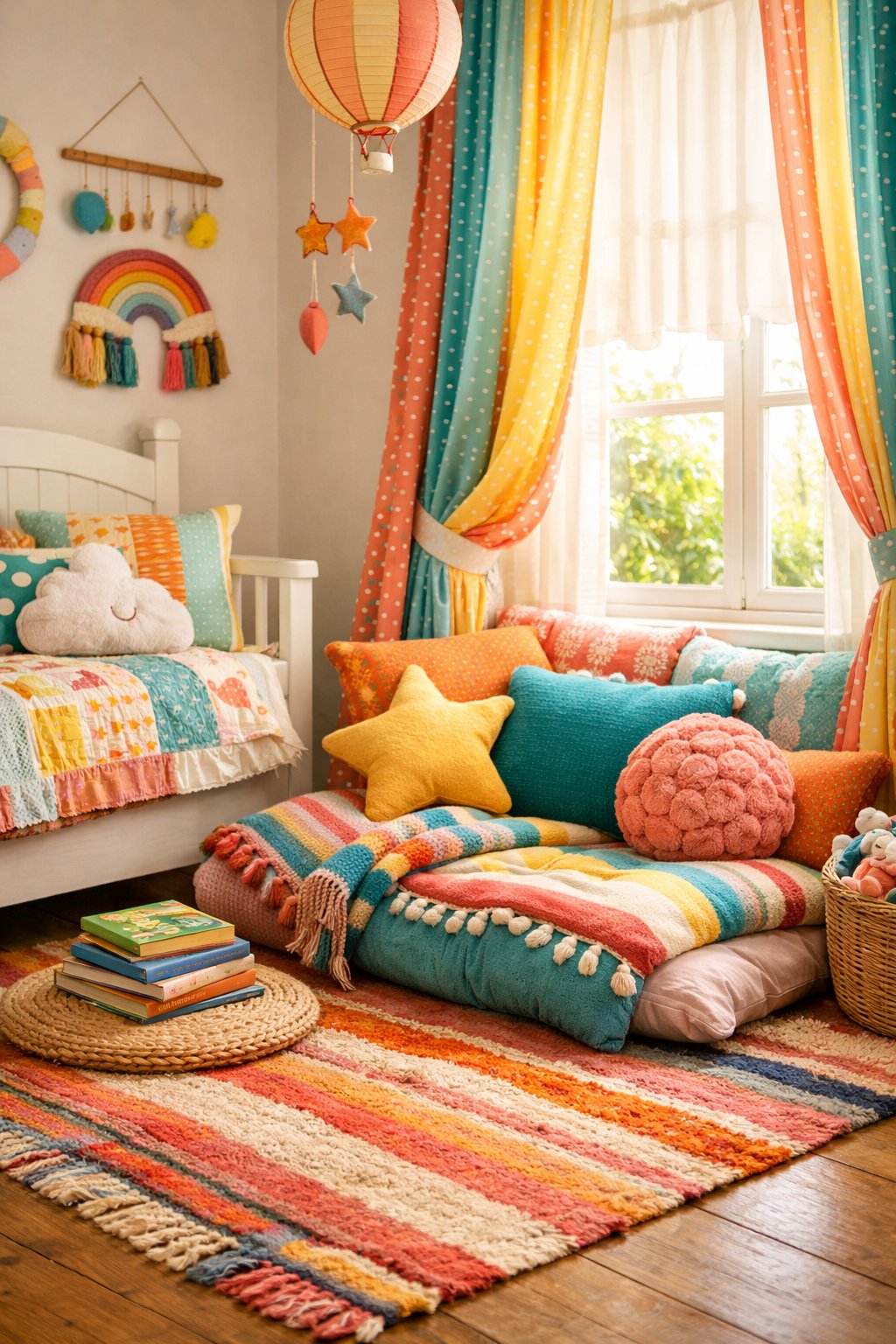
Soft, textured textiles add comfort and warmth to a child’s bedroom. Rugs, cushions, and curtains bring color and gentle texture without changing walls or furniture.
A soft rug cushions play time and reduces noise. Cushions support reading and quiet play, while curtains soften light and improve sleep.
Mix cotton, linen, or wool for easy care and comfort. Choose washable fabrics and calm patterns to keep the room practical and fun.
7) Dedicated play areas with safe, fun flooring options
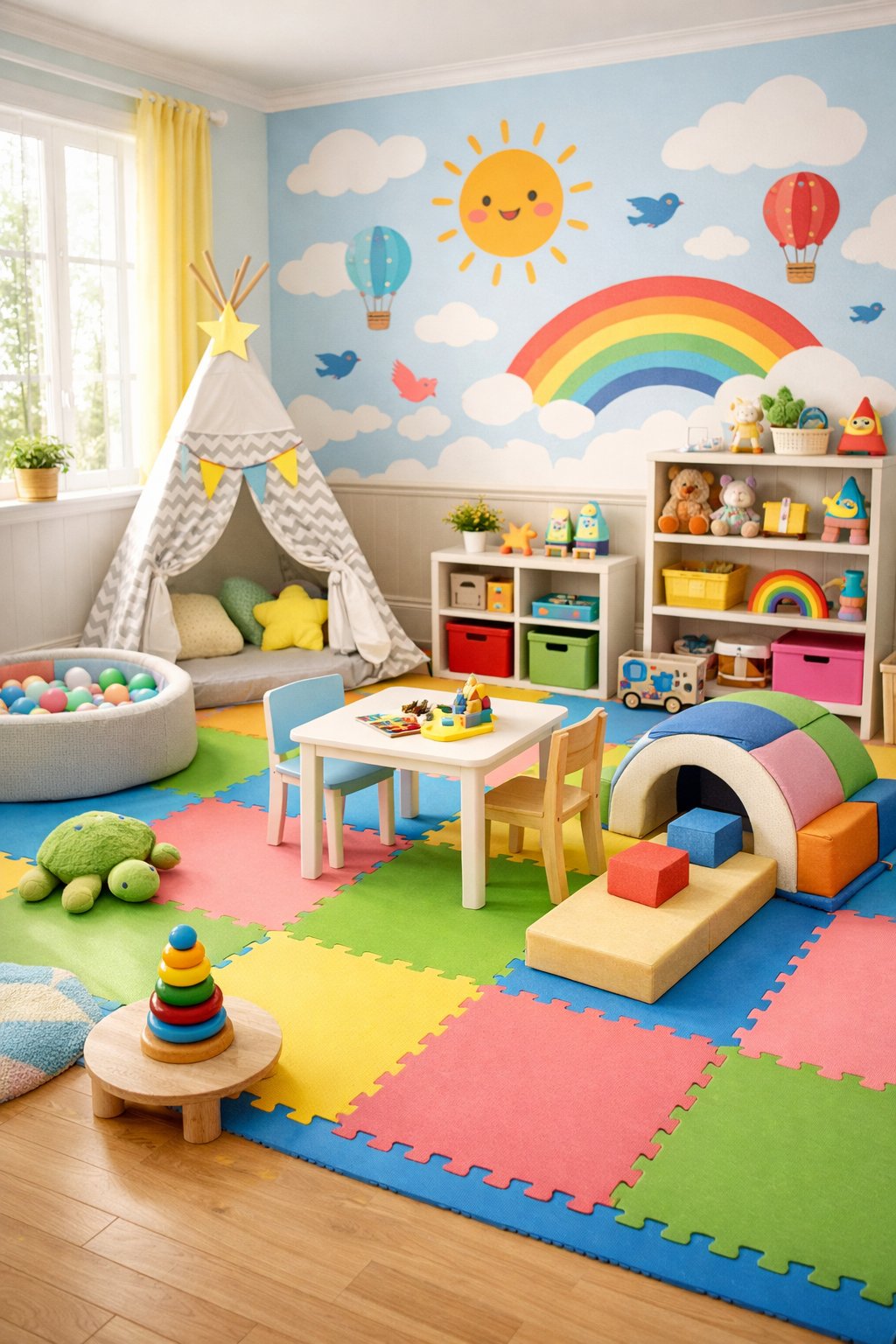
A dedicated play area helps children focus on play without taking over the whole bedroom. It works well in a corner, under a loft bed, or along one wall.
Safe flooring matters in these zones. Foam tiles, play mats, and low-pile rugs cushion falls and reduce noise.
Bright colors and simple patterns add fun while staying easy to clean. Durable materials handle daily use and active movement.
Design Principles for Kids’ Bedrooms
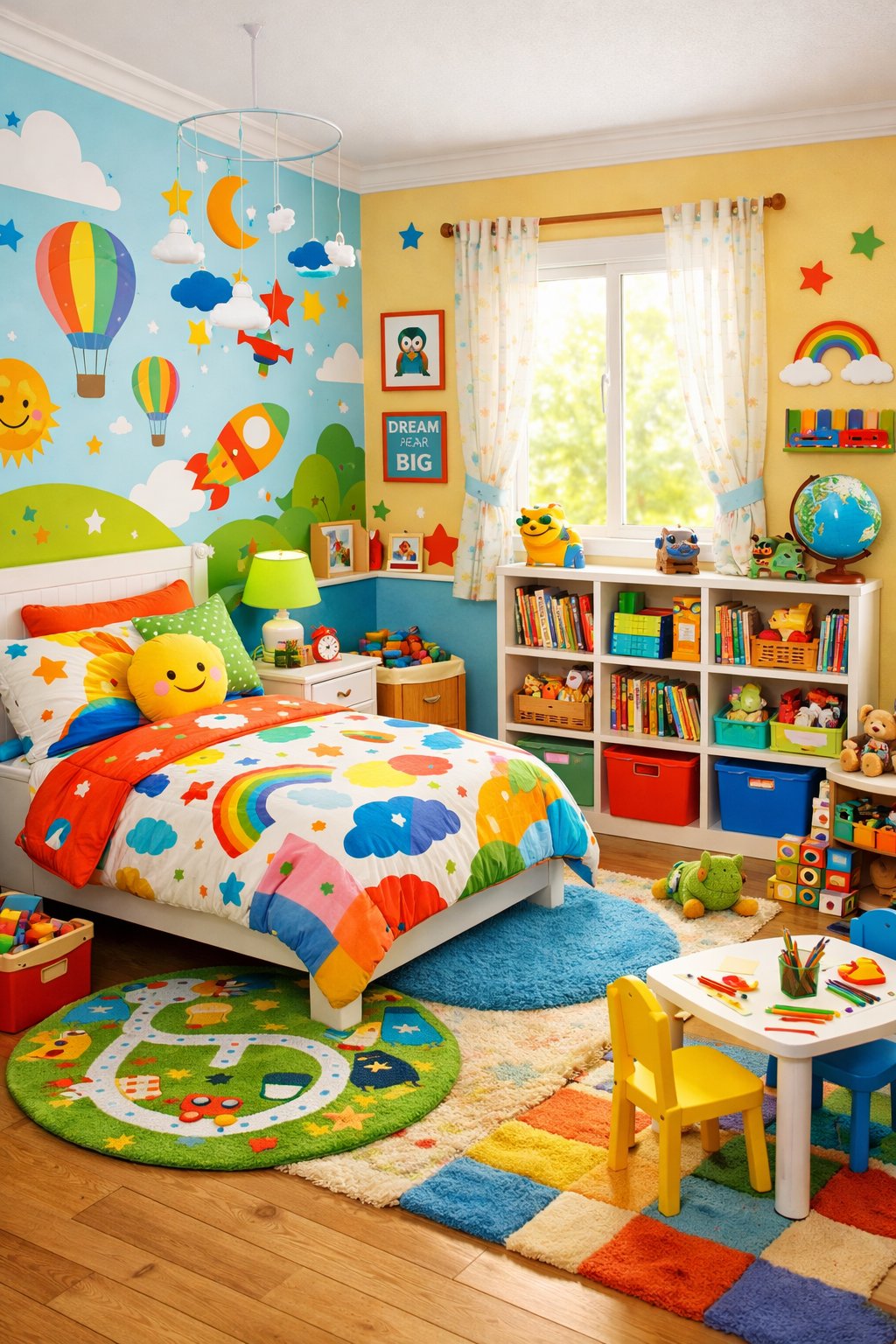
Good kids’ bedrooms support daily routines and active play while staying easy to change as the child grows. Smart layouts and age-fit themes guide most design choices.
Balancing Functionality and Play
A kids’ bedroom must work for sleep, study, and play. Designers place the bed first to protect clear sleep space. They add storage that children can reach, such as low shelves, open bins, and drawers under the bed.
Furniture should serve more than one purpose. A desk can hold crafts and homework. A bench can hide toys. Clear floor space matters, so wall hooks and vertical shelves help reduce clutter.
Key functional elements
- Closed storage for mess control
- Open storage for daily toys
- Soft floor rugs for safe play
Lighting also matters. Overhead lights support cleaning and dressing. Task lights support reading and homework.
Choosing Age-Appropriate Themes
Themes should match a child’s age, interests, and growth stage. Young children enjoy simple themes with bold colors and clear shapes. Older kids prefer flexible designs that change with their tastes.
Permanent items should stay neutral. Wall color, flooring, and large furniture last longer when they stay simple. Decor carries the theme and changes easily.
Theme ideas by age
| Age range | Best theme focus |
|---|---|
| 3–5 | Animals, colors, story characters |
| 6–9 | Sports, space, nature |
| 10–13 | Hobbies, patterns, muted colors |
Removable decals, bedding, and art allow quick updates without a full redesign.
Incorporating Creativity and Personalization
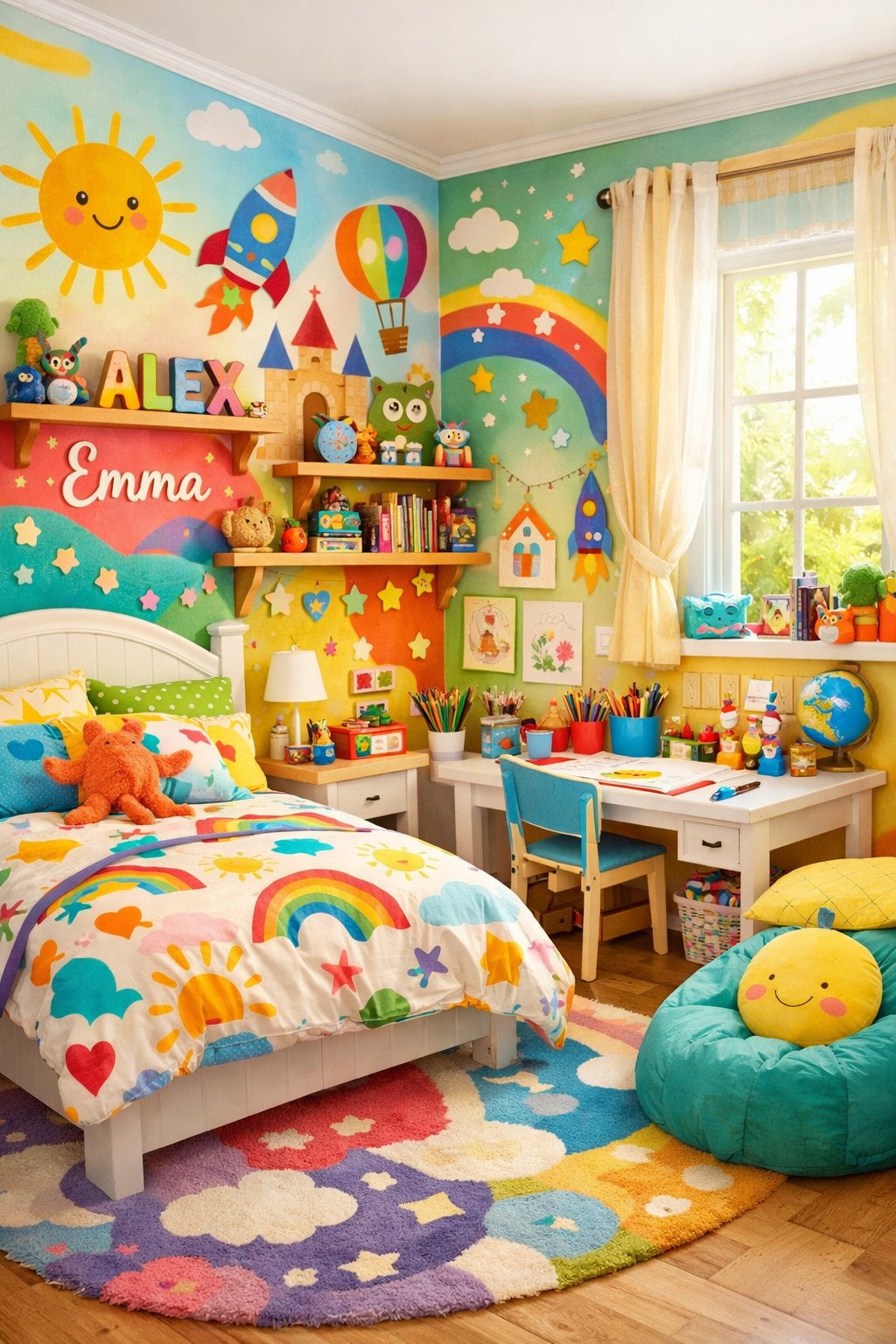
A child’s room works best when it reflects who they are and how they use the space. Thoughtful decor choices and smart storage help support play, learning, and daily routines.
Encouraging Self-Expression Through Decor
Decor gives children a clear way to show their interests. Wall art, bedding, and color choices should match what they enjoy right now. Removable decals and peel-and-stick wallpaper make changes easy as tastes shift.
Simple displays help children feel proud of their space. A small art wall, picture ledge, or cork board lets them show drawings and school projects. This keeps personal items visible without clutter.
Effective decor choices include:
- Theme-based accents like space, animals, or sports
- Name signs or initials on walls or doors
- Neutral walls with bold decor that can change over time
Lighting also matters. Desk lamps or string lights add comfort and help set a calm mood for reading or quiet play.
Personalized Storage and Organization Solutions
Storage works best when it fits a child’s height and habits. Low shelves, open bins, and labeled drawers help them clean up on their own. Clear systems reduce mess and save time.
Personal labels improve daily use. Names, icons, or color codes show where items belong. This works well for shared rooms.
| Storage Type | Best Use |
|---|---|
| Open bins | Toys and daily items |
| Drawer units | Clothes and art tools |
| Under-bed boxes | Seasonal items |
Furniture with built-in storage adds value. Beds with drawers or benches with lids save space. These choices support order without limiting play.
Frequently Asked Questions
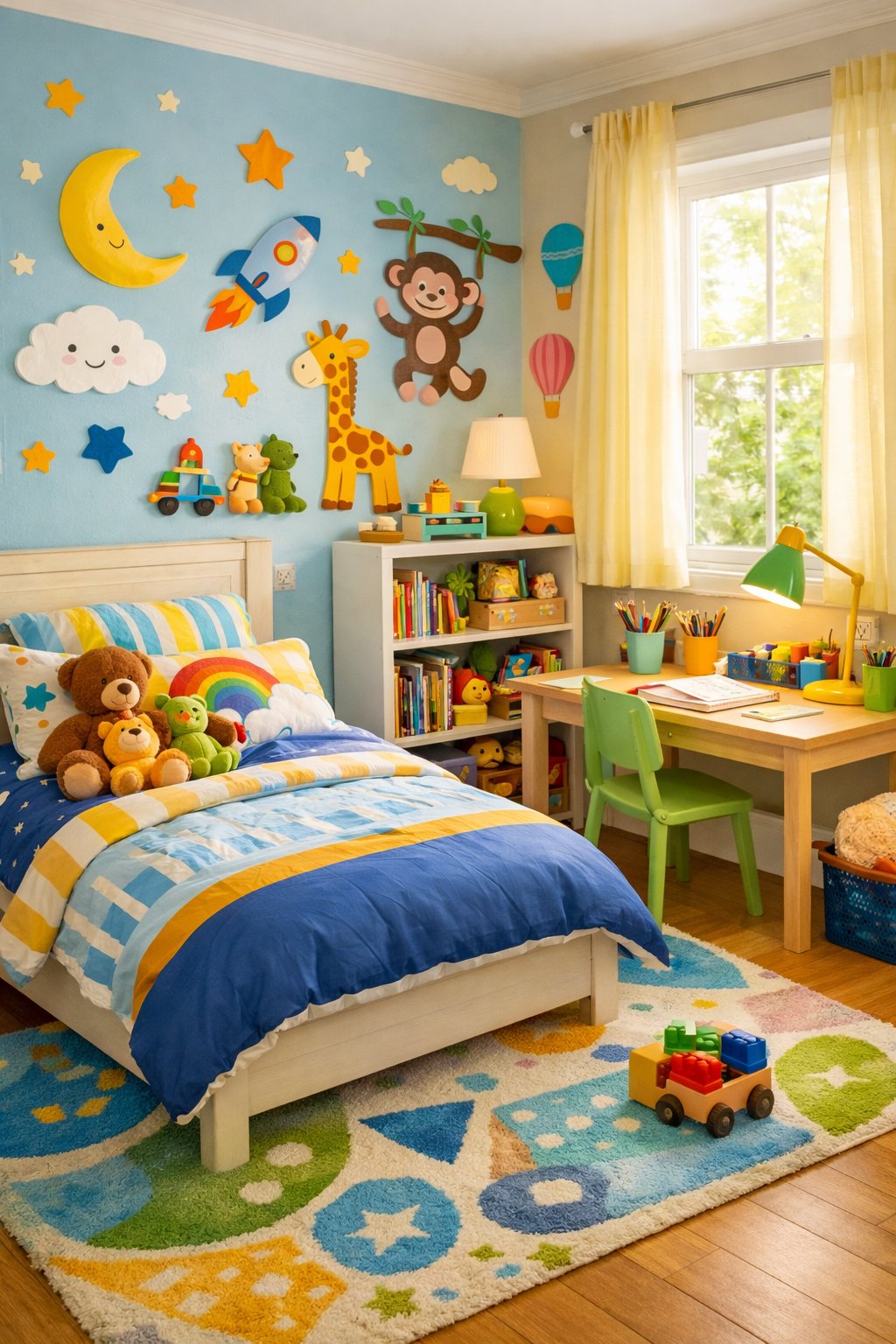
Parents often balance fun design choices with safety, storage, and room to grow. These answers focus on furniture, color, themes, shared spaces, and decor that support daily use.
What are some space-saving furniture pieces for a small kids’ bedroom?
Loft beds free up floor space for play or study areas below. Bunk beds work well when two children share one room.
Beds with built-in drawers store clothes or toys without adding extra furniture. Fold-down desks and wall shelves keep the room open and easy to move in.
How can I incorporate a fun theme into my child’s bedroom design?
A themed bed, such as a castle or pirate ship, sets a clear focus. Wall decals or murals add character without permanent changes.
Bedding, rugs, and lamps can match the theme and stay easy to replace as interests change. This approach avoids full room makeovers.
What are some gender-neutral color schemes for a kids’ room?
Soft greens, warm grays, and light blues work well for many ages. Beige and off-white create a calm base for colorful accents.
Parents can add interest with bright wall art or painted furniture. This keeps the room flexible over time.
How can I set up a shared bedroom for siblings with different ages?
Clear zones help each child feel ownership of the space. Area rugs, wall colors, or shelf units can define personal areas.
Shared storage works best when labeled for each child. Beds with built-in storage reduce clutter and save space.
What are some creative storage solutions for a child’s bedroom?
Under-bed drawers store toys and extra bedding out of sight. Open bins make it easy for younger children to clean up.
Built-in shelves near reading nooks keep books within reach. Wall hooks hold bags, hats, and costumes without using floor space.
How do I choose age-appropriate decor for a kid’s bedroom?
Decor should match the child’s interests and daily habits. Younger children benefit from bold colors and simple shapes.
Older kids prefer artwork, posters, or shelves to display personal items. Removable decor allows updates without repainting.


