Toddler Boys Room Ideas: 7 Creative Designs for Every Style
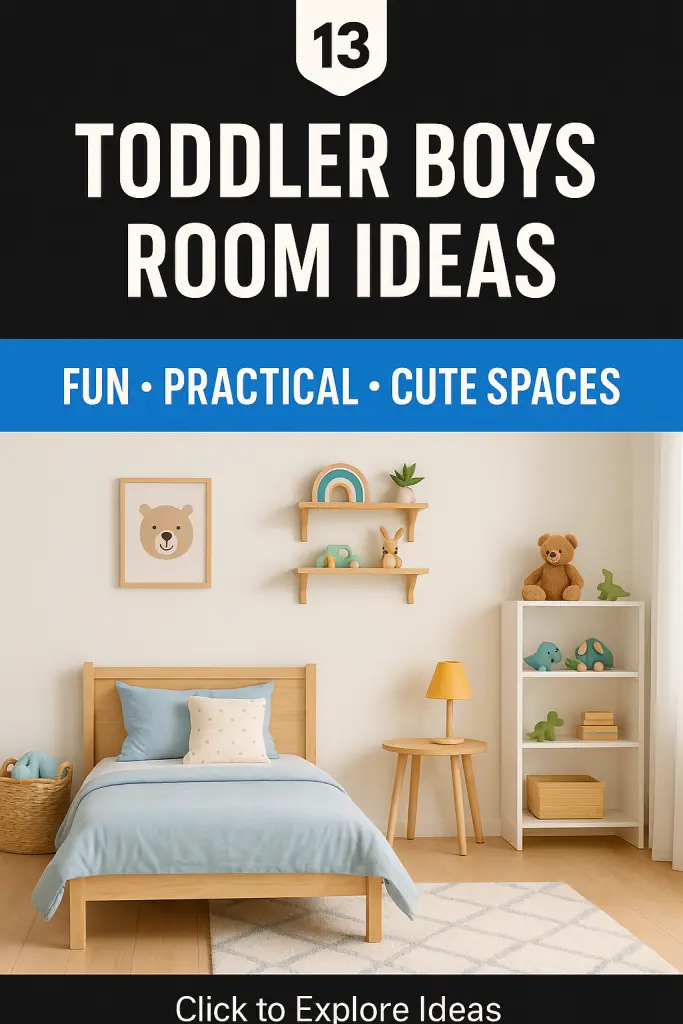
Designing a toddler boy’s room takes creativity, planning, and a focus on comfort. The space needs to support growth, play, and rest while reflecting his personality and interests. A well-designed room helps a child learn independence, stay organized, and feel secure in a space made just for him.
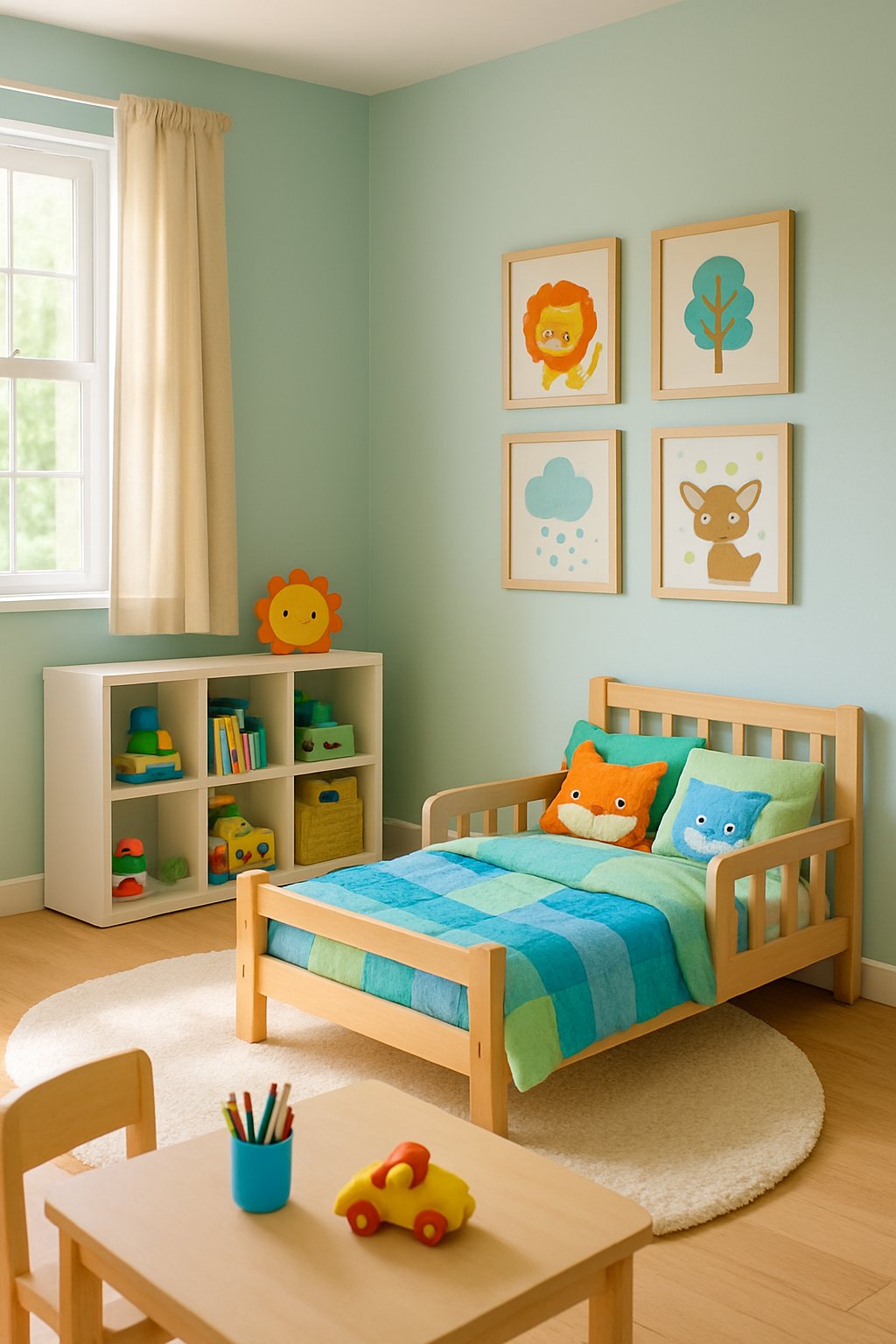
This article explores ways to create a room that is both practical and fun. It covers ideas for themes, furniture, layout, and safety, all centered around making the most of every inch. Simple design choices can turn an ordinary bedroom into a space that encourages imagination and everyday routines.
1) Dinosaur-themed wall decals and bedding
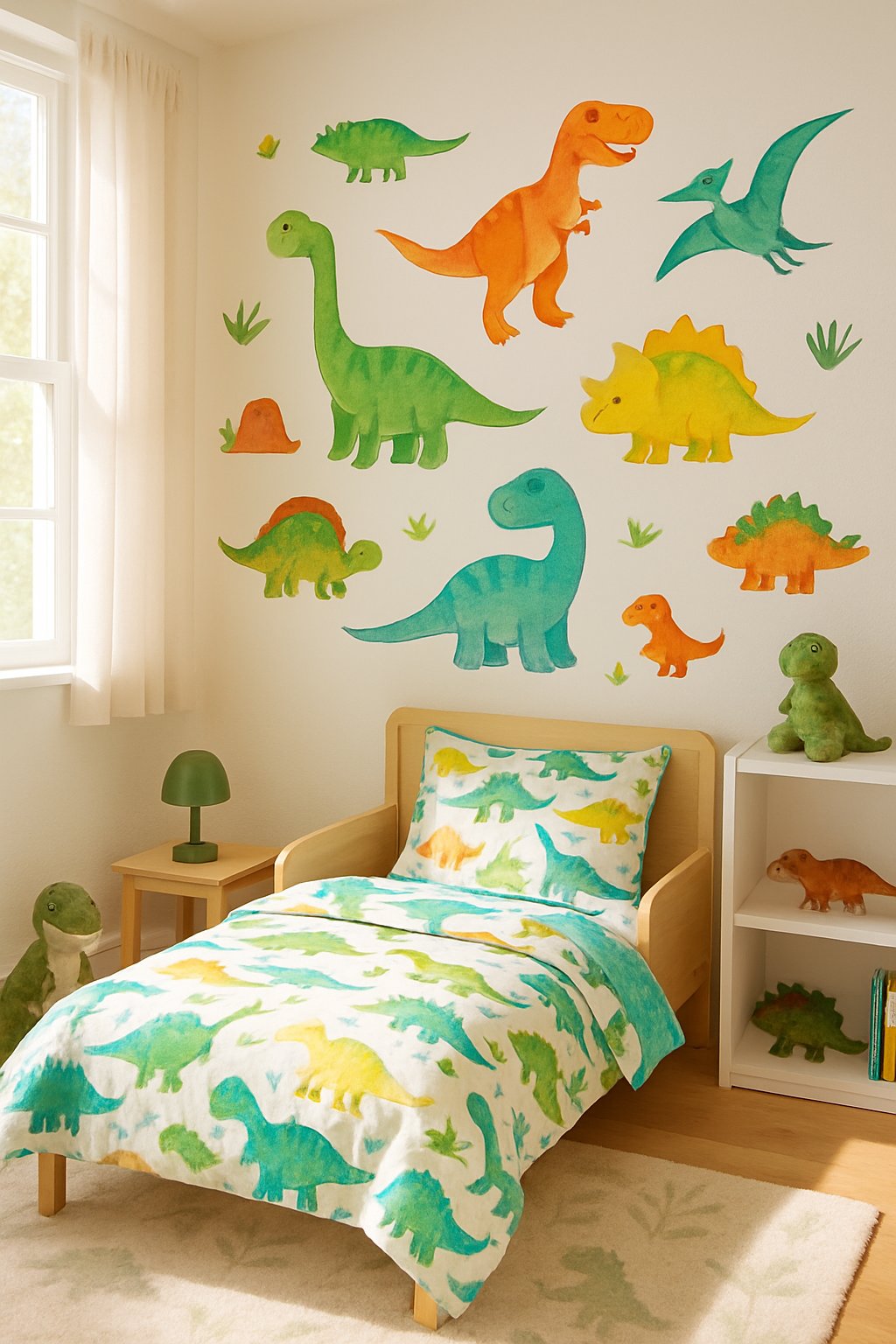
Dinosaur wall decals add color and character without permanent changes. Parents can choose designs showing friendly dinosaurs or realistic ones, depending on their child’s preference. Removable decals make updates easy as the child grows.
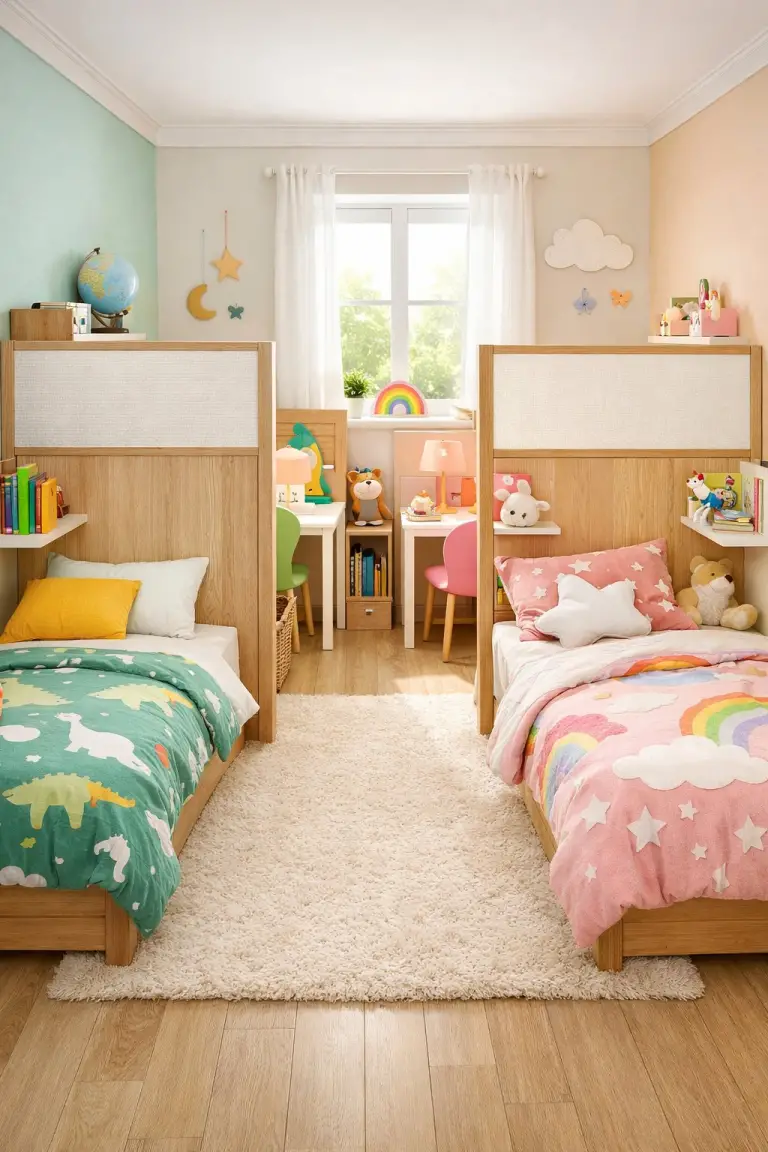
Coordinating bedding, like sheets or comforters with simple dinosaur prints, ties the theme together. Soft colors and cotton fabrics keep the room comfortable and inviting.
Combining decals and bedding creates a cohesive look that sparks curiosity about prehistoric life while keeping the space easy to clean and maintain.
2) Montessori low shelves for toy organization
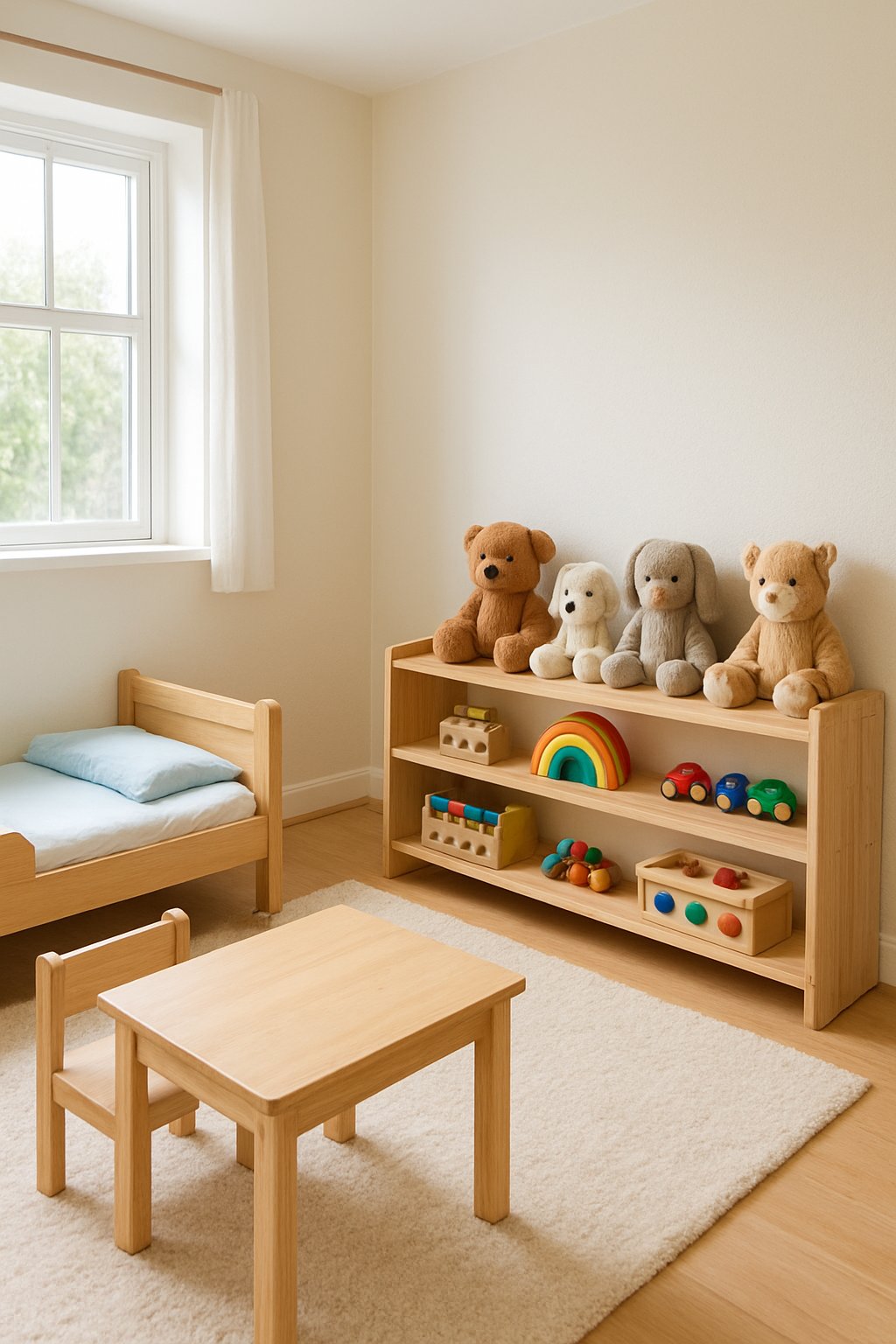
Montessori low shelves help toddlers see and reach their toys with ease. The open design encourages independence because children can choose and return items on their own.
Organizing toys by category or activity keeps the space neat and easy to use. It also helps toddlers learn to care for their environment.
Natural wood shelves fit well in most room styles and offer a calm, simple look. Parents can rotate toys regularly to keep the selection fresh and match their child’s current interests.
3) Space-saving loft bed with slide
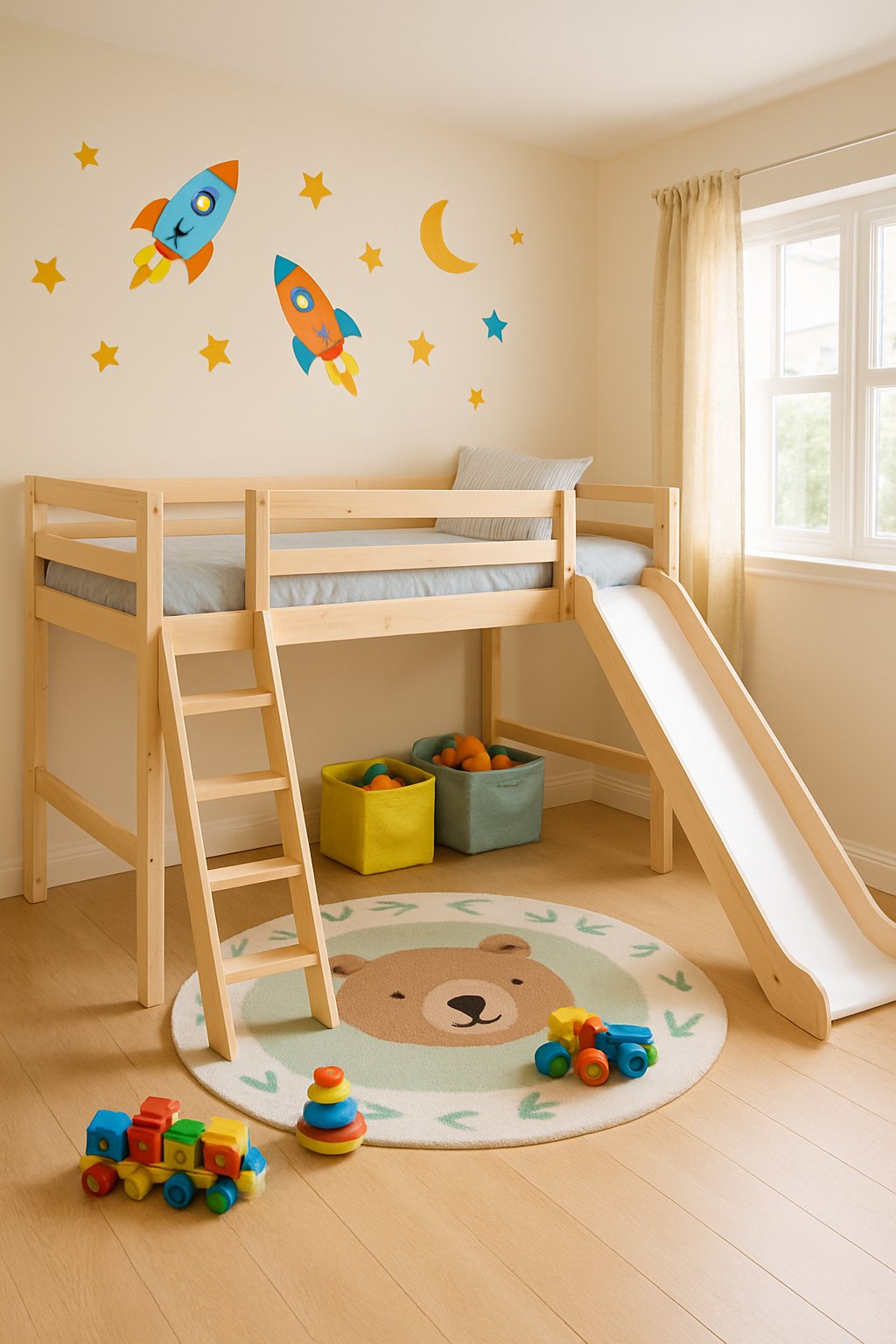
A loft bed with a slide helps save floor space while adding a fun feature to a toddler boy’s room. It lifts the bed off the ground, creating room underneath for toys, a reading corner, or storage bins.
Many designs include built-in stairs or ladders for safe climbing. Some also have small shelves or drawers to keep everyday items organized.
This setup encourages both play and practicality. It keeps the room tidy while giving children a playful way to start their day.
4) Soft neutral colors with blue and green accents
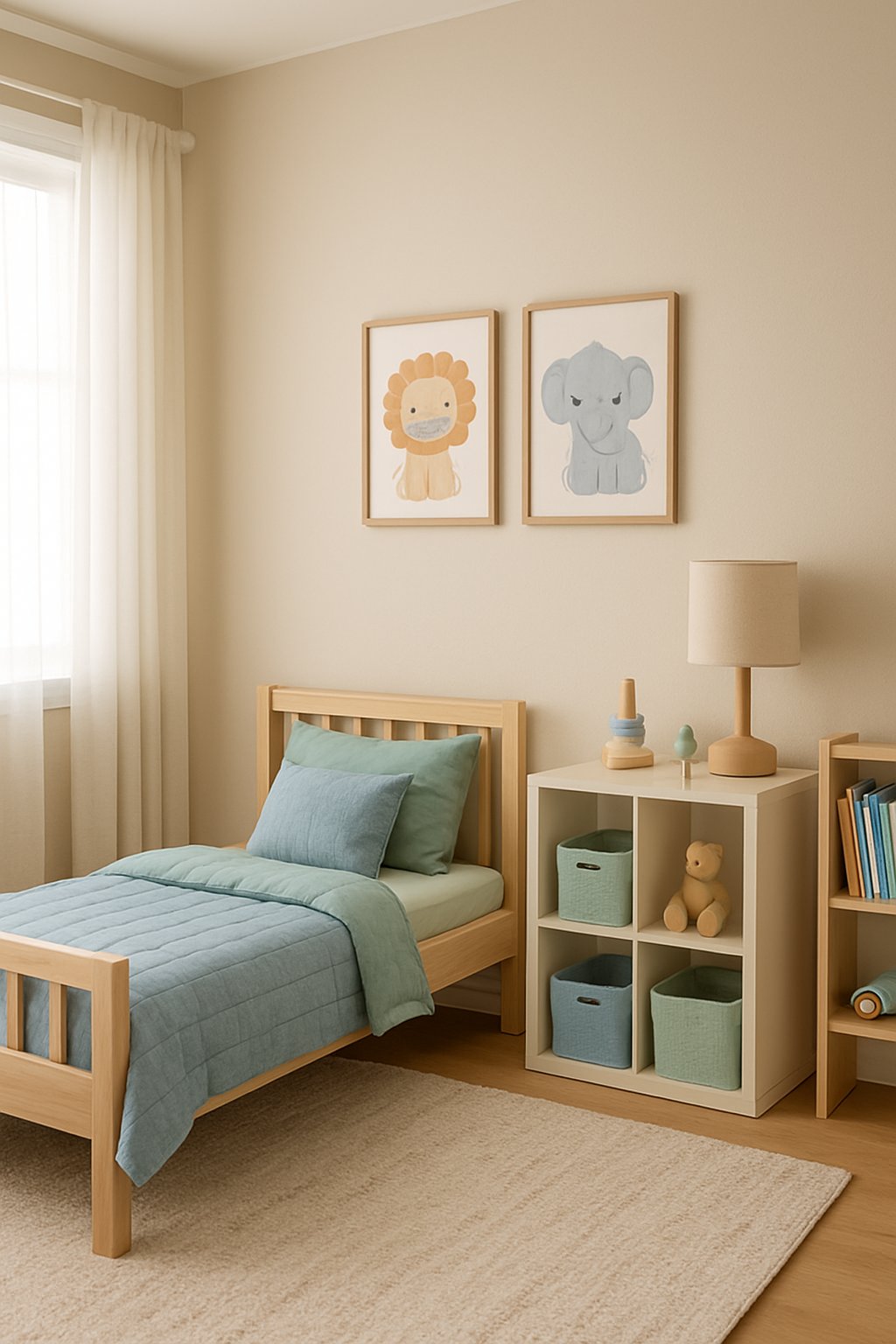
Soft neutral walls create a calm base that helps bright colors stand out without feeling overwhelming. Beige, light gray, or warm white make the room easy to update as the child grows.
Adding blue and green through bedding, rugs, or wall art gives the space energy while keeping it balanced. These cool tones pair well with natural wood furniture and soft textiles.
Simple patterns like stripes or dots in blue and green can make the room feel cheerful yet neat. This combination supports a relaxed and inviting space for play and rest.
5) Woodland animal prints for calming decor
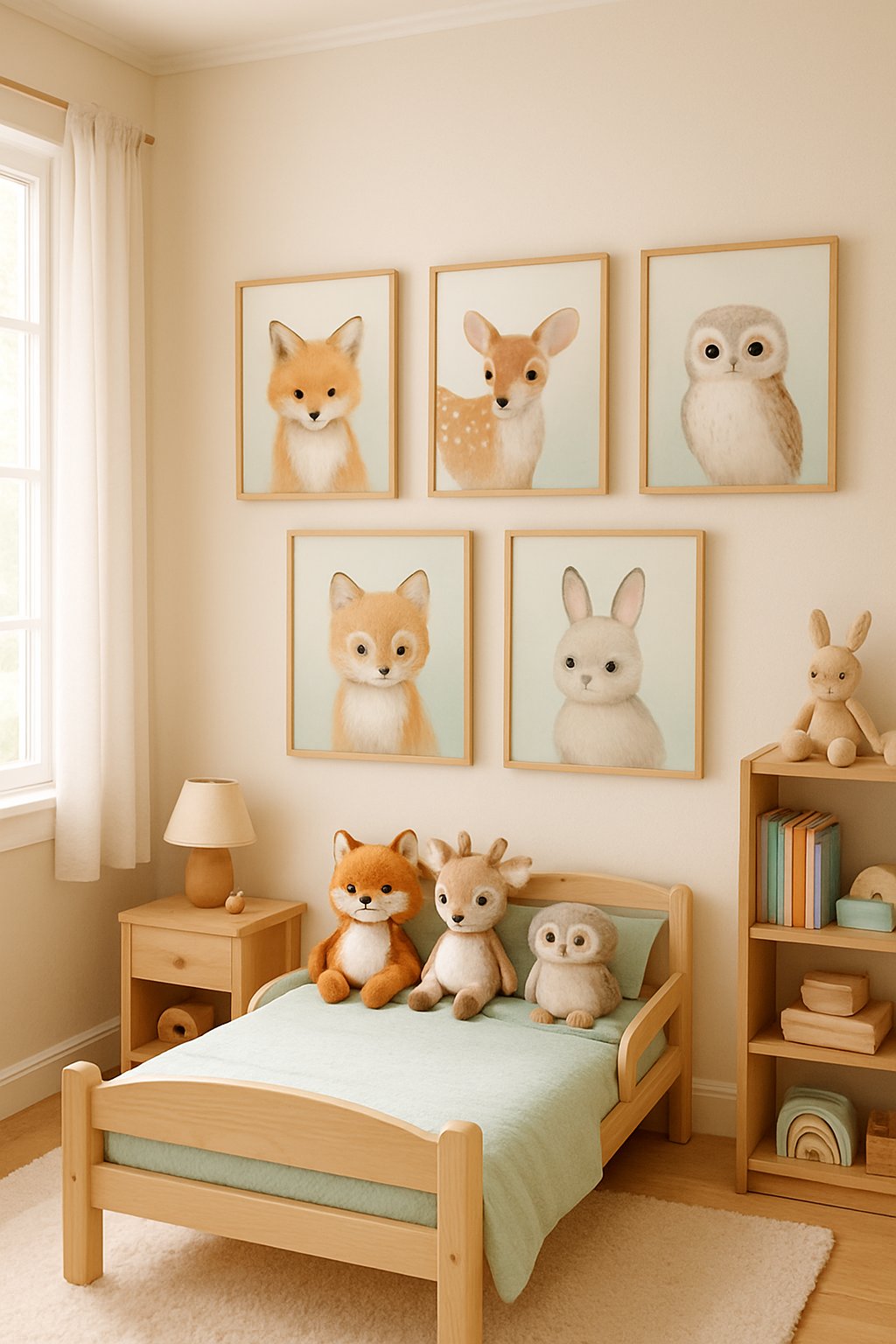
Woodland animal prints add gentle nature themes to a toddler boy’s room. Designs featuring foxes, bears, deer, or owls bring a soft forest touch without overpowering the space.
Parents can choose neutral or earthy colors to create a calm and balanced atmosphere. Framed prints, canvas sets, or wall decals work well above a crib or reading nook.
Combining these prints with wooden furniture or textured rugs helps tie the theme together. The result feels cozy, natural, and easy for a child to grow with over time.
6) Built-in reading nook with cushions
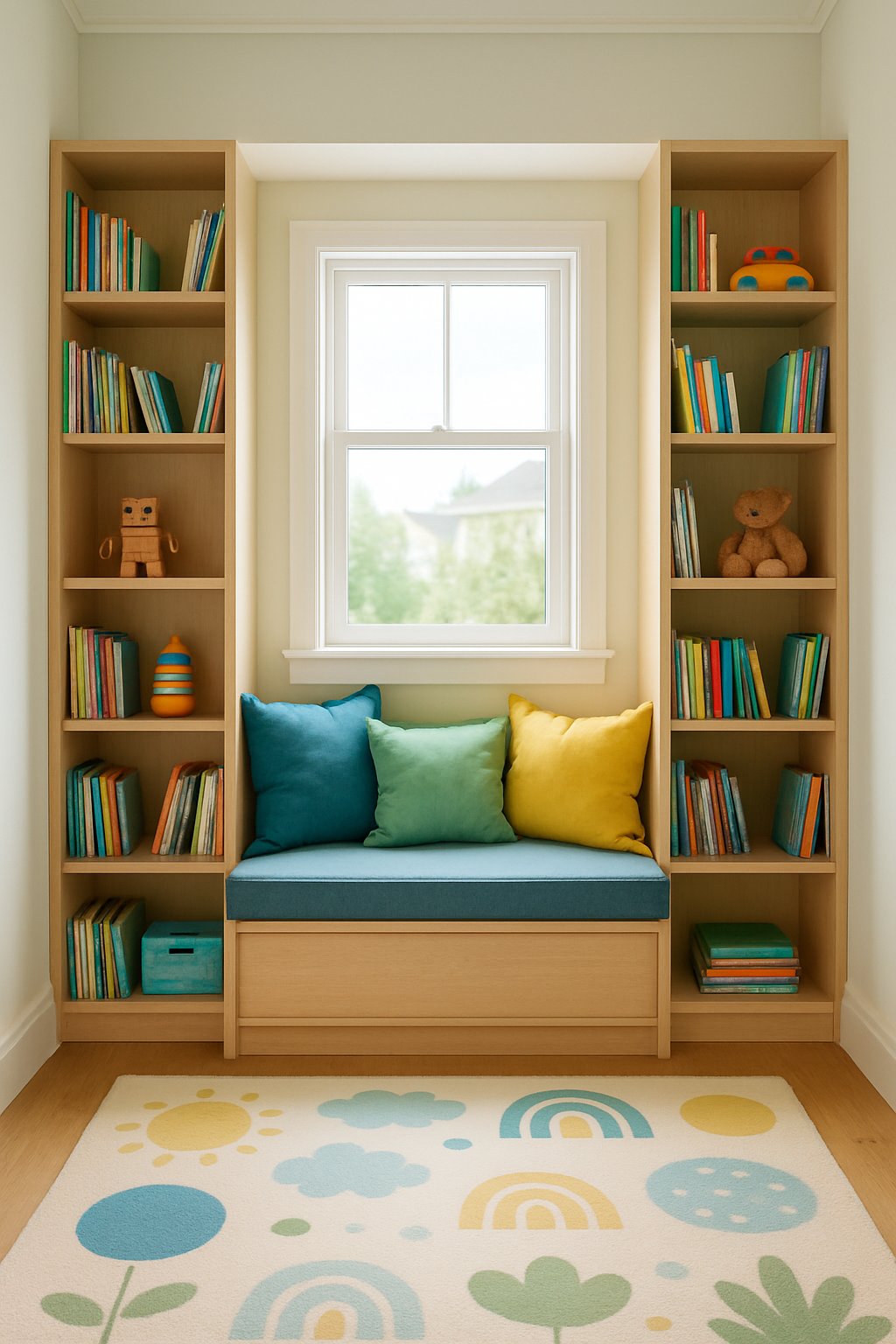
A built-in reading nook gives a toddler boy’s room a calm place for quiet time. It fits neatly into a corner or under a window, saving space while adding both comfort and function.
Soft, washable cushions make the area cozy and safe for little ones. They can rest, read, or play with stuffed animals without leaving the room.
Adding a few shelves nearby keeps books and toys organized. With proper lighting and simple decor, the nook becomes a practical, inviting spot that encourages early reading habits.
7) Durable, washable area rug for playtime
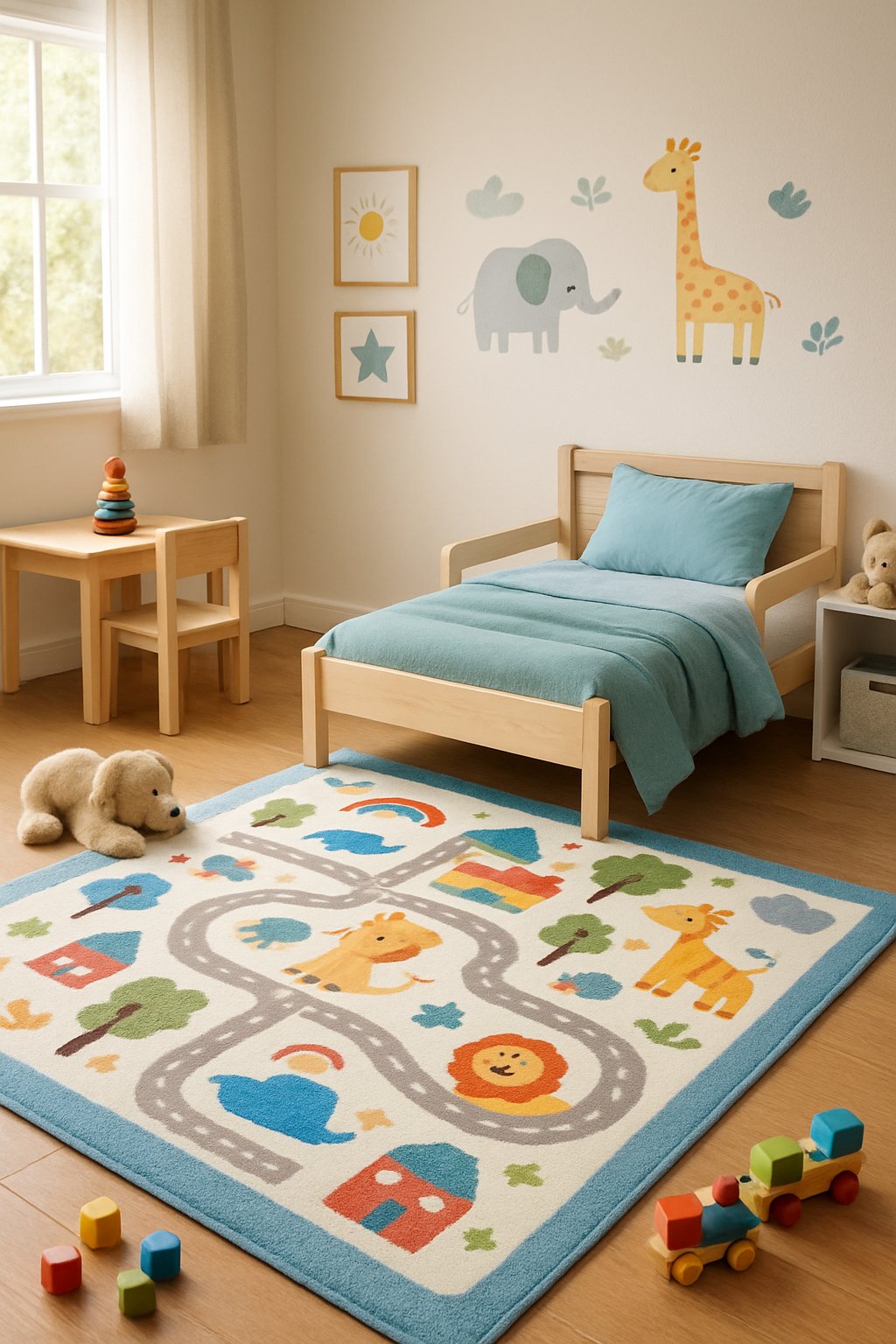
A durable, washable area rug makes playtime easier to manage. It protects the floor from spills, dropped toys, and daily wear while adding comfort for kids who like to play on the ground.
Many modern designs use soft, stain‑resistant materials that can be cleaned in a regular washing machine. Parents appreciate how simple it is to refresh the rug without special tools or cleaners.
Patterns with cars, animals, or sports themes often suit toddler boys’ rooms, giving the space color and character while keeping it practical and safe for play.
Room Layout Considerations
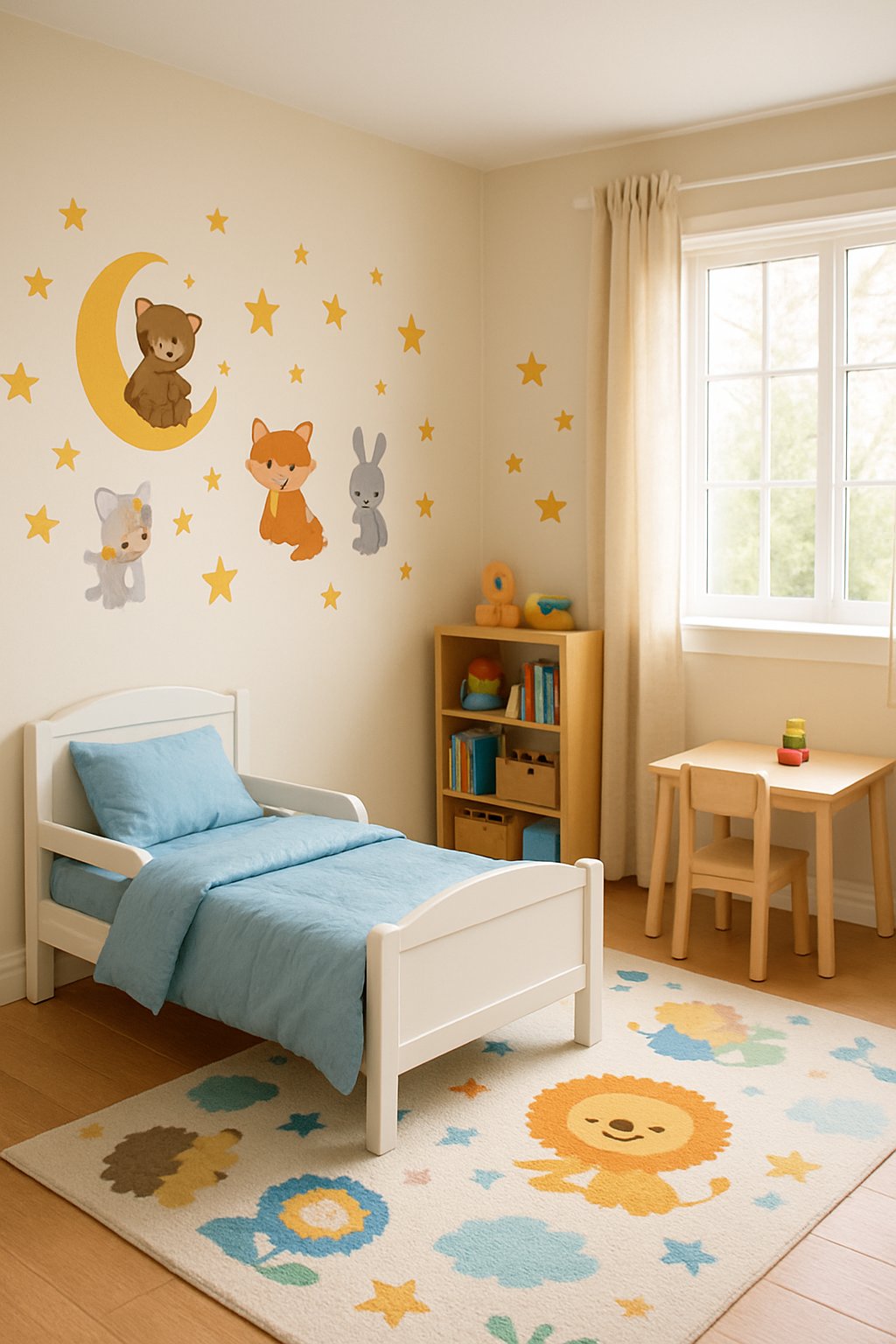
A well-planned layout helps a toddler’s room stay safe, fun, and easy to maintain. Good organization supports both play and rest without wasting space or creating clutter. Every piece of furniture should serve a clear purpose and leave enough room for movement.
Maximizing Space for Play
Toddlers need open floor space for toys, building blocks, and movement. Keeping furniture along the walls opens the center of the room for active play. Low storage bins and open shelving make cleanup easier and help children learn organization skills early.
Multi-purpose furniture adds function without taking up extra room. For example, a storage bench, a bed with drawers underneath, or a foldable play table can save space. Using vertical storage such as wall-mounted shelves or pegboards keeps the floor clear while keeping favorite toys within easy reach.
Soft rugs, padded mats, or foam squares make the play area comfortable and reduce the chance of injury. A small table for crafts or puzzles gives a defined space for quiet play. Avoid oversized furniture that can dominate the room and limit flexibility as the child grows.
Zoning Sleeping and Activity Areas
Separating sleeping and play zones helps children settle down at bedtime and stay focused during daytime activities. Placing the bed in a quiet corner with soft lighting and minimal distractions creates a restful atmosphere. Keeping toys and play storage away from the bed signals to the child that this space is for rest.
Parents can define each zone with simple visual cues. A rug, curtain divider, or change in wall color helps set boundaries without needing permanent structures. For shared rooms, a small bookcase or screen can mark each zone clearly.
Essential items like a nightstand, lamp, and small dresser should stay within arm’s reach of the bed. More active items such as toy bins or activity tables belong in the opposite side of the room to balance energy and reduce clutter near the sleep zone.
Safety and Comfort Essentials
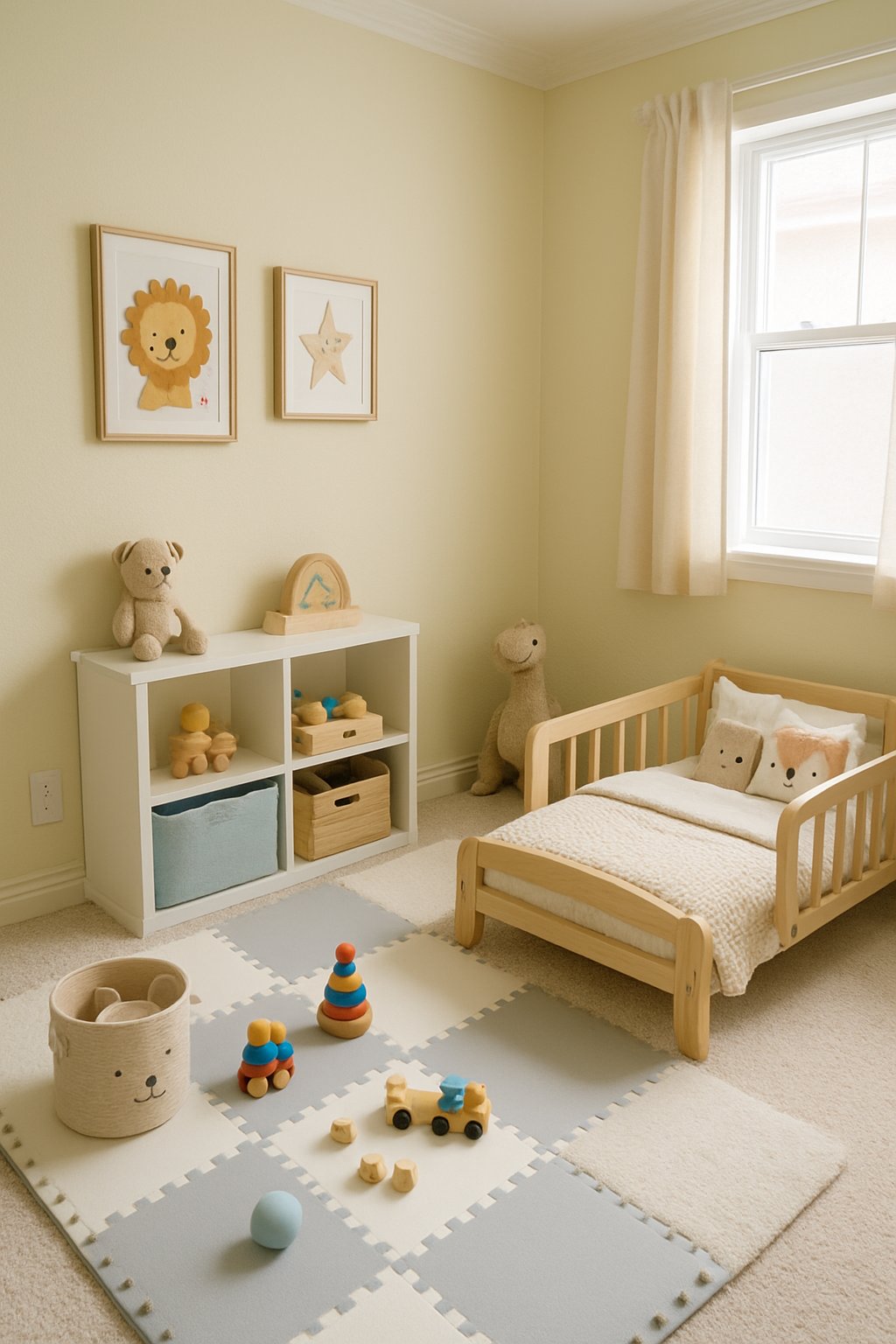
A well-designed toddler room keeps a child safe while providing a calm, comfortable space for rest and play. Thoughtful furniture choices and cozy design details help parents prevent accidents and create a welcoming area their child enjoys spending time in.
Choosing Safe Furniture
Safe furniture choices reduce the risk of injury and make daily use easier. Heavy furniture, such as dressers or bookshelves, should be anchored to the wall using safety straps. Rounded edges and smooth finishes lower the chance of bumps or scratches. Parents can also look for furniture labeled nontoxic or low-VOC to limit exposure to harmful chemicals.
A low bed frame or floor bed allows toddlers to get in and out on their own without falling from a height. Drawer locks and soft-close hinges keep little fingers safe. Reliable storage solutions, like low shelves or bins, help reduce clutter that may cause tripping.
Using a sturdy table and chair set at the right height supports safe play and learning. Simple, solid furniture holds up against daily wear and is easier to clean. Together, these steps make the room safer without sacrificing function or style.
Creating a Cozy Environment
Comfort encourages good sleep and relaxation. Soft fabrics, such as cotton bedding and microfiber rugs, make the space comfortable while remaining easy to wash. Proper room temperature and breathable bedding layers help prevent overheating.
Warm, neutral colors and gentle lighting create a peaceful atmosphere. A soft night-light or dimmable lamp gives just enough glow for bedtime routines. Curtains that block excess light also help toddlers fall asleep more easily.
Adding a small reading corner or plush mat provides a calm spot for quiet time. Parents should ensure all textiles are machine washable to handle spills and accidents. These choices balance style, cleanliness, and comfort for a safe, restful space.